
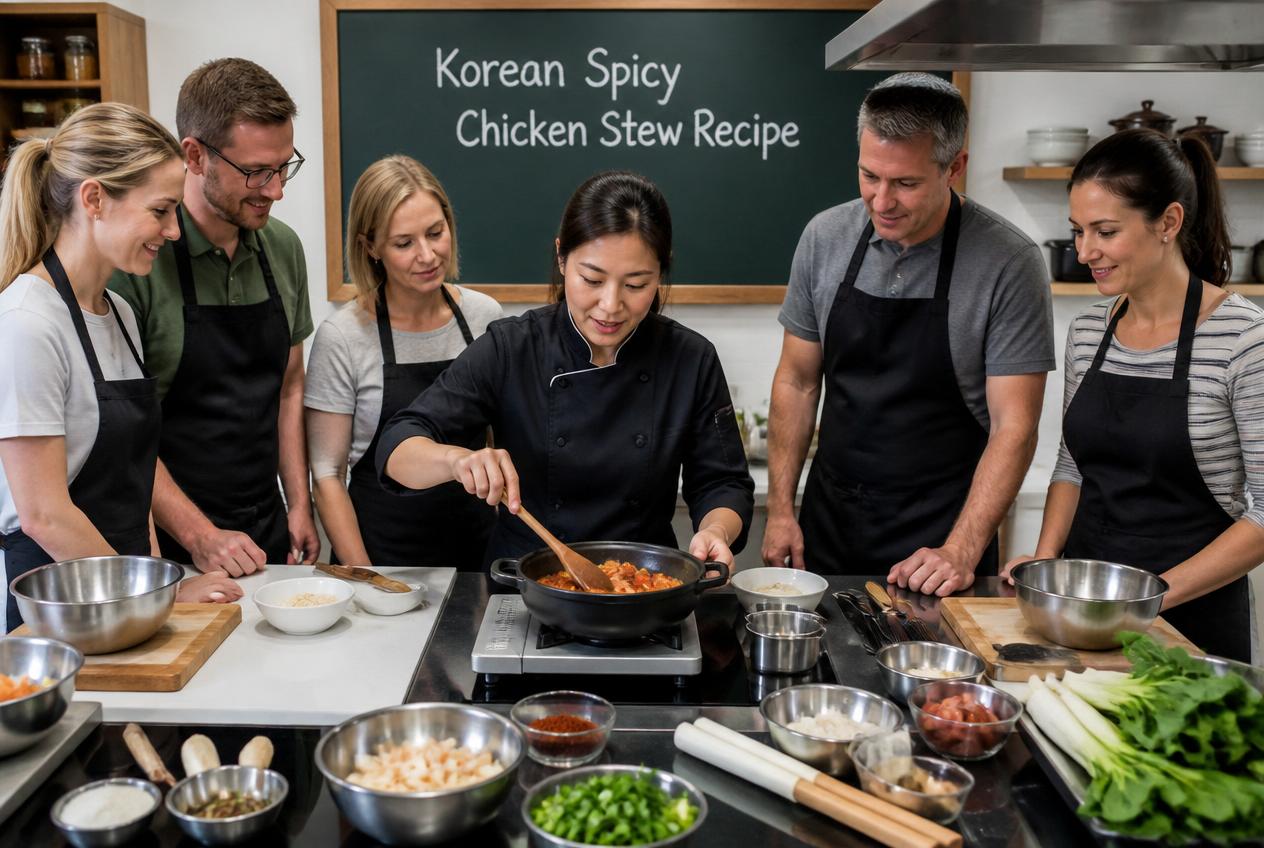
I’ll be honest—my first run-in with Korean Spicy Chicken Stew (dakdoritang) was anything but elegant. I basically faceplanted into a bowl of molten red broth and ended up gasping for water. But here’s the thing: after that first blast of heat, this Korean Spicy Chicken Stew really opens up into something special. You get these layers of savory, just-sweet-enough flavors that turn braised chicken and veggies into the kind of meal you crave on cold nights. Korean Spicy Chicken Stew is all about bone-in chicken, potatoes, carrots, and onions simmered in a bold, spicy gochujang-based sauce. It’s fiery, yes, but also super comforting.
What gets me about this spicy Korean chicken is how it looks a little intimidating at first—like, the red broth dares you to take a bite. But honestly? It’s a cozy, balanced Korean comfort meal that just warms you up from the inside. Whether you call it dakdoritang, dakbokkeumtang, or dakmaeuntang, this Korean Spicy Chicken Stew is a weeknight favorite in so many Korean homes and, honestly, it deserves its spot.
Let me walk you through how to make this spicy braised chicken at home. I’ll cover where it comes from, how to handle the heat so you can actually enjoy it, and a few tricks to make it your own. Once you get the hang of Korean Spicy Chicken Stew, you’ll see why it’s such a staple in Korean kitchens.
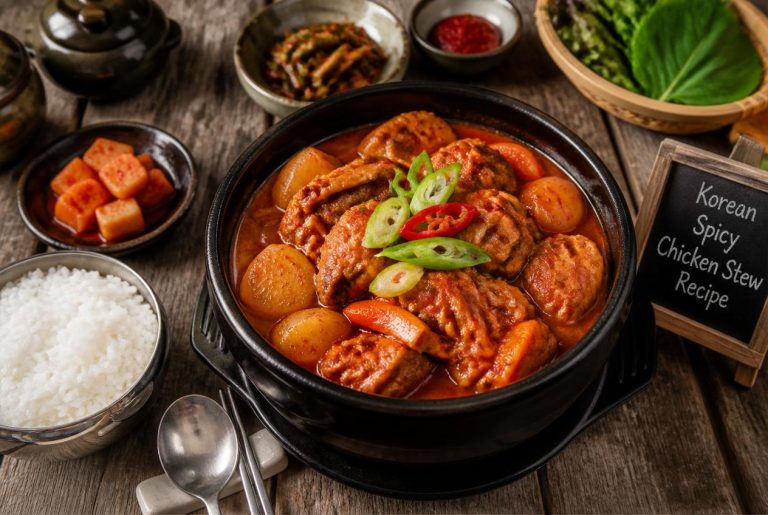
Korean Spicy Chicken Stew Recipe
Key Takeaways
- Korean Spicy Chicken Stew mixes tender braised chicken and vegetables in a gochujang-powered sauce
- This dish balances serious heat with savory and sweet notes, making it the ultimate comfort food—especially over rice
- You can dial up or down the spice, store leftovers easily, and find all kinds of regional spins on this classic Korean Spicy Chicken Stew
A Steamy History: The Origins of Korean Spicy Chicken Stew
Okay, so the history behind this fiery chicken dish is honestly a bit foggy—kind of like the steam that comes off a fresh pot of Korean Spicy Chicken Stew.
What I do know: dakdoritang blew up in popularity during the mid-20th century and became a go-to family meal. It just made sense for folks on a budget. Why? Cheap cuts of chicken, plus some veggies, and suddenly you’ve got magic bubbling away.
This dish goes by a few names, which feels pretty on-brand for Korean food. You might hear dakbokkeumtang or dakmaeuntang thrown around, but it’s all just Korean Spicy Chicken Stew with a different label.
I love that this classic Korean comfort dish started as a practical way to feed big families. Toss everything into one pot, let it bubble, and dinner is basically done.
Why did Korean Spicy Chicken Stew catch on?
- Used up affordable chicken parts
- Only needed one pot (less cleanup!)
- Fed a crowd
- Burst with flavor from simple ingredients
This stew took humble ingredients and made them crave-worthy. It’s comfort food with a punch—born out of necessity, but perfected by generations of Korean home cooks.
Tips for Navigating Spicy Chicken Stew Without Breaking a Sweat
Trust me, diving headfirst into dakdoritang without a plan is a rookie mistake. My first bowl had me downing water like I’d just crossed the Sahara.
My go-to survival moves:
- Always have steamed rice—no exceptions. Rice soaks up the spicy sauce and gives your mouth a break.
- Start with small bites—I used to load up my spoon, but smaller bites let you actually taste the stew, not just the heat.
- Keep dairy handy—milk or yogurt works way better than water. I learned this after chugging water that just made things worse.
- Don’t touch your face—seriously, I rubbed my eye after handling gochujang chicken once, and I’ll never do that again.
I always serve with rice as my main defense. When the heat hits, I go for two spoonfuls of rice for every spoonful of Korean Spicy Chicken Stew.
Temperature matters. Let your bowl cool off a bit before digging in. Hot food makes the spice feel even hotter, and honestly, who needs that?
I swear by a side of pickled radish or kimchi. The acidity cuts through the richness and resets your taste buds. Plus, it looks like you know what you’re doing—even if you’re sweating bullets.
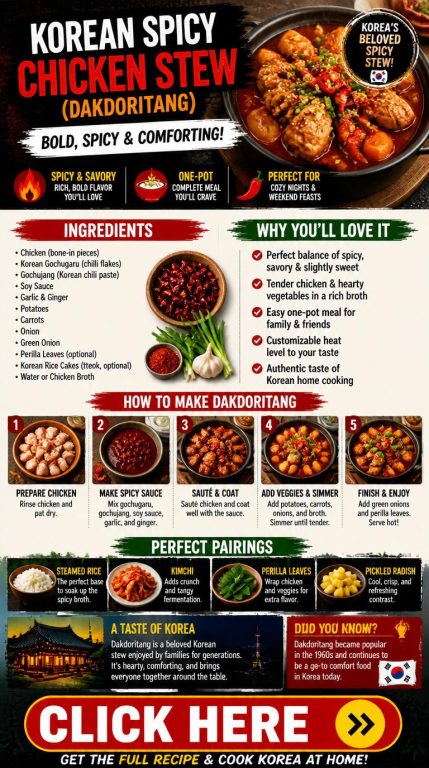
The Many Hats of Korean Stew: Fun Regional Twists
Korean Spicy Chicken Stew likes to put on different costumes depending on where you are. While dakdoritang is the classic Korean Spicy Chicken Stew with the usual ingredients, its cousin jjimdak goes for a sweeter vibe with soy sauce and a glossy finish.
Some home cooks get creative with Korean Spicy Chicken Stew. I know a friend in Seoul who adds jalapeños when she runs out of gochugaru—purists might gasp, but it’s honestly delicious. Others sneak in a bit of fermented soybean paste for extra depth, and I’m all for it.
Regional spins get wild:
- Coastal spots: Toss in seafood like shrimp or squid
- Mountain towns: Add more mushrooms and wild greens
- City kitchens: Go rogue with cheese or even instant noodles (no judgment)
- Traditionalists: Stick with chicken and potatoes, nothing fancy
The best part about Korean Spicy Chicken Stew? It’s forgiving. I’ve seen grandmas and pro chefs make it totally differently, and both versions were fantastic. One used fermented soybean paste for umami, another just leaned on fish sauce and gochujang.
My own favorite twist? A splash of rice wine and extra garlic. Maybe not traditional, but hey, my kitchen, my rules. Korean Spicy Chicken Stew is all about making it your own.
Leftovers and Storage: Keeping That Stew From Plotting Revenge
Here’s something I’ve learned: Korean Spicy Chicken Stew gets even better after a night in the fridge. The chicken soaks up more of that spicy sauce, and the potatoes taste richer.
When it comes to leftovers, I always let the stew cool down before stashing it away. Hot stew and a cold fridge just make for soggy, watered-down leftovers. Nobody wants that.
Refrigerator:
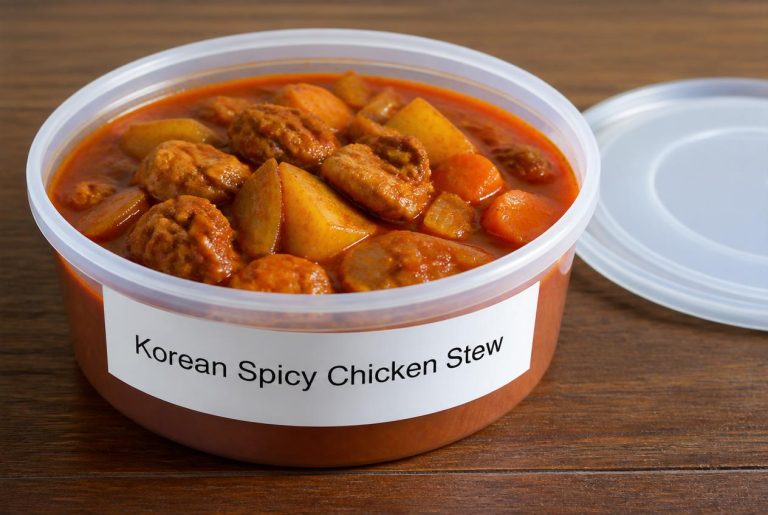
- Pop it in an airtight container
- It’ll keep for 3-4 days
- Store in the coldest part of your fridge
Freezer:
- Use freezer-safe containers
- Leave room at the top—it’ll expand
- Lasts 2-3 months
- Label it, so you know what’s what later
When I reheat Korean Spicy Chicken Stew, I go low and slow on the stove with a splash of water or broth, since the sauce thickens up in the fridge. The microwave works, but I stir it every minute for even heating.
One heads-up: avoid freezing and thawing more than once. The potatoes get mushy, and the chicken just doesn’t feel right after that.
I like to prep my veggies and sauce paste the night before. Makes cooking Korean Spicy Chicken Stew on a weeknight way less stressful.
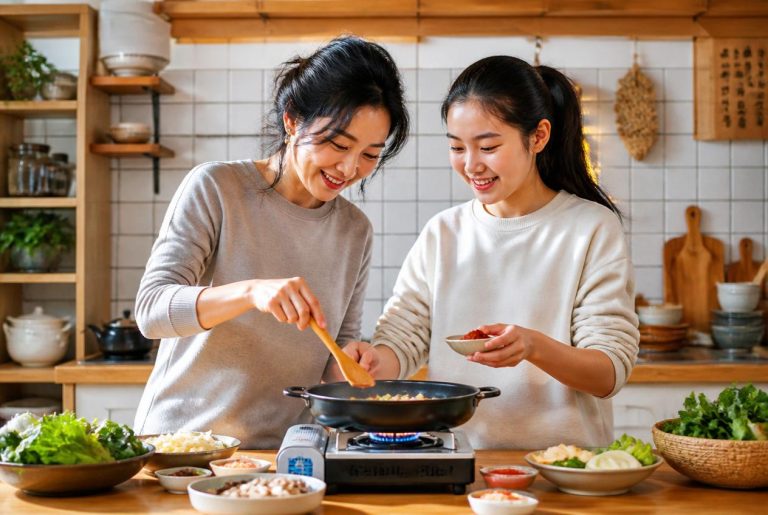
Korean Spicy Chicken Stew Recipe – Prep
Cooking Tips For the Korean Spicy Chicken Stew (Dakdoritang)
• Cut the chicken into evenly sized pieces so it cooks consistently throughout the stew.
• Add spicy seasonings gradually so the heat level remains balanced.
• Simmer the stew gently so the chicken stays tender and moist.
• Add potatoes and vegetables in stages based on their cooking times.
• Stir occasionally during cooking to help prevent sticking along the bottom of the pot.
• Use medium-low heat so the broth and sauce develop flavor gradually.
• Taste before serving and adjust seasoning carefully if needed.
• Let the dakdoritang rest briefly before serving so the flavors blend together fully.
Korean Spicy Chicken Stew Recipe – Storage
Storage Tips For the Korean Spicy Chicken Stew (Dakdoritang)
• Allow the stew to cool slightly before transferring it into storage containers.
• Store leftovers in airtight containers to help retain moisture and flavor.
• Refrigerate leftovers within 2 hours of cooking for proper food safety.
• Reheat slowly over medium-low heat while stirring occasionally.
• Add a splash of broth or water during reheating if the stew thickens too much.
• Keep herbs or garnishes separate until serving time for fresher appearance.
• Freeze portions in freezer-safe containers for up to 3 months if needed.
• Leave a little space at the top of containers because stews expand when frozen.
• Thaw frozen dakdoritang overnight in the refrigerator before reheating.
• Discard the chicken, vegetables, or sauce if they develop a sour smell, slimy texture, discoloration, mold, or unusual taste.
Korean Spicy Chicken Stew (Dakdoritang)
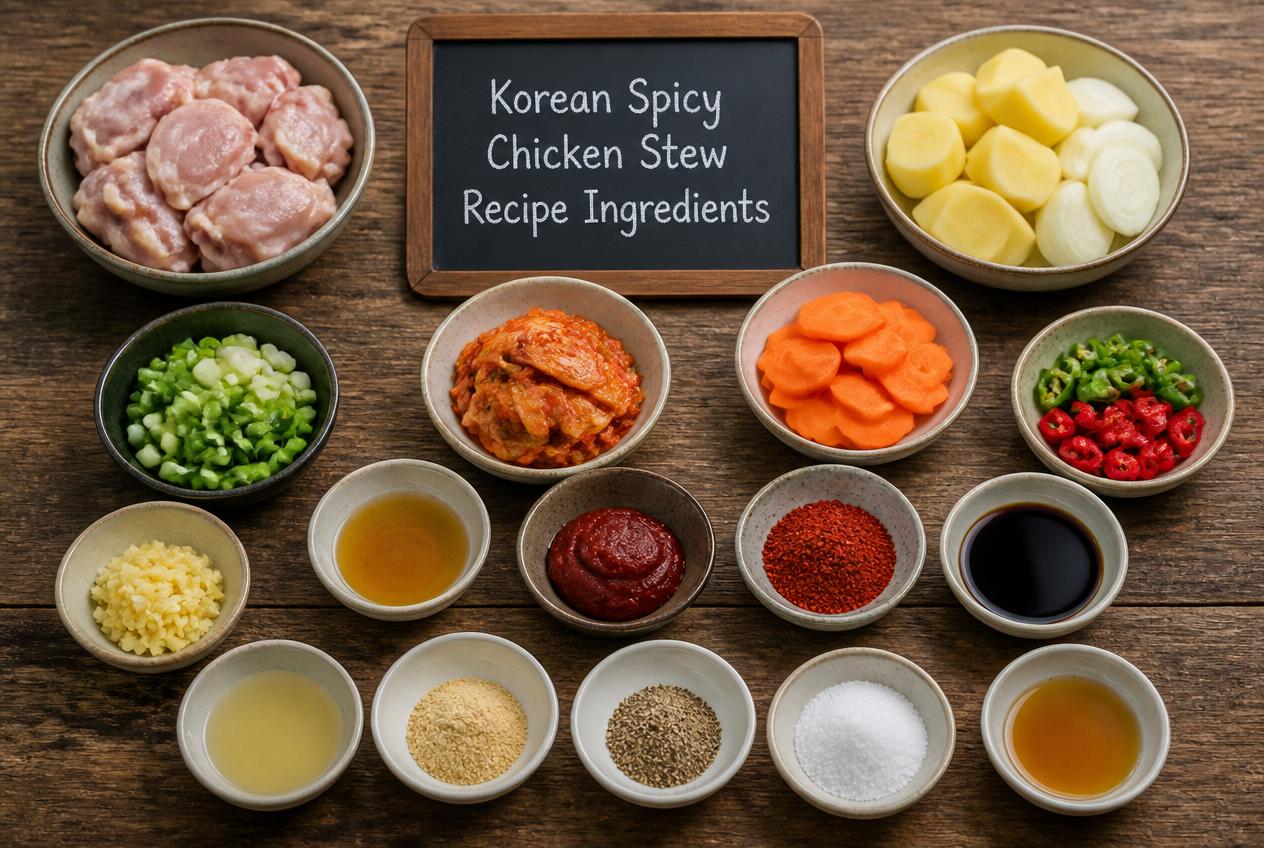
Ingredients
- 2.2 lbs chicken cut into medium sized chunks
- 1 cup water
- 2 potatoes cut into medium pieces
- 1 carrot cut into medium pieces
- 1 onion cut into medium pieces
- 3 perilla leaves thinly sliced
- 1 green onion thinly sliced stalk
- 1 tsp sesame seeds toasted
- 3 Tbsp gochujang Korean chili paste
- 2 Tbsp gochugaru Korean chili flakes
- 2 Tbsp rice wine
- 2 Tbsp soy sauce
- 1 Tbsp sugar
- 1 Tbsp garlic minced
- 1 tsp ginger minced
- 1 tsp sesame oil
- ground black pepper to taste
Instructions
- Bring a medium pot filled with water to a rolling boil over medium-high heat. Once the water is boiling vigorously, add the chicken and parboil it for 1 minute. This quick blanching step helps remove excess impurities from the chicken. Drain the chicken and discard the water.
- In a clean pot, combine the parboiled chicken, the prepared sauce, and the water. Stir to coat the chicken evenly with the seasonings. Cover the pot and bring everything to a boil over medium-high heat. Allow the stew to cook for about 10 minutes so the chicken can begin absorbing the flavors of the sauce.
- Add the potatoes, carrots, and onions to the pot. Cover and continue boiling for another 7 minutes. The vegetables will begin to soften while taking on the rich flavor of the broth and sauce.
- Reduce the heat to medium and gently stir the stew to redistribute the chicken and vegetables for even cooking. Add the sliced perilla leaves and cover the pot once again. Continue simmering for about 8 minutes, or until the chicken is fully cooked and the potatoes are tender. The sauce should thicken slightly as it cooks.
- Sprinkle the stew with the sliced green onion and toasted sesame seeds just before serving. Serve hot with steamed rice for a hearty and flavorful meal.
Frequently Asked Questions for the Korean Spicy Chicken Stew (Dakdoritang)
Getting the spice right and knowing which ingredients to prioritize will make or break your Korean Spicy Chicken Stew. Adding noodles or getting the perfect sauce thickness? It’s easier than you think.
How do I make the sauce spicy enough to make my taste buds file a complaint, but not my family?
For Korean Spicy Chicken Stew, I’ve found balance is everything. I start with 2 tablespoons of gochujang and 1 tablespoon of gochugaru. If I want more heat but don’t want to scare off my family, I’ll add extra gochugaru instead of more gochujang. The chili flakes bring the fire, while the paste adds depth and a little sweetness to keep things friendly.
Taste as you go. You can always add more spice, but you can’t take it out once it’s in. Korean Spicy Chicken Stew is all about adjusting to your own comfort zone.
What ingredients do I actually need for this stew, and which ones are just there to intimidate me?
The real MVPs for how to make dakdoritang are chicken, potatoes, gochujang, gochugaru, soy sauce, and minced garlic. Honestly, everything else? It’s just there to look impressive.
I always grab bone-in chicken pieces for Korean Spicy Chicken Stew because they bring so much flavor and don’t dry out. Potatoes and carrots? They’re the backbone, soaking up all that spicy goodness and making the stew hearty.
For the sauce, I throw in Korean red pepper paste, Korean chili flakes, soy sauce, minced garlic, and some ginger. Rice wine or mirin gives a little sweetness, and sesame oil finishes it off with that nutty kick. Korean Spicy Chicken Stew just wouldn’t be the same without it.
Onions help, but you can skip them if you want. Don’t let those fancy ingredient lists scare you away from making this Korean chicken stew recipe. Korean Spicy Chicken Stew doesn’t need to be complicated.
How can I make a mild version that won’t set off the spice alarm in my mouth?
When I cook Korean Spicy Chicken Stew for people who can’t handle too much heat, I cut the gochugaru in half and use just one tablespoon of gochujang. That way, you get the flavor without feeling like your mouth is on fire.
I toss in an extra tablespoon of soy sauce to make up for the missing heat. You still get that savory depth, but you won’t need to chug milk between bites of Korean Spicy Chicken Stew.
Sometimes I’ll add a bit more mirin or rice wine to bring out some sweetness and balance what little heat is left. Korean Spicy Chicken Stew really shines when you find that perfect balance.
Can I cook this stew low and slow without turning the chicken into sad, stringy regret?
Honestly, Korean Spicy Chicken Stew is a bit tricky here. If you cook it on medium heat for about 30-40 minutes, you’ll hit that sweet spot. Go too low and the chicken just gets tough and misses out on all the flavor from the gochugaru and gochujang.
Chicken needs enough heat to stay juicy while the sauce thickens. I learned to add potatoes and carrots about 15 minutes in, so they don’t turn into mush. Korean Spicy Chicken Stew is all about timing—everything finishes together, nothing overcooked.
It’s a bit of a dance, but once you get it, Korean Spicy Chicken Stew turns out rich and satisfying every time.
How do I add glass noodles without ending up with one giant, lovable noodle blob?
I soak my glass noodles in warm water for 10 minutes, then snip them into shorter pieces with scissors. Trust me, that’s the easiest way to avoid the dreaded noodle blob in Korean Spicy Chicken Stew.
Add the soaked noodles during the last 5 minutes, right when your chicken and potatoes are already tender. The noodles will soak up all that sauce—gochugaru, soy sauce, sesame oil—without clumping. Korean Spicy Chicken Stew deserves better than a tangled mess, right?
Stir gently and break up any noodles that try to cling together. Korean Spicy Chicken Stew should have those perfect, slippery noodles in every bite.
What’s the best way to thicken the stew so it’s cozy and rich, not watery and disappointed?
When I make Korean Spicy Chicken Stew, I usually let it simmer uncovered for the last 10-15 minutes. That way, the liquid reduces on its own, and the sauce turns thick and glossy, sticking to the chicken and potatoes instead of just sitting at the bottom. It just feels more comforting that way, you know?
But honestly, sometimes I get a little impatient. So I’ll grab a tablespoon of cornstarch, mix it with two tablespoons of water, and stir it right in. Works like a charm for Korean Spicy Chicken Stew. It thickens things up fast, and it doesn’t mess with the flavors from all that minced garlic, ginger, or the Korean chili paste I love tossing in.
I’ve learned not to drown my Korean Spicy Chicken Stew in liquid at the start. I pour in just enough to barely cover everything, then let the chicken do its thing and release all those tasty juices as it cooks. That’s honestly the secret to a rich, not watery, Korean Spicy Chicken Stew.

Recipes are gathered in person and written for real-world cooking conditions.
- 10 Hungarian Dessert Recipes Passed Down Through Generations - July 25, 2026
- 11 Easy English Recipes Anyone Can Make - July 25, 2026
- Hungarian Kifli Recipe - July 25, 2026