
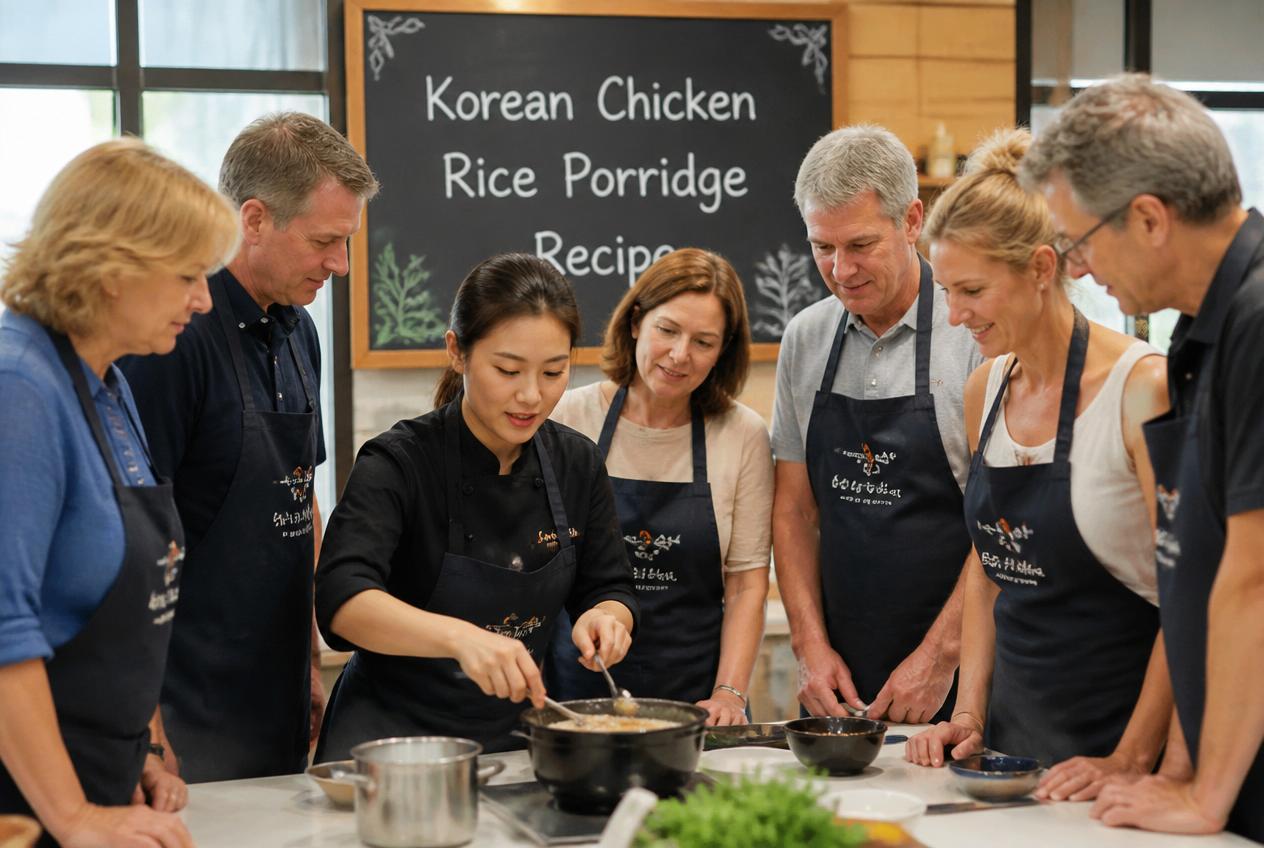
Korean chicken rice porridge—yeah, it might sound like the kind of thing your grandma would force on you when you’re feeling gross, but honestly, dakjuk is pure comfort food in Korea. I’ve spent way too many nights tweaking this creamy, soul-warming meal, and let me tell you, Korean chicken rice porridge is basically a hug in a bowl. It’s delicious whether you’re sick or just hungry for something cozy. Korean Chicken Rice Porridge really hits the spot.
Dakjuk is a silky rice porridge made by simmering chicken with short-grain rice until everything breaks down into a creamy, comforting dish that’s easy to digest and so satisfying. Forget the sad, watery porridge you might remember from being a kid—this Korean chicken rice porridge is rich with chicken flavor and packed with tender veggies. This traditional dish is popular for breakfast, as a light meal, or whenever you need a little extra comfort.
I’m going to show you ways to make, tweak, and totally fall for Korean Chicken Rice Porridge. From the classic recipe to wild spins that’ll make your taste buds dance, plus all my storage hacks and little tricks that’ll make you a dakjuk pro.
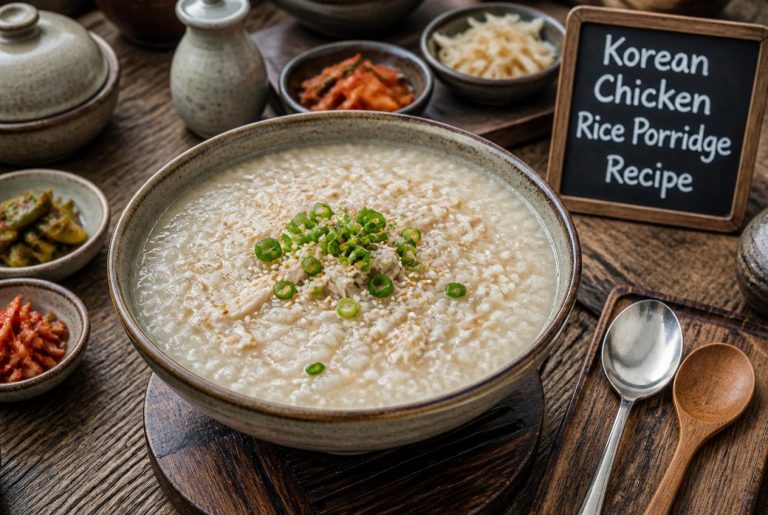
Korean Chicken Rice Porridge Recipe
Key Takeaways
- Dakjuk is a creamy Korean chicken rice porridge that’s both comforting and good for you, no matter the occasion
- You can customize Korean Chicken Rice Porridge with all sorts of ingredients and techniques for unique flavors
- Good storage keeps your leftover porridge fresh and tasty for days
Decoding Korean Chicken Rice Porridge: Stories, Scandals, And (Possibly) Ancient Recipes
I’ll be real—when I first heard about dakjuk, I figured it was just another food trend Instagram was shoving at me. Turns out, Korean chicken rice porridge has been around forever.
“Juk” just means porridge in Korean. It’s Korea’s answer to congee or lugaw. Same idea, just a different country.
Here’s what makes Korean Chicken Rice Porridge stand out:
- Rice simmered until it’s creamy, not just cooked through
- Chicken bone broth as the base for deeper flavor
- Finely chopped veggies mixed right in
- Simple seasonings so the ingredients actually shine
About those “scandals”—honestly, there’s not much drama here. The wildest thing I’ve seen in dakjuk history is someone forgetting to stir the pot and burning the bottom.
What surprised me most? This dish holds a lot of emotional weight. So many Koreans grew up eating Korean Chicken Rice Porridge when they were sick or during cold winters. It’s that food your grandma makes when you’re feeling miserable.
The “ancient” part? Rice porridge has been a staple all across Asia for ages. Pinning down exactly when Korean Chicken Rice Porridge started is tricky, but juk has been comfort food in Korea for generations.
My favorite trick? Some recipes use scorched rice (nurungji) for a toasty flavor and faster prep. That’s the kind of shortcut I can get behind.
Level Up Your Porridge Game: Secret Tips They Don’t Want You To Know
I’ve messed up enough dakjuk to know what separates a bland bowl from a great one. The biggest difference? I always use short-grain rice instead of long-grain. More starch means your Korean Chicken Rice Porridge comes out creamy, not watery.
My porridge consistency secrets:
- Rinse your rice, but don’t overdo it. A little starch thickens things up.
- Add rice to cold chicken broth, not boiling. That way, you avoid clumps.
- Stir every 5-10 minutes to release starch and keep the bottom from burning.
Here’s what nobody tells you: homemade chicken stock always beats store-bought. I learned this the hard way after my bone broth experiment flopped in the family group chat. Real chicken stock gives Korean Chicken Rice Porridge that silky texture that makes everyone ask for seconds.
Flavor boosters I swear by:
| Ingredient | When to Add | Why It Works |
|---|---|---|
| Sesame oil | Final 2 minutes | Gets bitter if cooked too long |
| Sesame seeds | As garnish | Toasted ones add crunch |
| Green onions | Right before serving | Keeps them fresh and bright |
For the best shredded chicken, I let it cool for 10 minutes before shredding. Hot chicken just falls apart and gets stringy. Cooled chicken shreds into nice, tender pieces for your Korean Chicken Rice Porridge.
Don’t forget fresh scallions at the end. I chop them right before serving because if you toss them in too early, they lose their flavor fast.

K-Porridge Remix: Unexpected Variations That Will Blow Your Mind
Honestly, traditional Korean chicken rice porridge is just the start. Once you nail the basics, you can get creative with your Korean Chicken Rice Porridge.
Texture Twists
Try swapping regular rice for glutinous rice or sweet rice. You’ll get a thicker, stickier porridge that clings to your spoon. Sometimes I mix half regular, half sweet rice when I want to change things up.
Veggie Upgrade Party
Honestly, I just throw in whatever’s hiding in my fridge:
- Shiitake mushrooms add a deep, earthy flavor that makes it taste like you cooked it for hours
- Zucchini and carrots bring color and a little crunch if you add them at the end
- Celery brightens things up and cuts through the richness
- Any finely diced mushrooms work great too
Flavor Bombs
Want to mix it up? Sometimes I stir in a spoonful of kimchi for tang and heat. It sounds odd, but the fermented kick turns this dish into something I crave.
A splash of fish sauce instead of salt adds a crazy amount of umami. Fresh ginger and garlic, chopped super fine, give Korean Chicken Rice Porridge a warming kick that’s perfect for sick days.
The best part? You don’t really need a recipe for these tweaks. I just taste as I go and adjust until I want to eat the whole pot.
Leftover Lovin’: How to Store Your Rice Porridge Without Annoying Your Fridge
I get it. You made a huge pot of dakjuk because, let’s face it, portion control disappears around Korean Chicken Rice Porridge. Now you’re staring at a mountain of leftovers and wondering what’s next.
First thing: cool it down fast. I scoop my Korean Chicken Rice Porridge into shallow containers so it cools quicker. Get it in the fridge within an hour—nobody wants a science experiment in their porridge.
When you store leftovers, use airtight containers. Otherwise, your porridge ends up tasting like whatever else is in the fridge, and that’s never good.
Fridge storage: Your Korean Chicken Rice Porridge will last up to five days. I portion it out so I can just grab a bowl and reheat, instead of nuking the whole pot every time.
Freezer storage: If I won’t eat it in five days, I freeze Korean Chicken Rice Porridge in single servings. Use decent freezer containers or bags. It’ll keep for up to three months.
When you reheat, add a splash of water or broth. The rice soaks up liquid as it sits, so Korean Chicken Rice Porridge gets thicker. I reheat it on the stove over medium, stirring now and then, until it’s hot all the way through. This keeps the texture smooth—way better than the microwave.
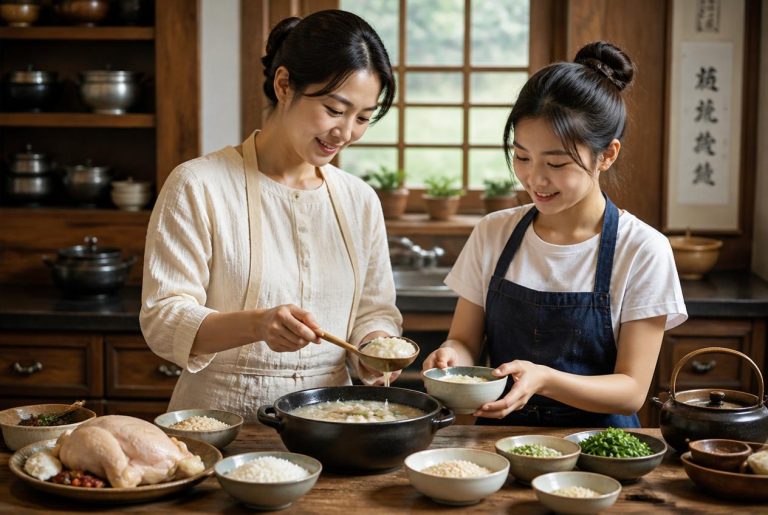
Korean Chicken Rice Porridge Recipe – Prep
Cooking Tips For the Korean Chicken Rice Porridge (DakJuk)
• Rinse the rice before cooking to help remove excess surface starch.
• Cook the rice slowly so it breaks down and creates a smooth porridge texture.
• Shred the chicken evenly for better distribution throughout the porridge.
• Stir frequently during cooking to help prevent sticking along the bottom of the pot.
• Add broth gradually if the porridge becomes too thick.
• Use medium-low heat so the porridge cooks evenly without scorching.
• Taste before serving and adjust seasoning carefully if needed.
• Serve the dakjuk hot for the best texture and flavor balance.
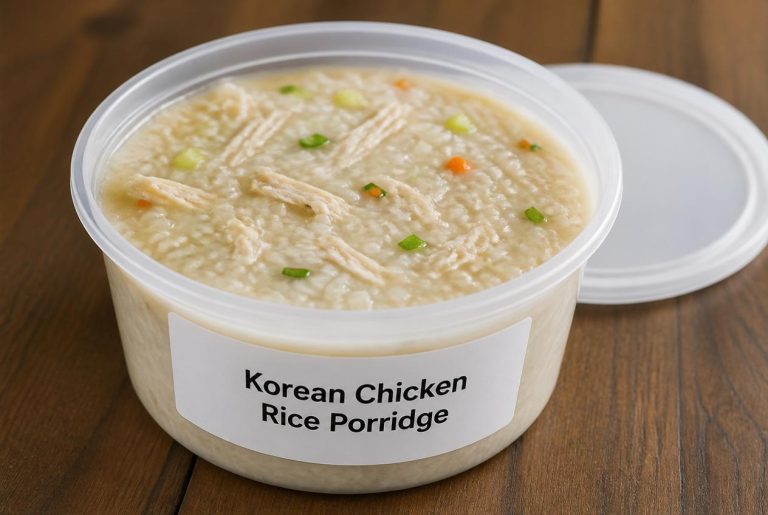
Korean Chicken Rice Porridge Recipe – Storage
Storage Tips For the Korean Chicken Rice Porridge (DakJuk)
• Allow the porridge to cool slightly before transferring it into storage containers.
• Store leftovers in airtight containers to help retain moisture and flavor.
• Refrigerate leftovers within 2 hours of cooking for proper food safety.
• Reheat slowly over low heat while stirring frequently.
• Add a splash of broth or water during reheating because porridge thickens during storage.
• Keep garnishes separate until serving time for fresher appearance and texture.
• Freeze portions in freezer-safe containers for up to 2 months if needed.
• Leave a little space at the top of containers because porridge expands when frozen.
• Thaw frozen dakjuk overnight in the refrigerator before reheating.
• Discard the porridge or chicken if they develop a sour smell, slimy texture, discoloration, mold, or unusual taste.
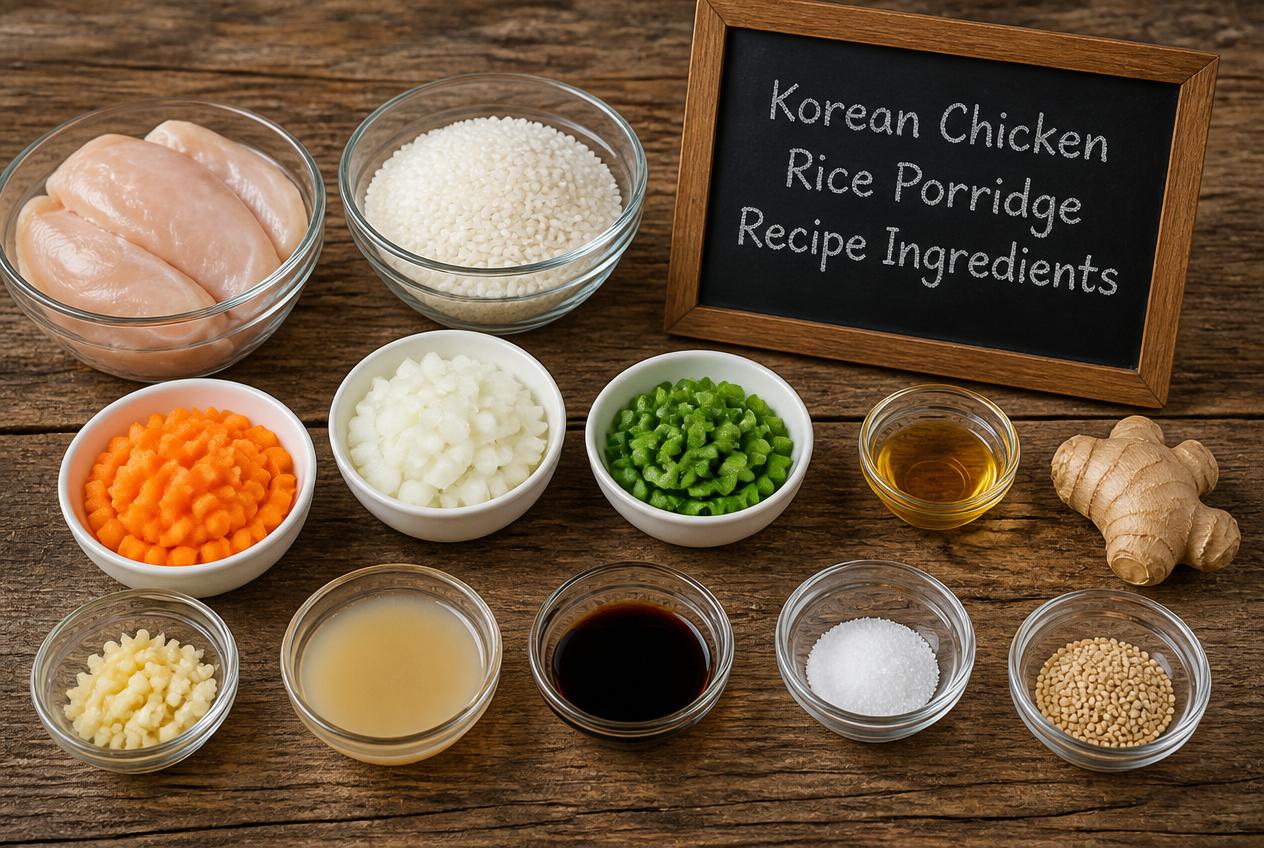
Korean Chicken Rice Porridge (DakJuk)
Ingredients
- 3 cups chicken broth
- 1 cornish hen or chicken carcass leftover from Baeksuk recipe
- 1 cup chicken meat dark and white (leftover from Baeksuk recipe)
- 1/2 cup white rice short grain white rice soaked for 30 min
- 3 Perilla leaves julienned
- 2 green onions chopped
- salt to taste
- sesame seeds
- 2 tsp garlic fresh, chopped
- 0.5 Tbsp sesame oil optional
Instructions
- Rinse the rice thoroughly under cold water and drain well. If using leftover chicken and broth from a previously prepared Baeksuk, separate the meat from the bones and reserve both. Return the bones to the Instant Pot along with the broth. Secure the lid, set the valve to the sealing position, and cook on Manual Low Pressure for 7 minutes. Allow the pressure to release naturally for 10 minutes before opening the lid.
- While the broth is cooking, wash the perilla leaves and green onions. Slice the perilla leaves into thin strips and chop the green onions. If desired, prepare some fresh garlic to use as a garnish later. Those who prefer a milder garlic flavor can add it during cooking instead of serving it raw.
- Once the pressure has released, strain the broth and discard the bones. The resulting broth will be used to cook the rice and create the porridge base.
- If desired, add the sesame oil to the Instant Pot and turn on the Sauté function. Add the drained rice and cook for 1 to 2 minutes, stirring frequently. This optional step adds a subtle nutty flavor to the finished porridge.
- Add the strained broth to the rice in the Instant Pot. Secure the lid and set the valve to sealing. Select the Porridge function and cook for 10 minutes. Once the cycle is complete, allow a Natural Release for 5 minutes, then perform a Quick Release. When opened, the rice should be very soft and creamy while still maintaining its shape.
- Stir the reserved chicken meat into the cooked porridge. Turn on the Sauté function and simmer on High for about 3 minutes with the lid open. Stir occasionally to distribute the chicken evenly throughout the porridge and ensure everything is heated through.
- Ladle the hot porridge into serving bowls and garnish with the perilla leaves, green onions, and garlic. Season with salt and pepper at the table according to individual taste. Sprinkle sesame seeds or perilla seeds over the top for additional flavor and texture. For the best consistency, avoid adding salt to the entire batch if there will be leftovers, as the rice can break down if stored for an extended period after being salted.
Frequently Asked Questions for the Korean Chicken Rice Porridge (DakJuk)
Making Korean Chicken Rice Porridge that actually tastes good means getting the texture right, picking the right rice, and knowing how to store it so it doesn’t turn into a fridge disaster. Toppings matter more than you’d think, and honestly, there are a few tricks that save you from bland, boring bowls.
How do I make chicken rice porridge that tastes like comfort and not like sad wallpaper paste?
The secret? It’s all about the stock. I use a whole chicken or bone-in pieces—those release flavor and collagen that make Korean Chicken Rice Porridge creamy.
I never skip the aromatics. Garlic, ginger, and green onions go in every time. A splash of sesame oil at the end brings everything together and makes it something I actually want to eat.
Don’t forget the salt. I taste as I cook and adjust, because underseasoned Korean Chicken Rice Porridge is just plain sad.
What’s the easiest way to get that silky porridge texture without babysitting the pot all day?
I rinse my rice to get rid of extra starch, then go with a 1:7 or 1:8 rice-to-liquid ratio. More liquid makes for silkier Korean Chicken Rice Porridge, and I don’t have to stir nonstop.
Low and slow is the way to go. I keep the heat at medium-low and stir every 10 minutes or so. This method keeps things simple and stress-free.
If I’m feeling lazy, I just use my Instant Pot and let it do the work while I do anything else. Korean Chicken Rice Porridge is honestly one of the easiest comfort foods once you get the hang of it.
Which rice works best for porridge—regular, short-grain, or whatever’s been hiding in my pantry since 2019?
Honestly, for Korean Chicken Rice Porridge, I always reach for short-grain white rice. It just melts down and gives you that creamy, almost dreamy texture everyone wants. Medium-grain rice? That’ll do the job too, though it’s not quite as perfect.
Now, long-grain rice is a different story. It stays a bit too firm and doesn’t really break down the way you want for Korean Chicken Rice Porridge. I usually leave that one out unless I’m desperate. And that random bag from 2019? If it smells okay and there aren’t any little critters, why not give it a try? Waste not, right?
Sometimes I just use leftover cooked rice if I’m in a hurry. I’ll whip up a quick 30-minute dak juk and call it a day. It won’t get as silky as the classic Korean Chicken Rice Porridge, but honestly, it’s still pretty satisfying—especially when you’re hungry and don’t want to order takeout.
Can I make a big batch and reheat it later without it turning into edible cement?
You can totally make a big pot of Korean Chicken Rice Porridge ahead of time. Just remember to add a splash of liquid when you reheat it. I keep mine in the fridge for up to three days, sealed up tight.
Whenever I reheat Korean Chicken Rice Porridge, I notice it gets super thick—almost like glue. I just pour in some chicken broth or water, heat it on the stove, and stir until it’s that perfect, cozy consistency again.
Freezing is an option too. I portion out Korean Chicken Rice Porridge into containers, freeze them for up to a month, and let one thaw in the fridge overnight. The texture changes a bit, but it’s still comforting.
What toppings and seasonings make chicken porridge actually exciting (and not just ‘sick day survival food’)?
Korean Chicken Rice Porridge is all about the toppings for me. I set out soy sauce, sesame oil, and toasted sesame seeds so everyone can customize their bowl. Green onions bring a fresh crunch that wakes everything up.
Kimchi? Absolutely essential. The spicy, tangy bite balances the richness of Korean Chicken Rice Porridge in the best way. I can’t imagine serving it without a side of kimchi.
Sometimes I’ll toss on fried garlic chips, a soft-boiled egg, or sprinkle some gochugaru for a little heat. Even just a bit of black pepper can totally change the vibe if you want something simple. Korean Chicken Rice Porridge is way more versatile than people think.
Is there a famous Korean home-cooking version people swear by, and how do I follow it without messing it up?
Korean home cooks usually make dakjuk—or Korean Chicken Rice Porridge—by simmering a whole chicken until it’s super tender, then shredding the meat and cooking it with rice until everything turns creamy. Honestly, Korean Chicken Rice Porridge is simple, but it works wonders when you’re craving comfort food.
Don’t rush it. I always let the chicken simmer until it’s basically falling off the bone, which usually takes around 45 minutes to an hour. That’s when Korean Chicken Rice Porridge really gets its rich, deep flavor. If you try to speed it up, it just doesn’t taste the same.
Some families toss in minced veggies like carrots, mushrooms, and zucchini to boost the nutrition. I like to chop them up super fine so they melt right into the Korean Chicken Rice Porridge, rather than floating around awkwardly. Honestly, who wants a big chunk of carrot in every bite?
One thing I’ve learned: if you’re patient and use good ingredients, Korean Chicken Rice Porridge almost always turns out delicious. It’s forgiving, which is nice if you’re not a kitchen pro. If you’ve never tried making Korean Chicken Rice Porridge before, just go for it—you’ll probably surprise yourself.
Some people even say Korean Chicken Rice Porridge tastes better the next day, after the flavors settle in. I’m not sure if that’s true, but I do know it disappears fast in my house. There’s just something about a big bowl of Korean Chicken Rice Porridge that feels right, especially on a chilly day.

Recipes are gathered in person and written for real-world cooking conditions.
- 10 Hungarian Dessert Recipes Passed Down Through Generations - July 25, 2026
- 11 Easy English Recipes Anyone Can Make - July 25, 2026
- Hungarian Kifli Recipe - July 25, 2026