
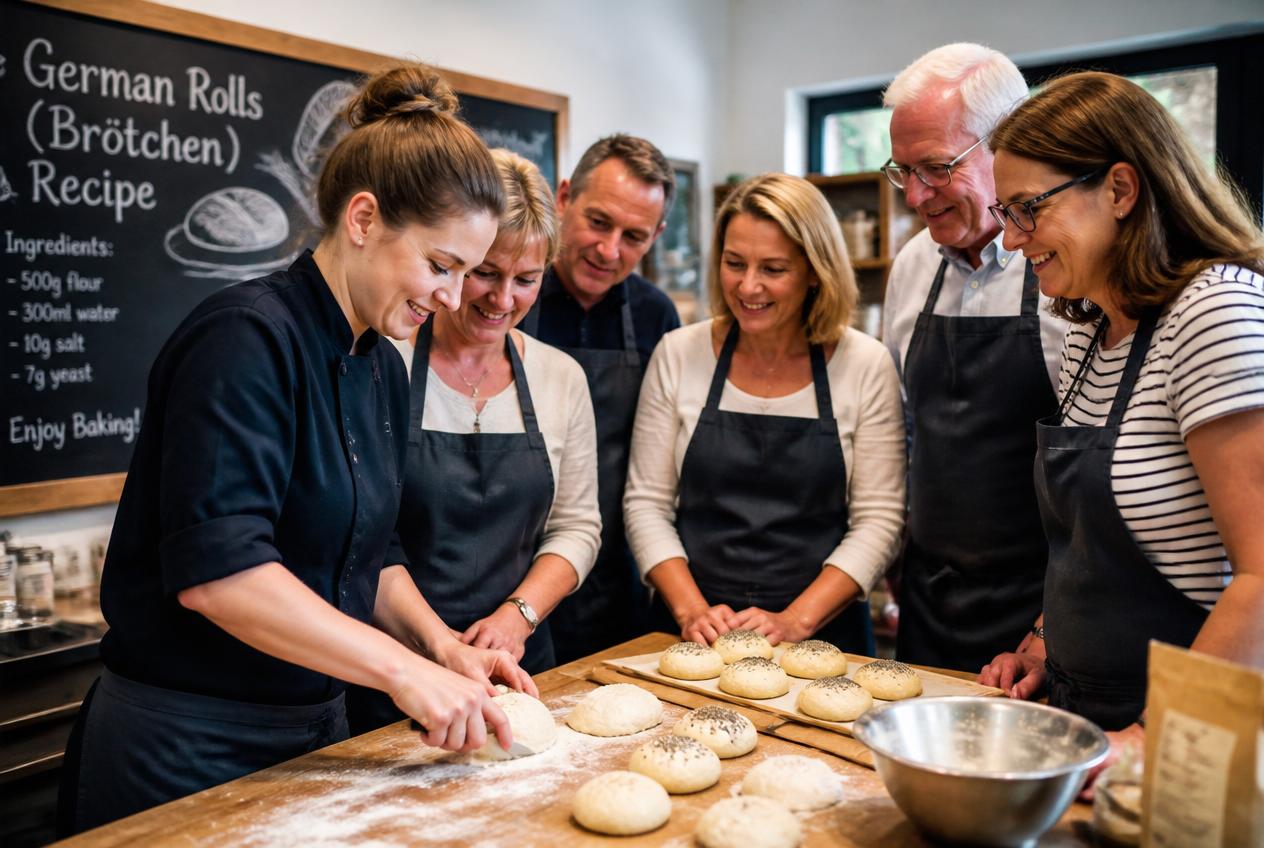
German Rolls (Brotchen) are traditional German bread rolls you’ll find on breakfast tables all across Germany. These little rolls have a crispy, golden crust and a soft, airy inside that makes them perfect for slathering with butter, piling on cold cuts, or just tearing apart with your hands. The word “Brötchen” means “little bread” in German, but depending on where you are, folks might call them Semmeln, Schrippen, or even Weckle.
Making German Rolls (Brotchen) at home is honestly way less intimidating than it sounds. You only need flour, water, yeast, and salt—no weird ingredients. The trick to getting that bakery-style crust and pillowy center? It’s all about the right method. I’ve learned that the crust comes from good steam and proper shaping, not fancy additives. German Rolls (Brotchen) have a touch of malty flavor and a chewy bite that stands up to anything you want to put on them, whether it’s jam or bratwurst.
If you’re craving the taste of a real German bakery or just want to up your breakfast game, German Rolls (Brotchen) really deliver. I’ll walk you through every step, so even if you’re new to baking, you’ll get great results.
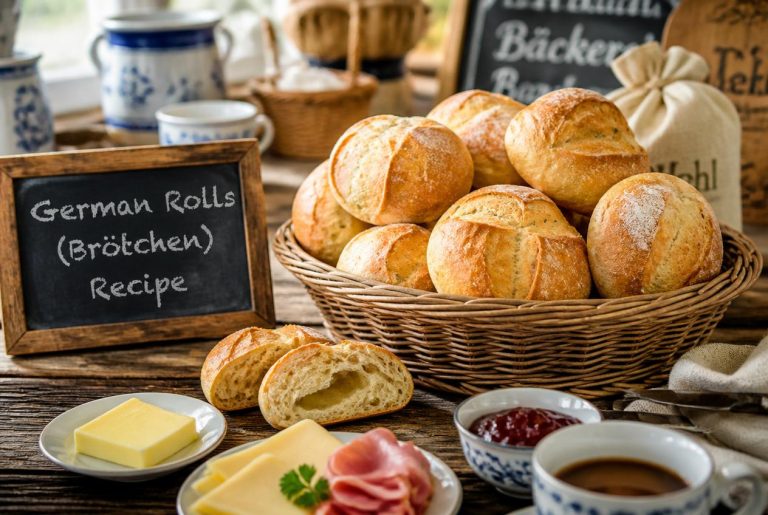
German Rolls (Brötchen) Recipe
Key Takeaways
- German Rolls (Brotchen) have a crunchy outside and soft, light inside—ideal for breakfast or sandwiches.
- The recipe keeps things simple, with easy ingredients and beginner-friendly steps.
- You can tweak German Rolls (Brotchen) in lots of ways but still keep that authentic texture.
Recipe Description and Historical Information
For me, German Rolls (Brotchen) are the heart of a real German breakfast. In some areas, you’ll hear them called Semmel or Semmeln, but most of Germany sticks with Brötchen. No matter the name, the experience is the same: crisp crust, soft inside, and a flavor that’s subtle but unmistakable.
This German Rolls (Brotchen) recipe gives you that classic contrast—crunchy on the outside, soft on the inside. That’s what sets them apart from your average dinner roll. German Rolls (Brotchen) have been around for centuries, baked fresh every morning in bakeries all over Germany. There’s something timeless about tearing into one while the crust is still warm.
What really makes German Rolls (Brotchen) special? It’s the flour-to-water ratio and the way you shape the dough. Steam during baking is crucial for that crackly crust, and I’ve found that German bakers have truly nailed this technique over generations.
Key Characteristics:
- Golden-brown, crispy crust
- Light, airy crumb
- Mild wheat flavor
- Usually 2-3 inches across
When I bake German Rolls (Brotchen) at home, I try to stick to the old-school ways—lots of attention to kneading and patience for rising. Germans typically eat these rolls for breakfast, sliced and loaded up with butter, jam, cheese, or cold meats. But honestly? German Rolls (Brotchen) work any time of day, especially for sandwiches.
Recipe Tips
I always reach for my kitchen scale when making German Rolls (Brotchen). Weighing your flour makes a huge difference—scooping by cups can be all over the place, and consistency is key for German Rolls (Brotchen).
Flour Selection
You can make German Rolls (Brotchen) with bread flour, strong white bread flour, or even all-purpose flour. I usually go for bread flour—it gives a chewier bite and a better crust. All-purpose is fine too, but the rolls turn out a bit softer.
Yeast Options
Both instant yeast and active dry yeast work for German Rolls (Brotchen). If I’m using active dry, I dissolve it in warm water and give it a few minutes to get foamy. Instant yeast? I just toss it in with the flour.
Malt Powder Benefits
Adding a little diastatic malt powder (or barley malt powder) helps the crust brown and adds a hint of sweetness. I usually use about a teaspoon per 500g of flour. If you only have regular malt powder, that’s fine too—just know the effect is a bit different.
Mixing Methods
| Method | Time | Result |
|---|---|---|
| Stand mixer | 8-10 minutes | Even, consistent dough |
| Knead by hand | 12-15 minutes | More control, traditional feel |
I like both methods for German Rolls (Brotchen). Sometimes, kneading by hand just feels right, you know?
Shaping and Baking
When shaping German Rolls (Brotchen), I gently stretch each piece into an oval—don’t punch out all the air. I always use parchment or a silicone mat so nothing sticks, and the rolls brown evenly.

Variations
German Rolls (Brotchen) come in a surprising number of styles, depending on where you are in Germany or Austria. In Berlin, they’re Schrippen. Down south, you’ll hear Weckle, Weckli, or Semmel. The shapes and sizes change, too—sometimes round, sometimes oval, sometimes mini (Partybrötchen), sometimes topped with seeds.
Common Brötchen Variations:
- Round Brötchen – Classic, with a single slash or cross on top
- Oval Rolls – Great for slicing open and stuffing with fillings
- Partybrötchen – Mini German Rolls (Brotchen) for parties or snacks
- Seeded Rolls – Poppy, sesame, or sunflower seeds on top
- Whole Grain – Made with whole wheat or mixed flours
If you’re hosting, Partybrötchen are a hit—tiny, cute, and just right for sliders or appetizers. Some bakers swap in milk for water for a softer crumb, or add malt extract for a deeper flavor. I’ve even tried German Rolls (Brotchen) with a bit of rye flour in the mix, though the classic Weizenbrötchen stick to wheat.
Crusts can be thin or thick, depending on how much steam you use. I like mine extra crunchy, but you do you.
Related Recipes
German Rolls (Brotchen) play well with other German breads. I love making soft pretzels at the same time—they’ve got that similar chew but with a twist (literally). Pumpernickel gives you a darker, more robust option if you want something to balance the lighter German Rolls (Brotchen).
If you’re looking to branch out, try:
- Semmel rolls – A Bavarian twist with a different shaping style
- Kaiser rolls – Austrian rolls with a star-shaped top
- Laugenbrötchen – Pretzel rolls that are basically German Rolls (Brotchen) with a pretzel bath
- Vollkornbrötchen – Whole grain German Rolls (Brotchen) for a heartier bite
I sometimes bake potato rolls alongside German Rolls (Brotchen)—they stay fresh longer and mix things up. Rye rolls are another fun experiment, especially if you like a bolder flavor with your cheese or meats.
For dinner, German Rolls (Brotchen) are perfect with schnitzel, bratwurst, or sauerbraten. They soak up sauces like nobody’s business. And honestly, fresh butter or homemade jam on a warm German Rolls (Brotchen)? That’s breakfast bliss.
Similar Recipes
If you get hooked on German Rolls (Brotchen), you might want to check out other crusty bread rolls. The basic technique is similar, and once you’re comfortable, you can riff on the recipe however you like.
Kaiser rolls are a close cousin—crusty, soft inside, and great for sandwiches. Semmel is just another regional word for German Rolls (Brotchen), with a nearly identical recipe.
Want to try something a little different? Maybe:
- French baguette rolls – Crusty and chewy, but with a French flair
- Italian ciabatta rolls – Extra airy, still with a crispy crust
- Portuguese rolls – Soft inside, crisp outside
- Pretzel rolls – German Rolls (Brotchen) with a pretzel twist
Traditional wheat rolls (Weizenbrötchen) are the base for a lot of these variations. Once you master German Rolls (Brotchen), it’s easy to mix in seeds, grains, or other flours to keep things interesting.
Laugenbrötchen are worth a try if you like pretzels—German Rolls (Brotchen) dipped in lye for that signature flavor and color. They’re killer with cold cuts or just plain butter.
Honestly, nothing beats the sound of a fresh German Rolls (Brotchen) cracking open. Pick a style that fits your mood or your meal, and don’t be afraid to experiment. That’s half the fun of baking, right?
If You Like German Rolls (Brotchen) Try These Recipes
If you love baking German Rolls (Brotchen), you might want to poke around some traditional German bread recipes that use similar methods and ingredients. German Rolls (Brotchen) really open the door to all sorts of other German classics, and honestly, it’s hard not to get hooked once you’ve nailed the basics.
Breads to Try Next:
- Laugenbrötchen – Pretzel rolls with that unmistakable dark crust and chewy bite, all thanks to a baking soda bath. If you like German Rolls (Brotchen), you’ll probably get a kick out of these.
- Mohnbrötchen – Poppy seed rolls, bringing a nutty flavor and a fun look to your table. They’re like German Rolls (Brotchen) with a twist.
- Sesambrötchen – Sesame-topped rolls for extra crunch and a bit of visual flair. These are close cousins to German Rolls (Brotchen).
- Vollkornbrötchen – Whole grain rolls, heartier and with a richer, nuttier taste than your usual German Rolls (Brotchen).
When you want to go bigger, I’d try crusty farmhouse bread. It uses the same steam trick as German Rolls (Brotchen) for that crispy crust, just on a larger scale. There’s something satisfying about pulling a big loaf out of the oven, especially when it reminds you of your favorite German Rolls (Brotchen).
If you’re after something that looks a bit different, tiger bread rolls are a fun choice. Their crackled crust makes them stand out in any bread basket, but they’re still in the German Rolls (Brotchen) family in spirit.
Easy Variations Using Your Base Recipe:
- Toss in sunflower or pumpkin seeds for a new spin on German Rolls (Brotchen)
- Brush with egg wash instead of water to get that golden shine—just like fancier German Rolls (Brotchen)
- Sprinkle with coarse salt before baking for a savory kick
- Shape into oval wecken instead of rounds if you want your German Rolls (Brotchen) to look more bakery-style
Honestly, German Rolls (Brotchen) and their variations work for breakfast, sandwiches, or alongside soup. Most recipes only need four basic ingredients, so you don’t have to overthink it. There’s a certain comfort in knowing you can whip up a batch of German Rolls (Brotchen) without much fuss.
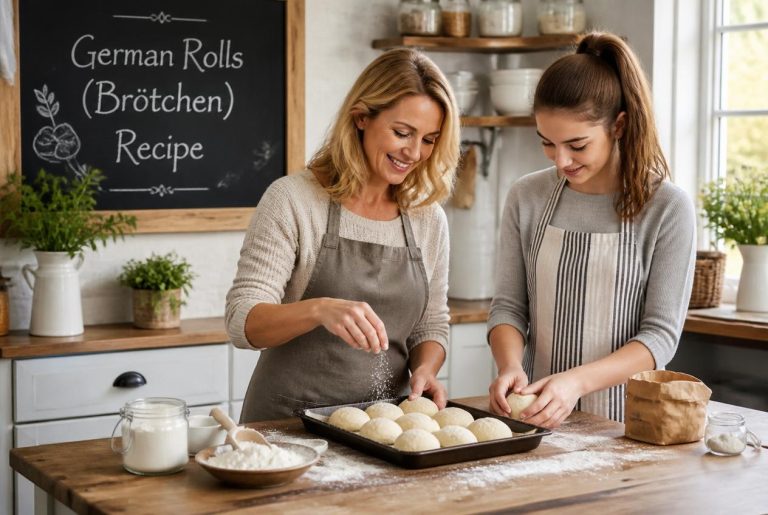
German Rolls (Brötchen) Recipe Cooking TIps
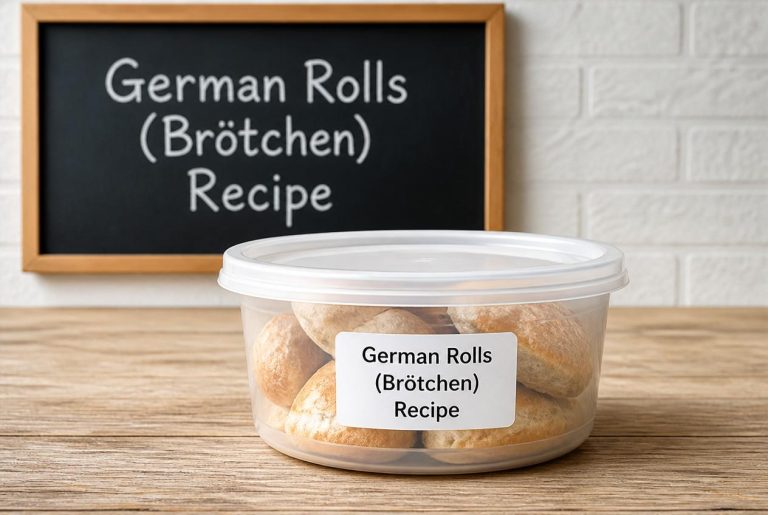
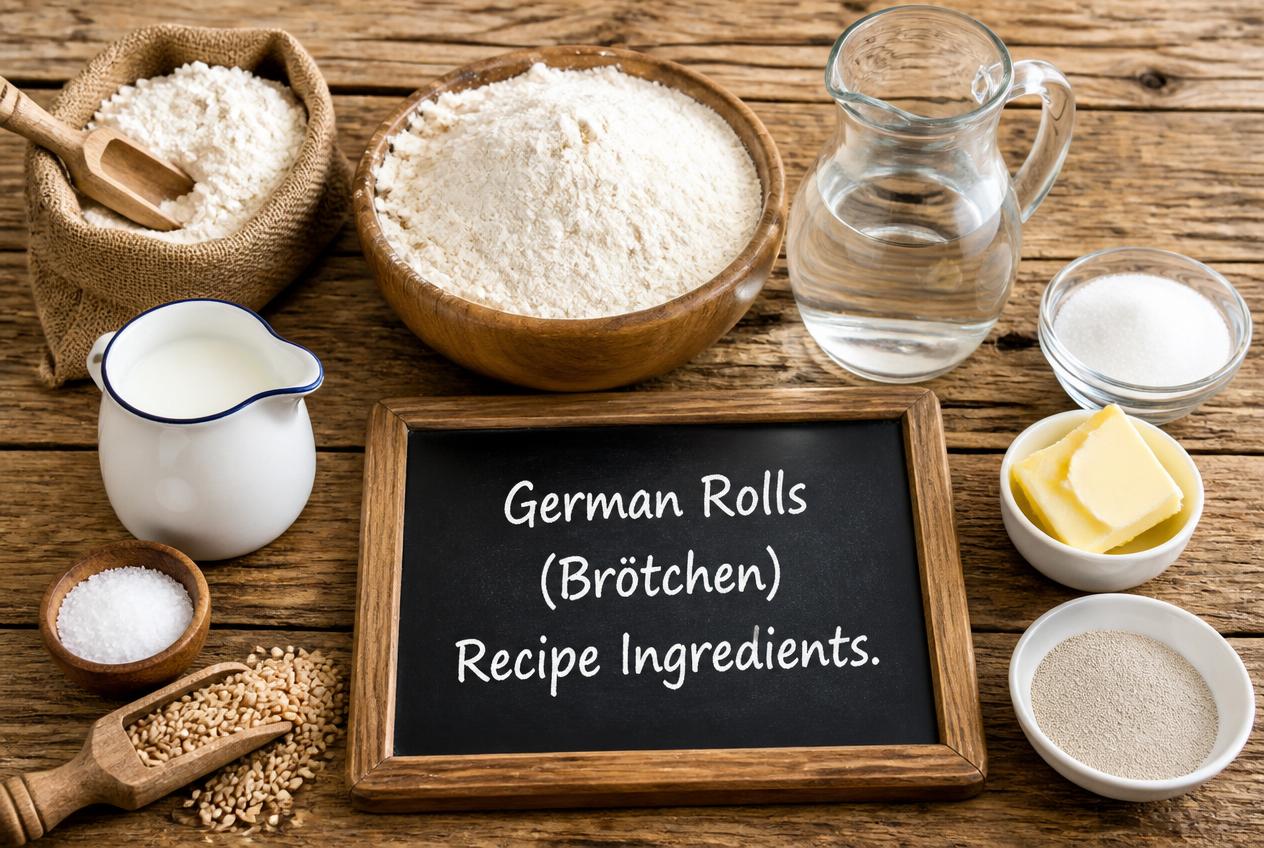
German Rolls (Brotchen)
Ingredients
- ¾ cup plus 1 tablespoon whole milk lukewarm, divided
- ½ cup water lukewarm
- ¾ teaspoon active dry yeast
- 4 cups flour
- 1 ¼ teaspoons salt
Instructions
- In a large mixing bowl, combine the ¾ cup warm milk and ½ cup warm water. The liquid should feel comfortably warm to the touch, around 100–110°F, but not hot enough to kill the yeast.
- Sprinkle the yeast over the warm liquid and stir gently. Allow the mixture to stand undisturbed for about 10 minutes, or until it becomes foamy and bubbly on the surface. This indicates the yeast is active and ready to leaven the dough.
- Add the flour and salt to the yeast mixture. Using a wooden spoon or sturdy rubber spatula, stir until the ingredients come together and form a shaggy, rough dough.
- Turn the dough out onto a clean work surface and knead for approximately 10 minutes. At first the dough may seem stiff and somewhat rough, but continued kneading will develop the gluten and transform it into a smooth, elastic dough. Traditional Brötchen dough is intentionally firm, which helps create the characteristic chewy texture and crisp crust.
- Continue kneading until the dough is smooth, cohesive, and no longer sticky.
- Place the kneaded dough into a clean bowl and cover it loosely with plastic wrap or a damp kitchen towel.
- Set the bowl in a warm, draft-free location and allow the dough to rise for about 1 hour, or until it has roughly doubled in size. During this time the yeast will ferment the dough, creating flavor and producing the air pockets that give the rolls their light interior.
- Once the dough has doubled, gently punch it down to release excess air. Transfer it to a lightly floured surface and divide it into 8 equal portions.
- Shape each piece into a smooth oval approximately 3½ inches long. Roll and tuck the dough gently to create surface tension, which helps the rolls maintain their shape during baking.
- Arrange the shaped rolls on a parchment-lined baking sheet, leaving space between them to allow for expansion.
- Cover the rolls loosely with plastic wrap or a damp tea towel and place them back in a warm location.
- Allow them to proof for approximately 1 hour, or until they have doubled in size and look noticeably puffy. This second rise helps create the light, airy crumb that is characteristic of traditional German breakfast rolls.
- Toward the end of the proofing time, preheat the oven to 450°F.
- Brush the tops of the rolls with the remaining 1 tablespoon milk. This helps promote even browning and gives the crust a beautiful golden color.
- Using a very sharp knife, razor blade, or bread lame, score each roll lengthwise down the center. The cut should be deep enough to allow the rolls to expand properly during baking, creating the classic split top seen on authentic German Brötchen.
- Place the baking sheet into the preheated oven and bake for 20–25 minutes, or until the rolls are deeply golden brown and sound hollow when tapped on the bottom.
- The high baking temperature helps create a crisp exterior while keeping the interior soft and chewy. The scored tops should open beautifully during baking, creating the traditional appearance of bakery-style Brötchen.
- Remove the rolls from the oven and transfer them to a wire rack. Allow them to cool for a few minutes before serving.
- These rolls are delicious served warm or at room temperature with butter, fruit preserves, honey, cheese, sliced meats, or cold cuts. Traditional German Brötchen are a staple of breakfast tables throughout Germany and are prized for their crisp crust, chewy interior, and versatility. They are best enjoyed fresh on the day they are baked, though they can also be reheated briefly in the oven to restore their crispness.
Frequently Asked Questions
When folks start baking German Rolls (Brotchen) at home, they usually have a bunch of questions: how to get that right texture, where to find the right flour, or even just how to time the dough. It’s not always straightforward, is it?
What makes traditional breakfast rolls crisp on the outside and soft inside?
Steam during baking and proper dough hydration create that contrast in German Rolls (Brotchen)—crispy crust, soft inside. I get steam going by putting a pan of water on the oven’s bottom rack or giving the German Rolls a quick spray before baking.
Kneading helps the dough develop gluten, and the right flour-to-water balance is key. I use high-protein bread flour for chewiness, which is what makes German Rolls so good.
I bake German Rolls (Brotchen) hot—usually 425-475°F. The high heat sets the crust fast and keeps the inside tender. There’s just something about that first crack when you tear one open.
Where can I buy authentic-style breakfast rolls in the U.S. or online?
In the U.S., German bakeries in cities like New York, Chicago, Milwaukee, and some Texas towns bake fresh German Rolls every day. I’ve found German Rolls (Brotchen) in delis and European specialty shops, too—sometimes frozen, so you finish baking them at home.
Online retailers sometimes ship frozen German Rolls nationwide, but it’s hit or miss. Whole Foods and certain grocery chains occasionally carry European-style rolls, but I’ll admit, they rarely match real German Rolls (Brotchen) for texture.
What are the most common types of German breakfast rolls and how do they differ?
Weizenbrötchen are your classic wheat German Rolls (Brotchen)—golden, mild, and perfect for breakfast. Vollkornbrötchen, another type of German Rolls , use whole grain flour for a darker color and nuttier taste. Körnerbrötchen add seeds like sunflower, sesame, or pumpkin, so you get more crunch and flavor. Laugenbrötchen, a pretzel-style German Rolls (Brotchen), have that shiny, deep brown crust. And then there’s Käsebrötchen, where cheese gets baked in or on top—honestly, who can resist cheesy German Rolls ?
How can I get a bakery-style crust at home without a professional oven?
I preheat a baking stone or steel for at least 30 minutes, which helps my German Rolls (Brotchen) get that crispy bottom. Steam is a must—I spray the oven walls, use a pan of boiling water, or toss ice cubes onto a hot pan at the bottom. For German Rolls (Brotchen), baking as hot as your oven goes (425-475°F) makes a real difference. I’ve learned not to open the oven door during the first 10 minutes, or the heat and steam just vanish and my German Rolls suffer for it.
Why didn’t my rolls rise properly, and how can I fix dense results?
When my German Rolls (Brotchen) don’t rise, it’s usually the yeast—either dead or just tired. I always check the yeast with warm water (about 105-110°F) before mixing. Kneading matters, too; ten minutes by hand or 5-7 minutes in a stand mixer usually does the trick for German Rolls (Brotchen) dough. If the dough or kitchen is too cold, the yeast gets sluggish. I let my German Rolls (Brotchen) dough rise somewhere warm (around 75-80°F) until it doubles, which usually takes about an hour or so.
Letting German Rolls (Brotchen) dough rise too long can make it collapse, so I keep an eye on it and bake as soon as it’s doubled. It’s a little dance—sometimes you get it just right, sometimes not, but that’s part of the charm of baking German Rolls at home.
Can the dough be made ahead, refrigerated overnight, or frozen for later baking?
I often make German Rolls (Brotchen) dough ahead of time and stash it in the fridge overnight. After the first rise, I shape the German Rolls, pop them on a baking sheet, and cover them up with plastic wrap before sliding them into the fridge for 8-12 hours. It just seems to bring out a deeper flavor—something about that slow, cold rest works wonders.
The cold fermentation slows down the yeast and lets enzymes break down starches into sugars, so the German Rolls end up with more interesting flavors. When I’m ready to bake, I let the German Rolls (Brotchen) sit out for about 30-45 minutes to warm up a bit. Honestly, I think this step makes a difference, though sometimes I get impatient and bake them a little early.
If I want to keep German Rolls (Brotchen) around longer, I freeze the shaped, unbaked dough. I set the German Rolls ( on a baking sheet, freeze them until they’re solid, then toss them in freezer bags. They hang out in there for up to 3 months, and I’ve never had a problem with quality dropping off.
When it’s time to bake frozen German Rolls (Brotchen), I thaw them overnight in the fridge. Then I let the German Rolls rise at room temp until they look puffy—sometimes that takes a little patience, but it pays off. If I’ve already baked a batch, I’ll freeze the finished German Rolls (Brotchen) once they’re totally cooled. Later, I just reheat the German Rolls (Brotchen) in a 350°F oven for 5-7 minutes to get that crisp crust back. Not quite like fresh, but honestly, pretty close. If you’re a fan of German Rolls, this method is a lifesaver for busy mornings or sudden cravings.

Recipes are gathered in person and written for real-world cooking conditions.
- 10 Hungarian Dessert Recipes Passed Down Through Generations - July 25, 2026
- 11 Easy English Recipes Anyone Can Make - July 25, 2026
- Hungarian Kifli Recipe - July 25, 2026