
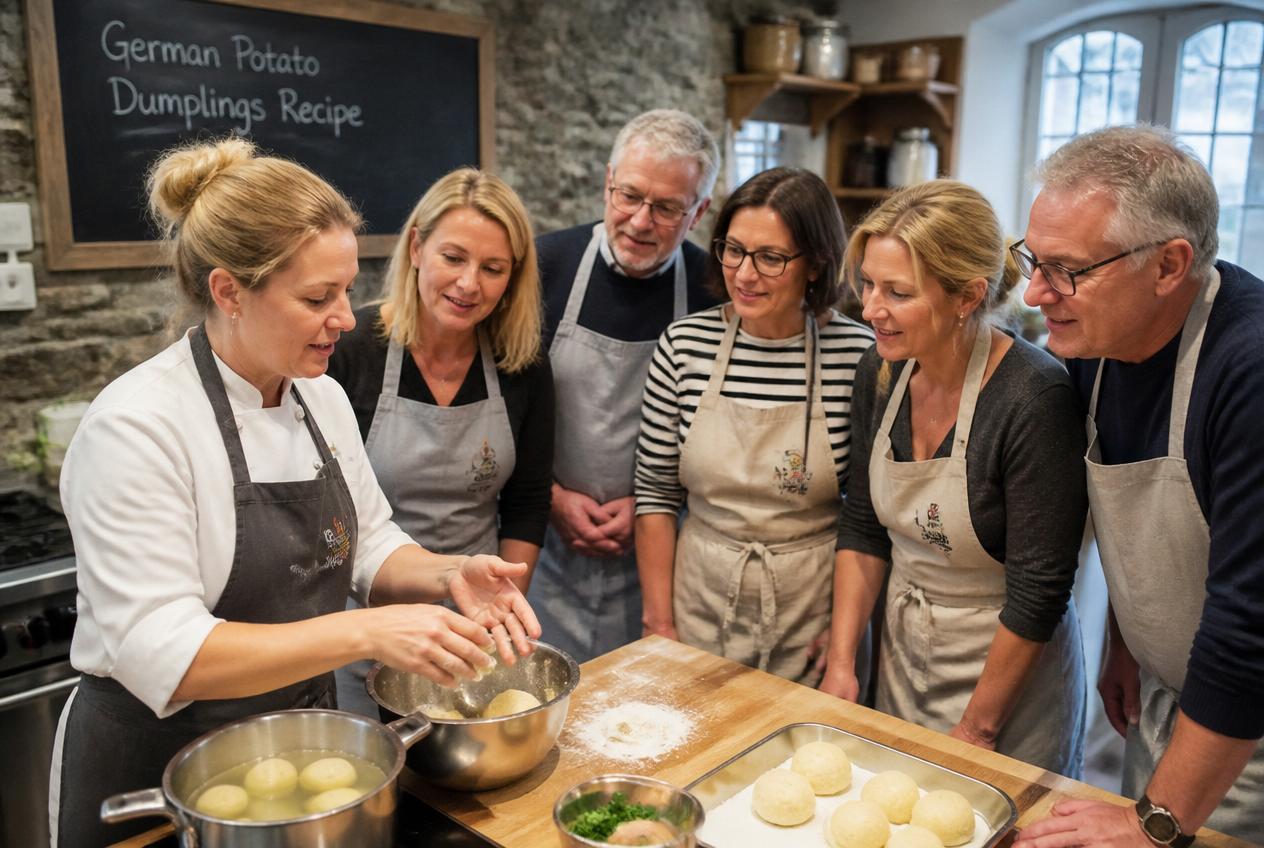
German Potato Dumplings , or Kartoffelklöße (sometimes called Kartoffelknödel), are these soft, pillowy potato balls that just beg to soak up gravy. I grew up with them at Sunday dinners, and honestly, the German Potato Dumplings recipe is still one of my go-to sides for roasts or anything saucy. These traditional German dumplings rely on starchy potatoes, eggs, and a handful of simple ingredients—comfort food at its best.
What I love about the German Potato Dumplings recipe is how simple yet versatile it is. They go with nearly any meat dish, and you pretty much need them to mop up gravy. Sure, they look tricky, but once you get the basic German Potato Dumplings recipe down, it’s surprisingly doable. I promise.
I’ll walk you through making an authentic German Potato Dumplings recipe that turns out just right. You’ll get tips on which potatoes to use, how to shape them, and how to keep them from falling apart in the pot.

German Potato Dumplings Recipe
Key Takeaways
- The German Potato Dumplings recipe makes soft, pillowy sides from starchy potatoes—perfect with roasts and gravy.
- You only need a few ingredients, but the right technique keeps dumplings from falling apart.
- Customize your German Potato Dumplings recipe with crouton centers, spices, or by mixing raw and cooked potatoes.
English Recipe Description And Historical Information
Honestly, the German Potato Dumplings recipe is one of the most beloved in German homes. These dumplings, soft and pillowy, are made mostly from potatoes and pop up as a classic side dish all over Germany.
The German Potato Dumplings recipe has roots in Bavarian, Thuringian, and Rhineland cooking. Potatoes arrived in Europe in the 16th century, and families quickly realized how filling and affordable they were. I guess that’s why the German Potato Dumplings recipe took off—it just makes sense for feeding a crowd.
Regional Variations
Every region puts its own spin on the German Potato Dumplings recipe:
- Bavaria: Kartoffelknödel or Reibeknödel
- Austria: Erdäpfelknödel
- Thuringia and Franconia: Kartoffelklöße
Bavaria, Franconia, and Thuringia all claim the German Potato Dumplings recipe as their own. I love that families pass these recipes down—there’s a lot of tradition and memory in every batch.
Traditional Preparation
Some German Potato Dumplings recipes call for special fillings—croutons, ham, even sauerkraut. The basic dumpling, though, is all about pairing with gravies and meat dishes.
They’re the ideal side for beef roast, pork roast, or a rich stew. That starchy texture is just made for soaking up sauce, and honestly, what’s better than that?
Recipe Tips
For the German Potato Dumplings recipe, I go for starchy potatoes like russets. Waxy potatoes? Too wet—they’ll fall apart.
Key Steps for Success:
- Boil potatoes in their skins a day ahead for the German Potato Dumplings recipe.
- Rice or mash the potatoes while warm.
- Let the mixture cool before you even think about shaping dumplings.
- Crouton centers aren’t just for tradition—they help the German Potato Dumplings recipe stay fluffy inside.
When I’m making the German Potato Dumplings recipe, I keep the dough a bit sticky, but not wet. If it’s too damp, I just add flour, one tablespoon at a time. Patience is key with any German Potato Dumplings recipe, trust me on that.
Before I cook a whole batch, I always test one dumpling in simmering salted water. If it falls apart, I add more flour. The German Potato Dumplings recipe is forgiving, but you’ve got to pay attention.
Common Mistakes to Avoid:
- Roll dumplings with wet hands to prevent sticking.
- Keep the water at a gentle simmer—boiling can destroy your German Potato Dumplings recipe.
- Don’t crowd the pot; cook in batches for the best results.
To finish, I like to pour brown butter and toasted breadcrumbs over the dumplings. It’s a little extra, but it makes any German Potato Dumplings recipe taste like something from a cozy German restaurant.
Once the dumplings float, I let them simmer for a couple of minutes to cook through. The German Potato Dumplings recipe is done when they’re light and tender.

Variations
I’ve found a bunch of German Potato Dumplings recipe variations across different regions. The main thing that changes is the ratio of raw to cooked potatoes.
Bavarian-Style Dumplings use all cooked potatoes. This German Potato Dumplings recipe gives you a soft, delicate dumpling—great for Oktoberfest or Sunday roasts.
Thuringian-Style Dumplings mix equal parts raw and cooked potatoes. That raw potato gives the German Potato Dumplings recipe a bit more bite and helps them hold together.
Saxon-Style Dumplings lean heavily on raw potatoes with just a touch of cooked. This German Potato Dumplings recipe is the firmest of the bunch.
Fillings in the German Potato Dumplings recipe can be all over the map:
- Crouton-filled, with butter-toasted bread in the center
- Bacon bits mixed into the dough
- Herbs like parsley, chives, or nutmeg
- Or just plain, letting the German Potato Dumplings recipe shine on its own
For holidays, I’ll make the German Potato Dumplings recipe a bit larger—perfect for Christmas or Easter. Family traditions and local tweaks mean there are endless takes on the German Potato Dumplings recipe.
Sometimes I make them smaller for soup, sometimes big for roasts. The cooking method stays the same, no matter which German Potato Dumplings recipe I follow that day.
Alternate Recipes Substitutions
Sometimes I need to adapt the German Potato Dumplings recipe to what’s in my pantry. There are plenty of swaps that keep the German Potato Dumplings recipe tasty and the texture right.
For the Potatoes:
- Yukon Golds make the German Potato Dumplings recipe a bit creamier.
- Mix in sweet potatoes for a little sweetness.
- Leftover mashed potatoes work, just cut back on the liquid for your German Potato Dumplings recipe.
For Binders:
If I’m out of potato starch, I’ll use cornstarch in the German Potato Dumplings recipe. All-purpose flour is fine too, but I use a bit less. For gluten-free or vegan versions of the German Potato Dumplings recipe, tapioca starch does the trick.
For Fillings:
- Swap in toasted rye or sourdough for the crouton center in your German Potato Dumplings recipe.
- Butter and seasoned breadcrumbs work well.
- No filling? That’s fine too—just keep the German Potato Dumplings recipe simple.
- Crushed crackers or pretzels add a fun crunch.
For Flavor:
Nutmeg is classic in the German Potato Dumplings recipe, but white pepper or a pinch of garlic powder works if I’m out. Parsley or chives brighten things up without messing with the texture.
Egg Substitutes:
If I need the German Potato Dumplings recipe to be egg-free, I mix two tablespoons of ground flaxseed with three tablespoons of water for each egg. It binds everything together nicely.
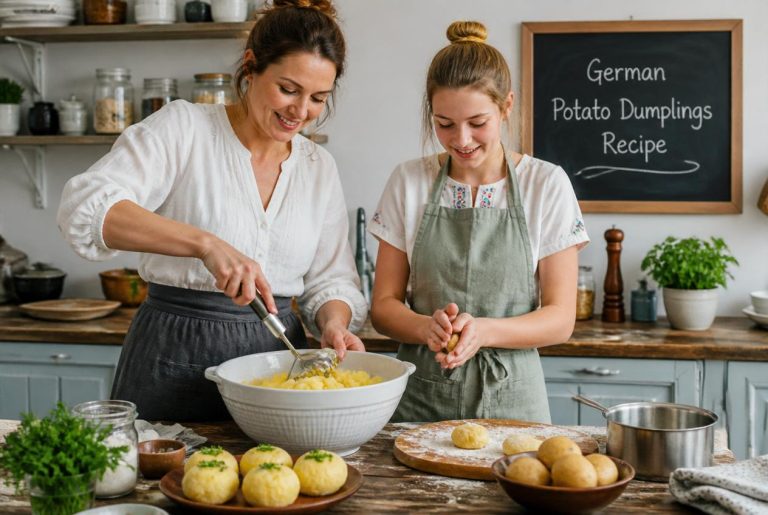
German Potato Dumplings Recipe Cooking TIps
German Potato Dumplings (Kartoffelklöße) Recipe Cooking Tips
• Kartoffelklöße are known for their soft texture, hearty flavor, and ability to soak up rich gravies and sauces.
• Starchy potatoes are preferred because they help create a light, fluffy dumpling texture.
• Some traditional recipes use a combination of cooked and raw grated potatoes for extra authenticity.
• Thoroughly drain raw grated potatoes if using them to prevent excess moisture.
• Potato starch helps the dumplings hold together during cooking.
• Eggs are sometimes added to improve structure and texture.
• Nutmeg is a classic seasoning that complements the potato flavor beautifully.
• Mix the dough gently to avoid creating heavy, dense dumplings.
• Wet hands can make shaping the dumplings easier and help prevent sticking.
• Some regional versions include toasted bread cubes in the center for added texture.
• Cook the dumplings in gently simmering water rather than a rolling boil.
• The dumplings are done when they float to the surface and are heated through.
• Allow them to rest briefly after cooking before serving.
• Serve with roast meats, red cabbage, mushroom sauces, or rich gravies.
• The flavor should balance tender potatoes, subtle seasoning, and a soft pillowy texture.
• Kartoffelklöße are a beloved accompaniment to many traditional German holiday and Sunday meals.
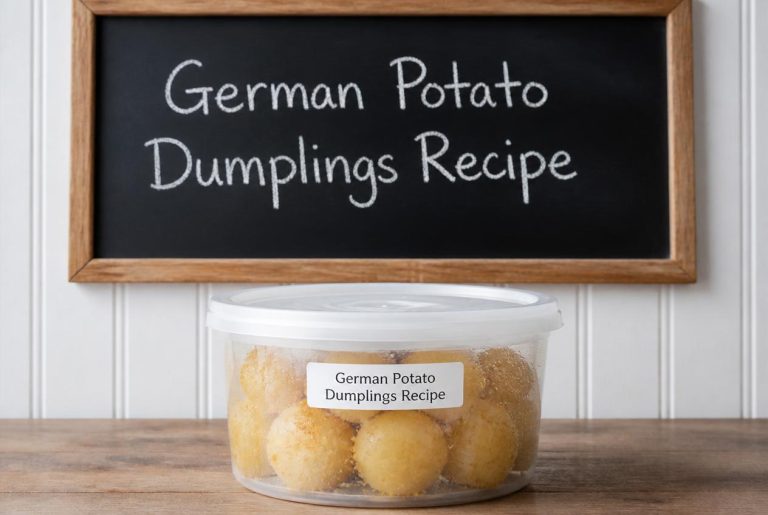
German Potato Dumplings Recipe Storage Tips
German Potato Dumplings (Kartoffelklöße) Storage Tips
• Allow the dumplings to cool before transferring them into storage containers.
• Store refrigerated in airtight containers to preserve freshness.
• Separate layers with parchment paper if stacking multiple dumplings.
• Refrigeration may firm the dumplings slightly, which is normal.
• Reheat gently in simmering water, a microwave, or by lightly pan-frying sliced dumplings.
• Pan-frying leftover dumpling slices can create a delicious crispy exterior.
• Freeze cooked dumplings in airtight freezer-safe containers if desired.
• Separate dumplings before freezing to prevent sticking.
• Defrost frozen dumplings gradually in the refrigerator before reheating.
• Serve with fresh gravy or sauce after reheating for the best texture.
• Use clean utensils when handling leftovers to help maintain freshness.
• Potato-based dishes are generally best enjoyed within a shorter refrigerated storage period for ideal quality and safety.
• Keep away from strongly scented foods because dumplings can absorb odors.
• Slight firming during storage is normal.
• Discard leftovers if the dumplings develop sour odors, slime, mold, or unusual discoloration.
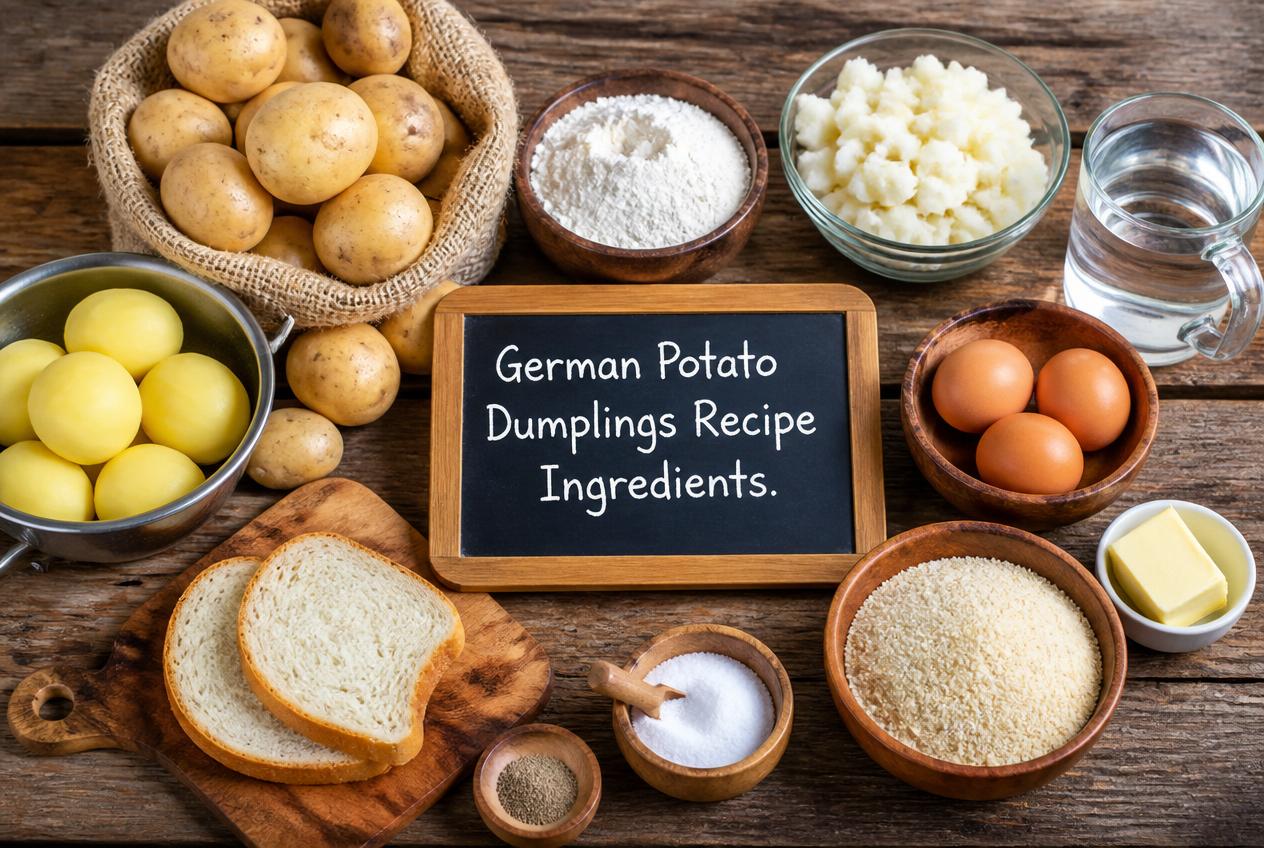
German Potato Dumplings (Kartoffelklöße)
Ingredients
- 2 pounds starchy potatoes such as russets or Idaho
- 1 cup plus 2 tablespoons 172 grams potato starch, or more as needed
- 1 1/2 teaspoons salt or to taste, plus more for the cooking water
- 1/8 teaspoon ground nutmeg preferably freshly grated
- 2 large eggs lightly beaten
- 4 to 6 tablespoons melted butter
- Buttered breadcrumbs freshly ground black pepper, and/or parsley, for garnish, optional
Instructions
- Begin by peeling the potatoes and cutting them into large, evenly sized chunks. Place the potato pieces into a large saucepan and cover them with cold salted water.
- Bring the water to a boil over high heat. Once boiling, reduce the heat to medium, cover the pan, and cook the potatoes for approximately 20–25 minutes, or until they are completely tender when pierced with a fork.
- Drain the potatoes thoroughly and allow excess moisture to evaporate for a minute or two. Excess water can make the dumpling dough too soft and difficult to work with.
- Pass the hot potatoes through a potato ricer into a large bowl or onto a baking sheet. If you do not have a ricer, mash them very thoroughly until smooth, but avoid overworking them.
- Spread the riced potatoes into an even layer and allow them to cool completely, about 30 minutes. Cooling is important because warm potatoes can make the dough sticky and difficult to shape.
- You should end up with approximately 6 cups of riced potatoes.
- While the potatoes cool, fill a large pot with salted water and bring it to a gentle boil. The dumplings will later cook in this water, so make sure the pot is large enough to hold them comfortably without overcrowding.
- Transfer the cooled riced potatoes to a large mixing bowl. Add the potato starch, salt, and ground nutmeg.
- Using your hands or a large spoon, gently toss the ingredients together until evenly distributed. The starch helps bind the dumplings while maintaining their light, fluffy texture.
- Add the lightly beaten eggs and gently mix everything together until a soft dough forms. Work carefully and avoid excessive mixing, as overworking the dough can make the dumplings dense and heavy.
- The finished dough should hold together easily when squeezed but remain soft and pliable.
- Divide the dough into approximately 12 equal portions, each weighing about 3 ounces or measuring roughly 2 inches in diameter.
- Roll each portion between your palms to create smooth, firm balls. If the dough feels sticky, lightly dampen your hands with water.
- Try to keep the dumplings as uniform as possible so they cook evenly.
- Using a slotted spoon, carefully lower the dumplings into the boiling water.
- As soon as all the dumplings are added, reduce the heat. Once the dumplings float to the surface, lower the heat even further so the water remains at a very gentle simmer.
- Cover the pot and cook the dumplings for 20 minutes. Avoid allowing the water to boil vigorously, as a rolling boil can cause the dumplings to break apart.
- During cooking, the dumplings will become light, tender, and fully cooked throughout.
- Using a slotted spoon, carefully remove the dumplings from the water and transfer them to a serving bowl or platter.
- Drizzle generously with 4–6 tablespoons of melted butter and lightly season with additional salt if desired.
- For a traditional presentation, top the dumplings with buttered breadcrumbs, freshly ground black pepper, chopped parsley, or a combination of all three.
- Serve the Kartoffelklöße immediately while warm. These classic German potato dumplings pair beautifully with rich gravies, Sauerbraten, Rouladen, roast pork, roast beef, venison, or mushroom sauces.
- The finished dumplings should be tender and fluffy on the inside while remaining firm enough to hold their shape. Their mild flavor makes them perfect for soaking up hearty sauces and gravies, which is why they are one of Germany's most beloved traditional side dishes.
German Potato Dumplings Recipe Frequently Asked Questions
People ask a lot of questions about the German Potato Dumplings recipe, and I get it—it takes a little practice. Here are some of the most common ones I hear about making, serving, and storing these dumplings.
What’s the difference between potato dumplings made from raw potatoes and cooked potatoes?
Raw potato dumplings (using the German Potato Dumplings recipe) are denser and chewier because the raw starch acts as a binder. Cooked potato dumplings have a lighter, fluffier texture and are easier for beginners. Some German Potato Dumplings recipes blend both types for a dumpling that’s tender but holds together well.
How do you keep potato dumplings from falling apart while boiling?
I always squeeze out extra moisture from the potatoes before making the dough for my German Potato Dumplings recipe. Too much water means disaster. I add enough flour, potato starch, or eggs to bind the German Potato Dumplings recipe together. The dough should be sticky but not a mess. Testing a single dumpling first saves a lot of heartbreak.
The water should simmer gently—boiling too hard will break apart your German Potato Dumplings recipe. If a tester falls apart, add more flour to the dough and try again.
What’s the best way to serve potato dumplings with traditional German dishes?
I love serving the German Potato Dumplings recipe with saucy roasts like sauerbraten or pork roast. They soak up gravy like nothing else. Beef rouladen is another classic pairing with the German Potato Dumplings recipe—the rich sauce and mild potato flavor just work.
Sometimes I just top the German Potato Dumplings recipe with browned butter and herbs for a lighter meal. They’re also great with roasted duck or goose, especially at the holidays, and a crisp salad on the side balances out the richness of the German Potato Dumplings recipe.
Can you make potato dumplings ahead of time and reheat them without losing texture?
Whenever I make a German Potato Dumplings recipe, I shape the uncooked dumplings and freeze them right on a baking sheet, then toss them into a freezer bag. No need to thaw—just drop them straight from the freezer into boiling water. It’s honestly a lifesaver if you’re prepping a German Potato Dumplings recipe ahead of a big dinner.
For cooked dumplings, I usually stash them in the fridge for up to two days. When I want to reheat, I gently warm them in simmering water for a few minutes, or sometimes I’ll pan-fry them in a bit of butter. Both methods work, but the buttered pan? That’s where the German Potato Dumplings recipe really shines, if you ask me.
Pan-frying leftover dumplings gives them this golden, crispy exterior that’s just unbeatable. I’d even say it takes the German Potato Dumplings recipe to another level—sometimes, I like them even more this way than fresh out of the pot.
Microwaving, though? I wouldn’t bother. It turns the German Potato Dumplings recipe into something rubbery and kind of sad. Stick with simmering water or a buttery skillet if you want to keep that lovely texture you worked for with your German Potato Dumplings recipe.
Are store-bought potato dumpling mixes worth using, and how do you improve their flavor and consistency?
Honestly, if you’re in a rush or just feeling lazy, a store-bought German Potato Dumplings recipe mix gets the job done. It’s quick, and you’ll have a decent side dish with barely any effort—sometimes you just need that shortcut.
But I can’t leave the mix alone. I always toss in chopped fresh herbs—parsley or chives work great. A little nutmeg makes a huge difference too. These tweaks make the German Potato Dumplings recipe taste way less bland, and a bit more like you put in the effort.
Texture’s another thing. If the German Potato Dumplings recipe mix feels too gummy, I’ll add an extra egg or cut back the water a bit. That simple fix makes the dumplings lighter, less dense, and honestly, more enjoyable to eat.
Still, nothing really beats making a German Potato Dumplings recipe from scratch. You control everything—the potatoes, the seasoning, the texture. The homemade German Potato Dumplings recipe just feels fresher and way more satisfying, even if it takes a little extra time. But hey, sometimes you just want the shortcut, and that’s okay too. Whether you’re using a mix or going all-in on homemade, the German Potato Dumplings recipe is always a crowd-pleaser.
How do German potato dumplings differ from Polish potato dumplings in ingredients and preparation?
German potato dumplings usually have bread cubes or croutons tucked right in the center. That little trick adds a crunch you just don’t expect, especially when the outside stays so soft. If you ask me, it’s a clever move that sets the German Potato Dumplings recipe apart from a lot of others.
Polish potato dumplings—kopytka, if you want to sound like you know what you’re talking about—are smaller and shaped like chunky pillows. They skip any filling, and honestly, they lean much heavier on flour than on potato. That’s a big difference from any German Potato Dumplings recipe I’ve ever tried.
For a German Potato Dumplings recipe, you can use raw potatoes, cooked potatoes, or sometimes both. There’s a lot of flexibility, and every family seems to swear by their own combination. Polish kopytka, on the other hand, stick with cooked mashed potatoes. It’s almost a rule.
Serving styles? Those couldn’t be more different. In my experience, a German Potato Dumplings recipe usually lands on the table next to some kind of rich meat and gravy. Meanwhile, Polish kopytka get tossed with butter and show up as the main event, not just a side. That’s another thing I love about exploring each German Potato Dumplings recipe—there’s always a new twist, depending on where you are or who’s cooking.

Recipes are gathered in person and written for real-world cooking conditions.
- 10 Hungarian Dessert Recipes Passed Down Through Generations - July 25, 2026
- 11 Easy English Recipes Anyone Can Make - July 25, 2026
- Hungarian Kifli Recipe - July 25, 2026