

I’ve been making Korean chicken soup for ages, and honestly, baeksuk is one of those dishes that makes you wonder why you ever mess with complicated recipes. Baeksuk is a classic Korean chicken soup made by boiling a whole young chicken with garlic and scallions. You end up with a clean, nourishing broth that you serve with salt and pepper on the side for dipping. No fancy tricks, no wild spices—just pure chicken flavor that’ll warm you up from the inside out.
The best part about this Korean chicken soup is how impressive it looks when you bring a whole chicken to the table, but honestly, it’s one of the easiest things I make. A lot of Korean families use a pressure cooker to speed things up. The chicken gets stuffed with sweet rice, which turns into this silky porridge in the broth. And I’ll admit, I’m always tempted to eat all the rice before anyone else gets a spoonful.
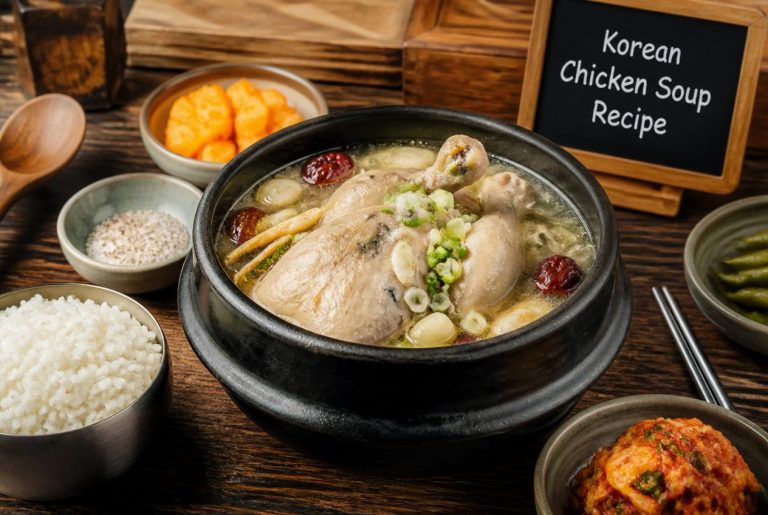
Korean Chicken Soup Recipe
Key Takeaways
- Baeksuk is a simple Korean whole chicken soup with just a few ingredients but tons of comfort and flavor
- Korean Chicken Soup has been a go-to restorative meal for centuries, especially in summer and winter
- If you learn the right cooking tricks, storage tips, and a few creative spins, you’ll totally master this classic Korean comfort food
The Soup Scoop: History and Fun Facts
Let me tell you, baeksuk has been warming Korean bellies for centuries, and the name is as straightforward as it gets. “백숙” (baeksuk) literally means “boiled plain white,” and that’s exactly what you get—no wild seasonings or secret sauces.
This dish lets the chicken shine. Baeksuk just means boiling meat thoroughly without a bunch of seasonings. Sounds a bit plain, right? But the pure chicken flavor is kind of a revelation.
Here’s what makes this Korean chicken soup stand out:
- Summer stamina booster – Koreans eat dak baeksuk (닭백숙) in the hottest months to recharge
- Communal eating – You serve the whole chicken in a big pot so everyone can dig in together
- Ancient wellness food – People have used it as a restorative soup for generations
It cracks me up that while everyone else is reaching for ice cream in July, Koreans are happily slurping down steaming hot Korean Chicken Soup. But you know what? They’re absolutely onto something.
The younger chicken version, 영계백숙 (yeonggye-baeksuk), uses birds around 3 or 4 pounds. After boiling, the broth gets turned into rice porridge—because who would waste that delicious chicken broth?
My favorite bit? Baeksuk tastes a lot like the fancier samgyetang (ginseng chicken soup), but it’s easier and way less expensive. It’s basically the chill cousin in the Korean Chicken Soup family.
Pro Chef Tips for Baeksuk Buffs
I’ve picked up a few tricks for perfect baeksuk recipe results. The biggest secret? Don’t rush the simmer—seriously, patience pays off.
My Essential Baeksuk Hacks:
- Pick a young chicken between 3-4 pounds for super tender meat
- Stuff a whole onion and lots of garlic inside the chicken for extra flavor
- Toss in green onions during the last 10 minutes so they stay bright and fresh
- Skip the salt in the broth (trust me, it’s worth it)
The salt dip is my go-to move. I mix up sea salt, black pepper, and sometimes a splash of sesame oil. Everyone gets to season their own bowl however they want.
I keep my Korean Chicken Soup super simple with just a few aromatics. The whole point is to let the chicken flavor really shine. If I tried to get fancy, my mother-in-law would definitely give me the side-eye.
Temperature is more important than you’d think:
| Cooking Stage | My Approach |
|---|---|
| Initial boil | Crank up the heat to get things started |
| Main simmer | Let it go low and slow for 60-90 minutes |
| Final rest | Let it chill for 5 minutes before serving |
I always skim the foam off the top during the first 15 minutes. It’s a bit annoying, but my broth turns out clear and beautiful every time.
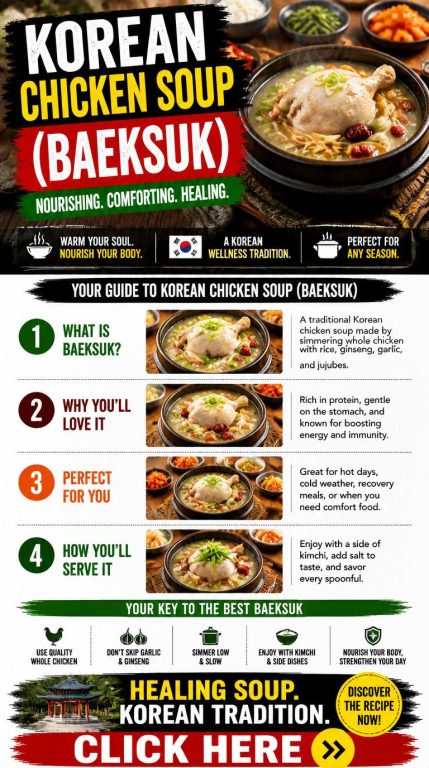
Variant Chicken Soup Shenanigans
Turns out, Korean Chicken Soup isn’t just one recipe. There are some wild variations that take basic boiled chicken soup in totally new directions.
My favorite twist? Nurungji baeksuk. Someone decided to toss scorched rice from the bottom of the pot into the soup, and honestly, it’s genius. The crispy rice softens up and gives the soup a texture you just don’t get anywhere else.
And then there’s the porridge angle. I assumed chicken porridge was just another name for soup. Nope! The rice actually breaks down and turns into a creamy, thick consistency called juk or jook. It’s like someone looked at regular soup and said, “What if we made this into a chicken-flavored hug?”
Common Baeksuk Variations:
- Classic baeksuk with whole chicken and garlic
- Nurungji version with crispy rice bits
- Juk style where the rice becomes porridge
- Silkie chicken for a fancier option
- Stuffed versions with sweet rice inside the chicken
The porridge versions really go all in. Why settle for separate rice grains when you can have a velvety, chicken-rich bowl instead? Some folks even stuff the chicken with glutinous rice before boiling, which is just smart planning.
Leftover Wizardry: Storing Your Baeksuk
Honestly, Korean Chicken Soup tastes even better the next day after the flavors have a chance to mingle. The first time I made it, I just tossed leftovers into whatever container I had, and yeah, that didn’t go well.
You need to get your leftover Korean Chicken Soup into the fridge within two hours. The USDA says you can keep leftovers in the fridge for three to four days.
My leftover routine:
- Grab airtight containers so the broth stays fresh and your fridge doesn’t end up smelling like a soup shop
- Pull the chicken meat off the bones before storing (future you will thank you)
- If you want to make something new later, store the broth and meat separately
I always slap a date label on my containers, because otherwise I’ll totally forget when I made it. That way, nothing turns into a science project in the back of the fridge.
The best part? You can turn leftover Korean Chicken Soup into Korean chicken porridge by simmering the broth and shredded meat with rice. I’ve also tossed the meat into fried rice, noodle soups, and even chicken sandwiches. It’s super versatile.
For longer storage, freeze your Korean Chicken Soup in individual portions for up to three months. Just don’t forget to leave a little space at the top—liquid expands, and nobody wants a freezer disaster.
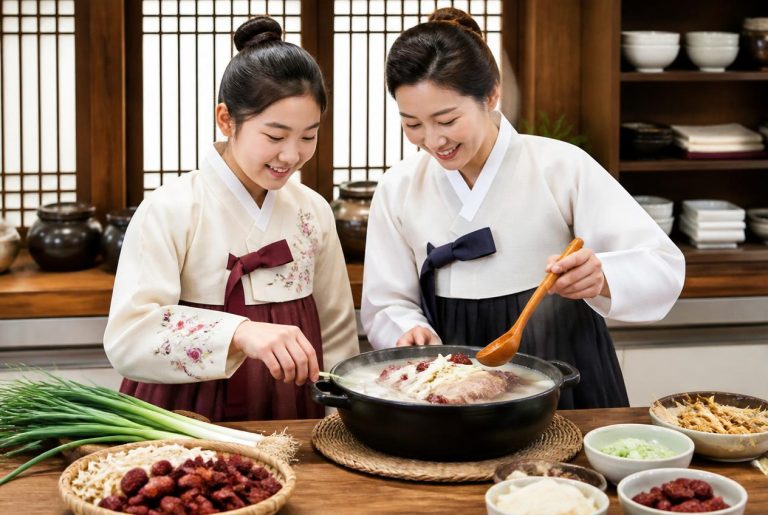
Korean Chicken Soup Recipe – Prep
Cooking Tips For the Korean Chicken Soup (Baeksuk)
• Use a whole chicken or evenly sized pieces so the meat cooks consistently.
• Simmer the chicken gently rather than boiling rapidly to help keep the meat tender.
• Skim foam from the surface during cooking for a cleaner broth.
• Add aromatics early enough so their flavors infuse into the broth.
• Keep the pot partially covered to help maintain steady cooking.
• Check the chicken for doneness before serving to ensure it is fully cooked.
• Taste the broth before serving and adjust seasoning carefully if needed.
• Let the baeksuk rest briefly before serving so the flavors settle together.
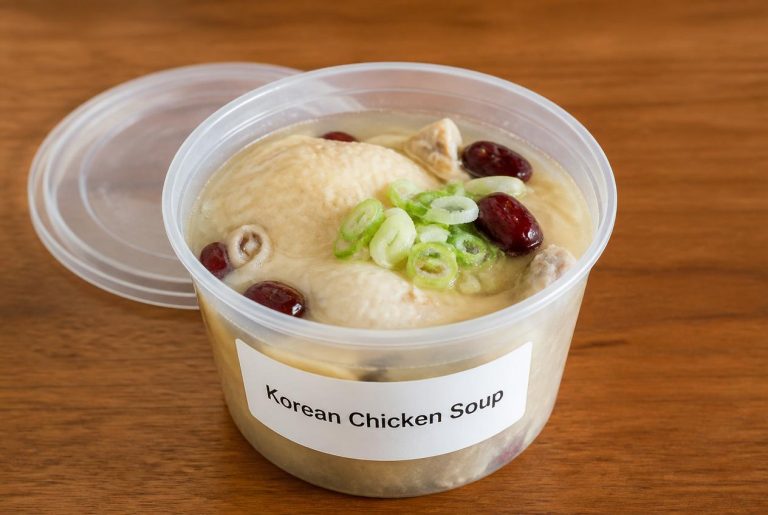
Korean Chicken Soup Recipe – Storage
Storage Tips For the Korean Chicken Soup (Baeksuk)
• Allow the soup and chicken to cool slightly before transferring them into storage containers.
• Store leftovers in airtight containers to help retain moisture and flavor.
• Refrigerate leftovers within 2 hours of cooking for proper food safety.
• Reheat slowly over medium-low heat while stirring occasionally.
• Add a splash of broth or water during reheating if the soup reduces too much.
• Keep garnishes separate until serving time for fresher appearance.
• Freeze portions in freezer-safe containers for up to 3 months if needed.
• Leave a little space at the top of containers because soups expand when frozen.
• Thaw frozen baeksuk overnight in the refrigerator before reheating.
• Discard the soup or chicken if they develop a sour smell, slimy texture, discoloration, mold, or unusual taste.
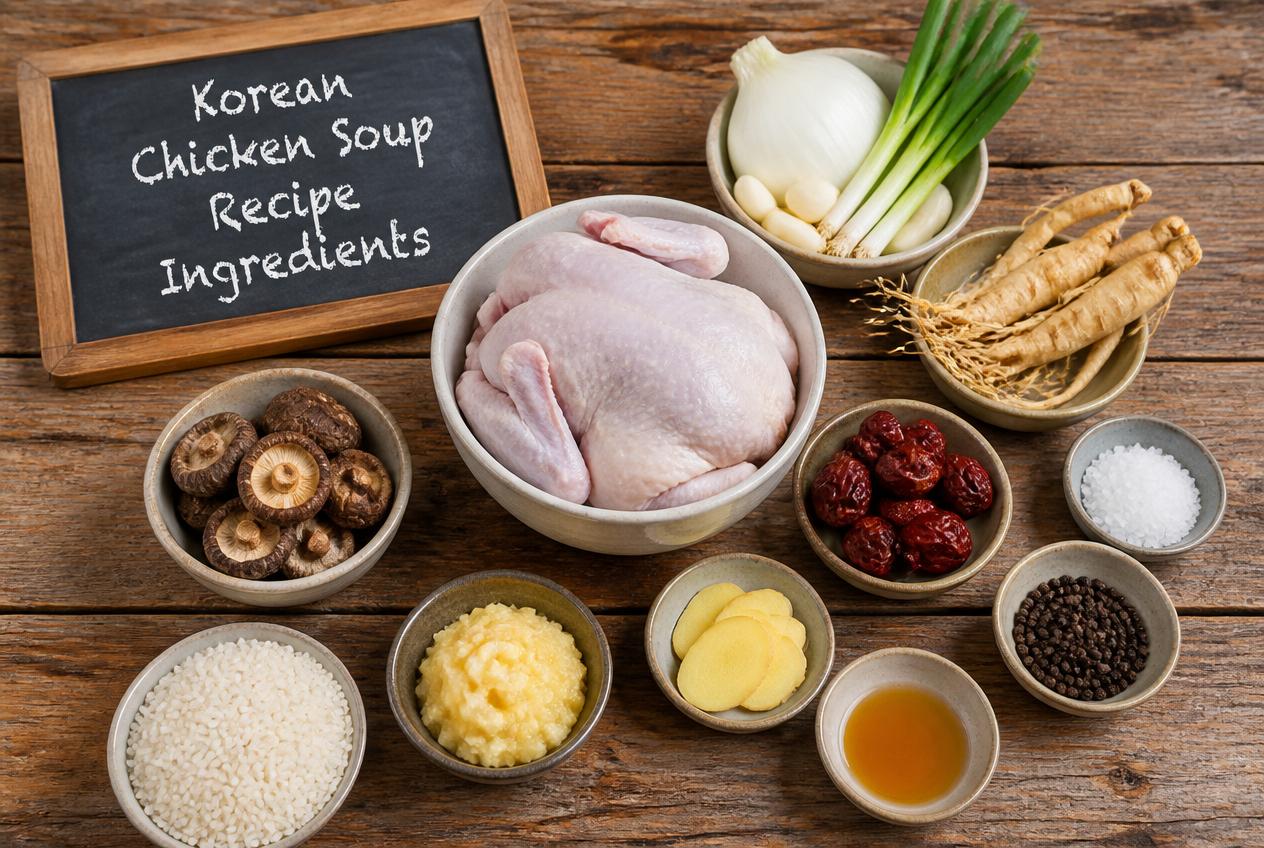
Korean Chicken Soup (Baeksuk)
Ingredients
- 2 cornish hen about 1 lb each
- 5 garlic cloves
- 1/2 yellow onion large
- 2 green onions 1 chopped and 1 whole in soup
- 5 cups water
- 1 Tbsp soy sauce jin ganjang
- 1/2 Tbsp rice vinegar
- 1 tsp sea salt
- 1/4 tsp black pepper
- 1/2 tsp sesame seeds crushed and roasted
Instructions
- Wash the green onions, trim off the roots, and peel the garlic and onion. One of the green onions should be chopped and reserved for serving, while the other should remain whole for cooking in the broth. Clean the Cornish hen by trimming away the tail end, wing tips, and any excess fat around the cavity and shoulder areas. This helps create a cleaner-tasting broth.
- Place the chicken into the Instant Pot along with the water, garlic, onion, and the whole green onion. Arrange everything evenly in the pot so the chicken is mostly submerged in the cooking liquid.
- Secure the lid and set the valve to the sealing position. Cook on Manual Low Pressure for 18 minutes. When the cooking cycle is complete, allow the pressure to release naturally for 5 minutes before performing a quick release. If you prefer especially tender chicken, allow a natural release of 10 minutes instead. For a larger whole chicken, increase the cooking time to 20 to 25 minutes and allow a longer natural release period.
- While the chicken cooks, prepare either the soy dipping sauce or the sesame sea salt mixture by combining the ingredients in separate bowls. These condiments are traditionally served alongside the chicken and allow everyone to season each bite to their own preference.
- Carefully remove the cooked chicken from the pot and allow it to cool for a few minutes. The chicken can be presented whole at the table for everyone to pull apart themselves, or the meat can be removed from the bones and divided among serving bowls. If desired, top the chicken with the reserved chopped green onions before serving.
- Ladle the hot broth into bowls and serve alongside the chicken. Accompany the meal with steamed rice and your favorite side dishes. Allow each person to season their soup with salt and black pepper at the table, or season the broth before serving if preferred. The simple broth and tender chicken make a comforting meal that is especially enjoyable when served piping hot.
Frequently Asked Questions for the Korean Chicken Soup (Baeksuk)
If you want to make baeksuk at home, just boil a whole chicken with a few basic ingredients. Knowing what sets this soup apart from samgyetang helps you appreciate what makes Korean Chicken Soup so unique.
Why does this chicken soup taste like a spa day for my insides, and how do I make it at home?
The magic of Korean Chicken Soup definitely comes from its simplicity. I just boil a whole chicken in plain water with garlic and sometimes scallions. That’s all it takes to get a clean, savory broth that feels super restorative.
The dish is made without seasonings during cooking. The chicken simmers until the meat is falling off the bone and all those natural flavors seep into the broth. I usually let it go for at least an hour.
The result? A mild, cozy Korean Chicken Soup that doesn’t overwhelm your taste buds. I serve it with salt and pepper on the side so everyone can make it just right for them.
What ingredients do I need so this turns out like cozy Korean comfort food and not sad boiled bird?
I always start with a young chicken around 3 or 4 pounds. Fresh garlic—at least a whole bulb—is a must.
Some folks add onion and leek for extra flavor. Sweet rice or glutinous rice goes inside the chicken if you want that porridge effect. The rice soaks up the broth and gets all creamy.
Water is the only liquid you need. Really, the simplicity is what makes Korean Chicken Soup so good.
Do I really have to use a whole chicken, or can I cheat with parts without angering the soup gods?
Traditionally, you use a whole chicken for the richest broth—the bones add so much depth. You boil the whole bird and shred it at the table.
If I only have chicken parts, I’ll use them. Maybe the soup gods will raise an eyebrow, but honestly, it still tastes pretty great. Just know the broth might not have quite the same oomph without the whole bird in the pot.
How do I serve it with rice—stir it in, dunk it, or build a tiny rice island?
The rice grains soak into the broth and turn almost like porridge, giving Korean Chicken Soup this rich, nutty flavor that’s hard to beat. Sometimes, I’ll stuff the chicken with rice before cooking, so it cooks right inside and soaks up all that chicken goodness.
Some folks just serve plain rice on the side and ladle the broth over it. Others go for nurungji baeksuk, which gets you those crispy rice bits at the bottom of the pot for a little crunch in your Korean Chicken Soup.
Honestly, I usually just stir the rice straight into my bowl of broth and let it get all soft and soupy. There’s no single right way—it’s Korean Chicken Soup, so make your rice island however you want.
What’s the difference between this and that famous ginseng chicken soup everyone keeps bragging about?
Samgyetang, also known as ginseng chicken soup or sam gye tang, uses Korean ginseng root as a main ingredient. It usually comes with jujubes (Korean dates), chestnuts, and glutinous rice stuffed inside the chicken. That’s a lot going on for one bowl of Korean Chicken Soup.
Baeksuk has less broth and a much milder taste compared to samgyetang. People say samgyetang is more medicinal, and it’s a go-to during those brutally hot summer days in Korea when you need your energy back.
If you ask me, baeksuk is way simpler and cheaper to make at home. You don’t need to track down ginseng or any fancy extras—just chicken, garlic, and water, and you’re on your way to a great batch of Korean Chicken Soup. It’s comfort food without the fuss. Korean Chicken Soup really hits the spot when you want something cozy and easy. And, honestly, isn’t that what most of us are after?
Can I add gochujang for a spicy glow-up, or is that culinary chaos?
Honestly, tossing gochujang straight into Korean Chicken Soup would totally flip the script on baeksuk. The word baeksuk means fish or meat boiled in water without seasoning, so keeping things simple is kind of the whole idea here. Messing with that purity? Some folks might call it chaos, and I get why.
But hey, I still want a little kick sometimes. So, I usually whip up a spicy dipping sauce on the side—just gochujang, soy sauce, and sesame oil. That way, I get my spicy glow-up and nobody’s grandma gets offended. Everyone wins, right?
The best part about Korean Chicken Soup, or baeksuk, is how clean and mild it tastes. It really lets the chicken be the star. If I’m craving heat, I just mix it into my own bowl. The main pot stays pure, and anyone who loves that classic simplicity can enjoy it. Korean Chicken Soup really does have a way of bringing people together, even if we can’t all agree on the spice level. And honestly, isn’t that part of the fun?

Recipes are gathered in person and written for real-world cooking conditions.
- 10 Hungarian Dessert Recipes Passed Down Through Generations - July 25, 2026
- 11 Easy English Recipes Anyone Can Make - July 25, 2026
- Hungarian Kifli Recipe - July 25, 2026