
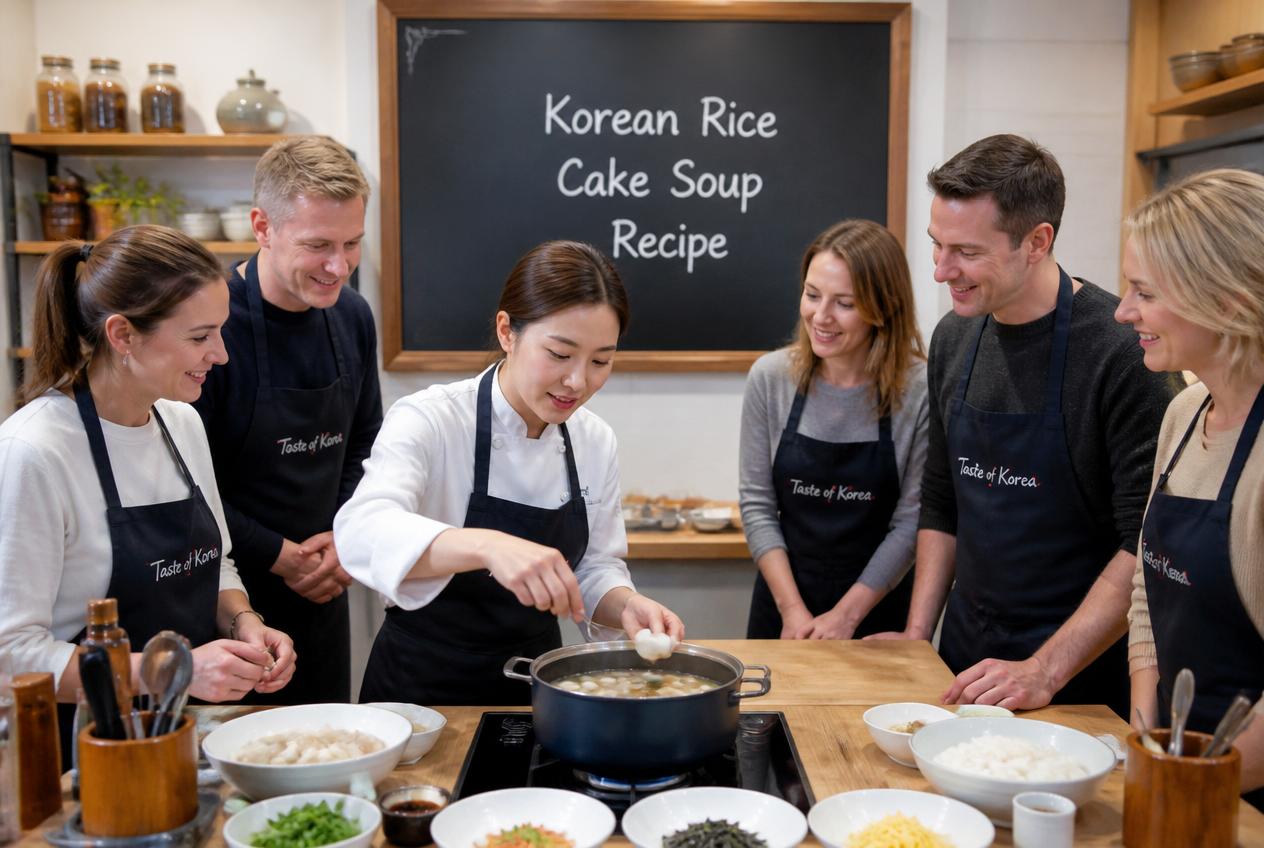
I’ll be honest—when I first tried tteokguk or Korean Rice Cake Soup, I didn’t really get why Koreans fussed over Korean Rice Cake Soup on New Year’s Day. But after I found out that eating a bowl of tteokguk on Korean Lunar New Year means you officially age a year and get a fresh start, making it one of the most important traditional dishes in Korean culture, it all made sense. Suddenly, slurping those chewy, coin-shaped rice cakes in savory broth felt less like just eating soup and more like joining in on a tradition that’s been around forever.
Korean Rice Cake Soup looks pretty simple, but wow, the flavor can be intense. I’ve messed up my share of ddeokguk—turned rice cakes to glue, made broth that tasted like dishwater. But once you get the hang of it, you’ll have a comforting rice cake soup that fits both celebrations and lazy weeknights.
Maybe you’re gearing up for Seollal or just curious why this traditional Korean New Year soup is such a big deal. Either way, I’ve rounded up 22 things you should know about Korean Rice Cake Soup. From slicing rice cakes the right way to wild variations that might surprise your Korean friends, this guide covers a lot.
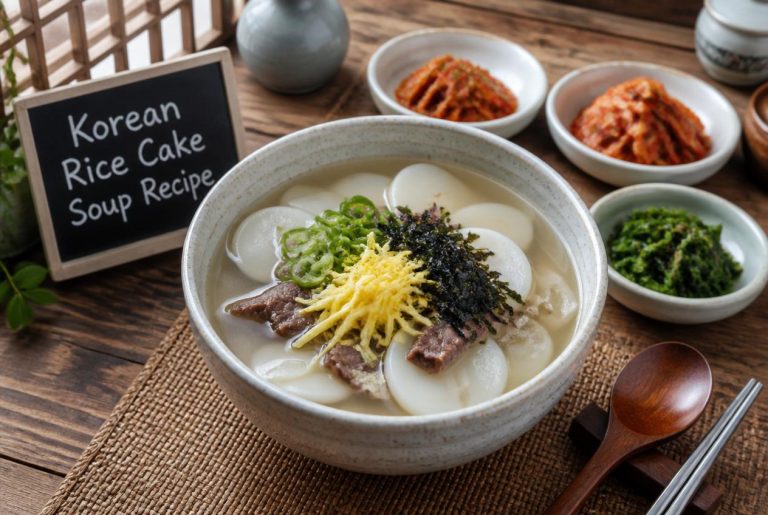
Korean Rice Cake Soup Recipe
Key Takeaways
- Tteokguk is eaten on Korean Lunar New Year to symbolize gaining a year of age and starting anew
- The soup uses sliced rice cakes cooked in beef, anchovy, or veggie broth, topped with egg and green onions
- You can store leftover tteokguk properly and get creative with versions beyond the classic New Year soup
A Brief History and Fun Facts About Tteokguk
I’ve always found it fascinating that tteokguk has been a Korean New Year staple for centuries. This isn’t just any soup—it’s the one that makes Seollal feel real.
The tradition is ancient. Early Koreans believed the white tteok symbolized purity and a clean slate for the Lunar New Year. Honestly, it’s clever—turning sliced rice cakes into edible good luck charms? Love that.
Here’s a quirky detail: Many Koreans say you don’t actually age a year until you eat your bowl of tteokguk on New Year’s Day. No soup, no birthday. I didn’t make the rules!
The oval rice cakes look like coins, so eating Korean Rice Cake Soup is like wishing yourself a year full of luck and money. Who doesn’t want a meal that doubles as a good luck charm?
Different parts of Korea do their own thing. Some families use beef broth, others go for anchovy, and plenty make vegetarian versions. Here’s a fun bit: the rice cakes are sliced from long logs called garaetteok—sounds like something out of a cartoon, right?
During Seollal, families gather to honor ancestors and share this symbolic Korean Rice Cake Soup together. It’s pretty comforting to know this holiday food keeps bringing people together, year after year, bowl after bowl.
Cooking Wisdom: Tips for Mastering Tteokguk
Using the right rice cakes really makes or breaks Korean Rice Cake Soup. Fresh garaetteok is the gold standard, but frozen sliced tteok works when you’re in a hurry. I soak frozen rice cakes in cold water for about 10 minutes before cooking—otherwise, they get weird and rubbery.
The broth is where I put in the effort. I simmer beef bones with dried kelp (dashima) and aromatics like garlic, onion, and daepa for at least an hour. My secret? Soup soy sauce (guk ganjang) and just a splash of fish sauce. That tiny bit of Korean fish sauce boosts the flavor without making your soup taste fishy.
Flavor basics I always use:
- Just a drizzle of toasted sesame oil at the end
- Fresh minced garlic (never the jarred stuff)
- Plenty of green onions or scallions for brightness
- A pinch of salt, tasting as I go
I keep the broth clear by skimming the surface while it simmers. Cloudy soup on New Year’s Day? No thanks.
For garnishes, I make thin egg ribbons by cooking beaten eggs flat and slicing them into strips. A handful of roasted seaweed (gim) torn into bits goes on top. The egg looks fancy but takes almost no time.
My biggest advice: taste as you cook. Add Korean soy sauce for soup a bit at a time—you can always add more, but you can’t take it out.
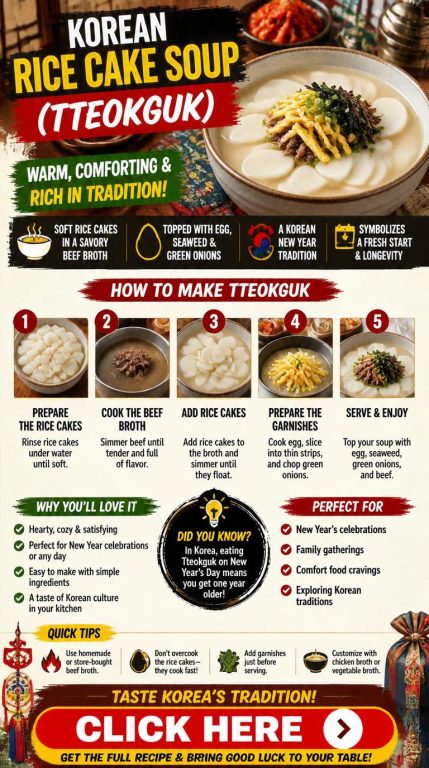 Culinary Spin-Offs: Unique Ways Koreans Enjoy Rice Cake Soup
Koreans definitely don’t always stick to the classic Korean Rice Cake Soup recipe. They love to mix things up with creative spins that keep things interesting.
The most popular twist I’ve seen is tteok-manduguk, which combines rice cakes with Korean dumplings (mandu). It’s like someone couldn’t pick between two favorites and just said, “Why not both?” The chewy rice cakes and soft dumplings swimming in the same broth—yeah, it works.
People get inventive with the mandu, too. Some add kimchi mandu stuffed with spicy, tangy cabbage for a real wake-up call. Others go for meat or veggie dumplings, depending on the mood.
Regional twists keep things fresh:
- Some folks add mushrooms or spinach
- Coastal areas sometimes throw in seafood
- Beef brisket slices show up in some family recipes
- Spicy cooks add gochugaru (red pepper flakes) for a kick
The cool thing about mandu-guk is you can eat it any time, not just on New Year’s. I love how flexible Korean Rice Cake Soup is—just use what you have on hand. Whether you keep it classic or load it with dumplings and kimchi, you can make Korean Rice Cake Soup your own.
Keep It Fresh: Storing Your Tteokguk Without Time Travel
Let me tell you, rice cakes have opinions on storage. Leave them soaking in broth overnight, and you’ll wake up to a bowl of mush instead of Korean Rice Cake Soup.
The Golden Rule: Always store rice cakes separate from the broth. Seriously, don’t skip this step. Those chewy disks lose their texture fast if they’re left in liquid.
Here’s what works for me:
- Broth: Store in an airtight container, refrigerate, and it’s good for up to 3 days
- Rice cakes: Keep them in a separate container with a splash of water so they don’t dry out
- Toppings: Egg ribbons, green onions, and other garnishes each get their own container
When I want another bowl, I reheat the broth on the stove for a minute or two. Then I add the rice cakes and let them cook until they’re just tender—usually a few minutes does the trick.
The broth can be made a few days ahead, which makes meal prep so much easier. I like making a big pot on Sunday and having Korean Rice Cake Soup ready for quick lunches all week.
Just remember: rice cakes don’t like long soaks. Keep them dry, keep them separate, and your Korean Rice Cake Soup will stay chewy and delicious for days.
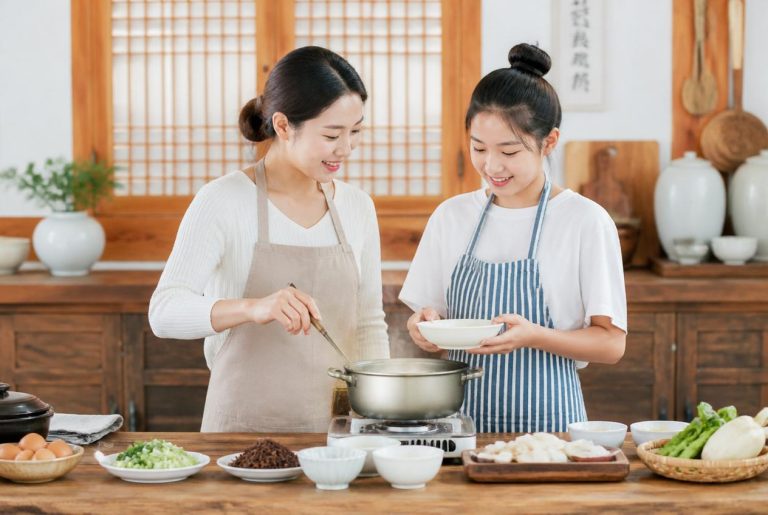
Korean Rice Cake Soup Recipe – Prep
Cooking Tips For the Korean Rice Cake Soup (Tteokguk)
• Soak the rice cakes if needed according to package directions so they cook evenly.
• Simmer the broth gently so it develops flavor without becoming cloudy.
• Add the rice cakes near the end of cooking to help prevent them from becoming overly soft.
• Stir occasionally during cooking so the rice cakes do not stick together.
• Add eggs carefully if using them so they cook evenly in the broth.
• Use medium-low heat so the ingredients remain tender and balanced.
• Taste before serving and adjust seasoning carefully if needed.
• Serve the tteokguk hot for the best texture and flavor balance.
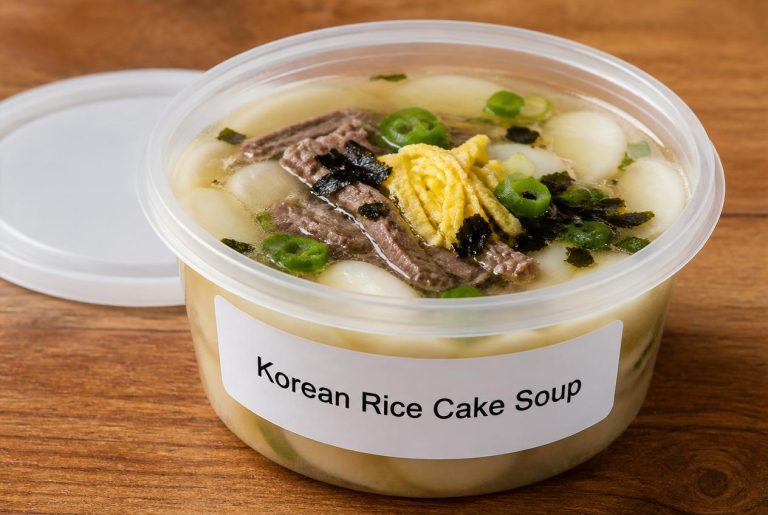
Korean Rice Cake Soup Recipe – Storage
Storage Tips For the Korean Rice Cake Soup (Tteokguk)
• Allow the soup to cool slightly before transferring it into storage containers.
• Store leftovers in airtight containers to help retain moisture and flavor.
• Refrigerate leftovers within 2 hours of cooking for proper food safety.
• Reheat slowly over medium-low heat while stirring occasionally.
• Add a splash of broth or water during reheating if the soup thickens too much.
• Keep garnishes separate until serving time for fresher appearance.
• Rice cakes may become softer during storage, so reheat gently.
• Freeze the broth separately if possible because rice cake texture changes after freezing.
• Thaw frozen broth overnight in the refrigerator before reheating.
• Discard the soup if it develops a sour smell, slimy texture, discoloration, mold, or unusual taste.
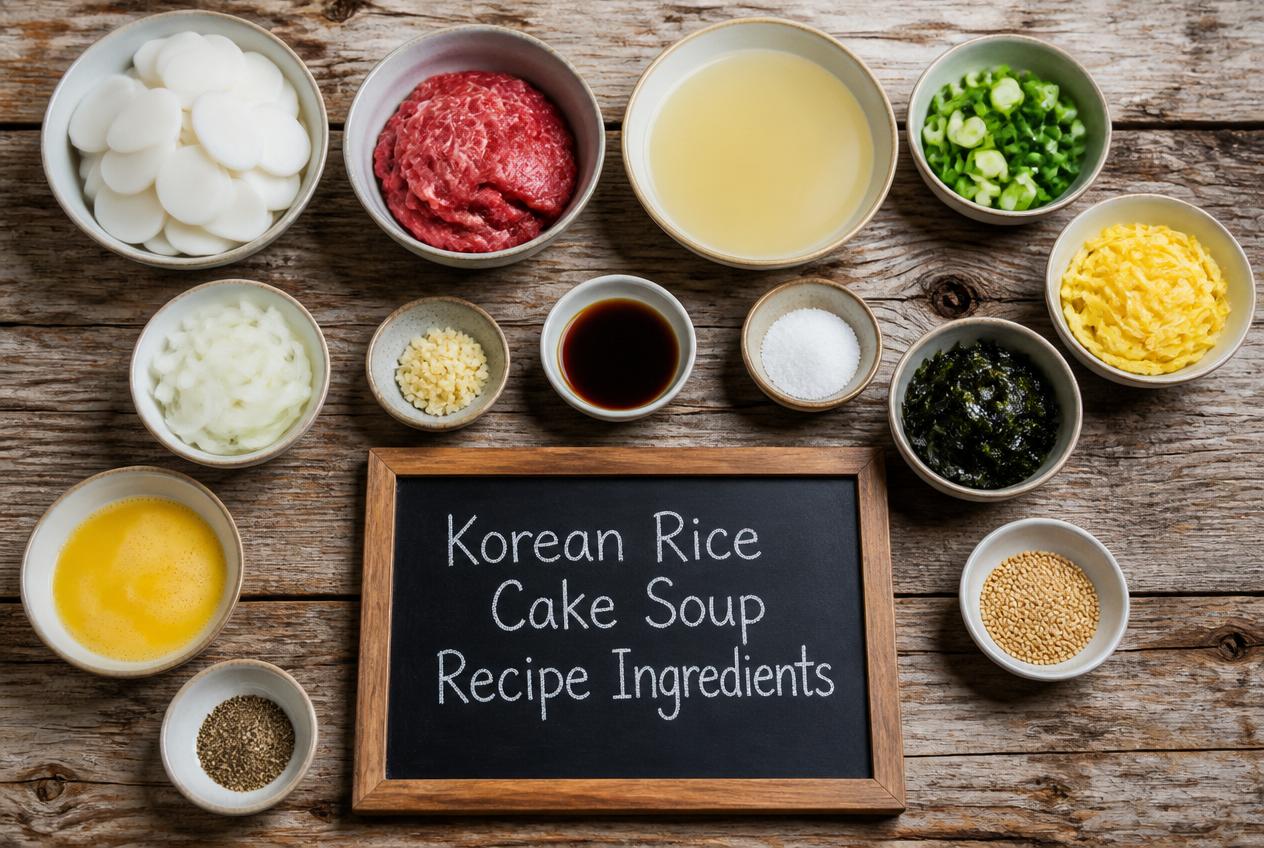
Korean Rice Cake Soup (Tteokguk)
Ingredients
- 1 lb rice cakes sliced oval rice cakes for soup, tteokguk tteok
- 1/2 lb beef stew meat
- 5 cups water
- 1 tsp sesame oil
- 1/2 onion
- 1.5 tsp soy sauce Soup soy sauce, Guk Ganjang
- 1/2 tsp sea salt
- 4 cloves garlic
- 1/2 tsp sesame oil
- 3/4 tsp soy sauce Jin Ganjang
- 2 green onions chopped
- 1 tsp garlic chopped
- 1/8 tsp sugar
- 1/4 tsp black pepper
- 1/4 onion sliced
- 1 Tbsp garlic chopped
- 1 egg
- 2 green onions sliced
Instructions
- If using frozen rice cakes, soak them in water for 10 minutes and then drain well. If using fresh rice cakes, simply rinse them briefly under water and drain. Prepare the onion by reserving one half for the broth and slicing the remaining portion for the soup. Peel the garlic cloves, leaving some whole for the broth and chopping the rest for later use.
- Turn the Instant Pot to the Sauté setting and drizzle in the sesame oil. Allow the pot to heat for a couple of minutes. Add the beef and cook for 3 to 4 minutes until the exterior is browned. Pour in the water, then add the onion half and garlic cloves. Secure the lid, set the valve to Sealing, and cook on Manual High Pressure for 13 minutes. Once the cooking cycle is complete, allow the pressure to release naturally for 5 minutes before carefully performing a quick release.
- While the broth is cooking, beat the egg in a small bowl and set it aside. Chop the green onions and garlic, then slice the remaining onion. Keep all of the prepared ingredients nearby so they are ready to add when the broth is finished.
- After the pressure has fully released, open the Instant Pot and remove the cooked beef, onion, and garlic from the broth. Discard the onion and garlic. Allow the beef to cool slightly, then slice it into thin pieces. Place the sliced beef in a bowl and season it with the ingredients listed for the beef seasoning. Mix thoroughly, using your hands if desired, so the seasonings are evenly distributed throughout the meat. Set the seasoned beef aside to use as a topping later.
- Return your attention to the broth and season it with the soup soy sauce and salt. Stir well, then add the sliced onion. Turn the Instant Pot back to the Sauté setting and bring the broth to a boil. Once boiling, add the rice cakes and cook until they begin to soften. Add the sliced green onions and slowly drizzle in the beaten egg while stirring gently. Finish with the chopped garlic and a little fresh black pepper. Continue cooking for 2 to 3 minutes, or until the rice cakes are tender and the soup is fully heated through.
- Ladle the hot rice cake soup into serving bowls and top each portion with some of the seasoned beef. Serve immediately with extra black pepper on the side. If desired, offer crushed toasted gim (seaweed) as a garnish so everyone can add it to their bowl before eating.
Frequently Asked Questions for the Korean Rice Cake Soup (Tteokguk)
Rice cakes kind of have a mind of their own, and nailing Korean Rice Cake Soup means knowing how to handle them. Otherwise, you end up with a sticky mess or a bland bowl.
What’s the easiest way to keep rice cakes chewy instead of turning them into tiny soup sponges?
I soak my rice cakes in cold water for about 20 minutes before cooking. This way, they don’t soak up too much broth and get mushy.
The trick is to drop them into the soup for just the last 5-7 minutes. If they go in too early, they puff up and fall apart when you try to eat them.
Fresh rice cakes are best, but if I only have frozen, I let them thaw first. Cooking from frozen just makes them cook unevenly and get sticky.
Can I make this soup spicy enough to impress my spice-loving friends (and mildly regret it)?
For a spicy Korean Rice Cake Soup, I add gochugaru (Korean red pepper flakes) right into the broth. Start with a spoonful or two and see how it goes—you can always add more.
Sometimes I mix gochujang with a bit of broth to make a spicy paste and swirl it in. Or I serve it on the side so everyone can pick their own spice level.
Sliced green or red chilies on top add heat and look great. Just remember, Korean Rice Cake Soup usually has a mild, clear broth, so you’re going off-script here.
Which broth tastes best here—beef, anchovy, chicken, or whatever I have lurking in my freezer?
Beef broth is the classic for Korean Rice Cake Soup. I simmer brisket or shank for at least an hour for that deep, clean flavor.
Anchovy broth is lighter and a little ocean-y. I use dried anchovies and kelp—sounds odd, but it’s actually really tasty.
Chicken broth is my go-to if I’m in a hurry. It’s milder but still makes a solid Korean Rice Cake Soup.
How do I stop the rice cakes from sticking together like they’re auditioning for a boy band?
I always separate the rice cakes as soon as I open the package. They love to stick together, especially if they’ve been sitting around.
Soaking them in cold water helps keep them apart before cooking. I stir them gently every few minutes in the water.
Once they’re in the soup, I stir gently but often for the first couple of minutes. That keeps them from merging into one big rice cake blob.
What toppings make this soup look fancy even if I’m wearing pajamas while cooking?
Egg ribbons are a must—they make any bowl of Korean Rice Cake Soup look special. I beat an egg, cook it flat and thin, then slice it up.
Thinly sliced green onions add color and a sharp bite. I use both white and green parts because, honestly, why waste them?
Toasted seaweed strips (gim) give it a restaurant vibe. If I made beef broth, I’ll toss in some julienned beef, plus a sprinkle of sesame seeds for a little extra flair. Korean Rice Cake Soup deserves to look as good as it tastes.
Where can I buy the right rice cakes if my local store acts like they’ve never heard of them?
Honestly, Korean grocery stores or Asian markets are always my first stop when I’m hunting for Korean Rice Cake Soup ingredients. I usually grab garaetteok, those long, chewy rice cakes and slice them into thin ovals myself. Sometimes I wonder if there’s a secret stash somewhere, but that’s where I look first.
When I can’t find them locally, I just order online. Amazon, H Mart’s website, or Weee! have Korean Rice Cake Soup rice cakes and ship them right to my door. They show up frozen, but honestly, once you thaw them, they’re perfect for Korean Rice Cake Soup. Not as tricky as it sounds.
If I’m really in a pinch, I check the frozen Asian food section at a regular grocery store. Sometimes, I get lucky and spot Korean Rice Cake Soup rice cakes there. They’re usually pre-sliced, which is kind of nice—less work for me, though they cost a bit more. Still, when you crave Korean Rice Cake Soup, a little convenience goes a long way.

Recipes are gathered in person and written for real-world cooking conditions.
- 10 Hungarian Dessert Recipes Passed Down Through Generations - July 25, 2026
- 11 Easy English Recipes Anyone Can Make - July 25, 2026
- Hungarian Kifli Recipe - July 25, 2026