
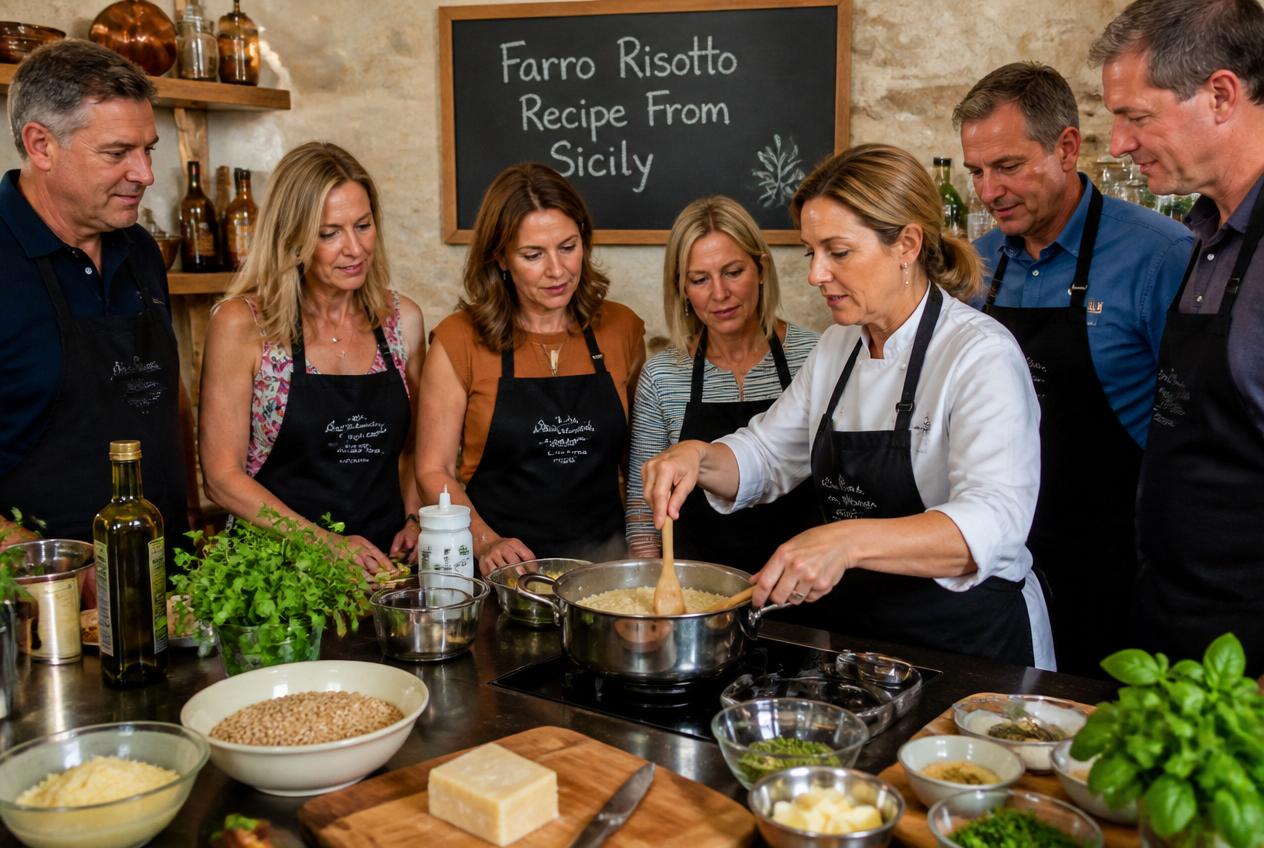
Sicilian Farro Risotto, recipes known as farrotto, transforms an ancient grain into a creamy, satisfying dish that rivals traditional rice-based risotto. This Farro Risotto recipe showcases Sicily’s agricultural heritage while delivering a nutty, wholesome flavor that sets it apart from its northern Italian counterpart. Slowly cooking farro in broth releases its starches, creating a luxurious texture without heavy cream, making this Farro Risotto recipe unique.
Farro contains soft starches that dissolve during cooking, creating the same creamy consistency as arborio rice but with deeper, earthier flavors and a more substantial bite. This Farro Risotto recipe is an excellent choice for those seeking a heartier alternative to standard risotto. The grain’s robust texture holds up beautifully to bold Sicilian ingredients like wild mushrooms, fresh herbs, and aged cheeses, making this Farro Risotto recipe truly authentic.
I’ll guide you through preparing authentic Sicilian farro risotto using traditional methods passed down through generations. You’ll learn the proper liquid ratios, stirring techniques, and timing needed to achieve that signature creamy consistency while maintaining the grain’s characteristic chew. This Farro Risotto recipe ensures the best texture and flavor.
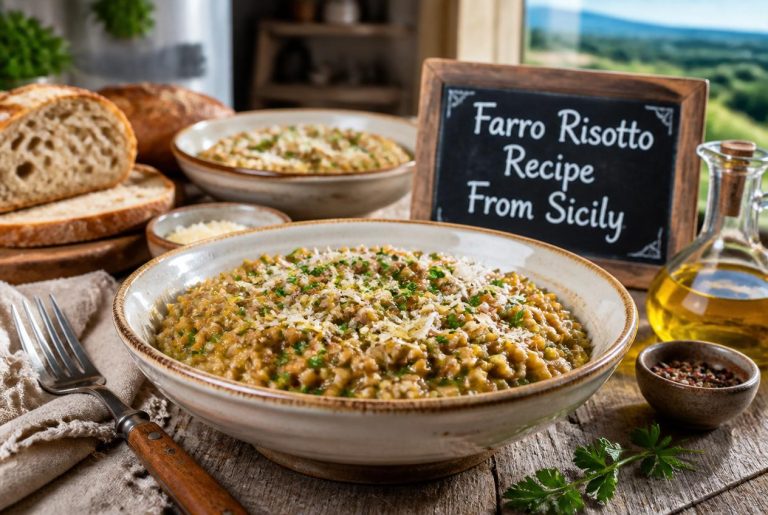
Farro Risotto Recipe From Sicily
Key Takeaways
- Farro risotto uses the same gradual broth-addition method as traditional risotto to create a creamy texture naturally
- The ancient grain provides a nuttier flavor and chewier texture than rice while still achieving the signature creaminess
- This Sicilian preparation typically takes about 30 minutes and pairs well with mushrooms, fresh herbs, and Mediterranean cheeses
Description and Historical Notes
Farro risotto, known as farrotto in Italian cooking, represents a rustic variation of the classic risotto that substitutes ancient farro grains for traditional rice. This Farro Risotto recipe is particularly significant in Sicilian cuisine, where it emerged from the island’s agricultural traditions and resourceful cooking methods.
Farro is one of the oldest cultivated grains in the Mediterranean region. In Sicily, peasant communities relied on this hardy grain because it thrived in the island’s diverse microclimates and required minimal resources to grow. This made it an essential component of Sicilian peasant food for centuries and a key ingredient in any Farro Risotto recipe.
The cooking technique mirrors traditional risotto preparation. Farro contains soft starches that dissolve during cooking, creating the signature creamy texture without requiring cream or excessive butter. This Farro Risotto recipe respects the grain’s natural properties while achieving a luxurious consistency.
Key characteristics of farro risotto include:
- Nutty, earthy flavor profile
- Chewy yet tender texture
- Higher fiber and protein content than rice
- Rich in magnesium and essential nutrients
Traditional foods from Sicily often showcase this grain in various preparations, but farrotto stands out for its comfort and versatility. The dish allows seasonal vegetables, local cheeses, and Mediterranean ingredients to shine while maintaining the wholesome qualities of the ancient grain. Pearled or semi-pearled farro works best for this Farro Risotto recipe, as these forms cook more quickly while retaining their nutritional benefits.
Expert Preparation Tips
I always toast my farro lightly in olive oil before adding any liquid. This simple step enhances the grain’s natural nutty flavor and creates a better foundation for the creamy, luscious dish that defines authentic Sicilian Farro Risotto recipe ideas.
The key to achieving proper consistency lies in adding broth gradually. I recommend warming your stock in a separate pot and adding it 1/2 cup at a time, stirring frequently between additions. This Farro Risotto recipe allows the grain to release its starches slowly and develop a creamy texture.
Essential techniques I follow:
- Maintain medium heat throughout cooking
- Stir regularly but not constantly
- Wait until liquid is mostly absorbed before adding more broth
- Taste for doneness after 25 minutes
Farro requires about 30 minutes of cooking time to reach the ideal texture. Unlike traditional risotto, farro retains a pleasant chew even when fully cooked, making this Farro Risotto recipe stand out.
My preferred ingredient ratios:
| Ingredient | Amount |
|---|---|
| Farro | 1 cup |
| Broth | 4-5 cups |
| Wine | 1/2 cup |
| Parmesan | 1/2 cup |
For Sicilian recipes at home, I finish my farrotto off the heat. Stirring in cold butter and freshly grated cheese at this stage creates an incredibly mantecatura—that silky, velvety finish Italians prize in their risottos. This step is essential for an authentic Farro Risotto recipe.
I test doneness by tasting a few grains. They should be tender but still have some bite, never mushy, which is key to a perfect Farro Risotto recipe.
Authentic Variations
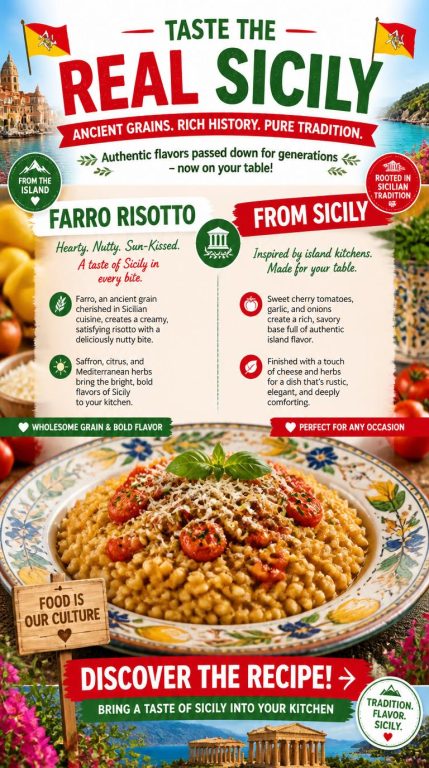
While traditional farro risotto follows classic Italian techniques, several Sicilian-inspired adaptations honor the island’s distinctive culinary heritage. These variations maintain the creamy texture that makes any Farro Risotto recipe special while incorporating ingredients that reflect Sicily’s Mediterranean crossroads.
Classic Sicilian Additions:
- Saffron and Wild Fennel – I add these aromatic ingredients to echo Sicily’s Arabic influences
- Fresh Seafood – Clams, mussels, or shrimp work beautifully with the nutty farro
- Sun-dried Tomatoes and Capers – These pantry staples bring bold, briny flavors
- Pistachios – Sicily’s famous Bronte pistachios add richness and texture
- Citrus Zest – Orange or lemon zest brightens the dish
Authentic recipes from Sicily often incorporate seasonal vegetables like artichokes, fava beans, or eggplant. The winter months call for hearty mushrooms and winter squash, while summer versions might include fresh tomatoes and basil. Each Farro Risotto recipe can be adapted to the season.
One variation I particularly enjoy uses anchovies melted into the soffritto, creating an umami-rich base that doesn’t taste fishy. Another adds toasted breadcrumbs on top, a distinctly Sicilian touch that provides textural contrast. These are delicious ways to personalize your Farro Risotto recipe.
The key is maintaining the proper cooking technique—adding broth gradually and stirring frequently—regardless of which ingredients you choose. Each addition should complement rather than overwhelm the farro’s inherent nuttiness and satisfying chew, ensuring your Farro Risotto recipe remains balanced.
Regional Pairing Suggestions
When I serve farro risotto at Sicilian family meals, I focus on complementing its nutty, creamy texture with traditional island flavors. The dish pairs beautifully with grilled swordfish or tuna, both staples of Sicilian coastal cuisine and perfect for any Farro Risotto recipe.
For vegetable sides, I recommend roasted eggplant with tomatoes and capers, which echoes the Mediterranean profile without overwhelming the farro’s earthy taste. A simple arugula salad dressed with lemon and olive oil provides a fresh contrast to the risotto’s richness and complements the Farro Risotto recipe.
Protein Pairings:
- Grilled swordfish with lemon
- Pan-seared tuna steaks
- Roasted chicken with herbs
- Braised lamb shanks
Vegetable Accompaniments:
- Caponata (Sicilian eggplant relish)
- Roasted bell peppers
- Sautéed Swiss chard with garlic
- Grilled zucchini
Mushroom and herb variations work particularly well when serving the risotto as a main course alongside a crisp green salad. The combination creates a satisfying vegetarian meal that honors traditional Italian cooking methods and highlights the Farro Risotto recipe.
For wine pairings, I select white wines from Sicily’s volcanic slopes, such as Etna Bianco or Grillo. These varieties complement the farro’s texture while enhancing any seafood or vegetable additions in your Farro Risotto recipe.
When planning Sicilian family meals, I often serve the farro risotto with mushrooms as a primo piatto, followed by a lighter protein course. This approach respects the traditional Italian meal structure while showcasing the versatility of this Farro Risotto recipe.
Comparable Sicilian Dishes
When I explore Sicilian cuisine, I find that farro risotto shares common ground with several traditional Sicilian recipes that emphasize grains, fresh vegetables, and simple preparation methods. These dishes inspire variations of the Farro Risotto recipe.
Risotto alla Siciliana stands as the closest relative to farro risotto. This classic Sicilian dish combines rice with fava beans, peas, artichokes, and pecorino cheese. The ingredients mirror the seasonal vegetables often used in farro preparations, though rice replaces the ancient grain in this Farro Risotto recipe alternative.
Sicilian grain dishes often feature similar flavor profiles:
- Pasta con le Sarde – Contains wild fennel, pine nuts, and raisins
- Arancini – Rice balls stuffed with ragù, peas, and cheese
- Insalata di Farro – Cold farro salad with vegetables and herbs
The cooking technique for farro risotto differs slightly from traditional rice-based versions. Farrotto provides deeper flavor and more substantial texture than conventional risotto while maintaining the same creamy consistency, making the Farro Risotto recipe especially appealing.
Sicilian cooks frequently incorporate similar ingredients across multiple dishes. Pine nuts, currants, saffron, and pecorino cheese appear in both farro risotto and other regional specialties. These elements create the distinctive sweet-savory balance characteristic of Sicilian cooking and elevate any Farro Risotto recipe.
Sicily’s fertile soil produces exceptional vegetables, grains, and legumes that form the foundation of these recipes. Each preparation showcases the region’s ability to transform simple ingredients into memorable meals, with the Farro Risotto recipe being a prime example.
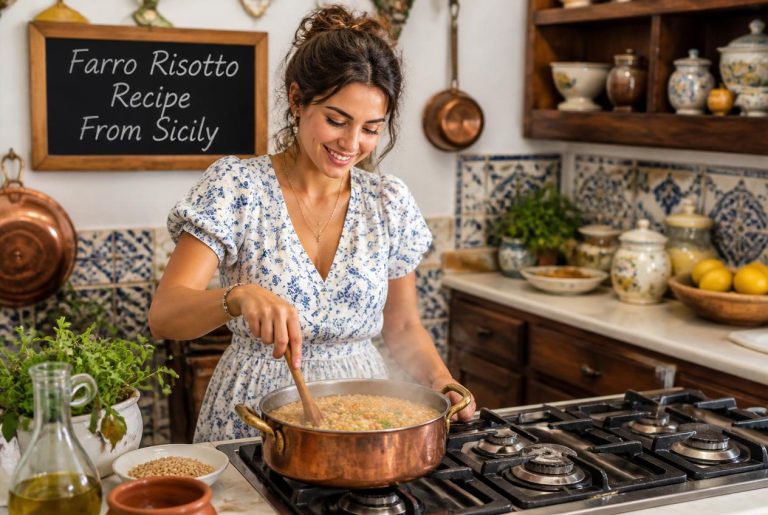
Farro Risotto Recipe From Sicily Cooking TIps
Farro Risotto Recipe From Sicily Cooking Tips
• Farro Risotto is known for its hearty texture, nutty flavor, and wholesome Sicilian-Mediterranean character.
• Farro is an ancient grain widely used throughout Italy and provides a pleasantly chewy texture compared to traditional risotto rice.
• Pearled farro cooks more quickly, while whole farro offers a firmer texture and deeper flavor.
• Rinse the farro thoroughly before cooking to remove excess starch and debris.
• Soaking whole farro beforehand can help reduce cooking time.
• Olive oil is traditionally used as the cooking fat and contributes authentic Sicilian flavor.
• Onions or shallots create a flavorful aromatic base.
• Garlic adds depth and complements the grain beautifully.
• Warm broth should be added gradually to help create a creamy consistency.
• Stir occasionally during cooking to encourage creaminess while preserving the grain’s texture.
• Seasonal vegetables such as tomatoes, zucchini, peas, asparagus, or mushrooms work especially well.
• Fresh herbs like parsley, basil, oregano, or thyme brighten the finished dish.
• Pecorino Romano adds a traditional Sicilian richness and savory depth.
• A splash of white wine can enhance flavor and add complexity.
• The finished dish should remain creamy while allowing the farro to retain a slight bite.
• The flavor should balance nutty grains, olive oil, vegetables, herbs, and aged cheese.
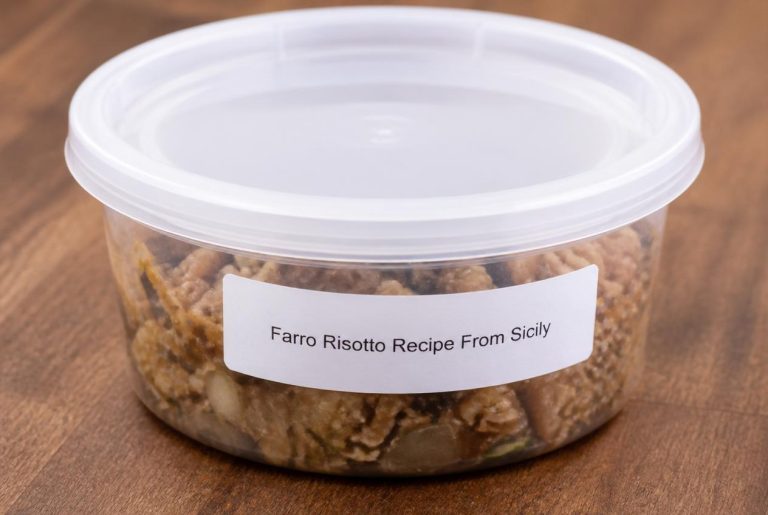
Farro Risotto Recipe From Sicily Storage Tips
Farro Risotto Recipe From Sicily Storage Tips
• Allow the farro risotto to cool before transferring it into storage containers.
• Store refrigerated in airtight containers to preserve freshness.
• Refrigeration may cause the risotto to thicken as the grains absorb liquid.
• Reheat gently over low heat to help maintain texture.
• Add a small splash of broth or water during reheating to restore creaminess.
• Herb and cheese flavors often deepen after overnight refrigeration.
• Fresh herbs are best added after reheating for maximum flavor and color.
• Freeze portions in airtight freezer-safe containers if desired.
• The texture may become slightly softer after freezing and thawing.
• Defrost frozen portions gradually in the refrigerator before reheating.
• Stir gently while reheating to distribute moisture evenly.
• Use clean utensils when handling leftovers to help maintain freshness.
• Grain-based dishes are generally best enjoyed within a moderate refrigerated storage period for ideal quality and flavor.
• Keep away from strongly scented foods because grains readily absorb odors.
• Discard leftovers if the risotto develops sour odors, slime, mold, or unusual discoloration.
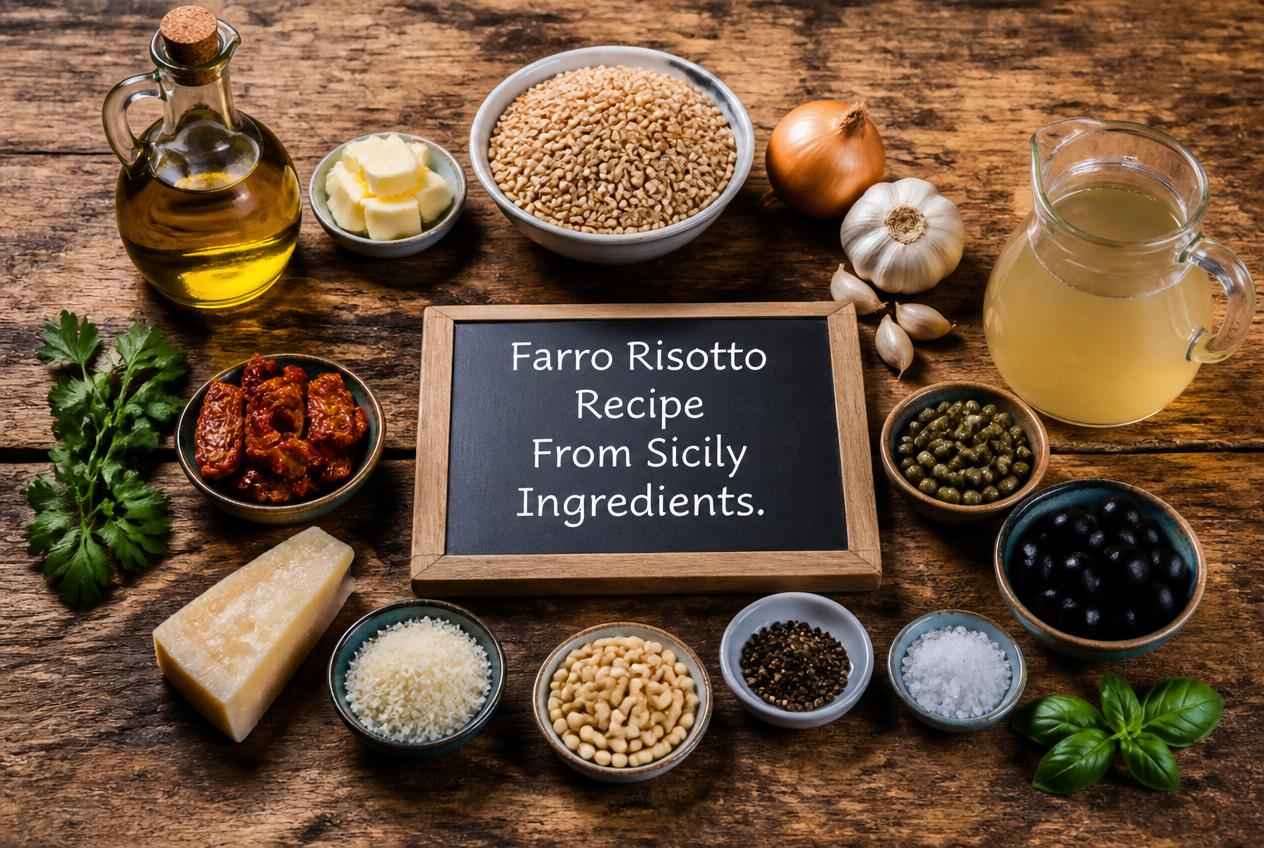
Farro Risotto Recipe From Sicily
Ingredients
- 2 tablespoons unsalted butter
- 1 small shallot finely diced or 1/2 small yellow onion
- 3 cloves garlic minced
- ½ teaspoon kosher salt
- ¼ teaspoon ground black pepper
- 1 ½ cups uncooked farro rinsed and drained
- 4 cups low-sodium vegetable broth divided or use chicken broth if you do not need the farro risotto to be vegetarian
- 1 14-ounce can no-salt-added petite diced tomatoes or 1 pound grated fresh tomatoes
- 1 pint cherry or grape tomatoes halved
- ½ teaspoon sugar
- ¼ cup grated Parmesan cheese plus additional for serving
- 1 tablespoon chopped fresh thyme
- Chopped fresh basil optional
Instructions
- In a large saucepan or Dutch oven, melt the butter over medium-low heat.
- Add the finely chopped shallot and cook gently for about 6 minutes, stirring occasionally, until softened and translucent. Avoid letting it brown or become crispy, adjusting the heat as necessary.
- Add the garlic, salt, and black pepper. Cook for about 1 minute, just until the garlic becomes fragrant.
- Add the farro to the saucepan and increase the heat to medium.
- Cook for 1–2 minutes, stirring constantly so the grains become coated in the butter. The farro should begin to smell slightly nutty and toasted, and the pan will appear mostly dry.
- This step helps develop flavor and improves the texture of the finished risotto.
- Pour in ¾ cup of the broth and increase the heat to medium-high.
- Stir continuously until the liquid is mostly absorbed.
- Add the remaining broth (reserving about 1 cup for later if needed) along with the diced tomatoes and their juices.
- Simmer the Risotto
- Reduce the heat to maintain a steady simmer, cover the pot, and cook for 30 minutes.
- Every 15 minutes, remove the lid and stir vigorously. This helps release the farro's starches and contributes to the creamy risotto-like texture.
- If the mixture appears dry at any point, add a splash of the reserved broth.
- After the initial 30-minute simmer, stir in the cherry tomatoes.
- Continue cooking uncovered for another 15–20 minutes, stirring more frequently as the farro nears tenderness.
- The farro should become tender while still retaining a pleasant chew in the center, similar to al dente pasta.
- If the risotto becomes too thick or dry during this stage, add additional broth or water a little at a time.
- Once the farro is tender, remove the pot from the heat.
- Stir in the sugar, grated Parmesan cheese, and fresh thyme.
- Mix thoroughly until the cheese melts into the risotto and everything is evenly combined.
- Cover the pot and let the risotto rest for 5 minutes.
- During this resting period, the farro will continue absorbing liquid and release additional starches, creating a creamier texture.
- Taste and adjust the seasoning with additional salt and black pepper if needed.
- Spoon the risotto into warm serving bowls.
- Top with:
- Fresh basil leaves
- Additional thyme
- Extra grated Parmesan cheese
- Serve immediately while warm.
- This tomato farro risotto combines nutty farro, sweet tomatoes, Parmesan, and herbs into a hearty Italian-inspired dish. Unlike traditional risotto made with rice, farro adds a pleasantly chewy texture and rich, earthy flavor while still creating the creamy consistency that makes risotto so comforting. It's excellent as a main course or alongside grilled chicken, fish, or roasted vegetables.
Farro Risotto Recipe From Sicily Frequently Asked Questions
Making farro risotto at home involves understanding the grain’s unique properties and how traditional Sicilian techniques differ from standard risotto preparation. This Farro Risotto recipe can be adapted for convenience while maintaining the dish’s characteristic creamy texture. Experimenting with seasonal ingredients and classic Sicilian flavors will help you create your own signature Farro Risotto recipe.
How do you make a traditional Sicilian-style farro risotto at home?
I start the Farro Risotto recipe by toasting the farro in olive oil with diced onions until the grains become fragrant and slightly golden. Farro contains a soft starch that dissolves during cooking, creating a creamy texture similar to arborio rice. This Farro Risotto recipe develops flavor from the very first step, ensuring a rich and satisfying dish.
I add warm vegetable or chicken broth gradually, about half a cup at a time, stirring frequently until each addition is absorbed. This Farro Risotto recipe usually takes 30 to 40 minutes, depending on whether I use pearled or semi-pearled farro. The gradual addition of broth helps the Farro Risotto recipe achieve the perfect creamy consistency.
I maintain a gentle simmer and stir regularly to release the starches. I finish the Farro Risotto recipe with grated Parmigiano-Reggiano cheese and a knob of butter for extra richness. This final touch brings out the best in the Farro Risotto recipe, making it truly special.
Can farro risotto be made without wine while keeping a rich flavor?
I make a Farro Risotto recipe without wine by enhancing the broth with aromatic vegetables and herbs. Sautéing garlic, carrots, and celery in the initial stages builds a flavor base that compensates for the absence of wine’s acidity. This Farro Risotto recipe benefits from a squeeze of lemon juice near the end of cooking, providing the brightness that wine typically contributes.
Homemade or high-quality store-bought broth makes a significant difference in the final taste of the Farro Risotto recipe. Dried mushrooms soaked in warm water create an umami-rich liquid that replaces both wine and part of the broth. This method ensures that the Farro Risotto recipe maintains depth and complexity without alcohol.
What is the easiest method for preparing farrotto for a weeknight dinner?
I use pearled farro for the quickest Farro Risotto recipe, as it cooks in about 20 to 25 minutes compared to 40 minutes for semi-pearled varieties. This Farro Risotto recipe can be completed in just 30 minutes from start to finish. I warm all my broth in advance and keep it at a low simmer in a separate pot, which speeds up the Farro Risotto recipe cooking time.
Some cooks note that the Farro Risotto recipe doesn’t require constant stirring like traditional risotto, allowing me to step away and prepare other meal components. I stir every few minutes rather than continuously, which saves time and effort on busy weeknights. This makes the Farro Risotto recipe ideal for quick, delicious dinners.
How do you make a mushroom farro risotto with a creamy texture?
I sauté sliced mushrooms separately in butter until they’re golden brown and have released their moisture. This step concentrates their flavor and prevents them from making the Farro Risotto recipe watery. Adding broth gradually in half-cup increments and stirring constantly helps release the farro’s natural starches for a creamy Farro Risotto consistency.
I reserve some of the cooked mushrooms to stir in at the end and use others throughout the cooking process. I finish the Farro Risotto with mascarpone or cream cheese along with Parmesan for extra creaminess. Fresh thyme pairs excellently with mushrooms and adds an earthy note that complements the farro’s nutty flavor in the Farro Risotto recipe.
Can farro risotto be baked in the oven instead of stirred on the stovetop?
I bake the Farro Risotto by combining toasted farro with hot broth in a covered Dutch oven at 375°F. The ratio is typically three cups of liquid to one cup of farro, and I check and stir halfway through the 35 to 40 minute cooking time. This hands-off Farro Risotto recipe method eliminates constant stirring and produces a slightly different texture than stovetop versions.
The grains cook more evenly but release less starch, resulting in a less creamy Farro Risotto I stir in cheese, butter, and additional warm broth at the end to achieve more creaminess in the Farro Risotto recipe. Advance preparation is possible by cooking the Farro Risotto recipe partially and finishing it just before serving.
Do Sicilians traditionally make risotto, and how does it differ from other regional styles?
Sicily has its own traditions with rice and grains that differ from the risottos of northern Italy. Sicilian cuisine historically incorporated farro and other ancient grains long before rice became widespread on the island. Many Sicilian families now enjoy preparing a Farro Risotto that highlights local flavors.
Traditional Sicilian grain dishes often include local ingredients like wild fennel, saffron, sardines, and pistachios. These flavors distinguish them from the butter and Parmesan-heavy preparations common in Lombardy and Veneto. A Farro Risotto recipe often features these Mediterranean ingredients to create a unique taste.
Sicilian-style preparations use olive oil as the primary fat instead of butter. The cooking technique stays similar, but ingredient choices reflect the island’s Mediterranean climate and Arab-influenced culinary history. Many cooks use a Farro Risotto recipe to showcase Sicily’s agricultural heritage, and the Farro Risotto recipe allows for creative use of seasonal produce.
Home cooks across Sicily have embraced the Farro Risotto recipe as a way to celebrate local grains. A Farro Risotto can adapt to whatever vegetables or herbs are in season. Using a Farro Risotto recipe, Sicilians continue to honor their culinary roots while enjoying a nutritious and delicious meal.
The Farro Risotto recipe stands out for its versatility and depth of flavor. By choosing a Farro Risotto recipe, you can experience a taste of Sicilian tradition in your own kitchen. Many chefs recommend trying a Farro Risotto recipe to explore new textures and flavors beyond classic rice-based risotto.

Recipes are gathered in person and written for real-world cooking conditions.
- 10 Hungarian Dessert Recipes Passed Down Through Generations - July 25, 2026
- 11 Easy English Recipes Anyone Can Make - July 25, 2026
- Hungarian Kifli Recipe - July 25, 2026