
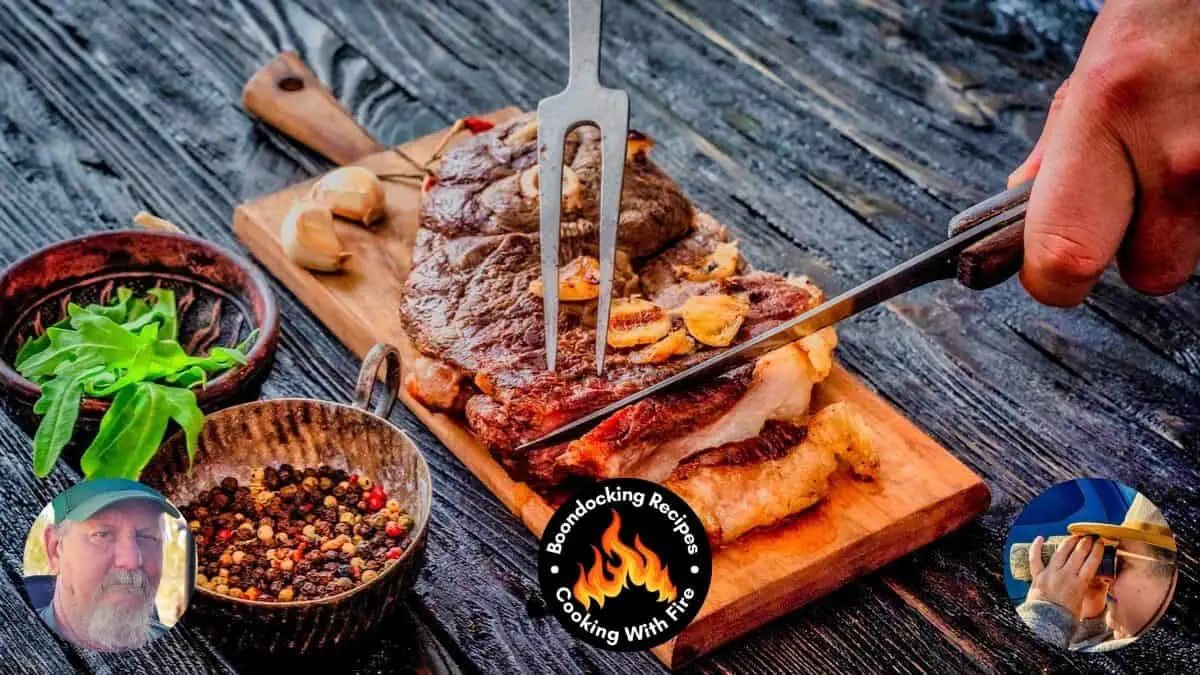
Bison tomahawk steak and chimichurri butter is the perfect dish for outdoor cooking. I often prepare it for my husband and myself, and it is always good. The rich of the bison combined with the chimichurri butter creates a perfect combination.
Cooking outdoors adds a unique touch to the Bison tomahawk steak and chimichurri butter. There’s something about grilling this steak over an open flame that just makes it taste better. Bison tomahawk steak and chimichurri butter is already a great cut of meat but when you add chimichurri butter make it so much better. The butter melts over the steak, blending with the natural juices and herbs.
My husband and I love the process of cooking the Bison tomahawk steak and chimichurri butter. The tomahawk steak is easy to handle on the grill, and the chimichurri butter is simple to make. These elements come together beautifully, creating a meal that’s as fun to prepare as it is to eat.
Grilling the Bison tomahawk steak and chimichurri butter is very practical. The steak’s bone acts as a handle, making it easy to turn and move on the grill. The chimichurri butter can be made ahead of time, so there’s less fuss when you’re ready to cook. This Bison tomahawk steak and chimichurri butter is all about enjoying good food without too much hassle.
Cooking Instructions For the Bison Tomahawk Steak and Chimichurri Butter
- The first step of making the Bison tomahawk steak and chimichurri butter is to start your fire or charcoals. You will using them for the Bison tomahawk steak and chimichurri butter, so you will want to make sure you have plenty on hand.
- If using embers, get a large fire going using (preferably) hardwood and let it slowly burn down. This process from start to finish can take upwards of an hour.
- If using charcoals, fill a large chimney starter and light. This process will take approximately 20 minutes to get all the coals hot and ready. You will likely want to have some charcoals available in reserve.
- Add a flat fire great on top of the embers for cooking
- After about 45 minutes of refrigeration, take the bison tomahawk steak out of the fridge and allow it to reach room temperature.
- The kosher salt, garlic powder, and freshly ground black pepper should be mixed in a small bowl. Coat the steak well on all sides with the garlic, salt, and pepper mixture.
- Bring the smoker up to 225°F, or 107°C. You can smoke using hickory, oak, or mesquite chips or pellets, but feel free to use whichever wood you choose.
- On the smoker grate, lay the steak that has been seasoned. Bring the steak to an internal temperature of 110-115°F, or 49-52°C, by smoking it for approximately 1 to 1.5 hours. You may change the degree of doneness by adjusting the smoking time.
- After the steak gets the doneness you desire, take it out of the smoker and give it a 5-minute rest. Arrange the meat on the barbecue that has been heated up. Get a nice crust on the steak by searing it for a few minutes per side. Additionally, sear the edges.
- Bring the steak to the “pull temperature,” which is around 5 degrees Fahrenheit below the temperature you want it to finish cooking at. Even as it rests, the steak will keep cooking from the residual heat.
Pull temperatures for various degrees of doneness are as follows: Infrequent: 46–49°C (115–120°F)Very uncommon: 120–125°F, or 49–52°CAverage: 130–135 degrees Fahrenheit (54–57 degrees Celsius)Well-Medium: 60-63°C (140-145°F)Great Job: 150°F (66°C) and above - Take the steak off the cooktop. Top the bison steak with 1 tablespoon of butter and loosely cover with foil. In order to circulate the fluids throughout the flesh, let the steak rest for a further 10-15 minutes.
- Serve the steak hot with your preferred accompaniments after slicing it against the grain. If desired, garnish with fresh herbs.
Ingredients
Bison Tomahawk Steak
kosher salt
freshly ground black pepper
garlic powder
butter
Fresh herbs for garnish

5 Reasons I Love the Bison Tomahawk Steak and Chimichurri Butter
1. It is delicious
If you like meat, you will like Bison. People describe Bison meat as tasting comparable to beef but richer and somewhat sweeter. However, because bison is so thin, it is crucial not to overcook it. Bison should not be cooked beyond medium. Of course, if you use ground Bison, this isn’t an issue.
Some people are afraid that Bison will have a gamey flavor comparable to venison; however, I have never found this to be the case. Bison, in my opinion, tastes better than any meat I’ve ever tasted. Bison meat is denser, richer in flavor, and more satisfying than beef, in my opinion.
2. Lean Protein
Food guidelines advocate bison as a lean protein alongside skinless chicken breast and other wild game meats, and for good reason. 100g of lean bison contains just 2.42g of fat, compared to 8.09g in lean beef and 9.66g in lean pig. The same 100g of bison contains just 82mg of cholesterol, compared to 86mg in the same quantity of lean beef, pig, and chicken. If you want to keep things lean and clean, Bison is an excellent choice. Figures sourced from the Canadian Bison Association website.
3. Lot’s of the Good Stuff Inside
In addition to being lean as well as low in cholesterol, bison is high in iron (3.42mg per 100g lean meat compared to 2.99mg in beef, 1.1mg in pork, 0.6mg in chicken, and.34mg in salmon), vitamin B12, B6, Niacin, and Zinc. Bison’s high iron content makes it an ideal choice for both men and women who suffer from anemia. In 2018, Thehealthy.com (part of Reader’s Digest) identified bison as one of the 13 Superfoods Every Healthy Woman Needs in Her Diet because women are more susceptible to anemia, and bison delivers a high iron, low-fat choice to help address this issue.
Bison are raised without growth stimulants or hormones and are not regularly fed antibiotics.
4. It’s Sustainable
Bison are raised sustainably, contributing to the land’s development and biodiversity rather than depleting it. Because practically all of a bison’s nutritional demands can be supplied by *feeding on native perennial plants that grow natively in Canada, there is no need to overfertilize the soil. These grassland ecosystems would often be exploited for monoculture cultivation, such as grain or soybeans. Some monoculture farms have even been turned into more biodiverse bison grazing areas.
Raising a bison cow and her young requires between four and sixteen hectares of grazing space. However, bison live on, consume, and fertilize these enormous grasslands. Compare this to other commercial farming approaches that confine animals to limited quarters and raise their feed on monoculture farms. To be sustainable, these monoculture agricultural processes require a lot of acreage and artificial fertilizers. Of course, the feed must be moved from the farm to the animals.
5. You Already Know What To Do With It
One might be telling yourself, “This seems wonderful, but what do I do with it?” That is an excellent question. But here’s the thing: You are already aware of what to do with it. Let me ask you something: Have you ever cooked beef? If you said yes, you have your answer. You may make the same dishes you’ve always used; just substitute Bison for the protein. It is that easy.
Bison, The Meat of The Future.
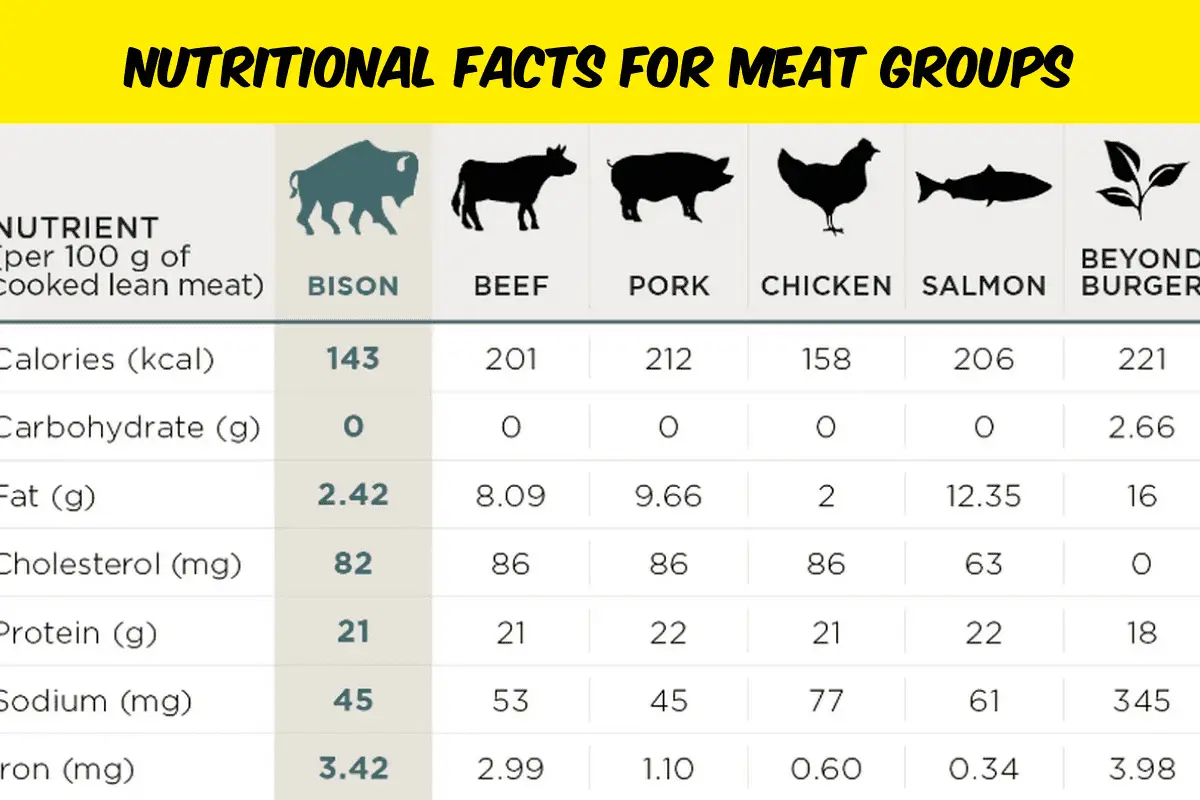
Nutritional Facts for Meat Groups
I’ve been cooking with bison for more than a decade, at private dinners, and at home, and I’ve always liked it. An observation that has impressed me over the years is that bison ought to be more widely recognized than it is, and I believe it is about to be. I believe that as consumers seek for more sustainable meals and leaner meats, bison will gain appeal. There is a growing trend, and for good cause, of eating higher quality meat in lesser quantities. Bison, with its high caloric density and unquestionable quality, is the ideal protein for this future dietary standard.
If you’ve ever spotted Bison at the grocery store, thought about it, but then passed it up because you didn’t know what to do with it or how it would taste, I hope this has given you a reason to reconsider. I hope you try it because I am convinced that you will be pleased with the results.
Grass-fed, regenerative bison meat is superior in flavor, protein content, and nutritional density. Bison is a lean, soft, naturally tasty meat with a deeper taste profile and darker color than beef. Bison meat, unlike that of other exotic species, lacks a “gamey” or wild flavor and is typically thought to be sweeter. Bison meat is interchangeable in almost any red meat dish.
Bison steaks cook around 1/3 faster than beef steaks due to their thinner nature. Bison steaks are best cooked medium-rare (135°F)/medium (145°F) to keep the meat’s moisture and taste – this means taking the meat off the fire when it is approximately 5 to 10 degrees below your ideal temperature to account for the rise in temperature while it rests.
Bison Cooking Guidelines
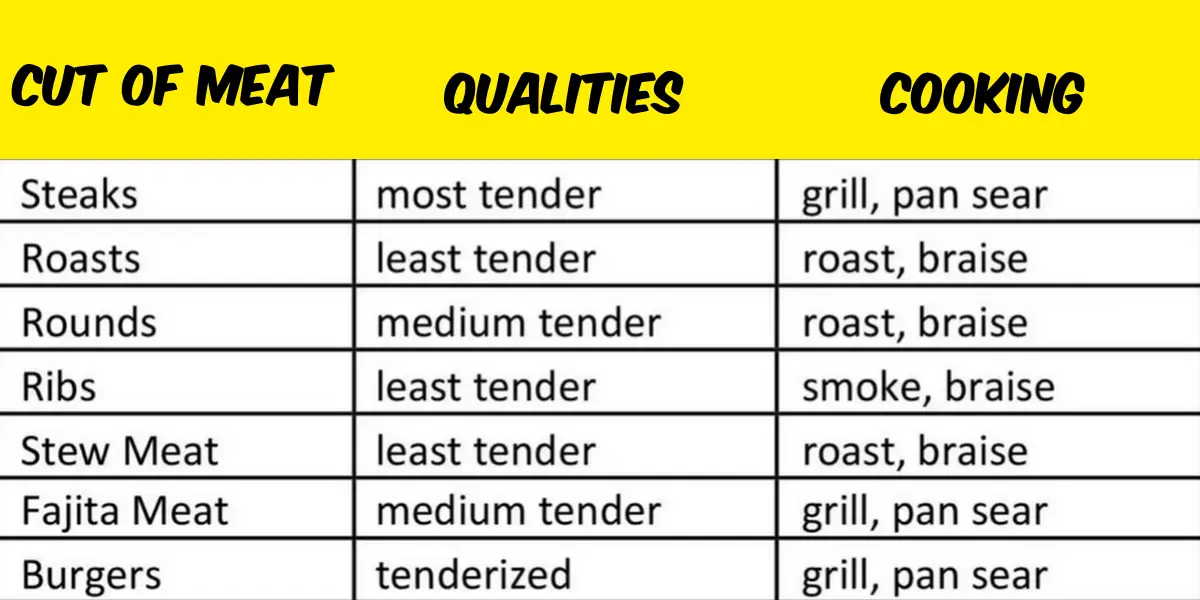
Chart Showing Various Cuts of Bison
Steaks (Grill, Broil, or Pan-Broil)
Use steak ¾ to 1 inch thick
Place in lightly oiled skillet and use medium heat on stove top
Place bison on BBQ or 6 inches from the heat source in broiler
Cook 4 – 5 minutes per side
To increase tenderness, marinate sirloin tip and inside round steaks for 8- 24 hours
Roasts (Sirloin Tip, Inside Round)
Sear roast in oven at 500°F (260°C) or on stove in a hot pan
Season roast, add ¼ cup (50 mL) of liquid (water or red wine)
Roast at 325°F (165°C) in covered pan or place in slow cooker
Cook roast to medium rare 145°F (63°C)
Roasts (Rib, Loin and Tenderloin)
Use uncovered pan with rack
Season as desired to taste
Cook at 275°F (135°C)
Do not cook past medium 155°F (68°C)
Burger
Cook ground meats to 160°F (70°C) internal temperature
Make sure all patties sit flat on grill for entire cooking time.
Cooking equipment should maintain temperature of 375°F (190°C) even when loading continuously with frozen patties
Ground bison should always be cooked until no pink remains

Natural versus Organic—Bison Meat is Meat Raised Naturally
The term ‘natural’ does not mean the same as certified organic. Under Canadian labelling guidelines, a ‘natural’ or ‘naturally raised’ label claim is allowed only if animals were raised with minimal human intervention, such as bison. While we can’t claim our bison meat as certified organic, we can say that our products are about as natural and unprocessed as you can get.
Bison Meat Benefits
Bison meat is one healthy protein, but don’t just take our word for it. The U.S. and Canada’s food guides recommends bison meat as a ‘heart healthy lean protein’ for anyone, and many nutritional experts tout bison as ‘a step above beef when it comes to sustainability, heart health and even taste.’ Nutrient-dense bison meat is healthy because it’s:
Bison is lean meat with a similar texture, flavor, and appearance to beef, but its impressive nutrient profile uniquely supports an active lifestyle. With no carbs, only 2.1g of fat, and a whopping 24 grams of high-quality protein per serving, the health benefits of bison meat are extensive.
Promotes Muscle Recovery
The main appeal of bison is its high quality protein content. . Protein is essential for helping your muscles recover from a tough workout. With the high-quality protein that bison contains, your body can use it for muscle synthesis and utilize the naturally-occurring vitamins and minerals to support overall health.
Supports Bone Strength
Protein has been shown to have a positive association with bone strength, especially within the senior demographic. With bison possessing a very pure and high-quality source of protein, regularly consuming this lean meat can help improve muscle mass and bone strength, keeping individuals—particularly seniors—active and independent.
Great Source of Zinc
Just a 4-ounce bison patty can provide over 3 milligrams of zinc—an essential mineral for your immune system, metabolism, and healing wounds. Zinc from meat sources, such as bison, is more bioavailable than from vegetarian sources, which means that bison provides a form of zinc that’s easy for your body to absorb and utilize in the body.
Preventative Against Anemia
Anemia is associated with low intake or poor absorption of vitamin B12. Since bison is a good source of iron and vitamin B12, consuming it can help you avoid becoming anemic and experiencing symptoms of anemia such as fatigue, dizziness, paleness, and a rapid heart rate.

FAQ For the Bison Tomahawk Steak and Chimichurri Butter
Q: What ingredients are needed for the Bison tomahawk steak and chimichurri butter recipe?
A: To make the Bison tomahawk steak and chimichurri butter recipe, you’ll need a bison tomahawk steak, olive oil, salt, and pepper for the steak. For the chimichurri butter, you’ll need unsalted butter, fresh parsley, fresh cilantro, fresh oregano, garlic, red wine vinegar, lemon juice, red pepper flakes, and salt.
Q: How do you cook the Bison tomahawk steak for the Bison tomahawk steak and chimichurri butter recipe?
A: To cook the Bison tomahawk steak for the Bison tomahawk steak and chimichurri butter recipe, start by preheating your grill to high heat. Rub the steak with olive oil and season generously with salt and pepper. Grill the steak for about 4-5 minutes per side for medium-rare, or until it reaches your desired level of doneness. Let the steak rest for 5-10 minutes before serving to allow the juices to redistribute.
Q: How do you make the chimichurri butter for the Bison tomahawk steak and chimichurri butter recipe?
A: To make the chimichurri butter for the Bison tomahawk steak and chimichurri butter recipe, start by finely chopping fresh parsley, cilantro, oregano, and garlic. In a bowl, mix these ingredients with softened unsalted butter, red wine vinegar, lemon juice, red pepper flakes, and salt until well combined. Transfer the mixture to a piece of plastic wrap, shape it into a log, and refrigerate until firm. Slice the chimichurri butter and place it on top of the grilled bison tomahawk steak before serving.
Q: Can I cook the Bison tomahawk steak and chimichurri butter recipe indoors?
A: Yes, you can cook the Bison tomahawk steak and chimichurri butter recipe indoors. Use a cast iron skillet or grill pan over high heat to sear the steak for 4-5 minutes per side. You can then transfer the skillet to a preheated oven at 375°F (190°C) to finish cooking the steak to your desired level of doneness. Let the steak rest before topping with chimichurri butter and serving.
Q: What side dishes pair well with the Bison tomahawk steak and chimichurri butter recipe?
A: The Bison tomahawk steak and chimichurri butter recipe pairs well with a variety of side dishes. Consider serving it with roasted vegetables, such as asparagus or Brussels sprouts, or a fresh salad. Grilled corn on the cob, mashed potatoes, or a quinoa salad also make excellent accompaniments. The vibrant flavors of the chimichurri butter complement many different side dishes, making it a versatile meal.
Other Bison Recipes to Try
Cast Iron Skillet Bison Picadillo Recipe
Easy Dutch Oven Bison Stew Recipe
Dutch Oven Bison Roast and Orange Sauce
Dutch Oven Spicy Poblano Bison Chili Recipe
Dutch Oven Beer Braised Bison Roast Recipe

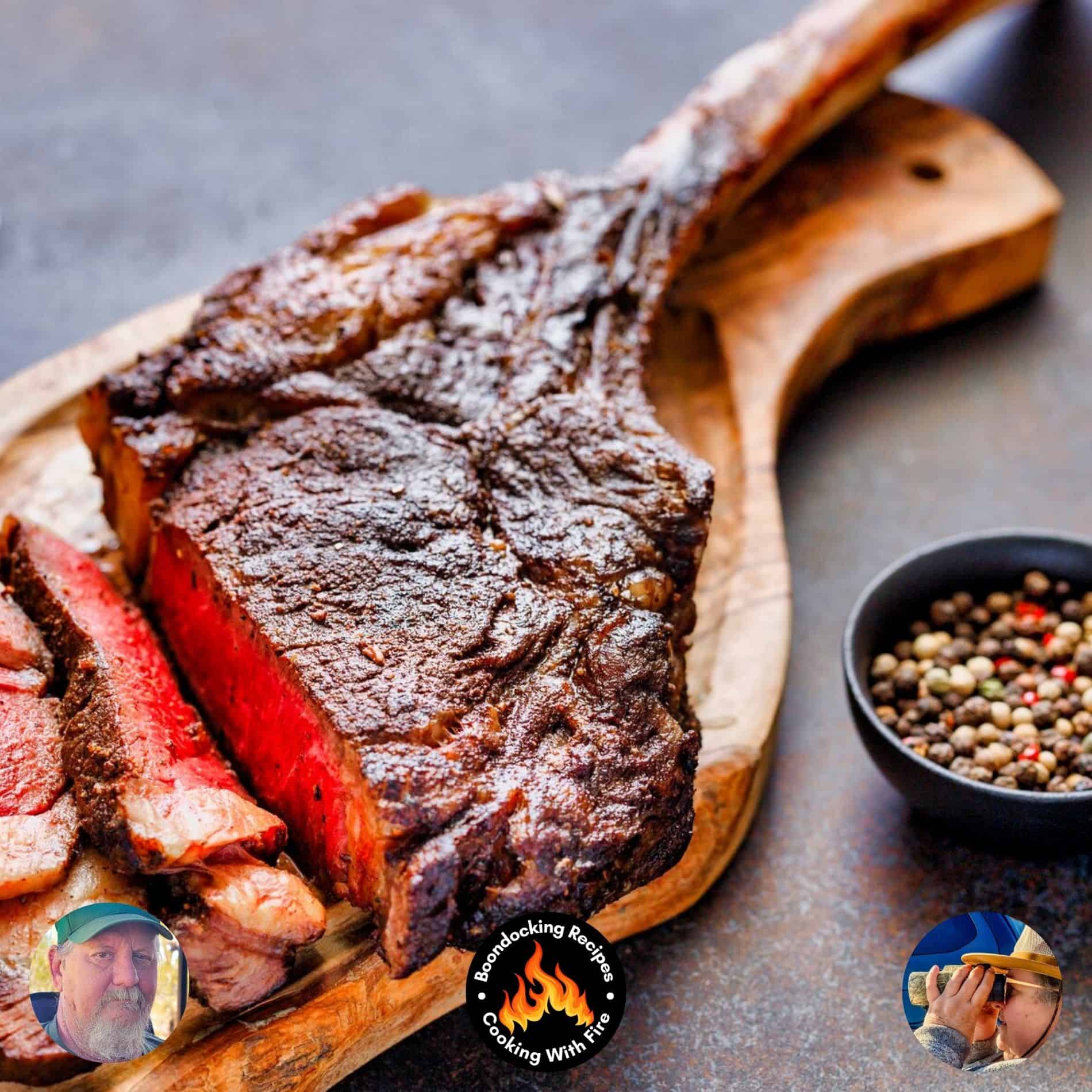
Campfire Bison Tomahawk Steak and Chimichurri Butter
Ingredients
- 2 lb Bison Steak Dry Aged Bison Tomahawk
- 2 tbsp kosher salt
- 1 tbsp black pepper freshly ground
- 1 tbsp garlic powder
- 1 tbsp butter
- Fresh herbs for garnish optional, e.g., rosemary or thyme
Equipment
- Kitchen Twine
- mixing bowl
- Cast Iron Skillet
- Grill Grate
- knives
- Campfire Cooking Utensils
- Campfire Serving Utensils
- Campfire Fork Or Tongs
- fire proof cooking gloves
- Cast Iron Dutch Oven
- Foil Paper Non Stick
Instructions
- The first step of making the Bison tomahawk steak and chimichurri butter is to start your fire or charcoals. You will using them for the Bison tomahawk steak and chimichurri butter, so you will want to make sure you have plenty on hand.
- If using embers, get a large fire going using (preferably) hardwood and let it slowly burn down. This process from start to finish can take upwards of an hour.
- If using charcoals, fill a large chimney starter and light. This process will take approximately 20 minutes to get all the coals hot and ready. You will likely want to have some charcoals available in reserve.
- Add a flat fire great on top of the embers for cooking
- After about 45 minutes of refrigeration, take the bison tomahawk steak out of the fridge and allow it to reach room temperature.
- The kosher salt, garlic powder, and freshly ground black pepper should be mixed in a small bowl. Coat the steak well on all sides with the garlic, salt, and pepper mixture.
- Bring the smoker up to 225°F, or 107°C. You can smoke using hickory, oak, or mesquite chips or pellets, but feel free to use whichever wood you choose.
- On the smoker grate, lay the steak that has been seasoned. Bring the steak to an internal temperature of 110-115°F, or 49-52°C, by smoking it for approximately 1 to 1.5 hours. You may change the degree of doneness by adjusting the smoking time.
- After the steak gets the doneness you desire, take it out of the smoker and give it a 5-minute rest. Arrange the meat on the barbecue that has been heated up. Get a nice crust on the steak by searing it for a few minutes per side. Additionally, sear the edges.
- Bring the steak to the "pull temperature," which is around 5 degrees Fahrenheit below the temperature you want it to finish cooking at. Even as it rests, the steak will keep cooking from the residual heat.
- Pull temperatures for various degrees of doneness are as follows:Infrequent: 46–49°C (115–120°F)Very uncommon: 120–125°F, or 49–52°CAverage: 130–135 degrees Fahrenheit (54–57 degrees Celsius)Well-Medium: 60-63°C (140-145°F)Great Job: 150°F (66°C) and above
- Take the steak off the cooktop. Top the bison steak with 1 tablespoon of butter and loosely cover with foil. In order to circulate the fluids throughout the flesh, let the steak rest for a further 10-15 minutes.
- Serve the steak hot with your preferred accompaniments after slicing it against the grain. If desired, garnish with fresh herbs.
Notes
INGREDIENTS
Chimchurri Butter
-
In a small mixing bowl combine butter, herbs, shallot, garlic, fresno, lemon zest and salt and pepper. Mix until well combined. Add red wine vinegar a small splash at a time, mixing after each addition. Serve immediately or refrigerate until chilled.
-
To torchon for refrigeration: Place a large piece of plastic wrap on a clean, slightly moistened work surface. Place the chimichurri butter on the center of the plastic. Fold the plastic away from you, over the butter. Try to avoid trapping any air bubbles. With each respective hand, hold either side of the plastic wrap. Roll the butter away from you, into a log, while the plastic twists to secure either end. Refrigerate until firm and slice disks, as needed for serving.
1 comment
Never tried bison, really nice steaks.
Comments are closed.