
There’s just something about a Bavarian pot roast recipe that hits all the right notes—bold, tangy flavors, super tender beef, and a sense of old-world comfort. If you’re craving a meal that feels both rustic and a little fancy, this Bavarian pot roast recipe might just be your new favorite. The beef turns out deeply savory, thanks to a slow braise in a spiced, slightly sour sauce. And honestly, you don’t need any fancy skills to pull it off.
Let’s break it down: get your ingredients lined up, don’t skip the beer or mustard, and lean into those cozy spices. I’ll walk you through what you need, some classic tips, and a bit of the story behind the dish. This Bavarian pot roast recipe is adaptable, straightforward, and honestly pretty forgiving if you’re not a kitchen perfectionist.
Description, Recipe, and Historical Information
The heart of a Bavarian pot roast recipe—sometimes called Schmorbraten or böfflamott, depending on where you’re from—starts with a boneless beef chuck roast slowly braised until it’s meltingly tender. Typically, you’ll grab a beef chuck or round roast, then let it simmer in beef broth with onions, mustard, a splash of vinegar, and a handful of warming spices—and yes, that’s where the magic happens for the gravy.
Some folks like to pour in a little red wine (Pinot Noir is classic) to bump up the flavor and help break down the meat, but if you’re not into wine, just use more beef broth. Sear that roast first—don’t skip this step!—then let it braise all lazy and low until it practically falls apart. I always save the cooking juices for a glossy, tangy sauce at the end. That’s half the reason I make this Bavarian pot roast recipe, honestly.
For sides, you can’t go wrong with spaetzle, egg noodles, or potato dumplings. They soak up the sauce in a way that makes you want seconds. If there’s any leftover Bavarian pot roast recipe (which is rare at my house), I slice or shred it for freezing—just keep it in the juices so it stays juicy when you reheat.
Historically, the Bavarian pot roast recipe comes from thrifty, practical roots. German cooks figured out how to turn tough cuts into something special with long, slow braising. Over time, every region put its own spin on it—sometimes adding more vinegar, sometimes wine, and always tweaking the spices. You’ll see variations like Sauerbraten or böfflamott, but the core of a good Bavarian pot roast recipe stays the same: patience, good beef, and a punchy, complex sauce.
If you want a no-fuss approach to the Bavarian pot roast recipe: sear the beef, deglaze with your liquid of choice, toss in aromatics and enough broth to come halfway up the meat, and braise low and slow for a few hours. When it’s done, strain and reduce the liquid for a rich gravy, taste for seasoning, and pour it all over your starch of choice. That’s it. There’s nothing fussy about a Bavarian pot roast recipe, but the results are pure comfort.

Cooking Tips
Start by browning the roast well on all sides. This step builds deeper flavor for your Bavarian pot roast recipe and gives the gravy a richer base. I usually grab a heavy Dutch oven or even a slow cooker insert—it just helps keep the heat nice and even, which matters more than you’d think.
Use low, steady heat for a Bavarian pot roast recipe—slow cooking is really the whole point. Plan for about 2.5 to 3 hours in the oven, or 6 to 8 hours on low if you’re using a slow cooker. I poke the meat with a fork to check: if it pulls apart easily, you’re golden. That’s when you know your Bavarian pot roast recipe is on track.
Keep the cooking liquid shallow, just enough to come partway up the roast. Too much and you’ll lose that concentrated flavor that makes a Bavarian pot roast recipe so good, but too little and you’ll dry things out. I like to baste once or twice during oven cooking to keep the surface moist—nothing fancy, just a quick spoonful here and there.
When it’s time to thicken the pan juices, I pull out the roast and simmer the juices on the stovetop to reduce. Or I’ll whisk in a cornstarch slurry—about a tablespoon per cup of liquid works for most Bavarian pot roast recipes. Want a silkier gravy? Drop in a cold knob of butter or a splash of cream at the end. It’s worth it.
Strain out any solids if you want a smooth sauce, then taste and tweak with salt, pepper, and maybe a dash of vinegar or mustard. I’ve found that if you’re using wine or beer in your Bavarian pot roast recipe, reducing it first really helps concentrate the flavor and avoids any weird bitterness. Not everyone bothers, but I think it’s worth the extra step.
If you’re freezing leftovers from your Bavarian pot roast recipe, let the meat and juices cool before packing them in airtight containers. Always include some cooking liquid to keep things from drying out. I thaw overnight in the fridge and reheat gently, adding a splash of broth if things look a little dry. Honestly, a Bavarian pot roast recipe often tastes even better the next day.
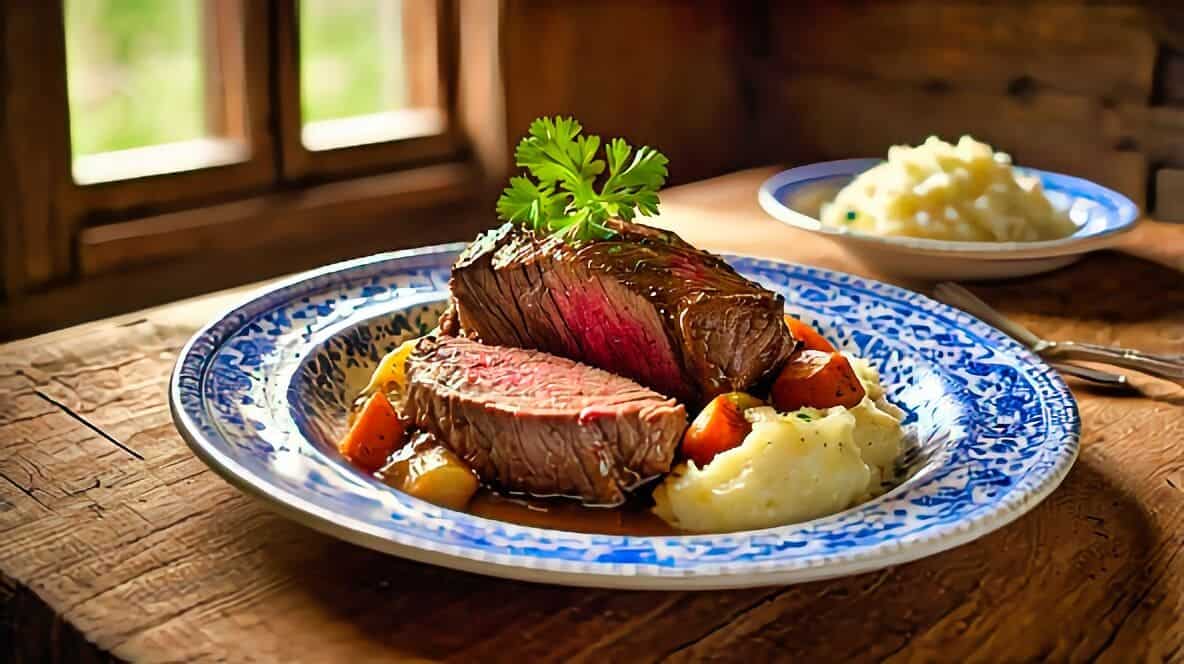
Bavarian Pot Roast Recipe
Ingredients
- 3 pounds beef roast
- 2 tablespoons canola or vegetable oil
- 1 1/4 cups water
- 3/4 cup beef broth
- 18 oz. tomato sauce
- 1 tablespoon vinegar
- 2 tablespoons sugar
- 1 teaspoon onion powder
- 1/2 teaspoon cinnamon
- 1/4 teaspoon ginger ground
- 1 1/2 teaspoon salt
- 1/2 teaspoon pepper
- 1-2 bay leaves
- 2 tablespoons cornstarch + 4 tablespoons water
Instructions
- Heat the oil in a large Dutch oven over medium-high heat.
- Place the roast in the hot oil and sear it on all sides until it develops a rich, even brown crust.
- Once browned, transfer the roast to a lightly greased slow cooker.
- In a medium mixing bowl, whisk together the water, beef broth, tomato sauce, vinegar, sugar, onion powder, cinnamon, ground ginger, salt, and black pepper until well combined.
- Pour the mixture evenly over the roast in the slow cooker.
- Add the bay leaves to the cooking liquid.
- Cover the slow cooker with the lid.
- Cook on LOW for approximately 8 hours, or until the roast is fork-tender and easily pulls apart.
- Once fully cooked, carefully remove the roast from the slow cooker and transfer it to a serving platter.
- Cover loosely with foil to keep it warm while preparing the sauce.
- In a small bowl, whisk the cornstarch with the water until completely smooth.
- Slowly whisk the cornstarch slurry into the cooking liquid remaining in the slow cooker.
- Stir continuously until the juices thicken into a smooth gravy.
- If needed, allow the gravy to cook for a few additional minutes until it reaches your preferred consistency.
- Slice or shred the pot roast and spoon the rich gravy generously over the top.

Recipes are gathered in person and written for real-world cooking conditions.
- 10 Hungarian Dessert Recipes Passed Down Through Generations - July 25, 2026
- 11 Easy English Recipes Anyone Can Make - July 25, 2026
- Hungarian Kifli Recipe - July 25, 2026