

You’ll find Italian Ziti al Forno-Baked Ziti recipe a reliable go-to when you want a hearty, no-fuss Italian casserole that feeds a crowd and pleases picky eaters. This Italian Ziti al Forno-Baked Ziti recipe layers tender pasta, savory meat sauce, and melty cheeses into a crowd-pleasing comfort dish you can make ahead and bake to bubbly perfection. I’ll walk you through a straightforward approach that keeps the flavors classic while showing where small tweaks lift the dish.
Follow my clear tips to nail the sauce texture, choose the right pasta, and assemble for even baking so the casserole stays saucy without becoming soggy. Expect quick variations for dietary needs and simple side pairings that turn Italian Ziti al Forno-Baked Ziti recipe into a family-friendly centerpiece for weeknight dinners or holiday gatherings.
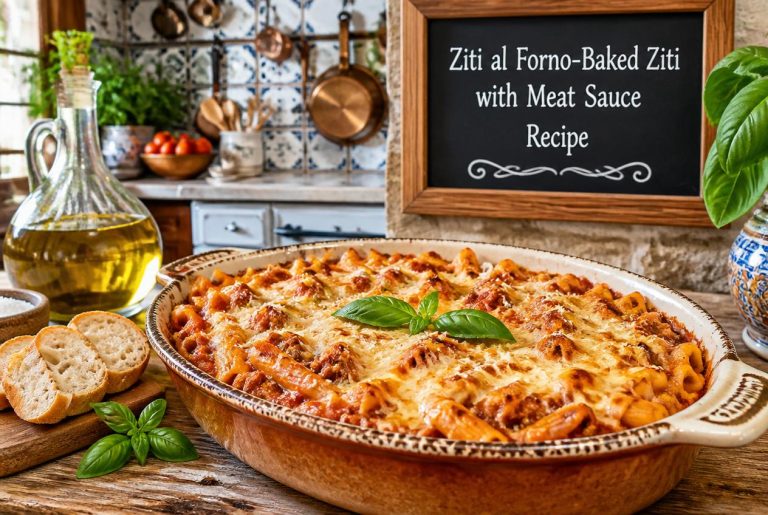
Ziti al Forno-Baked Ziti with Meat Sauce Recipe
Key Takeaways
- Learn the essential technique to build a classic, family-friendly Italian casserole.
- Use make-ahead and storage tips to simplify dinner planning.
- Find easy adaptations and pairing ideas to fit varied tastes and occasions.
Background and Origins
I trace Italian Ziti al Forno-Baked Ziti recipe to the long Italian tradition of baked pasta casseroles, known as pasta al forno, which appear across southern Italy. These dishes pair tubular pasta with sauces, cheeses, and sometimes béchamel or ragù, reflecting regional habits and seasonal availability.
Baked ziti serves as an Italian-American adaptation of those older casseroles. In Italy, similar preparations—like ziti alla sorrentina—tend to be lighter and use fewer cheeses, while the American casserole often layers ricotta, mozzarella, and a meat sauce for a denser texture.
Traditional Italian baked recipes emphasize fresh ingredients, restrained use of cheese, and a balance between sauce and pasta; the Italian-American version amplifies richness to suit family-style serving and oven baking. Italian Ziti al Forno-Baked Ziti recipe became a staple of Italian-American kitchens and holiday tables because it feeds many and travels well. Its status as traditional comfort food comes from simple steps: cook the pasta, mix with sauce and cheese, and bake until bubbly—a practical method rooted in household cooking.
Here’s a quick comparison table to clarify differences:
| Feature | Traditional Italian casseroles | Baked ziti (Italian-American) |
|---|---|---|
| Cheese use | Moderate | Generous |
| Sauces | Regional ragù or tomato | Hearty meat sauce common |
| Texture | Lighter | Dense, layered casserole |
Expert Preparation Tips
I preheat the oven early to ensure even baking; a fully hot oven helps cheese brown without drying the pasta. For oven-baked Italian dishes, I set the temperature between 375–400°F (190–205°C) depending on how quickly I want the top to caramelize. I salt the pasta water generously and undercook ziti by about 2 minutes. This prevents a mushy texture after baking in the cheesy Italian casserole and keeps the pasta al dente.
I layer with intention: sauce, pasta, cheese filling, then more sauce and shredded mozzarella. That layering yields a balanced cheesy Italian pasta casserole where each forkful has meat, sauce, and melted cheese. I mix ricotta with an egg and a pinch of nutmeg for a richer, stable filling. The egg helps set the filling so slices hold together when serving classic Italian oven-baked dinners.
I brown meat well and simmer the sauce to concentrate flavor before assembling. A reduced meat sauce cuts excess moisture that can make the casserole soggy. I use a combination of cheeses: pecorino or Parmigiano-Reggiano for sharpness and mozzarella or scamorza for melt. Grating fresh cheese improves melting and depth in an Italian Ziti al Forno-Baked Ziti recipe with meat sauce. I let the casserole rest 10–15 minutes after baking. Resting firms the layers and makes serving neat portions easier for family-style, oven-baked gatherings.
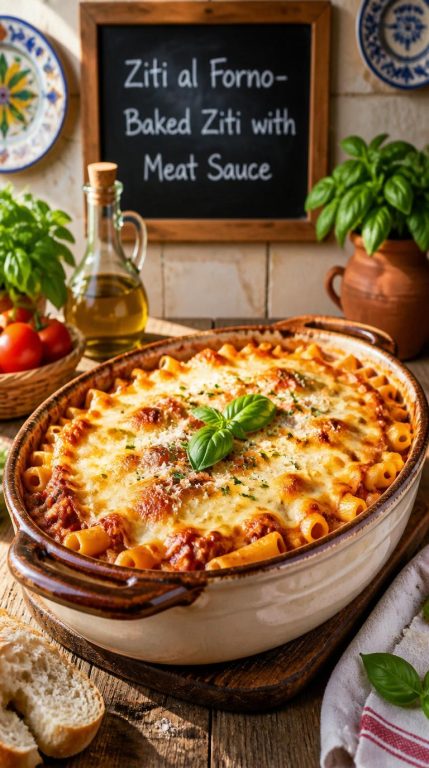
Advance Preparation and Storage
I often make Italian Ziti al Forno-Baked Ziti recipe ahead to save time on busy evenings. Assemble the casserole up to the point of baking, cover tightly with foil, and refrigerate for up to 24 hours. This approach works well for make-ahead Italian meals and other make-ahead Italian casseroles for families. For longer storage, I freeze the unbaked casserole. Wrap the dish in plastic wrap and a layer of foil, or transfer portions to airtight containers. Frozen, it keeps quality for 2–3 months; thaw overnight in the refrigerator before baking.
When reheating baked or thawed Italian Ziti al Forno-Baked Ziti recipe, I remove the foil and heat at 350°F (175°C) until the center reaches 165°F (74°C). If the top browns too quickly, I tent with foil. For single servings, I reheat slices in a 350°F oven for 15–20 minutes or microwave on medium power for 1–2 minutes, stirring if needed. I label containers with the date and contents to track freshness. For best texture, stir in a splash of sauce or a tablespoon of water when reheating; this restores moisture without thinning flavors.
Recipe Adaptations
I often turn Italian Ziti al Forno-Baked Ziti recipe into an Italian sausage casserole by swapping ground beef for Italian sausage. I brown the sausage first, drain excess fat, and fold it into the sauce for a richer, spicier profile. For a lighter Italian sausage and pasta casserole, I replace half the pasta with roasted vegetables. Zucchini, eggplant, and bell peppers add texture and reduce overall carbs while keeping the dish hearty.
I vary cheeses depending on what I have on hand. A mix of ricotta and shredded mozzarella yields the classic creamy interior, while grated Parmigiano-Reggiano or Grana Padano on top adds savory depth. To make it freezer-friendly, I assemble the casserole without the final bake, then flash-freeze or refrigerate. When ready to eat, I bake from chilled or defrosted until bubbly and golden.
I adapt seasoning to taste: fennel seed complements Italian sausage, while fresh basil brightens a tomato-forward sauce. For a smoky twist, I add a small amount of smoked provolone or diced pancetta. I sometimes convert the Italian Ziti al Forno-Baked Ziti recipe to a stovetop skillet version for weeknights. Cooking pasta and sauce together with the sausage in one pan shortens time and still delivers a satisfying, casserole-like texture.
Recommended Companion Dishes
I pair Italian Ziti al Forno-Baked Ziti recipe with light, bright salads to balance the dish’s richness. A simple arugula salad with lemon vinaigrette and shaved Parmesan adds peppery contrast and keeps the meal feeling fresh. I often serve roasted or steamed vegetables alongside when I want an easy weeknight complement. Roasted broccoli, sautéed spinach, or a tray of mixed Mediterranean vegetables work well for Italian weeknight dinners and add color to the plate.
For crowd-pleasing Italian dinners and potlucks, I include a basket of crusty bread or garlic knots. Guests use them to mop up sauce, and the carbs make the meal more comforting without extra prep. I recommend a light antipasto plate if I’m starting a larger spread. Cured meats, marinated olives, and pickled vegetables create variety and play nicely with baked ziti’s meaty sauce.
I sometimes offer a simple dessert that won’t compete with the main course. Fresh fruit, ricotta with honey, or small biscotti keep the menu balanced and let Italian Ziti al Forno-Baked Ziti recipe remain the star. Suggested pairings at a glance:
- Salads: arugula/lemon, mixed greens with balsamic
- Veggies: roasted broccoli, sautéed spinach
- Bread: crusty Italian loaf, garlic knots
- Starters: antipasto platter with olives and cured meats
- Desserts: fresh fruit, ricotta and honey
For more ideas on Italian baked dishes and casseroles, visit this authentic Ziti al Forno recipe that inspired many of these pairings.
Alternative Pasta Bakes
I often swap ziti for other pasta shapes when I want a different texture or presentation. Rigatoni and penne hold sauce well and give a meatier bite than ziti. Short tubes with ridges catch the ragù and melted cheese, which I find satisfying. Lasagna casserole recipes offer a layered approach that I use when I want distinct strata of sauce, cheese, and filling without assembling sheets of pasta.
I sometimes cut lasagna noodles to fit a deeper dish, then layer like a tray bake for an easy weeknight version. This keeps the lasagna flavors but simplifies assembly. For lighter variations, I pick shells or conchiglie and fill them with ricotta and spinach before baking. The individual pockets look appealing and portion control becomes easier. I also experiment with baked penne alla vodka when I want a creamy, tomato-forward alternative.
If I want a rustic, family-style dish, I turn to pasta al forno with mixed shapes and leftover meats. It’s forgiving: you can combine cheeses—ricotta, mozzarella, and grated hard cheese—for varied creaminess. For inspiration and technique on classic baked formats, I refer to detailed recipes for Pasta al Forno (Baked Ziti) and layered casseroles like lasagna adaptations in trusted recipe collections. Italian Ziti al Forno-Baked Ziti recipe works as a blueprint for these variations.

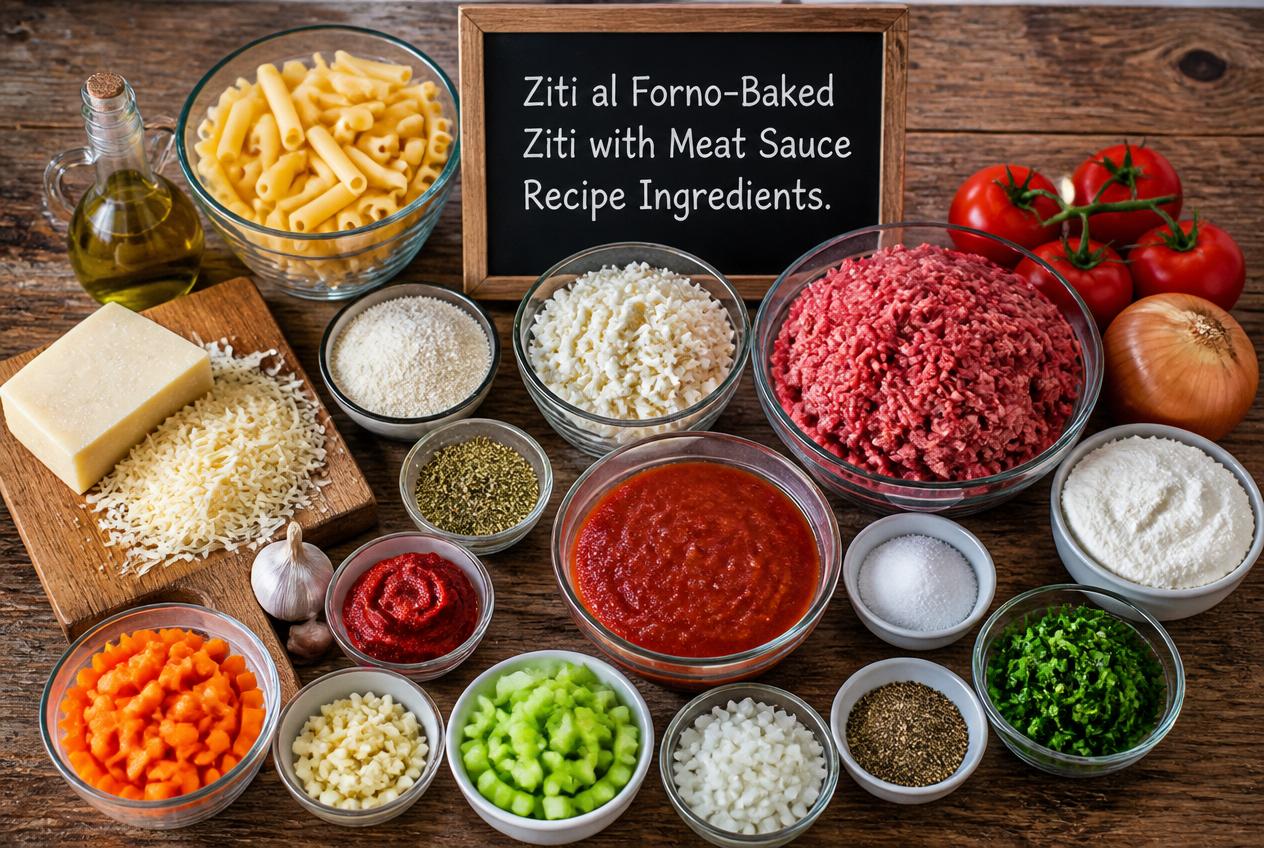
Ziti al Forno-Baked Ziti with Meat Sauce Recipe Ingredients
Ziti al Forno-Baked Ziti with Meat Sauce Recipe Cooking Tips
• Ziti al Forno is a classic Italian baked pasta dish known for its hearty layers of ziti pasta, rich meat sauce, melted cheese, and comforting baked texture.
• Ziti pasta is traditionally used because its tubular shape holds sauce exceptionally well.
• Cook the pasta just until al dente, as it will continue cooking during baking.
• A slow-simmered meat sauce made with ground beef, Italian sausage, or a combination of meats provides the dish’s signature richness.
• Sauté onions and garlic before adding meat and tomatoes to build deeper flavor.
• Allow the meat sauce to simmer long enough to develop complexity and reduce excess moisture.
• Mozzarella cheese creates the signature melted, stretchy texture throughout the casserole.
• Parmesan cheese adds savory depth and enhances the overall flavor profile.
• Ricotta cheese may be incorporated for additional creaminess and richness.
• Season generously with basil, oregano, parsley, and black pepper for traditional Italian flavor.
• Mix some sauce directly with the pasta before assembling to ensure even coverage.
• Layer the ingredients evenly to distribute meat, sauce, and cheese throughout the casserole.
• Avoid using excessive sauce, which can leave the baked pasta overly soft or watery.
• A generous topping of cheese helps create a golden, bubbly crust.
• Bake until heated through and the cheese is melted and lightly browned.
• Allow the casserole to rest briefly before serving so it holds together more neatly.
• Fresh basil or parsley makes an attractive garnish.
• The flavor should balance tender pasta, rich meat sauce, savory cheese, aromatic herbs, and a lightly crisp baked topping.
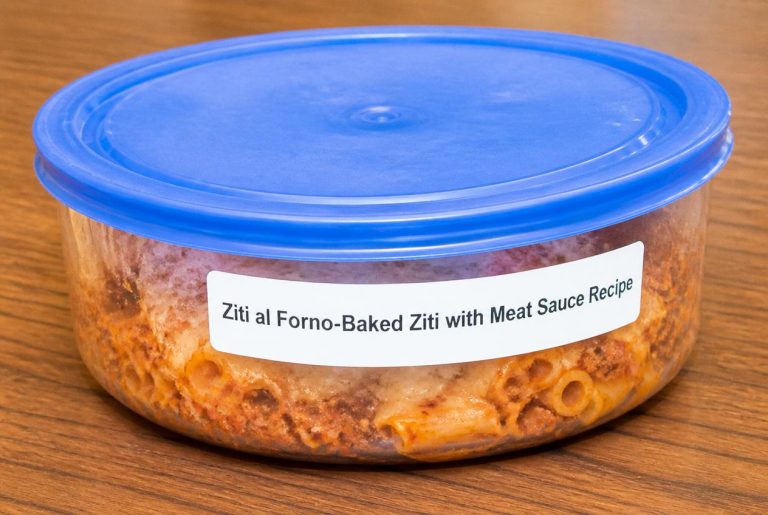
Ziti al Forno-Baked Ziti with Meat Sauce Recipe Storage Tips
Ziti al Forno-Baked Ziti with Meat Sauce Recipe Storage Tips
• Allow the baked ziti to cool before transferring it into storage containers.
• Store refrigerated in airtight containers to preserve freshness and texture.
• Whole casseroles can be covered tightly and refrigerated before portioning.
• Refrigeration often improves flavor as the meat sauce, cheese, and seasonings continue to blend.
• Reheat gently in the oven for the best texture and flavor.
• Cover with foil during reheating to prevent excessive browning of the cheese topping.
• Add a small amount of sauce if the pasta appears dry during reheating.
• Meat sauce and cheese flavors often become more developed after overnight refrigeration.
• Freeze individual portions or entire casseroles in airtight freezer-safe containers if desired.
• Wrap tightly to help prevent freezer burn and preserve quality.
• Defrost frozen portions gradually in the refrigerator before reheating.
• Use clean utensils when serving leftovers to help maintain freshness.
• Keep away from strongly scented foods because cheese and pasta dishes can absorb surrounding odors.
• Label frozen containers with the storage date for easier inventory management.
• Avoid repeated freezing and reheating cycles, which can negatively affect texture and consistency.
• Check for signs of spoilage such as sour odors, mold, unusual discoloration, or texture changes before consuming leftovers.
• For best quality, enjoy refrigerated and frozen portions while flavor and texture remain at their peak.
Ziti al Forno-Baked Ziti with Meat Sauce
Ingredients
- 1 pound pasta dry ziti
- 1 onion chopped
- 1 pound beef lean ground
- 2 jars spaghetti sauce 26 ounces each spaghetti sauce
- 6 ounces cheese slicedprovolone
- 1½ cups sour cream
- 6 ounces cheese shreddedmozzarella
- 2 tablespoons Parmesan cheese grated
Instructions
- Begin by preheating the oven to 350°F (175°C).
- Lightly grease a 9 x 13-inch baking dish and set it aside. Preparing the dish in advance allows for quick assembly once all components are ready. /traditional-pasta-recipe-from-sicily-2/
- Bring a large pot of salted water to a rolling boil.
- Add the ziti pasta and cook until it reaches an al dente texture. The pasta should still have a slight firmness since it will continue cooking during baking.
- Avoid overcooking at this stage, as overly soft pasta may become mushy after baking.
- While the pasta cooks, place a large skillet over medium-high heat.
- Add the chopped onion and ground beef. Cook until the beef is fully browned and the onions become tender and translucent.
- Pour in both jars of spaghetti sauce and stir well to combine. Allow the mixture to simmer briefly so the flavors can begin melding together.
- The sauce should be rich, hearty, and evenly combined before assembly.
- Place the sour cream into a medium mixing bowl.
- The sour cream provides a creamy middle layer that helps distinguish this baked ziti from traditional versions that rely on ricotta cheese.
- Set aside until assembly.
- Spread approximately half of the cooked ziti into the prepared baking dish.
- Top the pasta with the sliced provolone cheese, arranging it evenly to ensure every serving receives some of the cheese layer.
- Carefully spread the sour cream over the provolone.
- The sour cream may not spread as easily as other ingredients, so work gently to create an even layer.
- Cover the sour cream layer with half of the meat sauce.
- Add the remaining pasta over the sauce.
- Pour the remaining meat sauce evenly over the top, making sure the pasta is fully covered.
- This layering process creates distinct textures and flavors throughout the casserole.
- Sprinkle the shredded mozzarella cheese evenly across the surface.
- Follow with the grated Parmesan cheese.
- Together, these cheeses create a flavorful golden topping as the casserole bakes.
- Place the baking dish in the preheated oven.
- Bake for approximately 30 minutes, or until the cheese is melted and the sauce is bubbling around the edges.
- The top should be lightly browned and the center fully heated through.
- Remove the casserole from the oven and allow it to rest for about 10 minutes.
- This short resting period helps the layers settle and makes serving easier.
- Cut into generous portions and serve while hot.
- The combination of savory meat sauce, creamy sour cream, and three cheeses creates a comforting baked pasta dish that has remained a family favorite for years. Its hearty texture and crowd-pleasing flavor make it ideal for potlucks, family dinners, and make-ahead meals.
- This is the format I would recommend for all future recipes. For the remaining four recipes (Lasagna, Pasticcio, Manicotti Casserole, and Chicken Parmesan Casserole), I can provide them in this exact cookbook-style format with verified source links and expanded instruction blocks.
Ziti al Forno-Baked Ziti with Meat Sauce Recipe Frequently Asked Questions
I answer practical details about pasta choices, sauce technique, cheese handling, baking times, and make-ahead strategies so your Italian Ziti al Forno-Baked Ziti recipe stays saucy, structured, and evenly browned. Read each point for precise steps and measurements you can use during prep and baking.
What type of pasta works best if ziti is not available?
I use penne rigate or mostaccioli as the closest substitutes; their ridged surfaces hold sauce well. Rigatoni works if you want larger tubes that give more bite and sauce pockets. Italian Ziti al Forno-Baked Ziti recipe adapts easily to these swaps.
How do I make a rich meat sauce that won’t turn watery in the oven?
I brown the ground beef (or a mix of beef and pork) until the fond develops, then drain excess fat. I simmer the sauce uncovered for 20–30 minutes to concentrate flavors and reduce liquid; add a tablespoon of tomato paste early to boost body and use less watery crushed tomatoes rather than plain tomato sauce.
Should ricotta be mixed with egg for better structure in the baked dish?
I stir one large beaten egg into each 15-ounce container of ricotta when I want a firmer set and neater slices. If you prefer a creamier, looser texture, omit the egg and add 1/4–1/2 cup grated Parmesan for savory binding without as much stiffness. This tip works perfectly for Italian Ziti al Forno-Baked Ziti recipe.
When should mozzarella be added to achieve an even, well-browned cheese layer?
For the perfect Italian Ziti al Forno-Baked Ziti recipe, I fold half the shredded mozzarella into the pasta mixture before assembling. This ensures the cheese melts throughout the Italian Ziti al Forno-Baked Ziti recipe. I sprinkle the remaining mozzarella on top for the last 10–15 minutes of baking and finish under high broil for 1–2 minutes to create an even, golden-brown crust. The Italian Ziti al Forno-Baked Ziti recipe benefits from this method, as it delivers a gooey interior and a beautifully browned top.
How long should the casserole be baked and at what temperature for optimal texture?
I bake the assembled Italian Ziti al Forno-Baked Ziti recipe at 375°F (190°C) for 25–30 minutes, covering it with foil to heat it through and prevent excessive browning. Afterward, I remove the foil and bake the Italian Ziti al Forno-Baked Ziti recipe for an additional 10–15 minutes, or broil briefly, to brown the top and evaporate excess surface moisture. This process guarantees the Italian Ziti al Forno-Baked Ziti recipe achieves a perfect balance of creamy interior and crisp, cheesy topping. For more tips and variations on the Italian Ziti al Forno-Baked Ziti recipe, visit Serious Eats’ Baked Ziti Guide. The Italian Ziti al Forno-Baked Ziti recipe remains a favorite for family dinners and gatherings. When serving the Italian Ziti al Forno-Baked Ziti recipe, let it rest for a few minutes to set before slicing. The Italian Ziti al Forno-Baked Ziti recipe will impress guests with its flavor and texture.
Can this dish be assembled ahead of time and baked later without drying out?
You can assemble the Italian Ziti al Forno-Baked Ziti recipe ahead of time, cover it tightly, and refrigerate it for up to 24 hours. If you bake the Italian Ziti al Forno-Baked Ziti recipe straight from the fridge, increase the baking time by 10–15 minutes. For longer storage, freeze the unbaked Italian Ziti al Forno-Baked Ziti recipe for up to 3 months, thaw it overnight in the fridge, and bake it covered, adding about 20 minutes to ensure it heats through without drying. Preparing the Italian Ziti al Forno-Baked Ziti recipe ahead allows for flexibility and convenience. The Italian Ziti al Forno-Baked Ziti recipe retains its moisture and flavor if you follow these steps. For more tips on assembling casseroles ahead, visit [Serious Eats](https://www.seriouseats.com/baked-ziti-recipe). Using these methods, you can enjoy the Italian Ziti al Forno-Baked Ziti recipe fresh and delicious any time. The Italian Ziti al Forno-Baked Ziti recipe is perfect for family gatherings and meal prep. Always cover the Italian Ziti al Forno-Baked Ziti recipe tightly to lock in moisture. The Italian Ziti al Forno-Baked Ziti recipe remains a crowd-pleaser when prepared in advance. Remember to adjust baking times to keep your Italian Ziti al Forno-Baked Ziti recipe from drying out.

Recipes are gathered in person and written for real-world cooking conditions.
- 10 Hungarian Dessert Recipes Passed Down Through Generations - July 25, 2026
- 11 Easy English Recipes Anyone Can Make - July 25, 2026
- Hungarian Kifli Recipe - July 25, 2026