
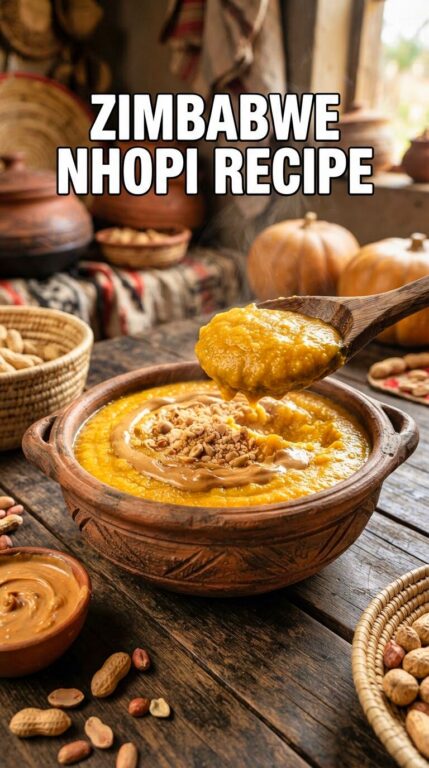
Let’s talk about the Zimbabwe Nhopi recipe—a cozy, creamy porridge made from pumpkin (or butternut), maize meal, and a good scoop of peanut butter. If you’re looking for something that slides easily into your breakfast or snack routine, this one’s a winner. This Zimbabwe Nhopi recipe is about as straightforward as it gets, balancing the natural sweetness of pumpkin with hearty cornmeal and a peanut finish that just works.
I’ll break down the ingredients, walk you through the steps, and toss in a bit of history so you know why the Zimbabwe Nhopi recipe is still a household staple. Got texture or seasoning preferences? There’s room to tweak things—honestly, that’s half the fun. If you need to swap ingredients, don’t stress. You’ll still end up with something delicious.
Description, Recipe, and Historical Information
The Zimbabwe Nhopi recipe is a classic porridge from Zimbabwe, usually built on pumpkin or butternut squash, maize meal, and a generous swirl of peanut paste. It’s creamy, a little sweet, and honestly, pretty filling—great for breakfast or just when you need a snack. If you haven’t tried a Zimbabwe Nhopi recipe yet, you’re missing out.
Here’s the gist: Peel and cube your pumpkin, then simmer it until it’s soft enough to mash. Once you’ve got that sorted, stir in your cooked maize meal (mealie-meal or cornmeal) until things thicken up. Finish with peanut butter, a pinch of salt, and maybe a dash of cinnamon or ginger if you like a bit of warmth. The Zimbabwe Nhopi recipe doesn’t ask for much, but it delivers a lot.
Typical proportions? Try 2 cups cooked pumpkin, 1 cup maize meal (cooked to porridge consistency), and anywhere from 2 to 4 tablespoons of peanut butter—totally up to your taste. You can toss the maize meal right into the pumpkin pot or cook it on the side and mix later; both ways work. Either approach, and you’ve got that dense, satisfying porridge texture the Zimbabwe Nhopi recipe is known for.
There’s a reason the Zimbabwe Nhopi recipe has stuck around. It grew out of Southern African subsistence cooking, where maize and pumpkins were reliable crops. People started adding peanuts for extra protein and richness—smart move, right? It made the dish both filling and nutritious. If you want a modern spin or more background, check out this practical recipe page for Nhopi—it’s got more on the Zimbabwe recipe and its cultural roots.
Honestly, the Zimbabwe Nhopi recipe is one of those things you have to try at least once. It’s humble, hearty, and just a bit nostalgic if you grew up with it. Don’t be afraid to play around with the Zimbabwe Nhopi recipe—everyone seems to have their own twist. And hey, if you end up loving it, welcome to the club. There’s always room for another fan of the Nhopi recipe.
So, next time you spot some pumpkin or butternut at the market, maybe give the Zimbabwe Nhopi recipe a go. It’s simple, satisfying, and honestly, kind of comforting. I’d say it’s got a place in anyone’s kitchen, whether you’re after breakfast, a snack, or just something different. The Zimbabwe Nhopi recipe might surprise you.
And, if you’re still on the fence, remember: the Zimbabwe Nhopi recipe isn’t fussy. It’s forgiving, easy to adjust, and always cozy. That’s probably why people keep coming back to it. Give the Zimbabwe Nhopi recipe a shot—you might just find yourself making it way more often than you’d expect.
Cooking Tips
Pick a firm pumpkin or butternut squash for that classic Zimbabwe Nhopi recipe texture. Honestly, the smoother the cubes, the better they’ll cook and mash—nobody likes random lumps.
I always toast the maize meal (cornmeal) for a minute or two in a dry pan. That little extra effort brings out a deeper flavor, and it helps keep those annoying lumps at bay in your Nhopi recipe.
Once you’re ready to mix maize meal with the cooked squash, grab a sturdy wooden spoon or maybe a whisk—just keep stirring. You’ll get a silky, lump-free porridge if you don’t stop. Zimbabwe Nhopi recipe rewards patience here.
Go easy on the peanut butter at first. Add it a spoonful at a time, tasting as you go. Peanut butter gives richness and a bit of salt, but too much can drown out the squash. Trust your taste buds; every Nhopi recipe batch is a little different.
If you like your Zimbabwe Nhopi recipe thick, use less water and let it simmer longer. For a softer, looser porridge, just splash in some hot water or stock as you cook. Don’t be afraid to experiment—consistency is a personal thing.
Season gently: a pinch of salt, maybe a hint of warm spice like cinnamon or nutmeg. That’s usually enough to bring out the natural sweetness in a Nhopi recipe. Heavy-handed spices? Not really the vibe here.
Keep the heat low to medium for the final simmer. If it starts sticking, just lift and stir—don’t scrape too hard or you’ll end up with burnt bits in your Zimbabwe Nhopi recipe.
Leftovers? No problem. Pop extra Nhopi recipe in an airtight container and stash it in the fridge for up to 3 days. When you’re ready to eat, reheat gently with a splash of water or milk, stirring to get back that creamy feel.
Tips at a glance:
- Prep pumpkin evenly for your Zimbabwe Nhopi recipe.
- Toast maize meal before mixing—key for Zimbabwe Nhopi recipe flavor.
- Stir constantly when combining ingredients for a smooth Zimbabwe Nhopi recipe.
- Add peanut butter slowly and taste as you go (Zimbabwe Nhopi recipe is all about balance).
- Adjust thickness with liquid to suit your Zimbabwe Nhopi recipe preference.

Zimbabwe Nhopi Recipe
Ingredients
- 1 butternut squash
- 1/4 cup peanut butter no nuts
- warm water to thin as needed
- ¼ tsp salt
- ¼ tsp cinnamon
- ¼ tsp ginger
Equipment
- Large pot for boiling squash
- Vegetable peeler or sharp knife for peeling the squash
- Cutting board for preparing the squash
- Small mixing bowl for making peanut butter sauce
- Spoon for scooping out squash seeds
- Serving dish or individual plates for presentation
Instructions
- a. Rinse the butternut squash under cold water to remove any dirt or debris.
- b. Use a vegetable peeler or a sharp knife to peel the tough outer skin of the squash.
- c. Cut the squash in half and scoop out the seeds and fibrous center with a spoon.
- d. Dice the peeled squash into small, bite-sized cubes.
- a. Fill a large pot with water and bring it to a boil over high heat.
- b. Add the diced squash to the boiling water and cook until it becomes tender when pierced with a fork.
- c. Drain the cooked squash and set it aside.
- a. In a small bowl, combine the creamy peanut butter, warm water, salt, cinnamon, and ginger.
- b. Mix well until you achieve a smooth and creamy consistency.
- c. Adjust the thickness of the sauce by adding more warm water if needed.
- a. Place the cooked butternut squash in a large mixing bowl.
- b. Pour the peanut butter sauce over the squash and gently toss until the squash is evenly coated with the sauce.
- a. Transfer the dressed squash to a serving dish or individual plates.
- b. Optionally, sprinkle some additional cinnamon or chopped peanuts on top for garnish.
- c. Serve the Zimbabwe Nhopi warm and enjoy the delicious flavors!
Notes

Recipes are gathered in person and written for real-world cooking conditions.
- 10 Hungarian Dessert Recipes Passed Down Through Generations - July 25, 2026
- 11 Easy English Recipes Anyone Can Make - July 25, 2026
- Hungarian Kifli Recipe - July 25, 2026