

Exploring how to make Vegetarian French Crepe Recipes was one of the best things I did on my trip to France. I went to a few cooking classes to learn how to make different dishes and get other real recipes for blog posts. One of the most important things I learned was how important it is to use fresh, local food. This was a big part of the class for the cooks I worked with. They talked a lot about how it makes every dish taste better.
Using local products in the recipe for vegetarian French crepes made them taste more fresh. The veggies we used came from farms close by and were picked the morning we cooked. I could tell the difference. The veggies were bright and crisp. This made the pancakes taste even better. Knowing that everything came from close by made it feel more eco-friendly as well.
France was a great place to learn how to cook different food. It was great to work in a real French kitchen. It was clear to me after learning from more experienced chefs why French food is so popular around the world. The recipe for Vegetarian French Crepes stood out, and I liked how each step focused on skill. The kitchen smelled great as we cooked because of the fresh herbs and veggies. The recipe was made so that the local ingredients would stand out.
When I got the Vegetarian French Crepes recipe just right, I saw how important the local products were to the end result. It was soft and light to eat the pancakes. The fillings inside were full of color and flavor. It was clear to me that the cooks’ care with local food made all the difference. The things they taught me are just as important as the method when it comes to making great French food.
One of the best parts of my trip was gathering these recipes. It was really fun and interesting to learn that way. I now have a better idea of how fresh, local products can bring out the best tastes in French food. I can’t wait to give my readers this Vegetarian French Crepes recipe. I’m sure it will make them want to cook with more local ingredients.
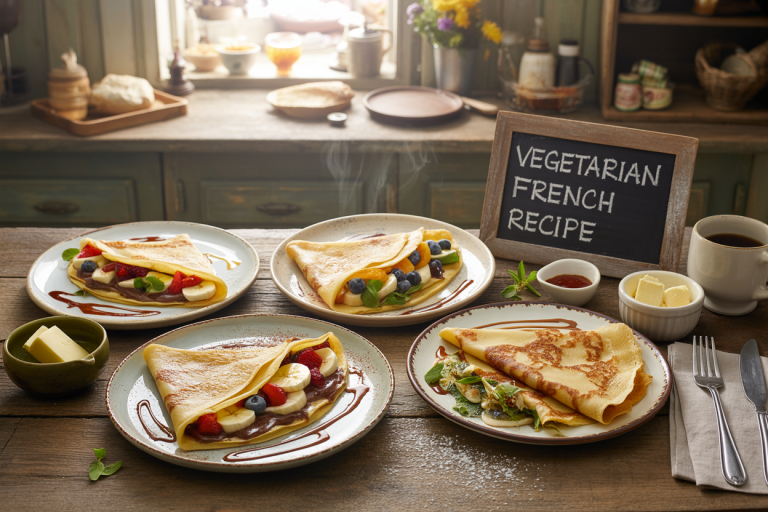
Vegetarian French Crepe Recipe
5 Essential Ingredients for Vegetarian French Style Food
French vegetarian cuisine is all about using fresh, high-quality ingredients to create flavorful and satisfying dishes. Here are five essential ingredients that form the foundation of many vegetarian French-style recipes:
1. Olive Oil
Olive oil is a key ingredient in French vegetarian cooking, especially in southern regions like Provence. It’s used to sauté vegetables, enhance the flavors of dressings, and drizzle over dishes for a rich, subtle flavor. Olive oil also serves as the base for making ratatouille, soupe au pistou, and other classic vegetarian dishes.
2. Fresh Herbs
French cuisine heavily relies on fresh herbs to elevate the flavors of simple dishes. Herbs such as thyme, rosemary, basil, parsley, and tarragon are staples in vegetarian French-style food. These herbs add depth and fragrance to soups, stews, and vegetable tarts. Herbes de Provence, a blend of dried herbs including thyme and lavender, is especially common for seasoning roasted vegetables or mixed into dressings.
3. Garlic
Garlic is indispensable in French vegetarian cooking. Whether used in a simple garlic butter sauce, blended into a pistou (similar to pesto), or sautéed with vegetables, garlic provides a bold, savory flavor. It’s often used in dishes like soupe au pistou and ratatouille.
4. Fresh Seasonal Vegetables
Vegetables like zucchini, tomatoes, eggplant, and peppers form the backbone of vegetarian French meals. Fresh, locally grown produce is highly valued, and these vegetables appear in numerous dishes like tarte aux légumes and vegetable stews. Seasonal vegetables are often roasted, sautéed, or served raw in crudités platters.
5. Cheese
Though French cuisine is known for its meats, cheese plays a huge role in vegetarian dishes. Varieties like goat cheese, camembert, or gruyère are commonly used in tarts, gratins, and salads, adding creaminess and richness to many dishes. Cheese elevates dishes such as gratin dauphinois and vegetable tarts, bringing them to another level of flavor.
Most Popular Spices For French Vegetarian Cooking
In French vegetarian cooking, spices are used sparingly but effectively to enhance the natural flavors of fresh ingredients. French cuisine is known for its subtle use of herbs and spices, allowing the quality of vegetables and other components to shine. Some of the most popular spices in French vegetarian dishes are carefully chosen to add warmth, aroma, and complexity without overpowering the dish.
Thyme is one of the most widely used herbs in French cooking, providing a slightly earthy and minty flavor. It is commonly used in stews, soups, and roasted vegetable dishes like ratatouille. Thyme is often paired with other herbs, such as rosemary and bay leaves, for seasoning hearty vegetarian meals.
Bay Leaves are another essential spice in French cooking, often added to soups, sauces, and stews to infuse a subtle, aromatic flavor. When simmered in broths or tomato-based dishes, bay leaves release a delicate yet rich taste that enhances the depth of flavor in vegetarian dishes like soupe au pistou or lentil stews.
Herbes de Provence is a classic blend of dried herbs traditionally used in southern French cuisine. The mixture typically includes thyme, rosemary, savory, marjoram, and lavender, offering a fragrant combination of flavors that pairs well with roasted vegetables and Mediterranean-style dishes. Herbes de Provence is often sprinkled over vegetable tarts, grilled vegetables, or mixed into olive oil-based marinades.
Paprika is occasionally used in French vegetarian cooking to add a mild warmth and vibrant color to dishes. Whether sweet or smoked, paprika complements roasted vegetables, soups, and stews, giving them a hint of spice without being overpowering.
Lastly, nutmeg is often used in creamy French vegetarian dishes like gratin dauphinois or vegetable soups. Its warm, slightly sweet flavor adds complexity to béchamel sauces, mashed potatoes, and gratins, balancing the richness of dairy-based dishes. Together, these spices create the subtle, aromatic flavors that define French vegetarian cuisine.
10 Reasons I love French Vegetarian Food
1. Fresh, Seasonal Ingredients
One of the best things about French vegetarian food is its emphasis on fresh, seasonal ingredients. Local markets in France offer a wide variety of vegetables, herbs, and fruits that reflect what is in season. This ensures that every dish is made with the ripest, freshest produce, giving the food a flavor and quality that’s hard to beat. French cooks pride themselves on using only the best ingredients, which makes even the simplest vegetable dishes taste exceptional.
2. Simple Yet Elegant
French vegetarian dishes are known for their simplicity, yet they are always prepared with an elegant touch. Many dishes require just a few ingredients, but the care and attention given to preparation result in meals that are refined and full of flavor. For example, a vegetable tart made with fresh zucchini, tomatoes, and onions can be a delightful dish when baked with a perfectly crisp pastry. This balance between simplicity and sophistication is what makes French vegetarian food so appealing.
3. Delicious Use of Herbs
Herbs play a significant role in French vegetarian cuisine, adding layers of flavor and aroma to dishes. Fresh herbs like thyme, rosemary, parsley, and tarragon are often used to enhance soups, stews, and roasted vegetables. French cooks also rely on herbes de Provence, a blend of dried herbs, to season vegetables and create delicious marinades. These herbs not only add fragrance to dishes but also elevate the natural flavors of the ingredients, giving the food a fresh and vibrant taste.
4. Rich in Tradition
French vegetarian food is steeped in culinary tradition, with many dishes having been passed down through generations. Classics like ratatouille, a vegetable stew from Provence, or tarte aux légumes, a savory vegetable tart, reflect the country’s rich food heritage. These dishes are not only beloved for their flavor but also for the cultural history they represent. Eating French vegetarian food often feels like experiencing a piece of France’s long-standing culinary traditions, making it a truly enriching experience.
5. Versatile Cooking Methods
French cuisine showcases a variety of cooking methods, each bringing out unique textures and flavors in vegetables. Roasting, for example, enhances the sweetness of root vegetables, while sautéing brings out the rich flavors of mushrooms and onions. Steaming preserves the freshness and nutrients of delicate greens, while baking creates crispy, golden crusts for vegetable tarts and gratins. This versatility allows French vegetarian dishes to offer diverse textures and flavors, ensuring that each meal is a delightful experience.
6. Cheese-Lover’s Dream
France is world-renowned for its wide selection of cheeses, and many vegetarian dishes incorporate these delicious ingredients. From soft and creamy goat cheese to the nutty flavors of gruyère and comté, French cheeses add richness and depth to vegetarian meals. Whether melted into a vegetable gratin, sprinkled over a salad, or baked into a tart, cheese plays a starring role in many French vegetarian dishes. For those who love cheese, French cuisine offers endless possibilities to indulge in flavorful, comforting meals.
7. Balanced Flavors
French vegetarian cuisine is all about balance. The flavors in each dish are carefully curated to complement one another, creating a harmonious taste experience. French cooks often use herbs and mild spices to enhance, rather than overpower, the natural flavors of vegetables. For example, in a dish like soupe au pistou, a vegetable soup with a basil-garlic sauce, the flavors of fresh vegetables are delicately balanced with the aromatic pistou, making the dish both satisfying and refreshing. This focus on balance is what makes French vegetarian dishes taste so refined.
8. Regional Specialties
One of the joys of French cuisine is the diversity of regional specialties, and this applies to vegetarian food as well. Each region of France has its own unique dishes that reflect the local ingredients and traditions. In Provence, for example, you’ll find vegetable-rich dishes like ratatouille and soupe au pistou, which highlight the region’s love for fresh produce and Mediterranean flavors. In Brittany, vegetarian buckwheat crêpes filled with vegetables and cheese are a local favorite. Exploring the regional varieties of French vegetarian food offers a chance to discover new flavors and cooking styles.
9. Healthy and Satisfying
French vegetarian cuisine is not only delicious but also healthy. The use of fresh vegetables, herbs, and olive oil creates meals that are both light and nutritious. French vegetarian dishes often focus on simple, wholesome ingredients that provide plenty of vitamins and nutrients without being heavy or overly rich. At the same time, these meals are filling and satisfying, thanks to the thoughtful combinations of vegetables, grains, and legumes. Whether it’s a hearty lentil stew or a light vegetable salad, French vegetarian food strikes the perfect balance between health and flavor.
10. Beautiful Presentation
In France, the presentation of food is almost as important as the taste. French cooks take great care in arranging their dishes, ensuring that the meal is as visually appealing as it is flavorful. Vegetarian dishes are often presented with vibrant colors, showcasing the freshness of the ingredients. A simple salad, for example, might be artfully arranged with bright green lettuce, ruby-red tomatoes, and a sprinkling of fresh herbs. This attention to detail elevates the dining experience, making every meal feel like a special occasion. The beauty of French vegetarian food lies not only in its taste but also in the artistry of its presentation.
Ingredients For the Vegetarian French Crepes Recipe
All-purpose Flour
Salt
Milk
Large Eggs
Melted Butter
Chopped Fresh Spinach
Crumbled Feta Cheese
Cooking Oil
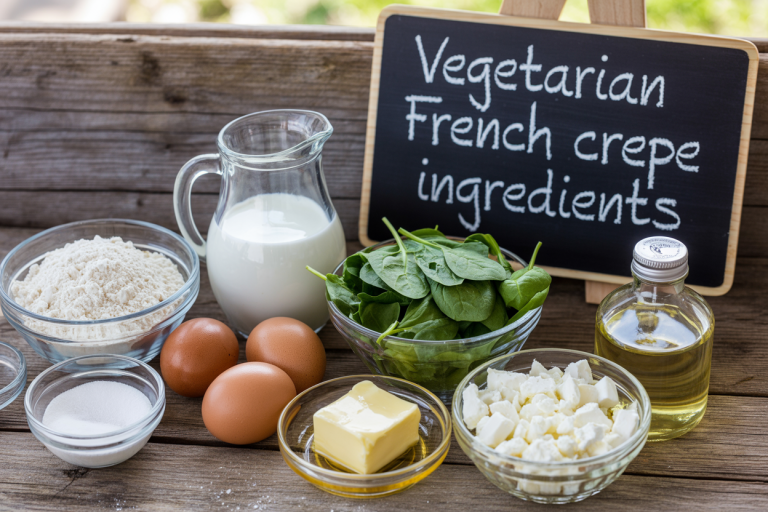
Vegetarian French Crepe Recipe – Ingredients
Cooking Instructions For the Vegetarian French Crepes Recipe
- In a large mixing bowl, whisk together the all-purpose flour and salt.
- In a separate bowl, combine the milk, eggs, and melted butter. Whisk until well blended. Gradually pour the milk mixture into the flour mixture while whisking continuously to create a smooth batter.
- Let the batter rest for about 10 minutes.
- Heat a non-stick skillet or crepe pan over medium heat and lightly grease it with cooking oil. Pour a ladleful of batter onto the skillet, swirling it around to evenly coat the bottom.
- Cook the crepe for about 1-2 minutes until the edges start to turn golden brown. Flip the crepe using a spatula and cook for an additional 1-2 minutes on the other side.
- Remove the cooked crepe from the skillet and set it aside. Repeat the process with the remaining batter to make more crepes.
- In a separate pan, wilt the chopped spinach over medium heat until it has reduced in size. Sprinkle the wilted spinach and crumbled feta cheese onto each crepe, dividing the ingredients evenly.
- Roll up the crepes or fold them into quarters.
- Serve the Vegetarian Spinach and Feta Crepes while warm.
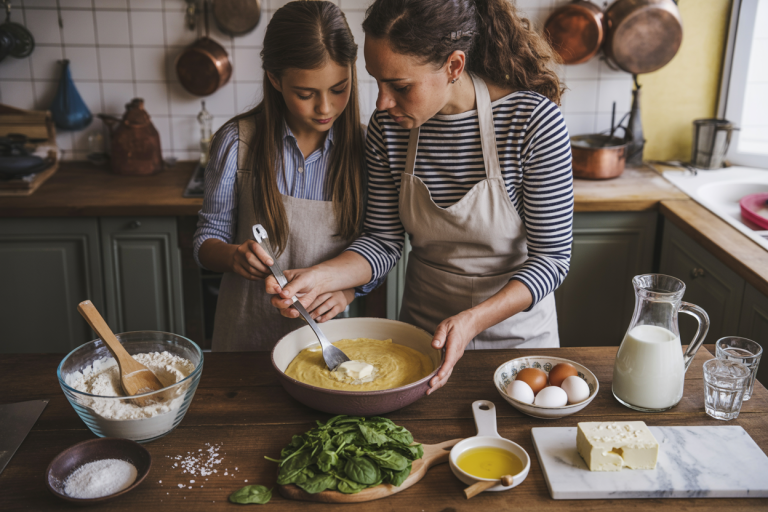
Vegetarian French Crepe Recipe – Prep
Cooking Tips For the Vegetarian French Crepe Recipes
• Let the batter rest before cooking to help improve texture and consistency.
• Use a lightly greased pan to help the crepes release more easily.
• Pour a small amount of batter and swirl quickly for thinner crepes.
• Cook over medium heat so the crepes brown evenly without becoming dry.
• Flip the crepes carefully once the edges begin lifting from the pan.
• Stack cooked crepes with parchment paper between them to help prevent sticking.
• Add fillings close to serving time for the best texture balance.
• Keep the crepes warm while finishing the remaining batches.
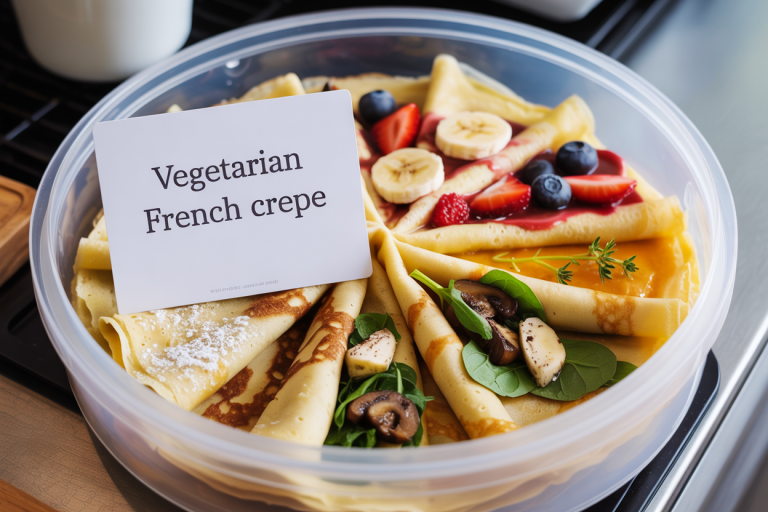
Vegetarian French Crepe Recipe – Storage
Storage Tips For the Vegetarian French Crepe Recipes
• Allow the crepes to cool completely before storing them.
• Store crepes in airtight containers or sealed bags to help retain softness.
• Place parchment paper between crepes to help prevent sticking.
• Refrigerate leftovers within 2 hours of cooking for proper food safety.
• Reheat gently in a skillet or microwave until warmed through.
• Keep fillings and toppings separate until serving time for better texture.
• Freeze crepes in freezer-safe containers or bags for up to 2 months if needed.
• Wrap portions tightly before freezing to help reduce freezer burn and moisture loss.
• Thaw frozen crepes overnight in the refrigerator before reheating.
• Discard the crepes or fillings if they develop a sour smell, sticky texture, discoloration, mold, or unusual taste, as these are common signs of spoilage.
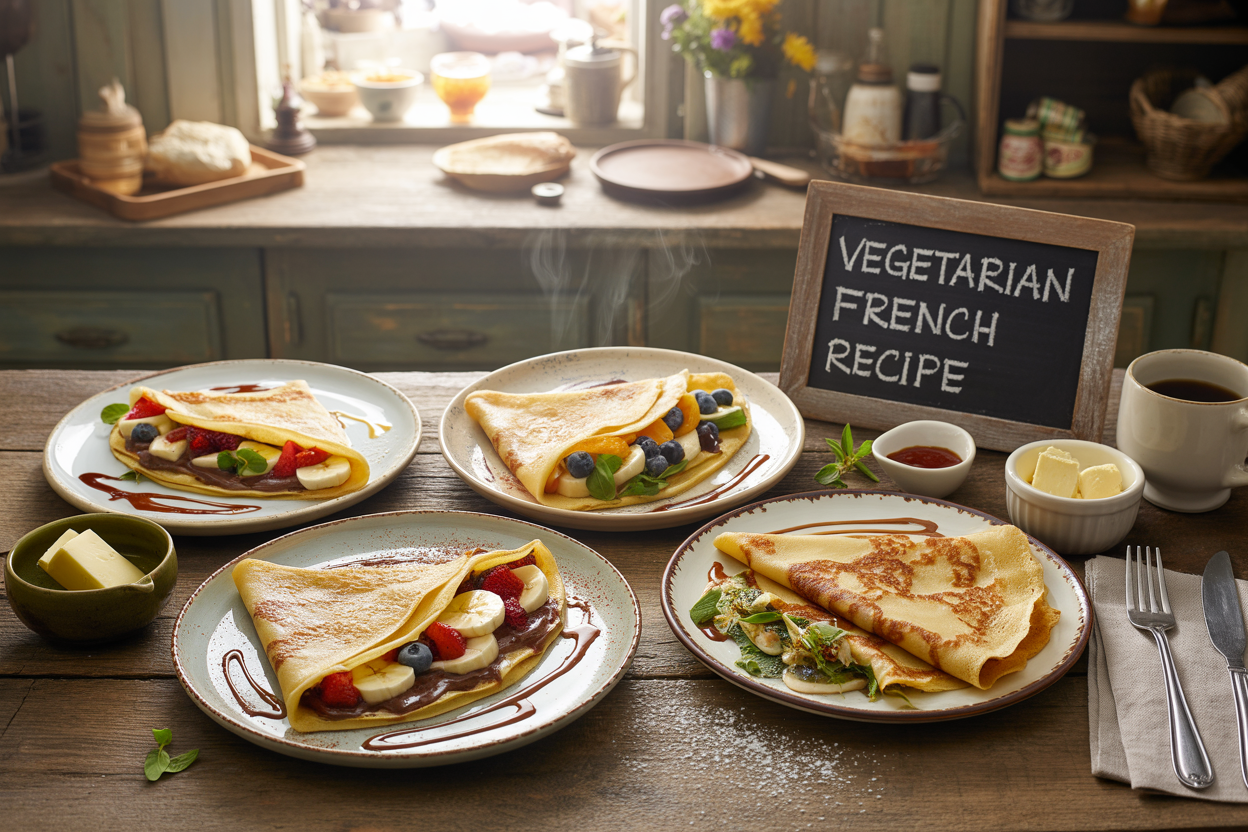
Vegetarian Spinach and Feta Crepes Recipe
Ingredients
- 2 cups all-purpose flour
- 1/2 teaspoon salt
- 2 cups milk
- 4 large eggs
- 2 tablespoons melted butter
- 2 cups fresh spinach chopped
- 1 cup crumbled feta cheese
- Cooking oil for greasing the pan
Equipment
- large mixing bowl
- whisk
- Non-stick skillet or crepe pan
- Spatula or crepe turner
- Saute pan or skillet for spinach and feta filling
Instructions
- In a large mixing bowl, whisk together the all-purpose flour and salt.
- In a separate bowl, combine the milk, eggs, and melted butter. Whisk until well blended.
- Gradually pour the milk mixture into the flour mixture while whisking continuously to create a smooth batter.
- Let the batter rest for about 10 minutes.
- Heat a non-stick skillet or crepe pan over medium heat and lightly grease it with cooking oil.
- Pour a ladleful of batter onto the skillet, swirling it around to evenly coat the bottom.
- Cook the crepe for about 1-2 minutes until the edges start to turn golden brown.
- Flip the crepe using a spatula and cook for an additional 1-2 minutes on the other side.
- Remove the cooked crepe from the skillet and set it aside.
- Repeat the process with the remaining batter to make more crepes.
- In a separate pan, wilt the chopped spinach over medium heat until it has reduced in size.
- Sprinkle the wilted spinach and crumbled feta cheese onto each crepe, dividing the ingredients evenly.
- Roll up the crepes or fold them into quarters.
- Serve the Vegetarian Spinach and Feta Crepes while warm.
Notes
Tips and Tricks
Make the crepe batter in advance and refrigerate it for an hour or overnight to allow the flavors to meld. Use a non-stick skillet or crepe pan for easy flipping and removal of the crepes. Ensure the skillet is preheated properly before pouring the batter to prevent sticking. Adjust the heat as needed to cook the crepes evenly without burning. Use a thin spatula or crepe turner to flip the crepes gently to avoid tearing. Keep the cooked crepes warm by stacking them on a plate covered with a clean kitchen towel until ready to fill.FAQ For the Vegetarian French Crepes Recipe
Q: What ingredients are essential for a Vegetarian French Crepe Recipe?
A Vegetarian French Crepe Recipe typically includes simple yet essential ingredients for the batter. The main components are all-purpose flour, eggs, milk, and a pinch of salt. For added richness, melted butter can be included, though it can be omitted for a dairy-free version. Some recipes also suggest adding vanilla extract or sugar for sweet crepes. To create a variety of flavours, consider incorporating herbs like chives or basil for savoury crepes. These ingredients combine to create a delicate batter that can be filled with numerous sweet or savoury options.
Q: How do you prepare the batter for a Vegetarian French Crepe Recipe?
To prepare the batter for a Vegetarian French Crepe Recipe, start by whisking the flour and salt together in a bowl. In a separate bowl, combine eggs and milk, whisking until smooth. Gradually add the wet ingredients to the dry ingredients, stirring continuously to prevent lumps. Once combined, let the batter rest for at least 30 minutes at room temperature; this allows the flour to hydrate and results in tender crepes. Before cooking, give the batter a gentle stir to ensure an even consistency. This preparation creates a versatile base for delicious crepes.
Q: Can you make a Vegetarian French Crepe Recipe ahead of time?
Yes, you can make a Vegetarian French Crepe Recipe ahead of time, making it convenient for meal prep or entertaining. After cooking the crepes, allow them to cool completely. Stack them with parchment paper between each layer to prevent sticking and store them in an airtight container in the refrigerator for up to three days. When ready to serve, simply reheat the crepes in a non-stick skillet over low heat. This method allows for easy assembly of fillings and toppings, making meal times quicker and more efficient.
Q: How do you serve a Vegetarian French Crepe Recipe?
A Vegetarian French Crepe Recipe is versatile and can be served in various ways. For sweet crepes, fill them with ingredients like fresh fruit, Nutella, or whipped cream, then sprinkle with powdered sugar for an elegant touch. For savoury crepes, consider fillings such as sautéed vegetables, cheese, or even spinach and ricotta. To serve, fold or roll the crepes neatly on a plate and garnish with fresh herbs or a drizzle of sauce, enhancing both flavour and presentation. This makes crepes suitable for breakfast, lunch, or dessert.
Q: What are some variations of the Vegetarian French Crepe Recipe?
There are numerous variations of the Vegetarian French Crepe Recipe to suit different tastes and occasions. For a gluten-free option, substitute all-purpose flour with a gluten-free flour blend, ensuring a similar texture. You can also experiment with different types of milk, such as almond or oat milk, for a dairy-free version. Sweet variations might include adding cocoa powder or cinnamon for extra flavour. Savoury options could incorporate cheese or finely chopped vegetables directly into the batter for a unique twist, allowing for creativity in this classic dish.

Recipes are gathered in person and written for real-world cooking conditions.
- 10 Hungarian Dessert Recipes Passed Down Through Generations - July 25, 2026
- 11 Easy English Recipes Anyone Can Make - July 25, 2026
- Hungarian Kifli Recipe - July 25, 2026
1 comment
These vegan crepes turned out beautifully! I filled them with nut butter and banana slices for a delicious snack, and they were a hit. I love how easy they are to customize.
Comments are closed.