
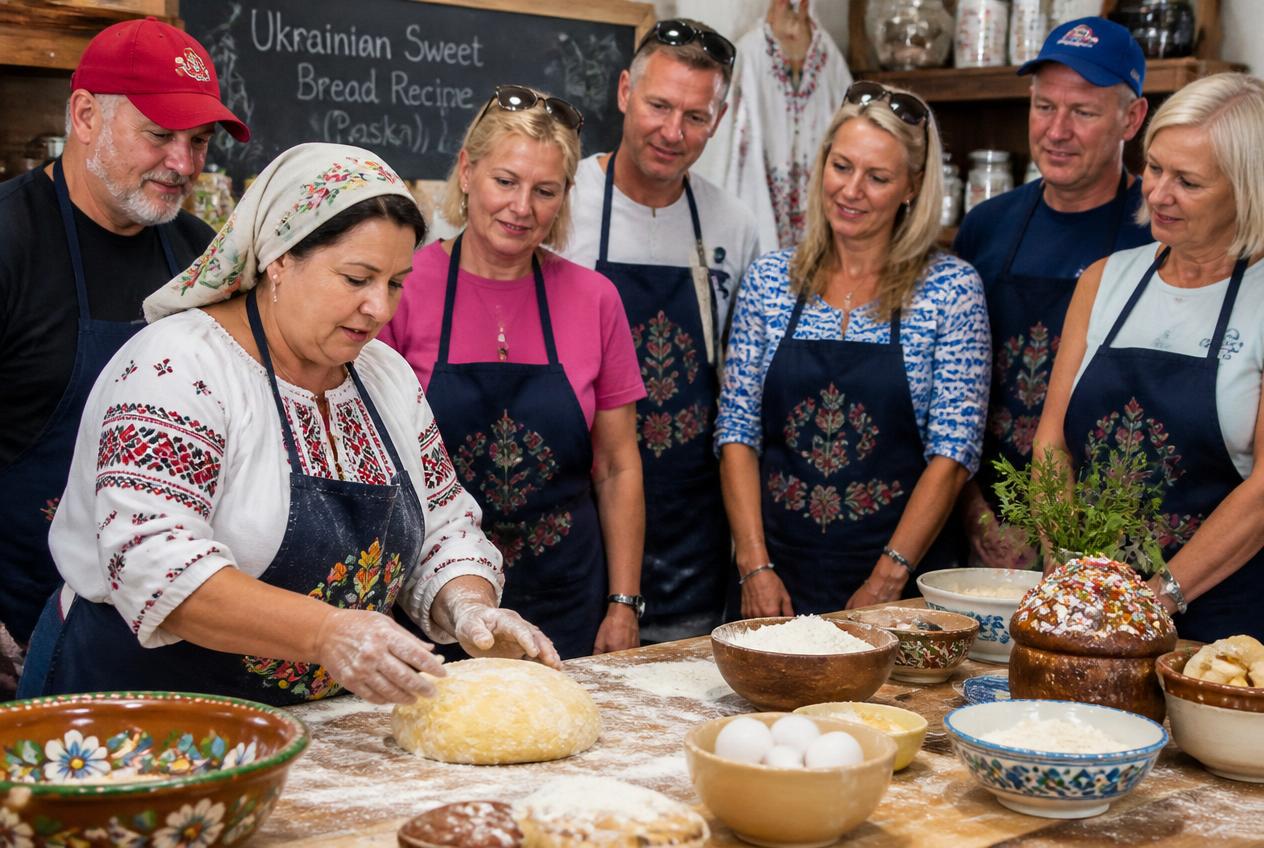
You hold a slice of history when you bake Ukrainian sweet bread recipe (paska): a tender, slightly sweet, egg-rich loaf that has fed celebrations for generations. I’ll show you a straightforward Ukrainian sweet bread recipe and practical tips so you can bake a traditional paska with a reliably soft crumb and glossy, festive top.
Follow my clear steps to mix, proof, shape, and bake with confidence, plus simple variations to match your taste and time. My guidance balances authentic technique with kitchen-friendly shortcuts, so you’ll get excellent results whether you’re making paska for the first time or refining your loaf. The Ukrainian sweet bread recipe is central to many family celebrations and remains a cherished tradition.
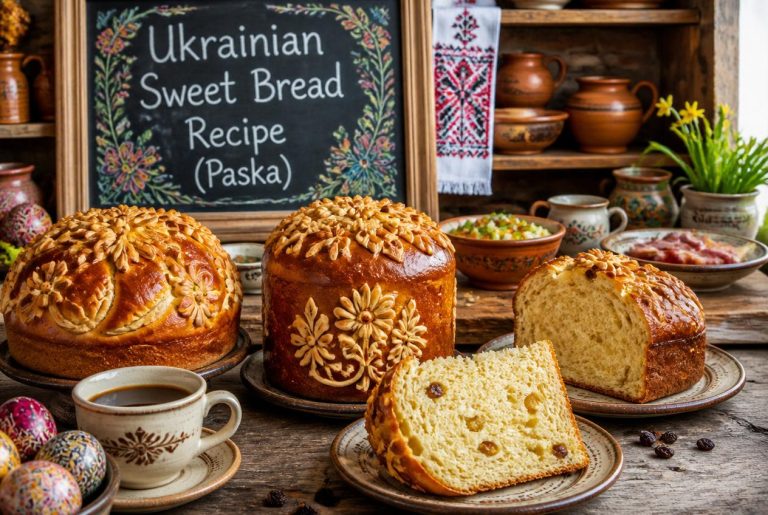
Ukrainian Sweet Bread Recipe (Paska)
Key Takeaways
- Learn a reliable Ukrainian sweet bread recipe to make authentic-tasting paska at home.
- Use expert tips and timing strategies to improve texture and flavor.
- Try easy variations to personalize the bread for holidays or everyday baking.
Historical Overview and Description
Paska’s roots go back to early Christian observances in Eastern Europe, where the word itself derives from terms meaning “Passover” and “Easter.” This connects Paska directly to Ukrainian holiday food recipes and the broader family of liturgical breads across the region. The Ukrainian sweet bread recipe has become a symbol of both faith and culture.
Traditional Paska is a rich, mildly sweet, yeasted loaf often enriched with butter, eggs, and milk. Families follow authentic Ukrainian sweet bread recipes that vary by region; some add raisins, citrus zest, or decorative icing. The Ukrainian sweet bread recipe represents both food and symbol in Ukrainian cultural foods.
Baked for Easter, paska appears in ritual baskets alongside pysanky and other Ukrainian festive dishes, then blessed at church before the meal. Old-fashioned Ukrainian sweet bread recipes preserve techniques like long fermentation and hand-shaping, connecting modern cooks to heritage recipes passed down through generations. These methods make the Ukrainian sweet bread recipe a living tradition.
Practical cues in recipe notes help adapt traditional Ukrainian sweet bread recipes for home kitchens. Small adjustments—ingredient quality, proofing time, or decoration—make Paska approachable without losing its cultural character. For a deeper cultural context, see the Ukrainian Easter bread overview on Wikipedia.
- Texture: tender, slightly dense
- Flavor: buttery, egg-rich, subtly sweet
- Uses: ceremonial centerpiece, breakfast bread, celebratory gift
Expert Guidance for Best Results
Use high-quality ingredients—fresh eggs, real butter, and a reliable active dry yeast—to reproduce an easy authentic Ukrainian sweet bread recipe at home. Weigh flour when possible for consistent dough hydration and to prevent dense paska. Proof yeast in warm milk or water at about 100–110°F (38–43°C); if bubbles form after 5–10 minutes, the yeast is active.
Mix and knead until the dough is smooth and slightly tacky, about 8–12 minutes by hand or 5–7 minutes with a stand mixer. Perform a windowpane test to check gluten development; this step makes paska tender yet structured, as many traditional Ukrainian sweet bread recipes for beginners teach. Use two rises: a bulk rise until doubled and a final rise after shaping.
Cool shaped loaves briefly in their molds before the oven and rotate pans halfway through baking for uniform color. Brush loaves with an egg wash for a glossy, golden crust and add a simple sugar glaze or sprinkles for a festive finish. Consult trusted Ukrainian sweet bread recipes and adapt techniques to your kitchen—altitude, humidity, and oven variance all matter.
Advance Preparation Methods
Prepare Paska in stages to fit it into your schedule and to improve flavor. Chill the dough after the first rise for up to 24 hours to slow fermentation and deepen taste; this also lets you bake fresh bread on the holiday morning without starting from scratch. For a practical example, many home cooks follow similar guidance in recipes like this one on Alfredo Recipes.
Make the enriched dough a day ahead and shape it just before the final proof. Shaping cold dough is easier because it’s firmer, and short bench rests keep gluten relaxed for neat decorations. If short on time, portion and refrigerate shaped loaves; they need an extra hour at room temperature to finish proofing before baking. This approach works well with any Ukrainian sweet bread recipe.
Use simple prep lists: chill eggs and butter to ease incorporation, soften raisins in warm water or rum for even distribution, and premeasure dry ingredients. For longer preparation, adapt a sourdough-style Ukrainian sweet bread recipe by replacing commercial yeast with a fed starter; it requires extended cold ferment but yields complex flavor similar to traditional Ukrainian homemade meals. Always label containers with date and contents when storing dough or fillings to keep batches organized.
Creative Variations
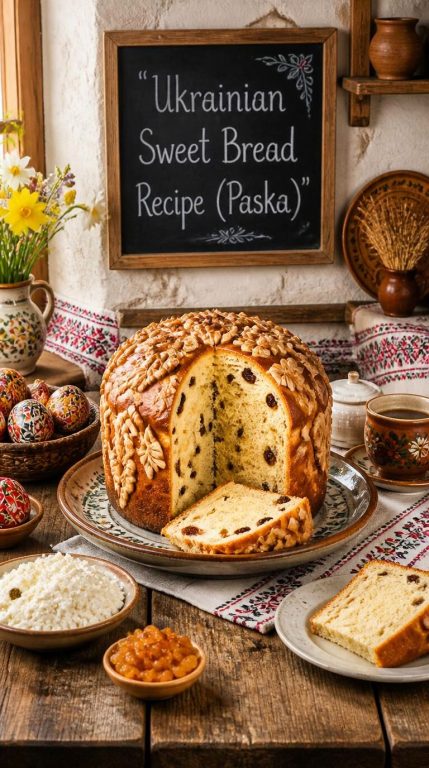
Adapt the classic Ukrainian sweet bread recipe to explore flavor and texture without losing its traditional character. Add citrus zest—lemon or orange—to brighten the crumb, or fold in golden raisins for pockets of gentle sweetness. For a richer loaf, enrich the dough with an extra egg yolk and a touch more butter; the crumb becomes tender and almost custardy.
Layer in ground vanilla bean or a spoonful of honey for a deeper aroma that pairs well with coffee. Make smaller, individual paska buns for portion control or faster baking; twist small strips together to keep the braided look. These mini loaves work well glazed and decorated with sprinkles for festive tables and are a fun way to use the Ukrainian sweet bread recipe.
For a savory twist, reduce the sugar and fold in herbs like dill or chives plus grated cheese for brunch-friendly paska. The dough tolerates bold inclusions, but avoid overloading it to keep the rise steady. Test small batches when trying new flavors to dial in balance before scaling up your Ukrainian sweet bread recipe.
- Sweet add-ins: citrus zest, raisins, candied peel, vanilla.
- Richer dough: extra yolk, more butter, honey.
- Format changes: mini loaves, braided crowns, loaves in a bundt pan.
- Savory option: reduced sugar, herbs, cheese.
Related Baking Recipes
Pair Paska with other Ukrainian cuisine recipes that highlight the country’s comfort-food traditions. Try a soft, egg-rich babka or a simple kolach for celebratory tables; both share the enriched dough techniques used in the Ukrainian sweet bread recipe and fit well with family dinner menus. Bake a batch of small buns or pampushky to serve with savory dishes for a homemade touch.
Classic Ukrainian dishes balance dough work with hearty fillings. Rye or potato breads complement braised meats and soups, while sweet rolls pair nicely with tea after a meal. If you enjoy Ukrainian comfort food recipes, bake scones or sweet cheese pastries alongside Paska for variety at brunch and to mirror traditional flavors. The Ukrainian sweet bread recipe fits into every festive occasion.
For traditional Ukrainian cooking ideas at home, keep a shortlist: enriched breads, fruit-studded loaves, and lightly glazed cakes. Each item supports the family dinner atmosphere and helps preserve classic techniques for future meals. The Ukrainian sweet bread recipe remains a staple in every Ukrainian kitchen.
Similar Traditional Breads
Compare paska to other Eastern European enriched loaves when exploring authentic Eastern European recipes. These breads share egg-rich doughs, festive roles, and a slightly sweet crumb that fits within traditional Slavic recipes. Kulich, a Russian tall, cylindrical Easter bread, is closely related to paska. Bakers shape and decorate it similarly, and it appears in many collections of Eastern European cuisine.
Italian panettone and brioche braids show the same comfort-food DNA in broader European baking. Panettone is an enriched, airy loaf shared at holidays across cultures. These loaves illustrate how authentic European comfort food migrates and adapts between regions, much like the Ukrainian sweet bread recipe.
Sweet curd desserts called paska (a cheese version) often accompany the bread at Easter feasts, highlighting how traditional Slavic recipes combine breads and dairy desserts in seasonal celebrations. Teaching or writing about paska always includes its unique Ukrainian identity and place in the shared Eastern European baking tradition.
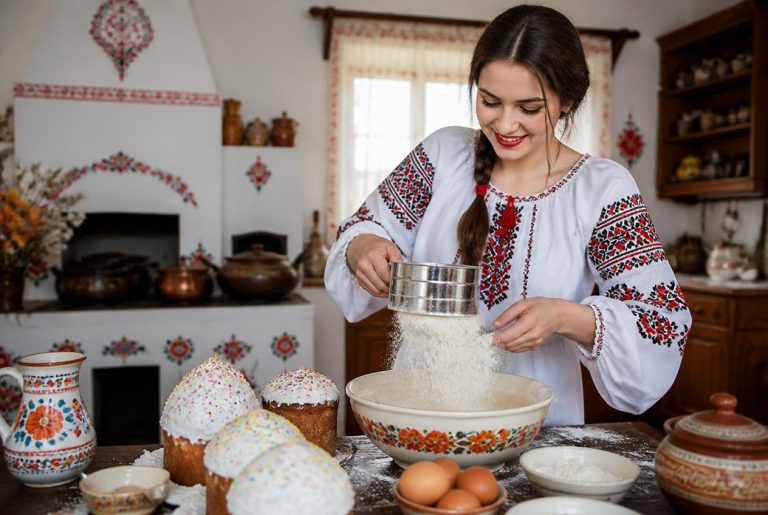
Ukrainian Sweet Bread Recipe (Paska) Cooking TIps
Ukrainian Sweet Bread Recipe (Paska) Cooking Tips
• Ukrainian Sweet Bread, known as Paska, is a traditional holiday bread celebrated for its rich flavor, soft texture, and beautifully decorated appearance.
• Use fresh yeast or properly stored active dry yeast to ensure a strong rise and light crumb.
• Warm milk and other liquids should be comfortably warm rather than hot to encourage yeast activity.
• High-quality flour helps create a tender yet sturdy loaf structure.
• Eggs, butter, and sugar contribute richness and the characteristic soft texture.
• Knead the dough thoroughly until it becomes smooth, elastic, and slightly tacky.
• Allow the dough ample time to rise, as enriched doughs often require longer fermentation periods.
• Raisins, currants, citrus zest, or other dried fruits are commonly added for flavor and texture.
• Fold additions into the dough evenly to ensure consistent distribution.
• Avoid adding excessive flour during kneading, which can produce a dense loaf.
• Traditional decorative dough braids, crosses, or floral designs can be placed on top before baking.
• Brush the loaf with egg wash to create a glossy golden finish.
• Bake until the loaf develops a deep golden color and is fully cooked through.
• Allow the bread to cool completely before slicing to preserve its texture.
• A light glaze may be applied after baking for additional sweetness and shine.
• The flavor should balance gentle sweetness, rich butter and egg notes, dried fruit, and subtle yeast character.
• Properly prepared Paska should have a soft, tender crumb and an attractive golden crust.
• Serve plain or with butter, preserves, or tea for a traditional presentation.
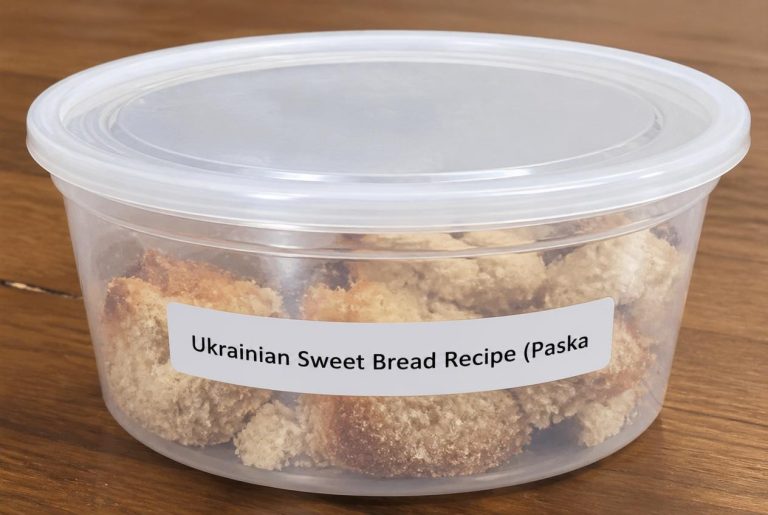
Ukrainian Sweet Bread Recipe (Paska) Storage TIps
Ukrainian Sweet Bread Recipe (Paska)
Storage Tips
• Allow the bread to cool completely before transferring it into storage containers.
• Store at room temperature in airtight containers or sealed bags to help maintain softness.
• Keep the loaf tightly wrapped to reduce moisture loss and prevent staling.
• Avoid refrigeration when possible, as it can cause bread to become firm more quickly.
• Store sliced portions with cut sides protected to help preserve freshness.
• Reheat gently if desired to restore softness and aroma.
• Toasting can refresh older slices and enhance flavor.
• Glazed or decorated loaves should be handled carefully to preserve their appearance.
• Freeze whole loaves or individual slices in airtight freezer-safe containers if desired.
• Wrap tightly to help prevent freezer burn and preserve quality.
• Defrost frozen bread gradually at room temperature before serving.
• Refresh thawed bread briefly in a warm oven if desired.
• Use clean hands or utensils when handling stored bread to help maintain freshness.
• Keep away from strongly scented foods because sweet breads readily absorb surrounding odors.
• Label storage containers with the preparation date for easier inventory management.
• Avoid repeated freezing and thawing cycles, which can negatively affect texture and flavor.
• Discard the bread if mold, unusual odors, discoloration, or other signs of spoilage develop.
• For best quality, enjoy the bread while it remains soft, aromatic, and flavorful.
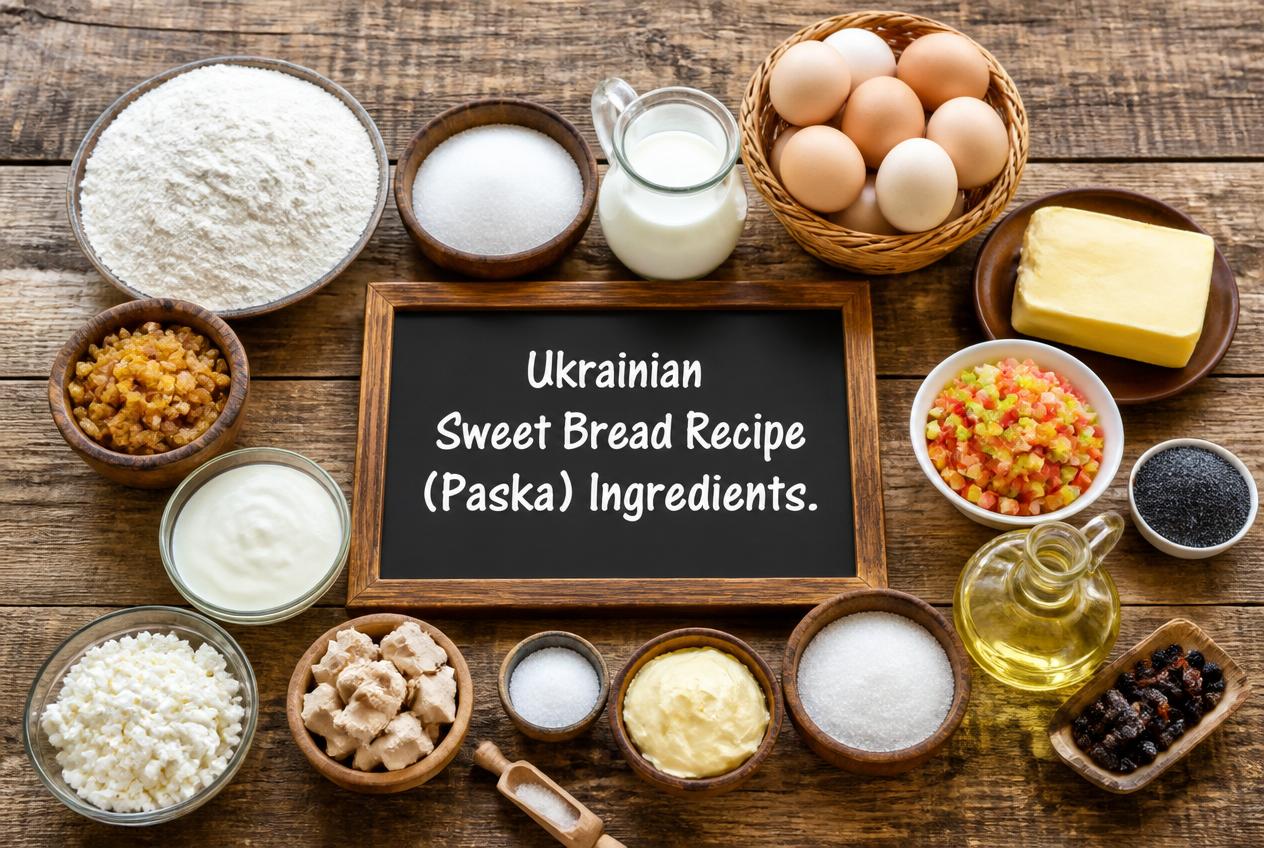
Ukrainian Sweet Bread Recipe (Paska)
Ingredients
- 2 cups milk + 2 Tbsp warm
- 6 eggs room temperature
- 1 Tbsp active dry yeast
- 2 cups sugar
- 2 sticks butter meltedsticks unsalted
- 1/2 tsp salt
- 1/2 cup sour cream
- 1 tsp vanilla extract
- 9 cups all-purpose flour divided
- 1 1/2 cups raisins white or brown
Instructions
- In a very large mixing bowl, combine the warm milk, eggs, yeast, sugar, melted butter, salt, sour cream, and vanilla extract. Whisk until the mixture is smooth and evenly blended. Gradually stir in 4 cups of the flour until a thick batter forms. Cover the bowl and place it in a warm location to rise for about 2 hours, allowing the yeast to activate and the mixture to become light and airy.
- Add the remaining 5 cups of flour one cup at a time, mixing well after each addition. Continue until a soft dough forms that no longer sticks heavily to your hands. Fold the raisins into the dough until evenly distributed throughout. Cover the bowl again and allow the dough to rise in a warm place for another 2 hours, or until doubled in size.
- Divide the risen dough evenly among three large bread molds or baking pans. Handle the dough gently to preserve the air pockets developed during rising. Place the filled molds in a warm location and allow the dough to rise again for approximately 2 hours, or until the molds are nearly full.
- Preheat the oven to 350°F. Once the dough has completed its final rise, place the loaves in the oven and bake for 30 to 35 minutes. The tops should become golden brown and the bread should be fully baked through. If needed, loosely cover the tops with foil during baking to prevent excessive browning.
- Remove the loaves from the oven and allow them to cool in their molds briefly before transferring them to a wire rack. Let the bread cool completely before slicing. This helps the crumb set properly and prevents the bread from becoming gummy.
- Slice and serve the Paska at room temperature. This traditional Ukrainian Easter bread is commonly enjoyed during Easter celebrations and is often shared with family and friends after being blessed at church.
Ukrainian Sweet Bread Recipe (Paska) Frequently Asked Questions
Find out what paska is, which ingredients matter for an authentic loaf, how it compares with similar breads, and practical tips to keep the crumb soft and moist. These answers focus on concrete techniques, typical serving customs, and reliable substitutions for any Ukrainian sweet bread recipe.
What is this traditional Easter bread, and how is it typically served?
Paska is a rich, egg- and butter-enriched Ukrainian Easter bread with a slightly sweet, tender crumb. Shape it as a round loaf or braid, glaze, and decorate with sugar, icing, or symbolic dough crosses. The Ukrainian sweet bread recipe is essential for this holiday centerpiece.
Families bring paska to the Easter basket for blessing and then serve slices with Paska cheese or other holiday foods. Serve it warm or at room temperature, plain or with butter, honey, or sweet curd. The Ukrainian sweet bread recipe ensures a soft and festive loaf for your table.
What ingredients are essential for an authentic version, and what substitutions work best?
Essential ingredients include strong bread flour, whole eggs, butter, milk, sugar, and yeast; they produce the enriched dough and characteristic crumb. Use room-temperature eggs and warmed (not hot) milk to activate yeast without killing it. The Ukrainian sweet bread recipe relies on these quality ingredients.
Good substitutions: use olive oil or neutral vegetable oil for a dairy-free option, and swap part of the whole milk for sour cream for extra tenderness. For a lighter crumb, replace 10–20% of the flour with pastry flour; for faster rise, use instant yeast in place of active dry yeast at a slightly reduced quantity. These tips keep your Ukrainian sweet bread recipe flexible.
What is the difference between paska and babka?
Paska is an enriched, usually plain or lightly flavored Easter loaf traditionally served at religious celebrations. Babka refers to sweet yeast cakes often rolled or layered with fillings like chocolate, cinnamon, or fruit. The Ukrainian sweet bread recipe for paska focuses on a soft, uniform crumb and symbolic decorations, while babka features a visible loaf swirl or braid and intense filling.
Use the Ukrainian sweet bread recipe to create a classic centerpiece for your Easter table and enjoy the tradition it brings to your home.
What is the difference between challah and paska?
Both challah and paska are egg-enriched braided breads, but challah is a Jewish ceremonial loaf with a slightly denser texture and often less sugar. Challah typically omits dairy to remain kosher for meat meals, whereas paska contains butter and sometimes milk. If you are searching for a Ukrainian sweet bread recipe, you will find that paska uses richer fat and eggs and is tied to Easter rituals and blessing traditions. Ukrainian sweet bread recipe traditions emphasize the use of butter and eggs, which create a soft, rich loaf.
Challah is commonly braided into multiple strands and served for Sabbath and holidays. In contrast, the Ukrainian sweet bread recipe for paska results in a loaf that is often decorated and shared during Easter celebrations. Many families pass down their Ukrainian sweet bread recipe through generations, making it a cherished part of holiday gatherings.
Is paska the same as panettone, and how do they differ?
Paska and panettone are both enriched sweet breads, but panettone is an Italian, dome-shaped bread with a tall, open crumb studded with candied fruit and long fermentation. Panettone relies on extended proofing or a sourdough starter for its lofty, airy structure. The Ukrainian sweet bread recipe for paska creates a tighter, softer crumb, higher butter content, and is typically lower and decorated, not studded with fruit.
The flavor profiles and textures of paska and panettone differ because of ingredient ratios and proofing methods. If you follow a Ukrainian sweet bread recipe, you will notice the emphasis on a soft, buttery texture and beautiful decorations. For more information about traditional Ukrainian paska and its significance, visit this resource on Ukrainian Easter bread.
People who love baking often seek out the best Ukrainian sweet bread recipe to ensure their paska turns out perfectly every year. A classic Ukrainian sweet bread recipe often includes rich dairy, eggs, and sometimes citrus zest for added flavor. Whether you are new to baking or experienced, trying a Ukrainian sweet bread recipe will add a delicious and meaningful touch to your holiday table.
How can you ensure a soft, fluffy crumb and prevent the loaf from drying out?
Use an enriched dough formula with at least 20–30% fat (butter or oil) and multiple whole eggs to tenderize the crumb. Choose strong flour for proper gluten development, and keep the final dough temperature around 75–78°F (24–26°C) to encourage consistent fermentation. When making a Ukrainian sweet bread recipe, these steps help achieve the ideal texture.
Proof the dough until it nearly doubles, but avoid overproofing. Underbake slightly by a few minutes and let residual heat finish the crumb, which is essential for a successful Ukrainian sweet bread recipe. Wrap cooled loaves tightly in plastic or store them in an airtight container to retain moisture. Brush the crust with simple syrup or melted butter immediately after baking to lock in softness, a classic tip for any Ukrainian sweet bread recipe. If you want more tips and tricks for baking, visit King Arthur Baking Company for additional resources.
Perfecting a Ukrainian sweet bread recipe requires attention to detail at every step. Use high-quality ingredients and handle the dough gently. With practice, anyone can master a Ukrainian sweet bread recipe and enjoy a delicious, soft loaf every time. Experiment with different fillings or toppings to customize your Ukrainian sweet bread recipe to your taste. Remember, the key to a great Ukrainian sweet bread recipe is patience and precision. Try sharing your favorite Ukrainian sweet bread recipe with friends and family for a special treat. By following these guidelines, your Ukrainian sweet bread recipe will turn out beautifully every time.

Recipes are gathered in person and written for real-world cooking conditions.
- 10 Hungarian Dessert Recipes Passed Down Through Generations - July 25, 2026
- 11 Easy English Recipes Anyone Can Make - July 25, 2026
- Hungarian Kifli Recipe - July 25, 2026