
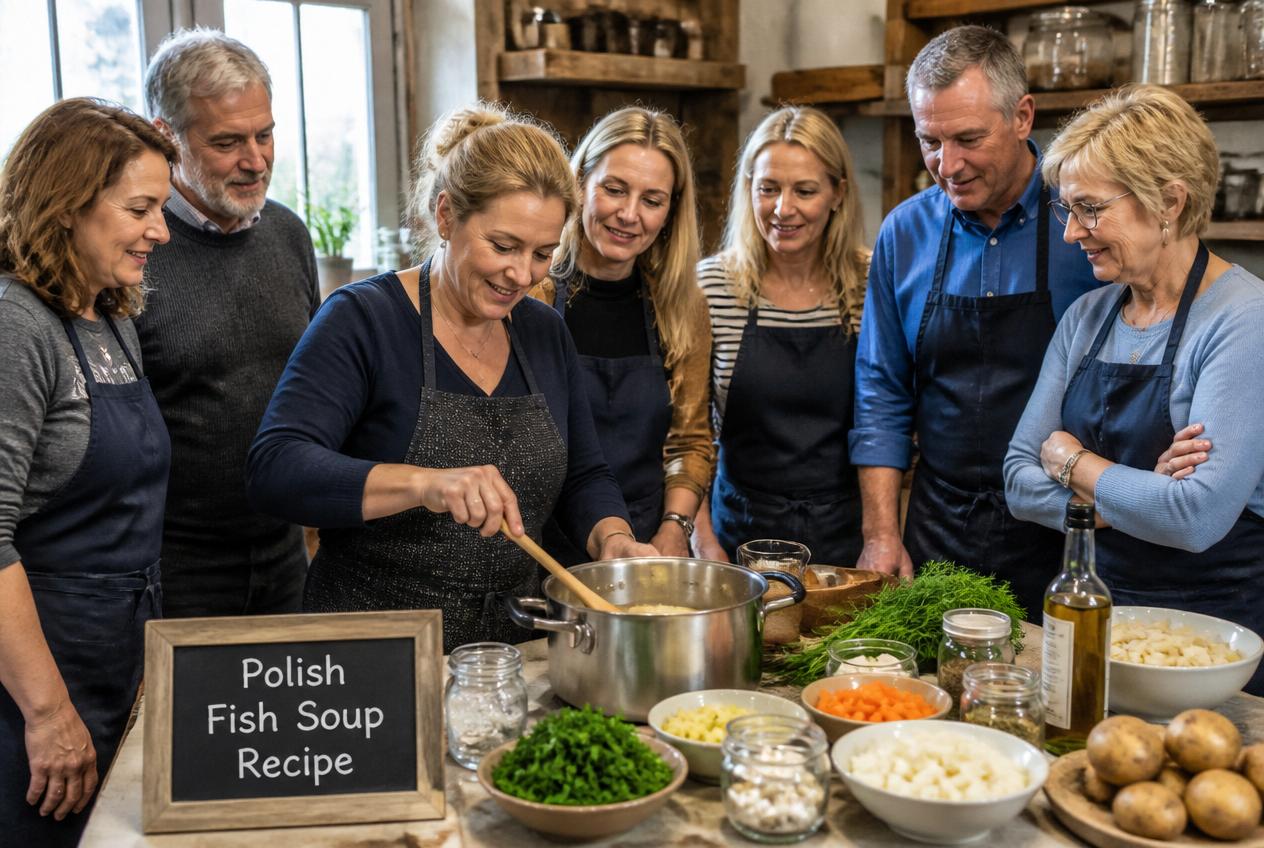
Polish Fish Soup Recipe (Zupa Rybna): Traditional Eastern European Comfort Food
Polish fish soup recipes, known as Zupa Rybna, represents one of the most cherished comfort foods in Polish cuisine. This hearty dish combines fresh fish with aromatic vegetables and herbs to create a warming meal that has graced Polish tables for generations. Zupa Rybna features fish fillets or whole fish, root vegetables like carrots and potatoes, and fresh herbs such as dill, often enriched with cream for a satisfying texture. The Polish fish soup recipe stands out for its adaptability and rich flavors.
This soup works beautifully as both an everyday family meal and a special occasion dish. Many Polish families serve the Polish fish soup recipe during Christmas Eve dinner, traditionally prepared with carp, though you can use cod, salmon, pike, perch, or tilapia depending on what’s available. The Polish fish soup recipe adapts well to different types of fish and remains forgiving for home cooks.
The Polish fish soup recipe stands out among comfort food recipes for its simplicity and deep flavor. Fish gently cooks in a flavorful broth built from vegetables and spices, creating a nourishing meal ready in about 45 minutes. Whether you live near the coast with access to saltwater fish or prefer freshwater varieties, this homemade Polish fish soup recipe delivers the authentic taste of Polish family cooking.
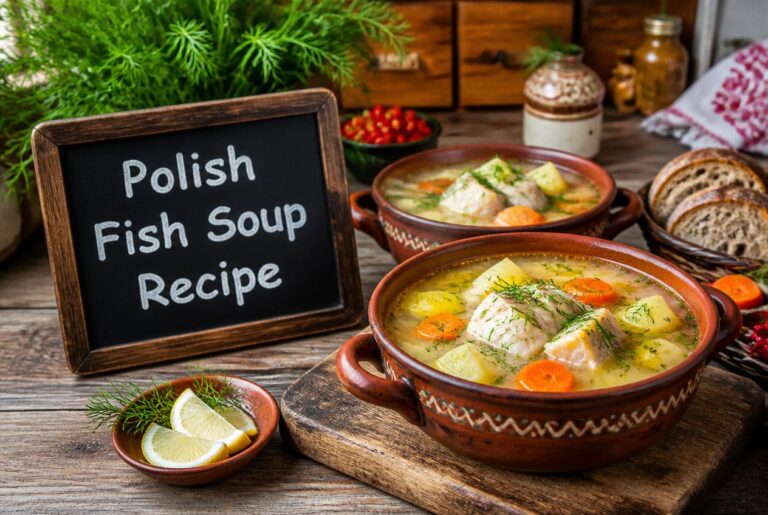
Polish Fish Soup
Key Takeaways
- Zupa Rybna is a versatile Polish fish soup recipe that can be made with various types of fish and adapted to your preferences
- The Polish fish soup recipe combines fish with root vegetables and herbs in a flavorful broth, often finished with cream for richness
- This traditional dish serves as both a comforting everyday meal and a special dish for Polish holiday celebrations
Description and Historical Information
Zupa Rybna stands as one of the most cherished traditional Polish recipes, particularly in coastal regions along the Baltic Sea. The Polish fish soup recipe represents authentic Polish food at its finest, combining simplicity with deeply satisfying flavors.
The Polish fish soup recipe features freshwater fish such as pike, carp, or perch, though saltwater varieties work equally well. The soup’s foundation relies on a rich fish broth combined with vegetables like potatoes, carrots, celery root, and onions. Fresh dill and parsley add characteristic Polish aromatics.
Key Characteristics:
- Light yet nourishing broth
- Delicate fish pieces that remain tender
- Aromatic vegetables and herbs
- Often finished with cream for richness
This classic Polish fish soup recipe has deep roots in necessity and tradition. Coastal communities developed the Polish fish soup recipe when fish was abundant and affordable. Inland regions favored freshwater varieties, while seaside areas used Baltic catches.
Zupa Rybna holds special significance during Christmas Eve, where it appears as part of the traditional meatless Wigilia supper. Many families consider the Polish fish soup recipe essential among their old-fashioned Polish recipes passed through generations. Each household maintains its own variation, reflecting regional influences and family preferences.
The preparation method varies across Poland, but the essence remains consistent. Popular Polish fish soup recipes emphasize quality ingredients over complex techniques. The Polish fish soup recipe showcases how traditional Polish meals transform humble components into comforting, flavorful food that has sustained Polish families for centuries.
Chef’s Tips
Use the freshest fish available for the best results in your Polish fish soup recipe. Cod, salmon, pike, or tilapia work beautifully, though traditionally any mix of freshwater or saltwater fish can be used. The Polish fish soup recipe benefits from a variety of fish for richer flavor.
Key Ingredient Considerations:
- Use bone-in fish pieces when possible for richer broth depth
- Fresh dill is essential and should be added near the end of cooking
- Quality root vegetables like carrots, celery root, and parsnips enhance the rustic character
Making the fish stock separately gives better control over the final flavor of the Polish fish soup recipe. If short on time, simply poach fish fillets directly in the vegetable broth, making this Polish fish soup recipe easy to prepare on busy evenings.
For authentic rustic Polish cooking, never rush the vegetable base. Let the onions, carrots, and celery soften slowly before adding liquid. This builds a foundation of flavor that defines a traditional Polish fish soup recipe.
Time-Saving Approaches:
- Prep vegetables the night before
- Use fish fillets instead of whole fish to skip deboning
- Make extra stock and freeze for future batches
Taste and adjust seasoning gradually. The fish releases salt as it cooks, so add salt conservatively at first. A squeeze of fresh lemon juice before serving brightens the entire Polish fish soup recipe.
Serve the Polish fish soup recipe with crusty bread for a complete meal. This simple addition turns the soup into a satisfying and practical choice for everyday cooking.
Make-Ahead Instructions
The Polish fish soup recipe is excellent to prepare in advance, making it perfect for busy weeknights or when hosting guests. The flavors develop and deepen when the soup sits, creating an even more delicious result.
Preparing the Broth
Make the fish broth up to 2 days ahead. After straining the broth, let it cool completely before transferring it to an airtight container and refrigerating. This step saves considerable time on the day you plan to serve the Polish fish soup recipe.
Vegetable Preparation
Chop vegetables the night before and store them in separate containers in the refrigerator. The carrots, celery, onions, and potatoes hold up well for 24 hours when properly stored for the Polish fish soup recipe.
Adding the Fish
Add the fish only when ready to serve the Polish fish soup recipe. Fish becomes mushy and loses its texture when reheated, so keep raw fish refrigerated separately. When ready to serve, simply reheat the broth and vegetables, then add fresh fish fillets during the final 10 minutes of cooking.
Storage Guidelines
| Component | Advance Time | Storage Method |
|---|---|---|
| Fish broth | 2 days | Airtight container, refrigerated |
| Chopped vegetables | 24 hours | Sealed container, refrigerated |
| Fresh fish | Same day only | Keep raw until final cooking |
Bring refrigerated broth back to a gentle simmer before proceeding with the Polish fish soup recipe. This approach allows you to serve fresh-tasting soup without last-minute stress.
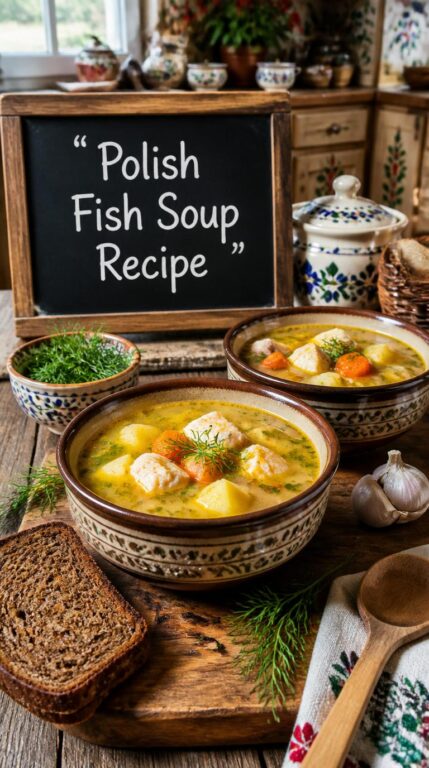
Variations
Numerous regional and seasonal variations of the Polish fish soup recipe exist throughout Poland. The most notable difference lies in the type of fish used, which often depends on geography and availability.
Common Fish Variations:
- Coastal regions: Cod, herring, or mixed saltwater fish
- Inland areas: Pike, perch, carp, or trout
- Modern adaptations: Salmon, tilapia, or pre-made fish fillets for convenience
Polish Christmas recipes traditionally feature carp-based Polish fish soup recipe as part of the Wigilia (Christmas Eve) supper. This version is often lighter and served as one of the twelve meatless dishes. Christmas preparations typically include more aromatic vegetables and sometimes a touch of cream for richness.
Polish Easter recipes may incorporate different fish varieties, though the Polish fish soup recipe is less common during this holiday compared to Christmas. When served at Easter, the soup often includes spring vegetables like fresh parsley root and young carrots.
Regional Additions:
- Tomato paste or fresh tomatoes for a reddish broth
- Cream or milk for a velvety texture
- Rice, barley, or small pasta shapes
- Mushrooms for earthy depth
- Whole fish with heads and bones versus clean fillets
Polish holiday recipes often call for whole fish preparation, which creates a more robust broth from the bones and head. Modern cooks sometimes use only fillets, which makes serving easier and appeals to those who prefer boneless soup. Some families pass down Polish fish soup recipes that include specific spice blends or secret ingredients unique to their household traditions.
Related Recipes
If you enjoy the Polish fish soup recipe, explore other traditional Polish soups that offer similar comfort and depth of flavor. These dishes showcase Poland’s rich culinary heritage and rely on simple, wholesome ingredients. For more Polish recipes, visit Polish Your Kitchen.
Żurek is a sour rye soup to try when craving something tangy and hearty. It features a fermented rye base, potatoes, sausage, and hard-boiled eggs. The soup has a distinctive sour flavor that sets it apart from other Polish soups.
Barszcz (beet soup) comes in several variations. The clear version is popular for Christmas Eve, while the heartier red barszcz with beans and vegetables works well for regular meals. The earthy sweetness of beets creates a satisfying base.
Kapuśniak is a cabbage soup perfect for cold months. It combines sauerkraut or fresh cabbage with pork, potatoes, and aromatic spices. The result is a warming, slightly tangy dish.
Rosół serves as Poland’s answer to chicken noodle soup. This clear broth with chicken, vegetables, and noodles provides a light yet nourishing meal. Many Polish families consider it essential for Sunday dinners.
Grochówka is a split pea soup with smoked meats that is incredibly filling. The smoky flavor from kielbasa or bacon complements the creamy texture of the peas perfectly.
Each of these soups shares the Polish fish soup recipe’s emphasis on fresh ingredients and straightforward preparation methods. Try them to expand your repertoire of Polish comfort food.
Recipe Comparison
The Polish fish soup recipe shares similarities with other European fish soups, yet each maintains distinct characteristics rooted in regional ingredients and cooking traditions. The Polish fish soup recipe typically features freshwater fish and dill, while French and Hungarian variants reflect their own cultural preferences.
Comparison With Traditional French Bouillabaisse
French bouillabaisse relies on Mediterranean saltwater fish like rascasse, red mullet, and sea bass, whereas the Polish fish soup recipe uses freshwater species such as pike, perch, or carp. The French version incorporates saffron, fennel, and orange zest for a distinctly aromatic profile, while authentic Eastern European food traditions favor dill, parsley, and bay leaves.
Bouillabaisse requires a specific sequence where fish stock simmers separately before combining with a roux-based mixture. The Polish fish soup recipe is simpler to execute, as vegetables and fish cook together in one pot. The French soup traditionally includes tomatoes and garlic, creating a reddish broth, but Slavic recipes produce a lighter, cream-colored base.
The serving methods differ significantly. Bouillabaisse arrives at the table with toasted bread and rouille sauce on the side, while the Polish fish soup recipe is served with fresh rye bread and sometimes garnished with hard-boiled egg.
Comparison With Hungarian Halászlé
Hungarian halászlé showcases the bold use of paprika, giving the soup its characteristic red color and spicy kick. Eastern European recipes like zupa rybna avoid paprika entirely, relying instead on subtle herb flavors. Halászlé uses carp almost exclusively, reflecting Hungary’s river fish traditions, while Polish versions accept various freshwater species.
The Hungarian preparation creates an intensely concentrated fish broth by cooking fish bones and heads for extended periods. I make zupa rybna with shorter cooking times and often include cream for richness. Halászlé remains brothy and clear, whereas Polish fish soup achieves a heartier, more substantial consistency through root vegetables like carrots, parsnips, and celeriac.
Hungarian recipes typically omit dairy products completely, while I incorporate cream or milk into zupa rybna for added smoothness and flavor. The Polish fish soup recipe stands out for its creamy texture and use of multiple fish varieties.
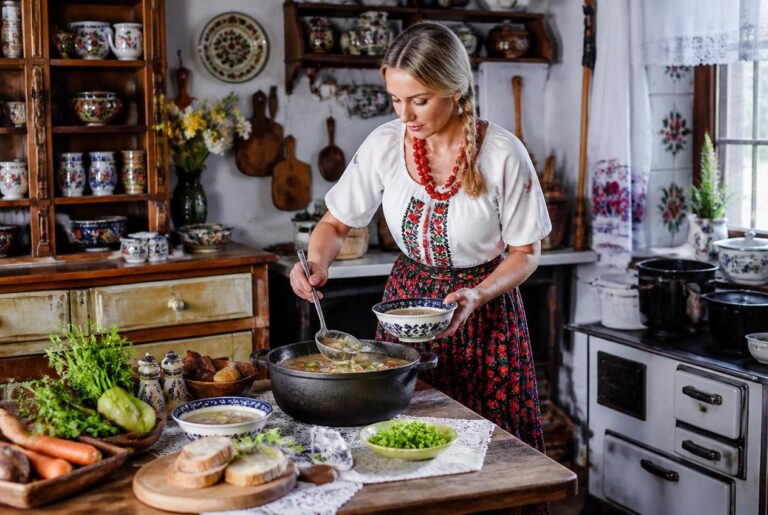
Polish Fish Soup Recipe Cooking TIps
Polish Fish Soup Recipe Cooking Tips
• Polish Fish Soup is a traditional dish known for its delicate seafood flavor, aromatic broth, and hearty yet comforting character.
• Fresh fish is essential for achieving the clean, balanced flavor that defines the soup.
• White fish varieties such as cod, pike, perch, carp, or other locally available fish are commonly used.
• Fish bones and heads can be simmered to create a richer, more flavorful stock.
• Strain homemade fish stock carefully to remove bones and impurities.
• Onions, carrots, celery root, parsley root, and leeks are commonly used to build flavor in the broth.
• Garlic adds depth without overpowering the fish.
• Bay leaves, allspice, black pepper, parsley, and dill are traditional seasonings.
• Simmer the broth gently to maintain clarity and avoid bitterness.
• Add fish pieces toward the end of cooking to prevent overcooking and breakage.
• Avoid vigorous boiling once the fish is added, as delicate flesh can fall apart.
• Potatoes may be included to make the soup more substantial.
• Tomato paste or tomatoes are used in some regional variations for added richness.
• Taste and adjust seasoning carefully, allowing the fish flavor to remain the focal point.
• Fresh dill or parsley provides a traditional garnish and bright flavor contrast.
• A squeeze of lemon can enhance the natural seafood flavors.
• The flavor should balance delicate fish, savory broth, aromatic vegetables, herbs, and mild acidity.
• Serve hot with rye bread, crusty bread, or traditional accompaniments.
Polish Fish Soup Recipe Storage Tips
Polish Fish Soup Recipe Storage Tips
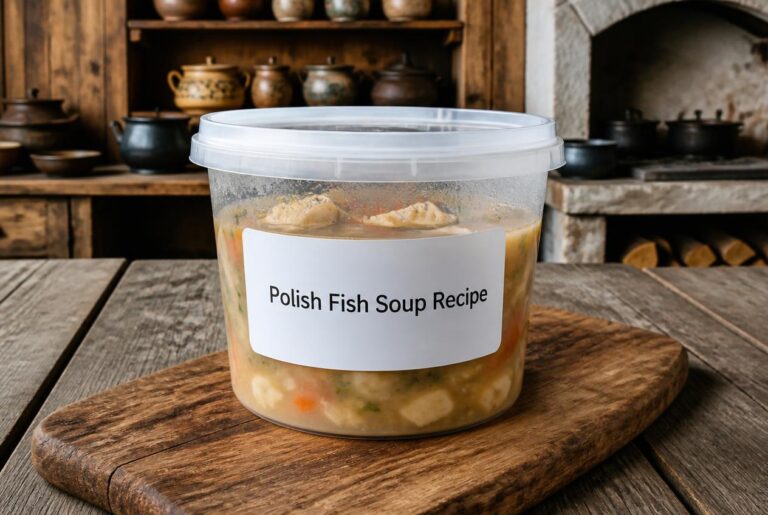
• Allow the soup to cool before transferring it into storage containers.
• Store refrigerated in airtight containers to preserve freshness and flavor.
• Fish soups are generally best consumed sooner than many other soups because seafood is highly perishable.
• Refrigeration often allows the broth and seasonings to blend more fully.
• Reheat gently on the stovetop or in the microwave until thoroughly heated.
• Avoid vigorous boiling during reheating, which can overcook the fish and affect texture.
• Stir carefully to avoid breaking apart delicate fish pieces.
• Add a small amount of broth or water if the soup becomes too concentrated during storage.
• Fresh herbs are often best added after reheating for maximum flavor and color.
• Store bread and accompaniments separately to maintain their texture.
• Freeze portions in airtight freezer-safe containers if desired.
• Wrap tightly to help prevent freezer burn and preserve quality.
• Some fish varieties may become slightly softer after freezing and thawing.
• Defrost frozen portions gradually in the refrigerator before reheating.
• Use clean utensils when serving leftovers to help maintain freshness.
• Keep away from strongly scented foods because fish readily absorbs surrounding odors.
• Check for signs of spoilage such as strong off odors, slime, unusual discoloration, or texture changes before consuming leftovers.
• For best quality, enjoy refrigerated and frozen portions while the fish remains tender and the broth retains its fresh flavor.
Polish Fish Soup Recipe (Zupa Rybna)
Ingredients
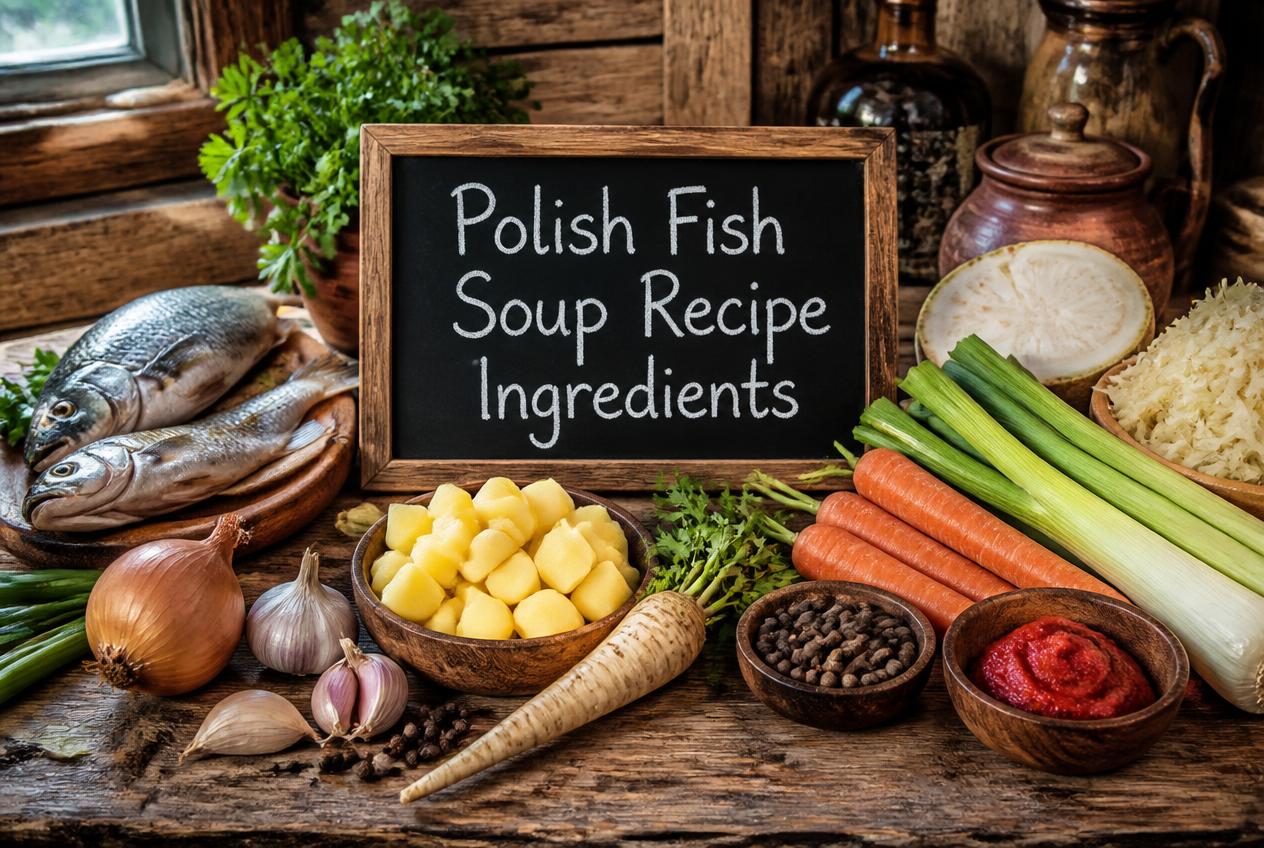
- 2 lbs fish whole with heads
- 6 onions
- 1 leek the white part
- 1 small celery root
- 1 parsley root
- 3 carrots
- 1 tbsp horseradish grated
- 1 tbsp lemon juice fresh
- 3 bay leaves
- 3 allspice berries
- 1 tbsp salt
- ½ tsp pepper
- oil
- 12 cups water
Instructions
- Begin by cleaning the fish thoroughly. Remove any scales if necessary and rinse the fish well under cold running water. Leave the heads attached, as they contribute a great deal of flavor and natural gelatin to the broth.
- Peel the onions and slice them into thick pieces. Clean the leek thoroughly and use only the white portion, slicing it into rounds. Peel the celery root, parsley root, and carrots, then cut them into large chunks.
- Keeping the vegetables fairly large makes them easier to remove later and helps create a clear, flavorful broth.
- Heat a small amount of oil in a large stockpot over medium heat.
- Add the sliced onions and cook slowly until they become deeply golden and lightly caramelized. This step is especially important because the browned onions give the finished broth its characteristic golden color and rich flavor.
- Take care not to burn them; you want a deep golden brown rather than a bitter, dark char.
- Once the onions are browned, add the leek, celery root, parsley root, and carrots to the pot.
- Pour in the 12 cups of water and stir gently. Add the bay leaves, allspice berries, salt, and pepper.
- Bring everything slowly to a boil over medium-high heat. As the liquid heats, skim off any foam or impurities that rise to the surface. Removing these impurities helps create a cleaner, clearer broth.
- Once the broth reaches a boil, reduce the heat to low and allow it to simmer gently for about 30 minutes. The vegetables will begin releasing their flavor and sweetness into the stock.
- Carefully place the whole fish into the simmering broth.
- Make sure the fish is mostly submerged in the liquid. If necessary, add a little additional water.
- Continue simmering very gently for approximately 30 to 40 minutes. Avoid vigorous boiling, as it can cause the fish to break apart and make the broth cloudy.
- During this time, the fish will become tender and impart its delicate flavor to the soup while the bones and heads contribute body and richness.
- Once the fish is fully cooked, carefully remove it from the pot with a slotted spoon and transfer it to a platter to cool slightly.
- Strain the broth through a fine-mesh sieve into a clean pot, removing all of the vegetables, herbs, and spices.
- For an especially clear broth, strain it a second time through cheesecloth or a very fine sieve.
- Stir the grated horseradish and fresh lemon juice into the strained broth.
- The horseradish adds a subtle warmth and depth, while the lemon juice brightens the flavors and balances the richness of the fish stock.
- Taste the broth and adjust the seasoning with additional salt or pepper if needed.
- Allow the soup to simmer gently for another 5 minutes so the flavors can meld together.
- Once the fish has cooled enough to handle, carefully remove the skin and bones.
- Separate the flesh into serving portions, taking care to remove even the smallest bones.
- Depending on your preference, you may serve the fish in large pieces or flake it into smaller portions.
- Place portions of fish into individual serving bowls and ladle the hot broth over the top.
- If desired, garnish with fresh parsley or additional grated horseradish.
- This traditional fish soup features a beautifully clear broth infused with sweet root vegetables, aromatic spices, and the delicate flavor of whole fish. The addition of horseradish and lemon provides a bright, slightly sharp finish that balances the richness of the stock.
- Serve with crusty bread, boiled potatoes, or simply enjoy the soup on its own as a comforting and elegant meal. The combination of tender fish and deeply flavored broth makes this a classic dish that is both nourishing and satisfying.
Polish Fish Soup Recipe Frequently Asked Questions
Fish soup requires careful attention to ingredients, cooking methods, and storage to achieve the best results. I’ve compiled answers to the most common questions about preparing and serving this traditional Polish dish. The Polish fish soup recipe offers a unique blend of flavors and techniques that set it apart from other European fish soups.
What types of fish work best for a traditional fish soup, and can different varieties be combined?
I recommend using firm white fish like cod, pike, or perch for traditional zupa rybna. These varieties hold their shape well during cooking and provide a mild, clean flavor that enhances the Polish fish soup recipe. Combining two or three different fish types creates a more complex flavor profile in the finished soup.
Carp is the most traditional choice for Christmas Eve preparations, though salmon and tilapia also work effectively. Freshwater fish like pike and perch are authentic to coastal Baltic recipes, while saltwater options such as cod offer easier availability in most markets. The key to a great Polish fish soup recipe is selecting fresh fish with firm flesh that won’t disintegrate during simmering.
How can I make a clear, flavorful fish stock without the soup tasting overly fishy?
I start by rinsing fish heads, bones, and trimmings thoroughly under cold water to remove blood and impurities. This step significantly reduces any strong fishy odors in the final stock, which is essential for a balanced Polish fish soup recipe. Gentle simmering rather than boiling keeps the broth clear and prevents it from developing an overly intense flavor.
I add lemon juice or a splash of white wine to brighten the taste and cut through any fishiness. Aromatic vegetables like celery, carrots, and onions balance the fish flavor while adding depth to the stock. Removing any foam or scum that rises to the surface during the first 10 minutes of cooking helps maintain the clarity and clean taste of the Polish fish soup recipe.
What vegetables, herbs, and spices are most commonly used to season this style of fish soup?
Carrots, celery root, parsley root, and leeks form the vegetable base in most traditional recipes. These aromatics provide sweetness and earthy notes that complement the delicate fish in a Polish fish soup recipe. Fresh dill is the most essential herb for zupa rybna, typically added near the end of cooking to preserve its bright flavor.
I also use bay leaves, whole peppercorns, and fresh parsley to build layers of taste. Potatoes are commonly included to make the soup more substantial and filling, which enhances the heartiness of the Polish fish soup recipe. Salt should be added carefully, as the fish naturally contributes salinity to the broth.
What are the most common mistakes to avoid when cooking fish in soup to prevent it from becoming tough or falling apart?
Overcooking is the primary cause of tough, rubbery fish in soup. I add fish fillets during the last 10-15 minutes of cooking, depending on the thickness of the pieces, to ensure a tender result in the Polish fish soup recipe. Adding fish to rapidly boiling liquid causes it to break apart and become mushy.
I maintain a gentle simmer and handle the fish minimally once it enters the pot. Cutting fish into uniform pieces ensures even cooking throughout the Polish fish soup recipe. Chunks between 1.5 to 2 inches work best for maintaining texture while absorbing flavors from the broth.
How can this fish soup be adapted for a slow cooker without overcooking the fish?
I cook the vegetables and aromatics on low heat for 4-6 hours to develop the broth fully. The fish should only be added during the final 20-30 minutes of cooking time for the best Polish fish soup recipe. Setting the slow cooker to high for the last portion ensures the fish cooks through without sitting in hot liquid too long.
I check the fish after 15 minutes to prevent it from becoming overdone in the Polish fish soup recipe. Preparing the stock base separately and using the slow cooker primarily for keeping the soup warm is another effective approach. This method gives me more control over the fish cooking process in the Polish fish soup recipe, resulting in a perfectly balanced dish.
For more inspiration and tips on traditional fish soups, visit Polish Housewife. The Polish fish soup recipe continues to be a favorite for festive occasions and family gatherings. When you master the Polish fish soup recipe, you can easily adapt it to your taste and available ingredients, ensuring a delicious and satisfying meal every time. The Polish fish soup recipe stands out for its rich history, versatility, and comforting flavors, making it a must-try for anyone interested in Eastern European cuisine.
What is the best way to store, reheat, and freeze fish soup while preserving texture and flavor?
I use airtight containers to store fish soup in the refrigerator for up to 2 days. After preparing a Polish fish soup recipe, I let the soup cool to room temperature before refrigerating it. This step helps prevent bacterial growth and keeps the Polish fish soup recipe fresh.
When I reheat a Polish fish soup recipe, I use medium-low heat and stir the soup occasionally. This method helps maintain the delicate texture of the fish and ensures even heating. I avoid using high heat or microwaving at full power because it can toughen the fish in the Polish fish soup recipe.
I freeze the broth and vegetables from a Polish fish soup recipe, but I add freshly cooked fish when reheating for the best texture. The Polish fish soup recipe stays good in the freezer for up to 3 months if stored in freezer-safe containers. For more tips on storing and reheating, you can visit Polish Your Kitchen for expert advice.
To enjoy the best flavor, I always prepare a new batch of fish for my Polish fish soup recipe after thawing. This technique keeps the soup tasting fresh and preserves the authentic flavor of the Polish fish soup recipe. Whether storing, reheating, or freezing, following these steps ensures your Polish fish soup recipe remains delicious and satisfying.
Remember to label containers with the date before storing your Polish fish soup recipe. This habit helps keep track of freshness and guarantees you enjoy your Polish fish soup recipe at its best. Using these methods, I always serve a flavorful and comforting Polish fish soup recipe to my family and friends.

Recipes are gathered in person and written for real-world cooking conditions.
- 10 Hungarian Dessert Recipes Passed Down Through Generations - July 25, 2026
- 11 Easy English Recipes Anyone Can Make - July 25, 2026
- Hungarian Kifli Recipe - July 25, 2026