

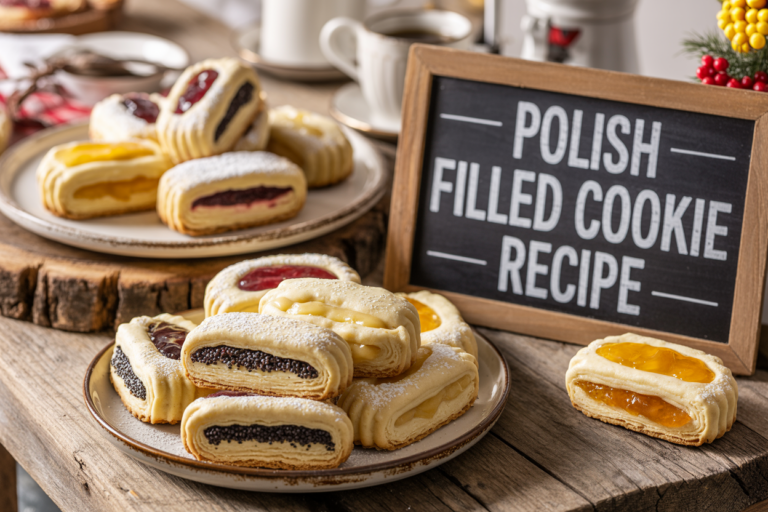
Kołaczki are traditional Polish filled cookies recipe that combine a tender cream cheese dough with sweet fruit preserves, creating an elegant pastry that’s become a beloved staple at holiday celebrations and family gatherings. I find these delicate treats approachable for home bakers, requiring just a handful of basic ingredients and simple techniques to achieve bakery-quality results. The Polish filled cookies recipe creates a memorable addition to any dessert table.
These buttery cookies feature a soft, flaky dough wrapped around your choice of jam filling, then folded into distinctive shapes and dusted with powdered sugar for a beautiful presentation. The cream cheese in the dough creates an incredibly tender texture that melts in your mouth, while the fruit filling provides a perfect balance of sweetness. A Polish filled cookies recipe always delivers a festive, crowd-pleasing treat.
I’m sharing my tested Polish filled cookies recipe along with practical tips for shaping, filling options beyond traditional jam, and storage methods. Whether you’re honoring your heritage or simply exploring new cookie recipes, this Polish filled cookies recipe deserves a place in your baking repertoire.
Polish Filled Cookie Recipe
Key Takeaways
- Kołaczki are Polish cream cheese cookies filled with jam or other sweet fillings and dusted with powdered sugar
- The Polish filled cookies recipe uses simple ingredients and straightforward techniques that work well for bakers at any skill level
- These cookies can be made ahead and frozen, with multiple filling and shaping variations to suit your preferences
Description and Historical Information
Kołaczki are traditional Polish cream cheese cookies that hold a special place among authentic Eastern European food. These delicate pastries stand out for their tender, flaky texture and sweet fruit preserve fillings. The dough combines cream cheese and butter, creating a rich base that practically melts in your mouth. A Polish filled cookies recipe highlights these classic flavors.
These cookies rank among the most beloved Polish desserts, particularly during Christmas and Easter celebrations. They’re also known by various spellings including Kolaczki, Kolacky, or Kiflies, depending on the regional variation. Using a Polish filled cookies recipe helps preserve these traditions.
The basic composition includes just four main ingredients: cream cheese, butter, flour, and jam. Traditional fillings feature fruit preserves like apricot, raspberry, or prune, though some versions use poppy seed or sweetened cream cheese. I always finish them with a light dusting of powdered sugar, as recommended in any authentic Polish filled cookies recipe.
Kołaczki represent a broader category of traditional foods from Poland that immigrant families have kept alive for generations. The cookies likely originated in Central and Eastern Europe, with variations appearing across Polish, Czech, and Hungarian communities. A Polish filled cookies recipe connects you to this rich heritage.
Key Characteristics:
- Texture: Tender and flaky, similar to a delicate pastry
- Shape: Typically folded into squares or triangles with visible filling
- Size: Small, bite-sized portions
- Appearance: Golden edges with powdered sugar coating
These cookies are essential foods from Poland that showcase the country’s baking traditions. With a Polish filled cookies recipe, you need minimal ingredients but achieve an elegant result suitable for special occasions or everyday enjoyment with tea or coffee.
Chef’s Tips
I always chill my dough for at least two hours before rolling. Cold dough is easier to handle and prevents the butter from melting during shaping. For the best Polish filled cookies recipe results, don’t skip this step.
When rolling out the dough, I keep it between two sheets of parchment paper. This eliminates the need for extra flour, which can make the cookies tough. The Polish filled cookies recipe benefits from this technique.
Using a pizza cutter creates perfectly straight edges when cutting the dough into squares. A sharp knife works too, but the pizza cutter is faster and more consistent. Every Polish filled cookies recipe rewards neat, even dough squares.
For filling amounts, I use about 1/2 teaspoon per cookie. Too much filling causes leaks during baking, while too little makes them dry. Polish filled cookies recipe instructions always recommend moderation with filling.
I seal the corners by pressing firmly with my fingertip or a fork tine. The cream cheese dough is naturally sticky, so it adheres well when pressed together properly. This Polish filled cookies recipe step ensures the cookies hold their shape.
My oven temperature stays at 350°F, and I rotate the baking sheet halfway through. This ensures even browning and prevents one side from getting too dark. Consistent baking is key to any Polish filled cookies recipe.
I wait until the cookies are completely cool before dusting with powdered sugar. Warm cookies will absorb the sugar and leave you with a sticky mess instead of a pretty finish. A Polish filled cookies recipe always emphasizes this finishing touch.
Storage tips I follow:
- Room temperature in an airtight container: 5 days
- Refrigerated: 10 days
- Frozen unbaked: 3 months
- Frozen baked: 2 months
I freeze unbaked kolaczki on a parchment-lined tray first, then transfer them to freezer bags. This prevents them from sticking together and lets me bake fresh cookies whenever needed. With a Polish filled cookies recipe, you can enjoy fresh cookies anytime.
Make-Ahead Instructions
I recommend making kołaczki dough in advance since the chilling time is already built into the process. After mixing the cream cheese dough, I divide it into two disks, wrap them tightly in plastic wrap, and refrigerate for up to 3 days before rolling and filling. This make-ahead approach is a hallmark of a reliable Polish filled cookies recipe.
For longer storage, I freeze the wrapped dough disks for up to 2 months. When I’m ready to use frozen dough, I transfer it to the refrigerator and let it thaw overnight. The dough should be cold but pliable when I roll it out, as every Polish filled cookies recipe suggests.
Filled but unbaked cookies can be arranged on parchment-lined baking sheets and frozen until solid. I then transfer them to freezer-safe containers or bags, separating layers with parchment paper. These keep well for up to 6 weeks. The Polish filled cookies recipe method makes holiday baking stress-free.
When baking frozen cookies, I add 2-3 minutes to the original baking time without thawing them first.
Baked kołaczki store beautifully and actually improve in texture after a day. I let them cool completely before storing in airtight containers at room temperature for up to 5 days. For longer storage, I freeze baked cookies in airtight containers for up to 3 months. The Polish filled cookies recipe ensures your treats stay fresh.
I avoid dusting cookies with powdered sugar before freezing. Instead, I add the sugar coating after thawing at room temperature for about 30 minutes. This prevents the sugar from absorbing moisture and dissolving. Every Polish filled cookies recipe recommends this finishing step for best results.
Variations
Kołaczki are remarkably versatile cookies that adapt beautifully to different occasions and preferences. While traditional fruit preserves remain the most popular filling choice, I encourage you to experiment with various options to find your favorite combinations. The Polish filled cookies recipe welcomes creativity.
Classic Filling Options:
- Apricot jam – The most traditional choice for Polish holiday recipes
- Prune butter – A deeply flavored option popular in authentic recipes
- Cherry preserves – Bright and tangy, perfect for Christmas cookie trays
- Raspberry jam – Adds a sweet-tart balance
- Poppy seed paste – A traditional filling for Polish Easter recipes
- Almond paste – Rich and nutty variation
- Sweetened cream cheese – Creates a lighter, tangier filling
The dough itself can be modified for dietary needs. Some bakers make gluten-free versions using cup-for-cup flour substitutes, though the texture becomes slightly more delicate. Vegan adaptations replace cream cheese and butter with plant-based alternatives, maintaining the tender pastry-like quality these cookies are known for. A Polish filled cookies recipe can be adapted to suit many diets.
Shape Variations:
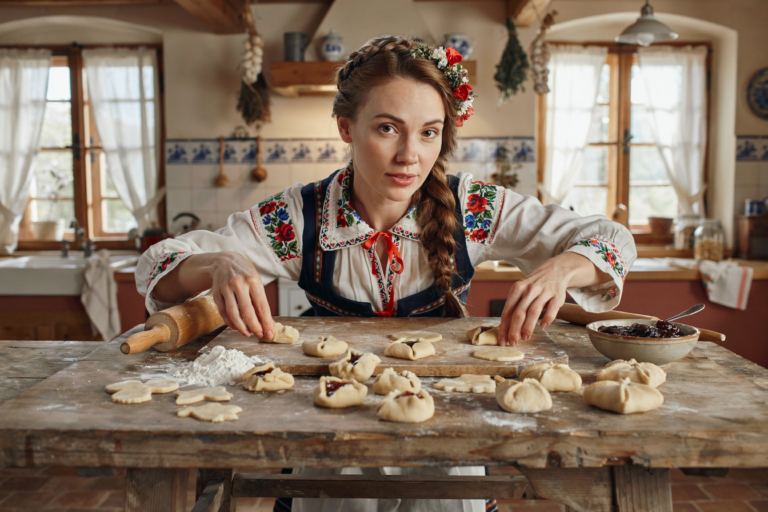
I typically fold these cookies into triangular envelopes, but you can also form them into different shapes. Some bakers create pinwheel designs by cutting slits at corners and folding alternate points to the center. Others prefer simple squares or rectangles for easier assembly during holiday baking sessions. The Polish filled cookies recipe allows for fun with shapes and styles.
For Polish Christmas recipes, I sometimes add a pinch of cardamom or vanilla to the dough for extra warmth. During Easter, lemon zest brightens the flavor profile beautifully. These simple tweaks make each Polish filled cookies recipe unique.
Polish Filled Cookie Recipe Cooking Tips
Polish Filled Cookies Recipe Cooking Tips
• Polish Filled Cookies are traditional pastries known for their tender texture, flavorful fillings, and festive appearance.
• These cookies are commonly prepared for holidays, family gatherings, and special celebrations.
• A buttery dough helps create a tender, delicate texture.
• Chill the dough before rolling to make it easier to handle and shape.
• Roll the dough evenly to ensure consistent baking and an attractive finished appearance.
• Fruit preserves, poppy seed filling, sweet cheese, nuts, prunes, or jam are popular traditional fillings.
• Use thick fillings that are less likely to leak during baking.
• Avoid overfilling the cookies, which can cause splitting or filling overflow.
• Seal edges carefully when making folded or enclosed cookie styles.
• A light dusting of flour on the work surface can help prevent sticking during assembly.
• Bake until the cookies are lightly golden rather than deeply browned to preserve tenderness.
• Allow the cookies to cool slightly on the baking sheet before transferring them to a cooling rack.
• Powdered sugar is often dusted over cooled cookies for a traditional presentation.
• Almond extract, vanilla, citrus zest, or spices may be added to enhance flavor.
• Decorative crimping or shaping can improve appearance and help secure fillings.
• The flavor should balance tender pastry, rich filling, gentle sweetness, and any complementary spices or flavorings.
• Some filled cookies develop even better flavor after resting for several hours or overnight.
• Properly prepared cookies should have a delicate texture with a generous but well-contained filling.
Polish Filled Cookie Recipe Storage
Polish Filled Cookies Recipe Storage Tips
• Allow the cookies to cool completely before transferring them into storage containers.
• Store in airtight containers to help maintain freshness and prevent drying.
• Place parchment or wax paper between layers to help protect delicate cookies and fillings.
• Filled cookies often become more flavorful after a day as the dough and filling flavors blend.
• Store at room temperature if consuming within a short period and if the filling is shelf-stable.
• Refrigerate cookies containing cream cheese, fresh dairy fillings, or other highly perishable ingredients.
• Bring refrigerated cookies closer to room temperature before serving for optimal flavor and texture.
• Keep cookies away from heat and direct sunlight to preserve quality.
• Freeze cookies in airtight freezer-safe containers if desired.
• Wrap tightly to help prevent freezer burn and preserve flavor.
• Freeze filled cookies in single layers when possible to prevent breakage.
• Defrost frozen cookies gradually at room temperature before serving.
• Powdered sugar toppings are often best refreshed after thawing.
• Use clean hands or utensils when handling stored cookies to help maintain freshness.
• Keep away from strongly scented foods because cookies can absorb surrounding odors.
• Label storage containers with the preparation date for easier inventory management.
• Discard cookies if mold, unusual odors, filling spoilage, or texture changes indicate deterioration.
• For best quality, enjoy the cookies while the pastry remains tender and the filling remains fresh and flavorful.
Polish Filled Cookies Recipe
Ingredients
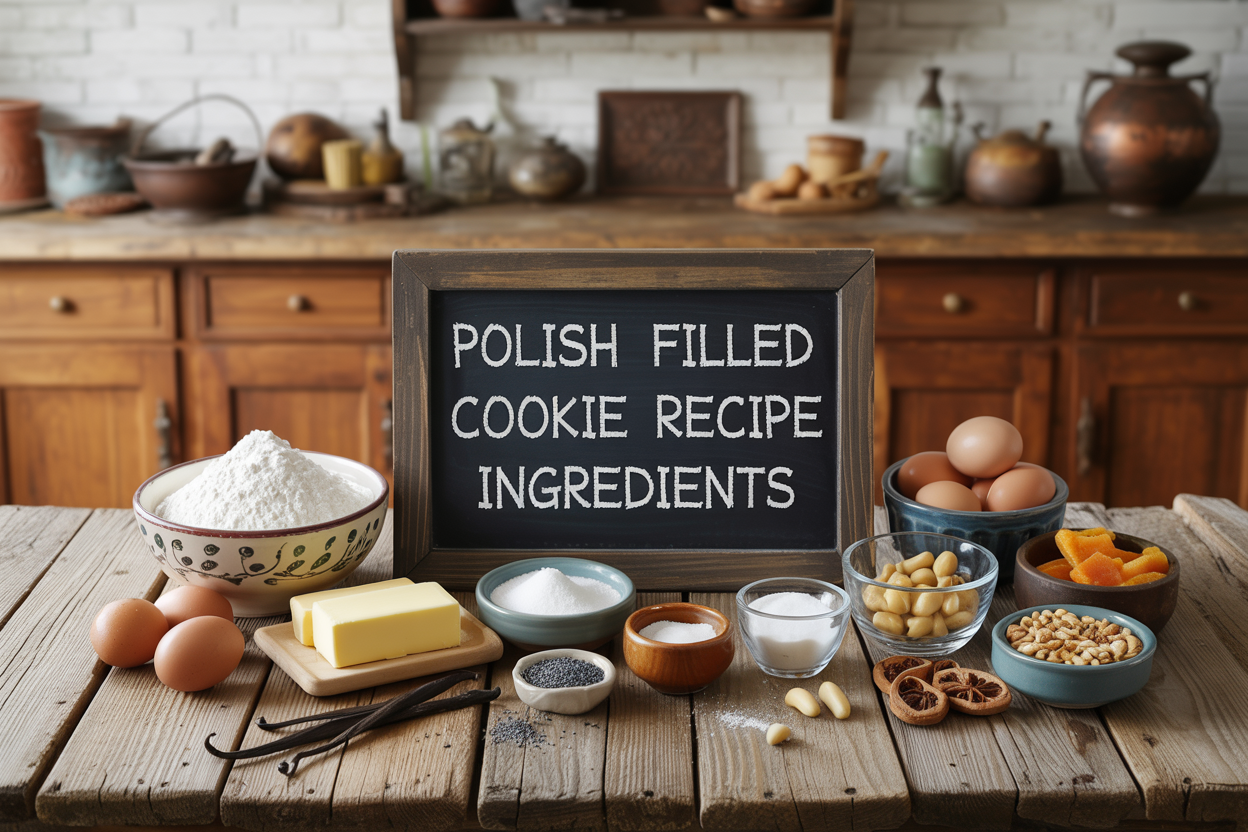
- 8 ounces cream cheese softened to room temperature
- 1 cup butter unsalted at room temperature
- 2½ cups flour plus more for rolling
- 2 tablespoons sugar powdered - plus more for rolling and dusting
- 1 egg white
- 12 ounces pastry filling such as Solo pastry filling
Instructions
- In a large mixing bowl, cream together the softened butter and cream cheese until smooth and fully combined. Add the flour and 2 tablespoons of powdered sugar and mix until a soft, slightly sticky dough forms. Once the dough comes together, wrap it tightly in plastic wrap and refrigerate it for at least 1 hour or overnight to firm up.
- When ready to bake, preheat the oven to 350°F. Line baking sheets with parchment paper and set them aside. Remove half of the dough from the refrigerator, keeping the remaining half chilled until needed.
- Dust your work surface with a mixture of flour and powdered sugar. Roll the dough out until it is slightly less than ¼ inch thick. Using a pastry wheel, pizza cutter, or knife, cut the dough into evenly sized squares. Working with smaller portions of dough helps keep it cool and easier to handle.
- Place a small amount of fruit filling in the center of each square. Fold one corner toward the center and brush it lightly with egg white. Fold the opposite corner over the first and gently press to seal. The egg white helps keep the cookies closed during baking and prevents the filling from escaping.
- Arrange the filled cookies on the prepared baking sheets, leaving a little space between them. Bake for 12 to 15 minutes, or until the cookies are lightly golden around the edges. Remove them from the oven and transfer them to a wire rack to cool completely.
- Once the cookies have cooled, dust them generously with powdered sugar. Serve immediately or store in an airtight container. If storing for more than a day, an additional dusting of powdered sugar before serving may be needed.
Polish Filled Cookies Recipe Related Recipes
After mastering the Polish filled cookies recipe, I recommend exploring other Polish and Eastern European recipes that share similar techniques or complement these delightful cookies perfectly. For more inspiration, check out Polish Housewife’s kolaczki guide.
Pierogi are essential to any Polish recipe collection. These filled dumplings use a simple dough that I roll and fill with potatoes, cheese, sauerkraut, or fruit fillings. The folding technique resembles the precision needed for the Polish filled cookies recipe, making them a natural progression in Polish cooking.
Kielbasa recipes offer savory balance to sweet baked goods. I often serve grilled or pan-fried Polish sausage alongside traditional cookies at gatherings. The smoky, garlicky flavors create contrast with delicate pastries, especially when serving a Polish filled cookies recipe at holidays.
Other Slavic recipes complement kołaczki beautifully:
- Czech Koláče – Similar filled pastries with fruit or poppy seed centers
- Russian Vatrushka – Sweet cheese-filled buns with comparable cream cheese dough
- Slovak Buchty – Soft yeasted buns filled with jam or nuts
- Hungarian Kiflies – Cream cheese crescents rolled with fillings
These Eastern European recipes share common ingredients like cream cheese, butter, and fruit preserves. The baking methods remain consistent across these traditions, just as with a Polish filled cookies recipe.
Pączki (Polish donuts) make excellent companions to kołaczki during holiday celebrations. Both feature fruit fillings and powdered sugar toppings. I prepare them together for Christmas and Easter gatherings, often alongside a Polish filled cookies recipe.
Makowiec (poppy seed roll) rounds out traditional Polish dessert offerings. The sweet yeast dough and rolled preparation technique echo skills developed while making filled cookies. A Polish filled cookies recipe fits perfectly into this dessert lineup.
Recipe Comparison
Kołaczki recipes vary primarily in their dough composition and filling choices. The traditional base typically includes cream cheese, butter, and flour as the foundation, though some bakers add egg yolks for extra richness. Choosing a Polish filled cookies recipe allows you to explore these subtle differences.
Key Recipe Variations:
| Element | Traditional Approach | Alternative Method |
|---|---|---|
| Dough | Cream cheese and butter (equal parts) | Sour cream or cottage cheese substitution |
| Flour ratio | 2 cups per 8 oz cream cheese | 2.5 cups for firmer dough |
| Leavening | None (pastry-like texture) | Small amount of baking powder |
| Chilling time | 2-4 hours or overnight | 30 minutes minimum |
The filling options I encounter most often include apricot, prune, cherry, raspberry, and poppy seed preserves. Some recipes call for pure fruit jam, while others prefer thicker pastry fillings that hold their shape better during baking. Every Polish filled cookies recipe offers room for personal preference.
The main debate centers on ingredient proportions. A four-ingredient recipe uses only butter, cream cheese, flour, and filling. More complex versions incorporate sugar into the dough, though many bakers rely solely on powdered sugar dusting for sweetness. The Polish filled cookies recipe you choose will reflect your taste and tradition.
Dough texture differences:
- Rich and flaky: Higher butter-to-flour ratio
- Tender and soft: Equal parts cream cheese and butter
- Crisp and structured: Lower fat content with extended chilling
The shaping technique remains consistent across recipes. I fold the corners toward the center to create the characteristic square or diamond shape that defines these Polish cookies. A Polish filled cookies recipe always includes this classic folding step.
Frequently Asked Questions
I’ve gathered answers to the most common questions about making these traditional Polish cookies, covering everything from the essential cream cheese dough to proper storage methods and regional variations. No matter your question, a Polish filled cookies recipe will guide you to delicious results.
What is the traditional dough made from for these filled Polish cookies?
The traditional dough for a Polish filled cookies recipe uses cream cheese, butter, flour, and sometimes a small amount of sugar. Cream cheese creates a tender, flaky texture that makes these cookies unique. Some Polish filled cookies recipe variations include egg yolks for extra richness, while others use just the main ingredients. The ratio of cream cheese to butter is usually equal, resulting in the signature delicate crumb found in every Polish filled cookies recipe.
Which fillings work best, such as jam, poppy seed, or sweet cheese?
Fruit preserves are the most popular filling in any Polish filled cookies recipe, especially apricot, raspberry, and prune. Thick, high-quality preserves work best to prevent spreading during baking. Poppy seed filling adds a nutty, slightly sweet flavor that Polish filled cookies recipe fans love. Sweetened cream cheese with vanilla and sugar creates a milder option. Other fillings for a Polish filled cookies recipe include lekvar (prune butter), cherry preserves, and even Nutella for a modern twist. Always choose fillings thick enough to hold their shape in your Polish filled cookies recipe.
How do you prevent the filling from leaking out during baking?
Keep filling portions small—about half a teaspoon per cookie—when following a Polish filled cookies recipe. Too much filling causes leaks as the dough puffs up. Chill the dough thoroughly before and after shaping to help the cookies keep their structure. Pinch the corners firmly to seal the dough over the filling in your Polish filled cookies recipe. Use thick preserves instead of runny jam; if needed, cook preserves down on the stovetop to thicken them before using in your Polish filled cookies recipe.
What is the difference between kolaczki and similar filled cookies like Italian pizzicati?
Kolaczki use a cream cheese-based dough, which gives a tender, pastry-like texture to the Polish filled cookies recipe. Italian pizzicati usually use ricotta in the dough, resulting in a denser, cake-like consistency. Shaping methods differ: for a Polish filled cookies recipe, fold dough into squares or triangles with visible filling, while pizzicati are often sealed or shaped into crescents. Polish filled cookies recipe versions favor fruit preserves and poppy seed, while Italian cookies often feature citrus zest, almond paste, or chocolate fillings.
Are these cookies traditionally Polish, Czech, or both, and how do the versions differ?
Both Polish and Czech cultures offer variations of the Polish filled cookies recipe, each with unique names and preparations. The Polish filled cookies recipe uses cream cheese dough and shapes cookies into small squares or triangles. Czech kolache are larger, made with yeast-based dough, and feature the filling as an exposed center topping. The Polish-American filled cookies recipe has evolved to be more compact and pastry-like, ideal for cookie trays. Czech-American bakeries often serve larger, breadier versions similar to Danish pastries, but the Polish filled cookies recipe remains distinct.
If you want to try making these treats yourself, be sure to search for a classic Polish filled cookies recipe. Practice with different fillings, and share your favorite Polish filled cookies recipe with friends and family. For more inspiration, visit King Arthur Baking’s kolaczki recipe and compare it to your own Polish filled cookies recipe. The right Polish filled cookies recipe will become a staple at every holiday and celebration.
How should these cookies be stored or frozen to keep them tender and prevent them from drying out?
I store baked kołaczki in an airtight container at room temperature for up to five days. I place parchment paper between layers to prevent them from sticking together. This method works well for any Polish filled cookies recipe and helps maintain their tenderness.
For longer storage, I freeze the cookies in a single layer on a baking sheet and then transfer them to freezer bags once solid. Using this approach, you can keep cookies made from your favorite Polish filled cookies recipe fresh for up to three months. Freezing helps preserve the delicate texture that makes a Polish filled cookies recipe so special.
I dust the cookies with powdered sugar after thawing instead of before freezing, which keeps them looking fresh. Letting them come to room temperature before serving ensures the best texture and flavor for any Polish filled cookies recipe. This simple step makes a big difference in the final result of your Polish filled cookies recipe.
If you want to try a new Polish filled cookies recipe, always make sure to store them properly to maintain their signature tenderness. Whether you use a traditional or modern Polish filled cookies recipe, proper storage is crucial. Don’t forget to share your favorite Polish filled cookies recipe with friends and family for a delightful treat.
When you bake a batch using a Polish filled cookies recipe, consider freezing half for later enjoyment. This way, you can enjoy a Polish filled cookies recipe any time without extra effort. Proper storage guarantees that every Polish filled cookies recipe you make stays delicious and fresh.

Recipes are gathered in person and written for real-world cooking conditions.
- 10 Hungarian Dessert Recipes Passed Down Through Generations - July 25, 2026
- 11 Easy English Recipes Anyone Can Make - July 25, 2026
- Hungarian Kifli Recipe - July 25, 2026