
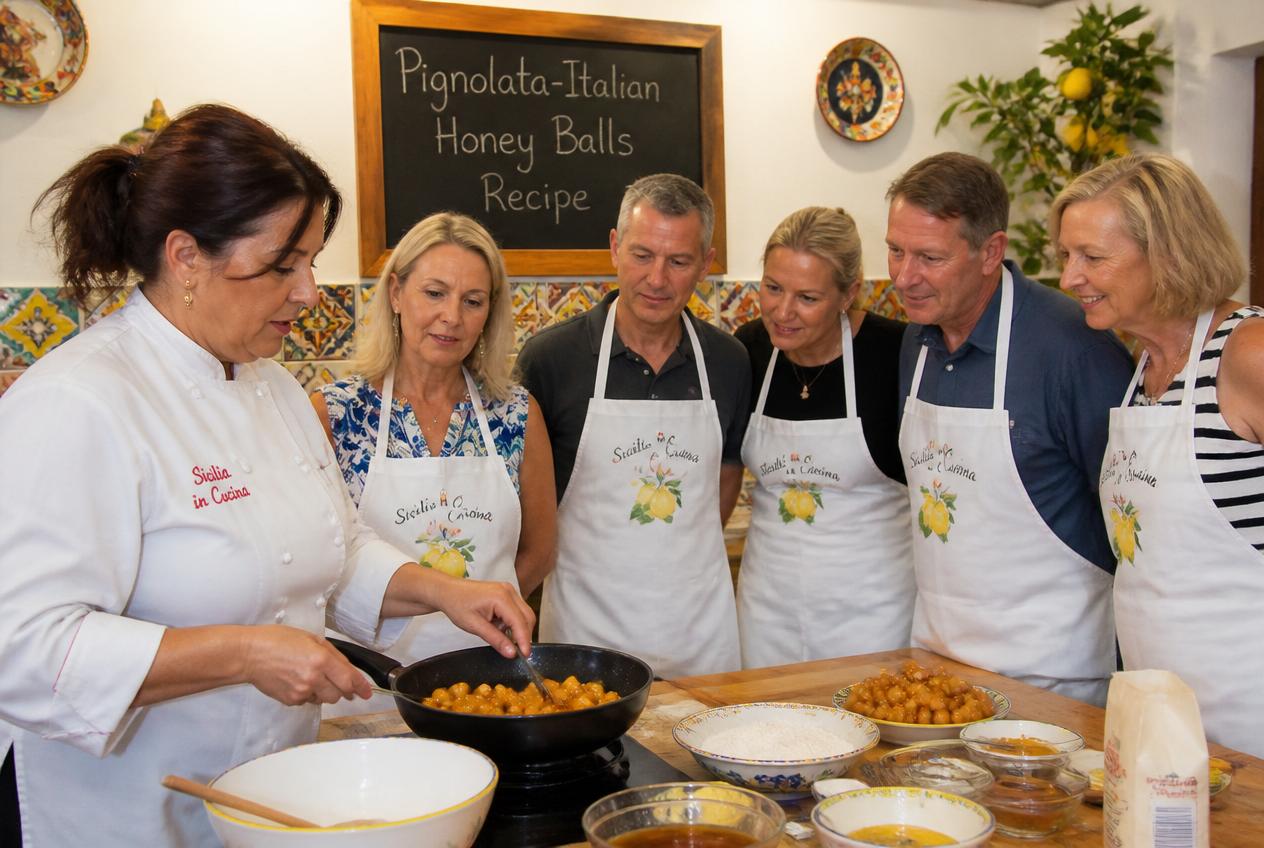
Pignolata-Italian Honey Balls recipe is a traditional Sicilian dessert made of small fried dough balls coated in warm honey and often topped with colorful sprinkles or pine nuts. Sicilian and Calabrian households cherish this festive treat, preparing it during Christmas and Carnival celebrations. The name comes from “pigna,” the Italian word for pinecone, which the finished dessert resembles when the honey-coated balls are piled together.
These bite-sized fried dough pieces are generously coated with a honey and sugar syrup, creating a sweet and slightly crunchy texture that makes them irresistible for sharing at festive gatherings. To make a Pignolata-Italian Honey Balls recipe, roll dough into thin strips, cut them into marble-sized pieces, and deep-fry them until golden before tossing them in the honey mixture. You can follow each step to recreate this authentic Sicilian specialty in your own kitchen.
Pignolata-Italian Honey Balls recipe shares similarities with struffoli from Naples, but the Sicilian version offers distinct characteristics and regional variations. Use expert techniques and creative adaptations to master this classic Southern Italian recipe for holiday celebrations or to experience an authentic taste of Sicily.
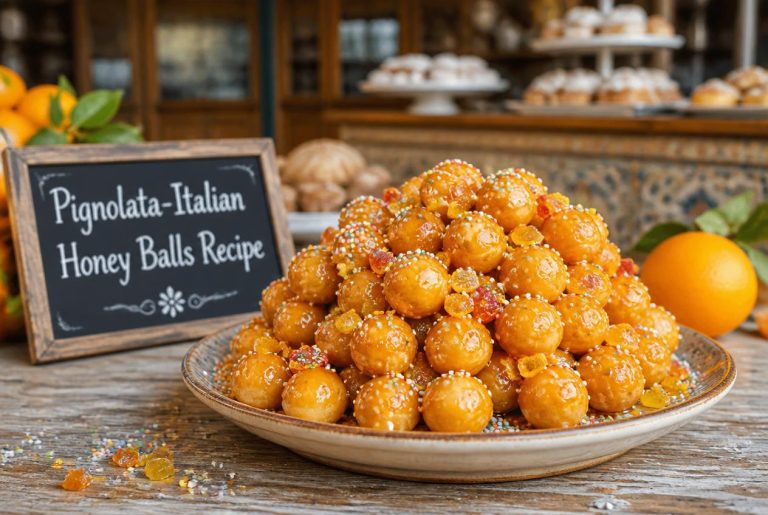
Pignolata-Italian Honey Balls Recipe
Key Takeaways
- Pignolata-Italian Honey Balls recipe consists of small fried dough balls coated in honey syrup and is traditionally served during Sicilian Christmas and Carnival celebrations
- The dessert requires rolling and cutting dough into tiny pieces, frying them until golden, and tossing them in a warm honey mixture
- Regional variations allow for creative toppings like pine nuts, candied fruits, and sprinkles while maintaining the authentic pinecone-inspired presentation
Cultural Context and Historical Significance
Pignolata-Italian Honey Balls recipe represents a cornerstone of Sicilian holiday recipes, deeply woven into the fabric of celebration throughout Southern Italy. This traditional Sicilian Christmas Eve dessert appears during two major festive periods: Christmas and Carnival season. The pastry’s origins reflect the ingenuity of traditional Mediterranean cooking, where simple ingredients like flour, eggs, butter, and honey transform into celebratory confections. The distinctive pine cone shape gives pignolata its name, connecting authentic Sicilian food to the island’s natural landscape.
Regional Names and Variations:
- Pignolata – Calabria and Sicily
- Pignulata – Sicilian dialect
- Pignoccata – Alternative Sicilian term
- Struffoli – Neapolitan version
Pignolata-Italian Honey Balls recipe plays a significant role in Sicilian cuisine as a communal dessert. Families gather to prepare these honey-coated balls, arranging them into elaborate mounds or rings adorned with colorful sprinkles and candied fruit. This dessert embodies the essence of traditional foods from Sicily—it’s not merely about taste but about preserving cultural heritage through recipe transmission across generations. The connection to Carnival celebrations emphasizes pignolata’s festive nature, marking periods of indulgence before religious observances.
Throughout Southern Italy, Pignolata-Italian Honey Balls recipe maintains its presence as both a Christmas and Carnival treat, showing how one recipe can serve multiple cultural moments while keeping its authentic character.
Expert Preparation Tips
Achieve the perfect consistency for Pignolata-Italian Honey Balls recipe dough by carefully balancing the eggs and flour ratio. The dough should be soft but not sticky, similar to pasta dough. When rolling the dough, work with small portions at a time and keep the rest covered to prevent drying out. Roll each piece into thin ropes about 1/4 inch thick, then cut them into small pieces roughly the size of a hazelnut.
Temperature Control
Maintain the oil temperature between 350°F and 375°F for a successful Pignolata-Italian Honey Balls recipe. If the oil is too hot, the balls brown too quickly on the outside while remaining raw inside. If it’s too cool, they absorb excess oil and become greasy. Fry the dough balls in small batches to avoid overcrowding, ensuring even cooking and maintaining the oil temperature. Each batch takes about 2-3 minutes until they turn golden brown.
Honey Coating Technique
Warm the honey gently before coating the fried balls for your Pignolata-Italian Honey Balls recipe. This step makes it easier to coat them evenly. Some recipes suggest adding a touch of lemon zest to the honey for extra flavor. Work quickly when coating the balls with honey, as it begins to set as it cools. Use two forks or lightly greased hands to toss the balls in the warm honey, ensuring complete coverage.
Creative Variations
While the traditional Sicilian pignolata recipe calls for honey-coated fried dough balls, you can personalize your Pignolata-Italian Honey Balls recipe in several creative ways. These variations maintain the essence of the original while adding unique twists. One popular adaptation involves using a chocolate coating instead of honey. Melt dark or milk chocolate and drizzle it over the fried dough balls, creating a rich alternative for chocolate lovers.
Flavor Enhancements:
- Add lemon or orange zest to the dough for citrus notes
- Mix cinnamon or vanilla extract into the honey syrup
- Incorporate almond extract for a nutty undertone
- Drizzle white chocolate alongside honey for contrast
Experiment with toppings beyond traditional sprinkles for your Pignolata-Italian Honey Balls recipe. Chopped pistachios, toasted almonds, or candied orange peels add texture and visual appeal. Some bakers create a half-and-half presentation with honey on one side and chocolate on the other. For a modern presentation, arrange the dough balls in individual serving cups rather than the traditional pinecone shape. This makes them easier to serve at parties and allows for personalized portions.
Add a tablespoon of liqueur such as limoncello or amaretto to the dough mixture for a subtle flavor enhancement in your Pignolata-Italian Honey Balls recipe. Baking instead of frying creates a lighter version, though it sacrifices some of the characteristic crispy texture. These creative approaches let you enjoy the Pignolata-Italian Honey Balls recipe in new ways while honoring tradition.
Inspiration From Regional Specialties
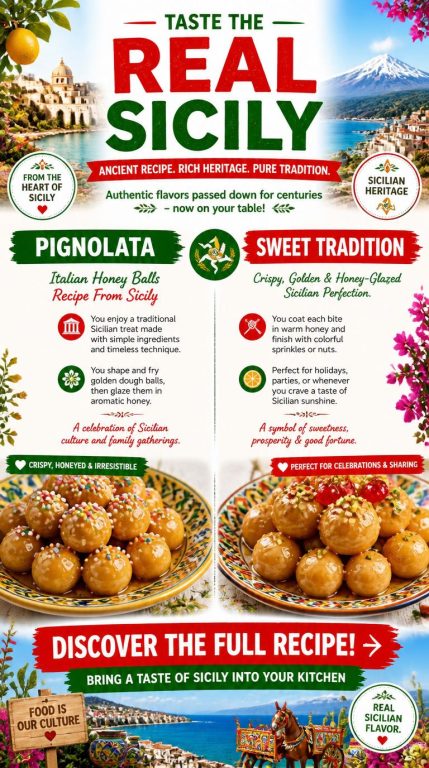
Pignolata-Italian Honey Balls recipe represents the heart of Sicilian desserts, where simple ingredients transform into celebration foods. This traditional Sicilian treat embodies the spirit of regional Italian cooking. The dessert draws inspiration from Sicily’s position as a Mediterranean crossroads. Honey-based sweets appear throughout Mediterranean recipes, reflecting ancient trade routes and shared culinary traditions. The technique of frying small dough pieces and coating them in honey connects Sicily to broader regional practices.
Southern Italian recipes like Pignolata-Italian Honey Balls recipe share common characteristics:
- Simple base ingredients: flour, eggs, butter, sugar
- Honey as primary sweetener: reflecting local production
- Festival associations: tied to Carnival and Christmas
- Communal presentation: shaped into mounds for sharing
While Pignolata-Italian Honey Balls recipe belongs to rustic Italian recipes, it carries sophistication in its execution. The fried dough balls covered in honey require careful temperature control and timing. Regional variations exist even within Sicily. In Messina, the dessert maintains traditional honey coating, while versions elsewhere use chocolate. This flexibility reflects how Sicilian street food and home cooking adapt while preserving core techniques. The dessert popular during Carnival season shows that Italian regional specialties aren’t just recipes—they express place, season, and community gathering, inspiring a love for traditional cooking.
Related Italian Pastry Recipes
Struffoli from Naples shares remarkable similarities with Pignolata-Italian Honey Balls recipe. These fried dough balls are coated in honey and typically served during Christmas celebrations in Campania. Cicerchiata is another regional variation popular in Abruzzo, Marche, and Molise. The preparation method involves frying small pieces of dough and binding them together with honey syrup. Explore Sannacchiudere from Taranto in Apulia for another take on this beloved Italian tradition. Each region has developed its own distinct approach to these honey-drenched pastries.
Key Differences Between Regional Variations:
- Struffoli: Typically arranged in a wreath shape and decorated with candied fruits
- Cicerchiata: Often formed into a ring or dome structure
- Pignolata: Shaped to resemble a pinecone with layers of honey-coated balls
Some traditional Sicilian Pignolata-Italian Honey Balls recipes incorporate semolina for added texture. This creates a crispier exterior while maintaining a soft interior. The basic components remain consistent across all variations: fried dough, honey or sugar syrup, and various toppings like sprinkles, pine nuts, or candied fruits. These pastries appear at different celebrations depending on the region. While Pignolata-Italian Honey Balls recipe is primarily associated with Christmas and Carnival, some families prepare them for St. Joseph’s Day and other special occasions throughout the year.
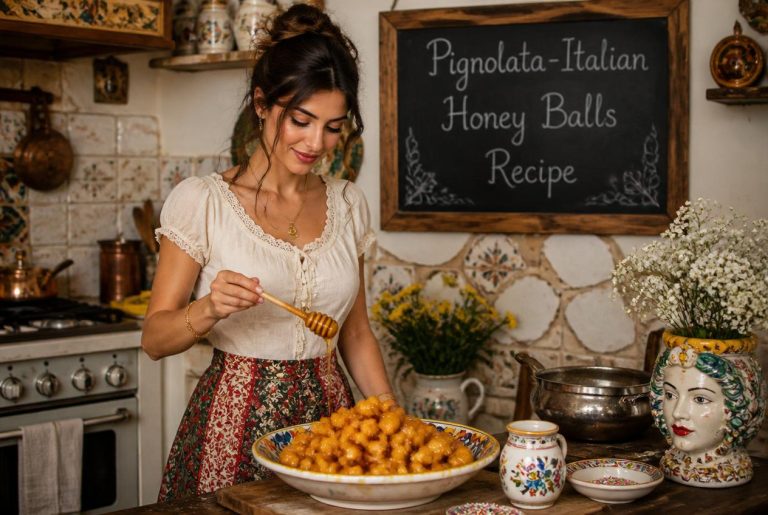
Pignolata-Italian Honey Balls Recipe Cooking Tips
Pignolata – Italian Honey Balls Recipe Cooking Tips
• Pignolata is known for its bite-sized fried dough pieces coated in sweet honey syrup and often decorated with colorful sprinkles.
• This festive dessert is especially popular in Sicily and Southern Italy during holidays and celebrations.
• The dough is typically simple, made with flour, eggs, and a small amount of fat for tenderness.
• Mix the dough until smooth and pliable, but avoid overworking it.
• Allowing the dough to rest briefly can make shaping easier.
• Roll the dough into ropes and cut it into small, uniform pieces for even cooking.
• Consistent sizing helps the dough balls fry evenly.
• Fry at a steady temperature to achieve a golden exterior without becoming greasy.
• Avoid overcrowding the fryer, as this can lower the oil temperature.
• Drain the fried dough thoroughly before coating with syrup.
• High-quality honey provides the most authentic flavor.
• Warm the honey gently to make coating easier and more even.
• Stir carefully to coat every piece without breaking the dough balls.
• Shape the coated pieces into a mound, ring, or festive arrangement while still warm.
• Colorful sprinkles, candied fruit, or chopped nuts are traditional decorative toppings.
• The flavor should balance crisp fried dough, sweet honey, and a light, delicate texture.
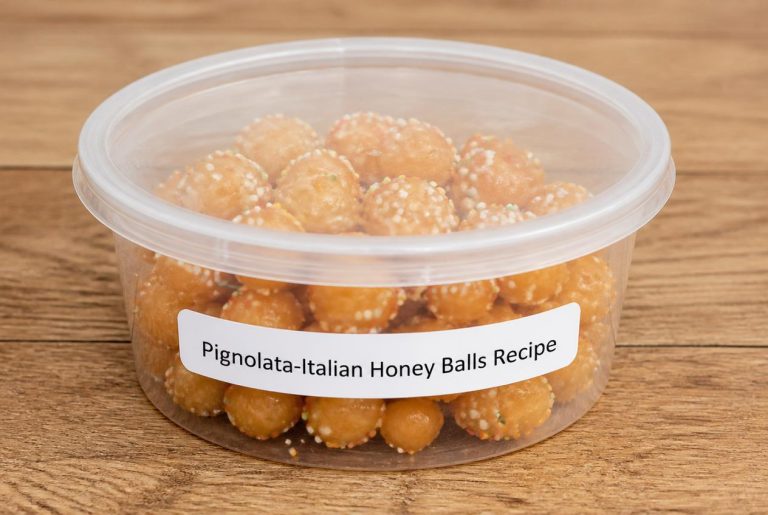
Pignolata-Italian Honey Balls Recipe Storage Tips
Pignolata – Italian Honey Balls Recipe Storage Tips
• Allow the Pignolata to cool completely before storing.
• Store in an airtight container to help maintain freshness.
• Room-temperature storage works best for short-term enjoyment.
• Keep the dessert in a cool, dry location away from direct sunlight.
• The honey coating may become slightly firmer over time, which is normal.
• Separate layers with parchment paper if stacking pieces.
• Humidity can soften the exterior, so keep containers tightly sealed.
• Freezing is generally not recommended because the honey coating may lose its texture.
• If freezing is necessary, wrap portions carefully in airtight freezer-safe packaging.
• Defrost frozen portions at room temperature before serving.
• Use clean dry utensils when handling leftovers to help maintain freshness.
• Honey-based pastries are generally best enjoyed within a moderate storage period for ideal texture and flavor.
• Keep away from strongly scented foods because sweet pastries can absorb odors.
• Slight sticking between pieces during storage is normal.
• Discard leftovers if they develop mold, fermentation odors, or unusual texture changes.
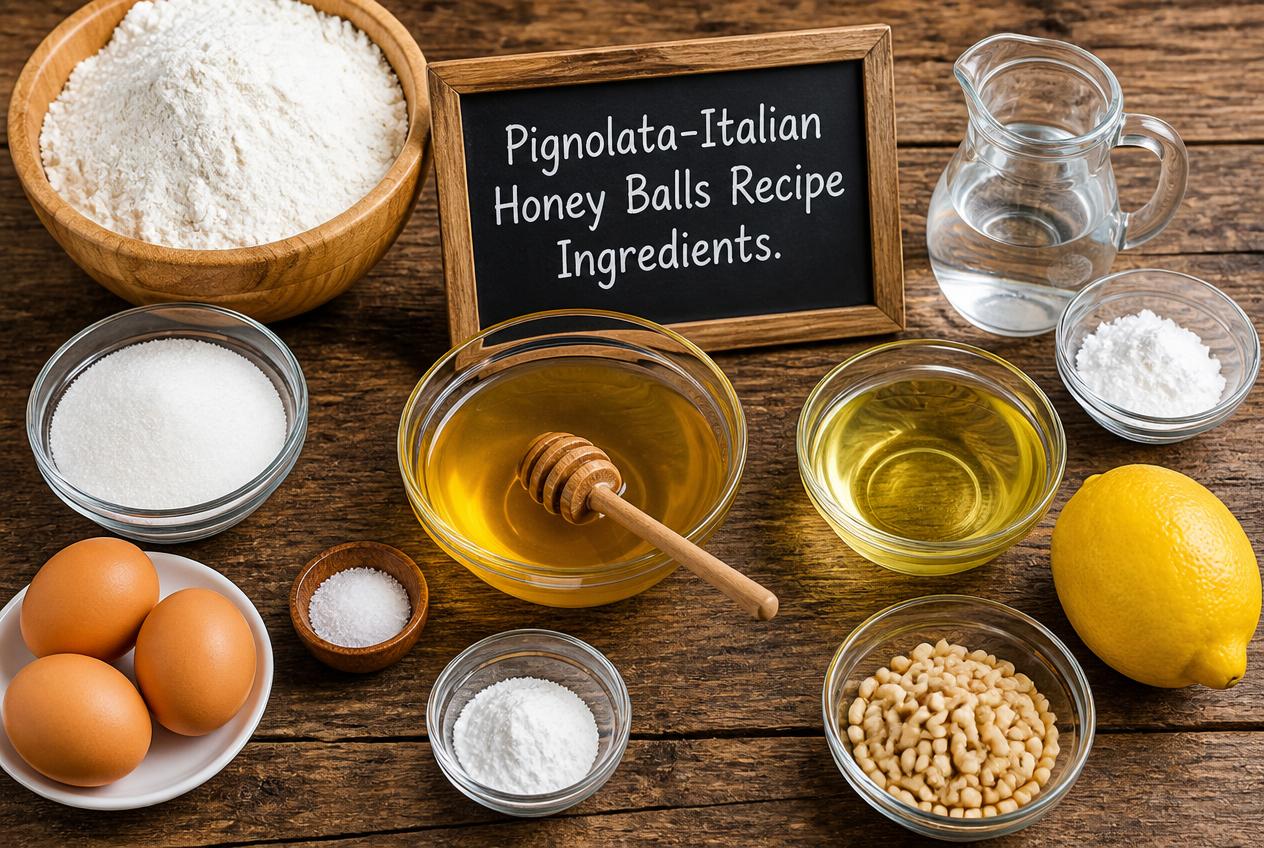
Pignolata-Italian Honey Balls Recipe
Ingredients
- 2 cups all-purpose flour
- 1 teaspoon baking powder
- ¼ teaspoon kosher salt
- 3 large eggs
- 2 tablespoons granulated sugar
- 2 tablespoons unsalted butter softened or melted
- 1 teaspoon vanilla extract
- ½ teaspoon grated lemon zest optional
- ½ teaspoon grated orange zest optional
- Neutral oil for frying peanut, vegetable, canola, grapeseed or avocado oil
- Honey Coating
- ½ cup honey
- 1 tablespoon granulated sugar
- Rainbow nonpareil sprinkles pine nuts or candied fruits (as needed)
Instructions
- Begin by combining the all-purpose flour, baking powder, and kosher salt in a large mixing bowl. Whisk the ingredients thoroughly to ensure the baking powder and salt are evenly distributed throughout the flour. This simple step helps guarantee that the dough rises uniformly and develops a consistent texture once fried.
- In a separate bowl, beat together the eggs, granulated sugar, softened or melted butter, vanilla extract, and the grated lemon and orange zest. Continue mixing until the ingredients are completely blended and the mixture is smooth and fragrant. The citrus zest is especially important, as it provides the bright, aromatic flavor that is characteristic of traditional Sicilian pignolata.
- Gradually add the dry ingredients to the wet mixture, stirring until a dough begins to form. Once no dry patches remain, transfer the dough to a lightly floured work surface and knead gently for about 3 to 5 minutes. The goal is not to develop a bread-like dough, but rather to create a smooth, soft dough that holds together well and can be shaped easily.
- When the dough becomes supple and uniform, wrap it in plastic wrap or cover it with a clean kitchen towel and allow it to rest at room temperature for about 30 minutes. This resting period relaxes the gluten, making the dough easier to roll and shape while helping create a more tender finished texture.
- Once the dough has rested, place it on a lightly floured surface and roll it into a large rectangle. Using a knife or pastry cutter, cut the dough into strips.
- Roll each strip between your hands and the work surface to create ropes approximately ½ inch thick. Using a sharp knife, cut the ropes into small pieces roughly the size of marbles. Traditionally, pignolata consists of many small bite-sized pieces, so try to keep them relatively uniform in size to ensure even frying.
- As you work, place the dough pieces on a lightly floured tray to prevent them from sticking together.
- Pour several inches of neutral frying oil into a deep, heavy-bottomed pot or fryer and heat it to 350°F (175°C). Maintaining a steady oil temperature is important because it allows the dough to cook evenly and develop a crisp golden exterior without becoming greasy.
- Working in batches, carefully lower the dough pieces into the hot oil. Avoid overcrowding the pot, as this can lower the oil temperature and result in uneven frying.
- Cook the dough balls for approximately 1 to 2 minutes, stirring gently as they fry so they brown evenly on all sides. They should emerge golden brown, crisp on the outside, and light inside.
- Using a slotted spoon, transfer the fried dough pieces to a paper towel-lined tray or wire rack to drain excess oil. Allow them to cool slightly while preparing the honey coating.
- While the dough balls are cooling, combine the honey and sugar in a saucepan over medium heat.
- Stir continuously as the mixture warms, allowing the sugar to dissolve completely into the honey. Continue simmering gently for about 2 to 3 minutes, just until the syrup becomes smooth and glossy.
- The finished syrup should be thick enough to coat the fried dough but still fluid enough to distribute evenly. Be careful not to overcook it, as excessively thick syrup can become difficult to work with.
- Remove the honey syrup from the heat and immediately add the warm fried dough balls.
- Using a large spoon or spatula, gently toss the pieces until every piece is evenly coated in the glossy honey mixture. Working while both the syrup and dough are still warm helps ensure that the coating adheres properly and creates the characteristic shiny finish.
- Continue folding and stirring until all the pieces are thoroughly coated and glistening.
- Transfer the coated dough balls to a serving platter while they are still warm. Traditionally, pignolata can be piled into a mound or shaped into a festive wreath.
- Once arranged, generously decorate the surface with rainbow nonpareil sprinkles, pine nuts, candied fruit, or any combination of traditional garnishes. The colorful decorations not only make the dessert visually appealing but also add texture and additional flavor.
- Because the honey remains sticky while warm, the garnishes will adhere naturally to the surface.
- Allow the pignolata to cool at room temperature until the honey coating becomes slightly tacky and begins to set.
- As it cools, the honey syrup binds the individual pieces together while still allowing them to be pulled apart easily for serving. The finished dessert should have a delightful combination of textures: crisp on the outside, tender within, and coated in a sweet, fragrant honey glaze.
- Serve the pignolata once the honey has set but before it becomes overly firm. This traditional Sicilian celebration dessert is especially popular during holidays and family gatherings, where its festive appearance and irresistible sweetness make it a centerpiece on the dessert table.
- Each bite delivers a wonderful contrast of crunchy fried dough, fragrant citrus, and rich honey sweetness. Whether decorated with colorful sprinkles, pine nuts, candied fruit, or all three, pignolata is a joyful dessert that perfectly captures the spirit of Sicilian baking and celebration.
Pignolata-Italian Honey Balls Recipe Frequently Asked Questions
Pignolata-Italian Honey Balls recipe raises common questions about its origins, preparation methods, and the techniques needed to achieve the characteristic honey-coated finish that defines these festive treats. If you want to master a Pignolata-Italian Honey Balls recipe, focus on dough consistency, frying temperature, and quick, even honey coating. Experiment with regional variations and toppings to create your own version of Pignolata-Italian Honey Balls recipe and enjoy this iconic Sicilian dessert at home.
What is pignolata, and what does the name mean in Italian?
Pignolata is a traditional Sicilian dessert featuring small marble-sized fried dough balls generously coated in warm honey. The name comes from the Italian word “pigna,” which means pine cone, referring to the way the honey-covered balls cluster together resembling the appearance of a pine cone. The Pignolata-Italian Honey Balls recipe creates a dessert that is both visually appealing and delicious.
In some regions, these Italian honey balls are also called Pignoccata in Sicilian dialect. The dessert is particularly popular in Calabria and Sicily, where it’s traditionally served during Christmas and Carnival season. Many families pass down the Pignolata-Italian Honey Balls recipe through generations as a cherished holiday treat.
How do you pronounce “pignolata” correctly?
I pronounce pignolata as “peen-yoh-LAH-tah” with the emphasis on the third syllable. The “gn” combination in Italian creates a sound similar to the “ny” in “canyon.” When sharing the Pignolata-Italian Honey Balls recipe, I like to help friends with the pronunciation so they can enjoy both the dessert and the culture.
The first syllable “pi” sounds like “pee,” followed by “gno” pronounced as “nyo,” then “la” as in “lah,” and finally “ta” as in “tah.” Mastering the pronunciation adds to the experience of preparing the Pignolata-Italian Honey Balls recipe.
What is the difference between pignolata and struffoli?
While both desserts consist of fried dough balls coated in honey, they come from different regions of Italy. Pignolata originates from Sicily and Calabria, while struffoli is the traditional name used in Naples and other parts of southern Italy. The Pignolata-Italian Honey Balls recipe and the struffoli recipe have similarities, but their regional origins set them apart.
Pignolata is known as Pignolata in Messina and Struffoli in Naples, though both versions share similar preparation methods. The main differences lie in regional variations of toppings and presentation styles, with some versions using pine nuts, candied fruits, or colorful sprinkles. When you try the Pignolata-Italian Honey Balls recipe, you can experiment with these toppings to suit your taste.
Is pignolata difficult to make for a beginner?
I find that pignolata is one of the most simple Italian treats to prepare, making it accessible for beginners. The dough requires basic ingredients like flour, eggs, butter, and sugar mixed together. Using the Pignolata-Italian Honey Balls recipe, beginners can confidently create this festive dessert.
The most challenging aspect involves maintaining consistent oil temperature while frying the small dough balls. With patience and attention to detail, even first-time bakers can successfully create this traditional dessert. Following the Pignolata-Italian Honey Balls recipe step by step ensures a delicious outcome.
Is pignolata traditionally fried or baked?
Pignolata is traditionally fried, not baked. The balls of dough are fried to achieve their characteristic crispy exterior and light, airy interior. The Pignolata-Italian Honey Balls recipe always calls for frying to ensure the perfect texture.
I deep fry the small dough balls until they turn golden brown, which typically takes just a few minutes per batch. This frying method creates the slightly crunchy texture that contrasts beautifully with the sweet honey coating. Using the Pignolata-Italian Honey Balls recipe, you can enjoy an authentic and flavorful dessert.
Whether you are celebrating a holiday or simply craving something sweet, the Pignolata-Italian Honey Balls recipe is a delightful way to bring a taste of Italy into your home. Gather your ingredients, follow the Pignolata-Italian Honey Balls recipe, and enjoy the process of making a traditional dessert that is sure to impress family and friends. The Pignolata-Italian Honey Balls recipe is a wonderful addition to any dessert table and a joy to prepare.
What is the best way to coat honey balls so they stay glossy and don’t stick together?
For the Pignolata-Italian Honey Balls recipe, I coat the fried dough balls while the honey is still warm to ensure even coverage and maintain a glossy appearance. I work quickly because the honey sets as it cools, which is crucial for the Pignolata-Italian Honey Balls recipe. This method keeps the Pignolata-Italian Honey Balls recipe looking beautiful and appetizing.
I gently toss the fried balls in the warm honey mixture, making sure each piece gets coated without breaking apart. To make sure garnishes like sprinkles, pine nuts, or candied fruits stick well, I add them right after coating for the Pignolata-Italian Honey Balls recipe. Once arranged, I let the Pignolata-Italian Honey Balls recipe sit at room temperature so the honey can set slightly, which prevents excessive sticking while maintaining the desired glossy finish. Using this technique, the Pignolata-Italian Honey Balls recipe results in a beautiful and delicious treat that everyone will love. The Pignolata-Italian Honey Balls recipe is perfect for holidays or celebrations, and following these steps will help you achieve the best results every time. If you want to impress your guests, try the Pignolata-Italian Honey Balls recipe for your next gathering.

Recipes are gathered in person and written for real-world cooking conditions.
- 10 Hungarian Dessert Recipes Passed Down Through Generations - July 25, 2026
- 11 Easy English Recipes Anyone Can Make - July 25, 2026
- Hungarian Kifli Recipe - July 25, 2026