

Norwegian meatballs, or Kjøttboller, are these tender, flavorful meatballs swimming in a rich brown gravy that’ll have you wondering why you ever settled for regular meatballs. These traditional Scandinavian meatballs use ground beef or a mix of beef and pork, seasoned with cozy spices like nutmeg and ginger, then get heaped over mashed or boiled potatoes—don’t forget the lingonberry jam. I get it, meatballs with jam sounds odd, but give it a shot. It just works.
Unlike the Swedish meatballs you probably know from that famous furniture store, Norwegian meatballs are usually all-beef and a bit saltier. Norwegian Meatballs and Gravy (Kjøttboller) just beg you to curl up in a cozy cabin while snow drifts outside—even if you’re sweating in Florida. That creamy brown gravy soaks into your potatoes and ties everything together, honestly, in the best way.
Let me show you how to make Norwegian Meatballs and Gravy (Kjøttboller) at home, plus a few tips my Norwegian relatives swear by. Maybe I’ll even toss in a quirky twist or two for the bold. If you’re chasing your Scandinavian roots or just craving really good meatballs, Norwegian Meatballs and Gravy (Kjøttboller) have you covered.
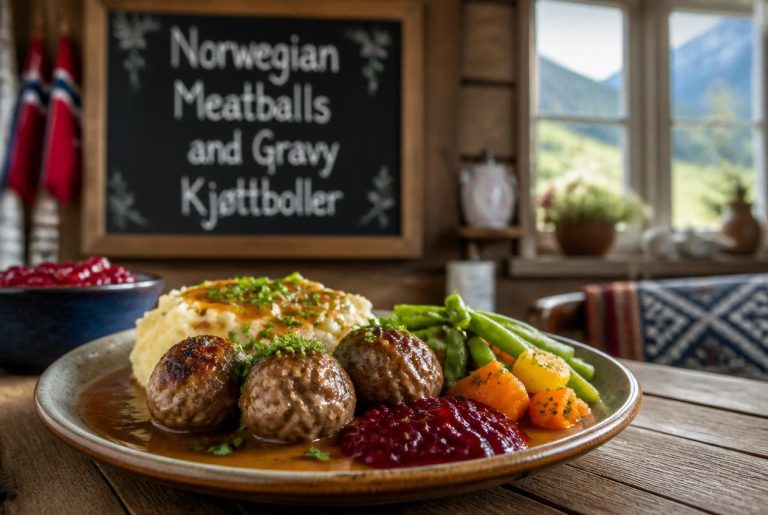
Norwegian Meatballs and Gravy (Kjøttboller)
Key Takeaways
- Norwegian Meatballs and Gravy (Kjøttboller) get seasoned with warm spices and served in brown gravy with potatoes and lingonberry jam
- The right spice blend and careful cooking are key for authentic flavor
- Leftover Norwegian Meatballs and Gravy (Kjøttboller) keep well and taste even better the next day
A Brief History Of Norwegian Meatballs And Gravy That Your Grandmother Would Approve
Alright, true story: when I first heard about Norwegian meatballs, I learned they’re actually called kjøttkaker in Norway, which just means “meat cakes.” Not exactly poetic, but my grandmother would’ve loved the straightforwardness.
These traditional Norwegian meatballs have warmed Norwegian homes for generations. People made them a staple because they’re simple, filling, and use ingredients that survive Norway’s chilly climate.
What makes kjøttkaker different:
- Bigger and flatter than Swedish meatballs
- Always come with brown gravy
- Seasoned with sweet spices like nutmeg, allspice, and ginger
My grandmother would’ve approved of Norwegian Meatballs and Gravy (Kjøttboller) for midweek dinners. No fuss, just hearty food that fills you up after a long day.
The brown gravy? That’s where the magic lives. When the juices from the meat blend into the gravy, you get flavors that could make any Norwegian grandmother smile. She’d probably wave her wooden spoon at anyone skipping the gravy, honestly.
It’s kind of sweet that Norwegian Meatballs and Gravy (Kjøttboller) became popular across the Nordics because sharing them brought families together. My grandmother always said the best recipes are the ones that gather everyone around the table, and Norwegian Meatballs and Gravy (Kjøttboller) absolutely do that.
Tips For Not Messing Up Norwegian Classics
Trust me, making authentic Norwegian kjøttkaker isn’t quite like tossing together any old meatballs. Norwegian Meatballs and Gravy (Kjøttboller) have a few tricks that’ll save you from serving up dense, sad pucks.
Don’t skip the moisture. I always splash in some milk or cream—it’s the secret to tender Norwegian Meatballs and Gravy (Kjøttboller). Breadcrumbs need liquid to do their thing.
Let things warm up a bit. Cold meat straight from the fridge just doesn’t blend well. I set my ingredients out for maybe 20 minutes so they mix together easily.
Here’s what helps me every time:
- Mix gently – overdoing it makes Norwegian Meatballs and Gravy (Kjøttboller) tough
- Don’t be shy with seasoning – nutmeg, ginger, and pepper are non-negotiable
- Taste as you go – I fry up a little tester before rolling the whole batch
- Keep them the same size – that way, Norwegian Meatballs and Gravy (Kjøttboller) cook evenly
The gravy is everything. Scraping up those brown bits from the pan? You can’t skip it—that’s where all the flavor hides for Norwegian Meatballs and Gravy (Kjøttboller).
Moderate heat wins out. I cook Norwegian Meatballs and Gravy (Kjøttboller) over medium instead of blasting them on high. Otherwise, I’ve ended up with burnt outsides and raw centers. Not fun.
And please, don’t skip the lingonberry jam. It makes Norwegian Meatballs and Gravy (Kjøttboller) sing, even if it sounds strange at first.

Norwegian Meatballs and Gravy (Kjøttboller)
Quirky Variations For Adventurous Eaters
I’ve realized Norwegian Meatballs and Gravy (Kjøttboller) are just the start when it comes to comfort food experiments.
If you like a bit of heat, try stirring in a spoonful of gochujang or sriracha right into the meat mixture. It’s unexpected, but the spicy kick with brown gravy? Norwegian Meatballs and Gravy (Kjøttboller) suddenly get a whole new personality.
Wild game blends are my other favorite move:
- Elk and pork together
- Venison mixed with beef
- Wild boar for extra depth
Chopped mushrooms and caramelized onions folded into the meatball mix? That’s another trick I love. Norwegian Meatballs and Gravy (Kjøttboller) get little bursts of umami in every bite, and no two are quite the same.
I sometimes swap the classic nutmeg and allspice for cardamom and coriander. It gives Norwegian Meatballs and Gravy (Kjøttboller) a gentle Middle Eastern twist. The gravy still ties it all together, even if it sounds a little out there.
For the bold, I recommend a curry-spiced version—add a pinch of turmeric and cumin to both the meatballs and gravy. Serve these spicy Norwegian Meatballs and Gravy (Kjøttboller) over rice for a change of pace.
And I’ll admit, sometimes I just crumble bacon into the mix. Bacon in Norwegian Meatballs and Gravy (Kjøttboller)? It’s a hit every time. Smoky, savory, and just a little bit indulgent.
How To Store Meatballs Without Summoning Odin
Let’s be real—bad storage can ruin even the best Norwegian Meatballs and Gravy (Kjøttboller). I stick to a few rules to keep my Norwegian meatballs safe from the wrath of the Norse gods.
Refrigerator Storage
I let my Norwegian Meatballs and Gravy (Kjøttboller) cool down to room temp, then stash them in an airtight container. Sometimes I add the gravy, sometimes not, but always seal it up tight. No one wants Odin sniffing around the fridge.
They’re good for 3 to 4 days in the fridge. Just don’t forget about them back there—Norwegian Meatballs and Gravy (Kjøttboller) deserve better than that.
Freezer Storage
For longer storage, I freeze Norwegian Meatballs and Gravy (Kjøttboller) on a baking sheet first so they don’t clump together. After about 2 hours, I move them to freezer bags or containers and slap a date on there. Mystery meatballs are a gamble I’m not willing to take.
Gravy goes in its own container. Norwegian Meatballs and Gravy (Kjøttboller) keep for up to 3 months in the freezer, but honestly, they never last that long in my house.
Reheating Tips
I reheat Norwegian Meatballs and Gravy (Kjøttboller) in a pan over medium heat with a splash of water or broth. For frozen ones, I thaw them overnight first. The microwave works if I’m desperate, but I always cover them with a damp paper towel—dry meatballs are a tragedy.

Norwegian Meatballs and Gravy (Kjøttboller) Cooking TIps
Norwegian Meatballs and Gravy (Kjøttboller) Recipe Cooking Tips
• Kjøttboller are known for their tender texture, mild seasoning, and rich brown gravy.
• A mixture of ground beef and pork is commonly used for the best balance of flavor and moisture.
• Finely grated onion adds sweetness and helps keep the meatballs tender.
• Breadcrumbs soaked in milk create a softer, more delicate texture.
• Eggs help bind the mixture without making it dense.
• Ground nutmeg, ginger, and white pepper are classic Norwegian seasonings.
• Mix gently to avoid tough meatballs.
• Shape evenly sized meatballs so they cook consistently.
• Brown the meatballs first to develop flavor before finishing them in the gravy.
• Beef stock forms the base of a traditional rich brown gravy.
• A small amount of cream can be added to the gravy for extra richness.
• Simmer the meatballs gently in the gravy so they remain moist and flavorful.
• Serve with boiled potatoes, mashed potatoes, vegetables, or lingonberry preserves.
• The flavor should balance savory meat, mild spices, and silky gravy.
• Kjøttboller are a classic Norwegian comfort food enjoyed year-round.
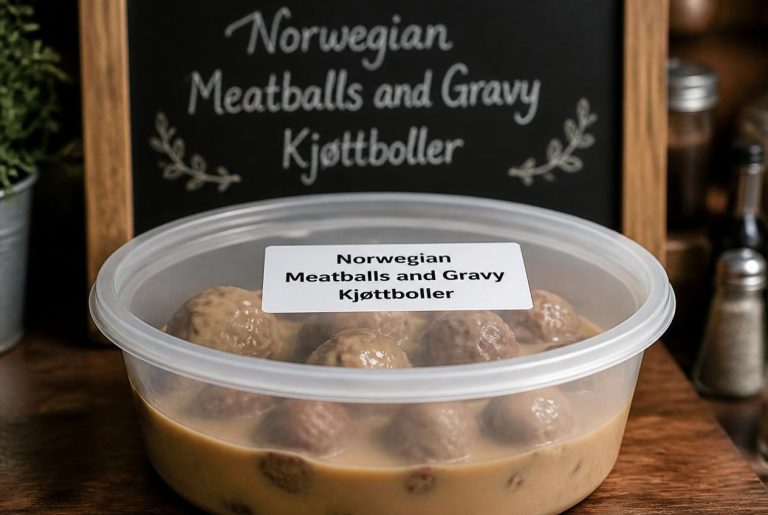
Norwegian Meatballs and Gravy (Kjøttboller) Storage TIps
Norwegian Meatballs and Gravy (Kjøttboller) Storage Tips
• Allow the meatballs and gravy to cool before transferring them into storage containers.
• Store the meatballs and gravy together to help maintain moisture and flavor.
• Keep refrigerated in airtight containers to preserve freshness.
• Refrigeration may thicken the gravy slightly, which is normal.
• Reheat gently over low heat until steaming hot throughout.
• Add a small splash of broth, milk, or water during reheating if needed.
• Spice and gravy flavors often deepen after overnight refrigeration.
• Freeze portions in airtight freezer-safe containers if desired.
• Defrost frozen meatballs gradually in the refrigerator before reheating.
• Stir the gravy occasionally during reheating to maintain a smooth consistency.
• Use clean utensils when handling leftovers to help maintain freshness.
• Meat-and-gravy dishes are generally best enjoyed within a shorter refrigerated storage period for ideal quality and safety.
• Keep away from delicate desserts because savory aromas may transfer.
• Discard leftovers if the meatballs or gravy develop sour odors, slime, mold, or unusual discoloration.
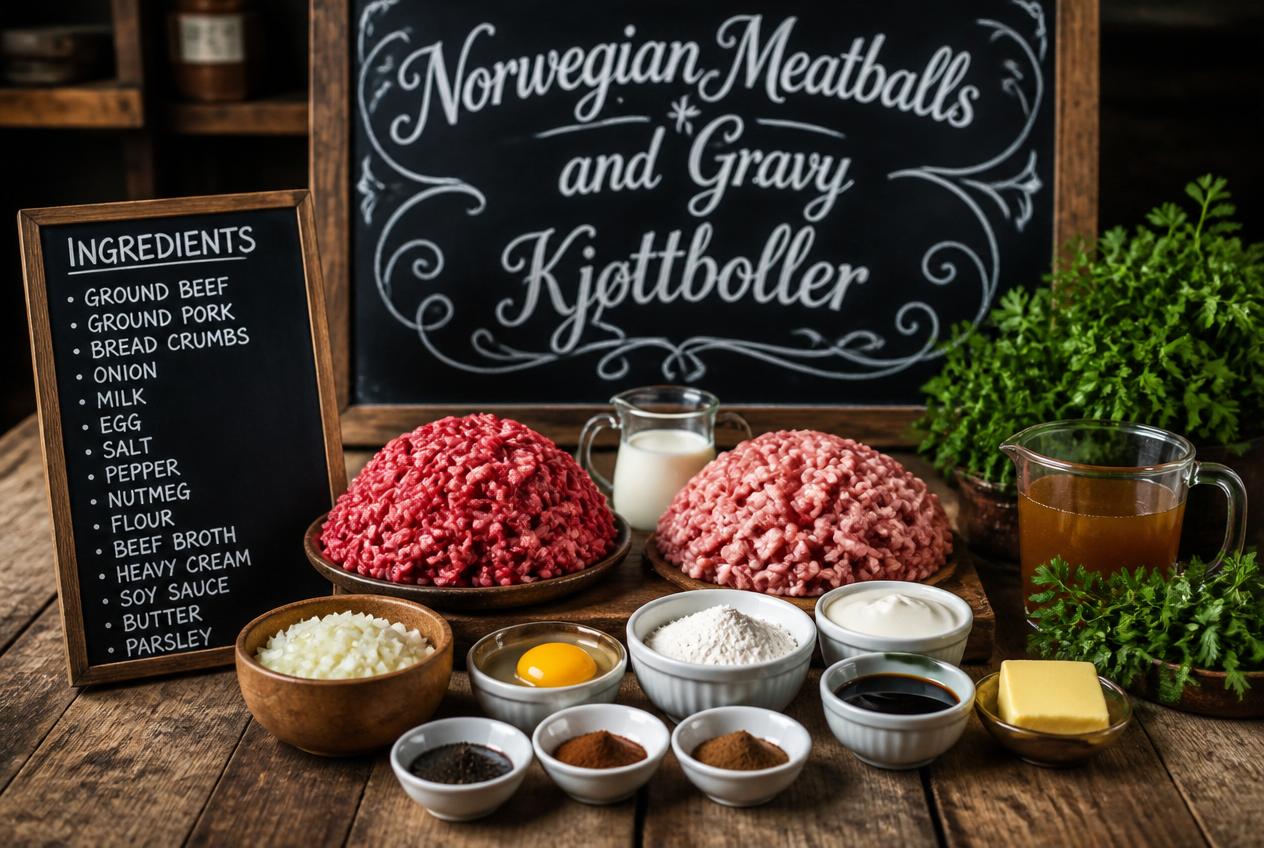
Norwegian Meatballs and Gravy (Kjøttboller)
Ingredients
- 1/3 poundlean ground beef
- 1/3 poundground pork
- 1/3 poundground veal if veal is unavailable use 1/2 lb each of beef and pork
- 1 egg
- 2/3 cupPanko bread crumbs
- 1/2 cupwhole milk
- 1 teaspoonsalt
- 1/2 teaspoonground pepper
- 1/4 teaspoonground nutmeg
- 1/4 teaspoonground ginger
- 1/4 teaspoonallspice
- 6 tablespoonbutter
- 1/4 cupflour
- 4 cupchicken broth
- 1/2 onion skin removed but left in tact
- 1/4 cupsour cream
- 2 tablespoonred wine
- dashgravy browning agent eg. Kitchen Bouquet
- 3-4 thin slices of gjetost Norwegian brown goat cheese (optional, since this is an acquired taste)
- salt and pepper to taste
Instructions
- In the bowl of a stand mixer fitted with the paddle attachment, combine the ground meats and egg. Mix just until the egg is incorporated throughout the meat. Create a small well in the center of the mixture and add the breadcrumbs. Pour the milk directly over the breadcrumbs and allow the mixture to sit for 1–2 minutes. This brief resting period gives the breadcrumbs time to absorb the milk, creating a panade that helps keep the meatballs exceptionally tender and moist.
- Add the spices and seasonings to the bowl, then mix everything together for several minutes. Continue beating until the mixture becomes very well combined, smooth, and noticeably lighter in texture. This thorough mixing helps develop the characteristic soft, delicate texture found in traditional Scandinavian meatballs. The finished mixture should feel cohesive and easy to shape without being dense or compacted.
- Using your hands or a small scoop, shape the meat mixture into balls approximately the size of golf balls. Try to keep them as uniform as possible so they cook evenly. Heat a few tablespoons of butter in a large Dutch oven over medium heat until melted and lightly foaming.
- Working in batches, place the meatballs into the hot butter, leaving enough space between them to allow proper browning. Avoid overcrowding the pan, as crowded meatballs will steam rather than develop a flavorful crust. Cook the meatballs while turning them carefully with tongs or a spoon until they are evenly browned on all sides. At this stage, they do not need to be fully cooked through. Transfer the browned meatballs to a plate while you finish the remaining batches.
- Once all of the meatballs have been browned, return them to the Dutch oven. Add the half onion and pour in enough broth to come approximately halfway up the sides of the meatballs. The broth should partially cover them rather than fully submerge them. Bring the liquid to a gentle simmer, then reduce the heat to maintain a slow, steady bubble.
- Cover partially and cook for about 20 minutes, or until the meatballs are fully cooked through and tender. During this time, the broth absorbs flavor from both the meatballs and onion, creating a rich base for the gravy. Once cooked, remove the pot from the heat and discard the onion. Carefully transfer the meatballs to a serving dish and reserve the cooking broth for the gravy.
- In a separate saucepan set over medium-low heat, melt the remaining 4 tablespoons of butter. Once melted, sprinkle in the flour and stir continuously to form a smooth roux. Cook the roux for about 1 minute to remove the raw flour taste, being careful not to let it brown too much.
- Gradually begin adding the reserved cooking broth from the meatballs. Add only a small amount at a time while whisking vigorously. This slow addition is important because it prevents lumps from forming and creates a smooth, velvety gravy. Continue adding broth in stages, whisking thoroughly after each addition until fully incorporated.
- If any broth remains after cooking the meatballs, add it to the gravy and bring the mixture to a gentle simmer. Reduce the heat to very low before adding the remaining ingredients. Whisk in the sour cream, wine, gravy browner, and gjetost if using. The sour cream adds richness and a subtle tang, while the wine contributes depth and complexity. The gjetost adds a uniquely Norwegian sweetness and caramelized flavor that pairs beautifully with the savory meatballs.
- Season the gravy with salt and pepper to taste, then adjust any of the other flavorings as needed. Continue stirring until the gravy is smooth, creamy, and evenly blended. The finished sauce should be rich enough to coat the back of a spoon without becoming overly thick.
- If the gravy becomes thicker than desired, stir in a small amount of hot potato cooking water. The starch from the potatoes helps maintain the silky texture while thinning the gravy without diluting the flavor. Add only a little at a time until the consistency is exactly as you prefer.
- Arrange the cooked meatballs in a serving dish and generously spoon the hot gravy over the top. Serve immediately alongside boiled or mashed potatoes, which are perfect for soaking up the flavorful sauce. Traditional accompaniments include sweet-and-sour red cabbage and a simple green vegetable such as peas, green beans, or Brussels sprouts.
- The combination of tender meatballs, creamy gravy, and hearty side dishes creates a classic Norwegian comfort meal that is both rich and satisfying.
Norwegian Meatballs and Gravy (Kjøttboller) Frequently Asked Questions
Norwegian Meatballs and Gravy (Kjøttboller) spark a lot of questions, from what sets them apart from Swedish meatballs to why the gravy tastes so good. The spices, the way you cook them, the sides—it all matters.
What’s the difference between Norwegian meatballs and Swedish meatballs—besides national pride?
In my experience, Norwegian Meatballs and Gravy (Kjøttboller) are bigger and more rustic than their Swedish cousins. Sure, Swedish meatballs get all the hype, but Norwegian versions have a heartier size and a more straightforward spice profile.
The gravies split ways too. Norwegian brown gravy leans richer and beefier, while Swedish gravy often gets a splash of cream. Norwegian Meatballs and Gravy (Kjøttboller) also use a subtler spice blend, which I kinda prefer.
Which spices make these meatballs taste like a cozy Scandinavian hug?
Nutmeg and allspice really steal the show for Norwegian Meatballs and Gravy (Kjøttboller). These warm spices fill the kitchen with that unmistakable, comforting aroma. I keep things subtle—Norwegian cooking isn’t about blowing out your taste buds. Salt and pepper round it out, but don’t be afraid to taste and adjust as you go. I always do.
How do you keep meatballs juicy instead of turning them into little edible hockey pucks?
If you want Norwegian Meatballs and Gravy (Kjøttboller) to stay juicy, you’ve gotta work a little moisture into the mix. I usually grab some breadcrumbs and let them soak in milk or cream—trust me, it makes a difference. That way, you end up with tender meatballs instead of those tough little pucks nobody really wants to eat.
I’m careful not to overmix the meat. I just fold everything together gently until it holds. If you mash it up too much, the proteins tighten, and suddenly your Norwegian Meatballs and Gravy (Kjøttboller) are dense and chewy. Nobody’s asking for that.
Temperature’s another thing folks overlook. I brown the meatballs over medium heat—never blasting them. After that, I let them finish cooking in the gravy at a low simmer. If you crank the heat, you’ll dry everything out, and your Norwegian Meatballs and Gravy (Kjøttboller) will lose that signature tenderness.
What’s the best way to make a rich brown gravy that doesn’t taste like sadness?
Honestly, the magic starts with the drippings left from browning your Norwegian Meatballs and Gravy (Kjøttboller). Tossing those out would just be wrong. All the flavor’s right there in the pan.
I grab some butter and flour and make a roux in the same pan. Then, I slowly whisk in beef stock. Just let it cook for a bit so you don’t get that raw flour taste. Scrape up all those brown bits stuck to the pan—seriously, that’s where the flavor hides.
I season as I go, and sometimes I’ll sneak in a dash of soy sauce or Worcestershire if I want a little more depth. The gravy for Norwegian Meatballs and Gravy (Kjøttboller) should coat the back of a spoon when it’s ready—not too thick, not too thin.
Can you make the sauce with gjetost without scaring off the non-adventurous eaters?
Gjetost (that’s Norwegian brown cheese) has a sweet, caramel vibe. It’s not for everyone, but I’ll grate just a tablespoon into the gravy for Norwegian Meatballs and Gravy (Kjøttboller) sometimes. It adds a hint of sweetness that most folks can’t even pin down as cheese. You won’t freak anyone out if you keep it subtle.
Use just a pinch—seriously, don’t get wild with it. If you want to go all-in, set some extra on the side for the brave souls at the table. That way, everyone can decide how much Norwegian flavor they want in their Norwegian Meatballs and Gravy (Kjøttboller).
Some folks will introduce Norwegian brown cheese with dessert first, just to get friends on board with the taste before sneaking it into savory stuff. But, honestly, if you don’t overdo it, most dinner guests won’t even realize it’s in the gravy. It’s a sneaky way to add that classic twist to Norwegian Meatballs and Gravy (Kjøttboller).
What should you serve on the side—potatoes, lingonberry, or just surrender and do all of it?
Honestly, just do all of it. Why pick one when Norwegian Meatballs and Gravy (Kjøttboller) basically demand the full experience? Boiled or mashed potatoes are essential for scooping up every bit of that savory gravy.
Lingonberry jam adds this sweet-tart punch that somehow makes Norwegian Meatballs and Gravy (Kjøttboller) even better. Sounds odd if you haven’t tried it, but I swear, it works. There’s something about that burst of berry against the richness that just clicks.
I usually toss in some cooked veggies too—peas, carrots, maybe even pickled cucumbers if I’m feeling adventurous. The combo looks a little chaotic but, with Norwegian Meatballs and Gravy (Kjøttboller), it all sorts itself out on the plate. Flatbread or lefse? Sure, why not. You’ll want something to help chase the last bits of Norwegian Meatballs and Gravy (Kjøttboller) around your plate, and honestly, it’s all about maximizing the gravy anyway. If you’re making Norwegian Meatballs and Gravy (Kjøttboller), don’t hold back—pile on the sides, and enjoy every bite.

Recipes are gathered in person and written for real-world cooking conditions.
- 10 Hungarian Dessert Recipes Passed Down Through Generations - July 25, 2026
- 11 Easy English Recipes Anyone Can Make - July 25, 2026
- Hungarian Kifli Recipe - July 25, 2026