
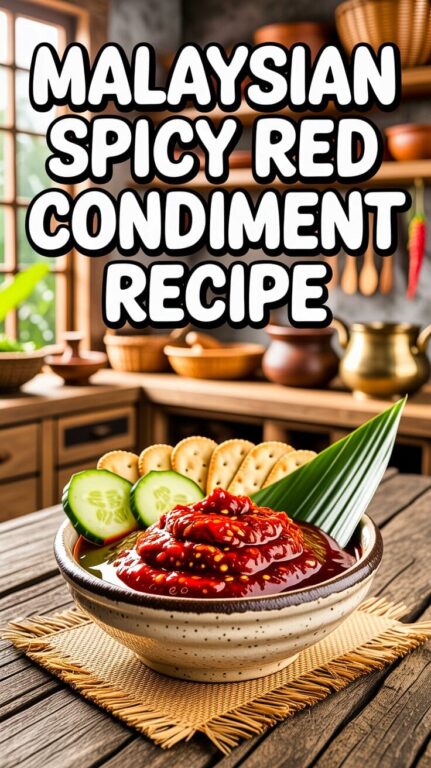
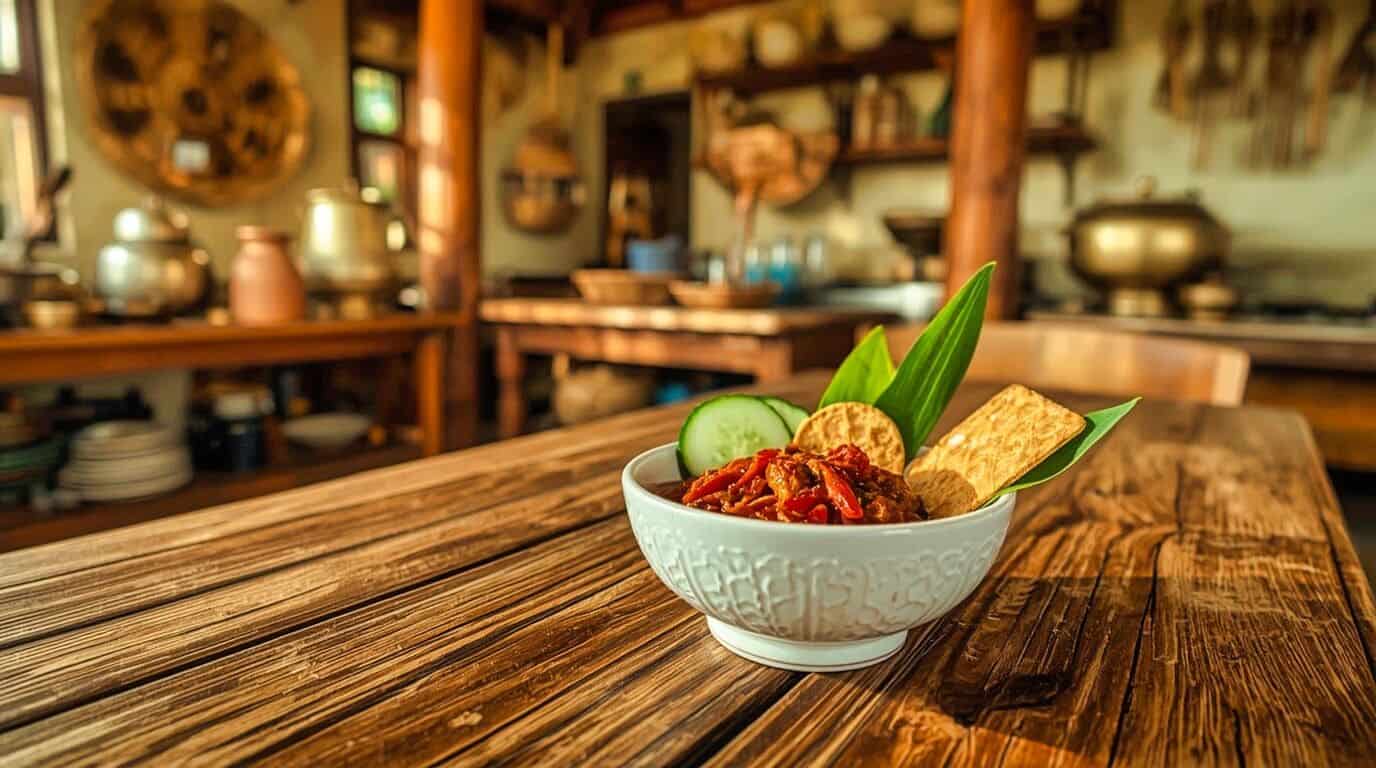
Let’s dive into a Malaysian spicy red condiment recipe that really wakes up your food—sambal belacan. This punchy little paste throws together fresh red chiles, toasted shrimp paste (belacan), shallots, garlic, lime, and a bit of sugar. The result? A bright, savory kick you can swipe onto rice, dip your veggies in, or toss into a quick stir-fry. I can’t imagine a kitchen without at least one jar hiding in the fridge.
This Malaysian spicy red condiment recipe isn’t just about the heat. It’s about getting that balance—bold, layered flavors that make even plain rice taste like something special. If you’re curious about how sambal fits into Malaysian recipes and local tastes, you’ll get a quick sense of its culinary roots. I’ll share how I toast and pound the ingredients, mess around with the heat, and stash leftovers so they last. It’s all pretty doable, even if you’re new to pounding things in a mortar.
Origins and Culinary Context
Sambal sits right at the center of any Malaysian table. The Malaysian spicy red condiment recipe grew out of a need for something that could light up simple meals with heat, umami, and a splash of acidity. Malaysians use it to give everything a little extra “oomph.”
When you hunt down an authentic Malaysian spicy red condiment recipe, you’ll spot the usual suspects: shrimp paste (belacan), palm sugar, and either tamarind or lime. That’s where the savory depth and tang come from. Some folks go for sambal tumis, frying everything down until you get a glossy, rich paste. You’ll see that version everywhere—from hawker stalls to home kitchens.
There’s a bigger story, too. This Malaysian spicy red condiment recipe connects with Southeast Asian food traditions. Indonesian sambal has a similar chili backbone, but each country tweaks it with local flavors and methods. Sometimes you’ll taste the similarities, sometimes not. Malaysia and Indonesia both love their sambal, but each has its own spin—just enough to keep things interesting.
Sambal’s a real multitasker. I use this Malaysian spicy red condiment recipe as a dip, a cooking paste, or just spooned over something like nasi lemak. Sometimes I fry it up for a tumis-style sambal that’s deeper and a bit smokier. Other times, I just scoop it straight from the jar. There’s no wrong way, honestly.
If you want to nail the Malaysian spicy red condiment recipe, pay attention to balance—spicy, salty, sweet, and sour. Don’t skip the belacan if you can help it; that’s what gives it that unmistakable punch. Whether you grind or pound, go raw or fry it, those choices shape the final sambal. Adjust it to your own taste and whatever dish you’re making. That’s half the fun.
Preparation Guidance
Start by grabbing the essentials for a proper Malaysian spicy red condiment recipe: fresh red chilies or bird’s eye chilies for that fiery kick, toasted belacan (fermented shrimp paste) for a punch of umami, plus garlic cloves and shallots. Don’t forget lime juice or calamansi, and just a bit of palm or brown sugar—these balance out the acidity and saltiness. If you ask me, those fresh, vibrant ingredients make all the difference in any Malaysian spicy red condiment recipe.
Toast the belacan in a dry pan until it smells rich and just a little smoky. This step really deepens the flavor and tones down the funky edge, which, let’s be honest, can be a bit much otherwise. For the best texture, I usually go with a mortar and pestle—there’s just something about that hands-on approach. If you’re in a rush, a blender or food processor works too. Just pulse it, though, because overheating can mess with the taste and texture of your Malaysian spicy red condiment recipe.
If you’re working with dried red chilies, soak them in hot water until they’re soft, then drain them well. Want a milder Malaysian spicy red condiment recipe? Take out the seeds from big red chilies. If you’re after serious heat, leave the seeds in those tiny bird’s eye chilies. It’s your call—some like it blazing, some don’t.
Now, toss together the chilies, toasted belacan, garlic, and shallots. Smash or blend everything until you get the texture you like. Squeeze in some lime juice or calamansi, and maybe add a bit of tamarind paste if you have it. Sweeten things up with palm sugar or brown sugar, tasting as you go. That’s the beauty of a good Malaysian spicy red condiment recipe—it’s all about making it your own.
If you want a cooked version, fry the paste briefly in oil. This simple step brings out the aroma and takes away the raw edge. Let it cool before you stash it away. Pop it into an airtight jar and keep it in the fridge. That way, your Malaysian spicy red condiment recipe stays fresh and ready for whenever the craving hits.
To make it last even longer, portion your sambal belacan into small containers or even ice cube trays. Freeze them flat, and just thaw what you need. This trick keeps your Malaysian spicy red condiment recipe vibrant for dishes like nasi goreng, coconut rice, grilled meats, fried fish, and noodle bowls. Honestly, once you’ve got a batch of this Malaysian spicy red condiment recipe on hand, you’ll find yourself reaching for it way more often than you’d expect. It’s kind of addictive, isn’t it? Keep experimenting with your Malaysian spicy red condiment recipe—you might just stumble onto your own secret twist.
Malaysian Spicy Red Condiment Recipe
Ingredients
- 20 chilies dried seeded and soaked to soften
- 10 red chilies fresh seeded and sliced
- 8 shallots peeled and chopped
- 4 cloves garlic peeled and chopped
- 1 teaspoon belacan break into small bits
- 1/3 cup cooking oil
Instructions
- Place all of the sambal ingredients into a mortar.
- Using a pestle, pound the mixture until it forms a smooth, well-blended paste with no large pieces remaining.
- Alternatively, transfer the ingredients to a food processor and blend until a fine, even paste is achieved.
- Heat the oil in a wok or large skillet over medium heat.
- Once the oil is hot, add the prepared sambal paste.
- Stir-fry continuously for several minutes, stirring often to prevent the paste from sticking or burning.
- Continue cooking until the sambal becomes fragrant and the oil begins to separate from the paste, indicating that the spices are fully cooked.
- Remove the wok from the heat and transfer the sambal to a clean bowl.
- Allow it to cool completely before storing.
- Transfer the cooled sambal to an airtight container and refrigerate until ready to use.
- Use the sambal as a flavorful base for curries, stir-fries, noodle dishes, rice recipes, marinades, or as a spicy condiment alongside your favorite Malaysian meals.
- This Malaysian Sambal Paste is a rich, aromatic chili condiment that serves as the flavorful foundation for countless Southeast Asian dishes. Keeping a batch on hand makes it easy to add authentic heat, depth, and complexity to everything from curries and noodle soups to grilled meats and seafood.

Recipes are gathered in person and written for real-world cooking conditions.
- 10 Hungarian Dessert Recipes Passed Down Through Generations - July 25, 2026
- 11 Easy English Recipes Anyone Can Make - July 25, 2026
- Hungarian Kifli Recipe - July 25, 2026