
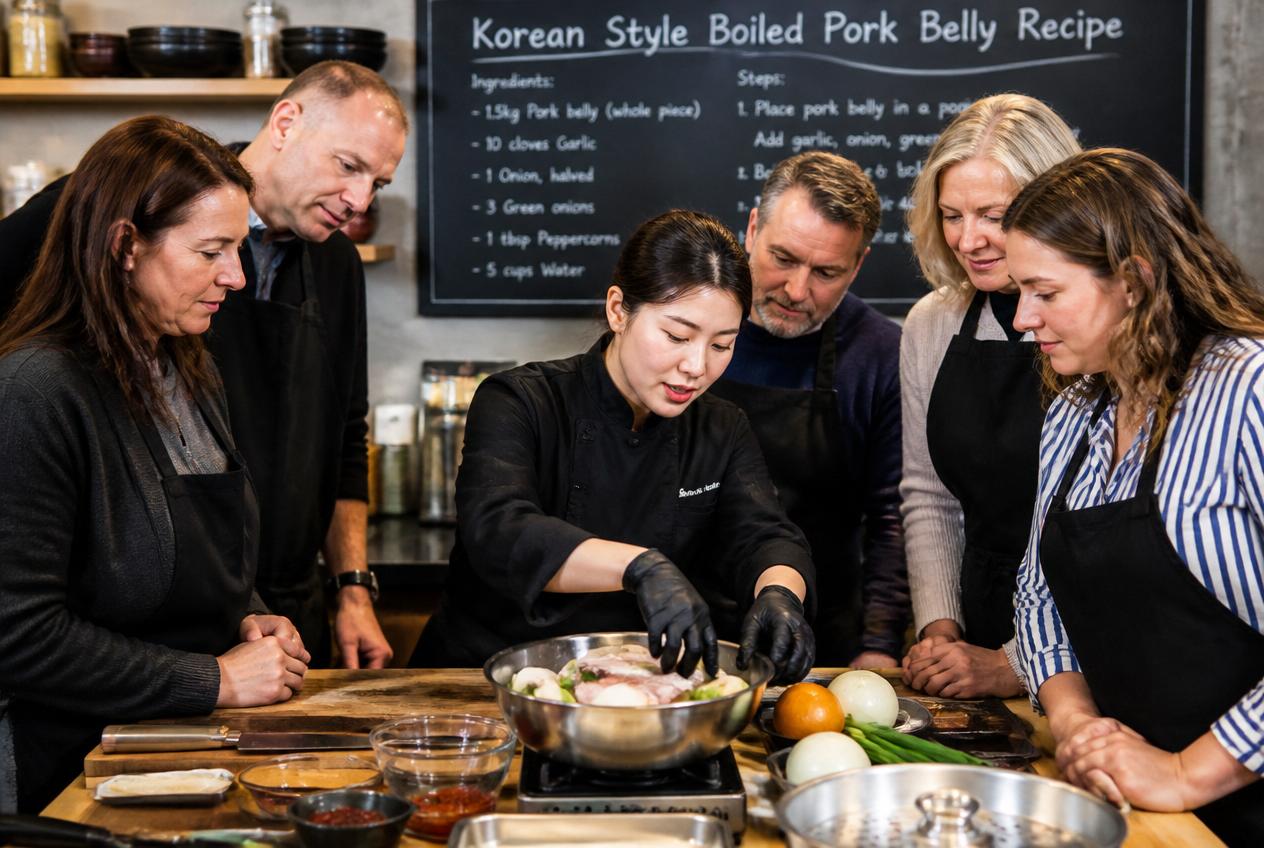
Honestly, I never thought boiled pork could be this exciting until I tried Korean Style Boiled Pork Belly. Bossam takes pork belly and turns it into something so tender and flavorful, you’ll start questioning why you ever bothered with any other method. Bossam is Korean boiled pork belly simmered with aromatics until it’s melt-in-your-mouth soft, then wrapped in crisp cabbage or lettuce with kimchi and spicy sauces.
Korean Style Boiled Pork Belly is easy to make at home. You don’t need fancy gadgets or rare ingredients. Just grab some pork belly, a few aromatics, and a pot that can handle it all. That’s it, really.
The best part? You build your own wraps at the table. Everyone gets to customize their bite. I’m all about extra kimchi and garlic, but you can go mild if that’s more your vibe. Korean Style Boiled Pork Belly is all about making it your own.
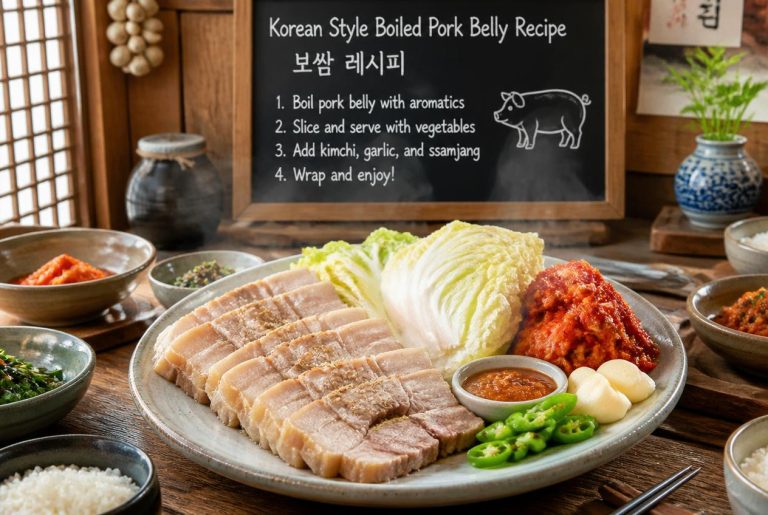
Korean Style Boiled Pork Belly Recipe
Key Takeaways
- Bossam is tender boiled pork belly wrapped in cabbage with kimchi and sauces
- The low-moisture braising method keeps the meat juicy and flavorful
- Leftover bossam can be stored and reheated for easy meals throughout the week
What’s the Buzz About Bossam? (Description and History)
Here’s the deal: Bossam is Korean boiled pork belly simmered with aromatics until it’s so tender, it basically melts when you bite into it. Forget your average boiled meat—this is next-level. We’re talking pork belly or shoulder taking a long bath with garlic, ginger, and doenjang. Korean Style Boiled Pork Belly just hits different.
The magic happens when you wrap those juicy slices in lettuce or cabbage with kimchi and ssamjang. It’s like making a little flavor present for yourself every time.
Bossam comes from the Gaesong region during the Goryeo dynasty, so Korean Style Boiled Pork Belly has been making people happy for centuries. It’s kind of wild that something so simple turned into a Korean classic.
What makes Korean bossam special:
- The pork is boiled, not grilled or fried
- You get to wrap it up yourself in leaves
- Kimchi is always there
- Raw garlic shows up, and nobody complains
Bossam has a cool connection to kimjang, the traditional kimchi-making season. Families would eat bossam during kimjang time in the fall, probably because after all that kimchi work, you deserve a big plate of Korean Style Boiled Pork Belly. Makes sense, right?
I love that Korean Style Boiled Pork Belly works for both celebrations and regular weeknight dinners. It’s a crowd-pleaser that turns everyone into a wrap artist.
How to Bossam Like a Pro (Kitchen Tips)
Making perfect Korean boiled pork belly doesn’t require chef credentials—just a few tricks. The real secret is low-moisture braising, which keeps all that juicy flavor locked inside the pork. Korean Style Boiled Pork Belly rewards patience.
Here’s how I do it every single time:
My Essential Bossam Tips
- Add sweet rice wine or mirim to the boiling liquid. It makes the meat tender and adds a hint of sweetness that just works with Korean Style Boiled Pork Belly.
- Don’t rush it. I let my pork belly simmer gently for at least 40-50 minutes. Seriously, patience pays off here.
- Let it rest before slicing. I give it about 10 minutes to cool down. Cutting hot pork belly is just asking for a mess.
When it’s time to serve Korean Style Boiled Pork Belly, I set everything up buffet-style. Sliced pork goes on a platter, cabbage leaves for pork belly wraps on the side, and bowls of kimchi and ssamjang for that punch of flavor.
How to Eat Bossam the Right Way
The fun part is making ssam wraps. Grab a cabbage leaf, put a slice of Korean Style Boiled Pork Belly in the center, top with kimchi and sauce, then fold it up like a tiny burrito. One bite and it’s like a trip to Seoul. No joke.
My advice? Don’t be shy. Pile on the fillings and enjoy the messy, tasty experience of authentic bossam wraps. Korean Style Boiled Pork Belly was made for this.
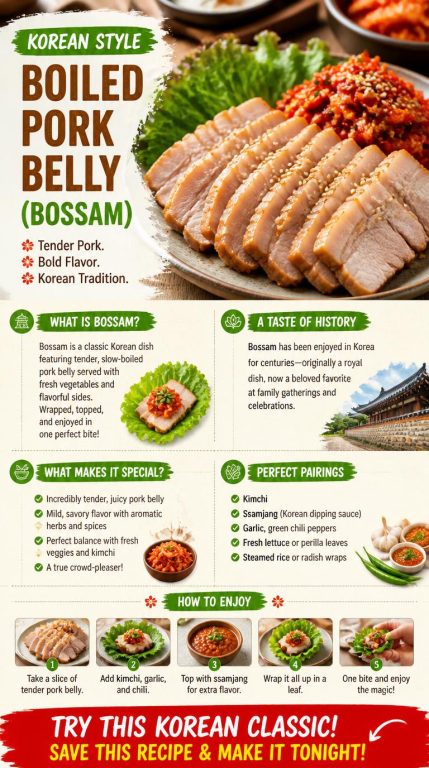 Bossam, But Make It Different (Fun Variations)
I like to play around with Korean Style Boiled Pork Belly wraps because honestly, there are so many ways to change it up. Sometimes I swap out regular cabbage leaves for perilla leaves (kkennip) to get that minty, peppery kick. It’s a game-changer for Korean Style Boiled Pork Belly.
The real fun is with the sides. Sure, cabbage kimchi is classic, but I love mixing in radish kimchi or geotjeori (fresh kimchi) for more crunch and funk. My top pick is musaengchae, that spicy radish salad—it adds a real zing to every bite of Korean Style Boiled Pork Belly.
Dipping Sauce Adventures:
- Mix gochujang with a splash of maeshil-cheong (Korean plum extract) for a sweet, spicy kick
- Add mulyeot (Korean corn syrup) to your bossam sauce for extra shine
- Try a doenjang-based sauce if you want something earthier with your Korean Style Boiled Pork Belly
Fresh oysters sound odd, but they’re a traditional pairing with Korean Style Boiled Pork Belly. I hesitated at first, but now I’m hooked. That briny hit with the rich pork is just next-level.
Minari (water parsley) brings a fresh, herbal note that cuts through the richness of Korean Style Boiled Pork Belly. I toss it in whenever I can find it at the store.
My Quick Variation Cheat Sheet:
| Element | Standard | My Twist |
|---|---|---|
| Wrapper | Napa cabbage | Perilla leaves |
| Kimchi | Cabbage | Radish or geotjeori |
| Sauce | Ssamjang | Gochujang + plum extract |
The best thing about Korean Style Boiled Pork Belly? There’s no wrong way to wrap it up.
Leftovers: Bossam’s Encore Performance (Storage Advice)
I’ve made the mistake of tossing leftover tender boiled pork in a random container and forgetting about it. Korean Style Boiled Pork Belly deserves way better than that.
Proper Storage Makes All the Difference
I always keep my leftover pork separate from the veggies and kimchi. The pork stays juicy in an airtight container with a little of the cooking liquid. Veggies get their own spot—no one likes soggy cabbage, right?
Here’s my storage timeline:
| Storage Method | Pork Belly | Vegetables & Kimchi |
|---|---|---|
| Refrigerator | 3-4 days | 3-5 days |
| Freezer | Up to 2 months | Not recommended |
Reheating Without Ruining Everything
I never blast Korean Style Boiled Pork Belly in the microwave. That just turns it rubbery. I gently steam the pork slices for about 5 minutes or warm them in a covered pan with a splash of water.
One of my favorite tricks? Slice the cold pork belly thin and let it sit at room temp for 15 minutes. It’s surprisingly delicious this way. Korean Style Boiled Pork Belly just works, hot or cold.
Creative Second Acts
Leftover Korean Style Boiled Pork Belly is never boring. I chop it up for fried rice, toss it into ramen, or make quick lettuce wraps for lunch. Since it’s already seasoned and cooked, you’re halfway to your next meal without even trying.
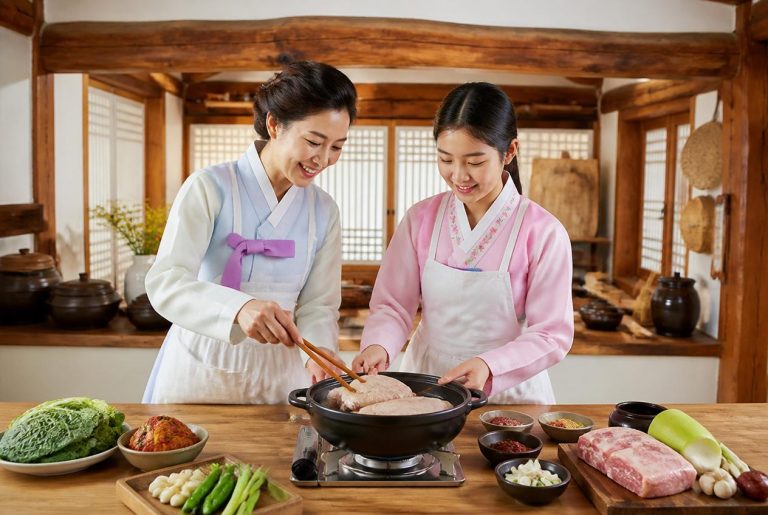
Korean Style Boiled Pork Belly Recipe – Prep
Cooking Tips For the Korean Style Boiled Pork Belly (Bossam)
• Simmer the pork belly gently so the meat becomes tender without falling apart.
• Keep the cooking liquid at a steady simmer rather than a rapid boil.
• Slice the pork only after resting briefly so it holds its shape more cleanly.
• Cut slices evenly for consistent serving portions and texture.
• Prepare fresh vegetables and wraps close to serving time for better texture.
• Use a sharp knife when slicing to help maintain neat pieces.
• Taste accompanying sauces before serving and adjust seasoning carefully if needed.
• Serve the bossam while the pork is still warm and tender.
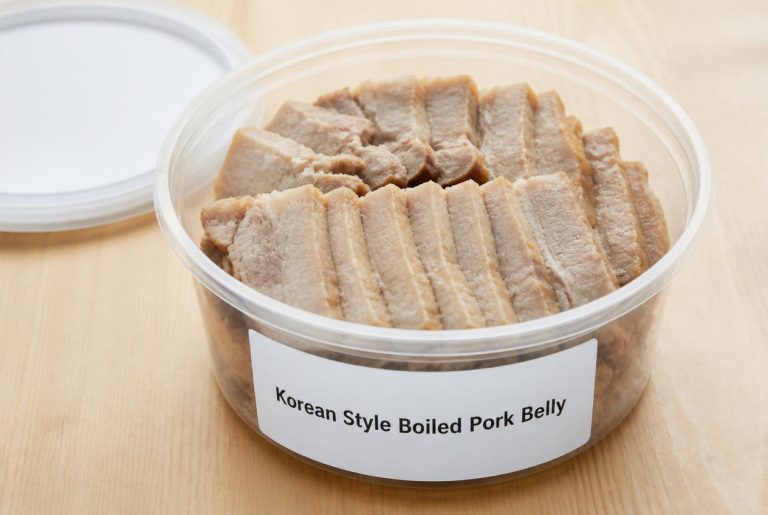
Korean Style Boiled Pork Belly Recipe – Storage
Storage Tips For the Korean Style Boiled Pork Belly (Bossam)
• Allow the pork to cool slightly before transferring it into storage containers.
• Store the pork separately from vegetables and wraps when possible.
• Refrigerate leftovers within 2 hours of cooking for proper food safety.
• Reheat gently over low heat to help prevent the pork from drying out.
• Add a small splash of broth during reheating if needed.
• Keep sauces, greens, and garnishes separate until serving time.
• Freeze cooked pork belly in freezer-safe containers for up to 3 months if needed.
• Wrap portions tightly before freezing to help reduce freezer burn and moisture loss.
• Thaw frozen pork overnight in the refrigerator before reheating.
• Discard the pork if it develops a sour smell, slimy texture, discoloration, mold, or unusual taste.
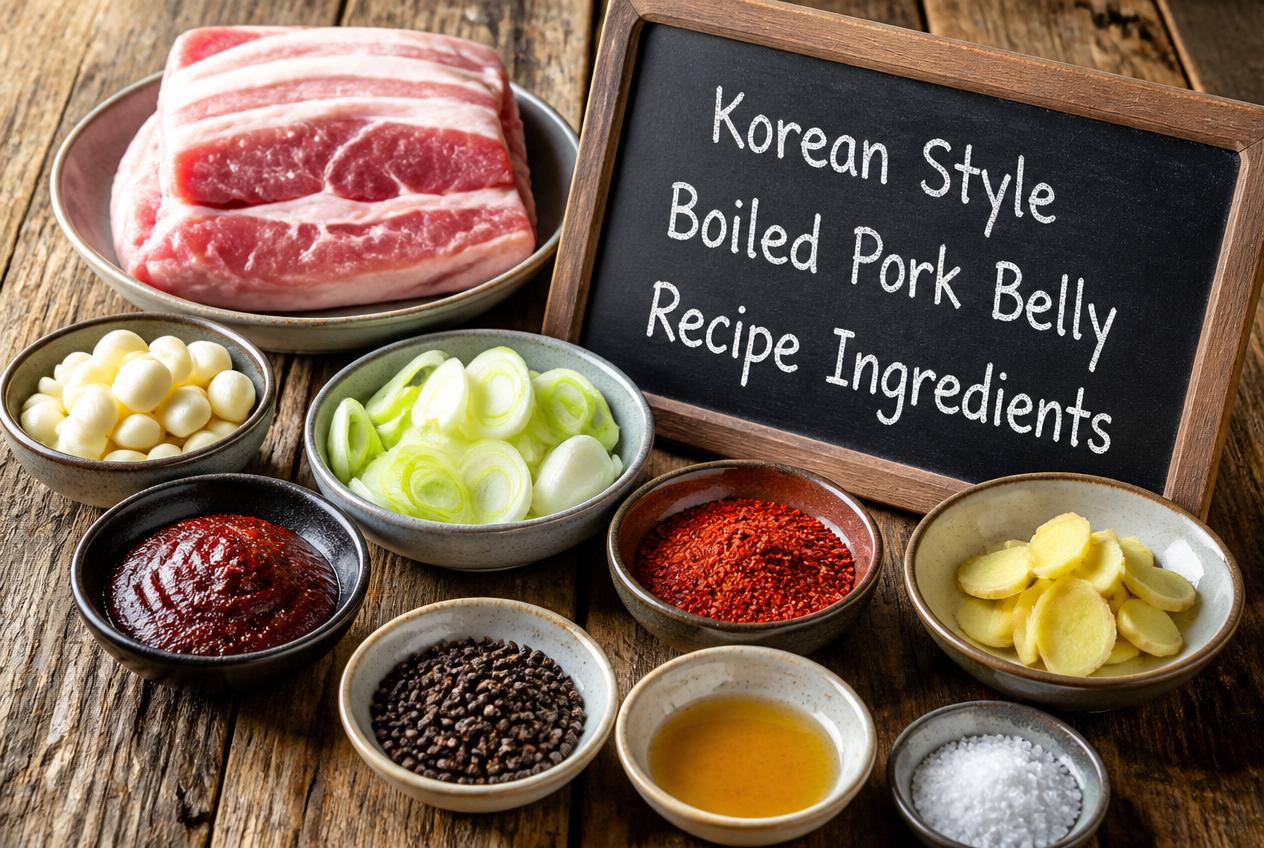
Korean Style Boiled Pork Belly (Bossam)
Ingredients
- Kosher salt or sea salt
- 1/2 head Napa cabbage from about one 2-pound; core and tough exterior leaves removed (tender yellow inner leaves only)
- 1 1/2 pound pork belly slab, preferably skin-on
- Rice-rinsing water optional
- 3 tablespoons doenjang Korean fermented soybean paste
- 1 onion whole, medium, yellow, skin on
- 10 scallions or 3 daepah, Korean giant scallions
- 1/2 medium apple
- 1 knob ginger peeled thumb-size knob, fresh
- 1 inch cinnamon stick 1-inch piece
- 10 garlic cloves whole, medium
- 1 teaspoon black peppercorns about 15 whole
- 1 small bay leaf
- 1/4 cup soju or vodka
- 1/2 tablespoon saewoo jeot Korean salted shrimp
- 1/2 tablespoon soju or vodka
- Pinch gochugaru Korean chile flakes, optional
- Pinch sesame seeds crushed toasted, optional
- Pinch green chile pepper optional, minced Korean
- 1 tablespoon doenjang Korean fermented soy paste
- 1 tablespoon gochujang Korean chile paste
- 1/2 teaspoon sesame seeds crushed roasted
- 1 medium clove garlic minced
- 1/8 teaspoon sesame oil toasted
Instructions
- Fill a large bowl with cold 3% salt-water brine. Add the Napa cabbage leaves and place a plate on top to keep them fully submerged in the liquid. Allow the cabbage to soak for at least 3 hours and up to 8 hours, or until the leaves become softened and pliable. Once ready, drain the cabbage well and set it aside until serving time.
- Rinse the pork belly thoroughly under cold running water. Fill a large pot with enough rice-rinsing water or plain water to completely submerge the pork and bring it to a rolling boil. Add the pork belly, return the water to a boil, and cook for 5 minutes. This step helps remove impurities from the meat. Drain the pork and discard the cooking liquid.
- Rinse the pot and refill it with fresh water. Add the doenjang, onion, scallions, apple, ginger, cinnamon stick, garlic, peppercorns, and bay leaf. Bring the mixture to a boil over high heat, stirring if needed to help dissolve the doenjang into the broth.
- Carefully return the pork belly to the pot and cover with a lid. Boil for 20 minutes, then reduce the heat to medium-low. Remove the lid and add the soju. Continue cooking for about 40 minutes longer, or until the pork is tender enough to be easily pierced with a fork. The finished pork should be fully cooked while remaining moist and flavorful.
- While the pork finishes cooking, prepare a large bowl of ice water. Remove the pork from the cooking liquid and briefly rinse it under cold running water. Transfer it to the ice water just long enough to cool the exterior. This quick chilling step helps firm the surface of the meat, making it easier to slice neatly. Let the pork rest for 5 minutes before cutting.
- In a very small bowl, combine the saewoo jeot and soju. If desired, stir in a pinch of gochugaru, crushed roasted sesame seeds, and minced green chile. Mix until everything is evenly combined and set aside for serving.
- In a small bowl, combine the doenjang, gochujang, crushed roasted sesame seeds, minced garlic, and sesame oil. Stir until a smooth, well-blended dipping sauce forms.
- Thinly slice the rested pork belly and arrange it on a serving platter. Add the drained cabbage leaves and the mu malaengi muchim alongside the pork. Place the ssamjang, saewoo jeot seasoning, sliced garlic, and green chiles into separate serving dishes so everyone can assemble their own wraps.
- To enjoy bossam, dip a slice of pork into the saewoo jeot seasoning and place it on a cabbage leaf. Add a small amount of garlic, a dab of ssamjang, and a few pieces of mu malaengi. If desired, add a slice of green chile. Wrap the cabbage around the fillings and enjoy in a single bite.
Notes
Frequently Asked Questions for the Korean Style Boiled Pork Belly (Bossam)
Nailing Korean Style Boiled Pork Belly means picking the right pork cut and knowing how to boil it without killing the flavor. Aromatics, timing, and prepping your wraps can turn simple boiled pork into something you’ll actually want to brag about.
What cut of pork works best if you want tender slices instead of chewy sadness?
I always reach for pork belly when making Korean Style Boiled Pork Belly. It’s got the perfect balance of meat and fat. The fat keeps everything moist and tender, while the meat gives you a real bite—never chewy, never dry.
Some folks use pork shoulder if they’re on a budget, and that’s fine. But honestly, nothing beats tender pork belly for Korean Style Boiled Pork Belly. The fat layers melt as it cooks, giving you that soft, almost jelly-like texture that makes bossam so addictive.
If you grab a lean cut thinking you’re being healthy, you’ll just end up with dry, chewy sadness. Trust me—Korean Style Boiled Pork Belly is all about that perfect, melt-in-your-mouth bite.
How do you keep boiled pork belly juicy without turning it into bland bathtub meat?
The secret to great Korean Style Boiled Pork Belly is pretty simple: boil it low and slow, but don’t just toss it in plain water and hope for the best. I always use well-seasoned water. I’ll throw in soy sauce, garlic, ginger, and onions so the pork actually soaks up some flavor as it simmers. If you skip this, you’ll end up with pork that tastes like nothing—nobody wants that.
Keep the water at a gentle simmer, not a wild boil. If you go too hard with the heat, the meat tightens up and all the juiciness leaks out. You’ll get pork that tastes like it took a sad bath, and honestly, that’s not what Korean Style Boiled Pork Belly is about.
After cooking, I always let the pork rest in its own cooking liquid for 10-15 minutes. This little break makes a big difference. The juices settle back in, so when you slice it, you get that juicy, tender bite that makes Korean Style Boiled Pork Belly so craveable.
Which aromatics and seasonings actually make the pork smell amazing (and not like a soup accident)?
For Korean Style Boiled Pork Belly, I stick with the classics: lots of garlic cloves, a bunch of ginger slices, green onions, and a whole onion cut in half. These aromatics fill your kitchen with that unmistakable Korean restaurant smell—way better than any “soup accident.”
I like to toss in a couple dried red peppers for a bit of subtle heat, plus a splash of Korean fish sauce for some extra depth. Sometimes I’ll add a spoonful of doenjang (that’s fermented soybean paste), which gives the pork a savory, earthy punch. It’s not strictly necessary, but wow, it takes Korean Style Boiled Pork Belly to another level.
Bay leaves and black peppercorns help round out the flavors without taking over. The trick is to layer everything so the pork tastes seasoned from the inside out—not just coated on the outside. That’s what makes Korean Style Boiled Pork Belly something you want to eat again and again.
How long should you boil pork belly so it’s perfectly cooked but not falling apart like your weekend plans?
For a standard two-pound slab of Korean Style Boiled Pork Belly, I usually go for about 40-50 minutes. If your cut is thicker, you might need a little more time, but you’re shooting for that sweet spot where it’s tender but still holds together. Nobody wants pork belly mush.
I poke the thickest part with a chopstick or fork around the 40-minute mark. If it slides in with just a bit of resistance, you’re good. If the pork falls apart, you’ve gone too far. Korean Style Boiled Pork Belly should be soft enough to slice, but not so soft it just crumbles.
I always check by pressing the meat—if it feels like the base of your thumb when you make a loose fist, it’s usually perfect. You’ll get the hang of it after a few tries, and honestly, isn’t that part of the fun?
What’s the easiest way to prep the cabbage wraps so they’re soft, not crunchy paper?
For Korean Style Boiled Pork Belly, napa cabbage is my go-to for wraps. The leaves are naturally tender, but I still like to soak them in salted water for about 30 minutes. It softens them up without actually cooking them, so they wrap nicely around the pork.
If I want to get a bit more traditional, I’ll blanch the leaves in boiling water for 30 seconds, then drop them in ice water. This keeps them flexible and just a little crisp—perfect for wrapping up juicy Korean Style Boiled Pork Belly without any rips or tears.
Sometimes I’ll pickle the cabbage overnight in a light brine if I have the time. It adds a tangy flavor that really cuts through the richness of the pork. Not everyone does this, but it’s a nice touch for Korean Style Boiled Pork Belly lovers.
Before serving, I always pat the leaves dry. Nobody enjoys soggy, slippery wraps. With the right prep, your Korean Style Boiled Pork Belly wraps will hold together and taste amazing—no cabbage disasters here.
What sauces and side dishes belong with it if you want the full wrap-and-bite experience?
If you’re going for the real Korean Style Boiled Pork Belly experience, ssamjang is a must. This thick, savory sauce mixes doenjang (soybean paste) and gochujang (red chili paste) with garlic, sesame oil, and sometimes a little honey. Honestly, I can’t imagine Korean Style Boiled Pork Belly without it.
Making ssamjang at home is super easy. Just mix two tablespoons of fermented soybean paste with one tablespoon of gochujang. Add some minced garlic, a splash of sesame oil, and chopped green onions. That’s it—five minutes, and it blows any store-bought version out of the water. Korean Style Boiled Pork Belly just isn’t the same without this homemade touch.
Saeujeot (salted shrimp) might sound a bit intense, but it’s the traditional sidekick for Korean Style Boiled Pork Belly. Just a little spoonful in your wrap gives you a punchy, briny flavor that’s pretty addictive. I know, fermented shrimp? But seriously, it transforms the whole bite.
Don’t forget the fresh garlic slices, green chili peppers, and of course, kimchi. Raw garlic gives you a sharp kick, peppers bring the heat, and kimchi’s tanginess cuts through the fatty Korean Style Boiled Pork Belly. It’s all about that balance.
Mu-saengchae (spicy radish salad) is another favorite with Korean Style Boiled Pork Belly. Toss shredded radish with gochugaru (Korean chili flakes), vinegar, and sesame oil. The crunch and spice wake up your taste buds and keep things interesting with every wrap.
Honestly, if you’re serving Korean Style Boiled Pork Belly, you’ll want all these sides and sauces on the table. The combination of flavors and textures makes each bite different and somehow better. Korean Style Boiled Pork Belly just shines when you wrap it up with all the good stuff.
Some folks like to add perilla leaves or lettuce for wrapping their Korean Style Boiled Pork Belly. It’s fresh, a little herby, and kind of makes you feel like you’re eating healthier, even if you’re not. I mean, why not pile on more flavor?
There’s something about eating Korean Style Boiled Pork Belly this way—lots of little dishes, everyone building their own wraps—that just feels right. It’s social, a bit messy, and honestly, that’s part of the fun.
The next time you make Korean Style Boiled Pork Belly, try setting out all these sides. You’ll see why people get obsessed with the whole wrap-and-bite thing. Korean Style Boiled Pork Belly isn’t just a dish; it’s an experience you’ll want to share.
So, if you’re planning a meal with Korean Style Boiled Pork Belly, don’t skimp on the sauces and sides. Trust me, you’ll want every single one for the full effect.

Recipes are gathered in person and written for real-world cooking conditions.
- 10 Hungarian Dessert Recipes Passed Down Through Generations - July 25, 2026
- 11 Easy English Recipes Anyone Can Make - July 25, 2026
- Hungarian Kifli Recipe - July 25, 2026