
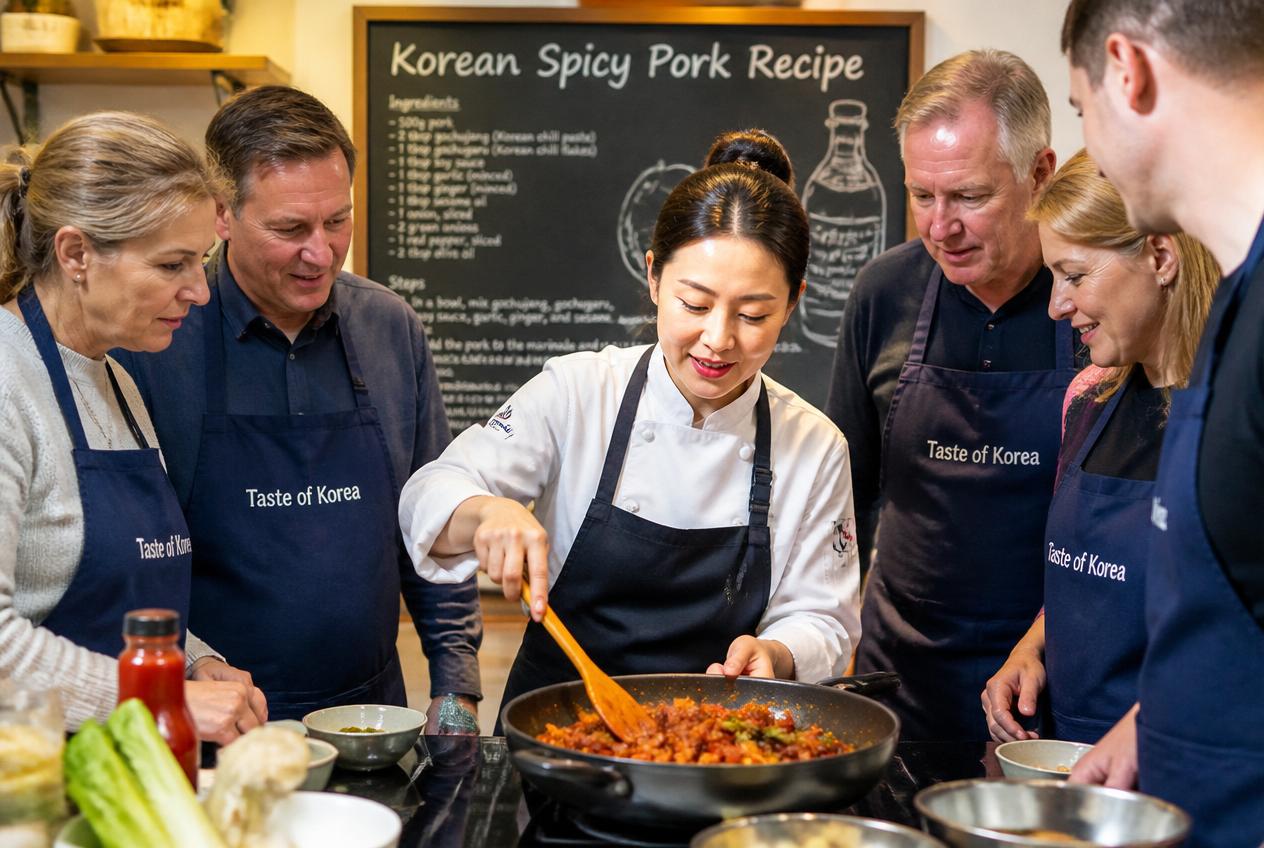
I still remember the first time Korean Spicy Pork bulgogi hit my tongue at this tiny neighborhood spot. The sizzling, fiery-red meat looked almost dangerous—honestly, it kind of was, but in the best way. One bite of that sweet, spicy, garlicky pork and I was completely obsessed. Korean Spicy Pork just does that to you.
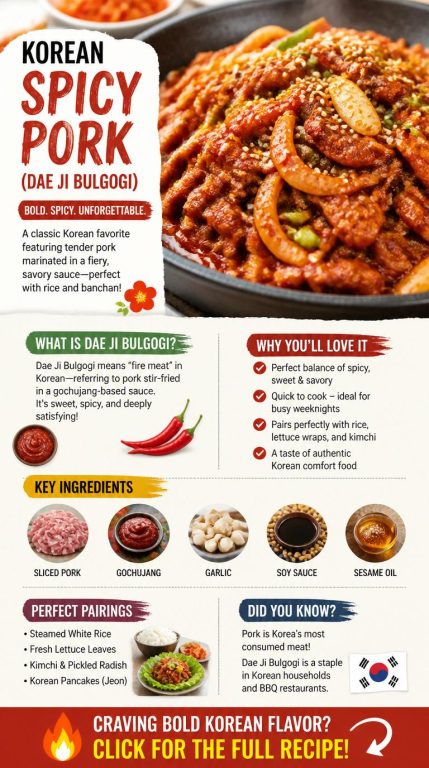
Dae Ji Bulgogi is a classic Korean BBQ dish. You marinate thinly sliced pork in a spicy-sweet sauce made with gochujang (Korean red chili paste), soy sauce, garlic, and ginger, then grill or stir-fry until it gets deliciously caramelized. This Korean Spicy Pork brings bold, tingly flavors that keep you coming back for more. I love it wrapped in lettuce with rice, but sometimes I just eat it straight off the grill because patience is overrated.
The beauty of Korean Spicy Pork is how easy it is to make at home once you get the hang of a few basics. After years of trial and error, I’ve finally nailed my recipe, and I’m excited to share what I’ve learned about cooking this Korean barbecue favorite right in your own kitchen.
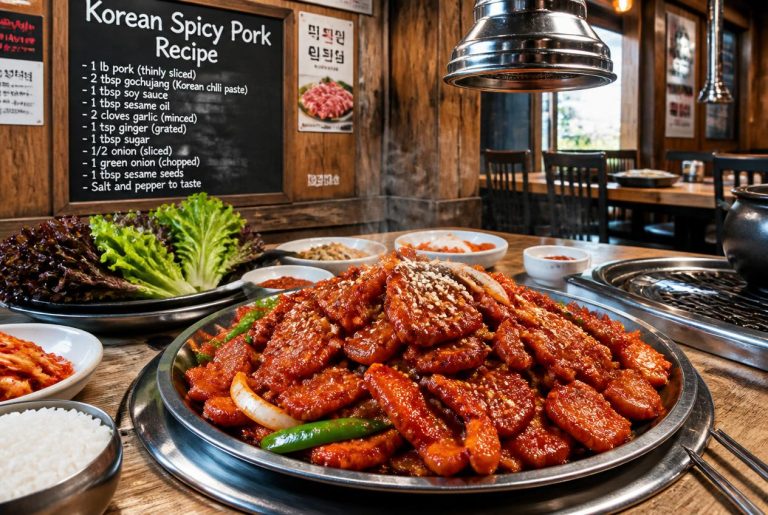
Korean Spicy Pork Recipe
Key Takeaways
- Dae Ji Bulgogi uses a gochujang-based marinade for that perfect spicy, sweet, and savory balance
- You can grill, pan-fry, or stir-fry the dish—whatever works for you
- Good storage and reheating keep your Korean Spicy Pork tasting awesome for days
A Glimpse Into Spicy Pork’s Past: Description and Historical Information
Honestly, when I first heard someone say “dwaeji bulgogi”, I thought it was just a funny word. Turns out, this Korean barbecue dish is one of the most crave-worthy things in Korean food.
The name means “pork fire meat,” which is honestly way cooler than it sounds. Beef bulgogi usually gets the spotlight, but daeji bulgogi (sometimes spelled dwaejibulgogi) is its spicy, rebellious cousin. Korean Spicy Pork is the one that brings the heat.
Here’s why this dish is such a standout:
- Main ingredient: Thinly sliced pork shoulder or belly
- Key marinade base: Gochujang (Korean red chili paste)
- Flavor profile: Sweet, spicy, garlicky, and smoky
- Cooking method: Grilled over fire or cooked on a stovetop
Korean Spicy Pork became popular in Korea as a cheaper alternative to beef bulgogi. Pork was affordable and easy to find, so it became a weeknight favorite. That gochujang-based marinade with garlic and ginger became the signature move.
Unlike beef bulgogi, Korean Spicy Pork brings some serious heat. Someone in Korea decided pork needed a flavor punch, and wow, they delivered. The marinade softens the meat and infuses every bite with layers of flavor that just work.
I love that Korean Spicy Pork proves you don’t need fancy stuff to make something unforgettable. Just thin pork, a killer marinade, and some fire.
Sizzling Success: Tips for Making Dae Ji Bulgogi
If you want amazing Korean Spicy Pork, start with super thin meat. Seriously, thin pork is non-negotiable here. I always freeze my pork for about 30 minutes before slicing—it makes life so much easier, and your knife skills will look top-notch.
Marinade ingredients I never skip:
- Gochujang (the spicy magic)
- Maesil cheong (Korean plum syrup for sweetness)
- Soy sauce
- Garlic and ginger
- Sesame oil
I marinate my pork for at least 2 hours. Overnight? Even better. The Korean Spicy Pork soaks up all those flavors and gets super tender.
When it’s time to cook, I turn up the heat—high heat gives you those charred, irresistible edges that make Korean Spicy Pork totally addictive. Don’t crowd the pan or grill. Let each piece sizzle and get a little crispy.
To finish, I sprinkle toasted sesame seeds on top. They add a nutty crunch that just works with the spicy, sweet sauce.
Want to impress? Serve your Korean Spicy Pork on a sizzling hot plate. It looks dramatic, and everyone will think you’re a Korean BBQ genius—even though this recipe is honestly pretty easy.
Regional Twists on Spicy Pork
I’ve noticed that jeyuk bokkeum gets all kinds of regional spins in Korea. Some places load up on gochugaru, others go for a sweeter version that won’t burn your face off.
The fun really starts with how people serve Korean Spicy Pork. Some families love wrapping it in perilla leaves (kkaennip), which adds a minty, herbal note. Others stick to lettuce for their ssam, making little bundles of goodness.
The banchan (side dishes) change a lot, too. Here’s what I’ve seen paired with Korean Spicy Pork:
- Seoul area: Kimchi, pickled radish, soybean sprouts
- Busan region: Raw garlic cloves, spicy pickled cucumbers, seaweed salad
- Jeolla Province: Extra kimchi, seasoned spinach, dried anchovies
Some places pile on ssamjang (that thick, savory-sweet paste), while others skip it because the pork is already spicy. In the north, people toss more veggies into the pan, making it a heartier meal. Down south, you might even find seafood mixed in, which sounds odd but totally works.
Everyone has their own opinion about what belongs with Korean Spicy Pork. I’ve learned there’s really no wrong way to enjoy dae ji bulgogi—though I’m sure some grandmas would argue with me.
How to Store and Reheat Like a Pro
I always make extra Korean Spicy Pork because it’s even better the next day. Don’t believe me? Try it.
How I store it:
- Let the pork cool to room temp first
- Pop it into an airtight container
- Keep it in the fridge for up to 3-4 days
- Don’t leave it out on the counter—trust me, I’ve made that mistake
If you leave Korean Spicy Pork uncovered in the fridge, it dries out and gets sad. No one wants sad pork.
Reheating methods:
| Method | Time | Result |
|---|---|---|
| Microwave | 1-2 minutes | Fast and easy |
| Stovetop | 3-5 minutes | Best texture |
| Oven | 10 minutes at 350°F | Even heating |
I usually reheat Korean Spicy Pork on the stovetop. I add a splash of water or oil to keep it juicy. The microwave works if I’m in a hurry, but the meat can get a little chewy. Stir halfway to avoid cold spots.
Pro tip: Sometimes I toss in fresh veggies while reheating—bell peppers and onions are awesome. The pork actually soaks up more marinade flavor overnight, so leftovers can taste even better than the first time. It’s kind of magic, or maybe just science, but either way, it’s delicious.
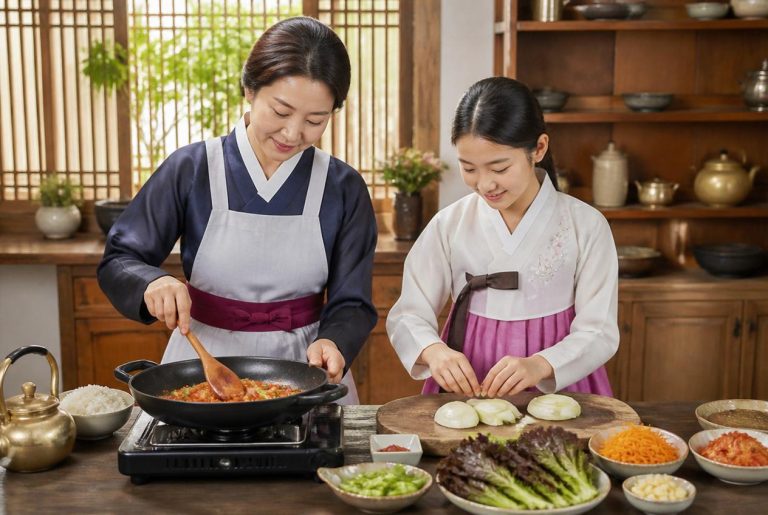
Korean Spicy Pork Recipe – Prep
Cooking Tips For the Korean Spicy Pork (Dae Ji Bulgogi)
• Slice the pork thinly so it cooks quickly and evenly.
• Marinate the pork long enough for the seasoning to distribute throughout the meat.
• Cook over medium-high heat for better browning and caramelization.
• Avoid overcrowding the pan because excess moisture reduces browning.
• Stir frequently during cooking for even texture and color.
• Add vegetables in stages if included so they cook properly.
• Taste before serving and adjust seasoning carefully if needed.
• Serve the pork hot for the best texture and flavor balance.
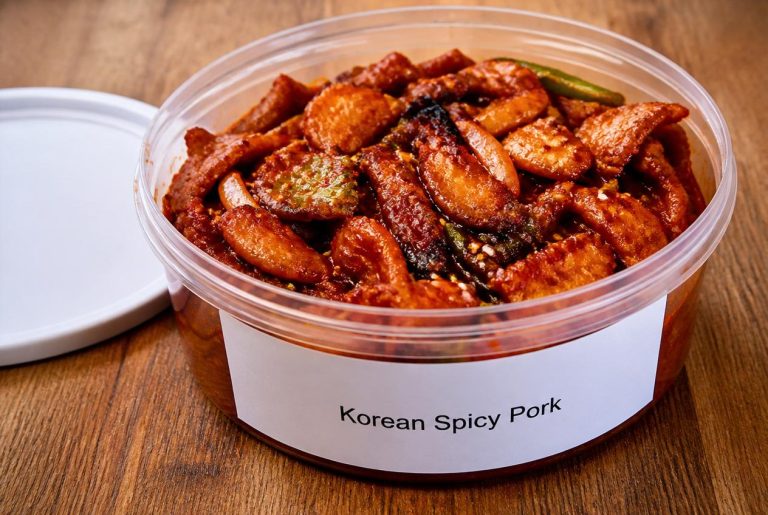
Korean Spicy Pork Recipe – Storage
Storage Tips For the Korean Spicy Pork (Dae Ji Bulgogi)
• Allow the pork to cool slightly before placing it into storage containers.
• Store leftovers in airtight containers to help retain moisture and flavor.
• Refrigerate leftovers within 2 hours of cooking for proper food safety.
• Reheat gently over medium-low heat while stirring occasionally.
• Add a splash of broth or water during reheating if the pork becomes dry.
• Keep rice, lettuce wraps, and garnishes separate until serving time.
• Freeze portions in freezer-safe containers for up to 3 months if needed.
• Wrap portions tightly before freezing to help reduce freezer burn and moisture loss.
• Thaw frozen pork overnight in the refrigerator before reheating.
• Discard the pork if it develops a sour smell, slimy texture, discoloration, mold, or unusual taste.
Korean Spicy Pork (Dwaeji Bulgogi)
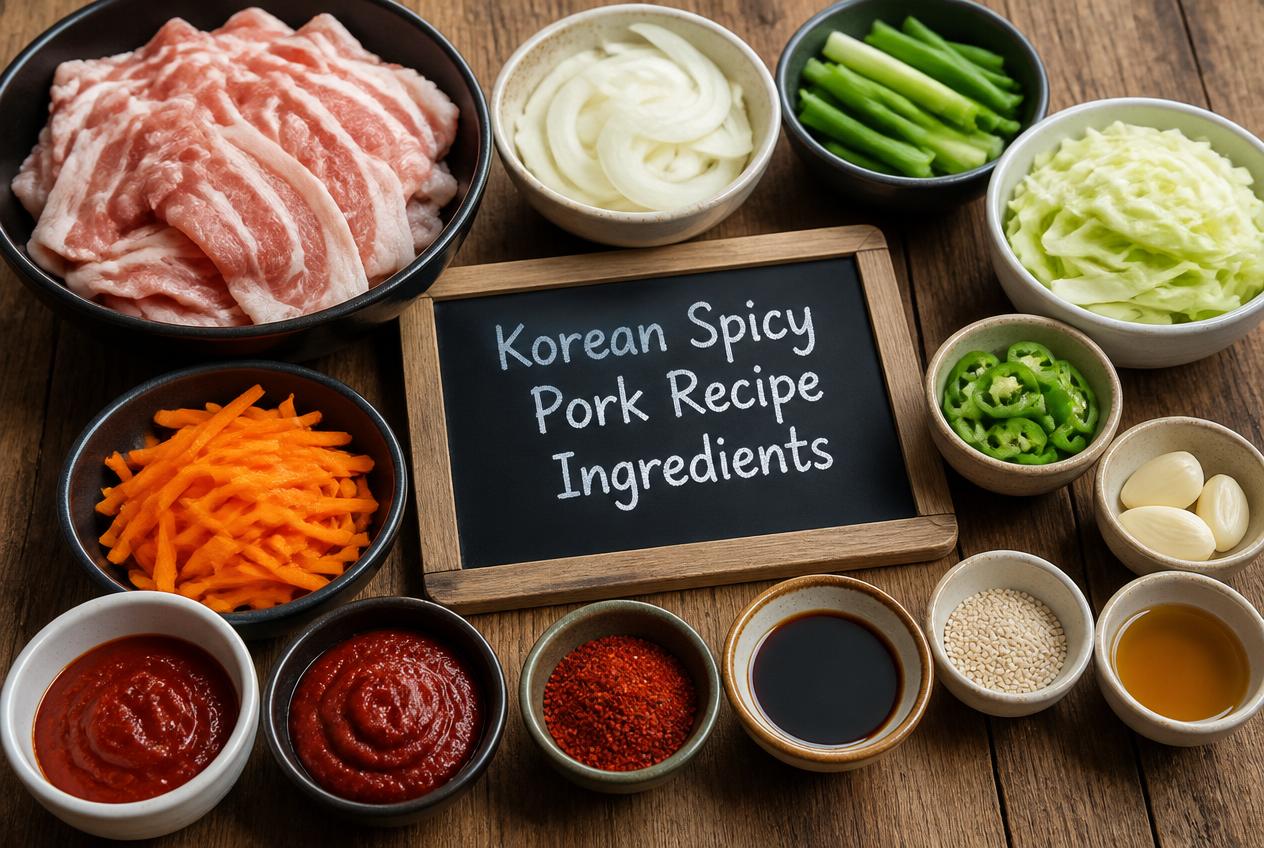
Ingredients
- 1 pound pork belly sliced thinly into pieces ½ inch x 2 inches and ⅛ inch thick
- ½ cup pear of crushed Korean aka “Asian pear”
- ¼ cup onion purée
- 4 cloves garlic minced
- ½ tsp ginger of minced
- 1 green onion chopped
- 1 tbs soy sauce
- 1 tbs sugar
- 1½ tbs rice syrup or 2 tbs brown sugar
- pinch black pepper ground
- 2 tsp sesame oil toasted
- 3 tbs pepper paste hot
Instructions
- Cook the marinated pork on a grill, in a skillet, in a stir-fry pan, or on a barbecue over medium-high heat. Avoid excessively high heat, as the marinade can burn before the pork is fully cooked. Cook until the pork is browned, caramelized in spots, and cooked through.
- Arrange the cooked pork with rice, lettuce leaves, ssamjang, sliced garlic, and green chili peppers. If desired, add perilla leaves, kimchi, or other banchan alongside the meal.
- To enjoy the pork Korean-style, place a piece of pork onto a lettuce leaf and a perilla leaf if using. Add a small amount of garlic, green chili pepper, and ssamjang. Wrap the leaf around the fillings and eat in a single bite. Keep the wraps small enough to comfortably enjoy as intended.
Frequently Asked Questions for the Korean Spicy Pork (Dae Ji Bulgogi)
Pork shoulder and gochujang are the backbone of great Korean Spicy Pork, but getting the spice level right and picking between a grill or skillet can make or break your BBQ night.
What cut of pork works best so your spicy BBQ dreams don’t turn into chewy sadness?
I always grab pork shoulder for Korean Spicy Pork. It’s got enough fat to stay juicy and tender when you cook it hot and fast. Slice it thin, about 1/4 inch, so the marinade soaks in and it cooks quickly.
Pork belly is my backup if I want something extra rich. It melts in your mouth and stands up to the bold flavors in Korean Spicy Pork.
Pork loin is leaner, so it works if you’re watching calories, but you’ll need to watch it closely so it doesn’t dry out. Trust me, overcooked loin is not what you want in Korean Spicy Pork.
How spicy is this dish supposed to be—’pleasant tingle’ or ‘call the fire department’?
The heat in Korean Spicy Pork lands somewhere between “oh, that’s nice” and “give me more rice, please.” It’s not meant to destroy you, just wake up your taste buds.
Most recipes use gochugaru and gochujang for a layered, warm heat—not just pure fire. I’d call it medium spicy for most folks.
You can dial the burn up or down by changing how much gochugaru and gochujang you put in your Korean Spicy Pork marinade. If you’re new to Korean food, start with less and add more as you get braver. Korean Spicy Pork is all about finding your perfect level of heat.
Which marinade ingredients are non‑negotiable, and which ones can be swapped without angering the Korean BBQ gods?
Gochujang sauce? Yeah, that’s absolutely non-negotiable for Korean Spicy Pork. Honestly, it’s the heart and soul of the whole thing. That sweet-spicy-savory punch is what makes Korean Spicy Pork so addictive, and without it, you just won’t get the same vibe.
Soy sauce, garlic, and ginger—those are must-haves too. They lay down the base, and everything else just kind of joins the party from there. Korean Spicy Pork really shines because of these core flavors.
When it comes to sweeteners, I’ve played around with sugar, honey, or brown sugar, and they all work. Sesame oil? It adds a ton of flavor, but you can cut back if you want. Rice wine is classic, but honestly, I’ve swapped in mirin or even a splash of apple juice when that’s all I had. Korean Spicy Pork is forgiving like that.
How long should the pork marinate before it goes from ‘meh’ to ‘wow, who made this’?
If I’m short on time, I let my Korean Spicy Pork marinate for at least 30 minutes. The thin slices soak up the flavors pretty fast, way quicker than bigger cuts ever could.
But if you can, let it go for two to four hours. That’s when the gochujang and garlic really get in there, and every bite of Korean Spicy Pork just pops. It’s honestly worth the wait.
Sometimes, I marinate overnight if I’m planning ahead, but I try not to go past 24 hours. Any longer, and the Korean Spicy Pork can get a bit mushy, which nobody wants.
Can you cook it without a grill (skillet/oven/air fryer), or is that culinary heresy?
I actually cook dwaeji bulgogi—or Korean Spicy Pork—in a cast-iron skillet more than on the grill. Cast iron gets crazy hot and gives Korean Spicy Pork that caramelized edge that’s so good.
If you’ve only got a non-stick pan, don’t stress. It works for Korean Spicy Pork, though you might not get as much char. Just crank up the heat before tossing in the pork.
Honestly, air fryers blew my mind with this dish. Korean Spicy Pork gets crispy on the edges but stays juicy inside. I’ve even baked Korean Spicy Pork at 425°F when I needed to feed a crowd. Sure, you lose a little smokiness, but it’s still delicious. Korean Spicy Pork is one of those dishes that just works, no matter how you cook it.
What does the Korean name for this dish actually mean, and why does it sound like a superhero?
“Daeji” (or “dwaeji”) just means pork in Korean. “Bulgogi” is “fire meat,” which, let’s be honest, totally sounds like something a superhero might shout while charging into battle. I mean, who wouldn’t want to try Korean Spicy Pork with a name like that?
So, daeji bulgogi is basically “pork fire meat.” That’s a way cooler name than just calling it “spicy grilled pork,” right? It pretty much sums up the whole vibe—meat, fire, and a ton of flavor. Korean Spicy Pork just has this energy that jumps out at you.
Some folks call it jeyuk bokkeum, especially if you’re stir-frying instead of grilling. The flavor’s still all there, just a little twist on how you cook it. Either way, Korean Spicy Pork brings the heat and the taste, no matter what you call it.

Recipes are gathered in person and written for real-world cooking conditions.
- 10 Hungarian Dessert Recipes Passed Down Through Generations - July 25, 2026
- 11 Easy English Recipes Anyone Can Make - July 25, 2026
- Hungarian Kifli Recipe - July 25, 2026