
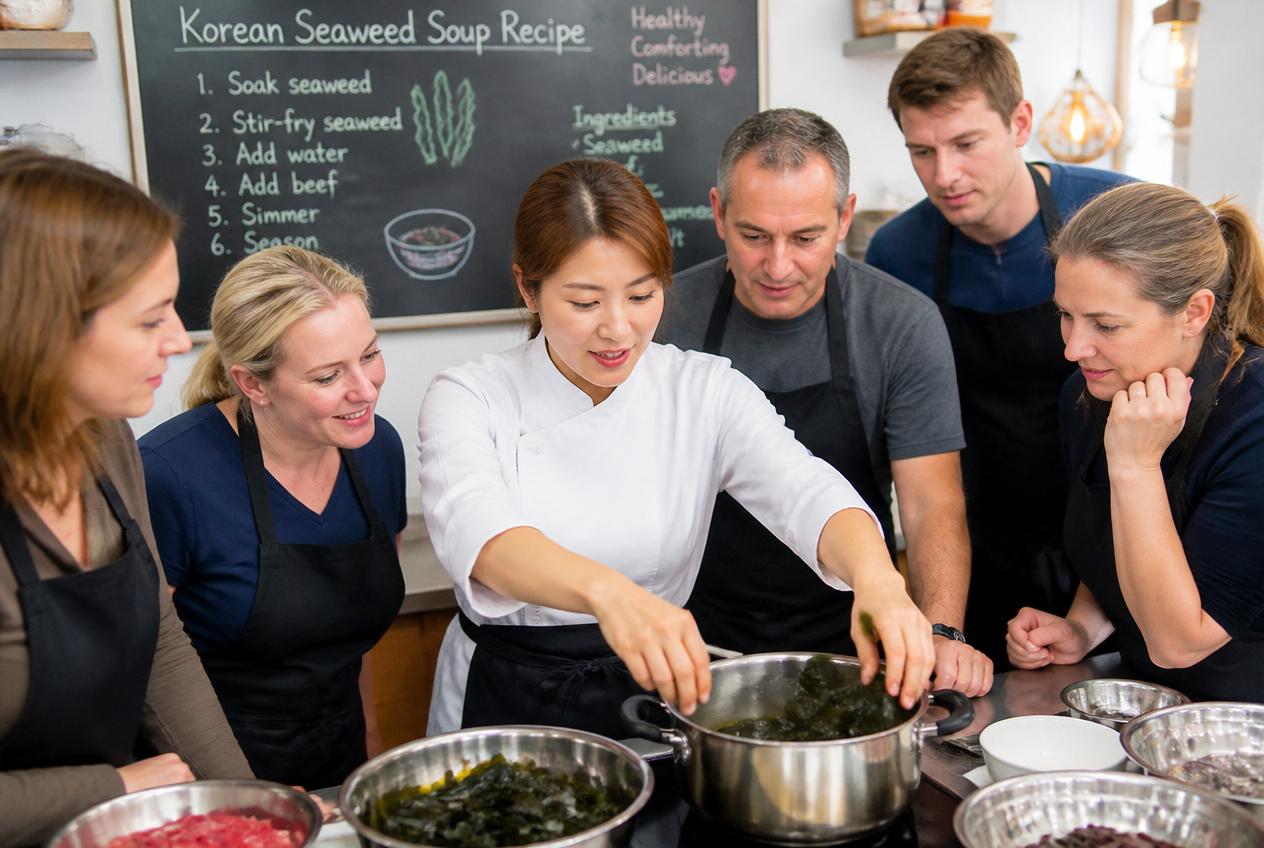
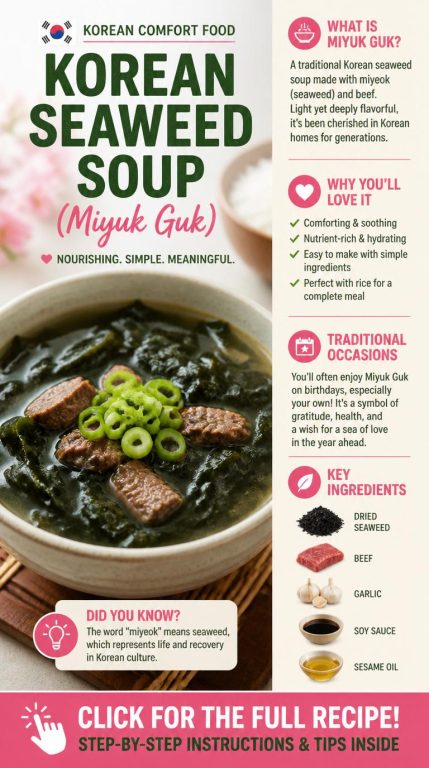
Korean seaweed soup, or miyuk guk, is one of those comfort foods that just feels like home. I’ve always thought it’s kind of wild how this humble soup made from miyeok (brown seaweed) turned into Korea’s go-to birthday dish. Korean Seaweed Soup is eaten on birthdays to honor your mom and by women after childbirth because it’s loaded with iodine, iron, and calcium.
The soup isn’t complicated. You just toss rehydrated dried seaweed and some protein like beef or seafood into a pot with garlic, sesame oil, and a dash of seasoning. Korean Seaweed Soup doesn’t rely on anything fancy. Instead, it’s the meaning behind it and, honestly, the fact that it’s both tasty and ridiculously good for you.
Okay, I get it—slurping a bowl of dark green seaweed might not sound like a party. But if you know the story behind this Korean soup tradition and pick up a few tricks, you might start craving Korean Seaweed Soup even when it’s not your birthday.
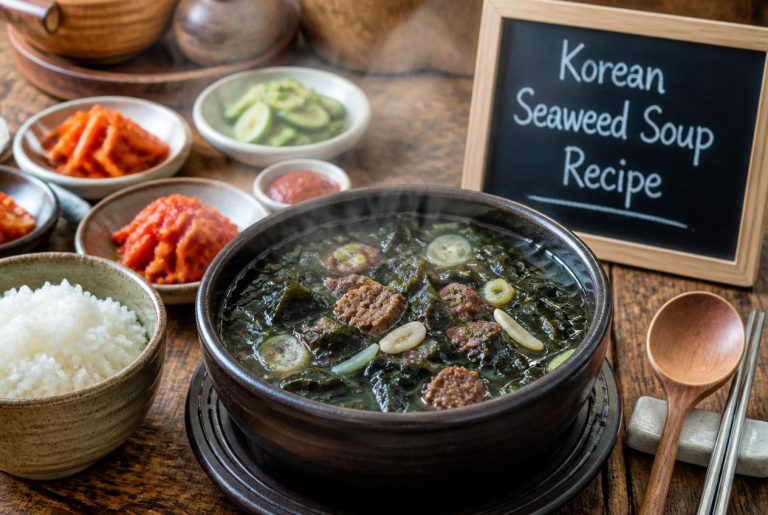
Korean Seaweed Soup Recipe
Key Takeaways
- Korean Seaweed Soup is a birthday and postpartum tradition because of its health benefits
- The soup uses dried seaweed, protein, sesame oil, and light seasonings to deliver a big umami punch
- Regional twists and storage hacks make it easy to enjoy Korean Seaweed Soup at home
History, Lore, And Questionable Legends Of Miyuk Guk
I’ve got to share the backstory of this birthday soup tradition—it’s honestly pretty heartwarming. Korean moms eat Korean Seaweed Soup after giving birth because it’s packed with calcium and iodine. Over time, serving this Korean birthday soup became a way to thank your mom on your birthday.
There’s more to it, though. Folklore says people would leave miyeok guk by a pregnant woman’s pillow before her due date, hoping for a safe delivery. Basically, they were trying to sweet-talk the childbirth goddesses, Samshin Halmoni, with soup.
Why is Korean Seaweed Soup special?
- Packed with nutrients—iodine, iron, calcium, folate, magnesium, and fiber
- Simple ingredients—just seaweed, protein, and light seasoning
- Cultural meaning—it’s a nod to your mom’s sacrifice
I find it kind of funny that while the rest of the world obsesses over birthday cakes, Koreans start their special day with a bowl of Korean Seaweed Soup. It’s the ultimate “Don’t forget your mom!” meal. “Remember when I brought you into this world? Here, have some soup.”
I think the tradition stuck around because Korean homes had ondol heating, so hot soup just made sense, especially in winter. Slurping down the same nutritious soup your mom ate after childbirth? That’s love, if you ask me.
Nifty Cooking Tips For Not Ruining Your Korean Seaweed Soup
Let me save you from a kitchen disaster: dried miyeok expands like crazy. Start with less seaweed than you think you’ll need—seriously, Korean Seaweed Soup can go from perfect to “seaweed invasion” in minutes.
Always soak your wakame or dried seaweed for at least 30 minutes before cooking. Trust me, if you skip this, you’ll end up chewing on tough, stringy bits that nobody wants in their bowl of Korean Seaweed Soup.
Here’s what I never forget anymore:
- Sauté the seaweed in sesame oil first for a richer, deeper flavor
- Add minced garlic early to let it infuse the broth
- Pick regular or soup soy sauce, depending on how dark you like your Korean Seaweed Soup
When you season your Korean Seaweed Soup, take it slow. You can always add more soy sauce or fish sauce, but you can’t undo too much salt.
I don’t dry my rehydrated seaweed all the way. Leaving a bit of water helps it blend with the sesame oil when you sauté, which makes the base of Korean Seaweed Soup even better.
If you’re new to Korean cooking, skip the fish sauce if you’re not sure you’ll like it. Soy sauce alone can build that classic savory flavor in Korean Seaweed Soup.
One big mistake? Boiling the soup too hard. Keep it at a gentle simmer so the seaweed stays tender and doesn’t break into tiny bits. Korean Seaweed Soup should have silky pieces floating around, not a seaweed confetti mess.
Wild And Wacky Regional Miyuk Guk Interpretations
Turns out, Korean Seaweed Soup isn’t just one thing across Korea. Different regions have their own takes, and some of them are honestly pretty wild.
Coastal Variations That Surprised Me
In seaside towns, cooks swap beef broth for seafood. Some make Korean Seaweed Soup with clam broth, others go all out with oysters or sea urchin. The seaweed stays, but the ocean flavor gets turned way up.
On Jeju Island, they use abalone in their Korean Seaweed Soup. Abalone! It’s like the fanciest version—makes me feel underdressed just thinking about it.
Inland Twists
Move away from the coast and you’ll find some regions sneak in mushrooms or even vegetables like radish or zucchini. Purists might freak out, but I think it keeps Korean Seaweed Soup interesting.
Broth bases change too. Some families use anchovy stock instead of beef, which completely changes the flavor. I wasn’t ready for that the first time I tried it, but now I kind of like the variety in Korean Seaweed Soup.
The Spicy Rebels
Most Korean Seaweed Soup is mild, but some people add gochugaru or even kimchi juice. It’s a bit controversial, but honestly, spicy Korean Seaweed Soup is delicious.
Stash It Like A Pro: Bones, Broth, And Beyond
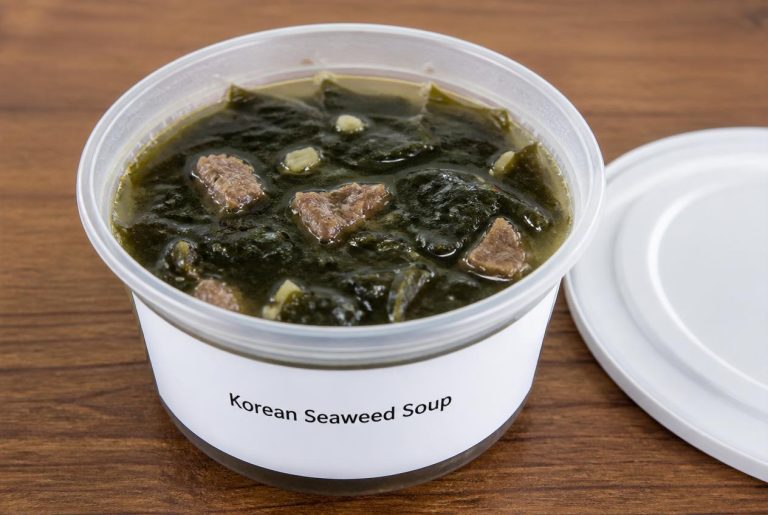
I’ll be real—Korean Seaweed Soup doesn’t last forever in the fridge, no matter how much I wish it did. If you store it right in an airtight container, you get about three to four days before it starts going weird.
Here’s how I keep Korean Seaweed Soup fresh:
| Storage Method | Duration | My Notes |
|---|---|---|
| Refrigerator | 3-4 days | Keep seaweed and broth together |
| Freezer | 2-3 months | I freeze in single portions |
| Broth only | 5-6 days refrigerated | Add fresh seaweed when reheating |
Let the soup cool down completely before stashing it away. Hot soup in a sealed container just leads to a science experiment in your fridge, and nobody wants that.
For freezing, I like portioning Korean Seaweed Soup into individual containers. That way, I can just grab one serving instead of defrosting a whole pot. Leave a little space at the top since liquids expand when frozen.
After freezing, the seaweed texture changes a bit, but honestly, the flavor of Korean Seaweed Soup still hits the spot for me.
If I’m meal prepping, sometimes I freeze just the broth and keep dried seaweed handy. It’s flexible, and I can always toss in leftover steamed rice from the fridge for a quick meal when I reheat Korean Seaweed Soup.
When I want a bowl, I reheat it on the stove over medium heat until it’s steaming. The microwave works, but I think the soup tastes better from the stovetop.

Korean Seaweed Soup Recipe – Prep
Cooking Tips For the Korean Seaweed Soup (Miyuk Guk)
• Soak the seaweed fully before cooking so it softens evenly.
• Drain and rinse the seaweed if needed to remove excess salt.
• Sauté the seaweed briefly before adding liquid to help build flavor.
• Simmer the broth gently so the ingredients remain tender.
• Add protein ingredients early enough to allow their flavor to infuse the broth.
• Stir occasionally during cooking to help distribute ingredients evenly.
• Taste before serving and adjust seasoning carefully if needed.
• Serve the soup hot for the best texture and flavor balance.
Korean Seaweed Soup Recipe – Storage
Storage Tips For the Korean Seaweed Soup (Miyuk Guk)
• Allow the soup to cool slightly before transferring it into storage containers.
• Store leftovers in airtight containers to help retain moisture and flavor.
• Refrigerate leftovers within 2 hours of cooking for proper food safety.
• Reheat slowly over medium-low heat while stirring occasionally.
• Add a splash of broth or water during reheating if needed.
• Keep garnishes separate until serving time for fresher appearance.
• Freeze portions in freezer-safe containers for up to 3 months if needed.
• Leave a little space at the top of containers because soups expand when frozen.
• Thaw frozen miyuk guk overnight in the refrigerator before reheating.
• Discard the soup if it develops a sour smell, slimy texture, discoloration, mold, or unusual taste.
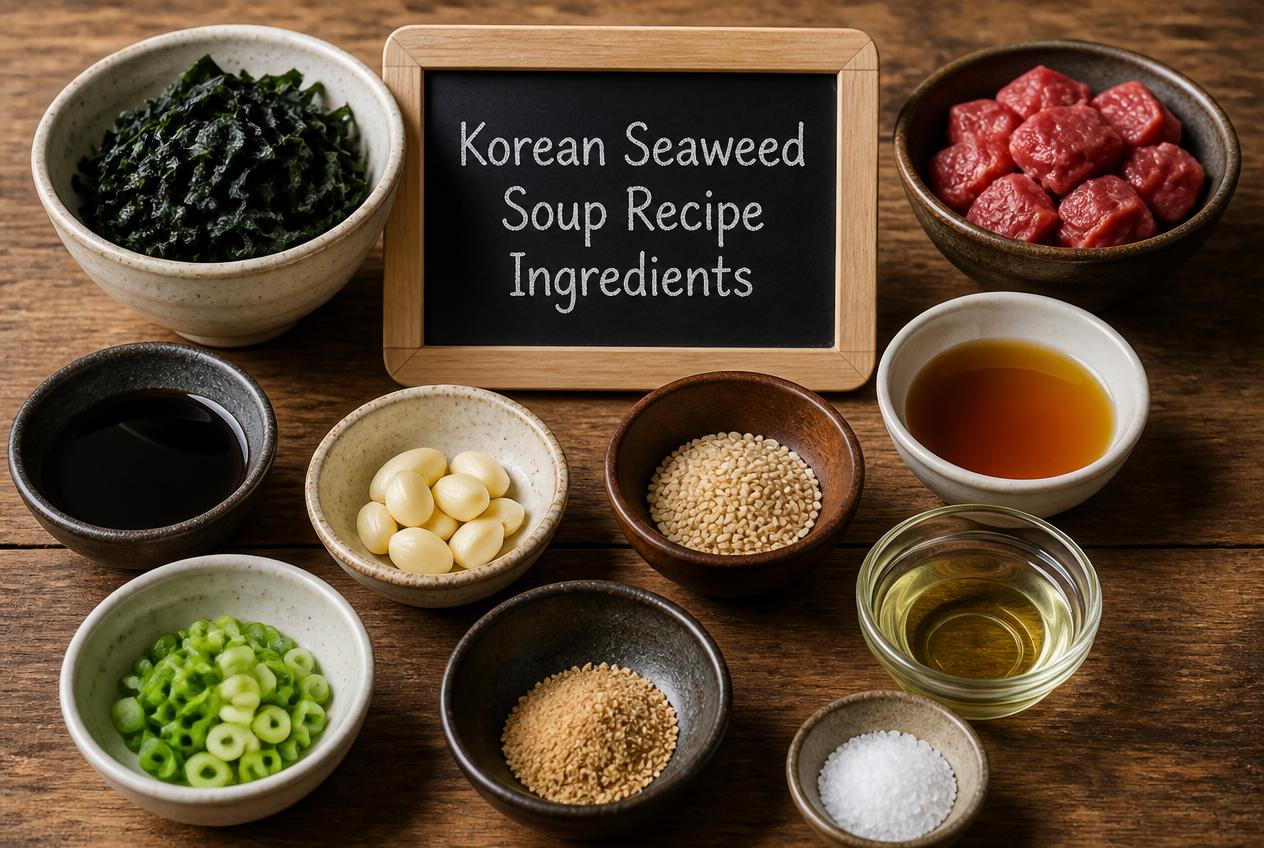
Korean Seaweed Soup (Miyuk Guk)
Ingredients
- 0.5 ounces seaweed dried, Miyeok / wakame
- 4.2 ounces beef chuck or round steak, sliced into smaller pieces
- 1/4 tsp sea salt fine grind, or more to taste
- black pepper to taste
- 1 Tbsp sesame oil
- 1 1/2 Tbsp soy sauce
- 1 tsp garlic minced
- 5 cups water
Instructions
- Soak the dried seaweed in cold water for 5 to 10 minutes, allowing it to fully expand and soften. Once rehydrated, drain away the soaking water and rinse the seaweed several times under running water to remove any excess residue. Gently squeeze out the excess moisture before setting it aside. If the seaweed is not already cut into smaller pieces, use kitchen scissors to cut it into short lengths that are easy to eat.
- Place the sliced beef in a small bowl and season it with the salt and black pepper. Mix well so the seasoning is evenly distributed throughout the meat. Set the beef aside while preparing the soup.
- Preheat a medium pot over medium heat for about 20 seconds. Add the sesame oil, followed by the prepared seaweed and seasoned beef. Stir everything together and cook for about 2 minutes, or until the beef is partially cooked. Add the soy sauce, garlic, and water, then stir to combine. Cover the pot and bring the soup to a boil over medium to medium-high heat. Continue cooking for 10 to 15 minutes, or until the beef is fully cooked and the flavors have blended together. Taste the broth and adjust with additional salt if needed.
- Serve the soup warm alongside steamed rice and your favorite Korean side dishes. The mild, savory broth pairs especially well with simple accompaniments and is best enjoyed while hot.
Frequently Asked Questions for the Korean Seaweed Soup (Miyuk Guk)
Korean Seaweed Soup brings up a lot of questions, from birthday traditions to making it meatless. Here are the answers to the stuff people ask most when they want to try this soup at home.
Why do Koreans eat seaweed soup on birthdays—aren’t candles enough?
In Korea, Korean Seaweed Soup is the birthday soup because it’s linked to new mothers. Women eat this soup after childbirth since seaweed is full of nutrients for recovery.
Eating it on your birthday is a way to honor your mom and the day she brought you into the world. It’s like saying “thanks, Mom” with soup instead of cake. And honestly, it’s a lot more meaningful.
How do I make Seaweed Soup at home without making a mess?
The trick is to soak dried seaweed in a big bowl—not your soup pot. Dried seaweed expands a ton in water, sometimes up to 10 times its size. The soup can overflow if you’re not careful.
I always use a roomy bowl and soak the seaweed for about 30 minutes. Once it’s soft, I squeeze out the extra water before tossing it in the pot. That way, I avoid a seaweed takeover in my kitchen and my soup comes out just right.
What ingredients do I need for Korean Seaweed Soup (besides a sense of adventure)?
You’ll need dried miyeok seaweed, which you can find at Asian grocery stores or online. For the broth, I use beef or anchovy stock, garlic, sesame oil, and soy sauce.
Most classic recipes use beef brisket or sirloin, cut into small pieces. Salt to taste, and maybe a splash of fish sauce if you want more umami. The key ingredients make Korean Seaweed Soup comforting and surprisingly complex even though it’s so simple.
Can I make seaweed soup vegetarian or vegan without it tasting like warm seawater?
I’ve made this a vegan recipe plenty of times, and honestly, it’s totally doable. The trick is to build up flavor with other ingredients, not just rely on meat. Sometimes, I’m surprised by how much depth you can get.
You can cook garlic, shiitake mushrooms, and seaweed together, then simmer everything in vegetable broth with a splash of soy sauce. I always toss in a spoonful of gochugaru (Korean red pepper flakes); it brightens up the recipe and ties all the flavors together. The mushrooms give that savory, rich depth, so the soup never ends up tasting watery or flat. If you’re worried about blandness, don’t be—there’s so much umami here.
How do I make seaweed soup with chicken if beef isn’t invited to dinner tonight?
Chicken actually works really well in this recipe, if you treat it right. I prefer boneless chicken thighs over breast—they stay juicy and add more flavor to the soup broth. It’s just a better texture, honestly.
Chop the chicken into small, bite-sized pieces, then sauté them in sesame oil with the soaked seaweed. That step matters because it builds a lot of flavor right from the start. After that, just add your broth and simmer everything for about 20 minutes. The chicken cooks through, and the soup turns out rich and satisfying. I find myself craving this version of Seaweed Soup more often than I expected.
If you’re looking for a comforting, nourishing bowl, Korean Seaweed Soup is a classic for a reason. Whether you go vegan or use chicken, Seaweed Soup always brings some warmth to the table. Don’t forget to taste as you go—Korean Seaweed Soup is all about finding that balance. And honestly, who doesn’t want an excuse to eat more soup?
How do I make seaweed soup with no meat but still get that rich, cozy flavor?
If you want a meatless soup that doesn’t end up bland or boring, mushrooms are the way to go—especially shiitakes. Honestly, they bring this earthy, almost beefy vibe that just works. I mean, who needs meat when you’ve got mushrooms like these?
For the broth, I like to toss in some kombu (kelp). It adds that natural umami kick, so you don’t miss out on depth. Before pouring in any water, I always sauté the seaweed in sesame oil. Trust me, it makes the soup taste so much better. Oh, and garlic? Absolutely don’t skip it. I usually throw in a generous splash of soy sauce too, just to bring everything together. The Seaweed Soup really shines when you layer those flavors.
Sometimes, I wonder if I’m overthinking it, but honestly, the combo of mushrooms, kombu, sesame oil, and a bit of garlic really brings the soup to life. If you’re craving comfort food without the heaviness, the Seaweed Soup is perfect. I make it whenever I want something cozy but light. You can play around with the recipe, but these basics never fail me. Seriously, once you get the hang of it, Seaweed Soup becomes one of those dishes you crave on chilly days. And if you haven’t tried it yet, why not give it a shot this week?

Recipes are gathered in person and written for real-world cooking conditions.
- 10 Hungarian Dessert Recipes Passed Down Through Generations - July 25, 2026
- 11 Easy English Recipes Anyone Can Make - July 25, 2026
- Hungarian Kifli Recipe - July 25, 2026