
Let’s dive right into the Hungarian Halászlé recipe, because honestly, few things hit the spot like a spicy, paprika-rich fisherman’s soup after a day exploring Budapest. I picked up the Halászlé recipe from an AirBnB host who doubled as a family cook, and he didn’t hold back on sharing the tricks he’d learned by the river. Carp and catfish, big scoops of paprika, onions, and peppers—he swore by simple ingredients and a heavy pot on an open flame. It’s a Hungarian Halászlé recipe you can make at home, and I’ll walk you through every step I learned in that tiny kitchen.
The guy, a fisherman-turned-cook, took me shopping at a lively market near the Danube. Fishmongers filleted carp and catfish right in front of us, and we grabbed sweet paprika and crusty river bread from the stalls. His kitchen was tiny, cluttered, and honestly perfect for learning the Hungarian Halászlé recipe: just a battered pot, a sturdy ladle, and a flame that always burned a bit too high. Timing, the right fish cut, and a good hand with spice—he insisted those made or broke the soup.
Below, I’ll lay out the Hungarian Halászlé recipe, the riverside stories he shared, and some hands-on tips that made all the difference. If you want to bring a bit of that riverside flavor home, these steps will get you there. Hungarian Halászlé recipe isn’t just about ingredients—it’s about tradition, improvisation, and honestly, a little bit of luck.
Recipe Descriptions and Historical Background
The Hungarian Halászlé recipe is basically a family of river fish soups, each one loaded with paprika and shaped by whoever’s stirring the pot. At its core, you’ll find onions, a heap of sweet Hungarian paprika, fresh fish—usually carp—and water or stock. Simmer it right, and the fish just flakes apart into that deep red broth.
There are two main styles of the Hungarian Halászlé recipe: Szeged and Baja. Szeged folks layer fillets for a rich, unified soup, while Baja cooks toss in bigger chunks and sometimes noodles. Both stick to the same Hungarian Halászlé recipe roots, but the rivalry is real. If you’re curious, check out this detailed look at Halászlé’s cultural roots.
Paprika runs the show in any Hungarian Halászlé recipe. It gives the soup that unmistakable color, a sweet-earthy aroma, and a backbone that doesn’t drown out the fish. The texture? Totally depends on your fish and timing. Tougher river fish hold up, while softer ones melt into the broth and thicken it a bit.
Traditionally, fishermen made the Hungarian Halászlé recipe outdoors, tossing whatever they caught into a kettle over fire. That’s why you’ll see so many versions—everyone uses what the river gives and what their family likes. I think that’s the best part, honestly.

Cooking Tips
For the Hungarian Halászlé recipe, I always hunt for the freshest carp or catfish. If you can, get the fish cleaned and skinned—makes the broth clearer and less fishy. It’s worth the hassle.
Start by browning a bunch of onions, then add paprika off the heat so it blooms but doesn’t burn. Trust me, burnt paprika is the worst thing you can do to a Hungarian Halászlé recipe.
Keep the simmer gentle. If you boil hard, the fish falls apart and the soup turns cloudy. I add tougher fish first, then slide in the delicate fillets at the end so they don’t disintegrate.
Taste as you go. Paprika can lose its punch if you cook too long, so I always add a bit more near the end if the color or flavor seems flat. A sprinkle of coarse salt and a dash of white pepper give the Hungarian Halászlé recipe a subtle kick.
If you’ve got access to an open fire, use it—smoky nuance makes the Hungarian Halászlé recipe shine. Otherwise, a heavy-bottomed pot on the stove does fine. I use a big spoon to ladle out fish and broth, trying to keep the pieces intact.
Serve the Hungarian Halászlé recipe with thick bread or boiled potatoes. I like to offer extra hot paprika or fresh parsley at the table so everyone can tweak their bowl. It’s the little touches that make it personal.
- Key timing tip for the Hungarian Halászlé recipe: add delicate fish in the last 5–7 minutes.
- Handle paprika with care—heat it quickly with fat, but never let it burn.
- For clear broth, skim the foam and keep the simmer low.
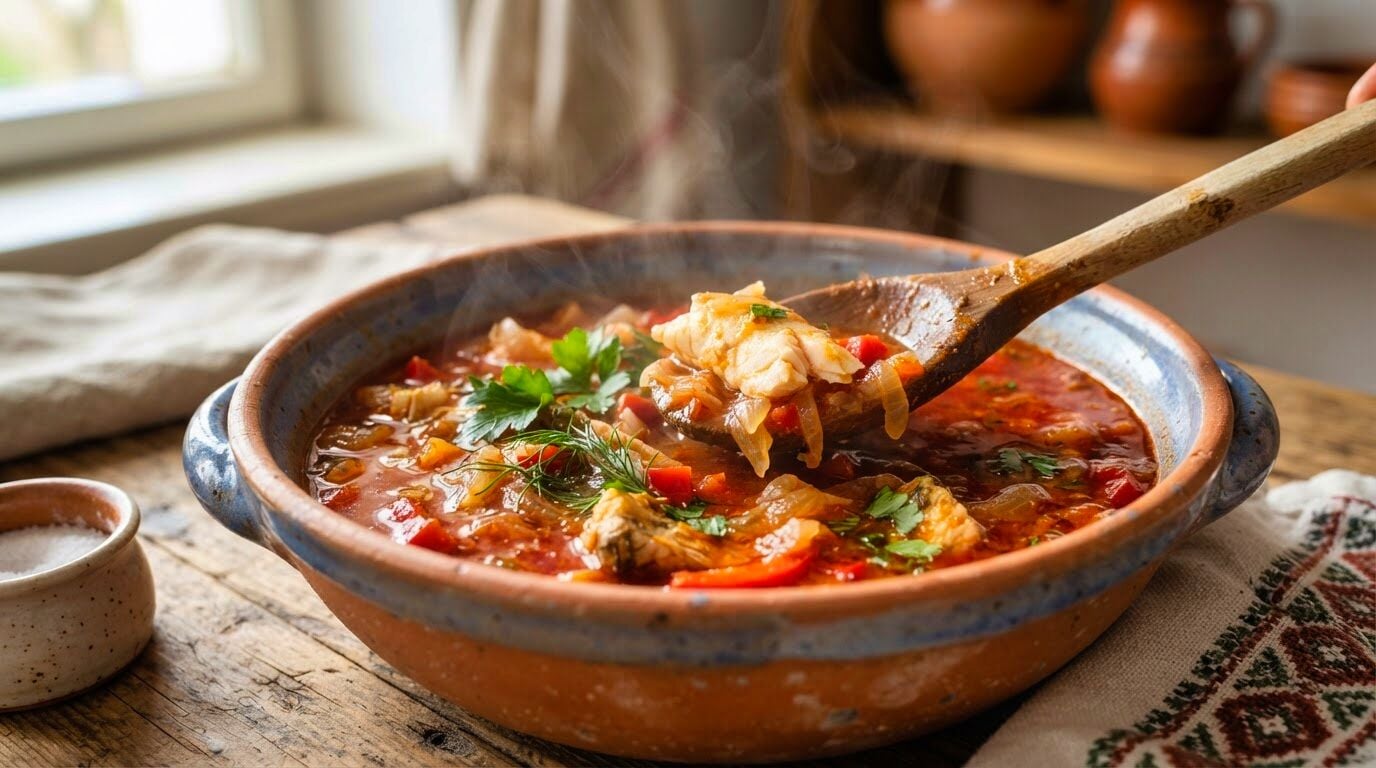
Hungarian Halászlé Recipe
Ingredients
- 4 ¼ cups carp for fillets
- 2 cups fish mixed
- 2 tablespoons paprika Hungarian sweet
- 1 handful parsley
- 4 pieces onions chopped
- 3 cloves garlic minced
- 10 cups water
- 1 teaspoon black pepper
- 1 teaspoon salt
Instructions
- Add the chopped onions to a large pot.
- Sauté for about 2 minutes.
- Stir in the minced garlic and continue cooking until the onions are soft and translucent.
- Clean and trim the fish.
- Keep the heads for the broth, but remove the eyes.
- Discard the tails and fins.
- Cut the fish into smaller pieces and separate them by use.
- Reserve the clean carp fillets for the finished soup.
- Use the bony pieces and the fillets from the smaller fish to prepare the stock.
- Remove the pot with the onions and garlic from the heat.
- Let it cool for about 2 minutes.
- Sprinkle in the Hungarian sweet paprika and stir well.
- Do not add the paprika while the onions are still sizzling, since excessive heat can make it bitter.
- Add the fish heads, bony pieces, and smaller fish to the paprika and onion mixture.
- Turn the pieces until evenly coated.
- Pour in about 2.5 liters, or roughly 10 cups, of water.
- Add the parsley, salt, and black pepper.
- Bring the mixture to a boil.
- Cover the pot and reduce the heat.
- Simmer gently for at least 40 minutes, or until the fish is extremely soft and beginning to fall apart.
- Pour the broth through a sieve.
- Using a large spoon, press the cooked onion and fish mixture through the sieve.
- Remove and discard all large bones and the fish heads, but first collect any tender flesh from the heads.
- Blend any larger soft pieces if needed.
- Press the smaller pieces through a fine sieve.
- Continue blending and straining until the broth is smooth, flavorful, and free of bones and solid pieces.
- Return the strained broth to the pot.
- Bring it back to a gentle boil, then reduce the heat.
- Add the sliced carp fillets.
- Simmer for about 10 minutes, or until the fish is tender and cooked through.
- Do not stir the soup with a spoon.
- Instead, gently move or swirl the pot every few minutes so the fish pieces remain intact.
- Carefully ladle the soup into bowls without breaking the carp fillets.
- This traditional Hungarian fish soup features a deeply flavored paprika broth made from slowly simmered fish, onions, garlic, and parsley. Fresh carp fillets are added at the end, creating a rich, warming soup with tender pieces of fish and a smooth, full-bodied base.
Frequently Asked Questions
If you’re new to the Hungarian Halászlé recipe, here are some practical answers about ingredients, fish choices, paprika, and serving traditions. I’ve fielded these questions while cooking and eating with locals.
What ingredients are traditionally used in Hungarian fisherman’s soup?
The Hungarian Halászlé recipe always starts with freshwater fish—usually carp, catfish, or pike-perch. Onions, sweet Hungarian paprika, bell pepper, and tomatoes form the broth’s heart.
Sometimes I toss in a bay leaf or black pepper. Some Hungarian Halászlé recipe versions add hot paprika or chili for extra heat. In certain regions, cooks even add carp roe or offal—depends on who’s cooking.
Which region of Hungary is Halászlé originally from?
The Hungarian Halászlé recipe comes from river towns along the Danube and Tisza. Fishermen in these areas cooked whatever they caught right on the riverbank, over open flames.
Each village put its own spin on the Hungarian Halászlé recipe, so there’s no single “official” version. The rivers shaped the dish, and every cook brings their own style.
What types of fish work best for an authentic fisherman’s soup?
I stick with a mix of river fish for the Hungarian Halászlé recipe—carp, catfish, and pike-perch if I can get them. These give that earthy, slightly gamey flavor that just feels right.
If you use saltwater fish, the Hungarian Halászlé recipe loses its true character. Freshness matters most, though, so grab whatever river fish you can find. Even smaller fish work if they’re fresh.
How do you achieve the deep red color and heat level typical of this soup?
The Hungarian Halászlé recipe gets its color from lots of sweet paprika. For heat, I throw in hot paprika or a bit of chili when frying the onions.
I always brown onions first, then stir in paprika off the heat—burnt paprika ruins everything. Simmering fish bones slowly pulls out both color and flavor for the Hungarian Halászlé recipe.
What does Halászlé taste like compared with other European fish soups?
The Hungarian Halászlé recipe tastes spicier and more paprika-heavy than most Western European fish soups. The broth is earthy, bright, and leans on freshwater fish flavors instead of the briny hit you get from coastal soups.
Unlike creamy or tomato-heavy fish soups, the Hungarian Halászlé recipe is all about smoky-sweet paprika, simple aromatics, and clean fish flavor. The broth stays thin, with chunky fish pieces—not thick or creamy, just bold and honest.
How is this soup commonly served in Budapest and during Christmas traditions?
Hungarian Halászlé recipe traditions run deep in Budapest, especially when it comes to serving. I usually spot Halászlé bubbling away in big kettles at riverside stalls or cozy restaurants. You’ll see folks at festivals or street events ladling this fiery red soup straight from the pot—there’s something about that aroma that just pulls you in. Honestly, nothing beats a steaming bowl of Hungarian Halászlé recipe on a chilly evening by the river.
When Christmas rolls around, the Hungarian Halászlé recipe becomes a star at family tables, especially on Christmas Eve. Families often tweak the Hungarian Halászlé recipe with their own fish blends and a personal touch of paprika, making each pot a little different. They’ll usually serve it with thick slices of crusty bread, or sometimes noodles—depends who you ask. I’ve noticed every household swears their Hungarian Halászlé recipe is the best, and honestly, who am I to argue?

Recipes are gathered in person and written for real-world cooking conditions.
- Hungarian Halászlé Recipe - July 23, 2026
- Hungarian Gulyásleves Recipe - July 23, 2026
- 10 Budapest Hungary Food Choices and Recipes to Try - July 23, 2026