
Hungarian Roasted Peppers recipes, I spent some time in Budapest just to learn the make the recipes from someone who’s been making them since childhood. Wandering through the Great Market Hall, I grabbed fragrant paprika and picked out fresh Hungarian wax and hot peppers, with stallholders pointing me toward the ripest, best-smelling ones. Honestly, those markets and the city’s winding streets totally changed how I think about balancing smoky, sweet, and bright flavors—especially in simple, everyday meals built around the Hungarian Roasted Peppers recipe.
One afternoon, I squeezed into a tiny kitchen for a hands-on class where Erzsébet, a local home cook, showed me how her family’s roasted peppers have always been made. She walked me through every step: roasting, peeling, seasoning, and even storing peppers, all while telling stories that made each step make sense. With her help, I learned how to blister skins, steam for easy peeling, and store roasted peppers the right way—key stuff if you want to nail the Hungarian Roasted Peppers recipe at home.
The class was a bit chaotic but intimate—we hovered over hot burners, tried charcoal and oven roasting, and made salads, spreads, and a basic paprikás sauce from the same roasted batch. I came away with real tips for shopping local, hauling peppers home, and recreating the flavors in your own kitchen. If you’re after the Hungarian Roasted Peppers recipe, there’s nothing like hands-on practice in a Budapest market kitchen.
Description, Recipe, and Historical Information
Hungarian peppers are super versatile, from sweet types to those lively Hungarian hot wax peppers with just the right kick. Roasting brings out their sweetness, chars the skins for easy peeling, and gives you a smoky base for anything from roasted Hungarian hot wax pepper salsa to pepper relish. If you’re after a true Hungarian Roasted Peppers recipe, you’ll want to start with the freshest peppers you can find.
Usually, I roast peppers on the grill or under a broiler until they’re blackened, then let them sweat in a bowl so the skins slip off. After peeling and seeding, I chop them for salads, blend them into a hot wax pepper salsa, or simmer with tomatoes for lecsó—a classic stew that’s basically a love letter to the Hungarian Roasted Peppers recipe. If I want something to stash for later, I’ll pack the roasted peppers hot into jars with vinegar for pickled Hungarian hot wax peppers or a simple, tangy relish.
Roasted peppers land in all sorts of things around here: tossed into pasta for Hungarian hot wax pepper pasta, stirred into pepper soup or a pepper and tomato soup, or even mashed into a hot wax pepper jam for toast. Sometimes I infuse olive oil with them or add slices to goulash or a pepper frittata. The Hungarian Roasted Peppers recipe just keeps showing up in new ways.
Hungarian peppers and paprika showed up after the Americas introduced them to Europe, and pretty quickly they became a backbone of the cuisine. Paprika changed everything, making lecsó and goulash what they are today. Roasting, pickling, and preserving peppers—these methods helped families keep the harvest going, and honestly, most Hungarian Roasted Peppers recipe traditions still rely on those same moves.

Cooking Tips
I crank the heat up when roasting Hungarian peppers to get that smoky char without drying them out. I always preheat the oven, broiler, or grill so the skins blister fast and the flavor gets more intense. The Hungarian Roasted Peppers recipe just doesn’t work if you rush this part.
Usually, I pick from three roasting methods: broiling on a sheet pan, grilling over an open flame, or charring in a heavy skillet. Each gives a different kind of smokiness—broiling is even, grilling is bold and rustic. The Hungarian Roasted Peppers recipe really shines when you find your favorite method.
Once they’re charred, I cover the peppers with a bowl or seal them in a container for 10–15 minutes. That steam makes the skins slip right off and keeps the flesh tender. It’s a small step, but if you’re after the perfect Hungarian Roasted Peppers recipe, don’t skip it.
I usually peel them with my fingers or a little knife, and I only bother with the seeds if I want things milder. I always wear gloves for the hot ones—learned that the hard way. A quick rinse gets rid of stubborn skin bits, which is nice for a clean finish on the Hungarian Roasted Peppers recipe.
For frozen Hungarian peppers, I let them thaw on a rack to drain off the extra water, then hit them under the broiler for a quick char. Patting them dry first helps. Even with frozen peppers, you can get pretty close to the real Hungarian Roasted Peppers recipe flavor.
I toss peeled peppers with olive oil, salt, and a splash of vinegar to balance the sweetness. If I’m not eating them right away, I store roasted peppers in oil or brine in the fridge for up to a week, or freeze them flat for later. It’s a handy way to keep the Hungarian Roasted Peppers recipe going all year.
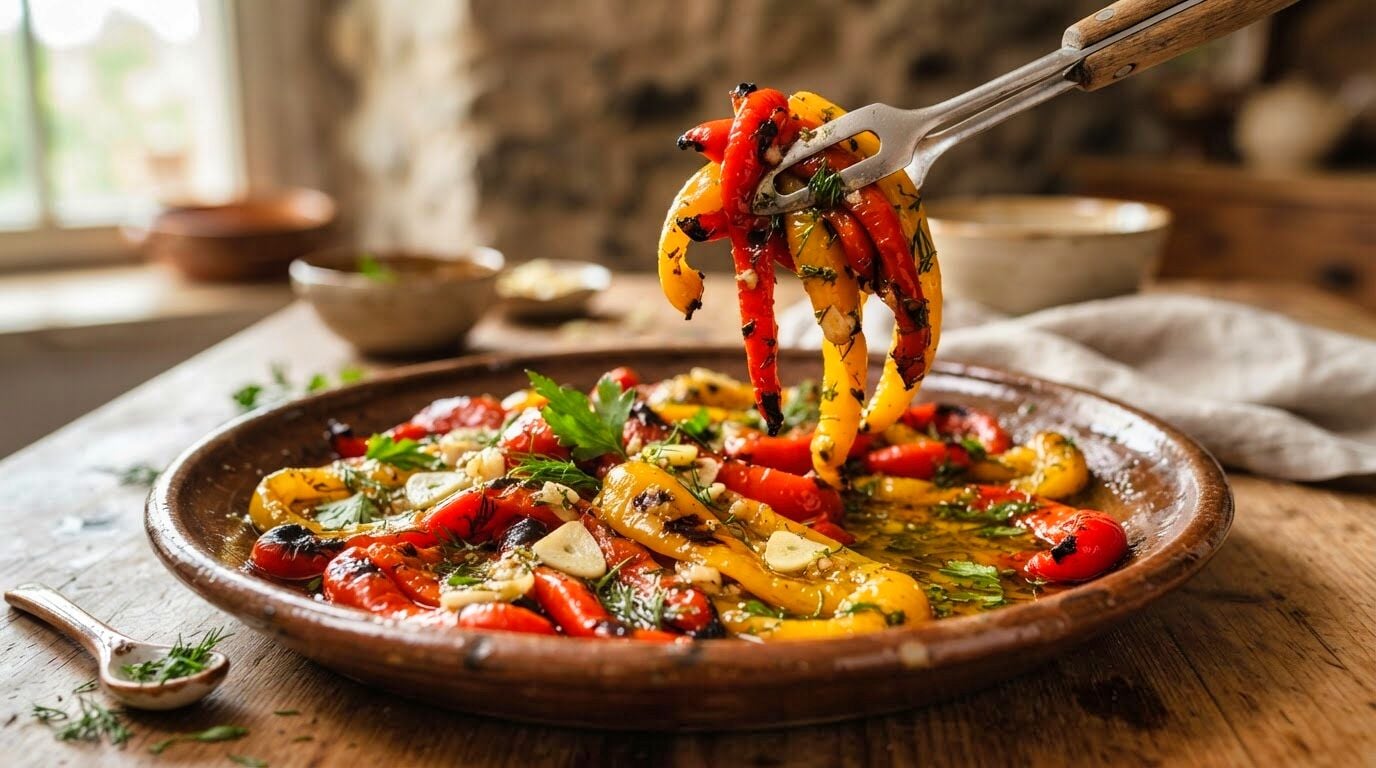
Hungarian Roasted Peppers Recipes
Ingredients
- 8 peppers roasted peeled and drained
- 6 cloves garlic grated
- 1/2 cup white vinegar
- 5 tablespoons oil
- 1 teaspoon parsley chopped fresh
- 1/2 tablespoon salt to taste
Instructions
- Place the garlic, oil, vinegar, salt, and parsley in a small mixing bowl.
- Whisk until thoroughly combined.
- Spoon 1 tablespoon of the marinade into the bottom of the storage dish.
- Arrange the first layer of peppers vertically.
- Drizzle 2 to 3 tablespoons of the marinade over the top.
- Add a second layer of peppers horizontally.
- Continue alternating the direction of each layer.
- Spoon more marinade over the peppers as you go until all of the ingredients have been used.
- Cover the container.
- Refrigerate for at least 2 hours.
- For the best flavor, chill overnight.
- Serve the peppers cold.
- Keep leftovers refrigerated for up to 1 week.
- These marinated peppers are layered with garlic, parsley, oil, and vinegar for a bright, tangy flavor. Easy to prepare ahead of time, they make a delicious appetizer, side dish, or topping for sandwiches and grilled meats.
Frequently Asked Questions
People ask about roasting methods, traditional Central European prep, vegetarian swaps, weekly meal ideas, stuffed peppers, and heat control for Hungarian and similar peppers. The Hungarian Roasted Peppers recipe sparks a lot of curiosity, honestly.
How do you roast peppers in the oven so they blister evenly and peel easily?
I set my oven to 475–500°F (245–260°C) and lay whole peppers out on a rimmed baking sheet, making sure they’re not crowded. That way, hot air hits all sides, and you get the best results for any Hungarian Roasted Peppers recipe.
After roasting for 20–30 minutes and turning every 6–8 minutes, the skins get blistered and blackened. I move the hot peppers to a bowl, seal it up for 10–15 minutes, and then peel under running water or just with my hands. The Hungarian Roasted Peppers recipe is way easier with thin-skinned varieties like Hungarian wax or banana peppers.
What’s the most authentic way to prepare roasted peppers in a traditional Central European style?
I go for a direct flame or broiler to get the smokiest flavor, then steam and peel as usual. After that, I dress the peeled peppers with sunflower oil, white vinegar, garlic, and salt for a simple, classic relish. It’s a must-try Hungarian Roasted Peppers recipe if you’re after something authentic.
Sometimes I slice the roasted peppers and simmer them with onions and sweet paprika for stews or as a garnish. For preserving, I pack them hot into jars with light brine and refrigerate, or process for longer storage. That’s another way to keep the Hungarian Roasted Peppers recipe alive year-round.
How can you make roasted Hungarian peppers vegetarian while keeping deep, savory flavor?
I build umami by sautéing chopped roasted peppers with caramelized onions, mushrooms, and a splash of soy sauce or tamari. Smoked paprika and tomato paste add depth without needing meat. The Hungarian Roasted Peppers recipe easily goes vegetarian and still tastes rich.
Sometimes I finish with toasted walnuts or grated cheese (or nutritional yeast for vegan) for more texture and richness. I like using the peppers in casseroles, stuffed peppers, or over grains—there’s always a new way to try the Hungarian Roasted Peppers recipe.
What are the best ways to use roasted Hungarian peppers in meals throughout the week?
I slice roasted peppers for sandwiches, salads, and grain bowls—they last 4–5 days in the fridge in oil or brine. Pureed, they become sauces, soups, or spreads, adding color and sweetness to all sorts of dishes. If you’re looking for variety, the Hungarian Roasted Peppers recipe is endlessly flexible.
I dice them into scrambled eggs or shakshuka for breakfast, or add them to stews, goulash, or as a garnish on roasted meats and veggie platters. The Hungarian Roasted Peppers recipe just fits into everything, honestly.
How do you make stuffed roasted peppers, and which fillings work best?
I grab medium-sized roasted peppers or Hungarian hot wax peppers, take out stems and seeds, and keep them whole or halved. I stuff them with cooked rice or bulgur, sautéed onions, garlic, herbs, and either crumbled feta or cooked lentils for a vegetarian spin. The Hungarian Roasted Peppers recipe works great for stuffing, too.
I top them with breadcrumbs or grated cheese and bake for 15–20 minutes until browned. For a non-veg version, I use a ground-meat mix—smoky paprika and tomatoes are perfect partners. If you haven’t tried stuffing the Hungarian Roasted Peppers recipe, you’re missing out.
Are Hungarian peppers hotter than jalapeños, and how can you control the heat in a roasted dish?
Hungarian wax peppers usually land somewhere between 5,000 and 15,000 Scoville units. That’s about the same as jalapeños, but honestly, it’s a bit of a gamble—sometimes you’ll get a milder one, sometimes it’s a firecracker. If you’re working on a Hungarian Roasted Peppers recipe, you’ll want to keep that in mind.
I like to cut out the seeds and ribs because that’s where most of the heat hides. Give the inside a good rinse, and you’ll take the edge off the spice. It’s a simple trick, but it really helps when you’re aiming for a gentler Hungarian Roasted Peppers recipe.
When I roast peppers, I’ll often toss them with some yogurt, sour cream, or even a bit of cheese—dairy works wonders for mellowing out the heat in a Hungarian Roasted Peppers recipe. Sometimes I reach for vinegar or a squeeze of lemon juice to balance things out. Before mixing everything, I always nibble a tiny piece to see where things stand. That way, I can tweak the sauce or filling to get the warmth just right for my Hungarian Roasted Peppers recipe. It’s not an exact science, but hey, where’s the fun in that?

Recipes are gathered in person and written for real-world cooking conditions.
- Hungarian Roasted Peppers Recipes - July 23, 2026
- Hungarian Sausage Stuffed Banana Peppers Recipes - July 23, 2026
- 10 Classic Filipino Dishes to Make at Home - July 22, 2026