
If you want to nail a classic German bratwurst recipe at home, you’ll need a few solid techniques and a bit of patience. This isn’t just about tossing some ground pork into a casing—it’s about getting that authentic snap, juicy bite, and spot-on seasoning that you’d expect from a real German butcher. Here, you’ll get practical steps and a bit of history, so your German bratwurst recipe doesn’t just taste good—it feels legit.
Let’s talk details. The right cuts, the right casings, and the right spices—they all matter. If you skip out on things like grinding temperature or grind size, you’ll notice the difference. Even emulsification (yeah, it sounds technical, but you’ll get the hang of it) changes the whole game. When you’re ready to cook, you’ve got options: pan-frying, grilling, or poaching. Each one brings out something different in your German bratwurst recipe, and you can’t really go wrong as long as you keep an eye on juiciness and doneness.
Honestly, the German bratwurst recipe is all about connecting with a tradition that’s been around for ages, but there’s plenty of room for your own twist. You might want to stick to the classic flavor profile, or maybe you’ll riff on a regional style. Either way, if you follow the basics, you’ll turn humble pork into a German bratwurst recipe you’ll be happy to serve at any table.
Origins and Historical Notes
Bratwurst has been part of German food culture since the Middle Ages, and you can see its fingerprints all over regional traditions. There are records from the 13th and 14th centuries that talk about sausages, and some areas still stick to recipes that haven’t changed much in hundreds of years. For a closer look at the Nürnberger style, check out this Nürnberger Rostbratwurst history—seriously, it’s worth a read if you’re into the origins of your German bratwurst recipe.
People originally made bratwurst as a way to preserve meat and stretch what little they had. Pork, veal, and beef all show up in different mixes, depending on where you are in Germany. Thuringia and Franconia both claim to be the true home of the German bratwurst recipe, and their ingredient lists definitely show some local pride.
The word “bratwurst” comes from Old High German—it’s more about finely chopped meat than it is about frying. That explains why the texture is such a big deal in any German bratwurst recipe, and why you’ll see different cooking methods from one region to the next. Nürnberger Rostbratwurst, for example, is small, spiced, and just salty enough to keep you coming back for more.
Modern twists like currywurst—where you slice up bratwurst and drown it in spiced ketchup and curry powder—are fun, but they don’t replace the real thing. German food has always balanced old-school preservation with new flavors, so your homemade German bratwurst recipe isn’t just a throwback—it’s part of a tradition that includes everything from street snacks to big family gatherings. If you ask me, that’s what makes the German bratwurst recipe worth learning.

Practical Cooking Guidance
Start by picking your meats: pork shoulder works great, especially with some pork fatback tossed in for that signature juiciness. If you want to go all in on a classic German bratwurst recipe, maybe mix in a bit of veal. Keep everything super cold—meat, fat, your hands—before you grind. It really helps you get that clean grind and the right texture for any German bratwurst recipe you’re aiming for.
Grind the meat first through a coarse plate, then give it another go with a medium plate for a more even consistency. I usually grab my KitchenAid grinder attachment, but a regular meat grinder does the trick too. Just work in small batches so the meat doesn’t warm up. When you’re ready to stuff, grab a vertical sausage stuffer or even a handheld one—just make sure you soak and rinse your hog casings first. It’s a small thing, but it makes a difference in a German bratwurst recipe.
Seasoning is where you can put your own spin on a German bratwurst recipe. I like to keep it simple: marjoram, white pepper, a pinch of nutmeg or mace, maybe a little ground ginger or cardamom for warmth, and some mustard powder to round it out. Cook up a tiny test patty before stuffing—seriously, don’t skip this step. Tweak the salt and spices as needed. Every German bratwurst recipe, no matter how traditional, benefits from tasting as you go.
When stuffing the sausage, try not to let air pockets sneak in, and don’t cram the casings too full. Twist your links gently, then let them rest in the fridge for a few hours. This lets the flavors in your German bratwurst recipe come together. To cook bratwurst the German way, simmer the links gently in beer or broth with onions for about 10–15 minutes. After that, toss them on a hot grill or skillet to brown up the casings and get that snap everyone loves in a German bratwurst recipe.
Stash your homemade bratwurst in the fridge for up to 3 days, or freeze them if you made a big batch. I usually serve mine with coarse German mustard and warm rolls, but you can get creative. If you want more ideas, check out a full traditional German bratwurst recipe—there’s a lot you can try. And honestly, once you’ve got the hang of a German bratwurst recipe, you’ll probably start tweaking it to make it your own. There’s just something about a homemade German bratwurst recipe that hits different, don’t you think?
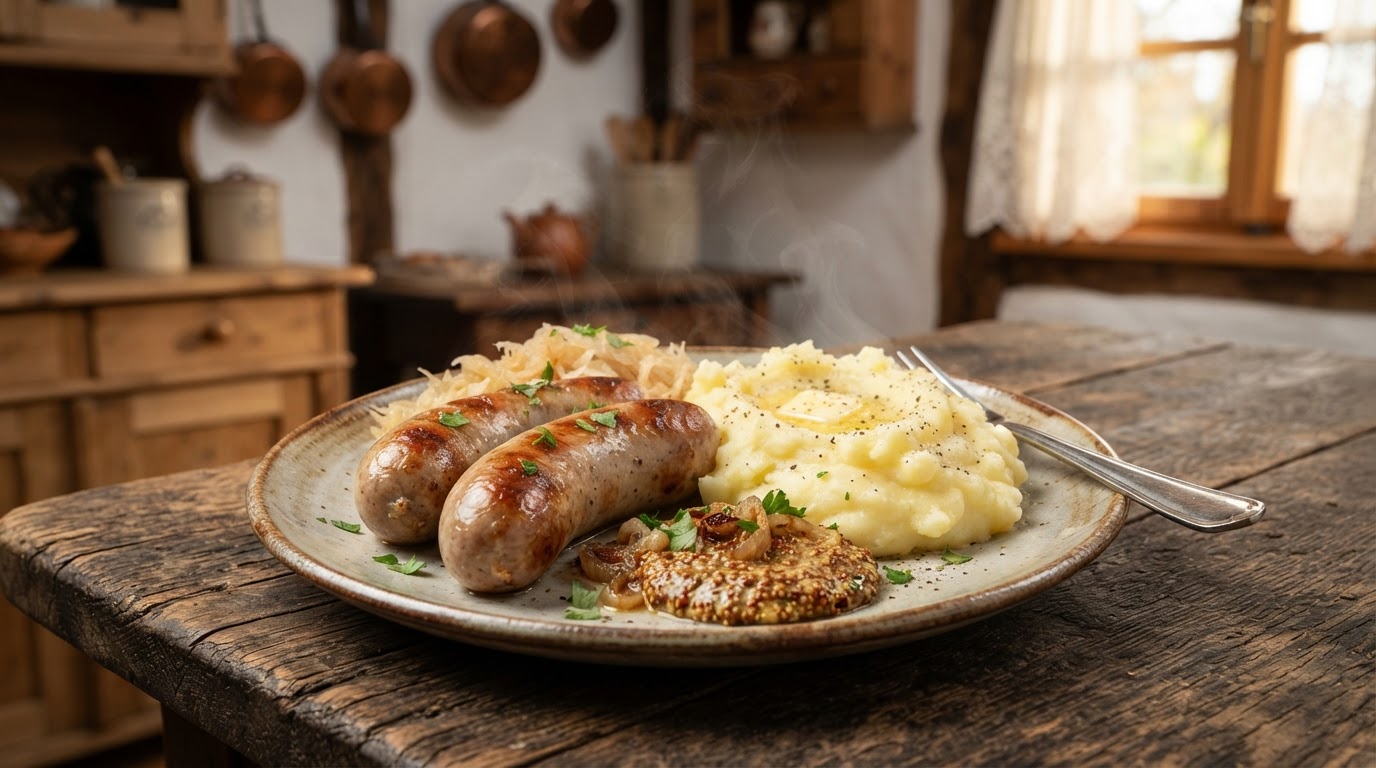
Homemade German Bratwurst Recipe
Ingredients
- 4 1/2 tablespoons salt
- 3/4 cup milk powder dried
- 4 1/2 teaspoons white pepper freshly ground
- 2 1/2 teaspoon black pepper freshly ground
- 3 teaspoon mace ground - can substitute nutmeg but strongly recommend mace for traditional German flavor
- 3 teaspoon ginger ground
- 3 teaspoon marjoram dried
- 2 1/2 teaspoon mustard powder
- 1 teaspoon cardamom ground
- 1 teaspoon coriander ground
- 1 teaspoon caraway seeds crushed
- 32 mm natural hog casing about 4 feet
- 6 pounds pork shoulder
Equipment
- large mixing bowl
- Meat grinder
- Sausage Stuffer
- Baking sheet
- Kitchen Twine
- Oven
Instructions
- a. Ensure your oven is clean and in good working order.
- b. Place the oven rack in the center position.
- c. Allow the oven to fully preheat before proceeding.
- a. Cut 7.5 lbs of boneless pork shoulder into 1/2 inch pieces.
- b. Cut 36 ounces of pork back fat into 1/2 inch chunks.
- c. Place both the meat and fat in the freezer for 45 minutes prior to grinding.
- a. In a mixing bowl, combine 4 1/2 tablespoons of salt.
- b. Add 3/4 cup of dried milk powder to the bowl.
- c. Mix in 4 1/2 teaspoons of freshly ground white pepper.
- d. Include 2 1/2 teaspoons of freshly ground black pepper in the mixture.
- e. Add 3 teaspoons of ground mace (or nutmeg if preferred for traditional German flavor).
- f. Incorporate 3 teaspoons of ground ginger.
- g. Mix in 3 teaspoons of dried marjoram.
- h. Add 2 1/2 teaspoons of mustard powder.
- i. Include 1 teaspoon each of ground cardamom, ground coriander, and crushed caraway seeds.
- a. Using a meat grinder, grind the partially frozen pork shoulder and pork back fat.
- b. Ensure the mixture has a consistent texture.
- c. Mix in the prepared spice mixture thoroughly.
- d. Add 6 cups of crushed ice to the mixture and continue mixing until well combined.
- a. Soak 32mm natural hog casings in warm water for about 30 minutes to soften them.
- b. Rinse the casings thoroughly under cold running water to remove any excess salt.
- c. Flush water through the casings to check for any blockages.
- a. Carefully thread one end of the casing onto the sausage stuffer nozzle.
- b. Gently push the sausage mixture into the casing, ensuring it fills evenly.
- c. Leave some space at the ends to tie off the sausages.
- a. Twist the filled casing at regular intervals to create individual sausages.
- b. Ensure the sausages are of the desired length.
- c. Tie off the ends of the casings with kitchen twine.
- a. Place the sausages on a baking sheet.
- b. Bake in the preheated oven at 350°F (175°C) for about 20-25 minutes or until fully cooked.
- c. Check the internal temperature of the sausages with a meat thermometer; it should read 160°F (71°C).
- a. Once cooked, remove the sausages from the oven.
- b. Allow them to rest for a few minutes before serving.
- c. Enjoy your Homemade German Bratwurst with your favorite accompaniments.
Notes

Recipes are gathered in person and written for real-world cooking conditions.
- 10 Hungarian Dessert Recipes Passed Down Through Generations - July 25, 2026
- 11 Easy English Recipes Anyone Can Make - July 25, 2026
- Hungarian Kifli Recipe - July 25, 2026