
If you’re curious about German cuisine, the German Saumagen recipe is a direct window into its hearty, grounded roots—deeply tied to place and tradition. Saumagen, a true Palatinate specialty, brings together diced pork, potatoes, and spices, all packed into a cleaned pig’s stomach (or casing). It’s gently cooked, then sliced, and often pan-fried for that crisp exterior and tender middle.
Let’s talk about what Saumagen actually is, how its history and ingredients give it character, and what you’ll need to know if you want to make it at home. I’ll share some practical cooking tips, so you can decide if a German Saumagen recipe deserves a spot on your table or if you should try it when you spot it on a menu. Texture, seasoning, serving ideas—they all matter when you’re eyeing a classic like this.
Description Recipe and Historical Information
In the Palatinate region, you’ll find Pfälzer Saumagen—a rustic, sausage-like dish that uses a cleaned sow’s stomach as its casing. The filling usually brings together diced pork and potatoes, with a bit of smooth bratwurstbrät to hold everything together. If you’re hunting for an authentic German Saumagen recipe, this is where you start.
Most folks season the filling with marjoram and nutmeg (Muskatnuss), and it’s common to toss in white pepper and onions. Sometimes you’ll see cloves, coriander, or thyme making an appearance. You stuff the mixture into the stomach, sew it closed, and simmer or gently poach it until it’s firm. The result? A texture sort of like a boiled sausage, but with its own personality. If you want to try a German Saumagen recipe, don’t skip this step.
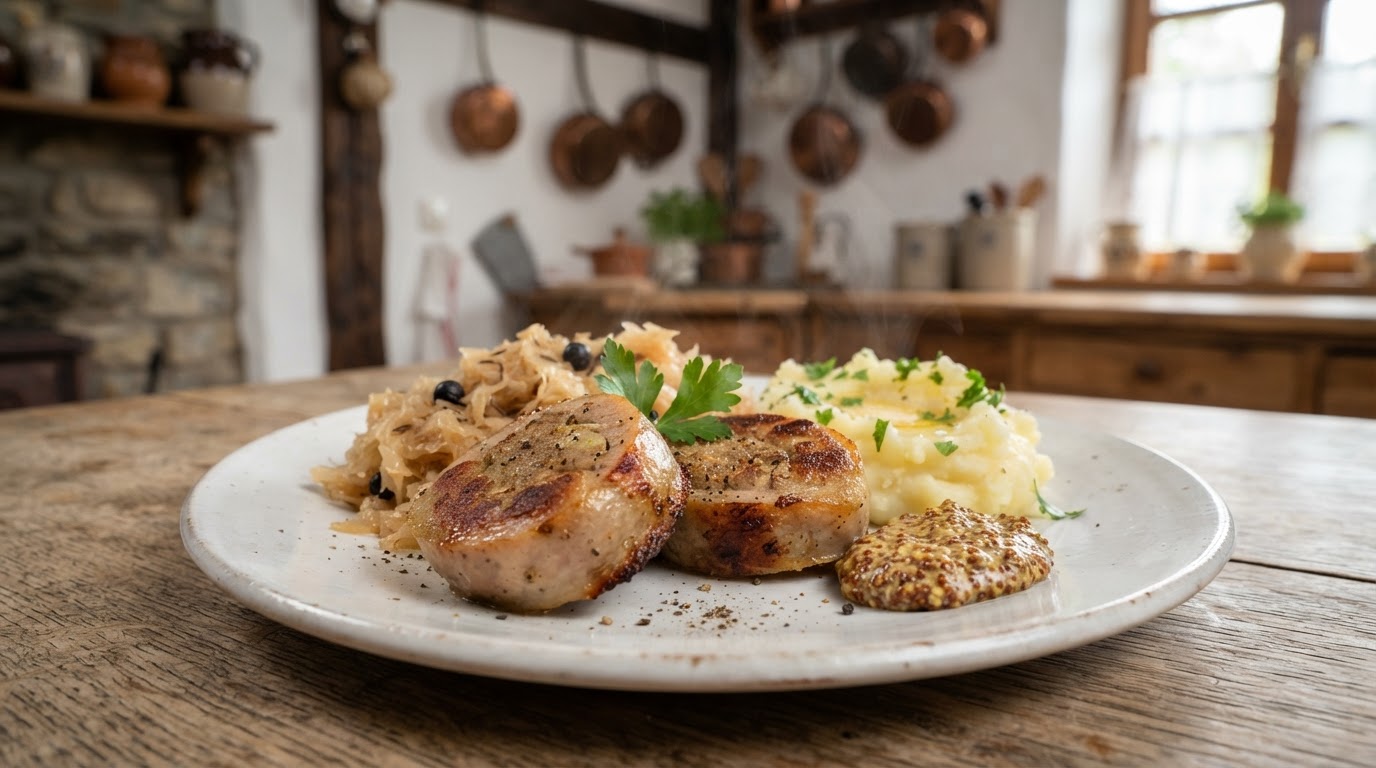
After cooking, you slice the Saumagen and pan-sear the pieces—this gives you a browned exterior and a deeper, richer flavor. Some people swap out a bit of potato for chestnuts in autumn, or bump up the pork for a meatier bite. There’s no single German Saumagen recipe; every family and region has a twist, and honestly, that’s half the fun.
Back in the 18th and 19th centuries, Saumagen came out of Palatinate farmhouse kitchens. People wanted to use the whole animal and whatever local staples they had—so potatoes and pork ended up in the mix. Later, when local leaders served Saumagen to visiting dignitaries, the dish got some fame outside the Palatinate. Suddenly, everyone wanted a German Saumagen recipe to try at home.
When you make or order Saumagen, expect a dense, savory slice—more like a square or loaf than a skinny sausage. If you’re after a practical, hands-on German Saumagen recipe, you’ll find plenty online, with step-by-step help. Don’t stress if it’s not perfect the first time; honestly, that’s part of the experience. The German Saumagen recipe is about tradition, flavor, and making something memorable with what you’ve got.
And if you’re still on the fence, maybe you just need to see a German Saumagen recipe in action. There’s something oddly satisfying about the process, and who knows? You might end up loving it—or at least having a good story for your next dinner party.
For anyone looking to bring a bit of Palatinate tradition to their kitchen, tracking down an authentic German Saumagen recipe is the way to go. Try it, tweak it, and make it your own. After all, that’s how these dishes survive and stay interesting. Is it for everyone? Maybe not, but you won’t know until you give a German Saumagen recipe a shot.
So, if you’re feeling brave or just plain hungry, why not hunt down a German Saumagen recipe and see what all the fuss is about? It’s got history, it’s got flavor, and honestly, it’s a little bit quirky—in the best way.

Cooking Tips
Start by rinsing the pig’s stomach really well and patting it dry—trust me, a clean casing makes all the difference in avoiding weird flavors in your German Saumagen recipe. Grate the potatoes finely so everything holds together, then chill the mixture before stuffing; it just makes the whole process less of a mess. If you’re after a classic German Saumagen recipe, these little prep details matter more than you’d think.
Gently cook the stuffed Saumagen. Let it simmer in water at a steady low boil until the inside hits at least 72°C (162°F)—or just go by size if you’re used to eyeballing things. Once boiled, slice it up and toss those pieces into a hot skillet for some color and a crisp edge. That’s the German Saumagen recipe way, honestly, and it’s worth the extra step.
Don’t go wild with the seasoning; the filling already packs pork and potatoes, so try to keep the salt in check and maybe add a little white pepper and marjoram. If you’re into tangy flavors, serve the German Saumagen recipe with sauerkraut—the acidity totally cuts through the richness and keeps things interesting. Some folks swear by this combo, and I can’t say I blame them.
Pairings? Oh, they matter. A German Saumagen recipe feels right at home next to traditional mashed potatoes for that smooth, comforting vibe. Or, if it’s hot out, go with potato salad for a cool, vinegary twist. Rye bread, with its rustic bite, soaks up those pan juices and really rounds out the German Saumagen recipe experience.
If you’re adding red cabbage, braise it with apple and a splash of vinegar for some sweetness and a pop of color. Warm it back up gently in a pan with a bit of stock or butter so it doesn’t go mushy. Leftovers from your German Saumagen recipe? Just wrap them up and stash them in the fridge—slice cold for sandwiches, or reheat with sauerkraut and mashed potatoes for another go-round. Seriously, a good German Saumagen recipe keeps on giving.
German Saumagen Recipe
Ingredients
- 1 cleaned pig's stomach
- 1 lb. pork belly
- 1 lb. bacon
- 1 lb. potatoes
- 1 lb. sausage meat raw
- 4 eggs
- 2 tsp salt
- 1 tsp pepper
- 1 tsp nutmeg
- handfull of marjoram
Equipment
- Large pot for boiling the Saumagen
- Kitchen twine or food-safe thread for tying the pig's stomach
- Mixing bowl for preparing the stuffing mixture
- Knife for chopping ingredients
- Clean surface for working with the pig's stomach
Instructions
- a. Rinse it under cold running water.
- b. Scrub gently to remove any dirt or debris.
- c. Drain and set aside.
- a. Dice the pork belly into small pieces.
- b. Cut the bacon into strips.
- c. Peel and chop the potatoes into small cubes.
- d. In a mixing bowl, combine the diced pork belly, bacon strips, chopped potatoes, raw sausage meat, and marjoram.
- e. Season the mixture with salt, pepper, and nutmeg.
- a. Place the cleaned pig's stomach on a clean surface.
- b. Carefully stuff it with the prepared mixture, ensuring it is evenly distributed.
- c. Do not overstuff to allow room for expansion during cooking.
- a. Sew or tie the open end of the pig's stomach securely to prevent the stuffing from falling out during cooking.
- b. Use kitchen twine or a food-safe thread for this purpose.
- a. In a large pot, bring water to a boil.
- b. Carefully place the stuffed pig's stomach into the boiling water.
- c. Reduce the heat to a simmer and cover the pot.
- d. Allow it to simmer for several hours until the Saumagen is fully cooked and tender.
- a. Remove the cooked Saumagen from the pot and let it cool slightly.
- b. Once it has cooled down, slice it into portions.
- c. It can be pan-fried or grilled for a crispy exterior before serving.
Notes

Recipes are gathered in person and written for real-world cooking conditions.
- 10 Hungarian Dessert Recipes Passed Down Through Generations - July 25, 2026
- 11 Easy English Recipes Anyone Can Make - July 25, 2026
- Hungarian Kifli Recipe - July 25, 2026