
German Rouladen recipe show up on festive tables and in home kitchens because it brings that deep, comforting flavor everyone craves, yet the technique is refreshingly straightforward. Rouladen means rolling thin beef slices around mustard, bacon, onions, and pickles, browning them, and then slow-braising until you end up with a tender, gravy-rich classic. It’s the kind of German Rouladen recipe that just works—reliably cozy every time.
Stick around, and you’ll see what Rouladen really is, how those simple ingredients come together, and some recipe steps with a few historical tidbits—because, honestly, understanding why this dish matters in German cuisine just makes it taste better. I’ll throw in a few practical cooking tips too, so you can tweak your German Rouladen recipe for timing, sides, or seasoning, and nail it every time.
Description, Recipe And Historical Information
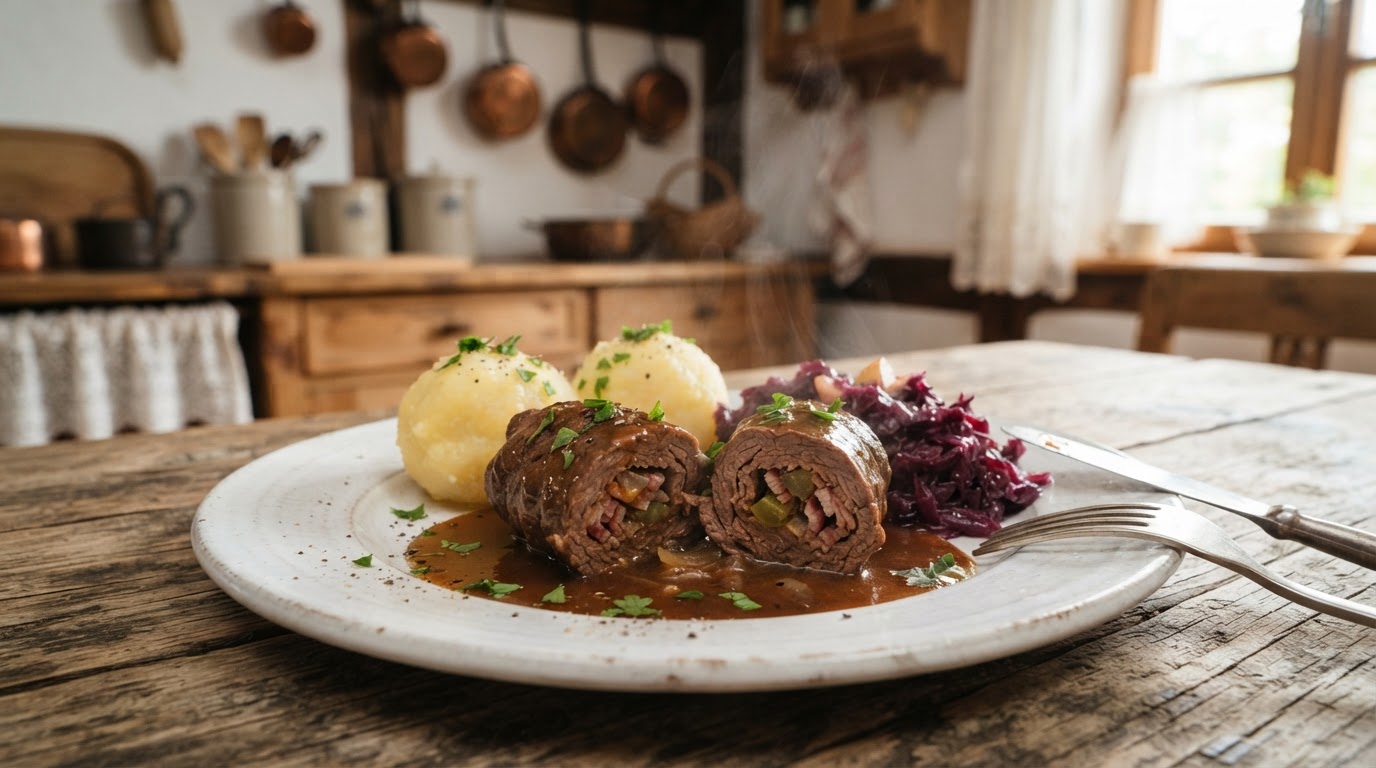
For a classic German Rouladen recipe, you start with thin slices of beef—top round or flank steak is the usual pick. Pound them out, swipe on mustard, then layer in bacon, sautéed onion, and dill pickles or gherkins. Roll them up and secure with toothpicks or kitchen twine. I always brown the rolls first, then braise them in beef stock or broth with bay leaf, carrot, celery, and leek (the classic suppengrün). Sometimes I’ll splash in a little red wine and tomato paste to make the sauce richer—seems like every German Rouladen recipe has its own opinion on that.
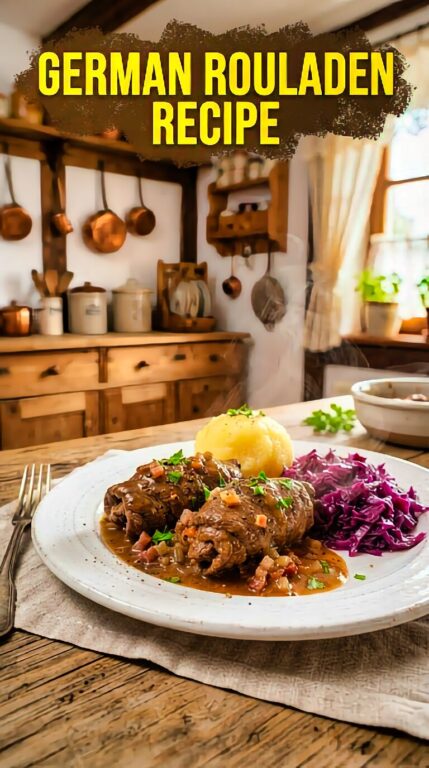
That braising liquid turns into a gravy—just reduce it, maybe thicken with a beurre manié or roux if you’re feeling fancy. The beef roulades practically beg for sides like braised red cabbage (Rotkohl), potato dumplings (Kartoffelklöße or Kartoffelknödel), bread dumplings (Semmelknödel), spaetzle, boiled potatoes, or even a good old German potato salad (Kartoffelsalat). You’ve got options, and honestly, every German Rouladen recipe seems to suggest something different.
People tweak the German Rouladen recipe all over Germany. Some swap in sharp German mustard or Dijon, others toss in carrots or more bacon for extra richness. This dish goes way back—rural cooks used to stretch their meat by rolling it around whatever flavorful bits they had. It’s resourceful, but it’s also just really satisfying.
If you want to keep it simple: season, spread, roll, brown, add broth and aromatics, simmer until it’s fork-tender, then strain and reduce the liquid for a glossy gravy. For a detailed German Rouladen recipe and step-by-step tips, check out this Authentic German Rouladen recipe. There’s no one right way, but once you get the hang of it, you’ll probably end up making your own version of the German Rouladen recipe before long.
Cooking Tips
Start with thin, even slices of beef—if they’re a bit uneven, just grab a meat mallet and give them a gentle pound. Trust me, this step makes the German Rouladen recipe way easier to roll and helps everything cook at the same pace.
When you roll up each piece, secure it with toothpicks, wooden skewers, or kitchen twine. Skewers are super handy if you’re browning fast, but twine gives a tidy look, which I kinda like for a classic German Rouladen recipe. Just remember to pull out the toothpicks or snip the twine before serving—nobody wants a surprise crunch.
Crank up the heat and brown those rouladen in a heavy pan or Dutch oven. That deep color? It’s not just for show—it builds a ton of flavor for your gravy, and honestly, that’s half the magic of any German Rouladen recipe.
Once they’re browned, braise them gently on the stovetop or tuck the whole thing in the oven at low heat. Depending on how thick your beef is, you might need anywhere from 1.5 to 3 hours. If you like to set it and forget it, go for a slow cooker/Crock-Pot on low—6 to 8 hours usually does the trick for a classic German Rouladen recipe that falls apart in the best way.
If you’re in a hurry (hey, it happens), grab a pressure cooker or Instant Pot. Cook on high pressure for about 25 to 35 minutes, then let the pressure release naturally. Afterward, simmer down the braising liquid to amp up that rich flavor—this shortcut still gives you a German Rouladen recipe worth bragging about.
For the filling, go with a swipe of mustard, some bacon, onions, and a tart dill pickle or cornichon. Keep it light, though—if you overstuff, you’ll fight to keep the rolls closed, and trust me, that’s not fun. It’s the balance of flavors that makes a German Rouladen recipe memorable, not how much you can cram inside.
Want to make German Rouladen recipe ahead? Brown them first, let them cool, then wrap each one up and stash them in the freezer for up to three months. When you’re ready, thaw overnight in the fridge and finish braising or gently reheat in a covered pan. That way, you get all the comfort of a German Rouladen recipe without the last-minute scramble.
German Rouladen Recipe
Ingredients
- 6 slices beef top round steak or flank steak
- 3 tbsp mustard dijon or yellow
- 6 slices prosciutto or 12 strips bacon
- 6 pickles large dill cut into long spears
- 2 onions sliced
- parsley small bunch of fresh finely diced
- 2 tbsp flour plain or all-purpose
- 1 tbsp butter
- 1 tbsp oil
- 1 tbsp butter
- 2 carrots cubed
- 2 parsnips cubed
- ¼ celeriac cubed
- ½ leek sliced
- 1 Tbsp tomato paste
- 1 Tbsp sugar
- 2 cups red wine
- 1 1/2 cups beef stock
- sea salt and black pepper
Equipment
- Large Skillet
- Meat mallet
- Tongs
- Toothpicks or kitchen twine
- Plate for searing
- Aluminum foil for covering
- cutting board
- Knife
- Wooden Spoon
- Measuring cups and spoons
- Gravy boat (optional)
Instructions
- a. Ensure that the meat is pounded thin and even using a meat mallet.
- b. Season each steak with a pinch of salt and black pepper.
- c. Spread 1/2 tablespoon of dijon mustard or yellow mustard evenly on each steak.
- d. Lay 1 slice of prosciutto or 2 strips of bacon on top of the mustard.
- e. Place a long spear of dill pickle and some sliced onions on each steak.
- f. Sprinkle finely diced fresh parsley over the fillings.
- a. Use toothpicks or kitchen twine to secure the rolls.
- b. Ensure the rolls are tightly sealed to prevent fillings from falling out.
- a. Wait until the butter is melted and the oil is hot but not smoking.
- b. You may need to work in batches to avoid overcrowding the pan.
- a. This should take approximately 2-3 minutes per side.
- b. Make sure to turn the rolls using tongs for even browning.
- a. Place them on a plate and cover with aluminum foil to keep warm.
- a. Stir continuously to create a roux until it turns golden brown.
- b. This should take about 2-3 minutes.
- a. Continue to cook and stir until the gravy thickens.
- b. This should take approximately 5-7 minutes.
- a. Ensure they are fully submerged in the gravy.
- b. Reduce the heat to low, cover, and simmer for about 1 to 1.5 hours, or until the meat is tender.
- a. Adjust the heat as needed to maintain a gentle simmer.
- a. Carefully remove the toothpicks or twine.
- a. Optionally, you can serve them with traditional sides like red cabbage and mashed potatoes.
Notes

Recipes are gathered in person and written for real-world cooking conditions.
- 10 Hungarian Dessert Recipes Passed Down Through Generations - July 25, 2026
- 11 Easy English Recipes Anyone Can Make - July 25, 2026
- Hungarian Kifli Recipe - July 25, 2026