
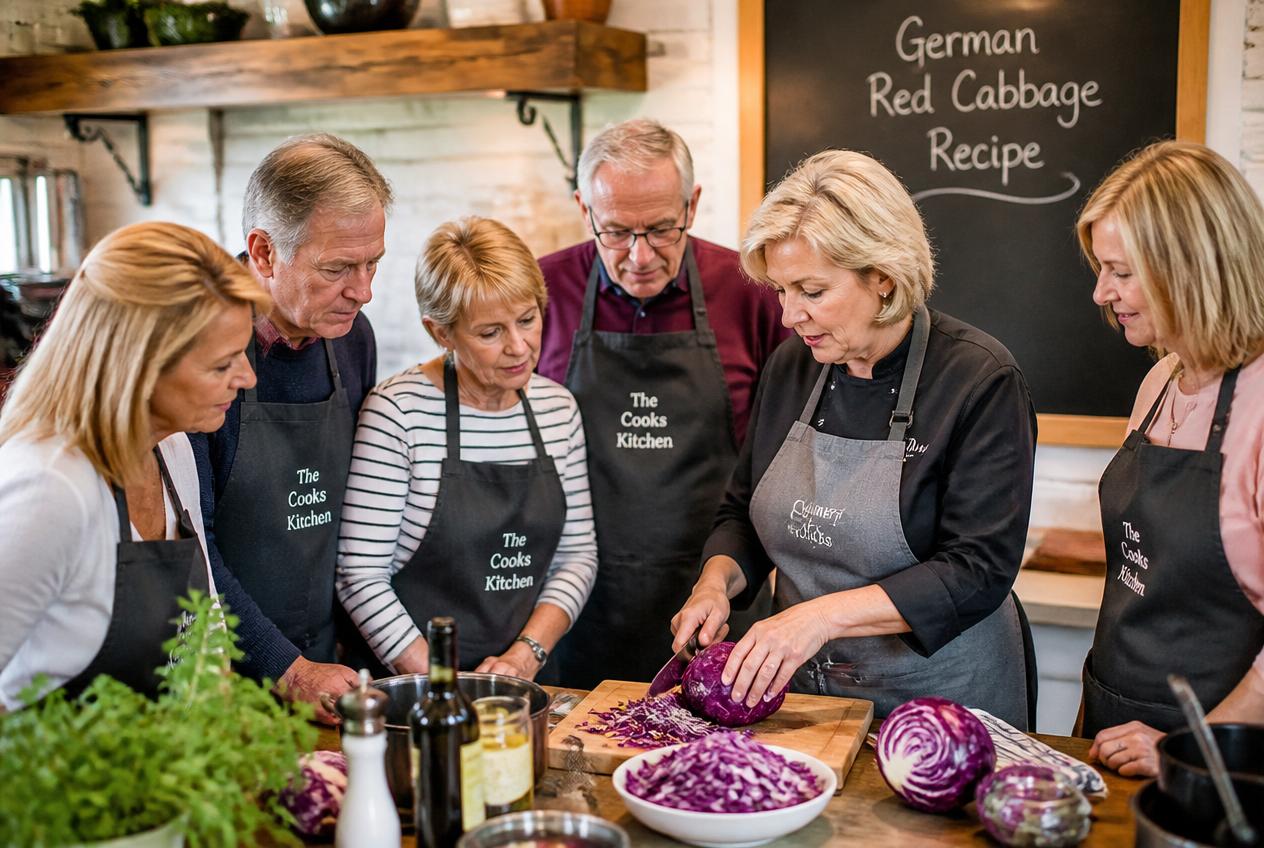
Traditional German red cabbage, known as Rotkohl or Blaukraut depending on where you are, is pretty much a staple at dinner tables all over Germany. This classic German Red Cabbage recipe brings together shredded red cabbage, apples, vinegar, and warm spices for that signature sweet and sour vibe. It’s honestly hard to imagine a German feast without it. The name shifts—northern Germans call it Rotkohl, while folks in Bavaria and the south say Blaukraut. Same dish, just a different name depending on who you ask.
I grew up eating this German Red Cabbage recipe with pork roasts, sauerbraten, and during the holidays. I always braise the cabbage slowly with onions, apples, and a bit of fat until it turns deep plum-red and tastes even better the next day. That’s probably my favorite part—leftovers are never a bad thing here.
This German Red Cabbage recipe stands out among classic German dishes because of the way sweet apples and tangy vinegar balance each other. It only takes a few minutes to prep, and you get an authentic taste of Germany every single time.
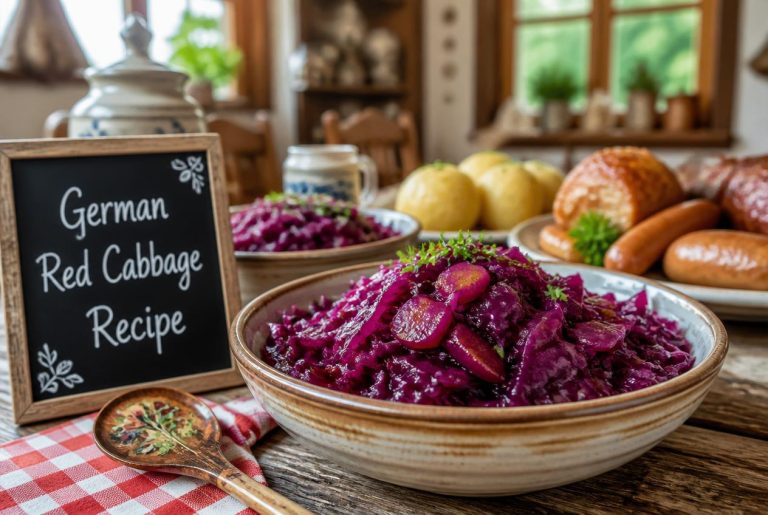
German Red Cabbage Recipe
Key Takeaways
- German Red Cabbage recipe creates a sweet and sour side dish using cabbage, apples, vinegar, and warm spices
- Rotkohl is the northern name, Blaukraut is what you’ll hear in Bavaria and the south
- Perfect with roasted meats, and honestly, it’s even better the next day
English Recipe Description and Historical Information
German Red Cabbage recipe is all about slow braising to bring out those sweet and sour flavors. Depending on where you are, people call it Rotkohl or Blaukraut. I always find it funny how one dish can have so many names, but that’s Germany for you.
This German Red Cabbage recipe uses shredded red cabbage, apples, onions, vinegar, and spices. Sugar or honey balances out the vinegar’s tang. Some folks add bacon for extra richness, and I can’t say I blame them.
Common Ingredients:
- Red cabbage
- Apples (tart ones are best)
- Onions
- Vinegar or red wine
- Sugar or honey
- Bay leaves
- Cloves or other warm spices
This German Red Cabbage recipe has been around for generations. I see it at holiday tables, Sunday dinners, and pretty much any meal with roasted meats, dumplings, or potatoes. That vibrant purple-red color always pops on the plate.
Families pass down their own German Red Cabbage recipe, tweaking spices or sweetness to taste. I like how the dish gets even better after a day in the fridge—those flavors really come together.
When I cook this German Red Cabbage recipe, I braise the cabbage for at least 45 minutes, sometimes over an hour. That’s how you get tender cabbage with just enough bite left. It’s a game of patience, but it pays off every time.
Recipe Tips
Honestly, I think this German Red Cabbage recipe comes out best if you make it a day ahead. The flavors blend together overnight, and reheating seems to make it even tastier. If you’re planning a big meal, this is one side you can prep in advance without worry.
Timing and Preparation
Braise the cabbage low and slow for at least 90 minutes. I always slice my cabbage thin—about 1/4 inch thick—so it cooks evenly and soaks up all the flavor.
Key Ingredients to Have Ready
- Fresh or jarred red cabbage (roughly 2 pounds)
- Tart apples like Granny Smith
- Red wine vinegar or apple cider vinegar
- Sugar or honey for sweetness
- Butter or bacon fat
- Bay leaves and whole cloves
I use both apple and vinegar in my German Red Cabbage recipe. The apple melts down and adds sweetness, while the vinegar keeps things bright and tangy.
Common Mistakes to Avoid
Don’t rush it. Cabbage needs time on low heat to get tender without turning into mush. I stir every 15 or 20 minutes and check the liquid—if it’s dry, I add a splash of water or apple juice. Nobody likes burnt cabbage.
Taste at the end and adjust. If it’s too sour, add a bit more sugar; if it’s too sweet, pour in a little more vinegar. That’s how you make this German Red Cabbage recipe truly yours.
Variations
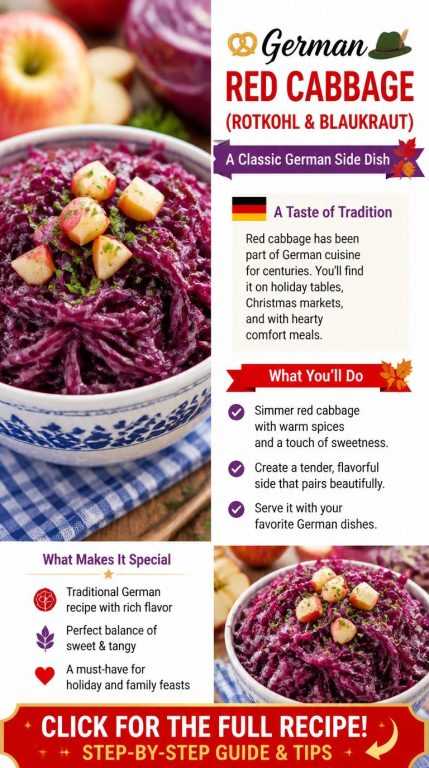
German Red Cabbage recipe variations are everywhere. Rotkohl in the north, Blaukraut in the south—same general idea, but the details shift. I’ve seen families argue about the “right” way to do it, but honestly, it’s all delicious.
Regional German cuisine really shapes what goes into your German Red Cabbage recipe. Some folks toss in bacon for a smoky kick, others keep it vegetarian. I’ve tried versions with red wine instead of vinegar, and some add redcurrant jelly for extra sweetness. Why not?
Spices change too. For German holiday foods, I usually add cloves, cinnamon, or even star anise. Bavarian cooks sometimes use juniper berries and bay leaves for a subtler touch. There’s no one-size-fits-all German Red Cabbage recipe, and I think that’s what makes it fun.
Common ingredient swaps include:
- Cabbage types: Try Savoy, green cabbage, or even radicchio if you want to mix things up
- Fruit: Pears or dried cranberries work if you’re out of apples
- Fat: Butter, bacon fat, or just a neutral oil
- Sweeteners: Brown sugar, honey, or apple juice
- Acid: Apple cider vinegar, red wine vinegar, or a squeeze of lemon juice
Oktoberfest recipes get a little heartier to match up with all that meat and sausage. I just play with the sugar and vinegar depending on what’s on the table. Every family seems to have a German Red Cabbage recipe they swear by.
Alternate Recipes Substitutions
This German Red Cabbage recipe is pretty forgiving—swap ingredients based on what you’ve got. The classic version uses butter, but you can skip it for an oil-free or plant-based take and it still comes out great.
Common Ingredient Swaps:
- Fat: Use olive oil, coconut oil, or skip it for a lighter version
- Sweetener: Honey, maple syrup, or coconut sugar instead of regular sugar
- Acid: Apple cider vinegar is my go-to if I’m out of red wine vinegar
- Liquid: Swap red wine for apple juice, veggie broth, or just water and a splash more vinegar
I like Granny Smith apples for their tartness in my German Red Cabbage recipe, but any tart apple works. If you’ve only got sweeter apples, just cut back on the sugar and up the vinegar a bit.
For spices, here’s what I usually swap:
| Traditional Spice | Alternative Option |
|---|---|
| Whole cloves | Ground cloves (just use a quarter of the amount) |
| Juniper berries | Bay leaves or allspice berries |
| Cinnamon stick | Ground cinnamon (about 1/2 teaspoon) |
You can make this German Red Cabbage recipe in a slow cooker too. I’ve done it on busy days, and it turns out super tender with almost no effort. Just set it and forget it for a few hours, then enjoy.

German Red Cabbage Recipe Cooking Tips
German Red Cabbage Recipe (Rotkohl and Blaukraut) Cooking Tips
• Rotkohl and Blaukraut are known for their sweet-and-sour flavor, tender texture, and vibrant color.
• Red cabbage is the essential ingredient and should be thinly sliced for even cooking.
• Apples add natural sweetness and help balance the cabbage’s earthy flavor.
• Onions contribute savory depth and complement the sweetness of the apples.
• Vinegar is important for preserving the cabbage’s bright red color and providing traditional tanginess.
• Red wine vinegar or apple cider vinegar are commonly used choices.
• A small amount of sugar helps create the classic sweet-and-sour balance.
• Cloves, bay leaves, and juniper berries are traditional seasonings that add warmth and complexity.
• Some regional recipes include red wine for additional richness and depth.
• Slow cooking allows the flavors to blend and the cabbage to become tender.
• Stir occasionally to prevent sticking and ensure even cooking.
• Butter, bacon drippings, or goose fat may be used for added richness.
• The cabbage should be tender but not mushy when finished.
• Rotkohl and Blaukraut pair beautifully with roast pork, duck, goose, sausages, and dumplings.
• The flavor should balance sweet apples, tangy vinegar, warm spices, and tender cabbage.
• The names Rotkohl and Blaukraut vary by region, but both refer to beloved traditional German red cabbage preparations.
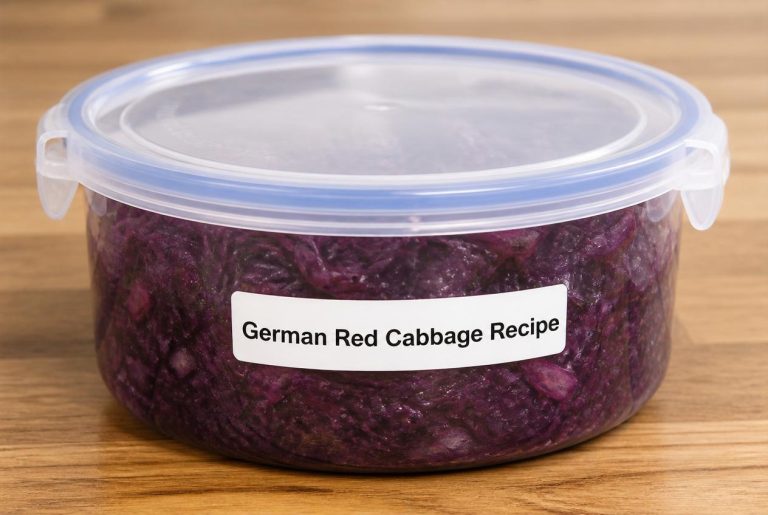
German Red Cabbage Recipe Storage Tips
German Red Cabbage Recipe (Rotkohl and Blaukraut) Storage Tips
• Allow the cabbage to cool before transferring it into storage containers.
• Store refrigerated in airtight containers to preserve freshness.
• Refrigeration often improves the flavor as the sweet-and-sour elements continue to blend.
• Reheat gently over low heat until thoroughly warmed through.
• Stir occasionally during reheating to ensure even warming.
• Apple and spice flavors often deepen after overnight refrigeration.
• Freeze portions in airtight freezer-safe containers if desired.
• Leave a small amount of space in containers because the cabbage may expand slightly when frozen.
• Defrost frozen cabbage gradually in the refrigerator before reheating.
• The texture may soften slightly after freezing, which is normal.
• Use clean utensils when handling leftovers to help maintain freshness.
• Cooked cabbage dishes are generally best enjoyed within a shorter refrigerated storage period for ideal quality and safety.
• Keep away from delicate desserts because cabbage aromas may transfer.
• Slight darkening of the cabbage during storage is normal.
• Discard leftovers if the cabbage develops sour spoilage odors, slime, mold, or unusual discoloration.
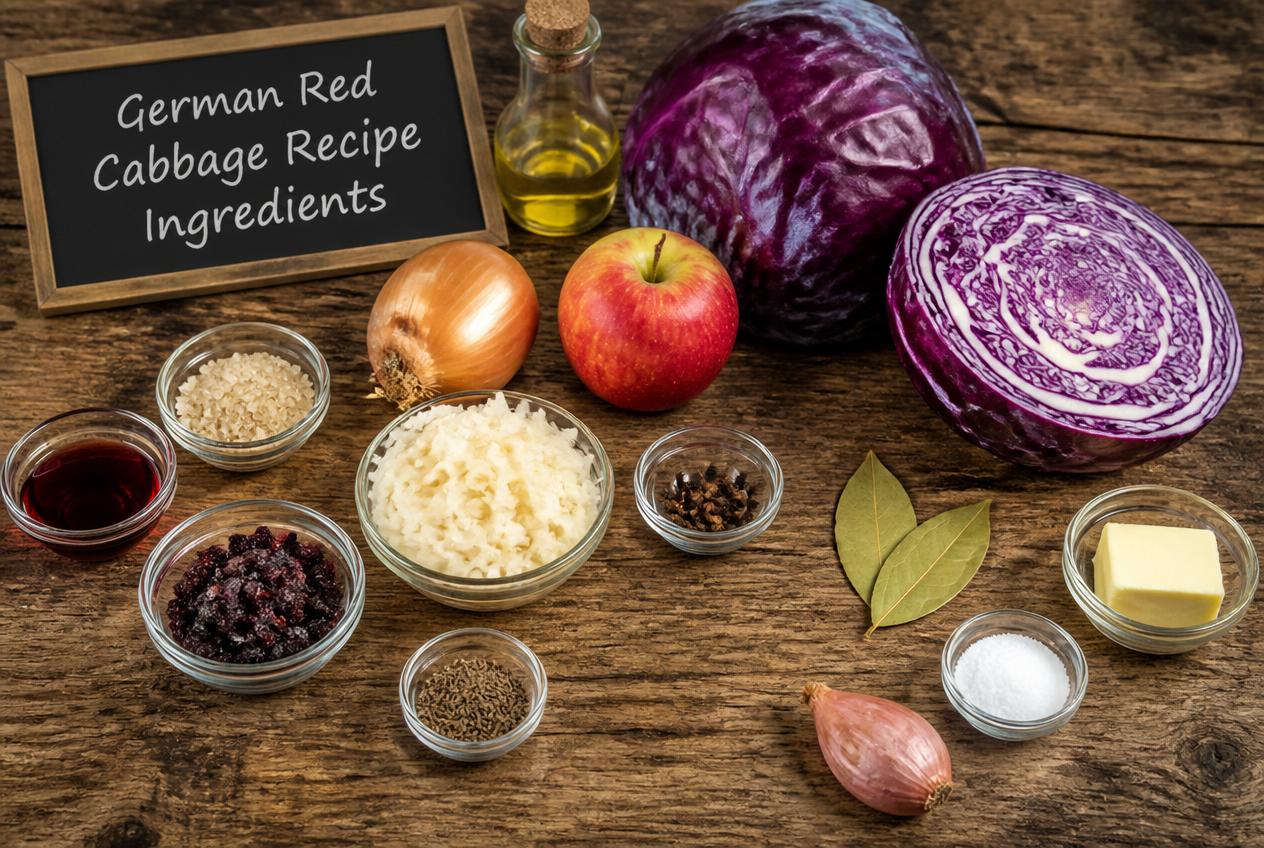
German Red Cabbage Recipe (Rotkohl and Blaukraut)
Ingredients
- 1/2 large head red cabbage , about 5-6 cups
- 1 apple , cut in half
- 1/3 cup apple cider vinegar
- 3 Tablespoons water
- 1/4 cup brown sugar
- 2 teaspoon salt
- 1/4 teaspoon freshly ground black pepper
- 5 whole cloves or ¼ teaspoon ground cloves
- 2 Tablespoons butter
Instructions
- Begin by cutting the cabbage into thin shreds, approximately ⅛ to ¼ inch thick. Uniform slices will help the cabbage cook evenly and develop a tender texture during the long simmering process.
- Place half of the shredded cabbage into a medium-sized heavy-bottomed pot or Dutch oven. Grate one half of the apple directly over the cabbage, distributing it evenly throughout the layer. The grated apple will slowly break down during cooking, adding natural sweetness and helping balance the acidity of the vinegar.
- Take the remaining apple half and insert the whole cloves into its flesh. Place this clove-studded apple on top of the cabbage. It will gently infuse the dish with warm spice while remaining easy to remove before serving.
- Top with the remaining shredded cabbage, creating an even layer in the pot.
- In a small bowl, combine the vinegar, water, sugar, salt, and black pepper. Stir until the sugar and salt dissolve completely.
- Pour the mixture evenly over the cabbage. The liquid will provide the signature sweet-and-sour flavor while helping the cabbage soften during cooking.
- Add the butter to the pot, distributing it over the top of the cabbage. As it melts, it will add richness and help create a silky texture.
- Cover the pot tightly with a lid and place it over medium-high heat. Bring the mixture to a gentle boil.
- Once boiling, immediately reduce the heat to low and allow the cabbage to simmer slowly for 1½ to 2 hours. During this time, the cabbage will become exceptionally tender while absorbing the flavors of the apple, cloves, vinegar, and seasonings.
- Stir occasionally during cooking to ensure even braising and to prevent any cabbage from sticking to the bottom of the pot.
- As the cabbage cooks, it will reduce significantly in volume and develop a rich, glossy appearance.
- Once the cabbage is fully tender, carefully remove the apple half containing the cloves and discard it. The apple will have released its flavor into the dish, and the cloves will have infused the cabbage with a subtle warmth.
- Stir the cabbage thoroughly to distribute the remaining grated apple and cooking juices evenly throughout the pot.
- Taste and adjust the seasoning if needed. Depending on your preference, you may wish to add a little extra sugar for sweetness, vinegar for brightness, or salt to enhance the overall flavor.
- Serve the braised red cabbage hot as a traditional accompaniment to roast pork, Sauerbraten, Rouladen, sausages, duck, goose, or other hearty meat dishes.
- The finished cabbage should be tender but not mushy, with a beautiful balance of sweet, tangy, and gently spiced flavors. Its vibrant color and rich taste make it one of the most beloved side dishes in German and Central European cuisine, especially during holiday meals and cold-weather dinners.
German Red Cabbage Recipe (Rotkohl and Blaukraut) Frequently Asked Questions
The name of this German Red Cabbage recipe changes with acidity and region. Traditional versions usually include apples, and sometimes bacon for a deeper flavor.
What is the difference between Rotkohl and Blaukraut?
Really, it’s just a regional thing. German Red Cabbage recipe is Rotkohl in the north and Blaukraut in Bavaria. The color changes depending on how much acid you add—more vinegar keeps it bright red (Rotkohl), less acid lets it turn more purple-blue (Blaukraut). Either way, you’re eating the same delicious German Red Cabbage recipe, just with a different name.
How do you make traditional German red cabbage with apples at home?
I start my German Red Cabbage recipe by slicing a head of red cabbage thin. I cook it in butter or oil with onions, then toss in peeled, chopped tart apples. I pour in red wine vinegar, add sugar, salt, and cloves. Sometimes I throw in bay leaves and juniper berries if I have them.
I let everything simmer low and slow for 60 to 90 minutes, stirring now and then. The cabbage softens, the apples break down, and the flavors all come together. Before serving, I taste and tweak the sweet-sour balance—maybe a little more sugar, maybe a splash more vinegar. That’s the beauty of this German Red Cabbage recipe: it’s flexible and always satisfying.
How can you make an old-fashioned version of German red cabbage with bacon?
So, here’s how I usually tackle an old-fashioned German Red Cabbage recipe with bacon: I start by tossing chopped bacon into a big pot and let it sizzle until it’s good and crispy. After that, I pour off most of the bacon fat but leave around two tablespoons—just enough to coat the bottom and give everything that smoky kick.
Next, I throw in sliced onions right into the bacon fat and cook them until they’re soft and a bit golden. Then comes the star: shredded red cabbage. I mix it in with the onions and bacon, making sure everything gets coated and starts to smell amazing.
For this German Red Cabbage recipe, I stick to the basics—add some diced apples, a splash of vinegar, a bit of sugar, and a mix of spices. I toss the bacon back in and let it all braise for about an hour, sometimes a bit longer if I’ve got the time. The bacon brings a smoky, savory note that just works with the sweet apples and sugar. If you ask me, this is the German Red Cabbage recipe that feels like home, especially when the kitchen starts to smell like fall.
What is the best way to cook jarred German red cabbage so it tastes homemade?
Honestly, jarred German Red Cabbage recipe options can taste a little flat, but you can totally fix that. I dump the jarred cabbage into a pot, then add a chopped apple, a generous tablespoon of butter, and a splash of apple cider vinegar. Those three alone wake up the flavors.
If I’m feeling fancy, I’ll toss in a pinch of cloves or maybe a bay leaf for a little extra something. Sometimes I pour in a bit of red wine or apple juice. It’s not in every German Red Cabbage recipe, but it adds depth and makes things interesting.
I let it all heat up together over medium-low, stirring here and there for about 20 minutes. The new ingredients blend with the cabbage and suddenly you’ve got a German Red Cabbage recipe that tastes way fresher—almost like you made it from scratch.
What should you serve with German red cabbage for a classic German meal?
Whenever I make a German Red Cabbage recipe, I love serving it with roast meats or game. Think roast pork, beef rouladen, or even roast duck—they’re classics for a reason. German red cabbage alongside roast meats and game just works, you know?
Bratwurst and other German sausages are also perfect partners for a German Red Cabbage recipe. The sweet and sour cabbage really pops next to sausages. I usually add potato dumplings or some spaetzle on the side. It rounds out the meal and soaks up all the juices—can’t go wrong there.
During the holidays, I’ll serve my German Red Cabbage recipe with roast goose or venison. The tangy, vibrant cabbage cuts right through the richness of those meats and makes the whole plate feel balanced. Honestly, if you haven’t tried a German Red Cabbage recipe with these classic dishes, you’re missing out. It’s one of those sides that quietly steals the show every time.
What are the nutrition facts and calories in a typical serving of German red cabbage?
So, if you’re digging into a German Red Cabbage recipe, you’re probably looking at one cup—about 150 grams per serving. Calorie-wise, you’ll find anywhere from 80 to 120, but honestly, it depends a lot on how heavy-handed you get with the butter and sugar. Some folks go wild with the extras, you know?
Red cabbage itself brings a lot to the table: low calories, plenty of fiber, and a solid hit of vitamin C. But when you start tossing in more sugar or a knob of butter (or bacon, if you’re feeling it), the German Red Cabbage recipe gets a bit richer—and the calorie count climbs.
For the usual German Red Cabbage recipe, you’ll see around 2 to 4 grams of fat, 15 to 20 grams of carbs, and 2 to 3 grams of protein per serving. There’s fiber in there, plus potassium and those good-for-you antioxidants, thanks to the cabbage and maybe some apples. Honestly, the German Red Cabbage recipe packs more nutrition than you’d guess for something that tastes so comforting. If you’re counting, every German Red Cabbage recipe will differ a bit, but you’re always getting a nice blend of flavor and nutrition. And that’s why people keep coming back to the German Red Cabbage recipe—there’s just something about it that hits right, both for your taste buds and your body.

Recipes are gathered in person and written for real-world cooking conditions.
- 10 Hungarian Dessert Recipes Passed Down Through Generations - July 25, 2026
- 11 Easy English Recipes Anyone Can Make - July 25, 2026
- Hungarian Kifli Recipe - July 25, 2026