

Kuchen is this classic German Cake and Pie Dessert recipe that sits somewhere between cake and pie, with a soft yeast dough base, fruit, and a creamy custard. Kuchen combines cake, pie, and custard into a single dish, starting with a lightly sweet yeast dough and finishing with that silky vanilla custard that bakes up beautifully. In German, “kuchen” just means “cake,” but in the U.S., people usually mean this specific German Cake and Pie Dessert recipe—brought over by German-Russian immigrants.
Honestly, I love this dessert because it fits any occasion and you can switch up the fruit based on whatever’s in season. Traditional German cakes like this have been passed down for ages—every family seems to have their own twist. The custard bakes up into a smooth, rich layer that contrasts perfectly with the tender dough underneath.
Making a German Cake and Pie Dessert recipe at home is less intimidating than it sounds. I’ll walk you through a basic German Cake and Pie Dessert recipe, some tips for better results, and show a few popular variations—think different fruit toppings and streusel options.
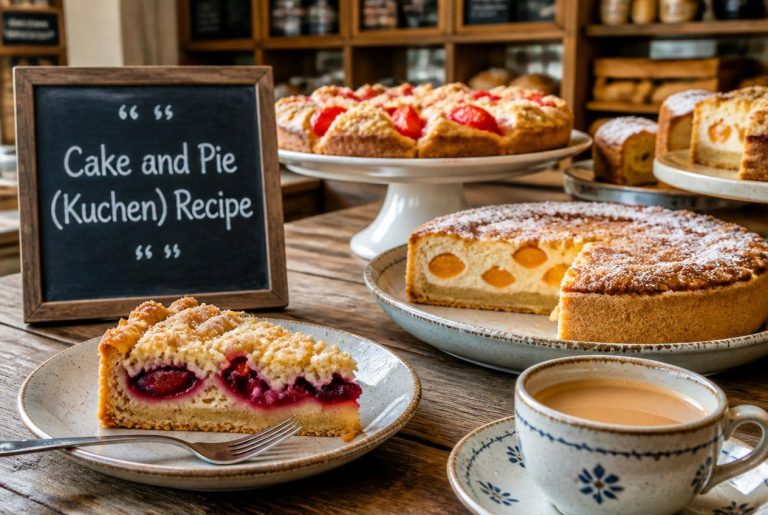
Cake and Pie (Kuchen) Recipe
Key Takeaways
- Kuchen is a German Cake and Pie Dessert recipe with yeast dough, fruit, and custard—it’s a hybrid of cake and pie
- You can customize your German Cake and Pie Dessert recipe with whatever fruit is in season and add toppings like cinnamon streusel
- The German Cake and Pie Dessert recipe uses simple ingredients and straightforward steps, so it works for both beginners and more experienced bakers
English Recipe Description and Historical Information
Kuchen is a traditional German dessert that brings together cake, pie, and custard in one unique treat. The word “kuchen” means “cake” in German, but this German Cake and Pie Dessert recipe is honestly way more interesting than a standard cake.
It starts with a sweet yeast dough as the base. You arrange fresh or canned fruit on top. Then you pour a creamy custard mixture over everything before baking.
Common Kuchen Variations:
- Peach kuchen
- Apple kuchen
- Cherry kuchen
- Apricot kuchen
- Plum kuchen
German immigrants brought this German Cake and Pie Dessert recipe to America, especially in the Midwest. Families passed their German Cake and Pie Dessert recipe down through generations, and you still see it everywhere in states like South Dakota, where kuchen is the state dessert.
In Germany, families made kuchen for afternoon coffee—kaffeeklatsch. People would gather for coffee, cake, and conversation. Immigrants kept this tradition going in their new homes, and the German Cake and Pie Dessert recipe became part of American food culture.
One thing I notice: authentic German Cake and Pie Dessert recipe slices look more like pie wedges than cake squares. The texture’s somewhere between a tender cake and a sweet custard pie, making it a comfort food that still feels a bit special.
The creamy custard on top really sets this German Cake and Pie Dessert recipe apart. It bakes right onto the fruit and dough, giving a silky finish that holds the whole thing together.
Recipe Tips
Use room temperature ingredients for your German Cake and Pie Dessert recipe—cold eggs and butter just don’t mix as smoothly into the dough.
Pick your fruit with care. Fresh, frozen, or canned fruit all work for this German Cake and Pie Dessert recipe. I’ve had great results with peaches, cherries, plums, and apples. Just remember to drain canned fruit well or your crust gets soggy.
Here are some tips I swear by:
- Don’t overmix the dough—just combine it until it’s smooth so it stays tender
- Let the yeast dough rise—give it proper time in a warm spot
- Arrange fruit in a single layer—that way, everything bakes evenly
- Test the custard—it should be set but still a little jiggly in the center
Prepping the topping first—whether it’s streusel or custard—just makes the whole German Cake and Pie Dessert recipe process smoother. Once the dough is ready, you can assemble everything fast.
For easy German Cake and Pie Dessert recipes, I usually grab a 9×13 inch pan. This gives you plenty of servings and bakes evenly. A springform pan works if you want that classic round look.
Keep an eye on baking time. The edges should turn golden and pull away from the pan. I check after 30 minutes, but sometimes it takes 45 depending on your oven and fruit.

Variations
Kuchen recipes can really change depending on where you are in Germany. Every region has its own spin on the German Cake and Pie Dessert recipe.
The fruit topping is where you’ll see the most variety. I use plums, apples, cherries, peaches, or berries—whatever’s good that season. Some traditional German cakes call for specific fruits based on local harvests.
The base for a German Cake and Pie Dessert recipe can be a yeast dough that rises like bread or a cake-like batter. In my experience, the German Cake and Pie Dessert recipe always lands somewhere between cake, tart, and custard pie.
Regional cuisine shapes the German Cake and Pie Dessert recipe a lot. Down south, people add more cream and custard; up north, you’ll see simpler streusel toppings. The streusel itself can be plain, cinnamon, or mixed with nuts.
During the holidays, special versions of the German Cake and Pie Dessert recipe pop up—Christmas brings dried fruits and spices, Easter has rhubarb or early spring fruits.
Common Kuchen Variations:
- Fruit kuchen—topped with whatever fruit is fresh
- Streusel kuchen—finished with a crumbly topping
- Custard kuchen—with a creamy vanilla custard layer
- Cheese kuchen—using quark or cream cheese
- Butter kuchen—just butter and sugar on top
The authentic German kuchen recipe my grandmother taught me uses whatever fruit is ripe. That’s what makes the German Cake and Pie Dessert recipe so great—you can always adapt it for the season.
Alternate Recipes Substitutions
The German Cake and Pie Dessert recipe is super flexible with ingredients. You can swap the fruit topping for whatever’s in season or just what you have on hand.
If you don’t have peaches, use apples, plums, cherries, or berries. Each fruit gives the German Cake and Pie Dessert recipe a new flavor but keeps the classic structure of dough and custard.
Dairy Substitutions
For the custard in your German Cake and Pie Dessert recipe, here are some swaps I like:
- Use half-and-half or whole milk instead of heavy cream
- Try Greek yogurt instead of sour cream for a tangier taste
- Switch out regular cream cheese for quark, which is more traditional for German cheesecake recipes
Dough Alternatives
If you’re not up for yeast dough, try a shortbread or graham cracker crust. Or go with a simple cake batter base for a different spin on the German Cake and Pie Dessert recipe.
For a gluten-free German Cake and Pie Dessert recipe, use a gluten-free baking blend instead of regular flour. Adding a bit of xanthan gum helps the dough hold together.
Sugar and Sweetener Options
I usually cut the sugar in the custard by about a quarter and it still turns out fine. You can use honey or maple syrup too, though the flavor does shift a bit.
If I want a lighter German Cake and Pie Dessert recipe, I swap some butter in the crust for coconut oil or vegetable oil. The texture stays nice and tender, but there’s less saturated fat.

Cake and Pie (Kuchen) Recipe Cooking Tips
German Cake and Pie Dessert Recipe (Kuchen) Cooking Tips
• Kuchen is known for its tender crust, variety of fruit or custard fillings, and simple homemade character.
• “Kuchen” is a broad German term that includes many styles of cakes, fruit tarts, and dessert pastries.
• A yeast dough or shortcrust pastry is commonly used as the base depending on the regional variation.
• Fresh seasonal fruits such as apples, plums, cherries, apricots, or berries are traditional toppings.
• Custard fillings add richness and pair especially well with fruit-based Kuchen.
• Butter is essential for creating a tender, flavorful crust.
• Allow yeast dough sufficient time to rise for the lightest texture.
• Streusel topping is a popular addition and provides a sweet crumbly texture.
• Cinnamon is often used with apple or plum versions for extra warmth and flavor.
• Avoid overloading the crust with fruit, which can create excess moisture during baking.
• Bake until the crust is golden and the filling is fully set.
• Allow the Kuchen to cool slightly before slicing to help the filling stabilize.
• Whipped cream is a traditional accompaniment for many fruit-based varieties.
• The flavor should balance buttery pastry, fresh fruit, gentle sweetness, and tender crumb.
• Kuchen is one of Germany’s most beloved coffee-time desserts and is commonly served during afternoon gatherings.
Cake and Pie (Kuchen) Recipe Storage Tips
German Cake and Pie Dessert Recipe (Kuchen) Storage Tips
• Allow the Kuchen to cool completely before storing.
• Store in an airtight container to help maintain freshness.
• Fruit-based Kuchen can often be stored at room temperature for short-term enjoyment.
• Custard-filled varieties should be refrigerated.
• Refrigeration may slightly firm the crust and filling, which is normal.
• Bring refrigerated Kuchen to room temperature before serving for the best flavor.
• Streusel toppings may soften slightly during storage.
• Freeze fully cooled Kuchen in airtight freezer-safe wrapping if desired.
• Wrap slices individually before freezing for convenient serving.
• Defrost frozen Kuchen gradually at room temperature or in the refrigerator.
• Use clean dry utensils when handling leftovers to help maintain freshness.
• Fruit desserts are generally best enjoyed within a moderate storage period for ideal texture and flavor.
• Keep away from strongly scented foods because cakes and pastries readily absorb odors.
• Slight softening of the crust during storage is normal.
• Discard leftovers if the Kuchen develops mold, fermentation, sour odors, or unusual texture changes.
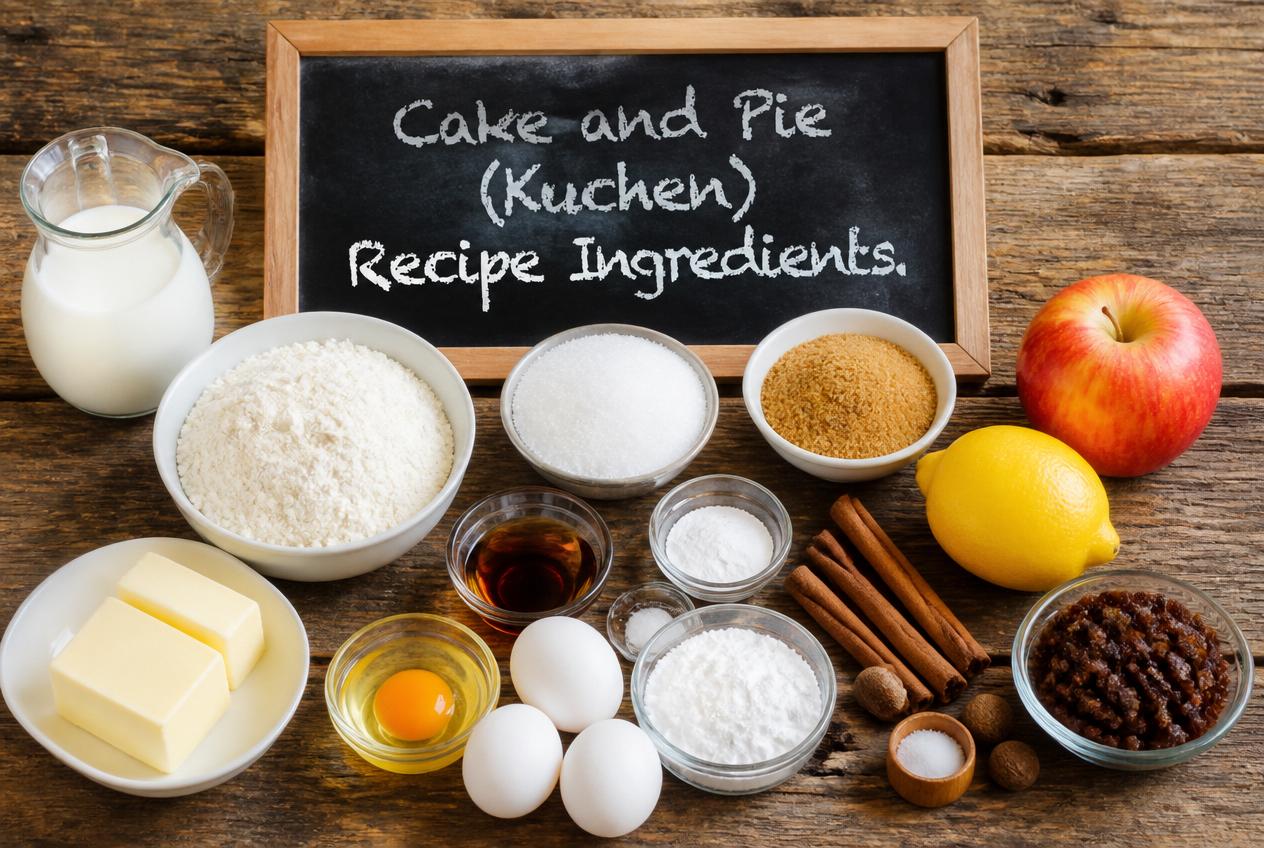
German Cake and Pie Dessert Recipe (Kuchen)
Ingredients
- 1 cups warm milk 110 to 115°F
- 1/2 cup sugar
- 1 1/2 teaspoons yeast
- 1/4 cup oil
- 1 egg at room temperature
- 3 cups flour
- 1/2 teaspoon salt
- 2 2/3 cups heavy cream
- 4 large eggs
- 3/4 cup sugar
- dash salt
- 1 teaspoon vanilla
- 3 tablespoons ground cinnamon
- 1/2 cup sugar
Instructions
- Begin by warming the milk to 100–110°F, making sure it is warm but not hot. In a small mixing bowl, combine the warm milk, yeast, and about 1 tablespoon of the sugar from the total amount. Stir gently and let the mixture stand for approximately 5 minutes, or until it becomes foamy on top. This indicates that the yeast is active and ready to use.
- In a large mixing bowl or the bowl of a stand mixer, combine the milk and yeast mixture, oil, and egg. Stir until the egg is fully incorporated and the mixture is smooth.
- In a separate medium bowl, whisk together the flour, remaining sugar, and salt. Gradually add the dry ingredients to the wet ingredients, mixing with a sturdy spoon or dough hook until a shaggy dough begins to form.
- Turn the dough onto a lightly floured work surface and knead for 5–7 minutes, until it becomes smooth, elastic, and slightly tacky. If using a stand mixer, knead with the dough hook on medium-low speed for the same amount of time. The dough should remain soft and somewhat sticky, which helps create a tender finished crust.
- Place the dough into a generously oiled bowl, turning it once so all sides are lightly coated. Cover loosely with plastic wrap or a clean kitchen towel and allow it to rise in a warm place until doubled in size, about 60–90 minutes.
- While the dough is rising, prepare the custard filling. In a small bowl, whisk together the eggs, sugar, and a pinch of salt until smooth and evenly combined.
- Pour the heavy cream into a medium saucepan and heat over medium-low heat until it begins to gently simmer around the edges. Do not allow it to boil.
- To temper the eggs, slowly add a few tablespoons of the hot cream to the egg mixture while whisking constantly. Repeat this process a second time to gradually raise the temperature of the eggs and prevent curdling.
- Slowly pour the tempered egg mixture back into the saucepan, whisking continuously. Increase the heat slightly and continue cooking, stirring constantly, until the custard thickens enough to coat the back of a spoon. Remove from the heat and stir in the vanilla extract.
- Transfer the filling to a bowl and allow it to cool while the dough finishes rising.
- If you would like to include a fruit compote filling, combine 1 cup mixed fruit, ¼ cup orange juice, and approximately 2 tablespoons sugar, or to taste, in a small saucepan.
- Cook over medium-low heat, stirring occasionally, until the fruit breaks down and the mixture thickens into a jam-like consistency. This usually takes 15–20 minutes. Once finished, remove from the heat and allow the compote to cool completely before using.
- In a small bowl, whisk together the sugar and cinnamon until evenly blended. Set aside until needed for assembly.
- Preheat the oven to 350°F (177°C) and lightly coat four pie plates with nonstick cooking spray. If you only have one pie plate, you can bake the Kuchen one at a time, allowing the plate to cool before reusing it.
- Once the dough has doubled in size, gently punch it down to release excess air. Divide it into four equal portions and shape each portion into a ball.
- Roll each ball into a round large enough to fit a pie plate. Press the dough into the prepared plates, gently working it up the sides if desired.
- For any Kuchen using fruit compote, spoon about one-quarter of the compote onto the bottom of the dough and spread it lightly. Dollops work well and create pockets of fruit throughout the finished dessert.
- Sprinkle approximately 1 tablespoon of the cinnamon-sugar mixture over the compote and dough. Pour about one-quarter of the cooled custard filling over the fruit layer.
- Repeat the process with the remaining Kuchen, adjusting fillings as desired if you are making different varieties.
- Once assembled, sprinkle the tops of all four Kuchen with the remaining cinnamon-sugar mixture.
- Place the Kuchen into the preheated oven and bake for approximately 20 minutes, or until the custard reaches 160°F (71°C) and appears mostly set. The centers may still have a slight jiggle but will continue firming as they cool.
- The crust should be lightly golden around the edges while the custard remains pale and creamy.
- Remove the Kuchen from the oven and allow them to cool completely. As they cool, the custard will continue to set, creating the classic creamy texture that makes Kuchen so beloved.
- Serve at room temperature or lightly chilled. These traditional German-Russian Kuchen are wonderful on their own or accompanied by fresh fruit, whipped cream, or a cup of coffee. The combination of tender sweet dough, silky custard, optional fruit filling, and cinnamon sugar topping creates a comforting dessert that is both rustic and elegant.
German Cake and Pie Dessert Recipe (Kuchen) Frequently Asked Questions
This German Cake and Pie Dessert recipe stands out from regular cakes because of how you make it and the unique texture. The ingredients and steps can change depending on whether you go for fruit on top or a cinnamon streusel version.
What is the difference between kuchen and cake in German baking?
Kuchen is the German word for cake, but when I talk about a German Cake and Pie Dessert recipe, I mean a dessert that mixes cake, pie, and custard. Traditional kuchen uses a yeast-based dough instead of baking powder or soda, which gives it a soft, bread-like texture.
Regular German cakes (like layer cakes) use a normal cake batter. The German Cake and Pie Dessert recipe sits somewhere between a soft cake and a rustic tart, usually with fruit and a creamy custard baked right on top.
What are the key ingredients in a traditional old-fashioned kuchen recipe?
Most German Cake and Pie Dessert recipes start with eggs, flour, and sugar. I always use yeast for the dough—that’s what makes it different from standard cakes.
You’ll need butter or another fat for richness. The custard topping uses milk, eggs, sugar, and vanilla extract. Some people add cream to make the custard even smoother.
How can you make an easy kuchen at home without advanced baking techniques?
If I’m short on time, I use store-bought frozen bread dough for my German Cake and Pie Dessert recipe. That skips the whole yeast rising step but still gives you the right texture.
For the custard, I just whisk eggs, sugar, milk, and vanilla together. Pour it over the fruit-topped dough and bake. The oven does the rest—no fancy skills or tools needed for this German Cake and Pie Dessert recipe.
Which fruits work best for a classic fruit-topped kuchen, and how are they prepared?
Apples, plums, peaches, and cherries all work great in a German Cake and Pie Dessert recipe. I slice apples and peaches thin so they bake through. Plums and cherries get halved and pitted.
Fresh fruit is best, but you can use canned or frozen if you drain it well. Arrange the fruit in overlapping rows on the dough, then pour on the custard. Some folks sprinkle cinnamon or sugar on the fruit for a little extra flavor in their German Cake and Pie Dessert recipe.
How do you make a cinnamon kuchen with a moist crumb and crisp streusel topping?
When I tackle a German Cake and Pie Dessert recipe like cinnamon kuchen, I start by making the yeast dough and waiting—sometimes a bit impatiently—for it to double in size. Once it’s ready, I press it into the pan, brush on some melted butter, and then cover the whole surface with a thick layer of cinnamon sugar. There’s something about that aroma that just feels right for a German Cake and Pie Dessert recipe, don’t you think?
For the streusel, I grab flour, sugar, butter, and lots of cinnamon, then rub everything together until I’ve got coarse crumbs. I toss those crumbs generously over the top. If you’re after that perfect texture in your German Cake and Pie Dessert recipe, don’t overbake—seriously, I always check a few minutes early, just in case. The difference between a dry cake and a moist crumb? It’s usually just a matter of minutes. German Cake and Pie Dessert recipe fans know: trust your nose and your instincts more than the clock sometimes.
What is the difference between a kuchen pie and a standard pie crust dessert?
Kuchen starts with a soft yeast dough as its base, not the usual flaky pie crust made from cold butter and flour. That dough feels way more cake-like and tender, which is a huge shift from the crisp, buttery layers you get in a standard pie crust. Anyone who’s tackled a German Cake and Pie Dessert recipe will notice this right away.
With a regular pie, you usually get a bottom crust, sometimes a top one too. But with kuchen, it’s a different story. Kuchen falls somewhere between a cake and a pie, and its dough does double duty as the base and the structure for whatever custard or fruit you pile on top. If you’re working through a German Cake and Pie Dessert recipe, you’ll see you don’t need to blind-bake the dough like you would for pie crust. That’s honestly a relief if you ask me. The German Cake and Pie Dessert recipe really lets the dough shine, and you get this lovely soft texture that’s nothing like the snap of traditional pie. Every time I follow a German Cake and Pie Dessert recipe, I’m reminded how versatile and forgiving kuchen dough can be—no stress about overworking it or keeping everything ice cold. It just feels like a more relaxed approach to baking, and that’s probably why so many people keep coming back to their favorite German Cake and Pie Dessert recipe.

Recipes are gathered in person and written for real-world cooking conditions.
- 10 Hungarian Dessert Recipes Passed Down Through Generations - July 25, 2026
- 11 Easy English Recipes Anyone Can Make - July 25, 2026
- Hungarian Kifli Recipe - July 25, 2026