
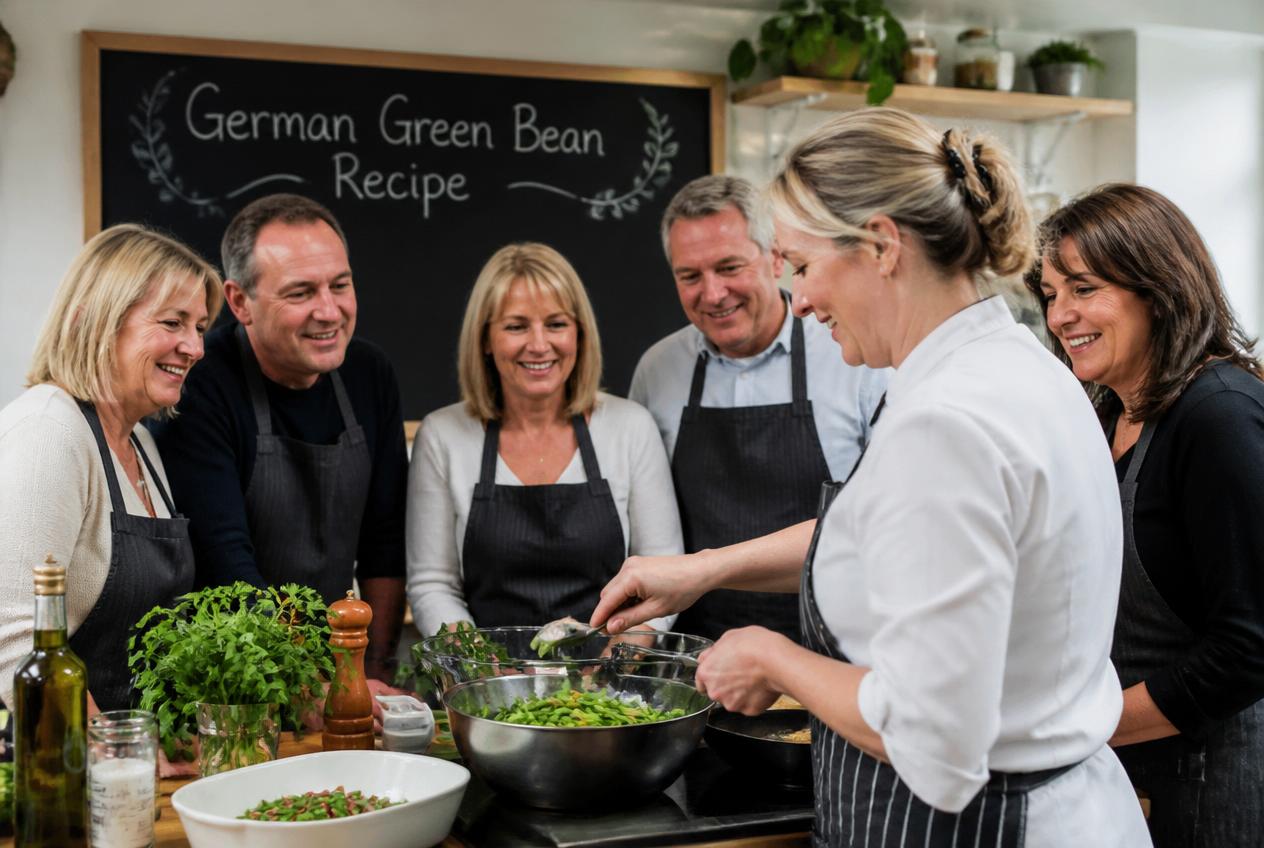
German green beans, or Speckbohnen, might be the most craveable vegetable side in my kitchen. This German Green Bean recipe blends crisp, fresh green beans with smoky bacon, creating that unmistakable savory punch. This quick and easy German recipe gives plain green beans a major upgrade with just a handful of ingredients—bacon, onions, and a sweet-sour glaze. The name Speckbohnen literally means “bacon beans” in German, and honestly, that says everything you need to know.
What I love about this German Green Bean recipe is how it captures the German way of treating vegetables: with respect, but also with bacon. Sure, German cuisine leans heavy on the meats, but there’s always a vegetable side. Speckbohnen nails that balance—tender beans, smoky bacon, and a little time in the pan until everything gets silky and full of flavor.
This German Green Bean recipe is a go-to for Oktoberfest or any night you want something more exciting than steamed veggies. The mix of smoky, tangy, and sweet flavors makes it the kind of side people remember and ask about later. I mean, who wouldn’t?
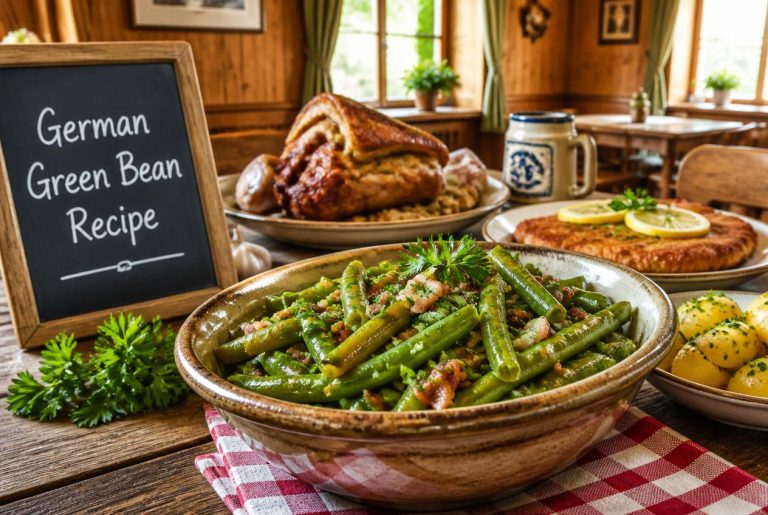
German Green Bean Recipe
Key Takeaways
- Speckbohnen is a German Green Bean recipe with bacon and a sweet-sour glaze
- It’s simple—just a few ingredients—but the flavor is deep and smoky
- This German Green Bean recipe is flexible, works for celebrations or weeknights, and you can tweak the seasonings
English Recipe Description and Historical Information
Speckbohnen, the classic German Green Bean recipe, combines green beans with bacon or speck (German cured ham). The name says it all: bacon beans. It’s simple, honest, and seriously tasty.
This German Green Bean recipe really shows off what German food is about—turning humble ingredients into comfort food. German traditions favor hearty, practical dishes, and Speckbohnen brings both freshness and vitamins to the table, all while standing up to heavy mains.
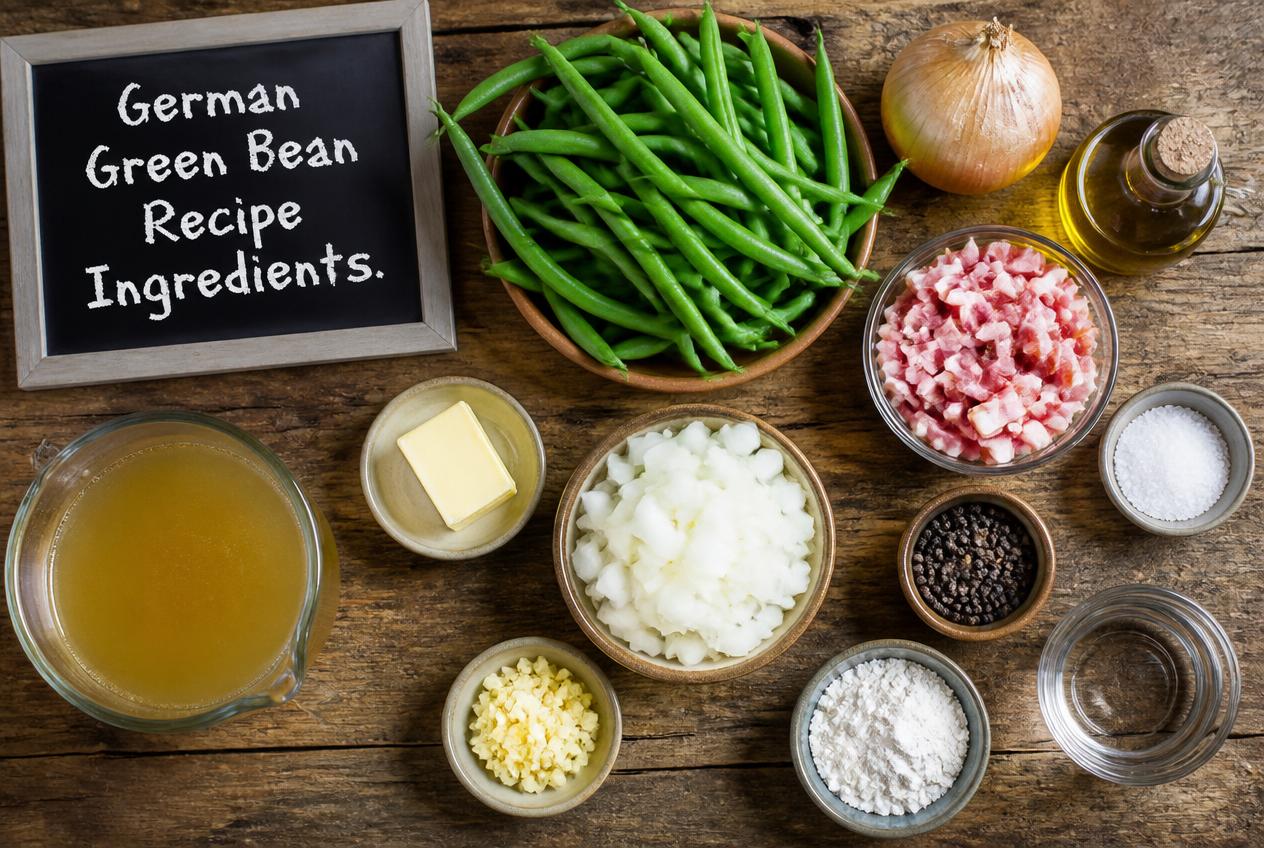
The basic German Green Bean recipe is built from:
- Fresh or frozen green beans
- Bacon or speck
- Onions
- Salt and pepper
- Sometimes savory (bohnenkraut) herb
With this German Green Bean recipe, you see how Germans balance meat and veggies. Even with all the sausages and roasts, there’s always at least one vegetable side or salad on the table.
Speckbohnen fits right in with German classics—think goulash, sauerbraten, or beef roulade. The bacon’s smokiness lifts the green beans without drowning them out. It’s a German Green Bean recipe that’s both comforting and practical, passed down through generations.
It’s fast, too. You only need one pan, and the process is as straightforward as it gets. German food doesn’t fuss around—this German Green Bean recipe proves you don’t need fancy techniques for big flavor.
Recipe Tips
I always crisp the bacon before adding it to the green beans. This German Green Bean recipe just works better that way—the bacon gets crunchy, and the fat is perfect for softening the onions.
Fresh green beans are my top pick for this German Green Bean recipe. I trim the ends and chop them into 1-2 inch pieces. Frozen beans are fine if you’re in a hurry, but fresh ones hold their shape and taste brighter.
Key ingredient tips for this German Green Bean recipe:
- Go for thick-cut bacon if you can—it’s more satisfying
- Yellow onions give the best sweet-savory base
- Summer savory is classic, but thyme is a solid backup
- A splash of vinegar brings that authentic tang
Don’t rush the beans. I simmer them low and slow so they’re tender but not mushy. Patience really pays off with this German Green Bean recipe. The beans should be soft, but not falling apart.
I cook the bacon first, take it out, and then sauté the onions in the leftover fat. Once the beans and liquid go in, I simmer everything for at least 20 minutes. Some folks go longer if they want softer beans. There’s no strict rule—just taste as you go.
This German Green Bean recipe is great for meal prep. I make it ahead, and honestly, the flavors deepen overnight. Store leftovers in an airtight container in the fridge for up to 4 days.
Don’t skip the bacon fat. It’s the soul of this German Green Bean recipe. If you’re watching the fat, drain off some, but leave at least 2 tablespoons for flavor. Otherwise, it just won’t taste as German.

Variations
This German Green Bean recipe is a hit at Oktoberfest or any big gathering. You can change it up while keeping the German vibe strong.
For a vegetarian German Green Bean recipe, I leave out the bacon and use smoked paprika for that deep, smoky flavor. Extra onions and a dab of butter add richness. It’s not exactly traditional, but it works.
Regional twists on the German Green Bean recipe:
- Bavarian: Add summer savory—super common in southern Germany
- Northern: Smoked ham replaces bacon
- Swabian: Toss in small potatoes and cook them with the beans
- Austrian: Finish with vinegar and sugar for a sweet-sour kick
I sometimes use yellow wax beans for color. Fresh green beans are best, but frozen ones save time. For more flavor, I’ll throw in garlic with the bacon or add diced tomatoes and bell peppers. Caraway seeds give it that unmistakable German touch.
Want a creamy German Green Bean recipe? Stir in sour cream at the end. Sometimes I’ll add chicken broth to deepen the flavor, or sprinkle fresh parsley or chives right before serving. It’s all about making this German Green Bean recipe work for you.
That’s the thing about the German Green Bean recipe—you can adapt it to your mood, what’s in your fridge, or even what region you want to channel.
Alternate Recipes Substitutions
This German Green Bean recipe is super forgiving with swaps. No bacon? I’ll use ham, pancetta, or even turkey bacon if I have to. It’s not quite the same, but it’s still good.
Fresh green beans are my usual choice in this German Green Bean recipe, but frozen ones step up if needed. I skip blanching with frozen beans since they’re already half-cooked. Canned green beans? Not ideal, but they’ll do in a pinch—just rinse them well.
Sometimes I have to get creative with seasonings in my German Green Bean recipe:
- Summer savory – Swap for thyme, marjoram, or a pinch of sage
- Onions – Shallots or leeks are great alternatives
- Butter – Olive oil or more bacon fat both work
- Vinegar – Apple cider or white wine vinegar get the job done
Different herbs can totally change the vibe of this German Green Bean recipe. Summer savory is traditional, but honestly, thyme or marjoram are just as good.
For a vegetarian German Green Bean recipe, I skip the bacon and use olive oil with smoked paprika. Mushrooms add extra flavor and texture. It’s not classic, but it’s tasty.
If you’re avoiding gluten, thicken any sauce with cornstarch instead of flour. This German Green Bean recipe is naturally pretty gluten-free anyway, so that’s rarely an issue.
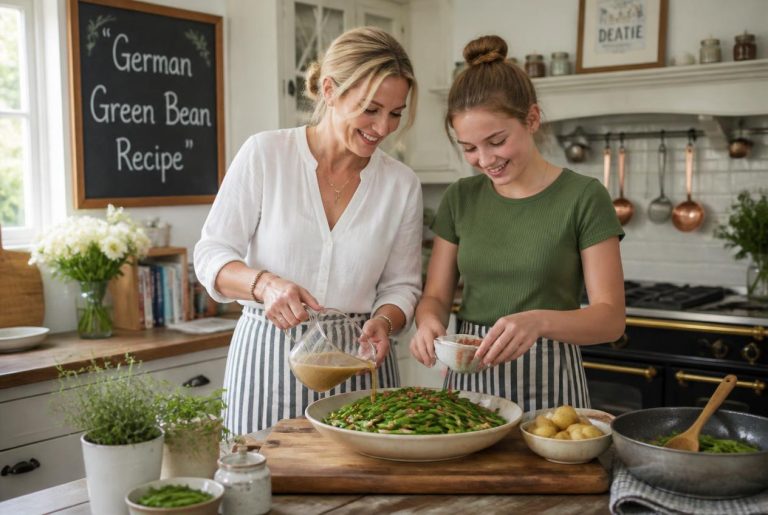
German Green Bean Recipe Cooking Tips
German Green Bean Recipe (Speckbohnen) Cooking Tips
• Speckbohnen are known for their savory flavor, tender-crisp texture, and smoky bacon coating.
• Fresh green beans provide the best texture and appearance.
• Trim the ends of the beans evenly before cooking.
• Blanch the green beans briefly before wrapping to help ensure even tenderness.
• Immediately cooling the beans after blanching helps preserve their bright color.
• Thin slices of bacon are traditionally used because they wrap more easily around the beans.
• Bundle several beans together before wrapping with bacon.
• Secure bundles with toothpicks if necessary to prevent unwrapping during cooking.
• Black pepper complements the smoky bacon flavor beautifully.
• A small amount of butter can add extra richness during cooking.
• Roast, bake, or pan-fry until the bacon is crisp and the beans are tender.
• Avoid overcooking the beans because they should retain a slight bite.
• Speckbohnen are commonly served alongside roast meats, schnitzel, or holiday meals.
• The flavor should balance fresh green beans, smoky bacon, and light seasoning.
• Speckbohnen are especially popular as a side dish throughout Germany and Austria.
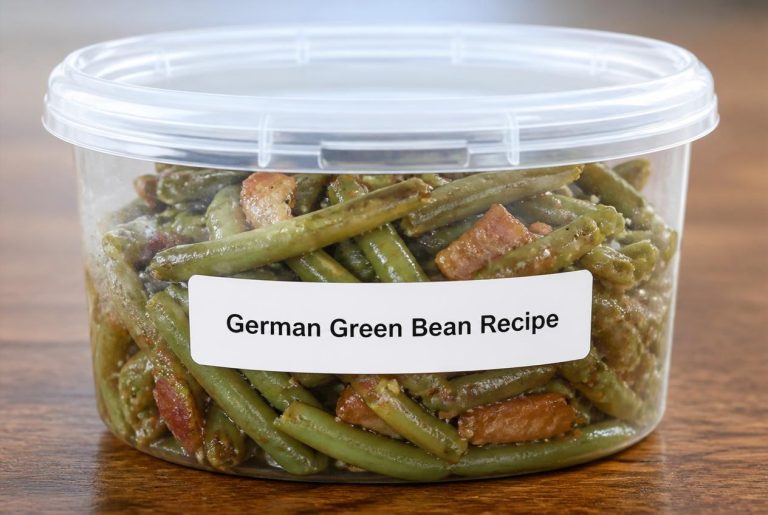
German Green Bean Recipe Storage Tips
German Green Bean Recipe (Speckbohnen) Storage Tips
• Allow the bean bundles to cool before transferring them into storage containers.
• Store refrigerated in airtight containers to preserve freshness.
• Refrigeration may soften the bacon slightly, which is normal.
• Reheat in the oven, air fryer, or skillet to help restore crispness.
• Avoid microwaving if possible because the bacon may become soft.
• Store the bundles in a single layer whenever possible to maintain their shape.
• Bacon flavors often deepen after overnight refrigeration.
• Freeze cooked Speckbohnen in airtight freezer-safe containers if desired.
• Defrost frozen bundles gradually in the refrigerator before reheating.
• Reheat until the bacon and beans are thoroughly heated throughout.
• Use clean utensils when handling leftovers to help maintain freshness.
• Vegetable-and-bacon dishes are generally best enjoyed within a shorter refrigerated storage period for ideal quality and safety.
• Keep away from delicate desserts because savory aromas may transfer.
• Slight softening of the beans during storage is normal.
• Discard leftovers if the bacon or beans develop sour odors, slime, mold, or unusual discoloration.
German Green Bean Recipe (Speckbohnen)
Ingredients
- 8 oz green beans
- ½ tablespoon butter approx
- ¼ onion
- 1 oz speck or prosciutto can also use bacon but will likely need a little more
Instructions
- Begin by trimming the stem ends from the green beans. If any of the beans are particularly long, cut them in half so that the pieces are roughly the same length. Uniform pieces not only look more attractive when served but also cook more evenly.
- Finely dice the onion and prepare the speck or prosciutto by slicing it into small strips or cubes. If the slices are large, cut them into smaller bite-sized pieces so they distribute evenly throughout the dish.
- Bring a large pot of water to a rolling boil and season it lightly with salt. Add the prepared green beans and cook for approximately 5 minutes, or until they are tender but still retain a slight bite.
- Avoid overcooking the beans, as they can quickly become soft and lose their vibrant color. The goal is to keep them bright green with a pleasant texture.
- If preferred, you can steam the beans or cook them in the microwave with a small amount of water until just tender. Regardless of the cooking method, they should remain firm enough to hold their shape.
- To preserve their bright green color, immediately transfer the cooked beans to a bowl of ice water or rinse them under very cold running water. Once cooled, drain thoroughly and set aside.
- While the beans are cooking, melt the butter in a medium skillet over medium heat. Add the diced onion and cook for 2–3 minutes, stirring occasionally, until softened and translucent.
- Add the speck or prosciutto to the skillet and continue cooking for another 1–2 minutes. As it heats, the meat will begin to render its fat and develop a slightly crisp texture, adding a rich, savory flavor to the dish.
- Add the drained green beans to the skillet with the onions and speck. Toss everything together thoroughly so the beans are coated with the butter and flavored by the rendered meat.
- Cook for about 1 minute, stirring frequently, just long enough to heat the beans through and allow the flavors to combine.
- Taste and adjust seasoning if necessary. Depending on the saltiness of the speck or prosciutto, additional salt may not be needed, though a little freshly ground black pepper can be added if desired.
- Transfer the beans to a serving dish and serve immediately while hot.
- This simple side dish highlights the fresh flavor of green beans while the buttery onions and savory speck add richness and depth. It pairs beautifully with schnitzel, roast pork, sausages, roasted chicken, or other traditional German and Austrian main courses. The combination of crisp-tender beans, sweet onions, and smoky cured meat creates an elegant yet easy accompaniment suitable for both everyday meals and holiday tables.
German Green Bean Recipe (Speckbohnen) Frequently Asked Questions
People have lots of questions about the German Green Bean recipe—what to use, how to cook it, and how to get the best flavor. Here’s what comes up most often.
How do you make German-style green beans with bacon and onions?
I dice bacon and cook it in a big skillet until it’s crispy. Then I scoop out the bacon, leaving about 2 tablespoons of fat in the pan.
Next, I toss in chopped onions and cook them until they’re soft and golden, usually around 5 minutes. I add the green beans and a splash of water or broth.
I cover the pan and let the beans simmer until they’re tender—15 to 20 minutes does it. At the end, I mix the bacon back in and season with salt and pepper. That’s the German Green Bean recipe in a nutshell.
What type of bacon or speck works best for traditional German green beans?
Traditional Speckbohnen uses speck, a smoked, cured pork belly from Germany. Speck gives a deeper smoky flavor than American bacon and isn’t as fatty.
If I can’t find speck, I just use thick-cut American bacon. It holds up during cooking and gives good flavor.
I skip turkey bacon or center-cut bacon for this German Green Bean recipe—they just don’t have enough fat for the job. The rendered fat is what makes the dish taste right.
How can you adapt sweet-and-sour German green beans using vinegar and a touch of sugar?
For a sweet-sour German Green Bean recipe, I mix sugar, vinegar, salt, and pepper in the pan after cooking the bacon and onions. White or apple cider vinegar both work.
I let the mixture boil for about 3 minutes to thicken. My usual ratio is 2 tablespoons sugar to 3 tablespoons vinegar for every pound of green beans.
Once the sauce thickens, I toss in the cooked beans and stir until everything’s coated and hot. The German Green Bean recipe should taste balanced—not too sweet, not too sour.
Can German green beans be made in a slow cooker without turning mushy?
I make the German Green Bean recipe in a slow cooker on low for 4–5 hours or high for 2–3 hours. The trick is not to overcook them.
I add the green beans, cooked bacon, onions, and a little liquid to the slow cooker all together. I check after the minimum time—beans should be tender but still have a bit of bite.
If I use frozen green beans, I cut the cooking time by about 30 minutes. I always drain them well first so the German Green Bean recipe doesn’t get watery.
What are the best sides to serve with German green beans, including spaetzle?
I like serving the German Green Bean recipe with spaetzle—those little German egg noodles soak up the bacon fat and tangy sauce perfectly. Their soft texture goes great with the beans.
Roasted potatoes or potato salad also pair well. The starchiness balances the tangy, savory notes of this German Green Bean recipe.
For mains, I reach for pork schnitzel, bratwurst, or roasted chicken. They match the classic German flavors of the German Green Bean recipe and round out the meal.
How can you make sweet-and-sour green beans without bacon while keeping a similar flavor?
Honestly, when I want to whip up a German Green Bean recipe without bacon, I just grab some olive oil or butter. Usually, I toss about 2 tablespoons into the pan and let the onions sizzle in that. It’s not bacon fat, but it works pretty well and gives a nice base for the German Green Bean recipe.
Now, if you’re missing that smoky hit you get from bacon, here’s a trick: sprinkle in a bit of smoked paprika or a dash of liquid smoke. I’ve found that about 1/4 teaspoon of liquid smoke does the trick—seriously, don’t go overboard or you’ll regret it. This little tweak really transforms the German Green Bean recipe and gets you closer to that classic flavor.
I stick to the usual sweet-and-sour sauce—vinegar and sugar, nothing fancy. Sometimes, I’ll throw in a pinch of garlic powder and maybe some fresh parsley or dill. It’s not meat, but it gives the German Green Bean recipe a fuller, more interesting flavor. You can play around with the herbs depending on what you’ve got. I mean, isn’t that what cooking’s all about?
If you’re after a German Green Bean recipe that’s meatless but still satisfying, these swaps really help. The German Green Bean recipe ends up tangy, a little sweet, just a hint smoky, and honestly, it’s pretty hard to miss the bacon. I’ve served this German Green Bean recipe to friends who never even noticed it was vegetarian. Try it out, maybe tweak the German Green Bean recipe to your own taste, and see what you think. Sometimes, the best German Green Bean recipe is the one you make your own, right?

Recipes are gathered in person and written for real-world cooking conditions.
- 10 Hungarian Dessert Recipes Passed Down Through Generations - July 25, 2026
- 11 Easy English Recipes Anyone Can Make - July 25, 2026
- Hungarian Kifli Recipe - July 25, 2026