
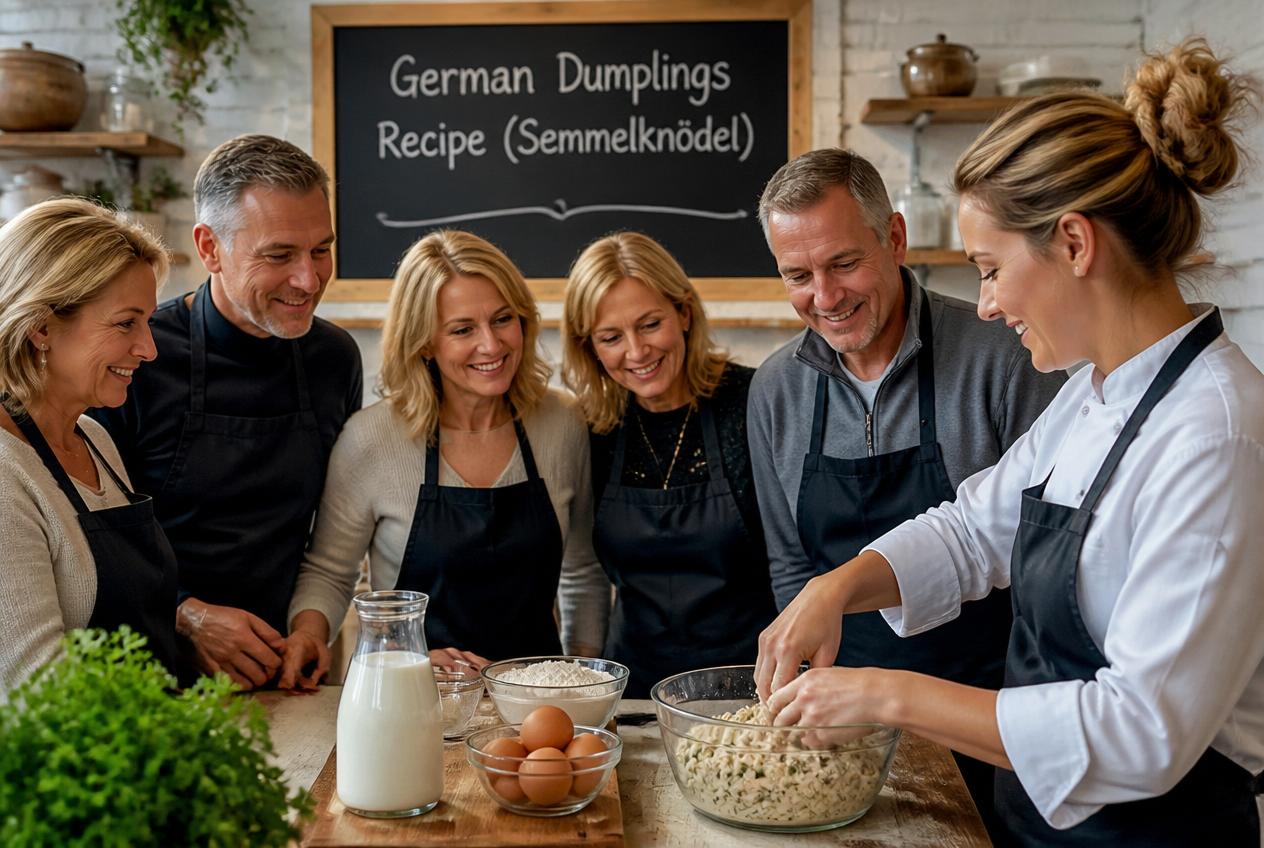
German Dumplings, or Semmelknödel, turn stale bread into soft, pillowy spheres that soak up gravies and sauces like edible sponges. These Bavarian staples have been around for ages, showing up on German tables for generations. Honestly, once you get the hang of making Dumplings, there’s a whole world of comfort food you can dive into.
Semmelknödel are made from cubed stale bread combined with milk, eggs, onions, and parsley, then formed into balls and simmered until tender. The method isn’t complicated, but nailing the right bread-to-liquid ratio takes a little practice. Once you get that down, German Dumplings become a go-to traditional side dish for any meal with rich sauces.
I’ll show you how to make Dumplings the authentic way, throw in some practical tips for getting the perfect consistency, and chat about a few creative twists to keep things interesting. Whether you’re staring down a pile of leftover bread or just want to bring a real German vibe to dinner, Dumplings are way easier to make than most people think.
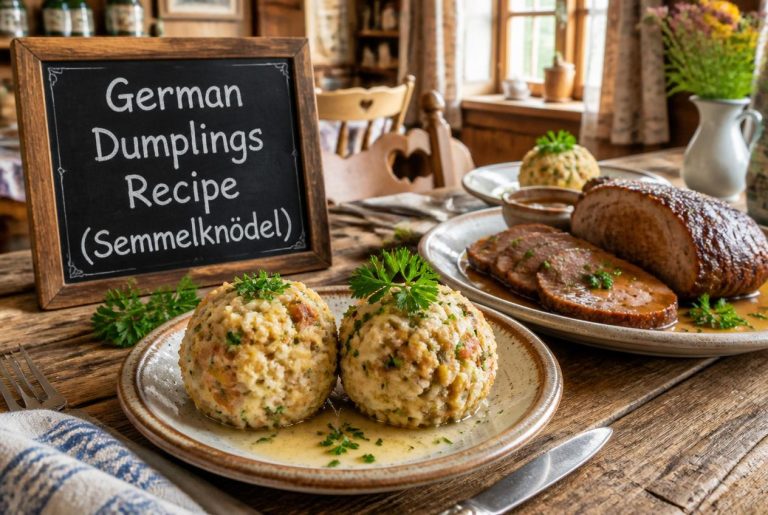
German Dumplings Recipe (Semmelknödel)
Key Takeaways
- German Dumplings—Semmelknödel—are classic Bavarian dumplings made from stale bread, milk, eggs, and seasonings, and they’re perfect with anything saucy.
- The trick to great German Dumplings is using bread that’s properly dried and making sure the mixture isn’t too wet or too dry.
- You can change up your German Dumplings with different herbs or ingredients and still keep that authentic German feel.
Recipe Background and History
Semmelknödel—or German Dumplings—started out in southern Germany, especially Bavaria. The name literally comes from “semmel” (bread rolls) and “knödel” (something kneaded). I think it’s pretty cool how German Dumplings show off the cleverness of traditional cooks, turning stale bread rolls (usually Kaiser rolls) into something everyone actually wants to eat.
The dish spread out from Bavaria and caught on all over southern Germany, Austria, Slovenia, and the Czech Republic. Each area added its own spin—sometimes onions, bacon, parsley, marjoram, or nutmeg join the basic mix. But at the core, it’s always Dumplings making the most of leftovers.
Core Ingredients:
- Stale bread rolls (Kaiser rolls)
- Warm milk
- Eggs
- Salt and seasoning
The traditional Semmelknödel recipe creates tennis ball-sized Dumplings simmered in water. German Dumplings are prized for their ability to soak up rich gravies and sauces from roasts and stews. That’s really the magic—Dumplings turn what would’ve been wasted bread into a fluffy, much-loved side that keeps showing up on German tables.
Practical Tips for Preparation
I always start with the right bread for my German Dumplings. German bread rolls (brötchen) work best when they’re at least a day old. Hardened bread soaks up the milk mixture way better than anything fresh. If you’re using super fresh bread, your German Dumplings might end up mushy, and nobody wants that.
I cut the bread into cubes—about half an inch each. That makes sure they soak up the liquid evenly and gives the Dumplings a nice texture. You don’t want big chunks or crumbs; somewhere in the middle is just right.
Key preparation steps:
- Soak bread cubes in warm milk for 10-15 minutes
- Don’t let the bread get too soggy—German Dumplings fall apart if there’s too much liquid
- Mix everything gently so you don’t smash the bread
- Rest the mixture for 15-20 minutes before shaping
I always test one Dumpling before making the whole batch. If it falls apart, I add more egg or breadcrumbs. If it’s too dense, a splash more milk loosens things up. When cooking, I keep the water at a gentle simmer. A rolling boil will break up your Dumplings—trust me, I’ve learned that the hard way.
To shape German Dumplings, I wet my hands with cold water to keep things from sticking. I roll them into balls about the size of a tennis ball, pressing just enough to hold them together. If you squeeze too hard, you’ll end up with dense German Dumplings, and that’s not what we’re after.
Once cooked, I cool German Dumplings completely before storing them in the fridge. They’ll last 2-3 days and reheat nicely—just slice and pan-fry in butter. Leftover Dumplings make for a killer breakfast or lunch, honestly.
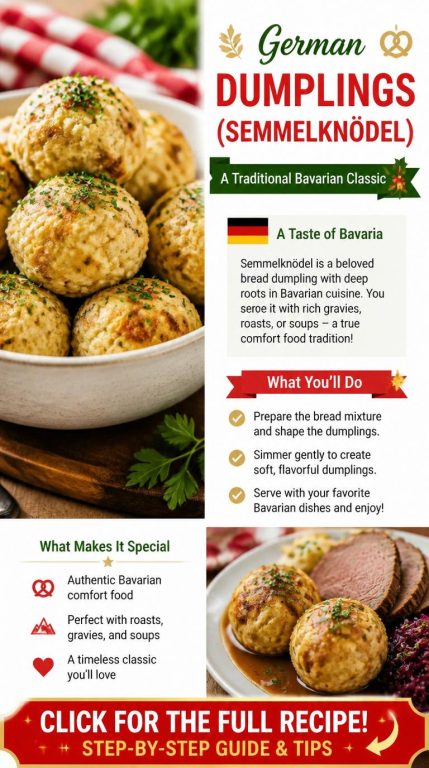
Creative Variations
Classic German Dumplings are great, but I’ve found all kinds of ways to shake things up. Across Germany and Austria, you’ll see plenty of regional twists that keep German Dumplings exciting.
Speckknödel is a favorite—add crispy bacon right into the Dumplings mix for a smoky, savory kick. These are especially good with lighter sauces or just a bit of butter.
Serviettenknödel changes up the cooking style. I roll the mixture into a long log, wrap it in cloth, and poach it whole. After cooking, I slice it into rounds. It’s still Dumplings at heart, just in a different shape.
Other cool German Dumplings variations I’d recommend:
- Brezenknödel – Use leftover pretzels instead of bread rolls for a pretzel-y twist
- Cheese dumplings – Grated Emmental or Gruyère turns German Dumplings into rich, cheesy bites
- Herb-infused – Chives, dill, or marjoram add freshness to German Dumplings
- Mushroom dumplings – Sautéed mushrooms bring earthy flavor to German Dumplings
Bavarian German Dumplings tend to be bigger, with parsley and extra spices tossed in. Austrian German Dumplings are usually firmer and a bit more floury. Either way, you’re transforming stale bread into fluffy, satisfying German Dumplings that play well with all kinds of main dishes.
Related Recipes
Dumplings really come alive when you pair them with the right food. I always recommend serving German Dumplings with dishes that have plenty of sauce—otherwise, you’re missing the point.
Creamy mushroom sauce is my go-to with Dumplings. The earthy flavors go perfectly with the mild bread. If you want a real German meal, whip up a classic Jägersoße (mushroom gravy) and let the German Dumplings soak it all up.
Here’s what I usually serve with German Dumplings:
- Sauerbraten – Tangy pot roast with loads of gravy for German Dumplings to drink up
- Rouladen – Beef rolls stuffed with bacon, onions, and pickles in a rich sauce
- Goulash – Hearty stew with thick sauce—German Dumplings love it
- Roast pork or beef – Any roast with pan juices is a win for German Dumplings
I’ve found that mushroom sauce paired with roast meats makes Dumplings really shine. They’re not just a side—they’re the best way to mop up every last bit of sauce.
Sometimes I go simple and just make a rahm sauce (cream sauce) with fresh herbs. It’s lighter but still gives Dumplings that creamy, comforting touch, even if you skip the roast.
If you’re serving German Dumplings, make sure there’s enough liquid on the plate. Dry dishes don’t do them justice. I always make sure my menu includes something saucy when German Dumplings are involved.
Similar Dishes
When I look at German dumpling varieties, German Dumplings (Semmelknödel) share a lot with other classics. Potato dumplings (Kartoffelklöße) are probably the closest cousins to German Dumplings.
Kartoffelklöße use potatoes instead of bread. They’re denser and smoother than the lighter, more textured German Dumplings. Both types of Dumplings work great with gravies and saucy meat dishes, though.
Key differences between these dumplings:
| Dumpling Type | Main Ingredient | Texture |
|---|---|---|
| Semmelknödel | Stale bread | Light, airy |
| Kartoffelklöße | Potatoes | Dense, smooth |
| Klöße (general) | Varies | Depends on type |
The word Klöße is kind of a catch-all for Dumplings of all sorts. Some regions swap between Klöße and Knödel, even if the recipes change a bit. Austrian German Dumplings also fit in here, with all sorts of sweet and savory options. The method stays the same—make the mixture, shape it, and boil it in salted water. Simple, but there’s a lot of room for personality.
If you’re after a gluten-free alternative to Dumplings, give Kartoffelklöße a try. Potato-based German Dumplings are just as versatile for roasts, goulash, and all the classic German meals.
Other Recommendations for Fans of German Dumplings (Semmelknodel)
If you’re into Semmelknödel as a versatile side dish, you’ve got to try pairing German Dumplings with classic meat dishes drenched in gravy. Sauerbraten, with its tangy, sweet-sour sauce, just begs for German Dumplings to mop it up. There’s something about that combo that feels right—like they belong together.
I’ve noticed that bread dumplings smothered in gravies and cream sauces just work. German Dumplings shine next to roasted pork with a dark beer sauce or those slow-braised beef dishes everyone loves on a cold day. Honestly, German Dumplings can rescue a meal that’s otherwise a little too dry or plain.
Classic German Pairings:
- Sauerbraten – That marinated pot roast with its bold gravy really lets German Dumplings show off their flavor-soaking skills.
- Schweinebraten – Bavarian roast pork with crispy crackling and rich pan juices—German Dumplings fit right in.
- Rinderrouladen – Beef rolls in gravy? German Dumplings are practically made for this.
- Jägerschnitzel – Pork cutlet in mushroom sauce, and yes, German Dumplings make it even better.
Try tossing Semmelknödel right into hot soups sometimes. German Dumplings add heft and texture, especially in beef broth with veggies or a creamy mushroom soup. There’s just no substitute for that satisfying bite of Dumplings in a bowl of something steamy.
For vegetarian meals, German Dumplings still hold their own. Pair them with a creamy mushroom stew or any dish with a thick, cozy sauce. Their mild flavor and spongy texture mean German Dumplings adapt to just about anything, not just the traditional meaty stuff.
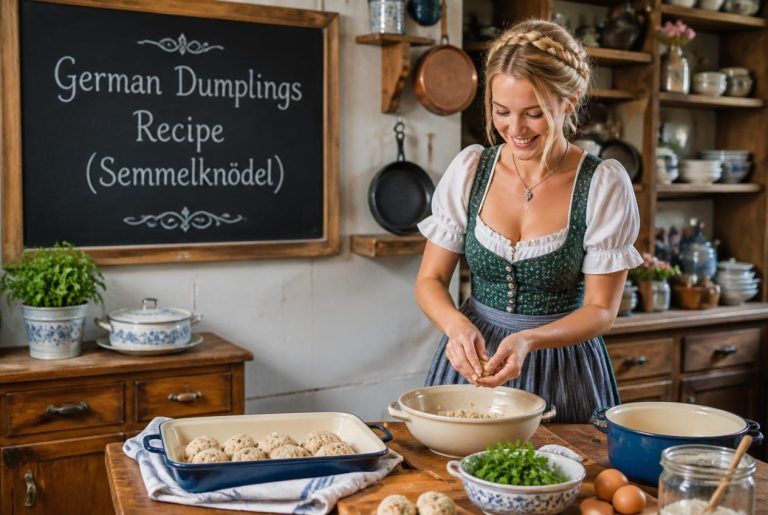
German Dumplings Recipe (Semmelknödel) Cooking TIps
German Dumplings (Semmelknödel) Cooking Tips
• Semmelknödel are known for their soft texture, hearty flavor, and ability to absorb rich gravies and sauces.
• Day-old bread rolls are traditionally used because they absorb liquid better than fresh bread.
• Cut the bread into evenly sized cubes for a consistent dumpling texture.
• Warm milk helps soften the bread and creates a tender mixture.
• Eggs act as a binder and help the dumplings hold together during cooking.
• Finely chopped parsley adds freshness and traditional flavor.
• Sautéed onions cooked in butter contribute sweetness and richness.
• Allow the bread mixture to rest before shaping so the liquid is fully absorbed.
• The mixture should be moist but not overly wet.
• Wet hands can make shaping the dumplings easier and help prevent sticking.
• Form the dumplings gently to avoid making them dense or heavy.
• Cook the dumplings in gently simmering water rather than a rolling boil.
• The dumplings are done when they float and are heated through.
• Some regional versions include toasted bread cubes in the center for additional texture.
• Semmelknödel pair beautifully with roast meats, mushroom sauces, gravies, and red cabbage.
• The flavor should balance tender bread, butter, onions, and fresh herbs.
German Dumplings Recipe (Semmelknödel) Storage Tips
German Dumplings (Semmelknödel) Storage Tips
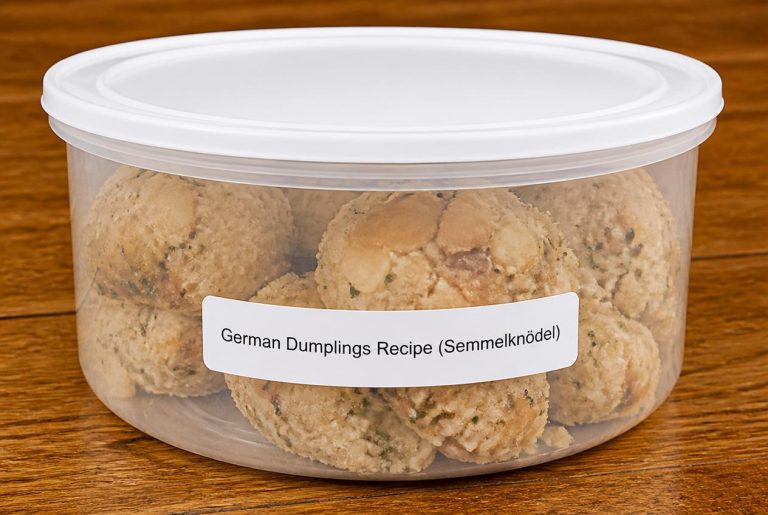
• Allow the dumplings to cool before transferring them into storage containers.
• Store refrigerated in airtight containers to preserve freshness.
• Separate layers with parchment paper if stacking multiple dumplings.
• Refrigeration firms the dumplings slightly, which is normal.
• Reheat gently in simmering water, a steamer, or a microwave until warmed through.
• Sliced leftover dumplings can be pan-fried in butter for a delicious crispy exterior.
• Herb and onion flavors often deepen after overnight refrigeration.
• Freeze cooked dumplings in airtight freezer-safe containers if desired.
• Separate dumplings before freezing to prevent sticking.
• Defrost frozen dumplings gradually in the refrigerator before reheating.
• Pan-frying thawed dumpling slices is a popular way to serve leftovers.
• Use clean utensils when handling leftovers to help maintain freshness.
• Bread-based dishes are generally best enjoyed within a shorter refrigerated storage period for ideal quality and safety.
• Keep away from strongly scented foods because dumplings readily absorb odors.
• Slight firming during storage is normal.
• Discard leftovers if the dumplings develop sour odors, slime, mold, or unusual discoloration.
German Dumplings (Semmelknödel)
Ingredients
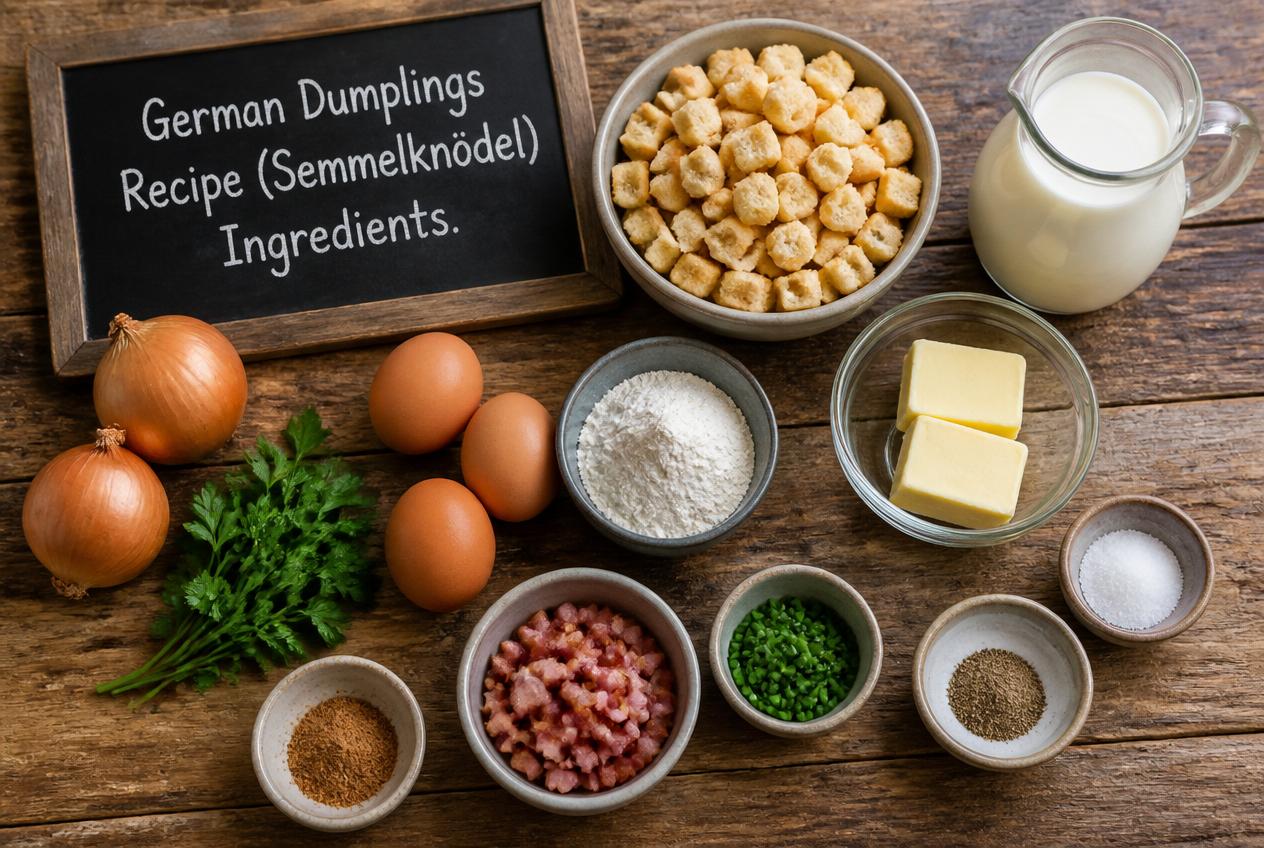
- 1 1 pound loaf stale French bread, cut into 1-inch cubes
- 1 cup milk
- 2 tablespoons butter
- 1 onion finely chopped
- 1 tablespoon chopped fresh parsley
- 2 large eggs
- ½ teaspoon salt
- 1 pinch ground black pepper
- ½ cup dry bread crumbs or as needed (Optional)
Instructions
- Place the bread cubes into a large mixing bowl. In a saucepan, heat the milk over medium heat until it is hot and just beginning to bubble around the edges. Do not allow it to boil.
- Pour the hot milk evenly over the bread cubes and stir gently to ensure all of the bread is moistened. Allow the mixture to sit for 15 minutes, giving the bread time to absorb the milk and soften completely. This soaking step is essential for creating the light, tender texture that traditional bread dumplings are known for.
- While the bread is soaking, melt the butter in a skillet over medium heat. Add the onions and cook, stirring occasionally, until they become soft, translucent, and lightly golden. This usually takes about 5–7 minutes.
- Stir in the chopped parsley and remove the skillet from the heat. The warm onions and herbs add flavor and moisture throughout the dumplings while complementing the mild flavor of the bread.
- Add the onion and butter mixture to the bowl with the soaked bread. Add the eggs, salt, and black pepper.
- Using clean hands, gently squeeze and work the mixture together, pressing the softened bread through your fingers until a cohesive dough forms. Continue mixing until the ingredients are evenly distributed and the dough becomes smooth, moist, and slightly sticky.
- The finished mixture should hold together when squeezed but still feel soft and light.
- Bring a large pot of lightly salted water to a gentle boil. The water should be at least 3 to 4 inches deep so the dumplings have enough room to cook evenly.
- Before shaping all of the dumplings, make a test dumpling about the size of a small orange or tangerine. With wet hands, gently shape the dough into a ball and carefully lower it into the boiling water.
- If the dumpling holds together during cooking, the mixture is ready. If it begins to fall apart, the dough is too wet. In that case, stir a small amount of breadcrumbs into the remaining mixture and test again until the consistency is correct.
- Once the mixture passes the test, wet your hands and shape the remaining dough into large round dumplings of similar size. Keeping them uniform helps ensure they cook evenly.
- Carefully lower the dumplings into the simmering water one at a time. Avoid overcrowding the pot; cook in batches if necessary.
- Reduce the heat so the water remains at a gentle simmer rather than a vigorous boil. Simmer the dumplings for approximately 20 minutes, allowing them to cook through without breaking apart.
- During cooking, the dumplings will become light, tender, and slightly expanded.
- Using a large slotted spoon, carefully lift the dumplings from the water and transfer them to a serving platter.
- The finished bread dumplings should be soft, fluffy, and pleasantly spongy, with a delicate texture that absorbs sauces beautifully. Serve them immediately alongside roast meats, beef rouladen, Sauerbraten, pork roast, mushroom gravy, or other traditional German dishes.
- These classic German bread dumplings (Semmelknödel) are perfect for soaking up rich gravies and sauces, making them one of the most beloved comfort-food side dishes in Central European cooking.
Frequently Asked Questions
Honestly, the bread you pick and how you cook it can make or break German Dumplings. If you rush or guess at the temperature, you might end up with a pot of mush. But get it right, and German Dumplings come out tender, a little springy, and basically perfect every time.
What type of bread works best for making traditional bread dumplings?
Day-old white bread rolls or white bread make the best base for authentic Semmelknödel. For German Dumplings, the bread should be a bit stale—fresh bread is too wet and just turns gummy. I always go for traditional German bread rolls called Semmel when I can find them. They’re firm enough to cut into cubes for Dumplings without turning to crumbs.
You could try sourdough or brioche for your Dumplings, but expect the flavor and texture to change. I’ve found whole wheat bread makes Dumplings that are heavier and sometimes don’t hold together as well. For me, simple white bread is the way to go for Dumplings.
How do you prevent bread dumplings from falling apart while cooking?
For German Dumplings, I always make sure my mixture has enough egg to keep everything together. The usual ratio is one egg for every two or three cups of bread cubes. Let the Dumplings mixture rest for 15 to 20 minutes so the bread soaks up the liquid fully—this helps them hold their shape.
I make one test Dumpling and cook it first. If it falls apart, I’ll toss in another egg or a spoonful of flour. When shaping Dumplings, wet your hands and handle them gently—press just enough to hold the shape, but don’t squish them to death.
Should bread dumplings be boiled, simmered, or steamed for the best texture?
I always simmer German Dumplings. Boiling them hard just beats them up and can turn them soggy. Keep the water between 180°F and 190°F—just below boiling. You’ll see tiny bubbles rising, but nothing wild. For Dumplings, I drop them into already-hot water, not cold, so they don’t soak up too much water.
Some people steam Dumplings, and that’s fine, but I stick to simmering. It’s the old-school way and gives Dumplings the texture I like. I’m not saying you have to do it my way, but it works.
How can you tell when bread dumplings are fully cooked inside?
German Dumplings are ready when they float to the top. That usually takes around 15 to 20 minutes, depending on their size. I let Dumplings simmer for another couple of minutes after they float, just to be sure the middle is cooked. Press one gently with a spoon—if it feels firm, you’re probably good.
Still not sure? Cut a Dumpling in half. The inside should look even, not doughy or dense. A good Dumpling is light all the way through, and you’ll know it when you see it.
What are the best sauces or gravies to serve with bread dumplings?
Rich brown gravy from roast drippings is hands-down the best for Bavarian bread dumplings. German Dumplings just soak up all that flavor. I also love mushroom cream sauce with German Dumplings. Jägersauce, with mushrooms and bacon, is a classic and maybe my personal favorite for Dumplings.
Goulash sauce or any hearty stew totally works because Dumplings were made for soaking up gravy. Sometimes I just go simple—German Dumplings with melted butter and fresh herbs. It’s not fancy, but it’s satisfying in a way only Dumplings can be.
Can bread dumplings be made ahead, frozen, and reheated without losing texture?
Honestly, I like to freeze German Dumplings before cooking them. I just set the uncooked German Dumplings on a parchment-lined baking sheet, let them firm up, then toss them into freezer bags. Dumplings hold up well for about three months in the freezer if you stash them right.
When I want German Dumplings later, I cook them straight from the freezer. No need to thaw—just toss them in, but give Dumplings an extra 5 to 7 minutes to cook through. Thawing German Dumplings first? In my experience, that only turns them mushy and kind of a nightmare to handle. Not worth the trouble.
If you’ve got leftover cooked Dumplings, they’ll chill in the fridge for about three days. I usually slice the German Dumplings in half and fry them up in butter until they’re golden and crisp. That crispy edge on German Dumplings? It’s honestly better than the original. I wouldn’t bother with reheating Dumplings in water or the microwave—both ways just make Dumplings soggy and sad, and who wants that?

Recipes are gathered in person and written for real-world cooking conditions.
- 10 Hungarian Dessert Recipes Passed Down Through Generations - July 25, 2026
- 11 Easy English Recipes Anyone Can Make - July 25, 2026
- Hungarian Kifli Recipe - July 25, 2026