
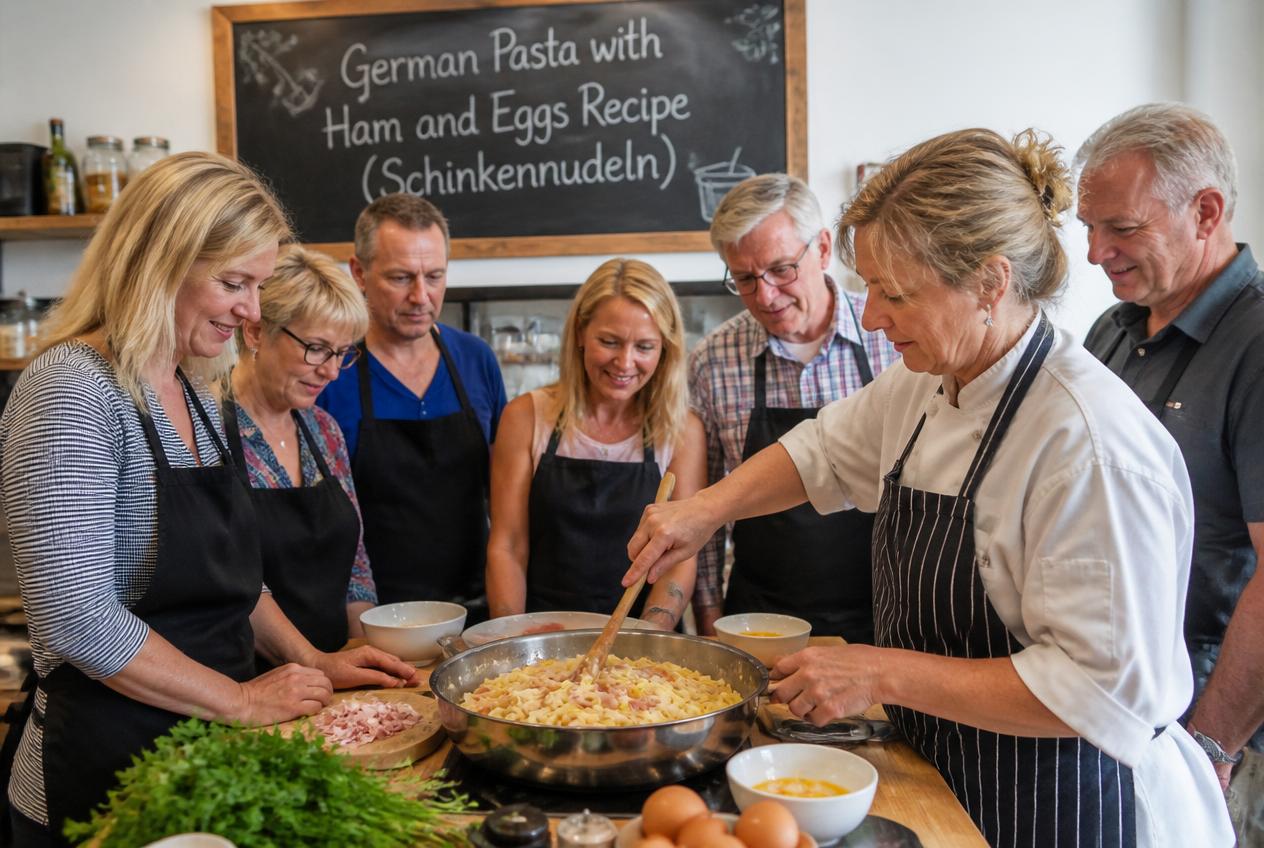
Schinkennudeln, or German Pasta with Ham and Eggs recipe, is a traditional German pasta dish with ham, eggs, and noodles that you can throw together in about 30 minutes. The name just means “ham noodles” in German, and this classic German comfort food has filled bellies across Germany and Austria for ages. If you ask me, it’s one of those dishes that never really goes out of style. There’s something about stumbling on a meal that’s both simple and comforting—especially when it doesn’t keep you tied to the stove all night.
This hearty German Pasta with Ham and Eggs recipe uses just a handful of basic ingredients, yet it somehow always tastes like more than the sum of its parts. You can whip up the German Pasta with Ham and Eggs recipe on the stovetop with scrambled eggs folded into pan-fried noodles, or toss it in the oven as a casserole with cream and cheese. Either way, you get that cozy, familiar flavor that German families have been making forever.
Honestly, the German Pasta with Ham and Eggs recipe is my go-to whenever I need to use up leftover ham. It’s one of those traditional German recipes that doesn’t demand a fancy shopping list—just pantry staples and whatever’s left in the fridge. Whether you’re after a quick dinner or itching to try a real-deal German Pasta with Ham and Eggs recipe, this one’s a keeper.
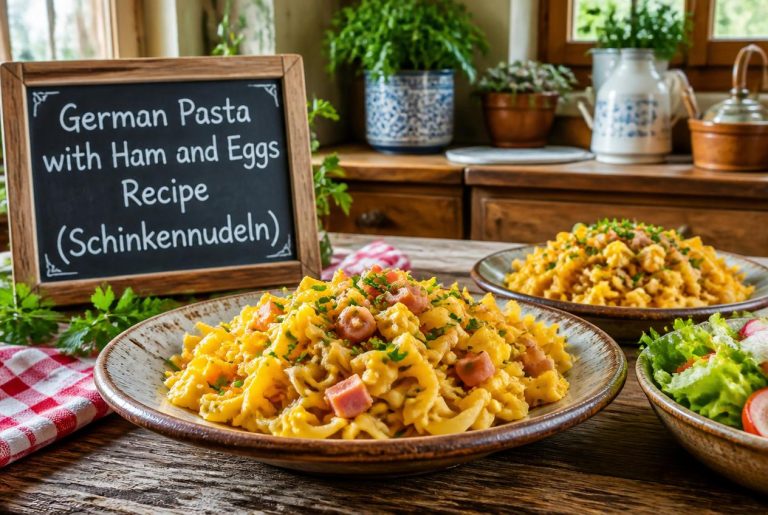
German Pasta with Ham and Eggs Recipe (Schinkennudeln)
Key Takeaways
- Schinkennudeln, or the German Pasta with Ham and Eggs recipe, comes together fast—less than 30 minutes from start to finish
- Make it on the stove with scrambled eggs or bake it with cheese and cream for a heartier version
- This German Pasta with Ham and Eggs recipe is perfect for weeknights and for putting leftover ham to good use
English Recipe Description and Historical Information
Schinkennudeln is a classic German comfort food—and if you translate it, you get “ham noodles.” The German Pasta with Ham and Eggs recipe gets its name from “Schinken” (ham) and “Nudeln” (noodles or pasta).
This dish, in my opinion, really shows off German practicality. People used to make the German Pasta with Ham and Eggs recipe to use up leftover ham and pasta, turning odds and ends into a proper meal. The basic method? Mix cooked pasta, diced ham, and eggs—either scrambled right in or poured over as a sauce. That’s pretty much it for a real German Pasta with Ham and Eggs recipe.
You’ll see variations of the German Pasta with Ham and Eggs recipe all over Germany and Austria. Some add cream and cheese like Emmental or Gouda, while others keep it barebones. Some folks pan-fry it, others bake it until golden. This flexibility is kind of the beauty of the German Pasta with Ham and Eggs recipe.
Common ingredients for the German Pasta with Ham and Eggs recipe:
- Short pasta like fusilli, penne, or macaroni
- Ham or bacon
- Eggs
- Butter or oil
- Optional: cheese, breadcrumbs, onions, cream
This German Pasta with Ham and Eggs recipe is all about no-waste, hearty food. Personally, I love how it highlights the classic German approach—substantial, not fussy. German cooking leans into comfort foods that make everyone happy, from kids to grownups.
The German Pasta with Ham and Eggs recipe takes only about 10-15 minutes to prep, which is probably why it’s a weeknight staple in so many homes.
Recipe Tips
If you’ve got leftover pasta, use it for the German Pasta with Ham and Eggs recipe. Cold noodles fry up better and get that slightly crispy bite that fresh pasta just can’t match.
Pick the right pasta. I always reach for short shapes—fusilli, penne, spirals. They don’t fall apart in the pan, and they hold the egg mixture. That’s what you want in a German Pasta with Ham and Eggs recipe.
For the best German Pasta with Ham and Eggs recipe, fry the ham until it crisps up a bit. I always cook the ham first, then toss in the pasta. That smoky flavor is everything, and it adds a little crunch.
Keep eggs soft, not rubbery. Beat them in a bowl, pour over the hot pasta and ham, and stir gently. Pull the pan off the heat when the eggs are still a little runny—they’ll finish cooking on their own. That’s the sweet spot for the German Pasta with Ham and Eggs recipe.
Here’s how I time things:
- Cook pasta just a minute or two shy of the package instructions
- Fry ham for about 3-4 minutes until the edges get brown
- Add eggs and stir for maybe 1-2 minutes, tops
Room temperature eggs blend better, so I let them sit out a bit if I remember. Cold eggs straight from the fridge don’t mix as smoothly in the German Pasta with Ham and Eggs recipe.
Don’t crowd the pan. I use a big skillet so everything fries instead of steaming. Crowded pans make the pasta soggy, and nobody wants that in their German Pasta with Ham and Eggs recipe.
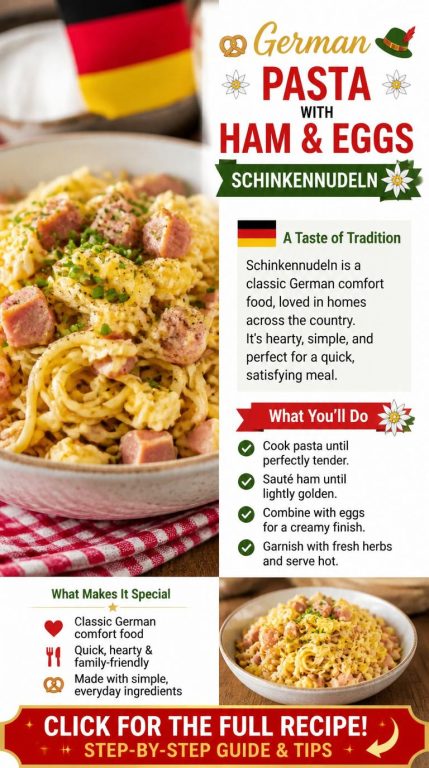
Variations
Honestly, the German Pasta with Ham and Eggs recipe comes in a ton of versions. Every family seems to have their own take. Some throw in cream and breadcrumbs, others add cheese, or even all of the above. That’s part of the fun.
The baked casserole take on the German Pasta with Ham and Eggs recipe shows up at holidays and big family get-togethers. I usually finish it in the oven so the eggs and cream set up with a golden top. It’s perfect when you need to feed a crowd.
For Bavarian spins and Oktoberfest, people love the German Pasta with Ham and Eggs recipe with extra cheese mixed in. Melty Emmental, Gouda, or even a bit of cheddar makes it richer and more satisfying.
Popular tweaks for the German Pasta with Ham and Eggs recipe:
- Sautéed onions for a flavor boost
- Fresh herbs—parsley or chives are my go-tos
- Mixing up the pasta shape (spaetzle is awesome if you can find it)
- Veggies like peas or bell peppers
- Breadcrumbs on top for crunch
When I’m in a hurry, I go with the quick stovetop German Pasta with Ham and Eggs recipe. Eggs scramble right into the noodles—no baking needed. This version even works for breakfast if you’re craving something hearty to start the day.
Some folks want their eggs firm, others like them creamy. I just adjust the cooking time on the German Pasta with Ham and Eggs recipe based on what I’m in the mood for. That’s the beauty of this dish—it’s flexible, forgiving, and always hits the spot.
Alternate Recipes Substitutions
If you’re missing something, don’t sweat it. The German Pasta with Ham and Eggs recipe adapts to whatever you’ve got. The main idea stays the same, but you can swap ingredients without much fuss.
Protein Swaps
No ham? Try cooked bacon, diced sausage, or leftover chicken. Turkey’s good too. For a vegetarian German Pasta with Ham and Eggs recipe, just add mushrooms or bump up the cheese. It still works.
Pasta Choices
I use whatever short pasta I find in the pantry. Fusilli, penne, rigatoni, macaroni—it’s all fair game for the German Pasta with Ham and Eggs recipe. Egg noodles give it a more old-school feel. I’ve even broken up leftover spaghetti for a makeshift version.
Dairy Substitutions
If I’m out of cream, I use milk with a bit of butter. Greek yogurt thinned with milk adds a tangy twist. For cheese, cheddar works if you don’t have Swiss or Gruyere. The German Pasta with Ham and Eggs recipe is super forgiving here.
Egg-Free Option
Need to skip eggs? I just make a simple cream sauce instead and up the cheese. The German Pasta with Ham and Eggs recipe still comes out rich and satisfying.
Mix-Ins
Frozen peas, diced peppers, sautéed onions—whatever needs using up can go in the German Pasta with Ham and Eggs recipe. Fresh herbs brighten things up. Sometimes I’ll add garlic or different spices to keep it interesting. There’s no wrong way, really.

German Pasta with Ham and Eggs Recipe (Schinkennudeln) Cooking Tips
German Pasta with Ham and Eggs Recipe (Schinkennudeln) Cooking Tips
• Schinkennudeln is known for its simple ingredients, comforting flavor, and quick preparation.
• Egg noodles are traditionally used because they complement the rich egg-based sauce.
• Short pasta shapes such as spirals, shells, or ribbon noodles work especially well.
• Cook the pasta until just tender to maintain the best texture.
• Good-quality cooked ham provides the most authentic flavor.
• Dice the ham into small, even pieces for consistent distribution throughout the dish.
• Butter is traditionally used and adds richness to the pasta.
• Onions can be sautéed until soft to provide sweetness and extra depth.
• Eggs should be added over gentle heat to create a silky coating rather than dry scrambled pieces.
• Stir continuously after adding the eggs to ensure even cooking.
• Fresh parsley or chives add color and freshness.
• Black pepper complements the ham and eggs particularly well.
• Some regional versions include a small amount of grated cheese for added richness.
• Serve immediately while hot and creamy.
• The flavor should balance tender pasta, savory ham, rich eggs, butter, and fresh herbs.
• Schinkennudeln is a popular German family meal and a classic way to use leftover cooked pasta and ham.
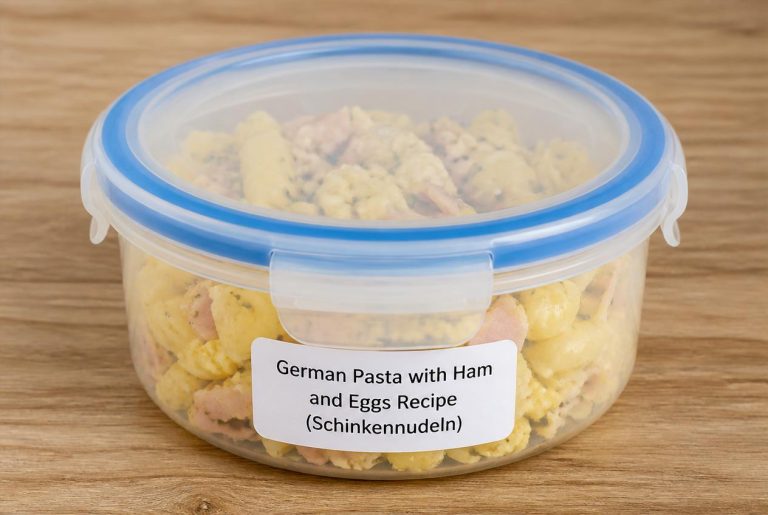
German Pasta with Ham and Eggs Recipe (Schinkennudeln) Storage TIps
German Pasta with Ham and Eggs Recipe (Schinkennudeln) Storage Tips
• Allow the pasta to cool before transferring it into storage containers.
• Store refrigerated in airtight containers to preserve freshness.
• Refrigeration may cause the egg coating to firm slightly, which is normal.
• Reheat gently over low heat to prevent the eggs from becoming rubbery.
• Add a small splash of milk, cream, or water during reheating if the pasta seems dry.
• Ham and herb flavors often deepen after overnight refrigeration.
• Store fresh garnishes separately whenever possible.
• Freezing is generally not recommended because the egg texture may change after thawing.
• Use clean utensils when handling leftovers to help maintain freshness.
• Egg-and-pasta dishes are generally best enjoyed within a short refrigerated storage period for ideal quality and safety.
• Keep away from strongly scented foods because eggs and pasta readily absorb odors.
• Slight thickening of the sauce during storage is normal.
• Reheat only the portion needed to help preserve quality.
• Discard leftovers if the dish develops sour odors, slime, mold, or unusual discoloration.
• Fresh herbs can be added after reheating to brighten the flavor before serving.
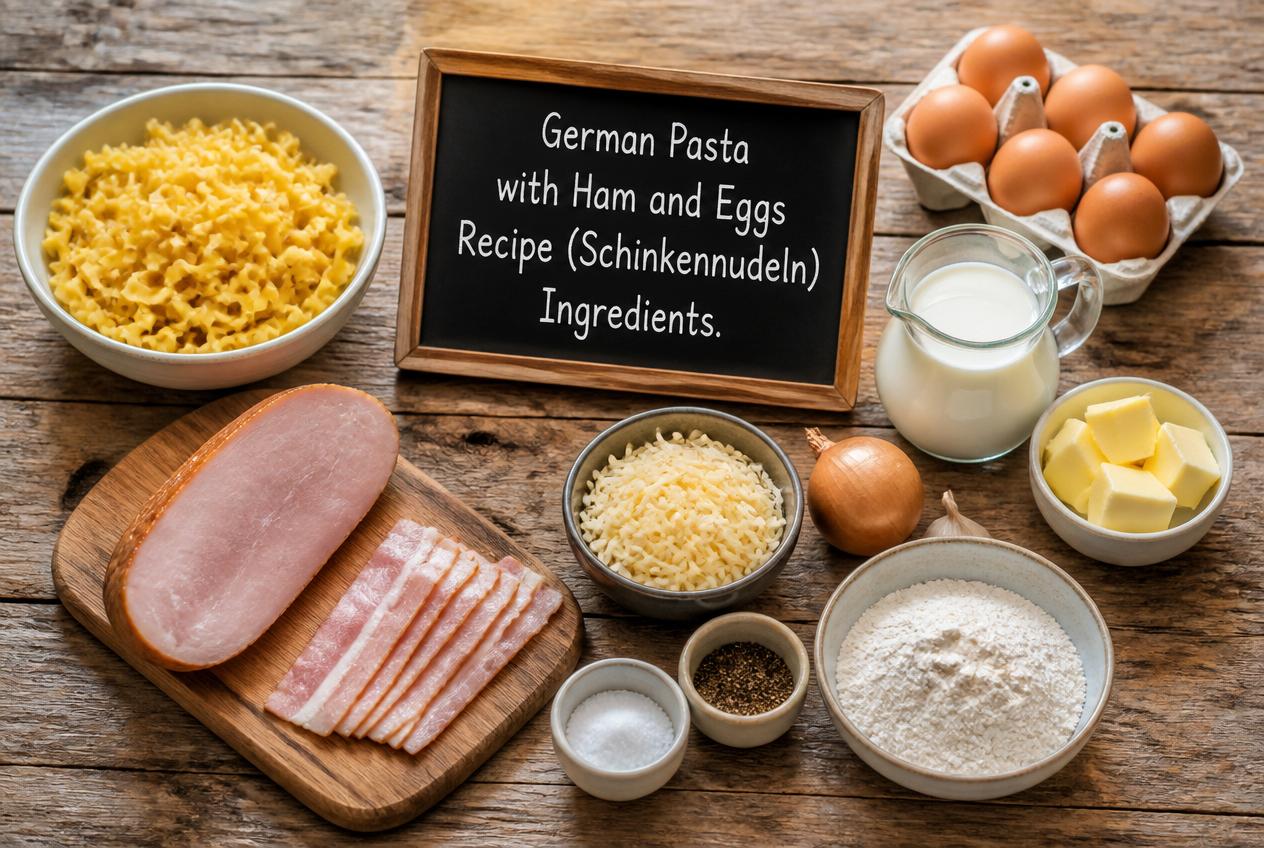
German Pasta with Ham and Eggs Recipe (Schinkennudeln)
Ingredients
- 1 ½ cups diced ham
- 1 pound orecchiette pasta
- 2 tablespoons olive oil
- 2 shallots thinly sliced
- 3 garlic cloves roughly chopped
- 1 ½ cups frozen peas
- ½ cup pasta cooking water
- ½ cup grated Parmesan cheese
- ½ cup grated Colby jack cheese
- ½ teaspoon lemon zest
- kosher salt and freshly cracked black pepper
Instructions
- Bring a large pot of generously salted water to a rolling boil over high heat. Once the water is boiling, add the pasta and stir immediately to prevent sticking. Cook according to the package directions until the pasta reaches al dente texture—tender but still slightly firm in the center.
- Before draining, carefully reserve ½ cup of the pasta cooking water. This starchy liquid will help create a silky sauce and bind the ingredients together later. Drain the pasta and set it aside briefly while preparing the remaining ingredients.
- While the pasta cooks, heat the olive oil in a large skillet over medium heat. Once the oil is warm, add the finely chopped shallot and cook for 3–4 minutes, stirring occasionally, until softened and fragrant. The shallot should become translucent and lightly golden around the edges.
- Add the chopped garlic and continue cooking for about 1 minute, stirring constantly. Cooking the garlic briefly allows it to release its aroma without becoming bitter.
- Stir the cubed ham into the skillet and cook for several minutes, allowing it to warm through and lightly brown in spots. The ham will add a savory, smoky flavor that complements the sweetness of the peas.
- Add the frozen peas directly to the skillet and toss everything together. Continue cooking until the peas are heated through and bright green, about 2–3 minutes.
- Pour the reserved pasta cooking water into the skillet and stir to combine. The starchy water will loosen the mixture and help create a light sauce that coats the pasta evenly.
- Add the drained pasta to the skillet and toss thoroughly with the ham, peas, and aromatics.
- Sprinkle both cheeses over the hot pasta and toss continuously until the cheese melts and creates a creamy coating around the noodles. The residual heat from the pasta and cooking water should be enough to melt the cheese smoothly without scorching.
- Season with salt and freshly ground black pepper to taste. Add the lemon zest and toss again to distribute it evenly throughout the dish. The lemon zest adds a bright freshness that balances the richness of the cheese and ham.
- Once everything is well combined and the cheese has melted into a creamy sauce, remove the skillet from the heat. If the pasta seems too thick, add a small splash of additional reserved pasta water until it reaches your preferred consistency.
- Serve immediately while hot, garnished with extra cheese, freshly cracked black pepper, or a little additional lemon zest if desired.
- This comforting pasta dish combines tender noodles, savory ham, sweet peas, aromatic shallots and garlic, and a creamy cheese sauce for a quick and satisfying meal that is perfect for weeknights or using up leftover ham.
German Pasta with Ham and Eggs Recipe Frequently Asked Questions
The German Pasta with Ham and Eggs recipe is pretty straightforward, but a few choices—like pasta shape or how you handle the eggs—can change things up.
How do you make a classic German ham and egg pasta dish at home?
I cook short pasta (usually fusilli or penne) in salted water until it’s al dente. While that’s going, I dice up ham and heat a big skillet with butter or oil.
Once the pasta’s ready, I drain it and toss it in with the ham. After frying for a few minutes, I push everything to the side, pour in beaten eggs, and scramble them before mixing it all together. The whole German Pasta with Ham and Eggs recipe takes less than 30 minutes.
Sometimes I add a splash of cream or milk to the eggs for extra richness. Salt, pepper, and maybe a pinch of nutmeg finish it off. That’s the German Pasta with Ham and Eggs recipe in a nutshell.
What type of pasta works best for ham-and-egg noodles in Central European cooking?
Short pasta shapes are the way to go for the German Pasta with Ham and Eggs recipe. Fusilli, penne, and macaroni work best because they trap the eggs and ham bits.
Fusilli is my favorite—its spiral shape holds onto the egg. The pasta needs to be sturdy enough to handle frying, or the German Pasta with Ham and Eggs recipe falls apart.
Some people use elbow macaroni or small shells. Just pick something that cooks evenly and mixes well with the other ingredients for your German Pasta with Ham and Eggs recipe.
Should the eggs be scrambled into the noodles or cooked separately for the best texture?
I always scramble the eggs right in the pan with the pasta and ham. That’s the most authentic way for a German Pasta with Ham and Eggs recipe. It coats everything and makes those tiny curds that cling to the noodles.
Scrambling the eggs with the noodles gives the German Pasta with Ham and Eggs recipe its signature texture. I beat the eggs, pour them over, and stir until they’re just set—soft, not dry.
If you cook the eggs separately, it’s just not the same. The traditional German Pasta with Ham and Eggs recipe relies on everything coming together in one pan. That’s where the magic happens.
What cheeses are commonly used in a German-style ham and noodle casserole?
Emmental and Gouda usually steal the show in the classic German Pasta with Ham and Eggs recipe, especially for the baked casserole version. Both melt nicely and bring a mellow, nutty flavor that just vibes with the ham instead of drowning it out.
Honestly, I just grab a block of cheese, grate a bunch, and toss some right into the pasta before baking. Then I throw more on top for that irresistible golden crust. German and Austrian versions often include cheese when prepping the German Pasta with Ham and Eggs recipe as a casserole, not just a skillet meal.
If Emmental’s missing from your fridge, try Swiss cheese or even a mild cheddar. The main thing? The cheese needs to melt well and not try too hard to take over the dish. For the German Pasta with Ham and Eggs recipe, I’d always go for something that plays nice with the ham and noodles, not something that bullies its way to the front.
How can you make a ham and noodle casserole creamy without using canned soup?
When I want the German Pasta with Ham and Eggs recipe to turn out creamy, I whisk eggs with heavy cream or milk, then pour it over the ham and noodles. Usually, two or three eggs per cup of cream does the trick, giving the whole thing a custardy feel once it bakes up.
Sometimes I’ll stir in a dollop of sour cream or cream cheese for more tang and richness in the German Pasta with Ham and Eggs recipe. If I’m feeling a bit extra, I’ll whip up a quick white sauce—just butter, flour, and milk—then toss it with the noodles before adding eggs and baking everything together.
The eggs and dairy hug the noodles as they bake, turning into a creamy, comforting coating. This way, the German Pasta with Ham and Eggs recipe comes out richer than anything you’d get from canned soup, and you’re still using simple, honest ingredients. I mean, isn’t that what home cooking’s supposed to be about?
What are the best side dishes to serve with a German-style ham and noodle bake?
Whenever I whip up my favorite German Pasta with Ham and Eggs recipe, I like to serve it with something light and fresh to balance out all that richness. A crisp green salad with a sharp, vinegar-based dressing usually does the trick and really cuts through the eggs and cheese. Trust me, it’s a classic move for a reason.
Honestly, cucumber salad feels like it was made for this dish. It’s a staple in German cuisine and just fits. Sometimes I’ll go for steamed green beans, or if I’m feeling fancy, roasted asparagus. They’re all pretty effortless, and the green on the plate looks inviting next to the German Pasta with Ham and Eggs recipe.
If you want to lean into the German vibe, sauerkraut or a punchy red cabbage slaw is where it’s at. That tangy kick? It works wonders alongside the savory notes in the German Pasta with Ham and Eggs recipe. These sides aren’t just tradition—they actually refresh your palate, bite after bite. I find myself coming back to this combo with the German Pasta with Ham and Eggs recipe because it just works, no matter the crowd.

Recipes are gathered in person and written for real-world cooking conditions.
- 10 Hungarian Dessert Recipes Passed Down Through Generations - July 25, 2026
- 11 Easy English Recipes Anyone Can Make - July 25, 2026
- Hungarian Kifli Recipe - July 25, 2026