
This Egyptian Aish Baladi recipe calls for just a handful of pantry staples and a no-fuss approach, turning out warm, whole-wheat pitas with that unmistakable nutty flavor and soft, pillowy inside. It’s sturdy enough for scooping up stews, but you can also wrap it around just about anything. If you’ve ever wanted to master a classic Egyptian flatbread, you’re in the right place.
Egyptian Aish Baladi recipe isn’t just about ingredients—it’s about choices. The flour blend, the water, even the oven’s heat all shape the bread’s character. A few quick tips and a bit of history can help you bake with more confidence and maybe even a little pride in the tradition behind every loaf.
When you follow this Egyptian Aish Baladi recipe, you’ll get straightforward steps and a couple of shortcuts that keep things authentic but save you some hassle. Whether you toss your dough onto a hot stone, a heavy sheet, or just right on the oven floor, you’ll find advice to help your next batch puff up just right and taste like the real deal from Egypt’s bustling bakeries.
Origins and Cultural Context
Egyptian Aish Baladi recipe connects you to Egypt’s long, layered food history. This bread’s whole-wheat, round style goes way back—think ancient grains and simple loaves feeding entire communities.
The word “Aish” (sometimes spelled “Eish”) means both “bread” and “life” in Egyptian Arabic. That’s not just a linguistic quirk; it really shows how bread weaves into daily meals and family traditions. It’s kind of wild how one word can capture both survival and culture, right?
Walk through any Egyptian neighborhood and you’ll see people using Aish Baladi to scoop stews, wrap up fillings, or just swipe up dips. The government has even subsidized this bread, since its price and availability can mean the difference between calm and unrest. Bread riots? They’re not just stories—they’ve happened when Aish Baladi ran scarce.
What sets Egyptian Aish Baladi recipe apart is its texture and baking style. Those quick, high-heat bakes give it a chewy crumb and a hint of smokiness. It feels rustic and real, not like the fluffy, factory-made pitas you find elsewhere. This bread ties people to traditional bakeries and old-school communal ovens.
If you want to nerd out on its history, there’s a good overview of Eish baladi on Wikipedia.
Recipe Overview and Historical Insights
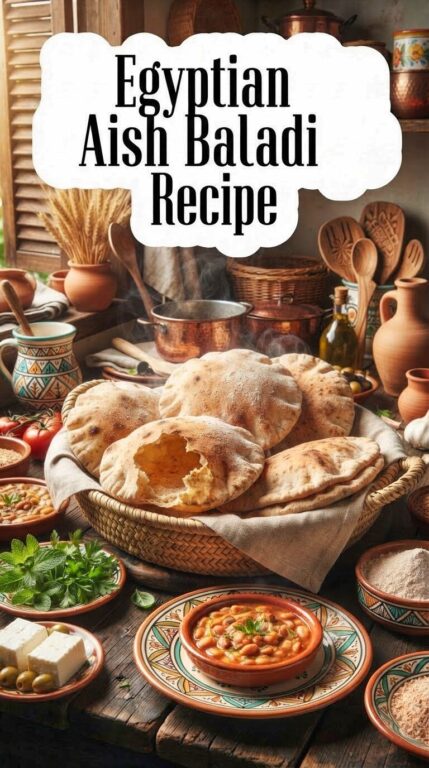
Egyptian Aish Baladi recipe gives you a rustic, whole-wheat flatbread that’s perfect with stews, dips, or grilled foods. The dough comes together with just whole-wheat flour, water, salt, and a pinch of yeast or a splash of sourdough starter for that tang and hearty bite.
Shape the dough into rounds by hand, then cook them on a hot griddle or bake in a blazing oven. Egyptian Aish Baladi recipe usually puffs up and forms a pocket—split it, fill it, or just tear and share. The charred spots and chewy inside make it feel homemade every time.
This bread’s roots stretch all the way back to ancient Egypt. For thousands of years, flatbreads like this have been a daily staple. It’s kind of amazing how little the recipe has changed, even as Egypt’s cities and kitchens have evolved.
Bread isn’t just food in Egypt—it’s a symbol, a social glue. Governments have subsidized Egyptian Aish Baladi recipe for decades, knowing how much it matters to people’s lives and stability. Even today, you’ll spot it everywhere, from market stalls to family tables, served with everything from molokhiya to simple dips.
Quick facts:
- Flours: mostly whole-wheat, sometimes with a touch of white flour.
- Texture: chewy, nutty, with a rustic crumb—nothing fancy, just honest bread.
- Cooking: hot griddle, oven, or if you’re lucky, a traditional clay oven.
For a hands-on guide and more details, check out this article on the traditional Egyptian flatbread: Aish Baladi: The Timeless Egyptian Flatbread Recipe. If you’ve never tried making Egyptian Aish Baladi recipe at home, give it a shot—you might surprise yourself. The process is simple, but the results? Genuinely satisfying.
Expert Cooking Tips
Keep an eye on your flour if you want a tender crumb for your Egyptian Aish Baladi recipe. I usually go with mostly whole wheat flour, but if the dough gets too dense, I’ll sneak in a bit of all-purpose flour. This way, you keep the bread soft but still hang onto that nutty flavor everyone loves in Egyptian Aish Baladi recipe.
Let your dough proof somewhere warm and out of the way of drafts. You’re aiming for it to really double in size—if your kitchen’s chilly, I just pop the bowl near a warm oven or flip the oven light on for a bit of gentle heat. It’s a simple trick, but it seriously makes a difference with Egyptian Aish Baladi recipe.
Crank up the heat on your baking surface. I always preheat a pizza stone or a heavy baking sheet to 500°F (260°C) for at least 30 minutes. That way, when you toss the dough on, it puffs up fast and forms a good pocket—essential for a solid Egyptian Aish Baladi recipe.
When you’re shaping, make the dough balls even and roll them thin. Work fast to trap the gas inside—thinner rounds puff better and give you that wide pocket you want in an Egyptian Aish Baladi recipe. Honestly, it takes a bit of practice, but you’ll get the hang of it.
I always focus on hydration instead of timing when I’m adjusting dough. If the dough feels a little sticky, don’t panic—it usually means your Egyptian Aish Baladi recipe will turn out softer and more flexible. Dry dough just doesn’t have the same vibe.
Add a quick burst of steam for chew and crust. I’ll spray or brush a little water on the oven walls or the dough right before baking. It helps the bread lift and gives you that light, slightly crisp crust that makes Egyptian Aish Baladi recipe so good.
Let the bread cool on a rack so it doesn’t get soggy. Give your pitas a few minutes to rest after baking so the pockets can set. If you stack them while they’re still hot, you’ll just trap steam and end up with a soft exterior, and no one wants that for their Egyptian Aish Baladi recipe.
When you’re storing and reheating, do it right. Freeze them in airtight bags once they’ve cooled, then reheat in a hot oven or skillet to bring back the texture. I’ve tried microwaving, but honestly, it’s never as good for Egyptian Aish Baladi recipe.
Curious about traditional methods or high-heat baking? Check out this authentic Aish Baladi recipe guide—it’s packed with tips for nailing the Egyptian Aish Baladi recipe at home.
Egyptian Aish Baladi Recipe
Ingredients
- 2 ½ cups flour Whole wheat
- ½ tablespoon Active dry yeast
- 2 teaspoon Sugar
- ½ tablespoon Salt
- ½ tablespoon Oil
- ¼ cup bran Cracked wheat
- 1 ¼ cup Warm water more or less as needed to make the dough
Instructions
- Pour the warm water into a large mixing bowl or the bowl of a stand mixer.
- Add the sugar and yeast.
- Cover the bowl with a clean kitchen towel and let it rest for about 10 minutes.
- The mixture should become frothy and bubbly.
- If the yeast does not activate after 15 minutes, discard it and begin again with fresh yeast.
- Add approximately half of the flour to the activated yeast mixture.
- Stir until combined.
- Cover the bowl again with the towel.
- Let the mixture rest in a warm place for about 30 minutes.
- Once the starter is bubbly, add the remaining flour, salt, and oil.
- Knead the dough for at least 10 minutes, or until it becomes soft, smooth, and no longer sticky.
- Cover the bowl with the kitchen towel.
- Place it in a warm location.
- Allow the dough to rise until doubled in size, about 1 hour.
- Turn the risen dough onto a work surface.
- Divide it into 8 equal portions.
- Shape each portion into a smooth ball.
- Cut 8 sheets of parchment paper large enough to hold each flatbread.
- Sprinkle about 1 teaspoon of cracked wheat bran onto each sheet.
- Place one dough ball on a prepared sheet of parchment.
- Roll it into an even circle less than 1/4 inch thick.
- Sprinkle a little more wheat bran over the top if desired while rolling.
- Repeat with the remaining dough balls.
- Transfer the rolled flatbreads on their parchment sheets to baking trays.
- Cover lightly with a kitchen towel.
- Allow them to rest for 30 minutes.
- While the dough is resting, preheat the oven to 500°F.
- Place a pizza stone inside the oven while it heats.
- A baking tray may be used if a pizza stone is unavailable.
- Carefully transfer one flatbread, still on its parchment paper, onto the hot pizza stone using a pizza peel or similar tool.
- Bake for 6 to 7 minutes.
- The bread should puff up as it bakes.
- Carefully remove the baked flatbread from the oven.
- Transfer it to a wire rack and let it cool for about 5 minutes.
- Repeat with the remaining flatbreads.
- Serve warm.
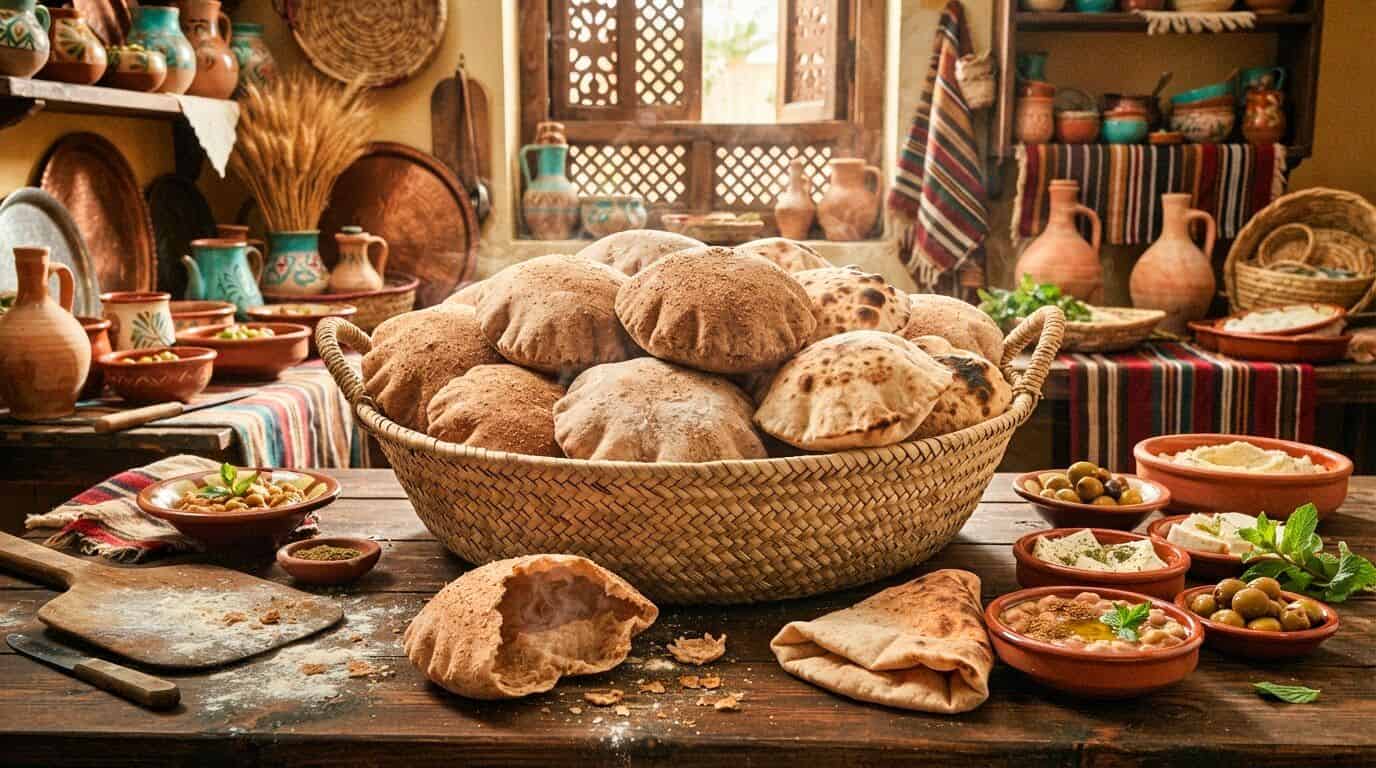
- This traditional Egyptian Baladi Bread is a soft, rustic flatbread with a lightly chewy texture and a crisp exterior. Baked at high heat until beautifully puffed, it's perfect for sandwiches, dipping, or serving alongside soups, stews, and grilled meats.

Recipes are gathered in person and written for real-world cooking conditions.
- 10 Hungarian Dessert Recipes Passed Down Through Generations - July 25, 2026
- 11 Easy English Recipes Anyone Can Make - July 25, 2026
- Hungarian Kifli Recipe - July 25, 2026