
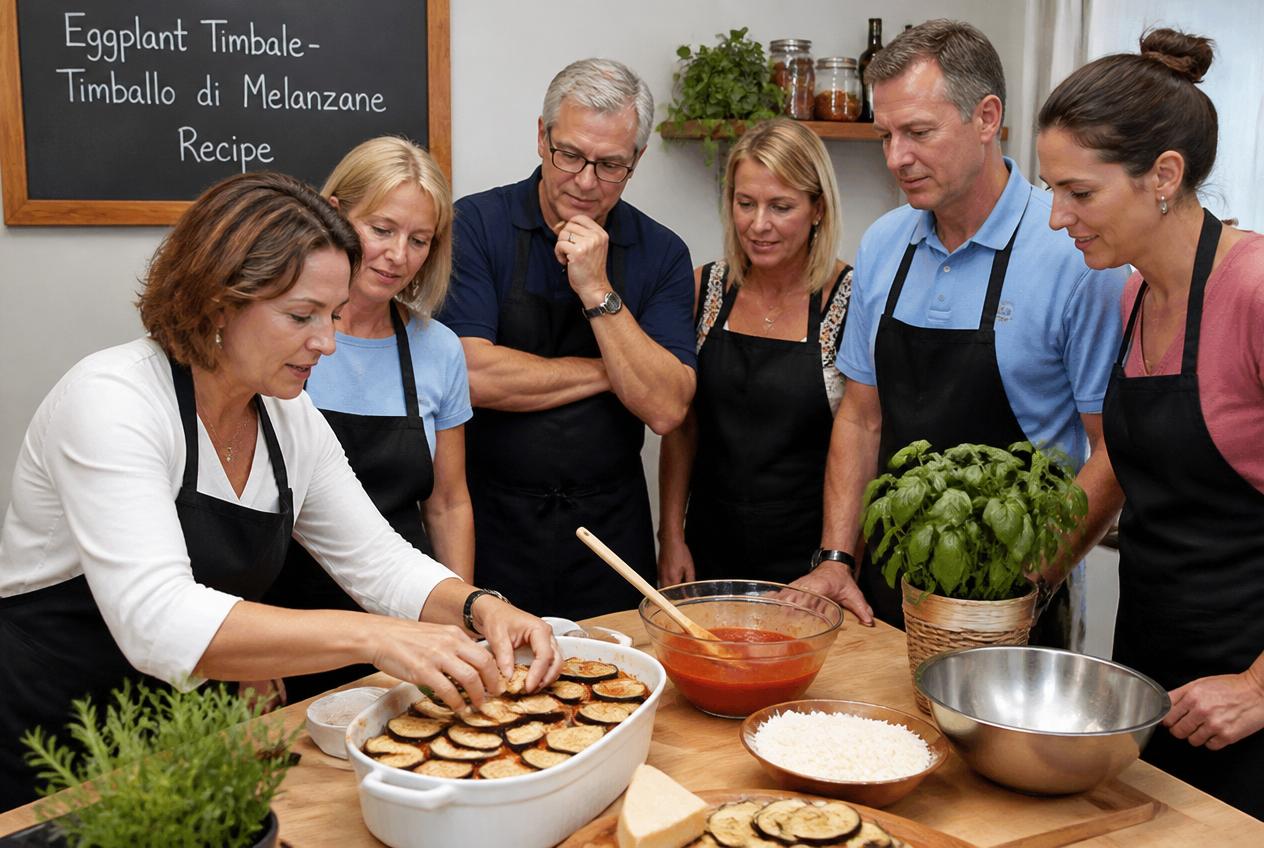
Eggplant Timbale –Timballo di Melanzane is a stunning Sicilian baked dish that layers pasta or rice with meat sauce, vegetables, and cheese inside a shell of grilled or fried eggplant slices. This classic Italian main course combines the rich flavors of Mediterranean eggplant with hearty pasta, creating an impressive centerpiece perfect for holidays and special occasions. The Eggplant Timbale recipe originates from Sicily, where families have passed it down through generations as a beloved tradition.
I find the Eggplant Timbale recipe particularly rewarding because it can be prepared in advance, making it ideal for entertaining guests. The preparation involves multiple components that come together beautifully when baked in a mold or Bundt pan. While it requires more effort than a simple risotto or pasta dish, the stunning presentation and depth of flavor make it worth the time.
The traditional Eggplant Timbale recipe features ring-shaped anelletti pasta or rice mixed with tomato sauce, peas, mozzarella, and sometimes hard-boiled eggs. The eggplant slices line the baking pan and wrap around the filling, creating distinct layers that reveal themselves when the timballo is inverted onto a serving plate.
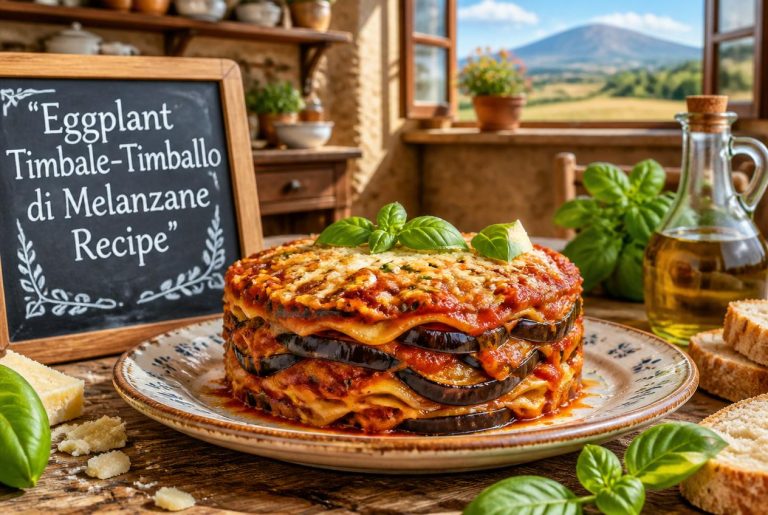
Eggplant Timbale-Timballo di Melanzane Recipe From Sicily
Key Takeaways
- Timballo di Melanzane, or Eggplant Timbale recipe, is a layered Sicilian dish combining eggplant, pasta or rice, meat sauce, and cheese baked in a decorative mold
- The Eggplant Timbale recipe can be made ahead of time and presents beautifully when unmolded, making it perfect for dinner parties
- Traditional ingredients include tomato sauce, peas, mozzarella, and either anelletti pasta or rice wrapped in eggplant slices
Background and Cultural Significance
Timballo di Melanzane holds a special place in Sicilian cuisine as a celebratory dish rather than everyday fare. This baked pasta dish eaten for family Easter celebrations represents the island’s ability to transform simple ingredients into something extraordinary.
This Eggplant Timbale recipe emerged from Sicily’s agricultural traditions, where eggplants grew abundantly in the Mediterranean climate. The dish showcases how traditional foods from Sicily combine pasta or rice with locally available vegetables and cheese to create elaborate presentations.
Key Cultural Elements:
- Originally made for special occasions and family gatherings
- Born in Palermo and later spread throughout the Southeast part of Sicily
- Traditionally uses anelletti, a ring-shaped pasta specific to the region
- Often prepared in a Bundt pan for an impressive presentation
The Eggplant Timbale recipe reflects Sicily’s diverse culinary influences, blending techniques and ingredients that tell the story of the island’s history. Some might consider it peasant food due to its reliance on vegetables and simple pantry staples, but it stands as a labor-intensive creation reserved for important celebrations.
This dish demonstrates Sicilian resourcefulness. Home cooks transformed basic ingredients like eggplant, pasta, tomato sauce, and cheese into a main dish perfect for entertaining. The multiple layers and components require time and attention, making the Eggplant Timbale recipe a dish that conveys care and celebration when served to family and guests.
Expert Preparation Tips
I always salt my eggplant slices generously and let them sit for at least 30 minutes before cooking. This draws out excess moisture and bitterness, resulting in better texture and flavor. The Eggplant Timbale recipe benefits greatly from this step.
When preparing the eggplant slices for the timbale, I grill or fry them until they’re pliable but not mushy. They need to be sturdy enough to line the mold without tearing. This ensures the Eggplant Timbale recipe holds its shape.
Key timing considerations:
- Salt eggplant: 30-45 minutes before cooking
- Cook pasta: 2-3 minutes less than package directions
- Rest assembled timbale: 10-15 minutes before unmolding
I use a Bundt pan to create the most impressive presentation for the Eggplant Timbale recipe. I generously oil the pan before lining it with eggplant slices, overlapping them slightly to prevent gaps. This step is important for a successful Eggplant Timbale recipe.
I always undercook the pasta since it continues cooking in the oven. I drain it while still quite firm to the bite. This classic Italian main dish relies on proper layering technique for the Eggplant Timbale recipe.
For the meat sauce, I cook it until most liquid evaporates. A watery sauce will make your timbale soggy and difficult to slice cleanly.
Essential assembly tips:
- Press down firmly on each layer to eliminate air pockets
- Fill the mold completely to the top
- Cover with foil for the first 20 minutes of baking
I always make this Eggplant Timbale recipe in advance since it reheats beautifully and actually improves after resting overnight in the refrigerator.
Creative Variations
I’ve discovered that timballo di melanzane can be made with either pasta or rice, which opens up numerous possibilities for creative adaptations. The traditional Sicilian Eggplant Timbale recipe often features pasta, but rice-based versions are equally authentic and delicious.
For protein variations, I recommend experimenting with different meat options beyond the classic ground beef. Ground turkey, Italian sausage, or a combination of pork and beef work beautifully. Vegetarian versions can substitute the meat with mushrooms, lentils, or additional vegetables like zucchini and bell peppers.
Popular filling variations include:
- Traditional meat sauce with peas
- Vegetarian ratatouille-style filling
- Seafood with shrimp and white fish
- Spicy sausage with peppers
- Mushroom ragù with herbs
Combining eggplant with rice creates a particularly rich texture, while pasta versions offer a heartier bite. Some cooks add hard-boiled eggs sliced throughout the layers for extra protein and visual appeal. The Eggplant Timbale recipe adapts well to these changes.
Cheese variations also transform the Eggplant Timbale recipe significantly. While mozzarella is standard, I suggest trying provolone, fontina, or aged pecorino for sharper flavor profiles. Mixing cheeses creates depth that complements the eggplant’s mild taste.
The Sicilian baked rice version often includes peas and mozzarella as key ingredients. This combination provides sweetness and creaminess that balances the savory elements perfectly in the Eggplant Timbale recipe.
Related Regional Dishes
I’ve found that timballo di melanzane shares culinary roots with several other classic Sicilian dishes that feature layered preparations and baked presentations. The Eggplant Timbale recipe concept of combining pasta or rice with vegetables and meat in a molded form appears throughout Southern Italian recipes.
In Naples, I often compare this dish to Sartù di Riso, a rice timbale filled with meat ragù, peas, and mozzarella. Both dishes use similar cooking techniques and presentation styles in molded pans. The Eggplant Timbale recipe stands out for its use of eggplant as the outer shell.
Another related preparation is Pasta ‘Ncasciata, a Sicilian baked pasta dish from Messina that layers pasta with eggplant, meat sauce, and cheese. Unlike the timbale’s molded presentation, this version bakes in a traditional casserole dish, but the Eggplant Timbale recipe remains unique in its structure.
I also see connections to Parmigiana di Melanzane, which uses many of the same ingredients—eggplant, tomato sauce, and cheese—but arranges them in distinct layers rather than wrapping pasta inside. The Eggplant Timbale recipe offers a different visual and textural experience.
Regional Italian recipes from Sicily include Anelletti al Forno, a baked pasta ring typically served at celebrations. This dish uses small ring-shaped pasta with ragù and peas, similar to what I use in my Eggplant Timbale recipe.
Pasta al Forno appears in various forms across southern Italy, each region adding local ingredients and techniques. The Sicilian baked rice and eggplant version often includes hard-boiled eggs and mozzarella alongside the traditional tomato sauce and peas.
Comparable Italian Specialties
When I explore traditional Mediterranean cooking, I find that Timballo di Melanzane shares similarities with several other beloved Italian baked dishes. These recipes showcase the same commitment to layering flavors and textures that makes the Eggplant Timbale recipe and other Italian comfort food so satisfying.
Sartu di Riso from Naples resembles the rice version of timballo quite closely. This Neapolitan specialty features rice mixed with meat, peas, and cheese, then baked in a decorated mold. The presentation and construction mirror what I see in the Eggplant Timbale recipe.
Parmigiana di Melanzane uses similar core ingredients. Both dishes celebrate eggplant as the star, incorporate tomato sauce, and rely on cheese for richness. The main difference lies in the structure—parmigiana layers everything flat while the Eggplant Timbale recipe molds it into an impressive dome.
Pasta al Forno represents another cousin in this family of baked pasta dishes. I appreciate how it combines pasta with sauce and cheese, then bakes until golden. While simpler than the Eggplant Timbale recipe, it delivers that same comforting warmth.
Lasagne naturally comes to mind as well. The layering technique I use in lasagne—alternating pasta, sauce, cheese, and sometimes vegetables—reflects the same building approach as the Eggplant Timbale recipe. Both dishes work beautifully for feeding gatherings.

Eggplant Timbale-Timballo di Melanzane Recipe From Sicily Cooking Tips
Eggplant Timbale–Timballo di Melanzane Recipe Cooking Tips
• Timballo di Melanzane is a classic Sicilian baked dish known for its elegant layers of eggplant, pasta, cheese, and rich tomato sauce.
• Eggplant is the signature ingredient and serves as both the lining and structure of the timbale.
• Choose firm, glossy eggplants with smooth skin for the best texture and flavor.
• Slice the eggplant evenly to ensure uniform cooking and easy assembly.
• Salting the eggplant before cooking can help remove excess moisture and reduce bitterness.
• Frying or roasting the eggplant develops a rich flavor and tender texture.
• A well-seasoned tomato sauce forms the foundation of the filling.
• Garlic, onions, and fresh basil add traditional Sicilian flavor.
• Short pasta such as anelletti, penne, or macaroni is commonly used.
• Cook the pasta slightly less than al dente since it will continue cooking during baking.
• Pecorino Romano adds authentic Sicilian richness and depth.
• Mozzarella provides a creamy, melted texture throughout the timbale.
• Some traditional versions include peas, meat ragù, salami, or hard-boiled eggs.
• Layer the ingredients carefully to create attractive slices when unmolded.
• Allow the timbale to rest after baking before turning it out of the mold.
• The flavor should balance tender eggplant, rich tomato sauce, savory cheese, herbs, and perfectly cooked pasta.
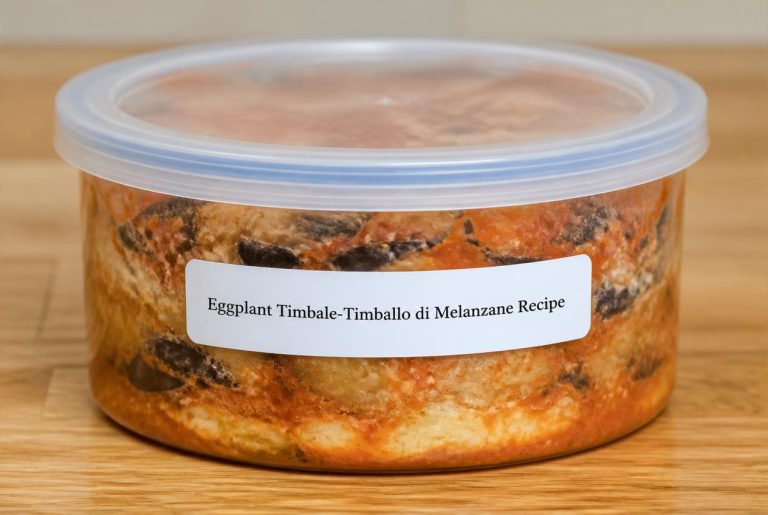
Eggplant Timbale-Timballo di Melanzane Recipe From Sicily Storage TIps
Eggplant Timbale–Timballo di Melanzane Recipe Storage Tips
• Allow the timbale to cool before transferring it into storage containers.
• Store refrigerated in airtight containers to preserve freshness.
• Whole timbales can be covered tightly and refrigerated before slicing.
• Refrigeration often improves the flavor as the layers continue to meld together.
• Reheat gently in the oven for the best texture and presentation.
• Cover with foil during reheating to help prevent drying.
• Add a small amount of sauce if the timbale appears dry when reheating.
• Eggplant and tomato flavors often deepen after overnight refrigeration.
• Freeze individual portions or whole timbales in airtight freezer-safe containers if desired.
• Wrap tightly to help prevent freezer burn.
• Defrost frozen portions gradually in the refrigerator before reheating.
• Use clean utensils when handling leftovers to help maintain freshness.
• Pasta-and-cheese dishes are generally best enjoyed within a moderate refrigerated storage period for ideal quality and safety.
• Keep away from strongly scented foods because cheeses and eggplant readily absorb odors.
• Discard leftovers if the timbale develops sour odors, mold, slime, or unusual discoloration.
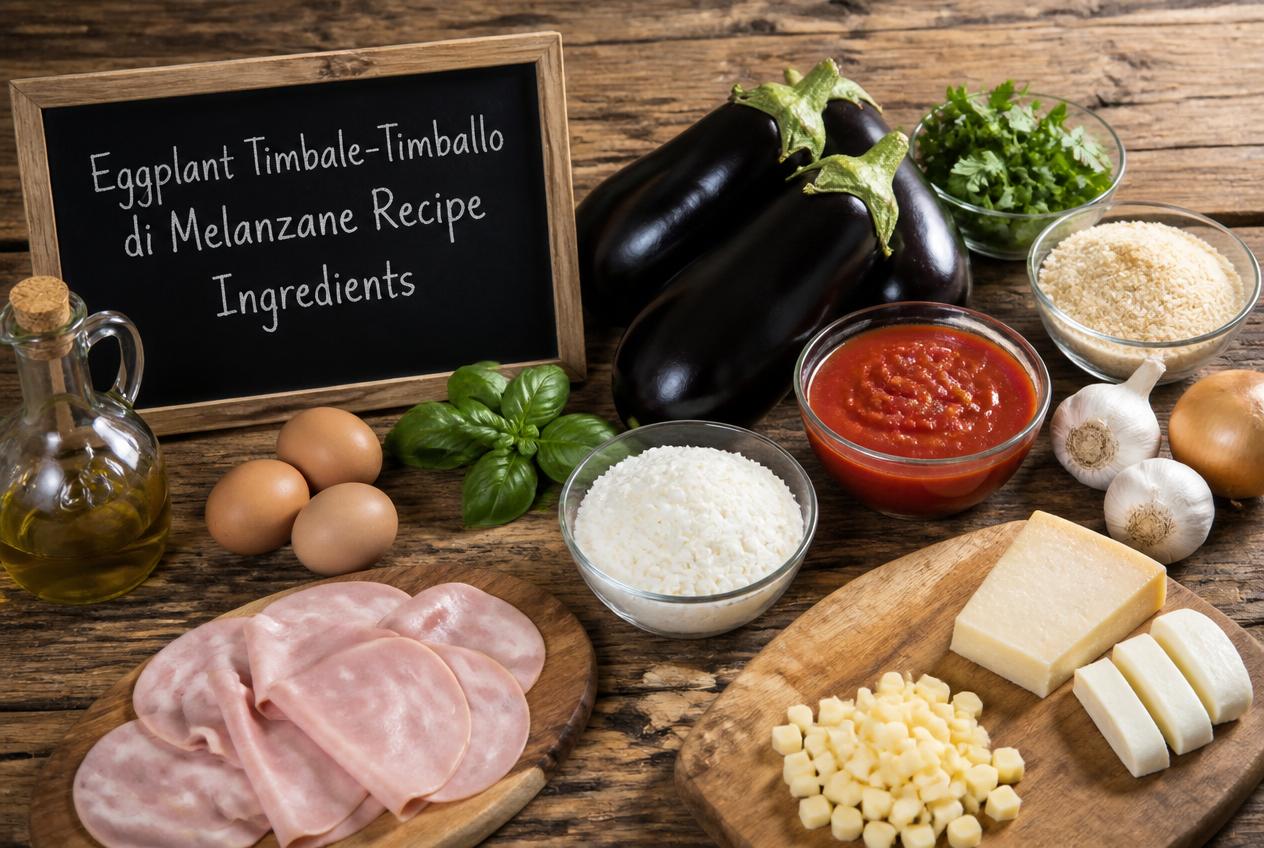
Eggplant Timbale-Timballo di Melanzane Recipe
Ingredients
- 3 tablespoons extra-virgin olive oil
- ¼ cup onion chopped you can use sweet onion or yellow onion
- 1 ½ pounds beef lean ground or you could do a mixture of pork/beef or however you prefer
- 1 cup dry white wine
- 56 ounce can tomatoes, I use San Marzano, remove the tough inside and puree' in a blender
- 6 fresh basil leaves torn into small pieces
- 1 cup peas fresh or frozen baby canned does not work for this recipe
- 2 ½ teaspoons sea salt
- ¼ teaspoon black pepper
Instructions
- 2 eggplants, huge or 3 medium
- ⅓ cup extra-virgin olive oil, maybe more (if needed)
- freshly ground pepper
- 1 lb penne, or rigatoni
- a few handfuls of fresh basil roughly chopped or hand torn
- Heat the olive oil in a medium saucepan or Dutch oven over medium heat.
- Add the diced onion and cook for about 2 minutes, stirring occasionally until it begins to soften. Add the garlic and continue cooking for another 5 minutes until fragrant.
- Add the ground beef and cook, breaking up any large pieces with a spoon. Stir frequently and continue cooking until the meat is fully browned and no pink remains, about 10 minutes.
- Pour in the wine and stir well. Allow it to simmer until most of the liquid has evaporated.
- Add the tomatoes and basil and stir to combine. Reduce the heat to medium-low and simmer until the sauce begins to thicken.
- Stir in the peas and season with salt and pepper to taste.
- Continue simmering the ragù for approximately 2 hours, stirring occasionally. If the sauce becomes too thick, add a little water as needed to maintain the desired consistency.
- Tip: The sauce can be made one or two days in advance and refrigerated. In fact, many cooks find the flavor improves after resting overnight.
- Bring a large pot of generously salted water to a boil.
- Cook the pasta until it is about 2 minutes shy of al dente, since it will continue cooking in the oven.
- Drain the pasta well and transfer it to a large mixing bowl.
- If using a previously prepared sauce, reheat it gently before combining it with the pasta.
- Add enough ragù to thoroughly coat the pasta and toss well. If using cheese, stir it in at this stage and mix until evenly distributed.
- While the sauce simmers, prepare the eggplant.
- Preheat a grill, grill pan, or stovetop grill over medium-high heat.
- Slice the eggplants lengthwise into slices approximately ¼ inch thick.
- Brush both sides generously with olive oil and season lightly with salt and pepper.
- Grill the slices for 4–5 minutes per side, until tender and marked with golden grill lines.
- Transfer the grilled slices to a baking sheet or platter and allow them to cool slightly.
- Preheat the oven to 350°F (175°C).
- Brush the inside of a springform pan generously with olive oil.
- Arrange the longest eggplant slices in the pan, starting at the bottom and extending them up the sides so they hang over the rim. These overhanging slices will later fold over the top of the timballo.
- Continue layering until the entire interior of the pan is covered, making sure there are no gaps.
- Spoon the pasta and sauce mixture into the eggplant-lined pan.
- Spread it evenly and gently press down to eliminate large air pockets.
- Fold the overhanging eggplant slices over the top of the pasta.
- Use any remaining grilled eggplant slices to cover any exposed areas, creating a fully enclosed package.
- Place the springform pan on a baking sheet to catch any drips and make handling easier.
- Transfer to the oven and bake for 30 minutes.
- The filling should be heated through and the eggplant should be tender and lightly caramelized.
- Remove the timballo from the oven and allow it to cool for approximately 15 minutes.
- Once it is cool enough to handle, release the springform ring carefully.
- Place a large serving platter over the top of the timballo and confidently invert it in one smooth motion.
- Lift away the bottom of the springform pan.
- Using a sharp knife, cut the timballo into wedges and serve warm.
- This Sicilian-inspired eggplant timballo combines grilled eggplant, rich ragù, pasta, peas, and cheese into a dramatic baked centerpiece. Once unmolded, the eggplant forms a beautiful outer shell that surrounds the flavorful pasta filling, making it perfect for family gatherings, holidays, or special dinners.
Eggplant Timbale Frequently Asked Questions
Timbale preparation involves understanding terminology differences, proper eggplant treatment, authentic ingredient selection, vegetarian adaptations, appropriate cookware, and structural integrity techniques for successful presentation. The Eggplant Timbale recipe, when followed carefully, creates an impressive and delicious centerpiece for any occasion.
What is the difference between a timbale and a timballo in Italian cooking?
Timbale and timballo refer to the same dish, with “timbale” as the French-derived English term and “timballo” as the authentic Italian name. Both describe a molded baked dish featuring pasta or rice encased in vegetables or pastry. When searching for an Eggplant Timbale recipe, you may see either term used, but Italian cooks primarily use “timballo” for traditional preparations.
In Sicilian cooking, Timballo di Melanzane refers specifically to pasta or rice baked in a mold lined with eggplant slices. The Eggplant Timbale recipe is a classic example of this style, and the terms are interchangeable in most recipe contexts. If you want to make an authentic Eggplant Timbale recipe, either word will guide you to the right dish.
How do you prepare eggplant for a timbale so it is not bitter or oily?
Salt sliced eggplant and let it sit for 30 minutes to draw out bitter liquid and excess moisture. Rinse the slices thoroughly and pat them completely dry with paper towels to prepare them for your Eggplant Timbale recipe. This process ensures the eggplant remains tender and not bitter.
For traditional Sicilian versions, eggplant is typically fried, but grilling or roasting reduces oil absorption significantly. Brush the slices lightly with oil rather than submerging them to achieve a tender texture without greasiness. These steps are essential for a successful Eggplant Timbale recipe that is flavorful and not oily.
What are the essential ingredients for an authentic Sicilian-style timbale?
Grilled or fried eggplant slices form the foundation for lining the mold in any authentic Sicilian Eggplant Timbale recipe. Anelletti, the small ring-shaped pasta, is the traditional choice most Sicilians use. Use these ingredients to start your Eggplant Timbale recipe in the classic style.
The filling includes tomato sauce, ground meat, peas, and cheese such as mozzarella or caciocavallo. Some versions incorporate hard-boiled eggs and rice instead of pasta, depending on regional and family traditions. Every Eggplant Timbale recipe can be adapted with these essential ingredients to reflect personal or regional preferences.
Can a vegetarian timbale be made without meat while keeping traditional flavor?
You can create vegetarian versions of the Eggplant Timbale recipe by replacing ground meat with finely diced mushrooms, which provide similar umami depth and texture. Tomato sauce, peas, and cheese already contribute substantial flavor, making the Eggplant Timbale recipe satisfying without meat. Add caramelized onions, roasted peppers, or extra vegetables to maintain the hearty character of the dish.
Increase the amount of cheese or incorporate ricotta to ensure the filling remains rich and satisfying. These adjustments allow you to enjoy an Eggplant Timbale recipe that is both traditional and vegetarian. Experimenting with different vegetables can further enhance your Eggplant Timbale recipe.
What type of mold or pan works best for shaping and unmolding a timbale?
Use a 9-inch springform pan because the removable sides make unmolding significantly easier and reduce the risk of damaging the presentation. Bundt pans also work well and create an attractive ring shape with a decorative pattern for your Eggplant Timbale recipe. Always line the pan with overlapping eggplant slices that extend beyond the rim so you can fold them over the top before baking.
Grease the pan lightly before adding the eggplant to prevent sticking and ensure a clean release after cooling. This technique is crucial for a perfect Eggplant Timbale recipe. With the right pan and careful preparation, your Eggplant Timbale recipe will look impressive and taste delicious.
How do you prevent a timbale from falling apart when slicing and serving?
I let the timbale rest for at least 15 to 20 minutes after removing it from the oven, which allows the ingredients to set and bind together properly. Attempting to unmold or slice while still piping hot usually results in structural collapse. The Eggplant Timbale recipe always benefits from this resting period, ensuring clean slices and a perfect presentation.
I use a sharp, thin-bladed knife dipped in hot water between cuts to produce cleaner slices with less dragging. Including enough cheese in the filling acts as a natural binder that holds the pasta or rice together during portioning. When I follow the Eggplant Timbale recipe, I always ensure the cheese distribution is even to maximize binding and flavor.
The Eggplant Timbale recipe recommends careful layering and pressing of the ingredients, which helps maintain structure. I always check that the filling is compact before baking, as this step is crucial for a successful Eggplant Timbale recipe. Consistent results come from following the Eggplant Timbale recipe instructions closely, especially regarding cooling and slicing techniques.
Practicing patience pays off when working with the Eggplant Timbale recipe, as rushing the process can ruin the final dish. I find that the Eggplant Timbale recipe delivers best when I allow the dish to cool and use the proper tools for serving. For anyone trying the Eggplant Timbale recipe, I suggest focusing on these small details for the best results.
When preparing the Eggplant Timbale recipe, I always line the mold properly to prevent sticking. The Eggplant Timbale recipe also suggests using parchment paper for easier unmolding. By following the Eggplant Timbale recipe step by step, I achieve a timbale that holds its shape beautifully every time.

Recipes are gathered in person and written for real-world cooking conditions.
- 10 Hungarian Dessert Recipes Passed Down Through Generations - July 25, 2026
- 11 Easy English Recipes Anyone Can Make - July 25, 2026
- Hungarian Kifli Recipe - July 25, 2026