
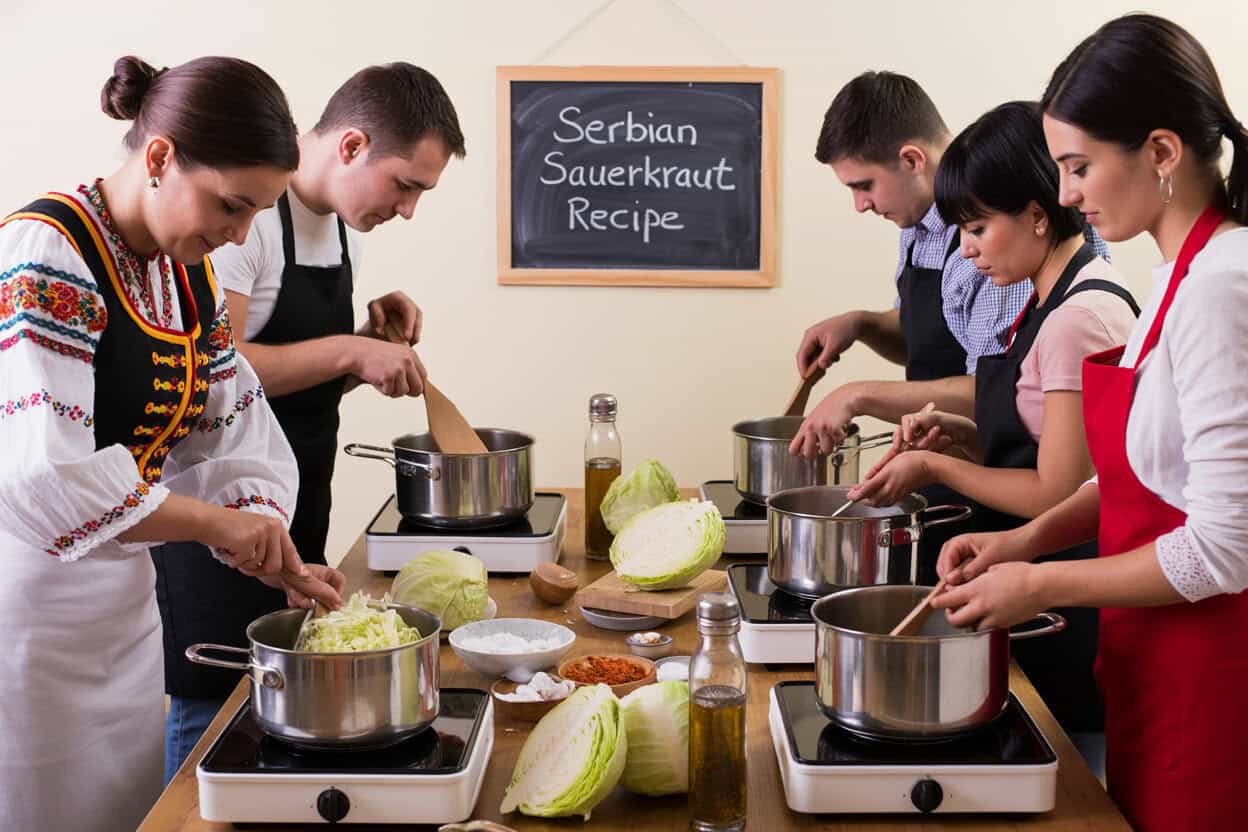
Serbian Sauerkraut Recipe: When exploring the rich culinary landscape of Serbia, we quickly discovered the charm of Serbian sauerkraut recipes. This dish is a staple in many households. Not only does it boast delicious flavors, but it also offers a healthy twist to our meals with its fermented goodness.
As we traveled through Serbia, we encountered various versions of sauerkraut, each with its own unique twist. We enjoyed trying recipes like Podvarak, a baked sauerkraut dish that combines hearty ingredients with smoky, savory notes.
Our journey into Serbian recipes allowed us to appreciate how simple ingredients can create comfort food that warms the heart.
Join us as we share our favorite Serbian sauerkraut recipe, perfect for serving as a side dish or a main course. You’ll love how easy it is to make and how it can bring a taste of Serbia right into your kitchen. Let’s dive into this flavorful adventure together!
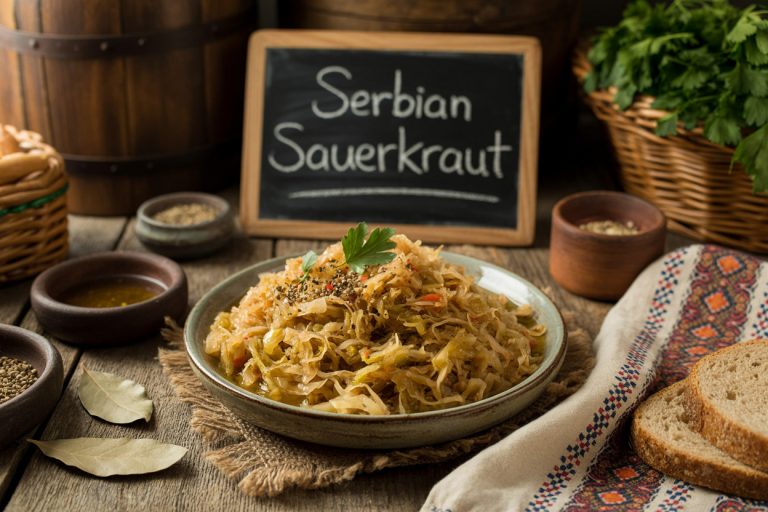
Serbian Sauerkraut Recipe
Why You’ll Love This Serbian Sauerkraut Recipe
We love this Serbian sauerkraut recipe because it combines simple ingredients with rich flavors. It brings comfort and warmth to our meals, making it perfect for family gatherings.
This dish is easy to prepare. With just a few steps, we can create a hearty meal that everyone will enjoy. Using ingredients like sauerkraut, meat, and spices makes it a satisfying choice.
Here are some reasons we can’t get enough of this recipe:
- Affordable: Most ingredients are budget-friendly. This recipe is perfect for feeding a crowd without breaking the bank.
- Nourishing: Packed with nutrients, sauerkraut is good for our digestion. It offers health benefits while tasting delicious.
- Customizable: We can easily adjust the meats or spices according to our tastes. Whether we use pork, turkey, or even add more veggies, the options are endless.
- Comfort Food: This dish is warm and hearty, making it ideal for chilly days. It feels just like a hug from grandma.
What Makes This Recipe Special
We love this Serbian sauerkraut recipe for its rich flavors and simple ingredients. It combines fermented cabbage with juicy meat, creating a hearty and satisfying meal.
One key aspect is the fermentation process. Fermented cabbage adds a tangy taste and is great for our gut health. Nutritionists even suggest eating something fermented every day!
This dish is also known for its frugality. Podvarak, or baked sauerkraut, originates from Serbian cooking, often associated with humble beginnings. It reminds us that delicious meals can come from simple, affordable ingredients.
Making this recipe is straightforward. We start with pickled cabbage, which gives it that distinctive flavor. A few other common ingredients include:
- Meat (like pork or sausage)
- Onions
- Spices (like paprika and pepper)
The combination makes this dish comforting and perfect for family dinners. Plus, it freezes well, so we can enjoy it any time.
Podvarak also reflects the heart of Serbian food culture. It brings people together, making it a beloved dish not only in homes but during celebrations and gatherings as well. We cherish the warmth and joy this dish brings to our table.
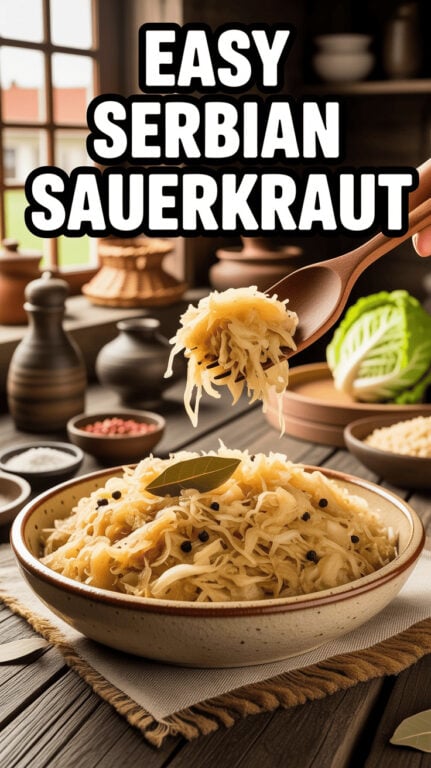
Cooking Equipment Needed
To make a delicious Serbian sauerkraut dish, we need some basic cooking equipment. Having the right tools will make the process smooth and enjoyable.
Here’s a list of what we’ll need:
- Large Skillet: Perfect for sautéing the onions and bacon.
- Cutting Board: A safe surface for chopping vegetables.
- Chef’s Knife: Essential for slicing onions, garlic, and carrots.
- Wooden Spoon: Helps us stir ingredients without scratching our cookware.
- Measuring Cups and Spoons: For accurate ingredient measurements.
- Ladle: Useful for serving the sauerkraut once it’s ready.
- Cooking Pot: If we want to cook beans or other sides.
- Mixing Bowl: Handy for mixing our ingredients before cooking.
Optional tools might include:
- Grater: If we choose to grate the carrots instead of slicing them.
- Colander: Useful for rinsing any canned beans or sauerkraut.
Having these tools on hand will set us up for success. As we get ready to cook, we can gather our equipment and enjoy the process!
Ingredients For the Serbian Sauerkraut Recipe
Oil
Bacon
Yellow Onion
Garlic
Carrot
Sauerkraut
Bay Leaves
Black Pepper
Sweet Paprika
Smoked Turkey
Water
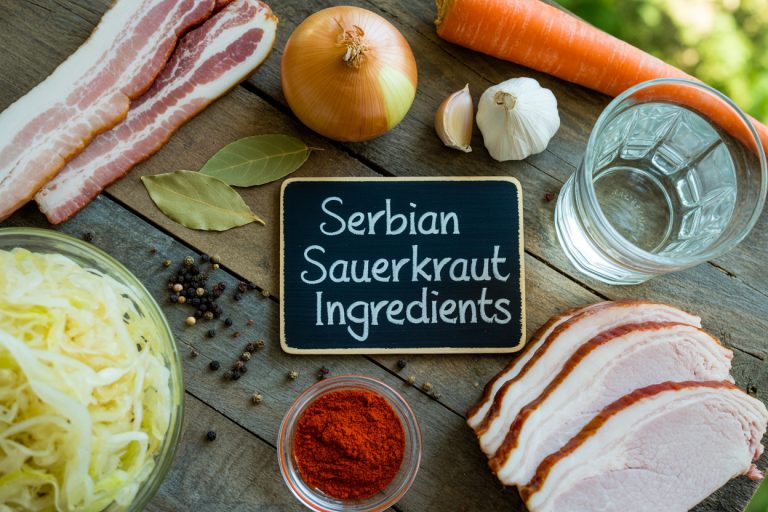
Serbian Sauerkraut Recipe Ingredients
Cooking Instructions For the Serbian Sauerkraut Recipe
Preheat and Prepare Ingredients
Preheat the oven to 375°F. Drain the sauerkraut in a colander, pressing out excess liquid.
Sauté Vegetables and Meat
Heat lard or oil in a large skillet over medium heat, then sauté onions and bacon until the onions are golden, about 5 minutes. Stir in garlic, carrots, sauerkraut, bay leaves, pepper, and paprika, continuing to cook for 5-10 minutes, stirring occasionally.
Assemble and Bake
Transfer the mixture to a baking dish, placing smoked or roasted meat on top. Add ½ cup water and cover with a lid or aluminum foil. Bake for 45 minutes, uncover, and bake for an additional 15 minutes.
Final Step
Discard the bay leaves before serving.
Serbian Sauerkraut Recipe Cooking TIps
Serbian Sauerkraut Recipe Cooking Tips
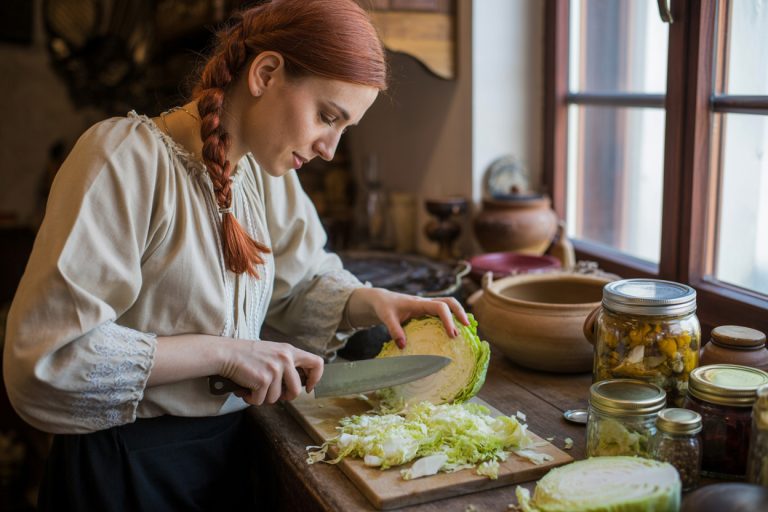
• Use fresh, firm cabbage for the best texture and fermentation results.
• Salt is essential for drawing moisture from the cabbage and supporting fermentation.
• Shred the cabbage evenly so it ferments consistently.
• Massage the cabbage thoroughly until it releases enough natural juices.
• Keep the cabbage fully submerged in brine during fermentation to prevent spoilage.
• Caraway seeds, bay leaves, or peppercorns can add traditional Serbian flavor.
• Use clean glass, ceramic, or food-safe containers for fermenting.
• Ferment in a cool, dark place for the best flavor development.
• Taste the sauerkraut periodically to monitor the preferred sourness level.
• Longer fermentation creates deeper and tangier flavor.
• Remove any foam or surface residue during fermentation if necessary.
• Avoid using iodized salt because it may affect fermentation quality.
• Once fermented, refrigerate the sauerkraut to slow further fermentation.
• Serve with meats, stews, soups, or breads for a traditional Serbian meal.
Serbian Sauerkraut Recipe Storage TIps
Serbian Sauerkraut Recipe Storage Tips
• Keep the sauerkraut refrigerated in airtight containers after fermentation.
• Store the cabbage fully submerged in its brine to maintain freshness and texture.
• Sauerkraut flavor may continue to deepen slowly during storage.
• Use clean utensils when serving to help prevent contamination.
• Keep the container tightly sealed to preserve freshness and reduce odor transfer.
• Avoid exposing the sauerkraut to excess air during storage.
• Refrigerated sauerkraut generally keeps well for extended periods when properly stored.
• Freeze only if necessary, since cabbage texture may soften after thawing.
• Use airtight freezer-safe containers if freezing for longer storage.
• Defrost frozen sauerkraut gradually in the refrigerator before using.
• Brine may become cloudier during storage, which is often normal for fermented foods.
• Add fresh herbs or seasonings after reheating cooked sauerkraut dishes for brighter flavor.
• Keep away from strongly scented foods because sauerkraut can absorb odors.
• Discard the sauerkraut if it develops mold, unpleasant rotten odors, sliminess, or unusual discoloration.
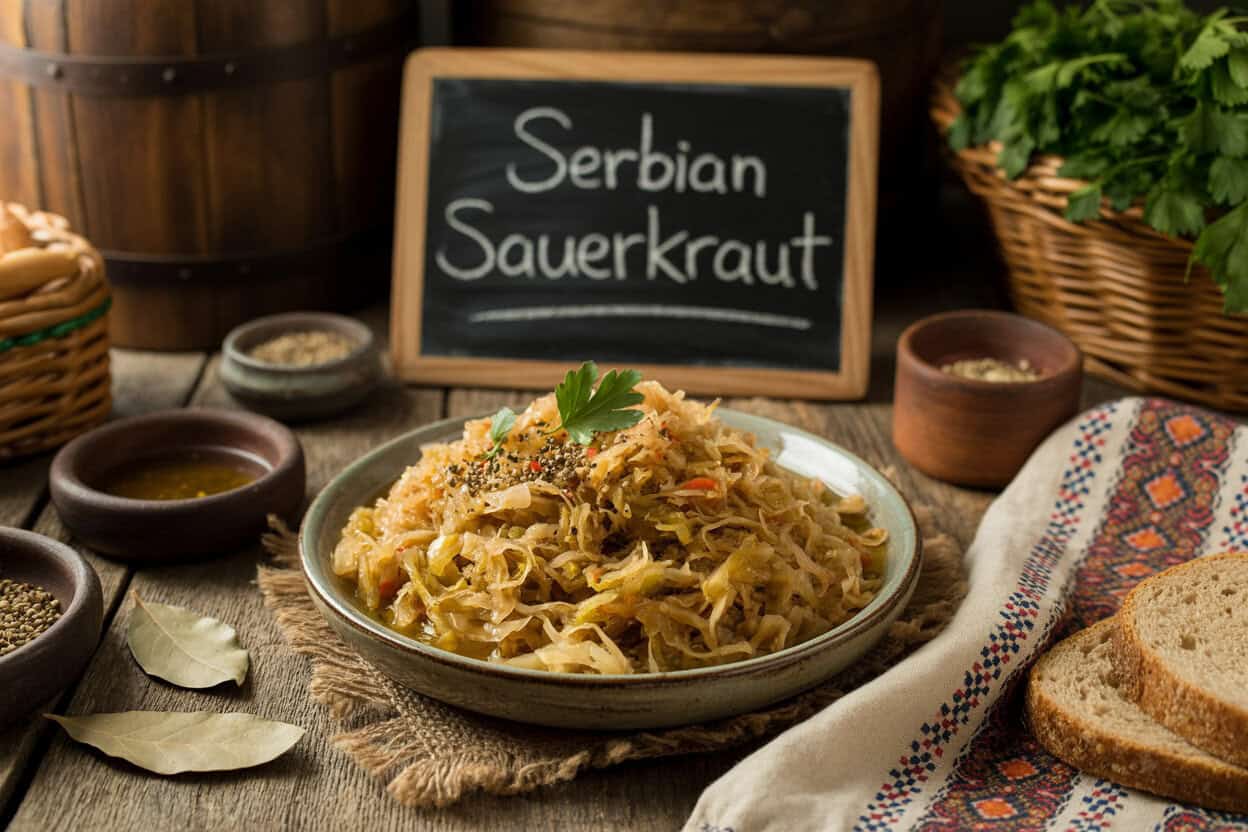
East Serbian Sauerkraut Recipe
Ingredients
- 2 tbsp Oil
- 5 oz Bacon cut into ½-inch pieces
- 1 Yellow Onion chopped
- 1 clove Garlic minced
- 1 Carrot sliced
- 32 oz. Sauerkraut jar
- 2-3 Bay Leaves
- 1/4 tsp Black Pepper freshly ground
- 1 tsp Sweet Paprika
- 1 lb Turkey or pork Smoked
- ½ cup Water
Instructions
- Sauté Vegetables and Meat
- Heat lard or oil in a large skillet over medium heat, then sauté onions and bacon until the onions are golden, about 5 minutes. Stir in garlic, carrots, sauerkraut, bay leaves, pepper, and paprika, continuing to cook for 5-10 minutes, stirring occasionally.
- Transfer the mixture to a baking dish, placing smoked or roasted meat on top. Add ½ cup water and cover with a lid or aluminum foil. Bake for 45 minutes, uncover, and bake for an additional 15 minutes.
- Discard the bay leaves before serving.
FAQ For the Serbian Sauerkraut Recipe
Question: What ingredients are needed for the Serbian Sauerkraut recipe?
A: The Serbian Sauerkraut recipe typically requires fresh cabbage, salt, water, and sometimes caraway seeds or garlic for added flavor. The Serbian Sauerkraut recipe may also include other herbs or spices depending on personal preferences.
Question: How long does it take to make Serbian Sauerkraut recipe?
A: The Serbian Sauerkraut recipe can take several weeks to ferment, as it relies on a natural fermentation process. However, once prepared, the Serbian Sauerkraut recipe can be stored for months and enjoyed over time.
Question: Can the Serbian Sauerkraut recipe be made without fermentation?
A: No, the Serbian Sauerkraut recipe relies on fermentation to achieve its distinct flavor and texture. Without fermentation, it won’t develop the signature tangy taste typical of the Serbian Sauerkraut recipe.
Question: How should Serbian Sauerkraut recipe be stored?
A: The Serbian Sauerkraut recipe should be stored in an airtight container in a cool place, such as a cellar or refrigerator, to maintain its freshness and flavor. Properly stored, the Serbian Sauerkraut recipe can last for several months.
Question: Can the Serbian Sauerkraut recipe be used in other dishes?
A: Yes, the Serbian Sauerkraut recipe can be used in a variety of dishes, such as soups, stews, or as a side dish to complement meats. The Serbian Sauerkraut recipe adds a tangy, flavorful kick to many traditional Serbian meals.

Recipes are gathered in person and written for real-world cooking conditions.
- 10 Hungarian Dessert Recipes Passed Down Through Generations - July 25, 2026
- 11 Easy English Recipes Anyone Can Make - July 25, 2026
- Hungarian Kifli Recipe - July 25, 2026
3 comments
The cabbage fermented beautifully, with just the right amount of tang and crunch. The brine was well-balanced, not too salty or overpowering. Served alongside grilled meats, it added a nice acidic contrast. Everyone enjoyed how fresh and flavorful it tasted, especially with a hearty meal.
I mean, sure, sauerkraut is cool and all, but why Serbian sauerkraut specifically? Is there some secret ingredient or technique that makes it stand out? Im intrigued, to say the least!
Im not sure if Im ready to jump on the sauerkraut bandwagon just yet. I mean, who knew cabbage could be so controversial? #TeamPickles 🥒
Comments are closed.