

If you’re after a hearty, home-style dish that just about everyone at the table will dig into, the Cumberland Pie recipe really delivers. The crispy, cheesy top and rich meat filling make it a staple in my kitchen. I’ll walk you through my favorite, family-friendly Cumberland Pie recipe—using beef or lamb, a savory gravy, and that signature crunchy breadcrumb and cheese topping for extra texture.
This Cumberland Pie recipe is flexible: you can swap in different veggies, try sliced potato or a mashed topping, and tweak the seasoning to match your mood or whoever’s eating. Honestly, it’s the kind of thing you’ll want to make on a weeknight or for a laid-back family meal.

Cumberland Pie Recipe
Key Takeaways
- I break down what makes the Cumberland Pie recipe unique compared to other English pies.
- I offer practical tips and easy swaps so you can make the recipe your own.
- I cover how to store leftovers and handle common kitchen hiccups.
English Recipe Description And Historical Information
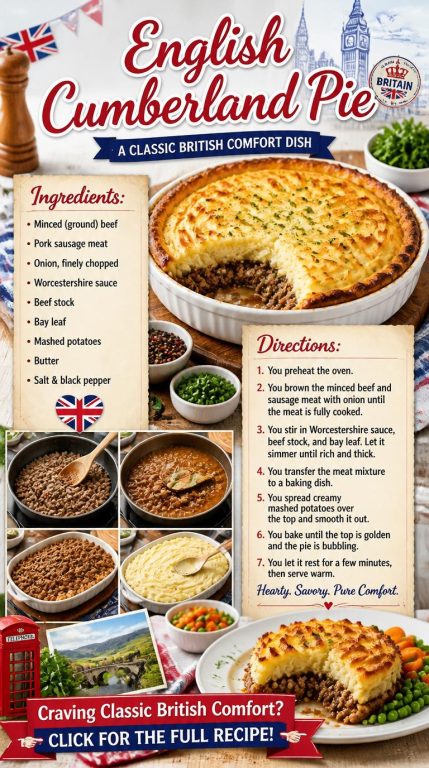
To me, the Cumberland Pie recipe lands somewhere between a cozy cottage pie and a baked casserole. It’s got a meaty base—usually beef or lamb—cooked up with onions and vegetables, then topped with potatoes and a crispy mix of cheese and breadcrumbs. That texture on top? It’s what sets this pie apart.
I use simple pantry ingredients for my Cumberland Pie recipe and go for slow cooking to really deepen the flavor. Sometimes I’ll grab bite-sized beef or minced meat, add stock and a few herbs, and finish with either sliced or mashed potatoes plus a good handful of mature cheddar. For the best crunch, breadcrumbs and cheese go on top before baking until golden.
The Cumberland Pie recipe comes from north-west England, in the old county of Cumberland (now Cumbria). Its roots get a bit tangled with cottage pie, but that cheese-and-crumb topping is the real giveaway. Older versions sometimes used different meats—or even fruit and spices back in medieval days—so home cooks have been adapting this one for ages.
I keep coming back to this Cumberland Pie recipe because it’s forgiving. You can swap in whatever veggies you’ve got, use up leftover roast, or make it ahead and just reheat. If you want a reliable modern version, check out this classic Cumberland Pie recipe.
Recipe Tips
I keep my Cumberland Pie recipe simple for weeknight cooking. I use lean minced beef or beef chunks and brown them well for the best flavor. If I’m in a rush, I’ll grab pre-chopped vegetables or frozen mixed veg to save time.
Usually, I brown the meat, toss in seasoning, and finish the filling with a splash of Worcestershire sauce. Sometimes I make the filling ahead and stash it in the fridge—makes for a super easy dinner later. Just reheat gently before you add the topping.
For the top of my Cumberland Pie recipe, I lean toward cheesy mash. Mash potatoes by themselves or toss in some swede for extra flavor. If you want a quick, crisp finish, sprinkle mature cheddar and breadcrumbs, then grill for a few minutes.
Here are a few tricks I use to save time and boost texture:
- Season each layer as you go—taste, then adjust.
- Start with a lower oven temp for even heating, then crank it up at the end to brown the top.
- If I’m short on time, I use sliced cooked potatoes instead of mash.
These tips make the Cumberland Pie recipe a breeze. For more traditional techniques and inspiration, check out this classic Cumberland Pie recipe.
Variations
I love tweaking my Cumberland Pie recipe to suit different tastes. Sometimes I use lean minced beef or turkey and toss in extra veggies like carrots and celery for a lighter, healthier twist. If you want to cut carbs, swap the potato topping for mashed cauliflower—still comforting, just a bit lighter.
For a vegetarian Cumberland Pie recipe, I’ll use lentils or a mix of mushrooms and beans. Lentils add bite, and mushrooms bring that deep, savory flavor. I season the filling with vegetarian Worcestershire-style sauce and plenty of herbs for extra oomph.
Change up the potato topping if you feel like it. Sometimes I slice potatoes thin and overlap them for a crispier, cheesier crust. Or I’ll mash potato with swede (rutabaga) for a sweeter, creamier finish—really nice with a rich filling.
If I want to save time, I cook the filling the day before. Letting it rest overnight actually makes the flavors pop, and the pie bakes up faster the next day. For more crunch, I sprinkle a mix of breadcrumbs and mature cheddar on top before baking.
For more ideas and technique tips, I’ll often look up the traditional Cumberland Pie recipe—Country Living has a good one with potato slices and a crispy cheese crumb topping. Here’s another solid Cumberland Pie recipe for inspiration.
Storage
I pop leftover Cumberland Pie recipe in the fridge once it cools to room temperature. I cover it tightly with foil or use an airtight container to keep it fresh.
The Cumberland Pie recipe keeps for about 3–4 days in the fridge. When I want to reheat, I use the oven at 160–170°C (325–340°F) until it’s hot through, or I’ll microwave in short bursts so the meat doesn’t dry out.
For longer storage, I freeze my Cumberland Pie recipe. I wrap it in plastic, then foil, or use a freezer-safe container. It’ll keep for up to 3 months if wrapped well.
I thaw frozen pie overnight in the fridge before reheating. If I need to bake it from frozen, I add a bit more time and cover with foil at first so the top doesn’t burn. If you’re curious about safe freezing and reheating, check out this food safety guide.
Some tips I always follow:
- Label with the date—it’s easy to lose track.
- Only reheat what you’ll eat to avoid repeated reheating.
- If the filling smells weird or the texture’s off, I just toss it.

Cumberland Pie Recipe Cooking TIps
Cumberland Pie Recipe Cooking Tips
• Cumberland Pie is known for its rich beef filling, savory gravy, and golden cheese-topped mashed potato crust.
• Traditional Cumberland Pie is made with minced or finely chopped beef rather than lamb.
• Browning the beef thoroughly adds depth of flavor and improves the richness of the filling.
• Onions are a key ingredient and provide sweetness that balances the savory meat.
• Carrots, celery, and mushrooms are common additions that enhance texture and flavor.
• Beef stock creates a rich, hearty gravy base.
• Worcestershire sauce adds classic British savory depth.
• Tomato purée can enrich the filling and add subtle sweetness.
• Mashed potatoes should be smooth and firm enough to spread easily over the filling.
• Butter and milk help create a creamy potato topping.
• Traditional Cumberland Pie often includes grated cheddar cheese on top of the mashed potatoes.
• Rough the surface of the potatoes with a fork to encourage crisp golden peaks during baking.
• Bake until the filling is bubbling and the topping is deeply golden.
• Allow the pie to rest briefly before serving so the filling can settle.
• The flavor should balance rich beef, savory gravy, creamy potatoes, and sharp cheddar cheese.
• Cumberland Pie is a classic British comfort-food dish often served during cooler months.
Cumberland Pie Recipe Storage Tips
Cumberland Pie Storage Tips
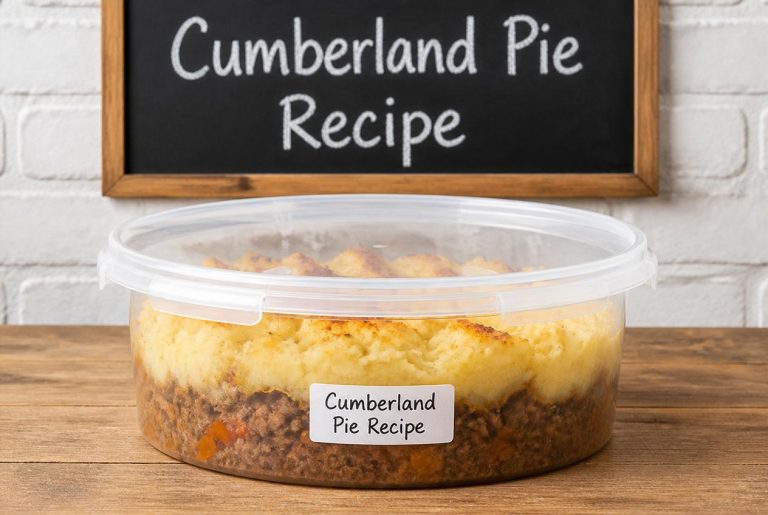
• Allow the pie to cool before transferring it into storage containers.
• Store refrigerated in airtight containers to preserve freshness.
• Store the pie whole or in individual portions for easier reheating.
• Refrigeration may firm the potato topping and gravy, which is normal.
• Reheat in the oven whenever possible to help maintain the topping’s texture.
• Cover loosely during reheating to prevent excessive drying.
• Add a small splash of stock if the filling appears dry after storage.
• Beef and vegetable flavors often deepen after overnight refrigeration.
• Freeze portions in airtight freezer-safe containers if desired.
• Whole assembled pies can also be frozen before or after baking.
• Defrost frozen pie gradually in the refrigerator before reheating.
• Reheat until the filling is thoroughly heated throughout.
• Use clean utensils when handling leftovers to help maintain freshness.
• Meat-and-potato casseroles are generally best enjoyed within a shorter refrigerated storage period for ideal quality and safety.
• Discard leftovers if the filling or topping develops sour odors, slime, mold, or unusual discoloration.
Cumberland Pie Recipe
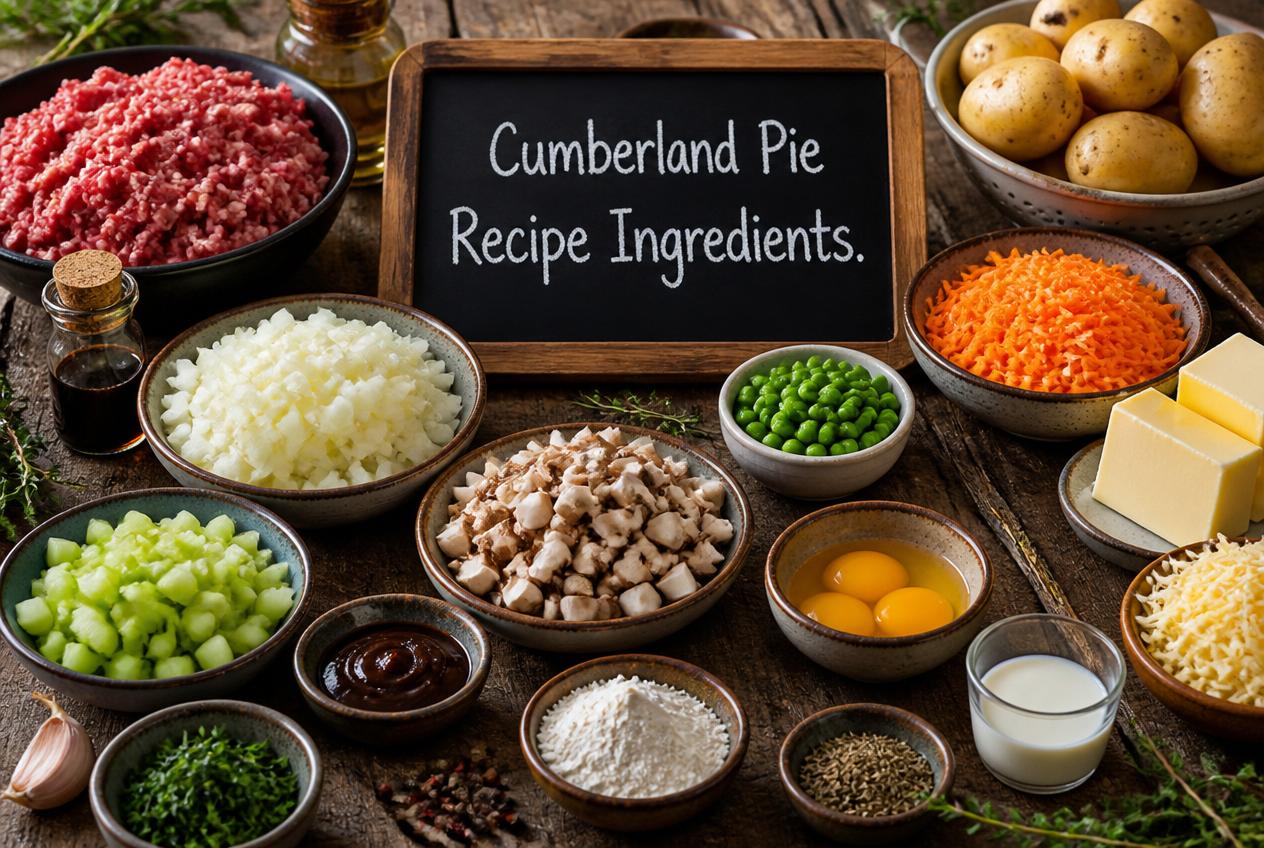
Ingredients
- 1.5 lb Beef chunks
- 3 tablespoon Plain flour
- Sea salt and ground black pepper
- 3 tablespoon Olive oil - for the beef
- 2 tablespoon Olive oil - for the veg
- 4 Shallots - diced
- 1 rib Celery - diced
- 1 Leek - thinly sliced
- 2 Carrot - peeled and diced
- 1 tablespoon Tomato puree
- 2.5 cups Beef stock
- 2 tablespoon Worcestershire sauce
- 1.33 lb Potato - cut into 0.5cm rounds
- 0.66 cups Breadcrumbs
- 1.33 cups Cheddar cheese - grated
Instructions
- Place the beef chunks into a large bowl and season generously with salt and black pepper. Sprinkle the flour over the meat and toss until every piece is lightly coated. This coating will help create a rich, thick gravy as the casserole cooks while also encouraging a beautiful brown crust on the beef.
- Heat 3 tablespoons olive oil in a large ovenproof casserole dish or Dutch oven over medium-high heat. Once the oil is hot, add the beef in a single layer, working in batches if necessary to avoid overcrowding. Brown the beef on all sides for about 4 minutes, allowing a deep golden crust to develop. Proper browning adds tremendous flavor to the finished dish. Once browned, transfer the beef to a plate and set aside.
- Add the remaining 2 tablespoons olive oil to the same pan. Add the shallots, celery, leek, and carrots, stirring to coat them in the flavorful cooking juices left behind by the beef.
- Cook over low heat for approximately 6 minutes, stirring occasionally, until the vegetables soften and become fragrant. The vegetables should be tender but not browned. This gentle cooking allows them to develop sweetness and create the foundation of the casserole's flavor.
- Return the browned beef and any accumulated juices to the pan. Stir in the tomato purée, beef stock, and Worcestershire sauce. Mix everything thoroughly, making sure the beef and vegetables are evenly distributed throughout the liquid.
- Bring the mixture to a gentle simmer. The liquid should partially cover the ingredients, creating a rich braising environment that will slowly tenderize the beef during cooking.
- Preheat the oven to 320°F (160°C), or 285°F (140°C) for a convection oven.
- Cover the casserole dish with a tight-fitting lid and transfer it to the oven. Cook for 2 hours, allowing the beef to slowly braise and become tender.
- After 2 hours, remove the lid and continue cooking for an additional 1 hour. This uncovered cooking period allows the sauce to reduce and concentrate, creating a rich, flavorful gravy while further tenderizing the meat.
- By the end of cooking, the beef should be fork-tender and the sauce thickened slightly.
- During the final stage of cooking, bring a large pot of salted water to a boil. Add the sliced potatoes and simmer for approximately 6 minutes. The potatoes should begin to soften but still hold their shape. This partial cooking ensures they finish perfectly in the oven without becoming undercooked.
- Drain the potatoes carefully and set them aside.
- Transfer the cooked beef and vegetable mixture to a large baking dish, spreading it evenly across the bottom. Arrange the partially cooked potato slices over the top in overlapping layers, creating an attractive pattern that completely covers the filling beneath.
- In a small bowl, combine the grated cheddar cheese and breadcrumbs. Mix thoroughly, then sprinkle the mixture evenly over the potatoes. This topping will create a wonderfully crisp, golden crust while adding rich cheesy flavor.
- Return the baking dish to the oven and bake for 30–40 minutes, or until the cheese has fully melted and the breadcrumb topping has turned golden brown and crisp. The filling should be bubbling gently around the edges and the potatoes should be completely tender.
- If necessary, place the dish under the broiler for the final few minutes to achieve extra browning, watching carefully to prevent burning.
- Remove the casserole from the oven and allow it to rest for 5–10 minutes before serving. This resting period allows the filling to settle slightly and makes serving easier.
- Spoon generous portions onto warm plates, making sure each serving includes plenty of tender beef, vegetables, creamy potatoes, and the crispy cheese topping. This hearty beef and potato bake is perfect served with green vegetables, peas, or a simple side salad, making for a comforting and satisfying meal
Cumberland Pie Recipe Frequently Asked Questions
I get a lot of questions about the Cumberland Pie recipe—ingredients, method, swaps, you name it. Here are some of the most common ones, with my real-world answers.
How is Cumberland Pie recipe different from cottage pie?
For my Cumberland Pie recipe, I use beef or lamb and usually leave the meat in chunks. The top is either sliced or mashed potato, but always with that extra layer of cheese and breadcrumbs for a crisp, golden finish. That’s what sets it apart from cottage pie, which just uses plain mash.
What’s the easiest way to make a Cumberland Pie recipe at home?
I brown beef or lamb chunks, then simmer them with onion, carrots, beef stock, Worcestershire sauce, and herbs until the sauce thickens. I spread the filling in a baking dish, cover with boiled sliced or mashed potatoes, sprinkle cheese and breadcrumbs, and bake at about 200°C (390°F) until the top bubbles and crisps up. For a step-by-step, this recipe is solid.
Can I make a Cumberland Pie recipe in a slow cooker?
Absolutely! I sear the meat first, then add veggies, stock, and seasonings to the slow cooker. I cook on low for 6–8 hours or high for 3–4. When it’s ready, I transfer to a baking dish, add potatoes and cheese, and brown under the grill or in a hot oven. Slow cookers make the Cumberland Pie recipe even easier.
What makes a Cumberland Pie recipe stand out for flavor and texture?
I want tender meat and a rich, reduced gravy that clings to every bite. The potato layer should be creamy inside and crisp on top, with cheese and breadcrumbs for contrast. Good seasoning—salt, pepper, Worcestershire, plus a bay leaf or thyme—brings depth without overpowering the main flavors. If you’re picky, don’t be afraid to tweak the seasoning until it’s just right.
How do I make a vegetarian Cumberland Pie recipe that still tastes hearty?
I use mushrooms, carrots, and diced root veggies for a savory base. I go with vegetable stock, tomato paste, soy sauce or vegetarian Worcestershire, and a splash of red wine or balsamic for depth. Top with buttery mash, bake with cheese and breadcrumbs, and you’ll get that same crunchy, comforting finish. Here’s a vegetarian Cumberland Pie recipe I like for inspiration.
Honestly, once you get the hang of the Cumberland Pie recipe, it’s hard to go back to anything else when you want comfort food. I’ve made the Cumberland Pie recipe for family gatherings, weeknight dinners, and even as a make-ahead freezer meal. The Cumberland Pie recipe is endlessly adaptable—sometimes I’ll add a pinch of smoked paprika, or stir in a handful of peas. If you’re trying the Cumberland Pie recipe for the first time, don’t stress about perfection. The Cumberland Pie recipe is forgiving, and honestly, it’s even better when you put your own spin on it. I’ve seen people use the Cumberland Pie recipe with leftover roast or even vegan cheese, and it still works. If you’re curious about regional twists, the Cumberland Pie recipe from Cumbria is a classic, but every cook adds their own touch. The Cumberland Pie recipe is one of those rare dishes that gets better with practice—so don’t be afraid to experiment. For more inspiration, check out this Great British Chefs Cumberland Pie recipe. Give the Cumberland Pie recipe a try—you might just find it becomes your new go-to comfort dish.
Can I use lentils instead of meat in a Cumberland-style pie?
Absolutely—if you ask me, brown or green lentils are your best bet for any Cumberland Pie recipe. They keep their shape after cooking, which matters more than you’d think. Usually, I’ll toss the lentils in a pan with a heap of sautéed onions, garlic, carrots, some veggie stock, tomato paste, and whatever seasonings I’m feeling that day. I let the whole thing simmer until it thickens up nicely. Then I just layer it up and bake, like any solid Cumberland Pie recipe calls for. Lentils bring a surprisingly meaty bite and plenty of protein, so you still get that hearty, stick-to-your-ribs vibe—without breaking the bank. Honestly, if you’re after a Cumberland Pie recipe that doesn’t cost much but still tastes like comfort, lentils deliver. You can check out more plant-based pie ideas at BBC Good Food, or for a twist, see how Olive Magazine does their lentil pies. If you’re experimenting with a Cumberland Pie recipe, don’t be afraid to play with spices. Sometimes I add smoked paprika or a splash of soy sauce for depth—maybe it’s not traditional, but it works. For more inspiration, I found a great breakdown at Delicious Magazine and even Jamie Oliver has a vegan pie that’s not far off from a classic Cumberland Pie recipe. Honestly, lentils are just so versatile. If you’re stuck for ideas, just remember: almost any hearty pie can turn into a Cumberland Pie recipe with the right tweaks. Give it a try and see what you think.

Recipes are gathered in person and written for real-world cooking conditions.
- 10 Hungarian Dessert Recipes Passed Down Through Generations - July 25, 2026
- 11 Easy English Recipes Anyone Can Make - July 25, 2026
- Hungarian Kifli Recipe - July 25, 2026