

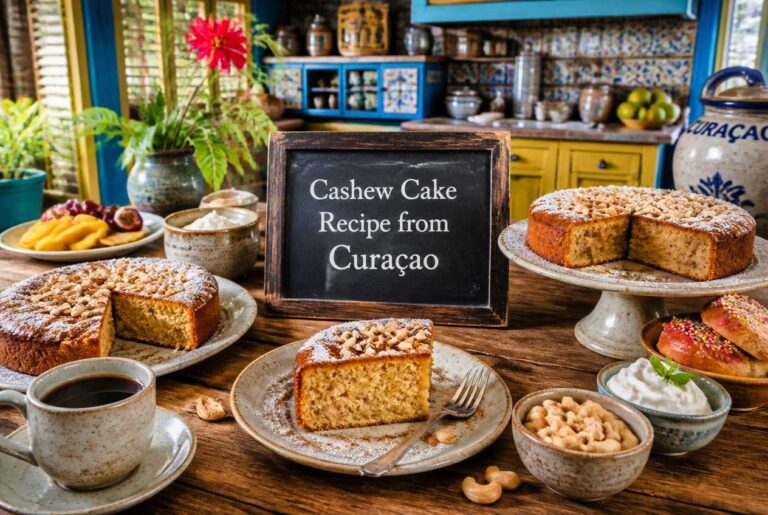
You’ll find one of the most satisfying desserts in the Caribbean in this traditional Cashew cake recipe from Curacao. I’ve perfected this recipe using locally inspired ingredients and simple baking techniques. You’ll learn how to create a moist, nutty cake that captures the island’s unique flavor. I guide you step by step to ensure your result is authentic and delicious.
Beef Stew Recipe From Curacau
Cashew Cake Recipes Key Takeaways:
- Cashew cake recipes from Curaçao features locally grown cashews, which give the dessert its rich, buttery flavor and distinctive texture.
- The cake is often made with simple, accessible ingredients like flour, sugar, eggs, butter, and freshly chopped cashews, reflecting the island’s home-style baking traditions.
- Many versions include a hint of vanilla or almond extract, enhancing the nutty depth without overpowering the natural taste of the cashews.
- Baking is typically done in a round or bundt pan, resulting in a moist, dense crumb that holds together well when sliced.
- The dessert is commonly served at family gatherings and local celebrations, showing its cultural significance beyond just a sweet treat.
- Some recipes finish the cake with a light dusting of powdered sugar or a simple glaze, but it’s often enjoyed plain to highlight the quality of the nuts.
- Curaçao’s tropical climate supports cashew cultivation, making this cake a true expression of local agriculture and culinary identity.
The Cashew Cake Recipes – Soul of the Islands
I’ve always believed that food carries memory, and in Curacao, every bite of cashew cake holds generations of stories. This island, with its sun-bleached shores and vibrant culture, doesn’t just grow ingredients-it grows identity. You can taste it in the way the nut’s sweetness balances with a hint of salt, much like life here: rich, complex, and deeply rooted.
A Heritage Ground in Nuts
People say the cashew tree remembers every storm it’s weathered. These trees, scattered across Aruba, Bonaire, and Curacao, aren’t just plants-they’re silent witnesses to centuries of change. You’ll find them clinging to rocky soil, their twisted branches yielding fruit that’s become a symbol of resilience. I crush roasted cashews by hand for my cake, just as she did, feeling that same stubborn pride in each grain.
The Festive Weight of Tradition
Every Christmas, my kitchen fills with the scent of butter and brown sugar as I prepare the cake my family has made for decades. This dessert isn’t just served-it’s presented, almost ceremonially, on lace-trimmed plates. You don’t eat it quickly; you savor it slowly, letting the dense, nutty layers remind you of who you come from.
There’s a quiet expectation tied to this cake, one I didn’t fully grasp until I brought it to my daughter’s first holiday in Amsterdam. When her Dutch friends closed their eyes after the first bite, murmuring “This tastes like warmth,” I realized tradition isn’t just preserved-it travels, it adapts, it stays.
Sourcing the Gold
Every bite of this cake carries the spirit of the island, and it starts with what you put into it. I’ve learned that raw cashews make all the difference-they’re richer, creamier, and hold their texture when baked. You’ll want to avoid pre-roasted or salted nuts, as they alter the cake’s delicate balance. For the best results, I source mine from small harvesters who dry the nuts slowly under the Caribbean sun. See how others have brought this tradition to life by exploring this 944. Curaçao’s Cashew Nut Cake inspiration on Pinterest.
Raw Cashews and Quality
I always check the color and smell of raw cashews before buying-fresh ones should be ivory, never yellowed, and carry a mild, nutty scent. If they smell musty or bitter, they’ve likely been stored too long. Your cake deserves only the best, so I recommend buying from trusted suppliers who prioritize freshness. A simple taste test before baking can save your dessert from off-notes.
The Essence of the Local Market
I find the true heart of this recipe at Willemstad’s floating market, where vendors from Venezuela and Colombia bring fresh produce daily. Here, cashews are sold in hand-woven bags, still warm from the sun. You can see the pride in the sellers’ eyes when they share stories of their harvest. It’s not just about ingredients-it’s about connection.
Walking through the market, I’m reminded that food here is more than sustenance. Each stall tells a story of cross-border friendship and shared tradition. The cashews may grow on Curaçao soil, but their journey-and flavor-reflect a blend of cultures you won’t find anywhere else. That’s what makes this Cashew cake recipe truly local.
The Alchemy of the Batter
Creaming for Structure
I begin by creaming the butter and sugar until the mixture turns pale and fluffy. This step builds the Cashew cake recipe’s foundation, incorporating air that expands during baking. You’ll notice the texture change gradually, becoming lighter with each turn of the spatula. Proper creaming ensures your cake rises evenly and holds its shape.
The Subtle Influence of Brandy
Brandy slips into the batter with quiet authority, deepening the flavor without announcing itself. I use just enough to enhance the cashews’ richness, not to dominate. You’ll taste its warmth in the background, a whisper of complexity that ties the ingredients together.
This small addition transforms the cake from simple to memorable. I’ve found that aged brandy works best-its mellow notes blend seamlessly, elevating the nuttiness without sharp edges. Your palate detects it more in texture than taste, a smoothness that lingers.
Folding the Dry Elements
Folding in the flour and ground cashews requires patience. I use a spatula, turning the mixture gently to preserve the air I’ve worked so hard to trap. You want to stop just before the flour disappears-streaks are fine, overmixing is not. This keeps your crumb tender, never dense.
Each pass of the spatula integrates without deflating. I watch the batter closely, knowing that the moment it looks uniform, it’s time to pour. Your cake depends on this restraint-understanding when to stop is as important as how you mix.
The Art of the Cashew Cream
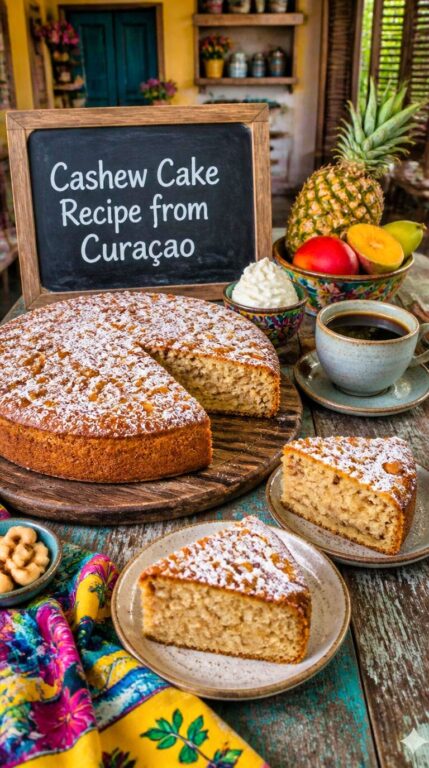
Perfecting the cashew cream is where this Curacao’s Cashew cake recipe with rum and creamy filling truly shines. I learned this technique from elders who insisted on patience and precision-qualities that transform simple ingredients into something luxurious. You’ll find authentic inspiration and community tips in this discussion about Curacao’s cashew nuts cake with rum and creamy filling, where tradition meets modern baking.
Grinding to Perfection
Soaking raw cashews softens their structure, making them ideal for smooth blending. I use a high-speed blender in short pulses, scraping down the sides often to ensure even consistency. You’ll know it’s ready when the mixture turns silky, almost like whipped butter. Overheating can cause oil separation, so I pause frequently to let the motor cool.
Balancing Sweetness and Salt
Sugar enhances the cream’s richness, but too much masks the nut’s natural flavor. I add cane sugar gradually, tasting as I go, while a pinch of sea salt deepens the profile. You might be surprised how salt lifts sweetness without making the cream taste salty. This balance defines the cake’s sophistication.
From my first attempt, I underestimated salt’s role. Now, I consider it the quiet anchor of the cream-subtle, but necessary. It contrasts the rum’s warmth and the cake’s sweetness, creating layers you feel with every bite. Your palate notices the harmony, even if you can’t name why.
The Emulsion Process
Stability matters when combining cashew paste with liquids like coconut milk or rum. I drizzle them in slowly while blending, letting the mixture emulsify drop by drop. Rushing causes splitting, leaving you with a greasy, uneven texture. Patience ensures a lush, unified cream.
Once I tried adding all the rum at once-mistake. The fats seized and the cream broke. Now, I treat emulsification like a conversation: slow, attentive, responsive. When done right, the cream holds its shape, crowns the cake beautifully, and melts smoothly on the tongue.
Cashew Cake Recipes Assembly and Architecture
Layering the Narrative
I begin stacking the cake with quiet precision, placing the first sponge on the serving plate. You’ll notice how each layer must align perfectly-this isn’t just about looks, it’s about balance in every bite. I spread a thin layer of cashew cream between each tier, letting it cling just enough to hold its story together. The rhythm here matters; too much pressure and the sponge compresses, too little and the layers slip.
The Final Smooth Coat
I apply the final coat of cashew cream with a long offset spatula, turning the turntable slowly. You want even pressure, not too thick, just enough to seal in the layers beneath. The surface should feel almost glassy, a blank canvas ready for what comes next.
This outer layer does more than look pretty-it locks in moisture and creates a barrier so decorations sit cleanly. I chill the cake briefly after this step because a firm base means cleaner details later.
Decorative Accents
I reach for toasted cashew halves and candied orange peel to frame the top edge. You can use edible hibiscus or local dried fruits from Curaçao for a personal touch. Placement should feel intentional but not rigid-like a memory recalled with warmth, not perfection.
These accents aren’t just decoration; they hint at what’s inside. I press each piece gently so it adheres without sinking, preserving the smooth coat I just perfected.
Serving the Experience
Every bite of this Cashew cake recipe tells a story of sun-drenched islands and generations of sweet tradition. I invite you to savor it slowly, perhaps alongside a warm cup of locally roasted coffee. For a deeper connection to the roots of this dessert, explore the Curacao classic: Bolo di Kashupete, a cherished version that honors the island’s culinary heritage.
Coffee and Conversation
Sharing this cake with friends turns dessert into a moment of connection. I often serve it with strong island coffee, its bold flavor balancing the nutty sweetness. You’ll notice how the warmth of the drink enhances the cake’s rich texture, making each bite more satisfying. This is how traditions grow-not just in taste, but in shared stories and laughter around the table.
Preserving the Masterpiece
Storing the cake properly ensures its quality lasts. I wrap mine tightly in beeswax cloth or place it in an airtight container at room temperature. You can enjoy it for up to five days, though it rarely lasts that long in my kitchen. Avoid refrigeration, as it can dry out the crumb and dull the flavors.
Your cake retains moisture best in a cool, dark pantry. If you need to keep it longer, I recommend slicing and freezing individual portions. Thaw at room temperature for 30 minutes before serving-this method preserves the texture and taste almost perfectly
With these considerations, I’ve shared a traditional Cashew cake recipe from Curaçao that reflects the island’s rich flavors and cultural heritage. I encourage you to use fresh, local cashews when possible, as they enhance the cake’s texture and taste. You’ll find that patience with baking time and attention to ingredient balance makes a clear difference in the final result. This dessert is more than a treat-it’s a connection to Curaçao’s history and home kitchens.

Beef Stew Recipe From Curacau Cooking Tips
Cashew Cake Recipe from Curaçao Cooking Tips
• Cashew Cake is a delightful Curaçao dessert that showcases the island’s tropical influences and the rich, buttery flavor of cashew nuts.
• Fresh, high-quality cashews provide the best flavor and texture.
• Lightly toasting the cashews before use can enhance their nutty aroma and deepen the overall flavor.
• Finely chop or grind the cashews for even distribution throughout the batter.
• Some recipes reserve a portion of the nuts for decorating the top of the cake.
• Use room-temperature butter, eggs, and dairy ingredients for smoother mixing and a more uniform batter.
• Cream butter and sugar thoroughly to create a light texture.
• Brown sugar may be used to add subtle caramel notes that complement the cashews.
• Vanilla extract is a common flavoring that enhances the natural sweetness of the nuts.
• Cinnamon or nutmeg can be added for extra warmth and depth.
• Fold the cashews into the batter gently to avoid overmixing.
• A small amount of citrus zest may brighten the flavor profile.
• Bake in a properly prepared pan to ensure easy removal after baking.
• Avoid overbaking, which can dry out the cake and diminish its tender crumb.
• Test for doneness by inserting a toothpick into the center; it should come out with a few moist crumbs.
• Allow the cake to cool before glazing or frosting.
• A simple vanilla glaze, cream cheese frosting, or light caramel topping pairs well with cashew cake.
• Properly prepared Cashew Cake should be moist, tender, and richly flavored with buttery nut notes.
Cashew Cake Recipe Storage Tips
Cashew Cake Storage Tips
• Allow the cake to cool completely before storing.
• Store in an airtight container to preserve moisture and freshness.
• Keep at room temperature in a cool, dry place if consuming within a few days.
• Refrigeration may extend freshness, particularly if the cake contains frosting or cream-based toppings.
• Bring refrigerated cake closer to room temperature before serving for the best flavor and texture.
• Cover the cake tightly to prevent it from drying out.
• Store sliced portions in sealed containers to maintain moisture.
• Nuts can absorb odors, so keep the cake away from strongly scented foods.
• Individual slices can be wrapped separately for convenient serving.
• Freeze whole cakes or slices in airtight freezer-safe containers if desired.
• Wrap tightly to help prevent freezer burn and preserve quality.
• Defrost frozen cake gradually at room temperature or in the refrigerator.
• Nut-based cakes generally freeze well and retain much of their flavor after thawing.
• Use clean utensils when slicing and serving to help maintain freshness.
• Label storage containers with the preparation date for easier inventory management.
• Check for signs of spoilage such as mold, rancid nut odors, unusual discoloration, or texture deterioration before consumption.
• Avoid repeated freezing and thawing cycles, which can negatively affect texture and quality.
• For best quality, enjoy the cake while it remains moist, aromatic, and rich with cashew flavor.
Cashew Cake Recipe from Curacao
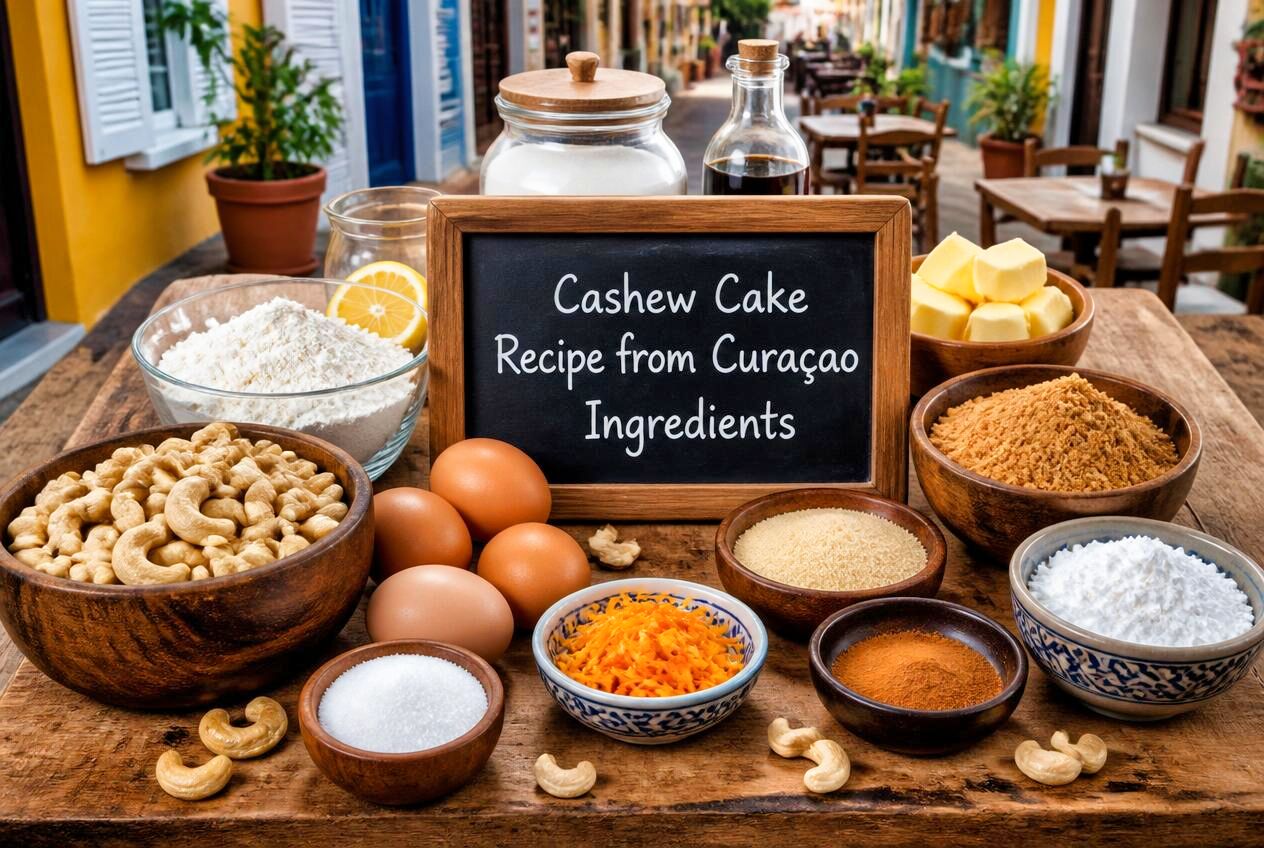
Ingredients
- 2 cups cashew nuts finely ground
- 1 cup all-purpose flour
- 1 cup sugar
- 1/2 cup butter softened
- 4 Large eggs
- 1 teaspoon baking powder
- 1 teaspoon vanilla extract
- 1/2 teaspoon salt
- 1/2 cup milk
Instructions
- Preheat your oven to the temperature specified in your recipe.
- Grease and line a cake pan with parchment paper, or lightly grease and flour the pan to ensure easy release after baking.
- Set the prepared pan aside.
- In a large mixing bowl, combine the butter and sugar.
- Using an electric mixer or a sturdy whisk, beat the mixture until it becomes light, pale, and fluffy.
- This step is important because it incorporates air into the batter, helping create a lighter and more tender cake texture.
- Continue mixing until the sugar is well incorporated and the mixture appears creamy.
- Add the eggs one at a time.
- Beat well after each addition, ensuring each egg is fully incorporated before adding the next.
- This gradual process helps create a stable emulsion and results in a smoother batter.
- Scrape down the sides of the bowl as needed to ensure everything is evenly mixed.
- In a separate bowl, combine the ground cashew nuts, flour, baking powder, and salt.
- Whisk the ingredients together until evenly distributed.
- This ensures the leavening agent and salt are spread uniformly throughout the batter.
- Gradually add the dry ingredients to the butter mixture, alternating with the milk.
- Begin and end with the dry ingredients, mixing gently after each addition.
- Add the vanilla extract and stir until everything is just combined.
- Avoid overmixing, as this can make the cake dense instead of tender.
- The finished batter should be smooth and evenly blended.
- Pour the batter into the prepared cake pan.
- Use a spatula to spread the batter evenly and smooth the surface.
- If desired, arrange whole cashew nuts decoratively across the top of the batter before baking.
- This creates an attractive finish and highlights the cake's main ingredient.
- Place the cake in the preheated oven and bake for approximately 30 to 35 minutes.
- The cake is done when the top is lightly golden and a toothpick inserted into the center comes out clean.
- Avoid opening the oven frequently during baking, as sudden temperature changes can affect the cake's rise.
- Remove the cake from the oven and place the pan on a wire rack.
- Allow the cake to cool in the pan for about 10 minutes.
- Then carefully remove it from the pan and transfer it directly to the wire rack to cool completely.
- Cooling completely helps the texture set properly and makes slicing easier.
- If desired, dust the cooled cake lightly with powdered sugar before serving.
- Slice into portions and serve with coffee, tea, or a glass of milk.
- The cake can also be accompanied by fresh fruit or lightly whipped cream for an elegant presentation.
- This cashew nut cake is rich, tender, and full of delicate nutty flavor. The ground cashews add both texture and moisture, while the buttery cake crumb remains light and soft.
- Perfect for afternoon tea, celebrations, or everyday baking, this cake highlights the natural sweetness and richness of cashews in a simple yet elegant dessert.
Cashew Cake Recipes Frequently Asked Questions
Q: What are Cashew Cake Recipes from Curaçao?
A: The Cashew cake recipe from Curaçao is a traditional dessert originating from the island of Curaçao in the southern Caribbean. It features cashews as the main ingredient, often combined with butter, sugar, eggs, flour, and sometimes a hint of vanilla or cinnamon. The cake has a dense, moist texture and a rich, nutty flavor. Unlike typical nut cakes, this version highlights locally grown cashews, which are abundant on the island due to its tropical climate.
Q: Can I use regular store-bought cashews for this Cashew Cake recipe?
A: Yes, you can use unsalted, raw, or roasted cashews from the store if fresh, locally harvested ones are not available. For the best flavor, choose raw unsalted cashews to control the seasoning. Toasting them lightly before mixing into the batter enhances their natural richness. Avoid honey-roasted or flavored varieties, as they can alter the cake’s taste and texture.
Q: Is this Cashew Cake Recipe gluten-free?
A: The traditional version of Cashew cake recipefrom Curaçao usually contains wheat flour, so it is not gluten-free. However, you can substitute the all-purpose flour with a gluten-free flour blend that includes a binder like xanthan gum. Many modern adaptations use almond flour or coconut flour to create a naturally gluten-free version while complementing the nutty profile of the cashews.
Q: How is this Cashew Cake recipe different from other nut cakes?
A: Cashew cake recipes from Curaçao stands out because it uses cashews as the dominant flavor and texture component, rather than just an add-in. The cake often has a higher nut-to-flour ratio, giving it a fudgy, almost cheesecake-like consistency. It also reflects Caribbean influences with subtle spice notes and sometimes a touch of citrus zest. The use of local ingredients and traditional baking methods gives it a unique island character not found in American or European nut cakes.
Q: How should I store and serve Cashew Cake recipe from Curaçao?
A: Store the Cashew cake recipe in an airtight container at room temperature for up to two days or refrigerate for up to five days. The cake often tastes better the next day as the flavors deepen. Serve it slightly chilled or at room temperature, optionally with a dusting of powdered sugar, a dollop of whipped cream, or a side of mango or papaya slices to highlight its tropical roots. It pairs well with coffee or a glass of island rum.

Recipes are gathered in person and written for real-world cooking conditions.
- 10 Hungarian Dessert Recipes Passed Down Through Generations - July 25, 2026
- 11 Easy English Recipes Anyone Can Make - July 25, 2026
- Hungarian Kifli Recipe - July 25, 2026