
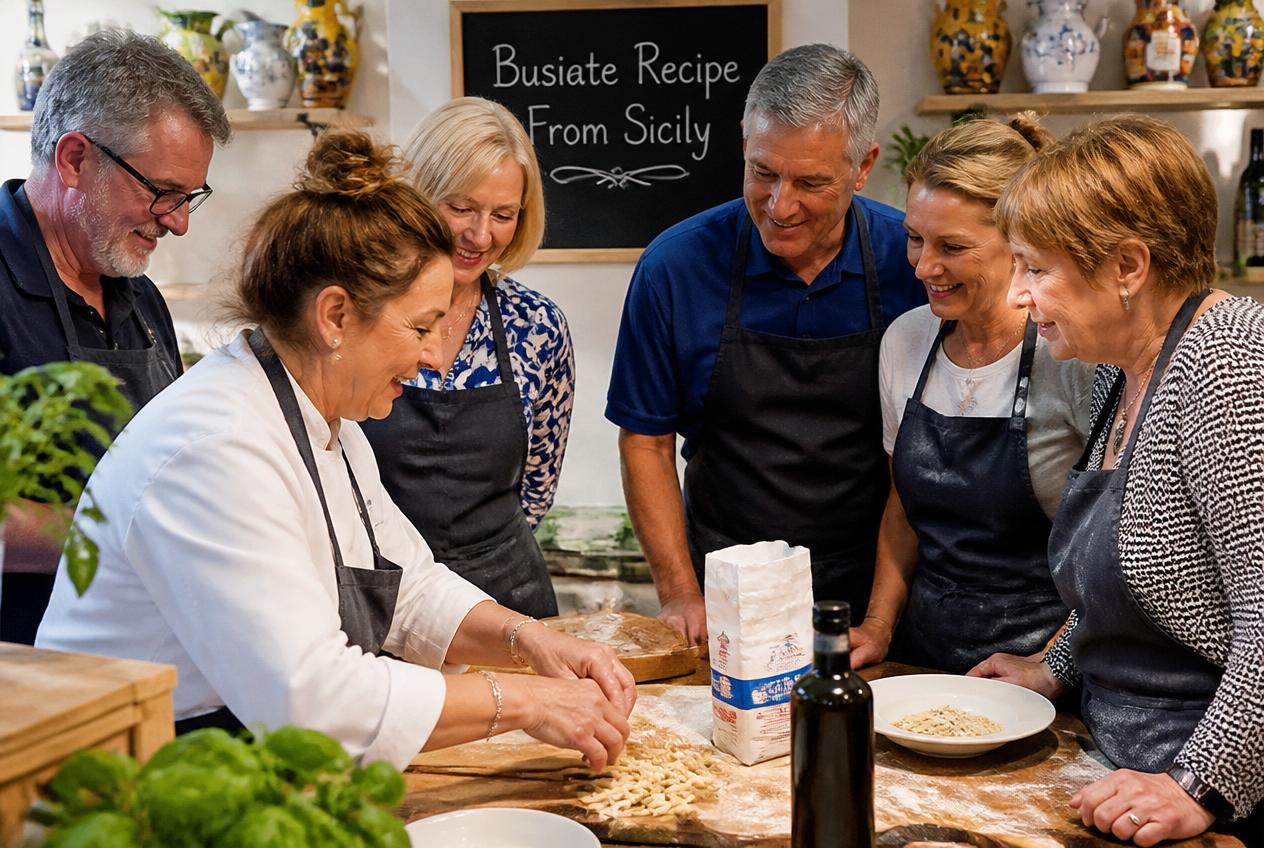
Busiate recipes with Trapanese pesto stands as one of Sicily’s most beloved pasta dishes, originating from the coastal province of Trapani where local ingredients define its character. This vibrant Sicilian pesto combines ripe tomatoes, toasted almonds, fresh basil, garlic, pecorino cheese, and extra virgin olive oil into a raw, uncooked sauce that clings perfectly to spiral busiate pasta. Unlike the more familiar Genoese pesto made with pine nuts, this version showcases the sun-ripened tomatoes and almonds that thrive in Sicily’s Mediterranean climate. The Busiate recipe highlights these regional flavors and brings the taste of Sicily to your table.
The story behind the Busiate recipe fascinates me. Sicilian sailors created their own version of pesto after encountering the Ligurian original, adapting it with ingredients they had readily available in their homeland. The result became known as ‘agghia pistata’ in Sicilian dialect, traditionally pounded with a mortar to create its distinctive texture.
This Busiate recipe appeals because of its simplicity and speed. The entire dish comes together in less than 30 minutes, making it an accessible weeknight meal that delivers the authentic flavors of Sicilian cuisine without requiring extensive preparation or hard-to-find ingredients.
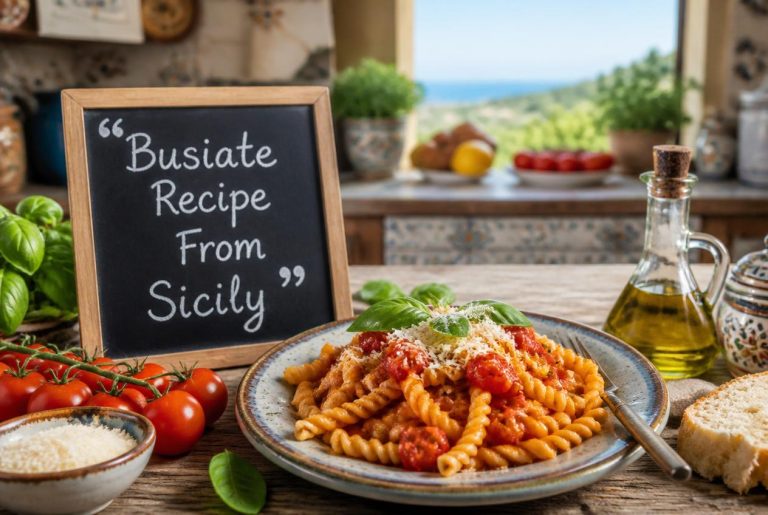
Busiate Recipe From Sicily
Key Takeaways
- Trapanese pesto uses tomatoes and almonds instead of the traditional pine nuts found in Genoese pesto
- The sauce remains completely raw and uncooked, preserving the fresh flavors of all ingredients
- This authentic Sicilian pasta dish can be prepared in under 30 minutes from start to finish
Recipe Tips
I recommend using the freshest tomatoes you can find for this traditional Sicilian pasta sauce. Ripe cherry or plum tomatoes work best because they provide natural sweetness and vibrant color to the pesto. The Busiate recipe benefits from the best seasonal produce.
Nut Selection
While almonds are traditional in authentic Pesto alla Trapanese, I always toast them first. This brings out their flavor and adds depth to the sauce. Pine nuts can substitute if needed, though almonds give the most authentic taste for the Busiate recipe.
Pasta Pairing
Busiate is the classic choice, but I’ve successfully used other pasta shapes when busiate isn’t available. Fusilli, casarecce, or even spaghetti work well because they hold the chunky pesto effectively and complement the Busiate recipe’s rustic charm.
Preparation Method
I use a food processor to bring this no-cook sauce together quickly. I pulse ingredients rather than blending continuously to maintain texture. The pesto should be slightly chunky, not completely smooth, which is ideal for the Busiate recipe.
Key Techniques
- Reserve pasta water before draining to adjust consistency
- Add pesto to warm pasta off the heat to preserve fresh flavors
- Use quality extra virgin olive oil for the best results
- Grate Pecorino Romano or Pecorino Siciliano fresh
I suggest making this affordable Sicilian dish during summer when tomatoes and basil are at their peak. Prepare the sauce ahead and refrigerate it for up to two days. The Busiate recipe is perfect for easy weeknight Sicilian dinner recipes.
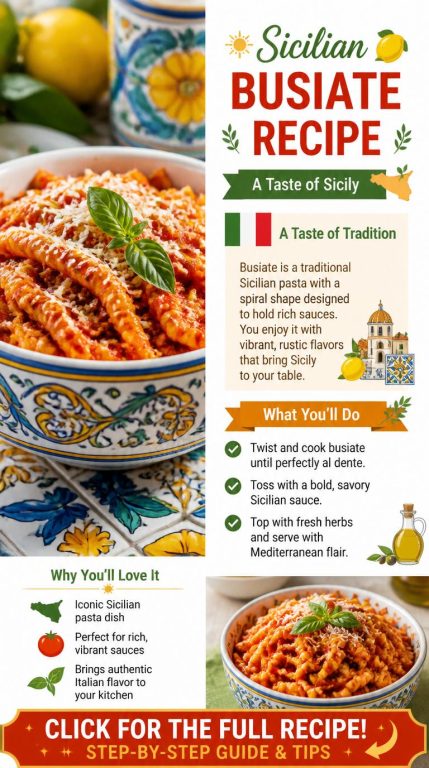
Creative Variations
I love experimenting with this traditional Sicilian pesto while staying true to its rustic roots. The classic Busiate recipe offers plenty of room for personal touches that honor the dish’s heritage and Sicilian origins.
Nut Substitutions
While almonds are traditional, I sometimes swap them for these alternatives:
- Pine nuts – Creates a closer connection to Genovese pesto
- Walnuts – Adds earthier, deeper flavors
- Pistachios – Brings a Sicilian twist with vibrant color
Cheese Variations
I occasionally replace pecorino with Parmigiano-Reggiano for a milder, creamier profile. For a sharper taste, I blend half pecorino with half aged ricotta salata, which enhances the Busiate recipe.
Herb Additions
Fresh mint leaves mixed with basil create a refreshing variation I use during hot summer months. A handful of arugula adds peppery notes that complement the tomatoes beautifully in the Busiate recipe.
Protein Enhancements
To transform this into a heartier meal, I toss in:
- Grilled shrimp or seared scallops
- Crumbled Italian sausage
- White beans for a vegetarian protein boost
Tomato Choices
While cherry tomatoes are standard in Sicilian-inspired recipes, I use sun-dried tomatoes for concentrated sweetness. Heirloom varieties add complexity when they’re in season, especially in the Busiate recipe.
Pasta Alternatives
Though busiate is traditional, I have paired this pesto with fusilli, casarecce, or even spaghetti. The sauce clings well to any pasta shape with good texture and works beautifully in the Busiate recipe.
These modifications maintain the spirit of rustic Italian recipes while allowing personal expression in the kitchen. The Busiate recipe adapts well to your favorite ingredients and seasonal produce.
Exploring Related Dishes
When I explore Sicilian pasta recipes, I find that Trapanese pesto appears in various forms beyond the classic busiate pairing. The sauce works beautifully with other pasta shapes like spaghetti, linguine, or rigatoni when busiate isn’t available, and the Busiate recipe remains a highlight of Sicilian cuisine.
This pesto shares culinary roots with Ligurian pesto Genovese, though the Sicilian version uses tomatoes and almonds instead of basil and pine nuts. The Genoese sailors brought their agliata sauce to Trapani, which inspired local cooks to create their own interpretation, resulting in the Busiate recipe.
Traditional foods from Sicily that complement this dish include:
- Pasta con le Sarde – sardines, fennel, and pine nuts
- Caponata – sweet and sour eggplant relish
- Arancini – fried rice balls with various fillings
- Pasta alla Norma – eggplant, tomato, and ricotta salata
I also use Trapanese pesto as a versatile condiment beyond pasta. It makes an excellent spread for bruschetta or works as a dip for fresh vegetables. Some cooks apply it to grilled fish or chicken for added flavor, expanding the Busiate recipe’s possibilities.
The beauty of this sauce lies in its simplicity and fresh ingredients. I find it represents the essence of Sicilian cooking, where quality local produce takes center stage. While busiate remains the traditional choice, experimenting with different pasta shapes or applications helps me appreciate the Busiate recipe’s adaptability in Mediterranean cuisine.
Comparing Similar Recipes
When I explore traditional Sicilian pasta sauce recipes, I notice that Trapanese pesto stands apart from its northern Italian cousin. While Genoese pesto relies on pine nuts and lacks tomatoes, this recipe from Sicily incorporates fresh tomatoes and toasted almonds as its base, making the Busiate recipe unique.
The cost difference is significant. Trapanese pesto costs half the price of traditional pesto Genovese, making it an accessible option for everyday cooking. This affordability stems from using almonds instead of expensive pine nuts, which is a key feature of the Busiate recipe.
| Ingredient | Pesto Genovese | Pesto Trapanese |
|---|---|---|
| Nuts | Pine nuts | Almonds |
| Tomatoes | None | Fresh cherry tomatoes |
| Cheese | Parmigiano-Reggiano | Pecorino Romano |
| Region | Northern Italy | Southern Italy |
| Cooking | Raw sauce | Raw sauce |
Regional Italian recipes from the south often emphasize fresh, sun-ripened ingredients. I find that recipes from Southern Italy typically feature tomatoes more prominently than their northern counterparts. The Busiate recipe showcases this Mediterranean tradition of simplicity and seasonal produce.
The preparation method for both pestos remains similar. I combine ingredients in a food processor or mortar and pestle without cooking them. However, Southern Italian recipes like this authentic Trapanese pesto deliver a sweeter, more robust flavor profile due to the tomatoes in the Busiate recipe.
The texture also differs between these sauces. Trapanese pesto has a chunkier consistency compared to the smoother Genoese version, which makes the Busiate recipe stand out.
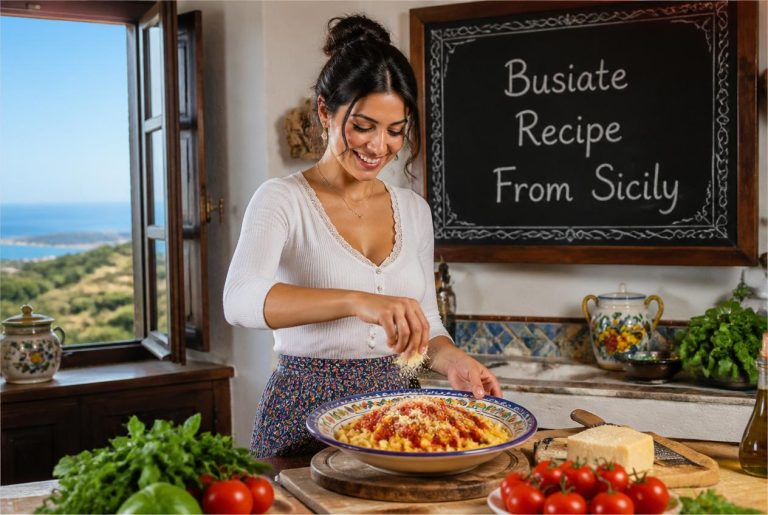
Busiate Recipe From Sicily Cooking TIps
Busiate Recipe From Sicily Cooking Tips
• Busiate is known for its long spiral shape, which is excellent for holding rich Sicilian sauces.
• The pasta originated in western Sicily, particularly around Trapani.
• Traditional busiate is made by wrapping strips of pasta dough around a thin rod or knitting needle to create its distinctive corkscrew shape.
• Semolina flour is commonly used because it produces a firm texture that holds up well during cooking.
• Knead the dough until smooth and elastic for the best texture.
• Allow homemade dough to rest before shaping to make it easier to work with.
• Cook busiate until al dente so it retains its traditional firm bite.
• Busiate alla Trapanese is one of the most famous Sicilian preparations and features a fresh tomato, almond, garlic, basil, and olive oil sauce.
• The spiral shape captures small pieces of tomato, herbs, and nuts beautifully.
• Extra-virgin olive oil is an essential ingredient in many Sicilian busiate dishes.
• Fresh basil adds brightness and complements the tomato-based sauces.
• Toasted almonds provide a traditional Sicilian flavor and subtle crunch.
• Pecorino Romano or other aged cheeses can be used as a finishing garnish.
• Reserve a little pasta water to help emulsify and bind the sauce.
• Toss the pasta with the sauce immediately before serving for the best flavor and texture.
• The flavor should balance tender pasta, sweet tomatoes, olive oil, garlic, herbs, and almonds.
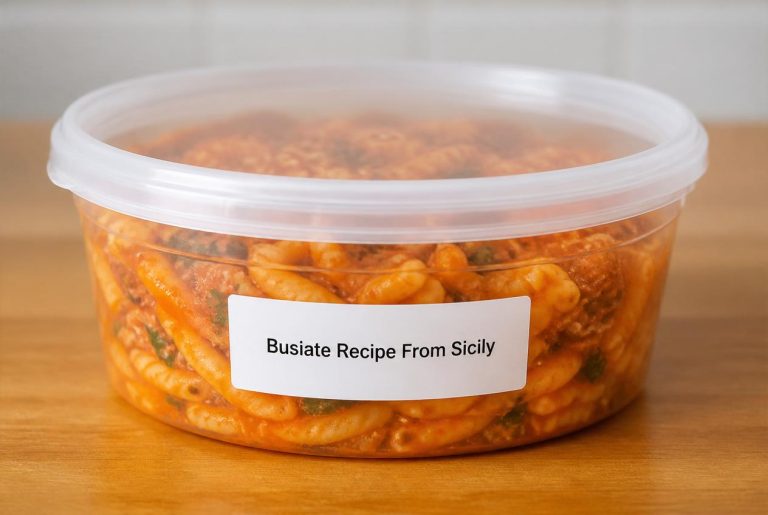
Busiate Recipe From Sicily Storage Tips
Busiate Recipe From Sicily Storage Tips
• Allow the pasta and sauce to cool before transferring them into storage containers.
• Store the pasta and sauce together if already combined, or separately if possible.
• Keep refrigerated in airtight containers to preserve freshness.
• Refrigeration may cause the pasta to absorb some of the sauce, which is normal.
• Reheat gently over low heat to help preserve texture.
• Add a small splash of water or olive oil during reheating if the pasta seems dry.
• Tomato, garlic, and herb flavors often deepen after overnight refrigeration.
• Freeze sauce separately for best quality if preparing ahead.
• Cooked pasta may be frozen, although its texture may soften slightly after thawing.
• Defrost frozen portions gradually in the refrigerator before reheating.
• Fresh herbs and cheese are best added just before serving.
• Use clean utensils when handling leftovers to help maintain freshness.
• Pasta dishes are generally best enjoyed within a moderate refrigerated storage period for ideal quality and flavor.
• Keep away from strongly scented foods because pasta and sauces can absorb odors.
• Discard leftovers if the pasta or sauce develops sour odors, mold, slime, or unusual discoloration.
Busiate Recipe From Sicily
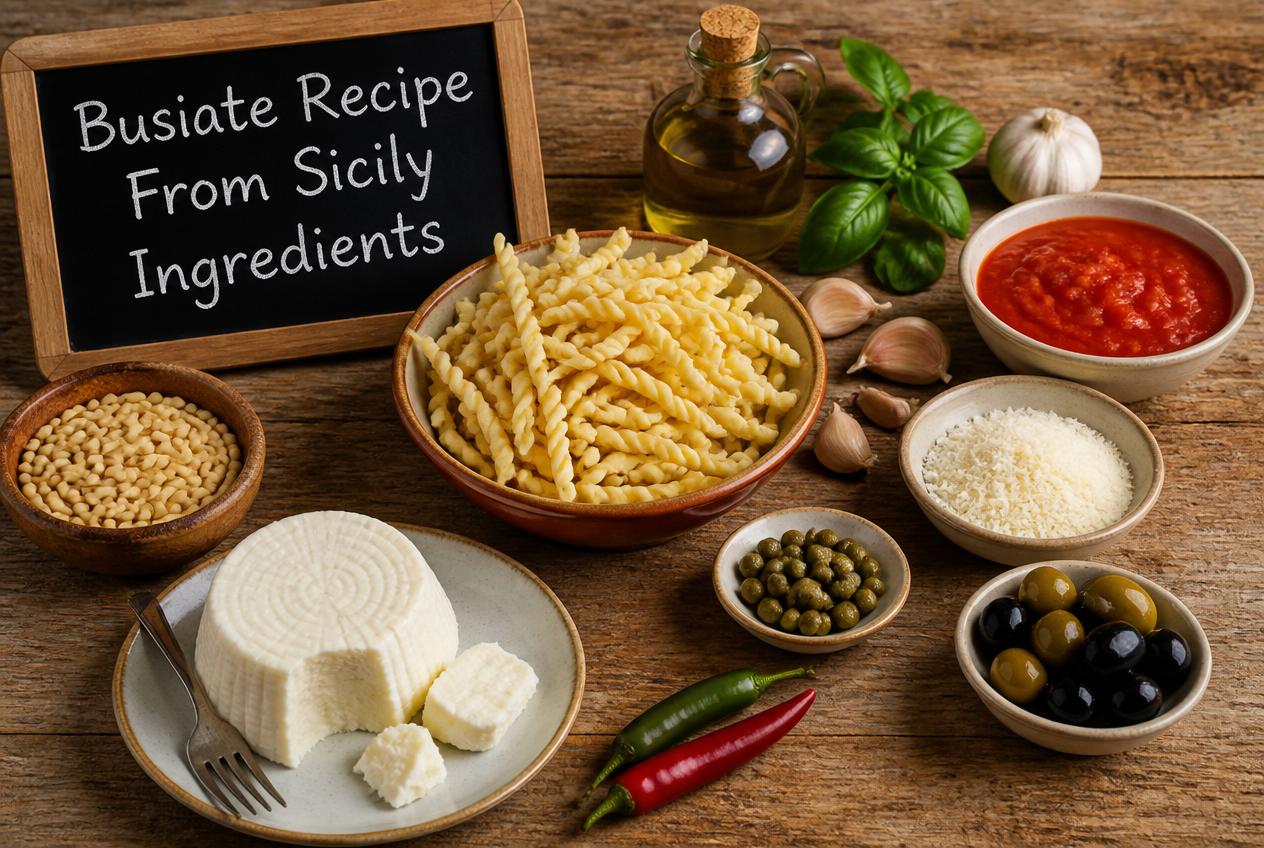
Ingredients
- 1 ½ pounds tomatoes ripe fresh
- 4 ounces pinoli
- 2 cloves garlic peeled and roughly chopped
- 20 basil leaves
- ½ cup extra-virgin olive oil
- salt and pepper to taste
Instructions
- Bring a small pot of water to a boil.
- Carefully lower the tomatoes into the boiling water and blanch them for about 30–60 seconds, or until the skins begin to loosen and split.
- Remove the tomatoes and transfer them to a bowl of cold water. Once cool enough to handle, peel off the skins.
- Cut the tomatoes into quarters, remove the seeds, and place the pieces in a colander or sieve to drain while you prepare the remaining ingredients. Draining helps prevent the pesto from becoming watery.
- Place the pine nuts (pinoli) and garlic in a mortar and grind them together until a coarse paste forms.
- Add the basil leaves and continue grinding until everything is well incorporated and fragrant.
- Add the prepared tomatoes in three separate additions, gently crushing and mixing them into the pesto. Avoid overworking the tomatoes—you want them to remain somewhat chunky and retain their texture.
- Transfer the mixture to a large serving bowl.
- Season with salt and freshly ground black pepper to taste.
- Slowly drizzle in the olive oil while stirring with a wooden spoon until the mixture is evenly combined.
- Cover the bowl and allow the pesto to rest for up to 2 hours at room temperature before serving. If preparing further in advance, refrigerate it and bring it closer to room temperature before using.
- If using a food processor, place the blanched and drained tomatoes, pine nuts, garlic, basil, and a pinch of salt into the bowl of the processor.
- Pulse several times until a chunky paste forms. Avoid processing continuously, as the pesto should retain some texture.
- With the processor running, slowly drizzle the olive oil through the feed tube until fully incorporated.
- Taste and adjust the seasoning with additional salt and black pepper as needed.
- Transfer the pesto to a serving bowl and set aside until ready to use.
- Bring a large pot of water to a rolling boil.
- Season the water generously with salt.
- Add the pasta and cook until al dente, following the package directions. Most dried pasta will take approximately 9–12 minutes, while fresh pasta may cook in as little as 1–3 minutes.
- Combine and Serve
- Drain the pasta thoroughly and immediately transfer it to the bowl containing the tomato pesto.
- Toss well until every piece of pasta is evenly coated with the sauce.
- Serve immediately while warm.
- This fresh Sicilian-style tomato pesto combines sweet blanched tomatoes, fragrant basil, garlic, pine nuts, and extra virgin olive oil into a light, rustic sauce that perfectly coats hot pasta. Unlike traditional green pesto, the tomatoes remain slightly chunky, creating a vibrant Mediterranean dish that highlights the freshness of its ingredients.
Busiate Recipe Frequently Asked Questions
Busiate pasta features a distinctive twisted shape traditionally formed around local reeds, while Trapanese pesto distinguishes itself from Genoese versions by incorporating tomatoes and almonds instead of pine nuts. The Busiate recipe brings these elements together for a memorable Sicilian meal.
What is busiate pasta, and how does it differ from other traditional Sicilian pasta shapes?
Busiate is a traditional Sicilian pasta characterized by its elongated, spiral shape. The pasta is made from durum wheat semolina and water, then rolled around a thin reed or bronze rod called a busa to create its signature corkscrew appearance. The Busiate recipe relies on this unique shape for its sauce-holding ability.
This hand-rolled technique produces hollow spirals that measure approximately 3 to 4 inches in length. The twisted grooves effectively trap chunky sauces and pesto, making busiate particularly well-suited for Trapanese pesto preparations. The Busiate recipe uses this distinctive shape to its full advantage.
Unlike smooth pasta shapes such as spaghetti or linguine, busiate’s textured surface provides superior sauce adhesion. The shape originated in the Trapani province of western Sicily, where it remains a regional specialty distinct from other Sicilian pastas like casarecce or cavati. The Busiate recipe continues to celebrate this iconic Sicilian tradition.
How do you make authentic Trapanese pesto (pesto alla Trapanese) at home?
I combine fresh cherry tomatoes, blanched almonds, garlic cloves, fresh basil leaves, pecorino cheese, and extra virgin olive oil in a food processor or mortar and pestle. This traditional Sicilian pesto remains uncooked, preserving the fresh flavors of all ingredients and making it perfect for any Busiate recipe. I toast the almonds lightly in a dry pan until fragrant to enhance their nutty flavor, then cool them before pulsing with garlic until finely chopped. Next, I add the tomatoes and basil to the mixture and continue processing.
I process the mixture until it reaches a slightly chunky consistency rather than a completely smooth paste, essential for the best Busiate recipe. I stir in grated pecorino cheese and drizzle in olive oil while pulsing until the pesto achieves the desired texture. The sauce should maintain some texture from the almonds and tomatoes, and I avoid over-processing to preserve the authentic rustic character of pesto alla Trapanese. This method ensures the Busiate recipe delivers the classic Sicilian taste.
What is the best method to cook busiate so it stays al dente and holds sauce well?
I bring a large pot of water to a rolling boil and add salt generously, using approximately 1 tablespoon per 4 quarts of water. Fresh homemade busiate typically cooks in 8 to 10 minutes, while dried commercial versions require 10 to 12 minutes. I test the pasta 2 minutes before the package instructions indicate completion by biting into a piece, ensuring the perfect texture for a Busiate recipe.
I reserve 1 cup of starchy pasta cooking water before draining, which helps the Trapanese pesto sauce coat the pasta evenly and creates a silky consistency for the Busiate recipe. I never rinse the cooked busiate, as the surface starch helps the sauce adhere to the twisted grooves. I toss the hot pasta immediately with the pesto and add reserved pasta water as needed to achieve the proper coating, making the Busiate recipe truly authentic.
Which ingredients are essential for a traditional busiate with Trapanese pesto, and what substitutions are acceptable?
Essential ingredients for a traditional Busiate recipe include ripe tomatoes, blanched almonds, fresh basil, garlic, pecorino cheese, and high-quality extra virgin olive oil. Authentic Trapanese pesto requires these specific components to achieve its characteristic flavor profile. I substitute pine nuts for almonds only when necessary, though this moves the recipe closer to Genoese pesto and changes the Busiate recipe slightly.
Parmesan cheese can replace pecorino, but it produces a milder, less sharp flavor in the Busiate recipe. For tomatoes, I prefer cherry or San Marzano varieties for their sweetness and lower water content, but Roma tomatoes work adequately if I remove excess seeds and liquid before processing. I avoid substituting dried basil for fresh, as it significantly diminishes the sauce’s vibrant character in the Busiate recipe.
Walnuts can replace almonds in a pinch, though they impart a slightly bitter note that differs from the traditional preparation of a Busiate recipe. Using these substitutions can help adapt the Busiate recipe to available ingredients while maintaining much of its original flavor. Always aim for the freshest ingredients to create the best Busiate recipe experience.
Where can you buy busiate pasta outside Italy, and what pasta shapes are the best alternatives if it is unavailable?
I find busiate at Italian specialty stores, gourmet food shops, and online retailers that carry imported Sicilian products, making it easier to prepare a true Busiate recipe. Several Italian pasta brands export dried busiate internationally, increasing accessibility for anyone wanting to try a Busiate recipe at home. When busiate is unavailable, I substitute fusilli lunghi, which features a similar spiral structure that captures sauce effectively for a Busiate recipe.
Casarecce, another Sicilian pasta with a rolled, twisted shape, serves as an excellent alternative in a Busiate recipe. Gemelli and regular fusilli work adequately, though their shorter lengths change the dish’s presentation and texture in the Busiate recipe. I avoid using smooth pasta shapes like spaghetti or linguine, as they cannot hold chunky pesto sauce as effectively in a Busiate recipe.
Strozzapreti offers comparable sauce-holding capabilities due to its twisted, elongated form, making it another good option for a Busiate recipe. For the most authentic experience, I purchase imported Sicilian busiate from online Italian food retailers and use it in my Busiate recipe to capture the true flavors of Sicily.
What other sauces pair well with busiate besides Trapanese pesto?
I serve busiate with robust tomato-based sauces that complement its textured surface, including arrabbiata and marinara variations. The pasta’s spiral grooves capture chunky vegetable ragùs and meat sauces exceptionally well. For a unique twist, try a Busiate recipe with slow-cooked beef ragù to enhance the pasta’s flavor.
Seafood preparations work beautifully with busiate, particularly sauces featuring clams, mussels, or shrimp in white wine and garlic. The twisted shape holds pieces of seafood and herbs in its crevices. A Busiate recipe with calamari and cherry tomatoes can highlight the pasta’s ability to absorb aromatic seafood sauces.
I also pair busiate with creamy sauces such as carbonara or cacio e pepe, where the spirals trap the rich, cheese-based preparations. Sicilian pesto variations incorporating sun-dried tomatoes or artichokes provide regional alternatives to traditional Trapanese pesto. For a comforting meal, a Busiate recipe with gorgonzola and walnuts offers a creamy, nutty option.
For lighter meals, I toss busiate with olive oil, garlic, and chili flakes, letting the pasta’s shape shine. A Busiate recipe with sautéed zucchini and mint delivers a fresh, seasonal dish. You can also try a Busiate recipe with roasted eggplant and ricotta salata for a classic Sicilian flavor.
Experiment with a Busiate recipe using roasted peppers and anchovies to create a savory, umami-packed sauce. A Busiate recipe with lemon zest, parsley, and toasted breadcrumbs brings brightness and texture. Whether you crave meat, seafood, or vegetarian options, the right Busiate recipe can transform any meal into a Sicilian feast.
Don’t hesitate to invent your own Busiate recipe by combining your favorite ingredients with this versatile pasta. Each Busiate recipe you try will showcase how well the spiral shape holds sauces and enhances every bite. With so many options, a Busiate recipe can fit any occasion and satisfy any craving.

Recipes are gathered in person and written for real-world cooking conditions.
- 10 Hungarian Dessert Recipes Passed Down Through Generations - July 25, 2026
- 11 Easy English Recipes Anyone Can Make - July 25, 2026
- Hungarian Kifli Recipe - July 25, 2026