
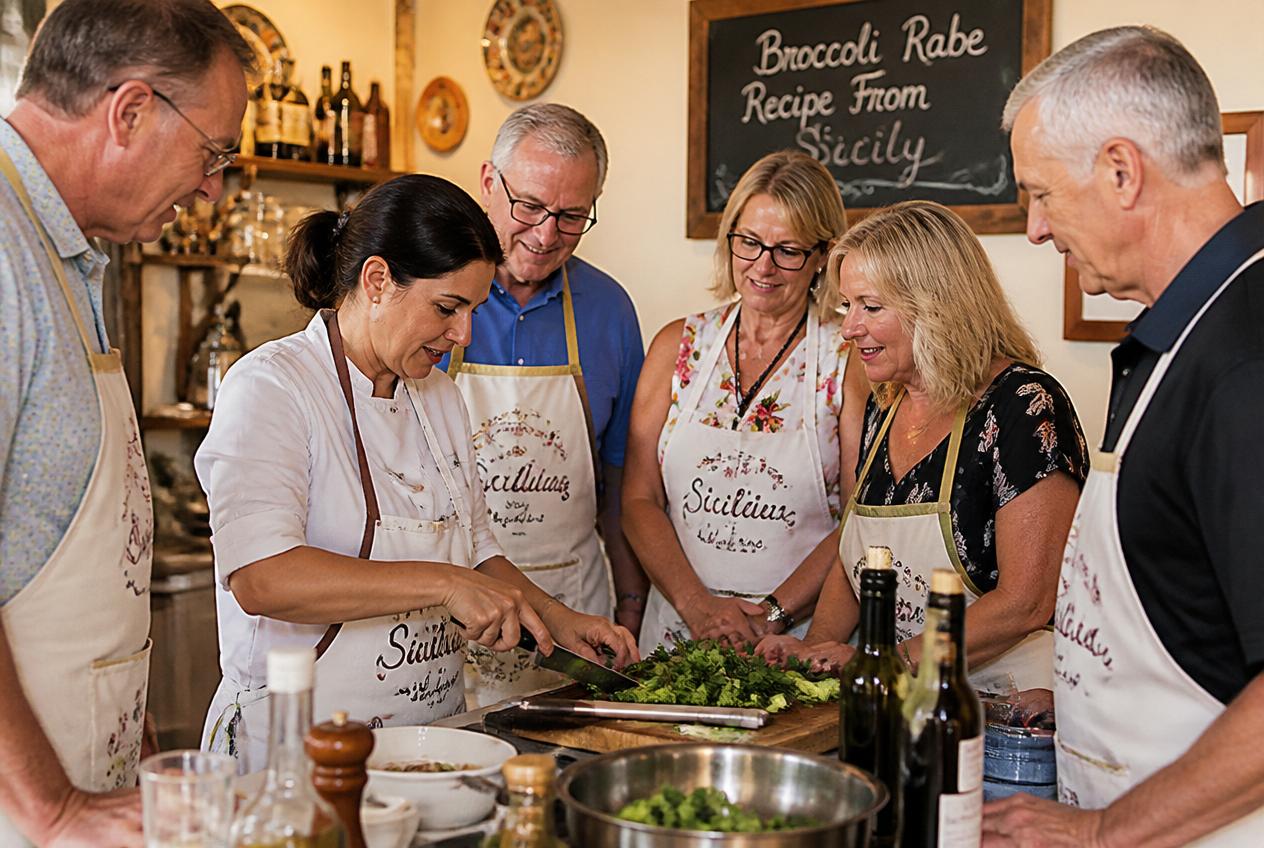
Broccoli rabe, known in Italy as rapini, holds a special place in Sicilian cooking where bitter greens become memorable side dishes. Sicilian-style broccoli rabe combines sautéed broccoli rabe with olive oil, garlic, and red pepper flakes to create a simple yet flavorful dish that’s ready in minutes. Southern Italian kitchens have passed down this Broccoli Rabe recipe through generations.
The beauty of this traditional Sicilian preparation lies in its minimal ingredient list that allows the natural flavors of the broccoli rabe to shine. The slight bitterness of the vegetable pairs perfectly with the heat from red pepper flakes and the aromatic quality of garlic. This Broccoli Rabe recipe works wonderfully alongside grilled meats, pasta, or as part of a larger Mediterranean-style meal.
Whether you know Italian cooking or try broccoli rabe for the first time, this Broccoli Rabe recipe offers an authentic taste of Sicily. The technique is straightforward enough for beginners and delivers the bold flavors that experienced cooks appreciate. Broccoli Rabe recipe traditions like this one highlight the vegetable’s unique character in Sicilian cuisine.
Key Takeaways
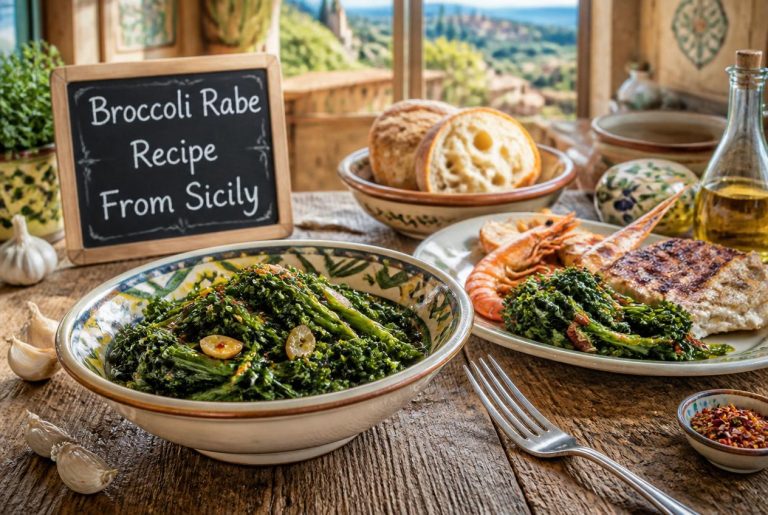
- Sicilian broccoli rabe is a quick side dish featuring garlic, olive oil, and red pepper flakes
- The preparation method highlights the vegetable’s natural bitter and nutty flavors
- This versatile Broccoli Rabe recipe pairs well with various main courses and can be adapted with additional ingredients
Description And Historical Information
Sicilian-style garlicky broccoli rabe, known as “cavuliceddi” in Sicilian dialect, is a traditional dish that showcases the bold, bitter flavor of broccoli rabe combined with garlic and olive oil. This leafy green vegetable, also called rapini, belongs to the turnip family and features tender shoots with a distinctive bitter and slightly nutty taste. Broccoli Rabe recipe variations exist across Sicily, but the focus remains on simplicity and flavor.
In Sicily, broccoli rabe has a shorter growing season during winter months compared to other regions. The Sicilian variety tends to be less bitter than broccoli rabe found elsewhere, making it particularly well-suited for traditional Mediterranean cooking methods. This Broccoli Rabe recipe makes the most of the local harvest.
This dish represents classic Sicilian peasant food, relying on simple, accessible ingredients that rural communities historically used. The Broccoli Rabe recipe typically involves:
- Fresh broccoli rabe with crisp leaves
- Extra virgin olive oil
- Garlic cloves
- Red pepper flakes
- Salt to taste
Broccoli rabe features prominently across Mediterranean cuisines, demonstrating its cultural significance in the region. This Broccoli Rabe recipe has gained renewed interest recently due to growing appreciation for sustainable, heritage foods and recognition of its nutritional benefits.
The preparation method for this Sicilian cuisine staple remains straightforward, focusing on enhancing the vegetable’s natural flavors rather than masking them. Traditional foods from Sicily often embrace bitter greens, and this spicy and flavorful side dish exemplifies that culinary tradition perfectly. The Broccoli Rabe recipe continues to be a favorite at Sicilian tables.
Recipe Tips
I blanch the broccoli rabe for 2-3 minutes before sautéing to reduce its natural bitterness while maintaining the vegetable’s firm texture. This step makes the Broccoli Rabe recipe more approachable for those new to this Sicilian-style side dish. Blanching also helps preserve the vibrant color of the greens.
When working with garlic in Sicilian cooking, I slice it very thin rather than mincing it. The garlic crisps up nicely in the olive oil without burning, which would create an acrid taste. This technique enhances the Broccoli Rabe recipe’s flavor.
Key preparation tips I follow:
- Trim only the tough bottom stems, keeping the tender stems attached
- Use high-quality extra virgin olive oil for authentic flavor
- Adjust red pepper flakes to taste, starting with 1/4 teaspoon
- Add water gradually if the pan becomes too dry during cooking
Timing is crucial for this Broccoli Rabe recipe. The garlic should become fragrant after about 45 seconds in hot oil. If it starts browning too quickly, I reduce the heat immediately.
For Sicilian meal ideas, I serve this Broccoli Rabe recipe alongside grilled sausages, roasted chicken, or pasta with anchovies. The slightly bitter greens complement rich proteins beautifully, making this Broccoli Rabe recipe a versatile side.
I always taste before adding salt, as the natural flavors intensify during cooking. Starting with 1/4 teaspoon of kosher salt is usually sufficient, but I adjust based on personal preference. This step ensures the Broccoli Rabe recipe remains balanced.
The broccoli rabe should remain bright green with a tender-crisp texture. Overcooking turns it mushy and dull, so I remove the pan from heat when the stems are just fork-tender. This technique keeps the Broccoli Rabe recipe fresh and vibrant.
Variations
I adapt this classic Sicilian-style broccoli rabe dish while maintaining its authentic character. The beauty of a Broccoli Rabe recipe lies in its flexibility with ingredients. Sicilian-inspired recipes allow for creative twists.
For a heartier version, I add anchovies to the garlic and oil base. The anchovies dissolve into the oil, creating a savory umami depth that complements the broccoli rabe’s natural bitterness. I typically use 3-4 anchovy fillets per bunch of greens in the Broccoli Rabe recipe.
Another variation incorporates eggplant and capers for a sweet and sour profile. This transforms the Broccoli Rabe recipe into something closer to a simplified caponata. I dice one small eggplant, sauté it until golden, then combine it with the prepared broccoli rabe and a tablespoon of capers.
I sometimes enhance the Broccoli Rabe recipe with these additions:
- Golden raisins – adds traditional Sicilian sweetness
- Toasted pine nuts – provides textural contrast
- Lemon zest – brightens the flavors
- Pecorino Romano – finish with shaved cheese
For protein, I fold in Italian sausage that I’ve browned and crumbled. This turns the Broccoli Rabe recipe into a complete meal when tossed with pasta.
I’ve also substituted other greens when broccoli rabe isn’t available. Mustard greens, turnip greens, or even kale work well with the same preparation method. The cooking time may need adjustment depending on the thickness of the stems, but the Broccoli Rabe recipe technique remains the same.
Related Recipes
When I explore recipes from Southern Italy, I find that broccoli rabe appears in numerous traditional preparations beyond the basic sautéed version. The bitter greens pair beautifully with other Mediterranean ingredients. A Broccoli Rabe recipe often features these classic combinations.
Broccoli rabe with eggplant and capers offers a more complex flavor profile. This combination draws from classic Sicilian caponata traditions, incorporating sweet and sour elements that balance the vegetable’s natural bitterness. This Broccoli Rabe recipe variation is a favorite for those who enjoy bold flavors.
Mediterranean-Inspired Variations I Enjoy:
- Broccoli rabe with pasta and Italian sausage
- Rapini pizza topping with mozzarella and anchovies
- Broccoli rabe frittata with pecorino cheese
- White bean and broccoli rabe soup
Southern Italian recipes often feature broccoli rabe in risotto, where the greens add a pleasant bite to the creamy rice. I also incorporate it into orecchiette pasta dishes, a Pugliese specialty that showcases the vegetable’s texture. Any Broccoli Rabe recipe from this region celebrates these pairings.
For those interested in exploring more broccoli rabe preparations, I suggest experimenting with different cooking methods. Blanching the greens before sautéing reduces bitterness, while roasting intensifies their earthy flavor. This Broccoli Rabe recipe adapts well to various techniques.
Mediterranean recipes frequently combine broccoli rabe with garlic, olive oil, and red pepper flakes as a foundation. I build upon this base by adding sun-dried tomatoes, olives, or pine nuts. These ingredients create depth while maintaining the Broccoli Rabe recipe’s regional authenticity.
The versatility of rapini means I can serve it as a side dish, incorporate it into main courses, or use it as a sandwich filling with provolone and roasted peppers. The Broccoli Rabe recipe remains a staple in Mediterranean-inspired meals.
Similar Recipes
Once you master Sicilian-style broccoli rabe, you can explore other regional Italian preparations that showcase this versatile vegetable. Broccoli Rabe recipe techniques from Sicily translate beautifully to other bitter greens and Mediterranean vegetables.
Broccoli rabe with eggplant and capers offers a more complex flavor profile by incorporating elements of caponata, the classic Sicilian sweet and sour relish. This Broccoli Rabe recipe balances the bitterness of the rapini with rich eggplant and briny capers.
I recommend trying these complementary dishes:
- Italian Broccoli Rabe – A simplified version using just olive oil, garlic, and red pepper flakes
- Cavuliceddi – The traditional Sicilian garlicky broccoli rabe preparation
- Rapini with Pasta – Combining sautéed broccoli rabe with orecchiette or rigatoni
- Broccoli Rabe and Sausage – Adding Italian sausage for a heartier main course
Regional Italian recipes from southern Italy often feature bitter greens prepared in similar ways. The basic method of blanching, then sautéing with garlic and olive oil appears throughout Calabrian, Puglian, and Campanian cuisines, making each Broccoli Rabe recipe unique to its region.
These preparations work equally well with other bitter greens like dandelion, escarole, or chicory. The key is maintaining the balance between the vegetable’s natural bitterness and the aromatic ingredients that complement it. Each Broccoli Rabe recipe brings its own character while respecting the simple, bold flavors that define southern Italian cooking.
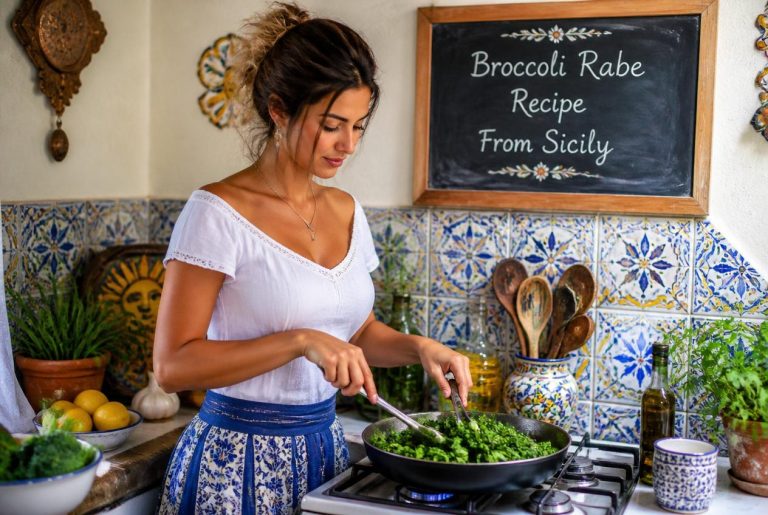
Broccoli Rabe Recipe From Sicily Cooking Tips
• Broccoli Rabe is known for its pleasantly bitter flavor, tender stems, and strong connection to Southern Italian and Sicilian cooking.
• Fresh broccoli rabe should have firm stems, vibrant green leaves, and tightly closed florets.
• Trim tough stem ends before cooking to improve texture.
• Wash thoroughly because soil can collect among the leaves and florets.
• Brief blanching can help reduce bitterness while preserving color.
• Extra-virgin olive oil is a key ingredient and provides authentic Sicilian flavor.
• Garlic is traditionally paired with broccoli rabe and enhances its earthy character.
• Red pepper flakes add gentle heat and are commonly used in Sicilian preparations.
• Anchovies are often included to provide savory depth and umami.
• Sauté the greens until tender while maintaining some texture.
• Avoid overcooking because the leaves can become mushy and lose their vibrant color.
• A squeeze of fresh lemon juice can brighten the finished dish.
• Toasted breadcrumbs are sometimes sprinkled over the top for texture and flavor.
• Broccoli rabe pairs beautifully with grilled meats, sausages, seafood, or crusty bread.
• The flavor should balance slight bitterness, garlic, olive oil, and subtle heat.
• Sicilian cooks often value the natural bitterness of broccoli rabe as part of the dish’s character.
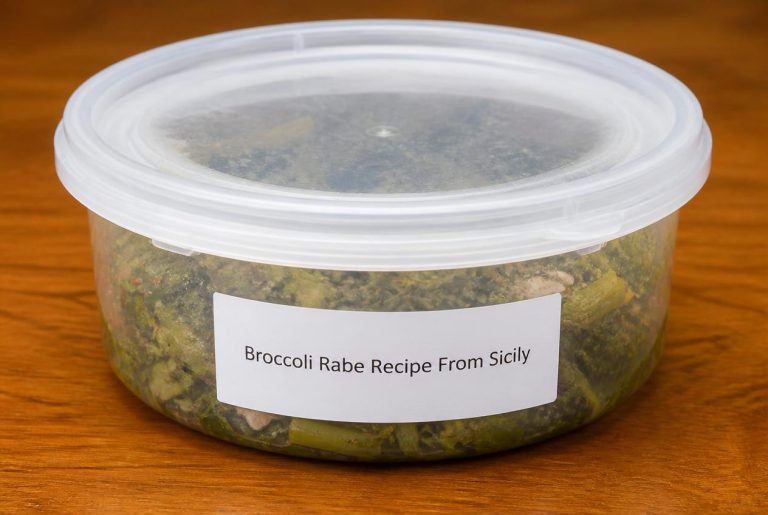
Broccoli Rabe Recipe From Sicily Storage Tips
• Allow the broccoli rabe to cool before transferring it into storage containers.
• Store refrigerated in airtight containers to preserve freshness.
• Refrigeration often allows the garlic and olive oil flavors to develop further.
• Reheat gently over low heat until warmed through.
• A drizzle of fresh olive oil can help refresh the dish before serving.
• Garlic and pepper flavors often deepen after overnight refrigeration.
• The dish may also be enjoyed cold or at room temperature.
• Freezing is possible, though the greens may soften after thawing.
• Store in airtight freezer-safe containers if freezing.
• Defrost frozen portions gradually in the refrigerator before reheating.
• Fresh lemon juice is best added after reheating for maximum brightness.
• Use clean utensils when handling leftovers to help maintain freshness.
• Cooked vegetable dishes are generally best enjoyed within a moderate refrigerated storage period for ideal quality and flavor.
• Keep away from strongly scented foods because leafy greens can absorb odors.
• Slight softening during storage is normal.
• Discard leftovers if the broccoli rabe develops sour odors, slime, mold, or unusual discoloration.
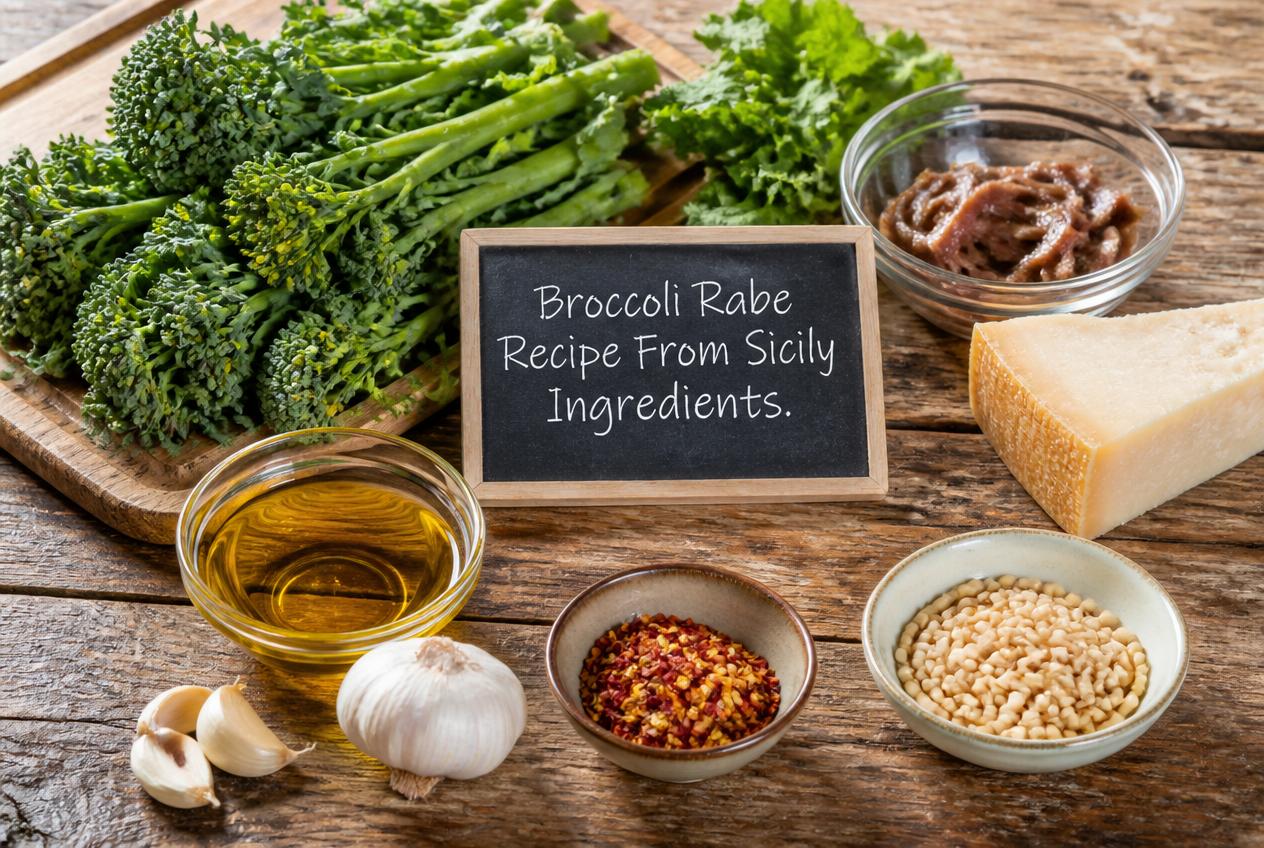
Broccoli Rabe Recipe From Sicily
Ingredients
- 1 pound broccoli rabe trimmed
- 5 tablespoons extra virgin olive oil
- 1 clove garlic minced
- 1 tablespoon grated Parmesan cheese
Instructions
- Fill a large pot with water and season it generously with salt. Bring the water to a rolling boil.
- While the water heats, trim the ends of the broccoli rabe stems if needed. Using a knife, cut a small X-shaped slit into the bottom of the thicker stems. This helps the stems cook more evenly with the leafy tops.
- Carefully place the broccoli rabe into the boiling water.
- Cook for approximately 3–5 minutes, or until the stems are just tender while still retaining some firmness.
- Avoid overcooking at this stage, as the broccoli rabe will continue cooking in the skillet.
- Drain thoroughly in a colander.
- Heat the olive oil in a large, heavy skillet over medium heat.
- Add the garlic and cook for 1–2 minutes, stirring frequently, until fragrant and lightly golden.
- Be careful not to let the garlic brown too much, as it can become bitter.
- Add the drained broccoli rabe to the skillet with the garlic-infused oil.
- Cook for 8–10 minutes, stirring occasionally, until the broccoli rabe reaches your preferred level of tenderness and the flavors have melded together.
- If you prefer softer greens, cook a few minutes longer; for a firmer texture, cook slightly less.
- Transfer the broccoli rabe to a serving dish.
- If desired, sprinkle generously with freshly grated Parmesan cheese just before serving.
- This classic Italian-style broccoli rabe preparation highlights the vegetable's pleasantly bitter flavor, balanced by fragrant garlic, olive oil, and optional Parmesan cheese. It pairs beautifully with grilled meats, Italian sausages, roasted chicken, seafood, pasta dishes, or crusty bread for a simple and flavorful side dish.
Broccoli Rabe Recipe From Sicily Frequently Asked Questions
Preparing broccoli rabe properly reduces its natural bitterness while maintaining the vegetable’s distinctive flavor. Choosing the right cooking method ensures the best texture and taste for this Broccoli Rabe recipe and Sicilian staple.
How do you prepare broccoli rabe to reduce bitterness before cooking?
I blanch broccoli rabe in boiling salted water for 2-3 minutes before sautéing to significantly reduce its bitter taste. This pre-cooking step removes some of the compounds responsible for bitterness while keeping the vegetable’s structure intact. The Broccoli Rabe recipe benefits from this technique, resulting in a milder flavor.
After blanching, I immediately transfer the broccoli rabe to an ice bath to stop the cooking process. This preserves the bright green color and prevents the vegetable from becoming mushy. The Broccoli Rabe recipe looks and tastes fresher with this step.
I also trim the thick, woody stems from the bottom of each stalk, as these parts tend to be tougher and more bitter than the leaves and florets. Some cooks prefer to peel the thicker stems with a vegetable peeler to make them more tender. Every Broccoli Rabe recipe improves with careful preparation.
What are the essential ingredients and seasonings for an authentic Sicilian-style broccoli rabe dish?
The core ingredients for an authentic Sicilian-style Broccoli Rabe recipe include olive oil, garlic, and red pepper flakes. These three elements create the foundation of flavor that defines this traditional Broccoli Rabe recipe. I use thinly sliced or minced garlic rather than whole cloves to distribute the flavor more evenly throughout the dish.
Cook the garlic until it becomes fragrant but not browned, as burnt garlic becomes bitter. Red pepper flakes add the characteristic heat that balances the vegetable’s natural bitterness. Salt is essential for seasoning, and I typically add it near the end of cooking to control the final flavor in my Broccoli Rabe recipe.
Some variations of a Broccoli Rabe recipe include anchovies, capers, or a splash of white wine for additional complexity. You can also try a more elaborate Broccoli Rabe recipe by combining eggplant and capers in a sweet and sour preparation inspired by caponata.
What is the easiest method for cooking broccoli rabe while keeping it tender-crisp?
For a classic Broccoli Rabe, heat olive oil in a large skillet over medium heat and add the garlic first to infuse the oil with flavor. Once the garlic becomes fragrant, add the broccoli rabe and red pepper flakes. Sauté the broccoli rabe for 5-7 minutes if you have blanched it first.
Add 2-3 tablespoons of water to the pan to create steam, which helps cook the thicker stems without overcooking the delicate leaves in your Broccoli Rabe recipe. Cover the pan for 2-3 minutes to trap the steam, then remove the lid to allow any excess moisture to evaporate. The broccoli rabe is done when the stems are tender enough to pierce with a fork but still have some resistance, making your Broccoli Rabe perfectly textured.
How can broccoli rabe be adapted with Indian-style spices without overpowering its flavor?
Start your Broccoli Rabe with a base of cumin seeds and mustard seeds tempered in oil before adding the broccoli rabe. These whole spices provide aromatic depth without overwhelming the vegetable’s natural taste. Turmeric and coriander powder work well in small amounts, adding warmth and color to your Broccoli Rabe recipe.
Use approximately 1/4 teaspoon of turmeric and 1/2 teaspoon of coriander for one bunch of broccoli rabe. Add a pinch of garam masala at the end to bring complexity without dominating the Broccoli Rabe recipe. Avoid heavy cream-based sauces or thick gravies, opting instead for a dry preparation that keeps the vegetable’s texture intact.
Finish the Broccoli Rabe recipe with a squeeze of lemon juice to brighten the flavors and complement both the Indian spices and the broccoli rabe’s bitterness.
Can broccoli rabe be cooked in a slow cooker, and what timing and settings work best?
I avoid cooking broccoli rabe in a slow cooker for extended periods, as the long cooking time turns the vegetable mushy and olive green. The delicate leaves and stems break down too much under slow, moist heat, which is not ideal for a Broccoli Rabe recipe.
If you need to use a slow cooker for your Broccoli Rabe recipe, add the broccoli rabe during the last 30-45 minutes of cooking on high heat. This approach works when incorporating it into soups, stews, or pasta dishes that are already cooking. The stovetop method remains superior for any Broccoli Rabe recipe because the quick, high-heat cooking preserves texture and color.
A pressure cooker is also not ideal for a Broccoli Rabe recipe, as even a few minutes under pressure overcooks this tender vegetable. For the best results, use the stovetop method for your Broccoli Rabe recipe to retain vibrant color and a tender-crisp texture.
What are the best ways to use broccoli rabe in pasta, sandwiches, or side dishes?
I toss sautéed broccoli rabe with orecchiette pasta, Italian sausage, and a splash of pasta water to create a cohesive sauce. The small, ear-shaped pasta catches the bits of garlic and the tender florets perfectly. This Broccoli Rabe recipe brings together robust flavors and textures in every bite.
For sandwiches, I layer the cooked broccoli rabe on crusty Italian bread with provolone cheese and roasted red peppers. The combination works well hot or cold, and adding a drizzle of olive oil keeps the bread from becoming dry. This Broccoli Rabe recipe transforms an ordinary sandwich into something memorable.
I serve this Broccoli Rabe recipe as a side dish alongside grilled meats, roasted chicken, or fish. The vegetable pairs particularly well with pork chops, as the bitterness cuts through the richness of the meat. Including a Broccoli Rabe recipe in your meal adds a fresh, bold flavor to any dinner plate.
I incorporate broccoli rabe into frittatas, pizza toppings, and grain bowls. Make sure to drain the vegetable well before adding it to prevent excess moisture from making other ingredients soggy. A Broccoli Rabe recipe elevates these dishes with its unique taste and nutritional value.
Try a Broccoli Rabe recipe by mixing it with lemon zest, red pepper flakes, and Parmesan for a quick side. You can use a Broccoli Rabe recipe as a topping for bruschetta or blend it into a pesto for pasta. Experimenting with a Broccoli Rabe recipe allows you to discover new favorite meals.
Including a Broccoli Rabe recipe in your weekly menu introduces variety and a healthy green to your diet. Whether you sauté, roast, or grill it, a Broccoli Rabe recipe offers endless possibilities. Enjoy the versatility and boldness that a Broccoli Rabe recipe brings to your kitchen.
For a simple Broccoli Rabe recipe, blanch the greens and toss them with garlic, olive oil, and chili flakes. Add this Broccoli Rabe recipe to pasta, sandwiches, or serve it as a side for a flavorful meal. With so many ways to prepare it, a Broccoli Rabe recipe fits every occasion.

Recipes are gathered in person and written for real-world cooking conditions.
- 10 Hungarian Dessert Recipes Passed Down Through Generations - July 25, 2026
- 11 Easy English Recipes Anyone Can Make - July 25, 2026
- Hungarian Kifli Recipe - July 25, 2026