
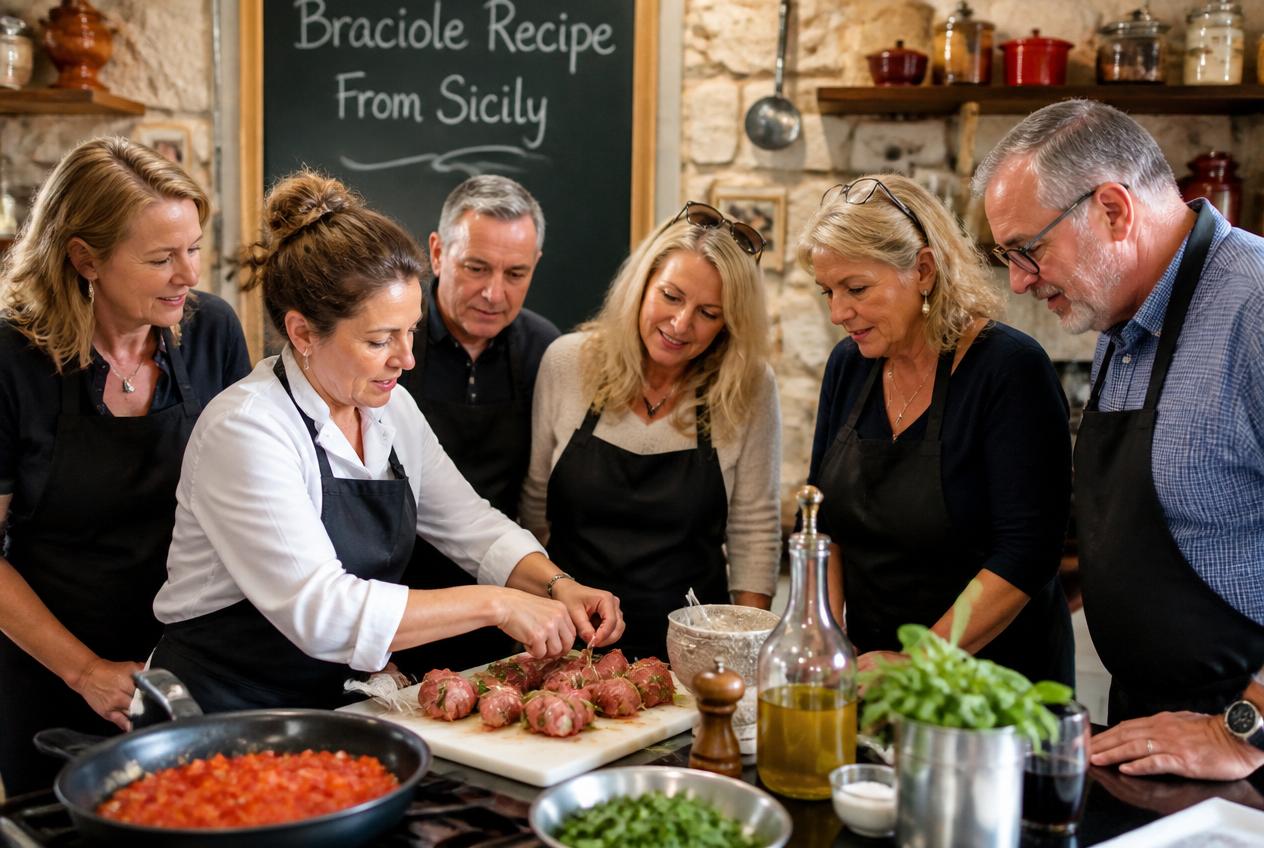
A Braciole recipe holds a special place in Sicilian cooking as one of those dishes that transforms simple ingredients into something memorable. This traditional Braciole recipe features thin slices of beef rolled around a savory filling of breadcrumbs, cheese, pine nuts, and herbs, then slowly simmered in tomato sauce until fork-tender. I’ve found that Sicilian braciole differs from other Italian variations in both its filling ingredients and cooking method. Braciole recipe traditions in Sicily highlight the island’s unique flavor combinations.
What makes this dish stand out among popular Sicilian recipes is how it brings together the island’s most characteristic flavors in one pot. The combination of aged pecorino cheese, toasted pine nuts, and aromatic herbs creates a filling that’s distinctly Sicilian. Adding wine-soaked raisins to the Braciole recipe, as some traditional preparations include, gives that sweet-savory balance that defines so many favorite Sicilian dishes.
I’ll walk you through the authentic preparation techniques that ensure tender meat rolls and a rich sauce worth savoring. This must-try Braciole recipe works beautifully for Sunday dinners or special gatherings, and the leftover sauce pairs perfectly with pasta. Preparing a Braciole recipe at home lets you experience true Sicilian comfort food.
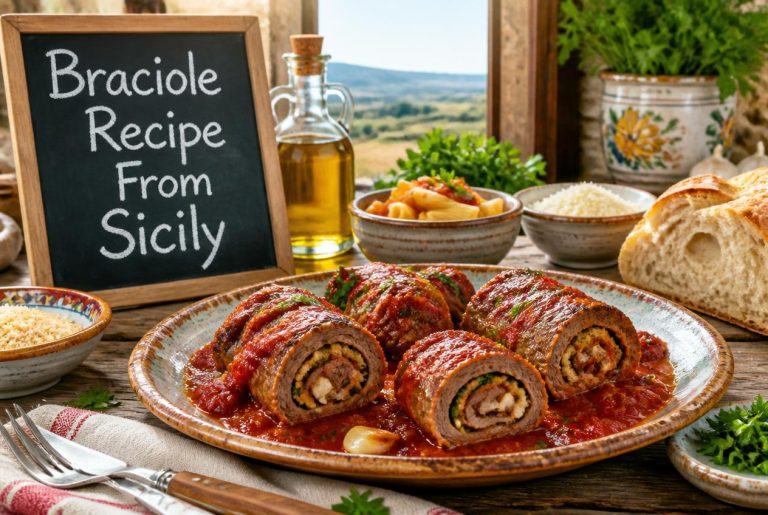
Braciole Recipe From Sicily
Key Takeaways
- Sicilian braciole consists of thin beef slices stuffed with breadcrumbs, cheese, pine nuts, and herbs, then braised in tomato sauce
- The dish showcases authentic Sicilian flavors through ingredients like pecorino, pine nuts, and sometimes wine-soaked raisins
- Proper preparation involves rolling the meat tightly, browning it well, and simmering slowly for maximum tenderness
Cultural Significance and Origins
Braciole represents one of the most cherished traditional Sicilian recipes I’ve encountered in my exploration of authentic Italian cuisine. This dish originated in Southern Italy, with particularly strong roots in Sicily, Naples, and Calabria. The Braciole recipe in Sicily reflects both tradition and resourcefulness.
Braciole’s history as Sicilian peasant food fascinates me. During times when meat was expensive and scarce, Sicilian families developed this ingenious method of stretching small portions of beef or pork into a filling meal. They pounded the meat thin, rolled it with simple yet flavorful ingredients, and simmered it slowly in tomato sauce.
I find that braciole holds deep cultural importance in Sicilian family recipes, where people often serve it at special occasions like weddings and holidays. The dish became a symbol of celebration and family gathering, passed down through generations as part of authentic Sicilian food traditions. Each Braciole recipe becomes a family heirloom.
Key Cultural Elements:
- Family gatherings – Central to Sunday dinners and festive meals
- Regional variations – Different Sicilian towns adapted the recipe to local ingredients
- Immigration legacy – Italian immigrants brought braciole to America in the early 20th century
- Economic ingenuity – Exemplifies how Sicilians transformed modest ingredients into memorable dishes
Preparing braciole reflects the essence of traditional foods from Sicily. It combines resourcefulness with bold flavors, creating what many consider among the best foods from Sicily. Every Braciole recipe tells a unique story of Sicilian heritage.
Expert Preparation Tips
Proper meat preparation makes all the difference when creating traditional Sicilian braciole. The beef slices need pounding to about 1/4-inch thickness for easy rolling and even cooking. A Braciole recipe always benefits from careful attention to meat texture.
I always lay out my ingredients before assembling the rolls. This makes the process smoother and prevents the filling from falling out during preparation. The Braciole recipe assembly process is easier with preparation.
Key Preparation Steps:
- Pound meat evenly to ensure uniform cooking
- Keep filling about 1 inch from edges to prevent spillage
- Secure rolls with kitchen twine or toothpicks
- Brown all sides before adding to sauce
I recommend using a meat mallet between two sheets of plastic wrap to prevent tearing. The filling should be moist but not wet, as excess moisture makes the meat difficult to sear properly. Braciole recipe success depends on these careful steps.
When I prepare a Braciole recipe, I sear the rolls over medium-high heat for 2-3 minutes per side until golden brown. This creates a flavorful crust that locks in moisture and flavor.
Temperature Guidelines:
| Cooking Stage | Temperature | Time |
|---|---|---|
| Searing | Medium-High | 2-3 min per side |
| Simmering | Low | 1.5-2 hours |
Letting the meat rest at room temperature for 15 minutes before cooking helps achieve even browning. For easy Sicilian recipes to make at home, having all components ready before you start prevents rushed assembly and ensures better results. Every Braciole recipe benefits from patience and preparation.
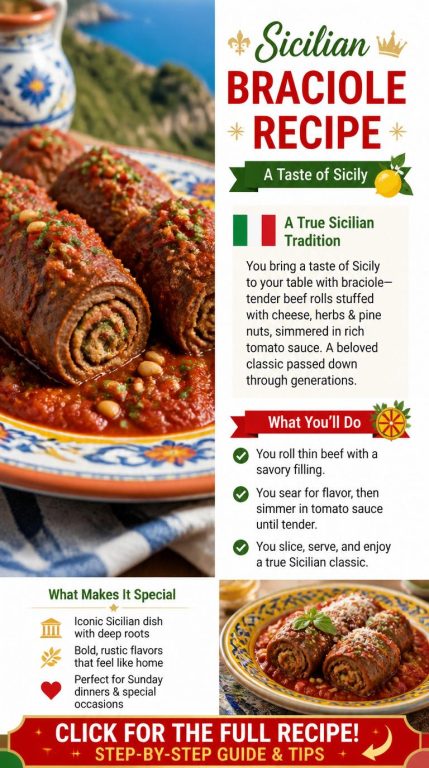
Unique Ingredient Variations
Sicilian braciole recipes showcase distinct ingredients that set them apart from other Italian regional versions. The addition of pine nuts and raisins creates a sweet-savory profile unique to Sicily. Each Braciole recipe tells a story through its ingredients.
When I prepare braciole, I notice that different cuts of meat can change the final texture. While many recipes call for thinly sliced beef, I’ve seen veal used in authentic Sicilian preparations as well. Top round sirloin remains the most popular choice for its tenderness and ability to roll easily in a Braciole recipe.
The filling variations I’ve encountered include:
- Traditional breadcrumb base with garlic and fresh herbs
- Pecorino cheese instead of or combined with provolone
- Toasted pine nuts for nutty richness
- Golden raisins for subtle sweetness
- Fresh parsley and sometimes basil
I find that pecorino cheese paired with pine nuts and raisins creates an unmistakably Sicilian flavor profile. Some family recipes incorporate sweet provolone for a milder taste in their Braciole recipe.
The meat selection offers flexibility too. I can substitute flank steak or top sirloin when round steak isn’t available. Each cut brings slightly different texture but maintains the dish’s character in any Braciole recipe.
My favorite variation involves toasting the pine nuts before adding them to the filling. This extra step enhances their flavor and adds depth to every bite. The raisins plump up beautifully during the slow simmer in tomato sauce, distributing sweetness throughout the Braciole recipe.
Serving Suggestions
I recommend serving Sicilian-style braciole with traditional accompaniments that honor its roots as Italian comfort food. The rich tomato sauce pairs beautifully with pasta, making this an ideal centerpiece for Sicilian family meals. Every Braciole recipe shines when shared at the table.
Classic Pairings:
- Pasta – Spaghetti, rigatoni, or penne work perfectly to soak up the savory sauce
- Crusty Italian bread – Essential for mopping up every last drop
- Simple green salad – Balances the richness with fresh, crisp greens
- Roasted vegetables – Zucchini, bell peppers, or eggplant complement the beef
For Sicilian Sunday dinner recipes, I arrange the braciole on a large platter surrounded by the pasta. This presentation works wonderfully for gatherings where everyone can serve themselves family-style. A Braciole recipe becomes a centerpiece for celebration.
I also suggest pairing this dish with steamed broccoli rabe sautéed in garlic and olive oil. The slightly bitter greens cut through the meat’s richness perfectly. A side of creamy polenta offers another excellent option for easy Sicilian dinner recipes and pairs well with any Braciole recipe.
Wine Pairing:
A medium-bodied red wine like Chianti or Nero d’Avola enhances the tomato-based sauce and complements the beef. I pour this at the table for an authentic Italian dining experience with your Braciole recipe.
For a complete Sicilian meal, I start with a light antipasto of olives, marinated artichokes, and aged cheeses. This approach creates a memorable dinner that celebrates Sicilian comfort food recipes at their finest. A well-prepared Braciole recipe always leaves a lasting impression.
Authentic Italian Recipe Comparisons
When I compare traditional Italian braciole recipes across regions, the differences reveal fascinating insights into Southern Italian cooking traditions. Sicilian braciole stands apart from its mainland counterparts in both preparation and filling ingredients. The Braciole recipe from Sicily highlights the island’s unique approach.
In my research of regional Italian recipes, I’ve noticed that Neapolitan braciole feature raisins, pine nuts, and garlic in their filling. This contrasts with the Sicilian Braciole recipe, which focuses on simpler Mediterranean ingredients. Northern Italian variations often skip the tomato sauce, while Southern Italian Braciole recipe traditions embrace the slow braise method for maximum flavor.
Key Regional Differences:
| Region | Primary Filling | Cooking Method |
|---|---|---|
| Sicily | Breadcrumbs, pecorino, parsley | Braised in tomato sauce |
| Naples | Raisins, pine nuts, cheese | Simmered in sauce |
| Northern Italy | Prosciutto, herbs | Pan-seared or grilled |
The authentic Braciole recipe from Sicily emphasizes quality over complexity. Sicilian-style braciole typically uses pecorino cheese rather than Parmesan, reflecting the island’s sheep-farming heritage. My approach to the Braciole recipe honors these classic Sicilian dishes while remaining accessible to home cooks.
Mediterranean recipes like this one prioritize fresh herbs and aged cheeses. The rustic Italian Braciole recipe passed down through generations doesn’t require expensive ingredients or complicated techniques. Traditional Mediterranean cooking succeeds through patience and respect for simple, high-quality components rather than elaborate preparations, and this Braciole recipe is no exception.
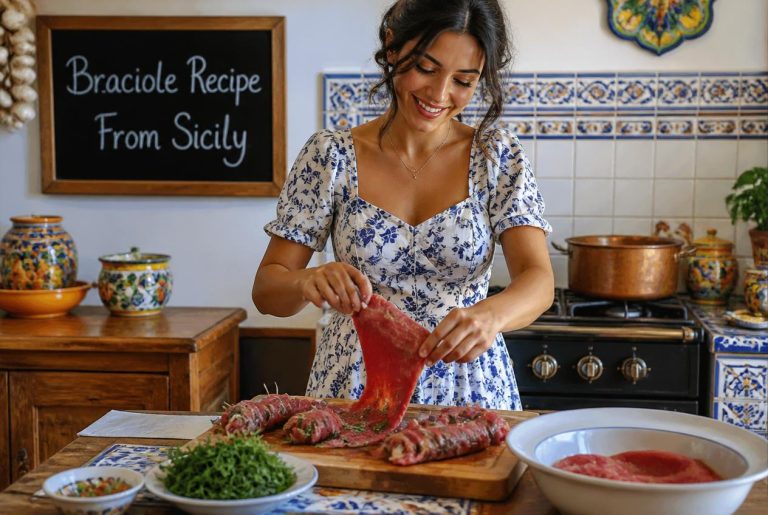
Braciole Recipe From Sicily Cooking Tips
Braciole Recipe From Sicily Cooking Tips
• Braciole is known for its thin slices of beef rolled around a flavorful filling and slowly cooked until tender.
• Sicilian braciole often features fillings made with breadcrumbs, Pecorino or Parmesan cheese, garlic, parsley, and sometimes pine nuts or raisins.
• Thinly sliced beef such as top round or flank steak works best for easy rolling.
• Pound the meat lightly to create an even thickness and improve tenderness.
• Fresh breadcrumbs absorb flavor and help bind the filling together.
• Pecorino Romano adds a traditional Sicilian richness and salty depth.
• Garlic and parsley provide the classic herbaceous flavor profile.
• Pine nuts contribute a delicate nutty texture, while raisins add a touch of sweetness common in Sicilian cuisine.
• Roll the meat tightly to keep the filling secure during cooking.
• Secure each roll with kitchen twine or toothpicks.
• Browning the rolls before simmering develops deeper flavor and color.
• Many Sicilian families simmer braciole in tomato sauce, allowing the meat and sauce to flavor one another.
• Slow cooking is essential for tender, flavorful braciole.
• The cooking sauce can be served over pasta as a traditional accompaniment.
• Allow the braciole to rest briefly before slicing and serving.
• The flavor should balance tender beef, savory cheese, herbs, garlic, and the subtle sweetness often found in Sicilian cooking.
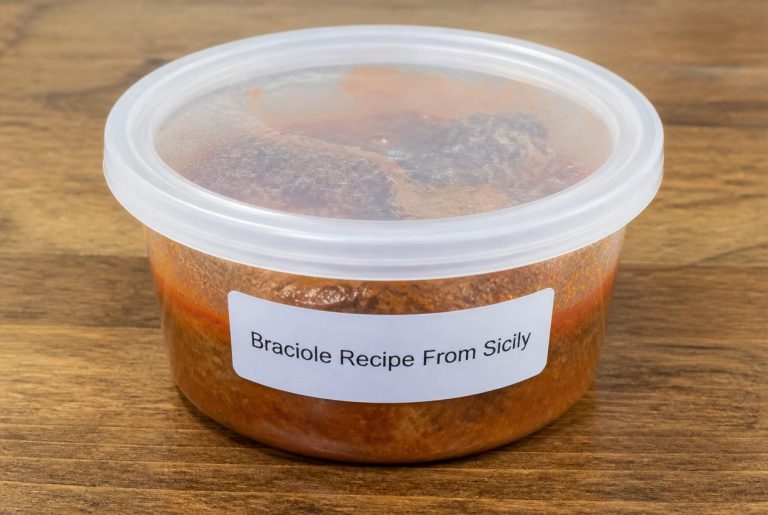
Braciole Recipe From Sicily Storage Tips
Braciole Recipe From Sicily Storage Tips
• Allow the braciole and sauce to cool before transferring them into storage containers.
• Store the meat and sauce together to help maintain moisture and flavor.
• Keep refrigerated in airtight containers to preserve freshness.
• Refrigeration often enhances the flavor as the herbs, cheese, and sauce continue to blend.
• Reheat gently over low heat until thoroughly warmed through.
• Add a small amount of tomato sauce or broth if the mixture becomes too thick during reheating.
• The flavors often deepen after overnight refrigeration.
• Freeze portions in airtight freezer-safe containers if desired.
• Store the rolls covered with sauce when freezing for best quality.
• Defrost frozen braciole gradually in the refrigerator before reheating.
• Remove toothpicks or kitchen twine before serving if still present.
• Use clean utensils when handling leftovers to help maintain freshness.
• Beef-and-tomato-based dishes are generally best enjoyed within a moderate refrigerated storage period for ideal quality and safety.
• Keep away from strongly scented foods because the sauce can absorb odors.
• Discard leftovers if the meat or sauce develops sour odors, slime, mold, or unusual discoloration.
Braciole Recipe From Sicily
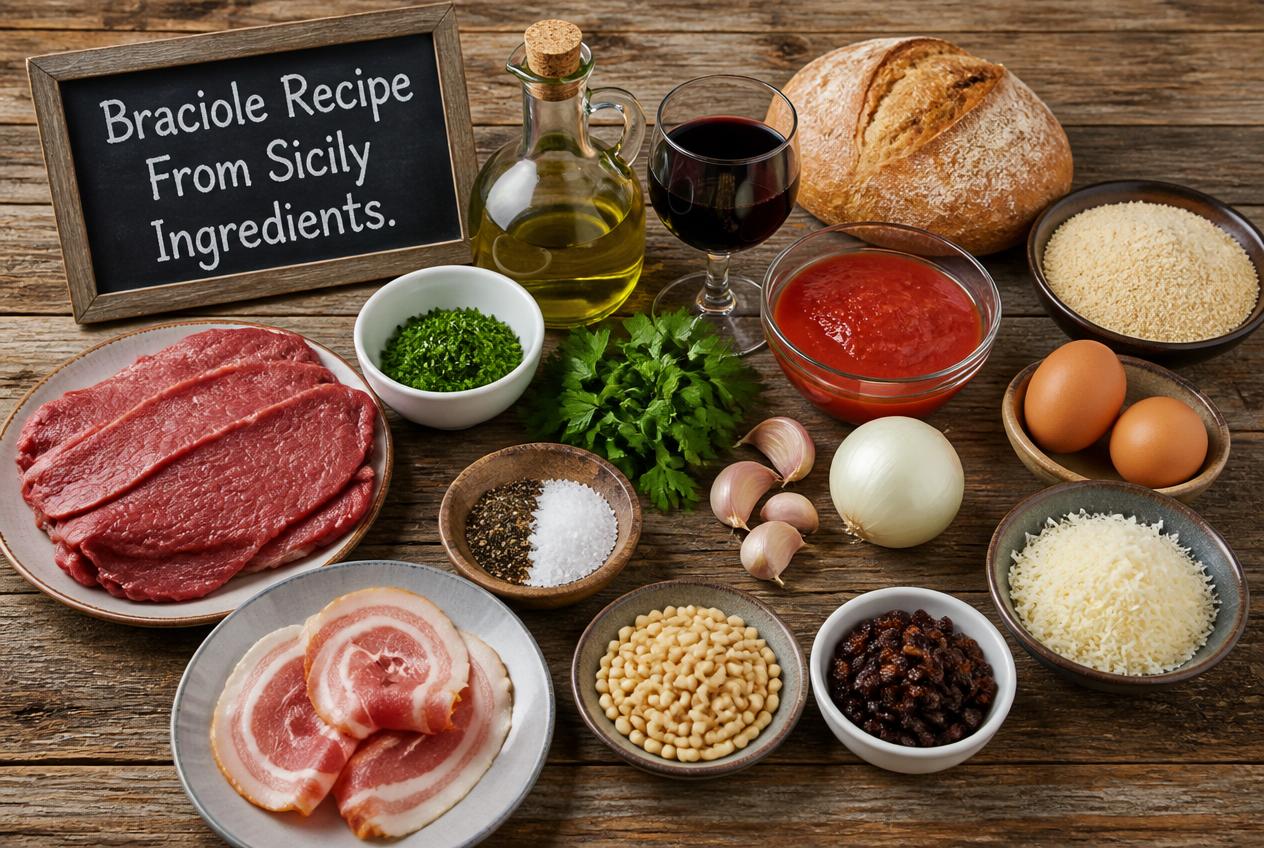
Ingredients
- 1 pound beef
- 1/4 cup cheese grated Pecorino Romano
- 1/4 cup parsley chopped Fresh herbs bring brightness to the filling.
- 1/4 cup pine nuts toasted Toasting enhances their nutty flavor.
- 2 cloves garlic minced Infuses a warm, aromatic essence into the braciole.
- 1/2 teaspoon salt Essential for enhancing all the flavors.
- 1/4 teaspoon black pepper Adds a subtle kick to the filling.
- 1 cup marinara sauce Use your favorite brand or homemade.
- 2 tablespoons olive oil Perfect for browning the braciole.
- 1 cup beef broth Creates a savory base that keeps the braciole moist.
- 1/2 teaspoon red pepper flakes Optional for a spicy kick.
Instructions
- 1 cup marinara sauce Use your favorite brand or homemade.
- 2 tablespoons olive oil Perfect for browning the braciole.
- 1 cup beef broth Creates a savory base that keeps the braciole moist.
- 1/2 teaspoon red pepper flakes Optional for a spicy kick.
- Preheat your oven to 350°F so it is fully heated by the time the braciole is ready to finish cooking.
- In a medium mixing bowl, combine all of the filling ingredients and mix thoroughly until evenly incorporated.
- The filling should be moist enough to hold together when pressed but not overly wet. This flavorful mixture will season the beef from the inside as it cooks.
- Lay the thin slices of beef flat on a clean work surface.
- Place a small amount of filling near one end of each slice, leaving space around the edges to make rolling easier.
- Starting from the filled end, roll each piece of beef tightly into a compact bundle. Secure each roll with toothpicks or kitchen twine to prevent the filling from escaping during cooking.
- Continue until all of the beef slices have been filled and rolled.
- Heat the olive oil in a large oven-safe skillet over medium heat.
- Once the oil is hot, add the braciole and brown them on all sides, turning as needed. Cook for approximately 3–4 minutes per side, until a rich golden-brown crust develops.
- Browning creates flavor and helps the rolls hold their shape during the long cooking process.
- Transfer the browned braciole to a plate and set aside temporarily.
- Without cleaning the skillet, pour in the marinara sauce and beef broth.
- Stir vigorously with a wooden spoon, scraping up any browned bits from the bottom of the pan. These caramelized bits add depth and richness to the finished sauce.
- Bring the sauce to a gentle simmer.
- Return the browned braciole to the skillet, nestling them closely together in the sauce.
- Spoon some sauce over the tops of the rolls, then cover the skillet with a lid.
- Allow the braciole to simmer gently on the stovetop for 30 minutes, which helps begin tenderizing the beef and infusing it with the sauce.
- Transfer the covered skillet to the preheated oven.
- Bake for an additional 30 minutes, allowing the beef to become tender and the flavors to meld together.
- The sauce should be rich and flavorful, and the beef should be cooked through while remaining moist.
- Remove the skillet from the oven and let the braciole rest for several minutes before serving.
- Carefully remove the toothpicks or kitchen twine before plating.
- Spoon plenty of the sauce over the braciole and serve hot.
- Braciole is a classic Italian comfort dish featuring thin beef rolled around a savory filling, browned, then slowly cooked in a rich tomato sauce. It pairs wonderfully with pasta, creamy polenta, crusty Italian bread, or a simple green salad. The slow cooking allows the beef to become tender while the filling and sauce create layers of rich, traditional Italian flavor.
Braciole Recipe Frequently Asked Questions
Sicilian Braciole recipe preparation involves specific techniques for selecting meat, creating fillings, and achieving the right texture through proper cooking times. The traditional approach includes unique ingredients like raisins and pine nuts that distinguish this regional style from other Italian variations. The Braciole recipe from Sicily remains a favorite for its flavorful and tender results.
What ingredients are traditionally used in authentic Sicilian braciole?
I find that authentic Sicilian braciole often includes raisins and pine nuts in the filling, which sets it apart from other Italian regional versions. The base for the Braciole recipe typically consists of breadcrumbs seasoned with Italian herbs, garlic, and Pecorino Romano or Parmesan cheese. The Braciole recipe’s unique combination of flavors makes it stand out among Italian stuffed meat dishes.
I also use fresh parsley in my filling mixture, along with olive oil to bind everything together. Some Braciole recipe variations incorporate hard-boiled eggs in the stuffing for added richness and protein. These additions elevate the Braciole recipe and give it a distinct Sicilian character.
The outer roll for a Braciole recipe requires thinly sliced beef, usually top round or sirloin. For the sauce, I use tomatoes, garlic, olive oil, and fresh basil to create the traditional simmering liquid. This combination ensures the Braciole recipe delivers a tender and flavorful result every time.
How do you prepare and roll braciole so they hold together during cooking?
I start by pounding the beef slices to an even thickness, which helps them roll more easily and cook uniformly. The meat should be thin enough to be pliable but not so thin that it tears during rolling. The Braciole recipe benefits from careful preparation at this stage.
I spread the filling evenly across each slice, leaving about half an inch of space around the edges. Rolling tightly and using kitchen twine helps keep the filling inside during cooking. These steps ensure the Braciole recipe holds together throughout the cooking process.
I secure each roll with toothpicks or kitchen string at regular intervals. Before simmering, I sear the rolls on all sides in hot oil, which creates a seal that helps them maintain their shape. This method is essential for a successful Braciole recipe.
What is the best cut of beef to use for braciole, and how thin should it be sliced?
I recommend using top round sirloin steak for the Braciole recipe, as it becomes tender with slow cooking and has minimal fat. Flank steak works as an alternative, though it has a slightly different texture. The Braciole recipe adapts well to either cut, depending on personal preference.
The beef should be sliced between 1/4 and 1/2 inch thick. I ask my butcher to slice it thin or use a meat mallet to pound thicker cuts to the proper thickness. This ensures the Braciole recipe yields rolls that are easy to fill and cook evenly.
Each slice should be large enough to hold a generous amount of filling while still rolling completely. I aim for pieces that are roughly 4 to 6 inches wide and 6 to 8 inches long. The Braciole recipe benefits from uniform slices for consistent results.
How long should braciole simmer in tomato sauce to become tender without drying out?
I simmer my braciole in tomato sauce until the meat is perfectly tender, which typically takes 1.5 to 2 hours on low heat. The sauce should bubble gently rather than boil vigorously. This slow-cooking process is key to an authentic recipe.
I check the meat periodically to ensure the sauce covers the rolls at least halfway. If the liquid reduces too much, I add small amounts of water or broth to maintain moisture. Monitoring the Braciole recipe during cooking ensures the meat stays moist and flavorful.
The braciole is done when I can pierce it easily with a fork and the meat pulls apart with gentle pressure. Overcooking can make the beef dry and stringy, so I monitor carefully during the final 30 minutes. This attention to detail makes every Braciole recipe a success.
Can Sicilian-style braciole be made in a slow cooker, and what adjustments are needed?
I make the Braciole in a slow cooker by first searing the rolls in a skillet to develop flavor and color. I then transfer them to the slow cooker with the tomato sauce. This method produces a tender and flavorful Braciole recipe with minimal effort.
I cook on low for 6 to 7 hours or on high for 3 to 4 hours. The slow cooker requires less liquid than stovetop cooking since there’s minimal evaporation. This adjustment ensures the Braciole recipe turns out perfectly in a slow cooker.
I arrange the braciole in a single layer when possible and ensure they’re at least partially submerged in sauce. The low, steady heat of a slow cooker produces exceptionally tender meat without constant monitoring. This makes the Braciole recipe ideal for busy home cooks seeking authentic Italian flavor.
What are common Sicilian braciole stuffing variations, such as using egg or raisins?
I often include hard-boiled egg slices in my braciole stuffing, which adds richness and creates an attractive spiral pattern when sliced. The egg also binds the other filling ingredients together, enhancing the overall texture of the Braciole recipe. Incorporating egg into a Braciole remains a traditional Sicilian touch that many home cooks enjoy.
Raisins provide a subtle sweetness that balances the savory elements in a Braciole recipe, and I soak them briefly in warm water first to plump them up. Pine nuts add a delicate, buttery crunch that complements the soft texture of the meat in the Braciole. Using both raisins and pine nuts creates a unique flavor combination for any Braciole recipe.
Some variations I’ve tried include adding crispy pork or different cheeses, which reflect influences from neighboring regions like Calabria. I sometimes substitute caciocavallo cheese for Pecorino when I want a milder, creamier flavor profile in my Braciole recipe. Experimenting with cheeses in a Braciole can lead to delicious results and new family favorites.
When preparing a Braciole recipe, you can also add fresh herbs like parsley or basil for extra aroma and flavor. Combining breadcrumbs, grated cheese, and garlic gives the Braciole recipe a hearty, satisfying filling. Many cooks enjoy personalizing their Braciole by including their favorite ingredients or regional specialties.
Exploring different Braciole recipe variations allows you to discover new flavors and textures. Whether you choose to use egg, raisins, or a variety of cheeses, each Braciole recipe can reflect your own taste and creativity. Sharing your Braciole recipe with family and friends makes the cooking experience even more enjoyable.

Recipes are gathered in person and written for real-world cooking conditions.
- 10 Hungarian Dessert Recipes Passed Down Through Generations - July 25, 2026
- 11 Easy English Recipes Anyone Can Make - July 25, 2026
- Hungarian Kifli Recipe - July 25, 2026