
There’s something both special and a bit unexpected about Tunisian Tajin Sibnekh recipe. It’s a classic Tunisian dish—think potatoes, chicken or liver, vegetables, and those bold spices like harissa and ras el hanout—all tucked into an oven-baked, eggy casserole. If you’re after a Tunisian Tajin Sibnekh recipe that’s hearty enough for dinner but honestly just as good for breakfast or lunch, you’re in the right place.
I’ll walk you through a bit of history, a clear step-by-step Tunisian Tajin Sibnekh recipe, and some practical tips to help you get the spices, texture, and timing just right. You want the eggs to set (but not go rubbery) and the potatoes to stay tender, right? With a little flexibility, you’ll nail that traditional Tunisian flavor even if you’re working with what’s in your fridge.
Description, Recipe and Historical Information
Tajin Sibnekh sits somewhere between a frittata and a tagine. People sometimes call it a chicken and egg tagine or Tunisian chicken and eggs. The basics? Pour beaten eggs over cooked meat and veggies, then bake it off until you can slice it cleanly. Simple in theory, but the flavor’s anything but.
For a straightforward Tunisian Tajin Sibnekh recipe, sauté chicken, potatoes, peas, and spinach with harissa or ras el hanout. Once the filling cooks through, beat some eggs and pour them over the top, then slide it into the oven or let it set gently on the stove. That’s what gives you those sturdy, satisfying slices—almost like a North African quiche, but with a lot more personality.
This dish actually traces its roots back to North African and Andalusian traditions, where cooks mixed stewed meats with eggs for a filling finish. Over time, the Tunisian Tajin Sibnekh recipe picked up regional twists—sometimes folks use liver, lamb, or skip the meat entirely (veggie versions are out there too). Chicken’s just the most common these days, but honestly, go with what you’ve got.
- Protein: Use boneless chicken pieces (or leftover cooked chicken if you’re in a hurry).
- Veggies: Potatoes, peas, plus a good handful of spinach—don’t overthink it.
- Spices: Harissa, cumin, ras el hanout—these make a Tunisian Tajin Sibnekh recipe sing.
- Method: Brown the chicken and veggies, toss in your spices, bind it all with eggs, and finish in the oven or gently on the stove.
Slice the Tunisian Tajin Sibnekh recipe warm, just like a frittata. It’s honestly great for breakfast, lunch, or dinner—and it fits right in with other classic Tunisian recipes. I guess it’s one of those dishes that never feels out of place on the table.
If you want to dive deeper, check out the full Tunisian Tajin Sibnekh recipe and some variations on the African Food Network. It’s worth a look, especially if you’re feeling adventurous or just hungry.
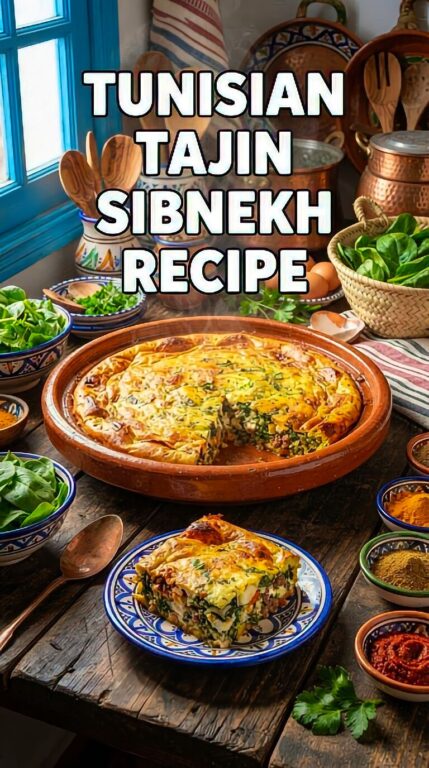
Cooking Tips
Start by seasoning early. I like to mix harissa and ras el hanout with a little tomato paste or tomato sauce, then coat the chicken so the spices really soak in before cooking. For the Tunisian Tajin Sibnekh recipe, this step makes all the difference.
Fry potatoes in vegetable oil until they turn golden and just a bit crisp. That texture under the eggs? It’s key for a good Tunisian Tajin Sibnekh recipe—just don’t forget to drain them well, or your dish ends up greasy. Nobody wants that.
I’d say use a heavy skillet or, if you’re lucky enough to have one, an earthenware tagine. The tagine gives that authentic flavor and keeps things moist, but honestly, a cast-iron skillet does the job for a Tunisian Tajin Sibnekh recipe if that’s what you’ve got lying around.
Drop in some frozen peas near the end of the stovetop stage. They thaw super quickly and keep their color and bite when you fold them into the eggs—kind of a must for the classic Tunisian Tajin Sibnekh recipe, if you ask me.
Stir in a small knob of butter right at the end. It rounds out the flavors and softens the harissa’s heat, but doesn’t hide the spices. For the Tunisian Tajin Sibnekh recipe, this little trick goes a long way.
Lightly beat the eggs and season just before you pour them in. If you beat them too much, the texture gets weird and tight; too little seasoning and, well, the whole Tunisian Tajin Sibnekh recipe falls flat.
Keep an eye on the oven. Bake until the eggs set but the center’s still got a bit of wobble—residual heat finishes the Tunisian Tajin Sibnekh recipe without drying it out.
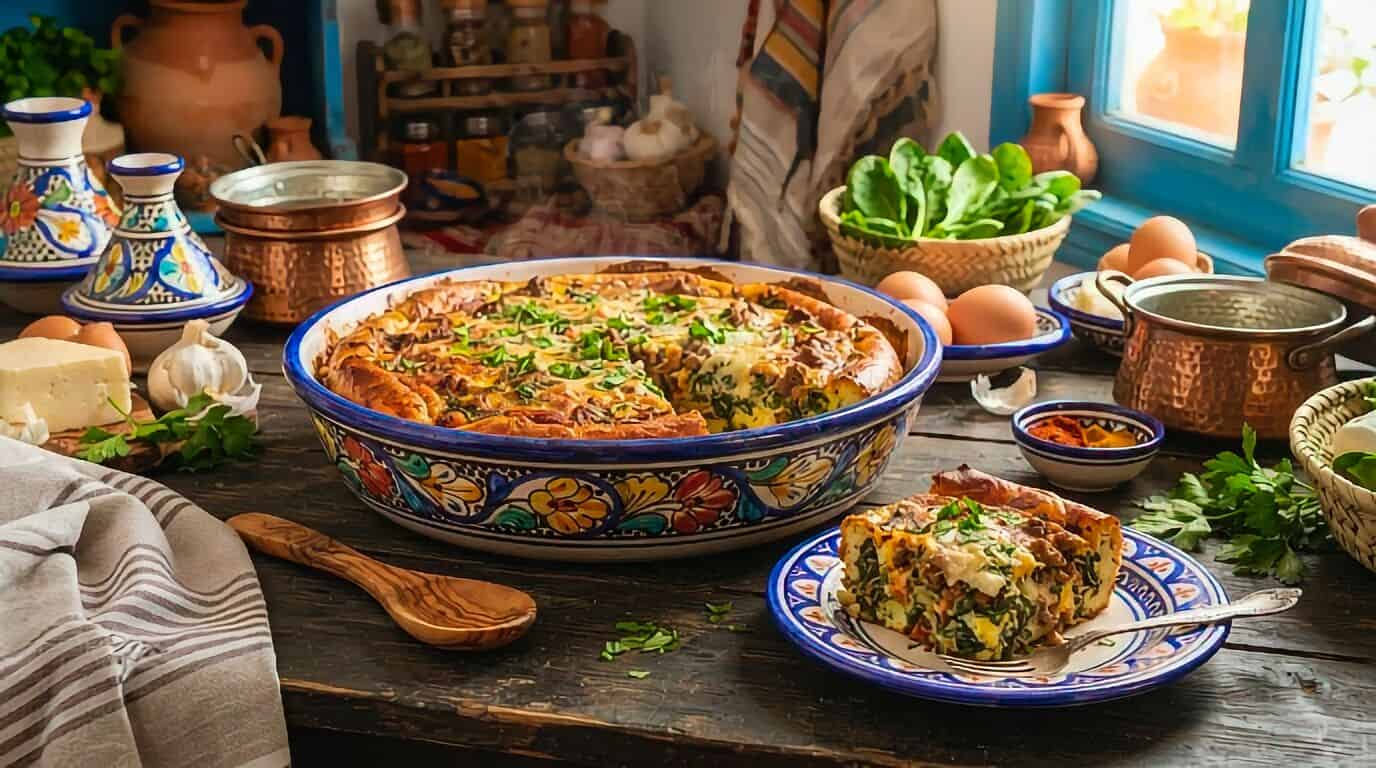
Tunisian Sibnekh Recipe
Ingredients
- 1/3 cup oil vegetable
- 2 potatoes peeled and cubed
- 8 ounces chicken breast diced
- 1 large onion diced
- 1 tablespoon harissa
- 1 1/2 teaspoons ras el hanout
- 1/2 cup water
- 1 1/2 tablespoons tomato sauce
- 1 tablespoon butter
- 1 spinach washed and chopped
- 8 eggs
- 1 cup peas frozen
- 1/3 cup Parmesan cheese
- 1 pinch salt and pepper to taste
Equipment
- Large Skillet
- Lid for the skillet
- Utensils for stirring and serving
- Spatula for transferring the dish
Instructions
- a. Add the cubed potatoes to the skillet and cook until they are golden brown and crispy.
- b. Remove the potatoes from the skillet and set them aside.
- a. Stir occasionally to ensure even cooking.
- b. Once cooked, remove the chicken from the skillet and set it aside.
- a. Stir to prevent sticking or burning.
- b. Add the harissa and ras el hanout spices, and continue to cook for another minute.
- a. Allow the mixture to simmer gently for a few minutes.
- b. Add the butter to enhance the richness of the sauce.
- a. Stir the spinach until it wilts and incorporates into the sauce.
- b. This will contribute color, flavor, and nutrients to the dish.
- a. Be careful not to break the yolks.
- b. Arrange the cracked eggs evenly throughout the skillet.
- a. The peas will provide sweetness and texture to the dish.
- b. Spread them evenly for balanced flavors.
- a. The cheese will add a savory and creamy element to the dish.
- b. Ensure even coverage for consistent taste.
- a. Cook until the egg whites are set but the yolks are still slightly runny.
- b. The lid will help trap heat and cook the eggs evenly.
- a. Adjust the seasoning according to your preferences.
- b. Be mindful not to over-salt, as some ingredients already have natural flavors.
- a. These elements will be reheated with the dish.
- b. Distribute them evenly throughout the mixture.
- a. Use a spatula to ensure you get all the components from the skillet.
- b. Make sure each serving has a balanced combination of ingredients.
- a. Garnish with fresh herbs if desired.
- b. The dish is now ready to be enjoyed by your guests.
Notes
Adjust the harissa’s heat to your taste. I usually start with a teaspoon, then add more if I’m feeling bold. Ras el hanout brings a warm complexity, so go easy until you know your blend. That’s the beauty of a Tunisian Tajin Sibnekh recipe: you can really make it your own.
Honestly, every Tunisian Tajin Sibnekh recipe I’ve tried has its quirks, so don’t stress if it’s not perfect the first time. Play with the spice levels, the veggies, and even the pan. That’s half the fun, right?
Whether you’re making it for a crowd or just for yourself, a Tunisian Tajin Sibnekh recipe is all about comfort and bold flavors. It’s not fussy, but it’s always satisfying. Give it a shot—you might surprise yourself.

Recipes are gathered in person and written for real-world cooking conditions.
- 10 Hungarian Dessert Recipes Passed Down Through Generations - July 25, 2026
- 11 Easy English Recipes Anyone Can Make - July 25, 2026
- Hungarian Kifli Recipe - July 25, 2026