
If you’ve ever wanted to make a real-deal Peruvian lomo saltado recipe at home, you’re in the right place. This dish brings together charred beef, juicy tomatoes, and crispy fries in a single pan—honestly, it’s one of those weeknight meals that always surprises me with how much flavor you get with so little fuss. I’ll walk you through a straightforward Peruvian beef stir-fry method using pantry staples and a few tricks to keep things bold and savory.
The Peruvian lomo saltado recipe has roots in Chinese-Peruvian (Chifa) kitchens, so you’ll notice a mix of flavors and textures that just work. I’ll share a bit about how it all started, and why some swaps—like a different vinegar or aji amarillo—can totally change the final bite. If you’re nervous about timing, high-heat searing, or when to add the fries, don’t worry; I’ve got some tips to help you nail it every time.
There’s always a handful of questions about what makes a Peruvian lomo saltado recipe authentic, which beef cut to pick, and how to serve it. I’ll cover those, along with a few troubleshooting ideas if things get weird with your seasoning or the fries get soggy. By the end, you’ll feel like you can riff on this classic and still keep it true to its roots.
Origins and Evolution
Lomo saltado sits right at the intersection of cultures—Peruvian and Chinese, to be exact. Chinese immigrants in Peru started using their wok skills with local ingredients, and suddenly, lomo saltado was born. It’s now a staple in Peruvian kitchens, and honestly, it’s easy to see why.
Back in the early 1900s, Chinese cooks in Lima’s chifa restaurants started sautéing beef, tomatoes, and fried potatoes together. That blend of stir-fry technique and Peruvian ingredients gave the country a new kind of comfort food. It’s kind of wild how a simple Peruvian lomo saltado recipe can carry so much history in every bite.
These days, you’ll see all sorts of spins—some folks add ají amarillo or tweak the soy-based marinade, while others go heavy on the fries or rice for maximum sauce-soaking. The heart of the dish stays the same, though: quick, high-heat cooking, bright seasoning, and a balance of tender beef, onions, and tomatoes. A splash of vinegar or soy sauce at the end gives you that umami punch. Serve it up with fries and rice, and you’ve got a meal that somehow feels both familiar and totally unique.
Lomo saltado moved from humble immigrant kitchens to pretty much every Peruvian menu, even showing up around the world. It’s a perfect example of how Peruvian food takes outside ideas and makes them its own, all while keeping that chifa spirit alive. If you want to dive deeper into the fusion of flavors, check out this guide to Peruvian gastronomy—it’s a rabbit hole, but a delicious one.
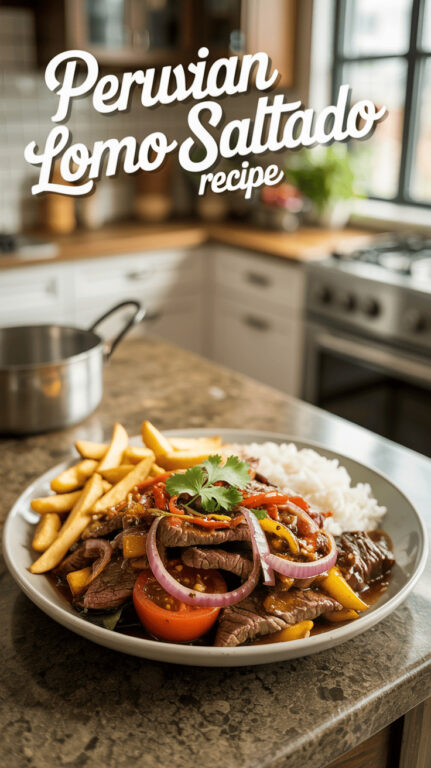
Preparation Insights
Get everything ready before you turn on the stove. Slice your beef into thin strips (top sirloin or flank steak works well), cut up red onion into wedges, and quarter your Roma tomatoes. Measure out your soy sauce, oyster sauce, and a spoonful of aji amarillo paste. When you’re making a Peruvian lomo saltado recipe, you want things to move fast once the pan’s hot.
Give the beef a quick marinade with garlic, a pinch of cumin, and a splash of low sodium soy sauce. Don’t let it sit too long—10 or 20 minutes is plenty, or you’ll lose that stir-fry texture. You want the beef to stay tender, not mushy.
Crank the heat up as high as your stove allows. A hot pan is non-negotiable for a true Peruvian lomo saltado recipe. Cook the beef in batches, so it sears instead of steaming. If you crowd the pan, you’ll just end up with gray, sad meat. Nobody wants that.
Sear the beef quickly, then pull it out while it’s still a bit underdone. Toss it back in at the end with the veggies, soy-based sauce, and aji amarillo to finish. If you’re feeling adventurous, a little aji verde at the end adds a fresh kick. I sometimes do that, sometimes not—depends on my mood.
Fries can go right in the pan for classic lomo saltado vibes, or you can serve them on the side over rice if you want them crispier. Adjust saltiness by using low sodium soy sauce, especially if you’re adding oyster sauce (which is already sweet and umami-packed). A good Peruvian lomo saltado recipe is all about balance.
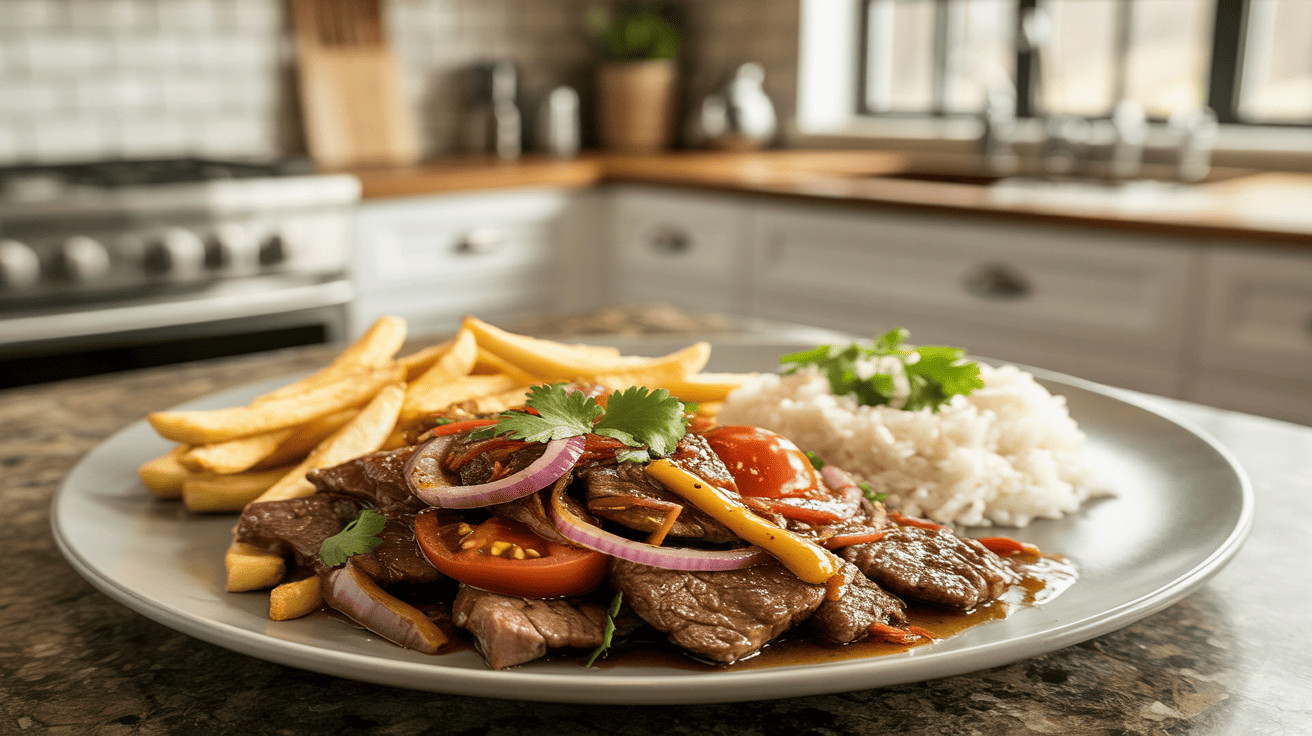
Peruvian Lomo Saltado Recipe
Ingredients
- 1 pound beef flank steakor filet mignon, sirloin, skirt steak, cut into thin slices
- 5 tablespoons soy sauce low sodium
- 5 cloves garlic minced or grated
- 1 tablespoon oyster sauce
- 1 tablespoon vinegar red wine
- 1 tablespoon Aji Amarillo paste
- 1 teaspoon cornstarch
- 1 onion red sliced into ½ inch wedges
- 3 tomatoes roma seeds removed and sliced into ½ inch wedges
- scallions Sliced scallions/chopped cilantro for serving
- Oil for cooking
Instructions
- Place the thinly sliced beef in a bowl.
- Add 1 tablespoon soy sauce and about half of the minced garlic, then toss until the beef is evenly coated.
- Allow the beef to marinate for 5 to 7 minutes.
- If using a tougher cut of beef, stir in the baking soda and marinate for 30 minutes to help tenderize the meat.
- In a small bowl, combine the remaining soy sauce, oyster sauce, red wine vinegar, ají amarillo paste, and cornstarch.
- Whisk until the cornstarch is fully dissolved and the sauce is smooth.
- Set aside until ready to use.
- Heat about 1 tablespoon of cooking oil in a cast iron skillet or wok over high heat until shimmering.
- Working in batches, add the beef in a single layer.
- Cook for 1 to 2 minutes, turning as needed, until browned on all sides.
- Avoid overcrowding the pan so the beef sears rather than steams.
- Transfer the cooked beef to a plate.
- If the pan appears dry, add another tablespoon of oil.
- Add the onions and cook for about 1 minute.
- Stir in the remaining garlic and the tomatoes, continuing to cook for another 1 minute while stirring frequently.
- Return the beef and any accumulated juices to the pan.
- If desired, add the French fries at this stage so they absorb some of the sauce.
- Pour the prepared sauce over the beef and vegetables.
- Toss everything together until the ingredients are evenly coated and the sauce has thickened slightly.
- Sprinkle with sliced scallions, chopped cilantro, or both.
Peruvian Lomo Saltado Recipe Frequently Asked Questions
There are always a few questions that come up when you’re making a Peruvian lomo saltado recipe. Let’s tackle the big ones, so you can cook with a little more confidence and a little less guesswork.
What cut of beef works best for this lomo saltado recipe?
Honestly, you can’t go wrong with top sirloin, flank steak, or skirt steak. Just slice it thinly across the grain for tenderness. Trim off any big pieces of fat, and if you’ve got a thicker piece, give it a gentle pound to even it out. Thin strips (about 1/4 to 1/2 inch) make for quick, even searing.
How do you get the signature smoky, stir-fried flavor at home without a wok burner?
Crank your stovetop as high as it’ll go, and use a heavy cast-iron or stainless steel pan. Let it get almost smoking hot before adding oil. Cook in small batches—yeah, it takes a bit longer, but it’s worth it for that seared flavor. Splash in soy sauce and vinegar at the end for that caramelized, tangy glaze. If you’re feeling extra, a quick hit under the broiler or a kitchen torch can add more char.
What type of vinegar is traditionally used, and what are the best substitutes?
Red wine vinegar is the go-to for most Peruvian lomo saltado recipes. It’s got the acidity and a subtle fruitiness that just works. If you’re out, white wine vinegar or even a mild apple cider vinegar can pinch-hit. Just steer clear of anything too sweet, like balsamic, unless you adjust it way down.
Should the fries be mixed into the stir-fry or served on the side to stay crisp?
Honestly, it’s a personal call. The classic move is to toss the fries into the stir-fry so they soak up the sauce and go a bit soft. But if you’re a texture person, serve them on the side and let everyone mix them in at the table. Frozen fries work fine—just bake or fry them until golden, then decide how you want to serve them.
What are the best rice options to serve with the lomo saltado recipe, and how do you cook them properly?
Stick with long-grain white rice—jasmine is my favorite, but any neutral long-grain rice will do. Rinse it until the water runs clear to get rid of extra starch. Use a 1:1.5 rice-to-water ratio, bring it to a simmer, then cover and cook on low for about 12–15 minutes. Let it rest off the heat for 10 minutes to finish. If you’ve got a rice cooker, even better—just follow the same rinse and ratio steps.
Do you need to marinate the steak for the lomo saltado recipe, and if so, for how long?
I usually toss the steak with soy sauce, a splash of vinegar, and a bit of garlic for a quick marinade. It’s not strictly necessary—if you’re searing over high heat, you’ll still get a good crust. But honestly, for a Peruvian lomo saltado recipe, even 15 to 30 minutes in that marinade seems to boost the flavor nicely.
Want a stronger punch? Go for up to 2 hours, but don’t push it past that. Thin strips of steak start getting weird and mushy if they sit in acid too long. I’ve learned the hard way—nobody wants a soggy Peruvian lomo saltado recipe. If you’re curious about other classic Latin American marinades, check out this guide from Serious Eats for more tips. And really, each Peruvian lomo saltado recipe has its own little twist, so don’t stress if you want to experiment a bit. Just keep that marinating time in check, and your Peruvian lomo saltado recipe will turn out just fine.

Recipes are gathered in person and written for real-world cooking conditions.
- 10 Hungarian Dessert Recipes Passed Down Through Generations - July 25, 2026
- 11 Easy English Recipes Anyone Can Make - July 25, 2026
- Hungarian Kifli Recipe - July 25, 2026