
Making an Irish Butter recipe at home isn’t as complicated as it sounds. Grab some cultured cream, a bit of patience, and basic kitchen gear, and you’re off. Homemade Irish butter brings that unmistakable golden color and creamy, dreamy texture you crave—plus, you get to decide exactly how salty and fresh it should be.
This Irish Butter recipe shows you why this butter stands apart, lays out a straightforward way to make it, and shares a few practical tricks for that perfect creamy finish. You’ll get bite-sized steps, a sprinkle of history for flavor, and some troubleshooting ideas just in case your Irish Butter recipe needs a little rescue.
Description, Recipe And Historical Information
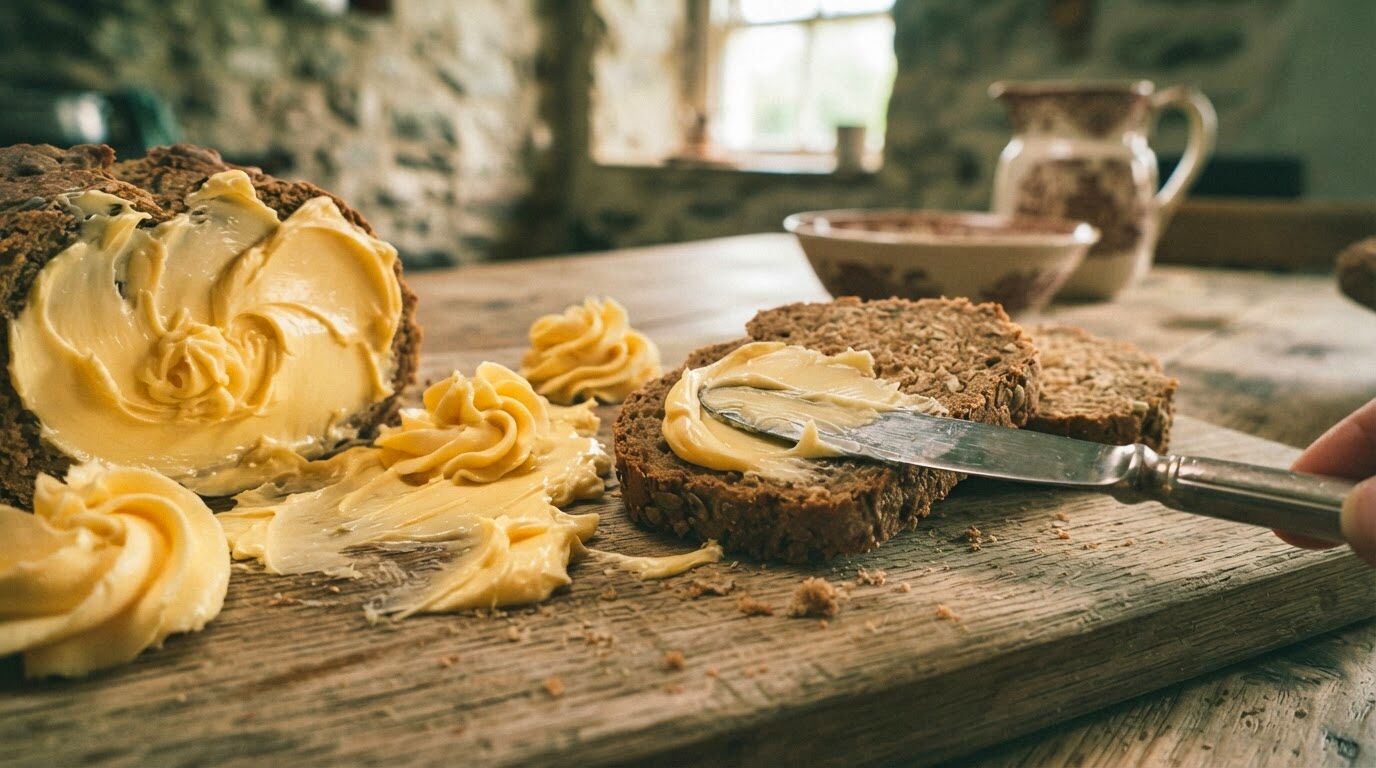
Irish butter, especially when you follow a traditional Irish Butter, comes packed with fat and a super creamy feel. Folks usually make it from the cream of grass-fed cows, sometimes culturing it to give it that signature tang. The color? That’s all thanks to beta-carotene, and the rich, almost melt-in-your-mouth vibe is what makes this Irish Butter recipe a staple in so many kitchens.
To whip up your own Irish Butter recipe, start by chilling heavy cream. If you want extra tang, stir in a spoonful of buttermilk or live-culture cream and let it sit for about 12–24 hours. Whip the cream till you see the solids separate from the liquid. Pour off the buttermilk, rinse the curds under cold water, then knead in salt to taste. That’s it—your homemade Irish Butter recipe, ready to go.
Using an Irish Butter recipe at home means you get fresh, customizable results. Cultured butter brings out a more complex, slightly tangy flavor than the usual sweet cream stuff. Oh, and don’t toss the leftover buttermilk—it’s awesome in pancakes or dressings, so this Irish Butter recipe gives you a tasty bonus.
Butter’s got a long, proud history in Ireland. Small farms used to churn out high-butterfat butter from happy, pasture-roaming cows. Making your own Irish Butter recipe today keeps that tradition alive and lets you tweak things for health, like holding onto some omega-3s from grass-fed milk. Honestly, there’s something special about connecting to that past with a simple Irish Butter recipe.
Here’s a basic Irish Butter recipe to get you started: See Full Recipe In the Card Below
- 1 pint heavy cream (or cultured cream)
- 1–2 tbsp buttermilk to culture (optional)
- 1/4–1/2 tsp salt (to taste)
- Whip, drain, rinse, knead, refrigerate
If you’re curious about the old-school methods or want to geek out on flavor, check out Irish butter’s flavor, history, and culinary uses. This Irish Butter recipe might just become your go-to for spreading, baking, or sneaking a taste straight from the fridge.

Cooking Tips
Start with cold, high‑fat heavy cream for a richer texture and faster separation. I usually chill my bowl and utensils for a few minutes—cold equipment just makes the Irish Butter recipe come together cleaner and faster. It’s a small step, but it really helps the butter solids form while you churn.
Want salty butter? Add a pinch of fine salt after rinsing. If you’re after more control, stick with an unsalted Irish Butter recipe, then season to taste at the end. I’d go easy with salted butter in recipes where you need precise salt levels, just to be safe.
When you use a butter churn or electric mixer for your Irish Butter recipe, work in short bursts and keep an eye on the curds. Stop churning as soon as you see the solids clump and the buttermilk separate. Overdoing it will just make the butter greasy. If you go with a jar method, you’ll get more of a hands-on feel, but it takes a bit longer.
Rinse the curds well under cold water using a fine mesh strainer or wrap them in cheesecloth to wash away any leftover buttermilk. I like to squeeze gently in the cheesecloth—thorough rinsing always makes the Irish Butter recipe taste fresher and last longer.
Pat or press the butter to get rid of extra water, then taste and tweak the salt. I stash mine in an airtight container in the fridge for up to two weeks, or freeze smaller portions if I make a big batch of Irish Butter recipe.
To make flavored butter, fold in chopped herbs, garlic, or grated hard cheese after you’ve pressed and chilled the butter. I use fresh ingredients and keep them minimal so the Irish Butter recipe still tastes creamy and balanced.
Irish Butter Recipe
Ingredients
- 4 Cups heavy cream not ultra-pasteurized
- 1/3 Cup buttermilk without gums or stabilizers (see note below)
- 4 Cups cold water
- 1 Cup ice
- 1/4 tsp salt
Instructions
- Pour the buttermilk and heavy cream into a glass jar.
- Stir until combined.
- Cover the jar loosely with a clean towel.
- Let it stand at room temperature for 24 to 48 hours.
- The cream is ready when it has thickened and developed a slightly tangy flavor.
- Before churning, make sure the cultured cream is about 60°F (15°C).
- Pour the cream into a mixing bowl.
- Using a stand mixer or hand mixer, begin beating on low speed to prevent splattering.
- Gradually increase the speed to high.
- Continue mixing until the cream forms stiff peaks.
- When it begins to look curdled, reduce the mixer speed to low.
- Stop once the butter solids have completely separated from the liquid.
- Pour off as much of the buttermilk as possible.
- Transfer it to a jar and refrigerate it for another use.
- Combine the ice and water.
- Pour ½ cup of the cold water over the butter.
- Use a spatula to press and knead the butter against the side of the bowl.
- Drain the water as soon as it becomes cloudy.
- Add another ½ cup of ice water and repeat the process.
- Continue rinsing 3 to 5 times, or until the water remains clear.
- Press and knead the butter against the bowl several more times.
- Continue until as much water as possible has been removed.
- For salted butter, knead in salt to taste.
- Place the butter in an airtight container or wrap it tightly in parchment paper.
- Refrigerate and use within 1 week.
- This cultured homemade butter has a rich, creamy texture and a pleasantly tangy flavor from the buttermilk-fermented cream. Thorough rinsing keeps it fresh, while optional salt gives it a classic savory finish.

Recipes are gathered in person and written for real-world cooking conditions.
- 10 Hungarian Dessert Recipes Passed Down Through Generations - July 25, 2026
- 11 Easy English Recipes Anyone Can Make - July 25, 2026
- Hungarian Kifli Recipe - July 25, 2026