
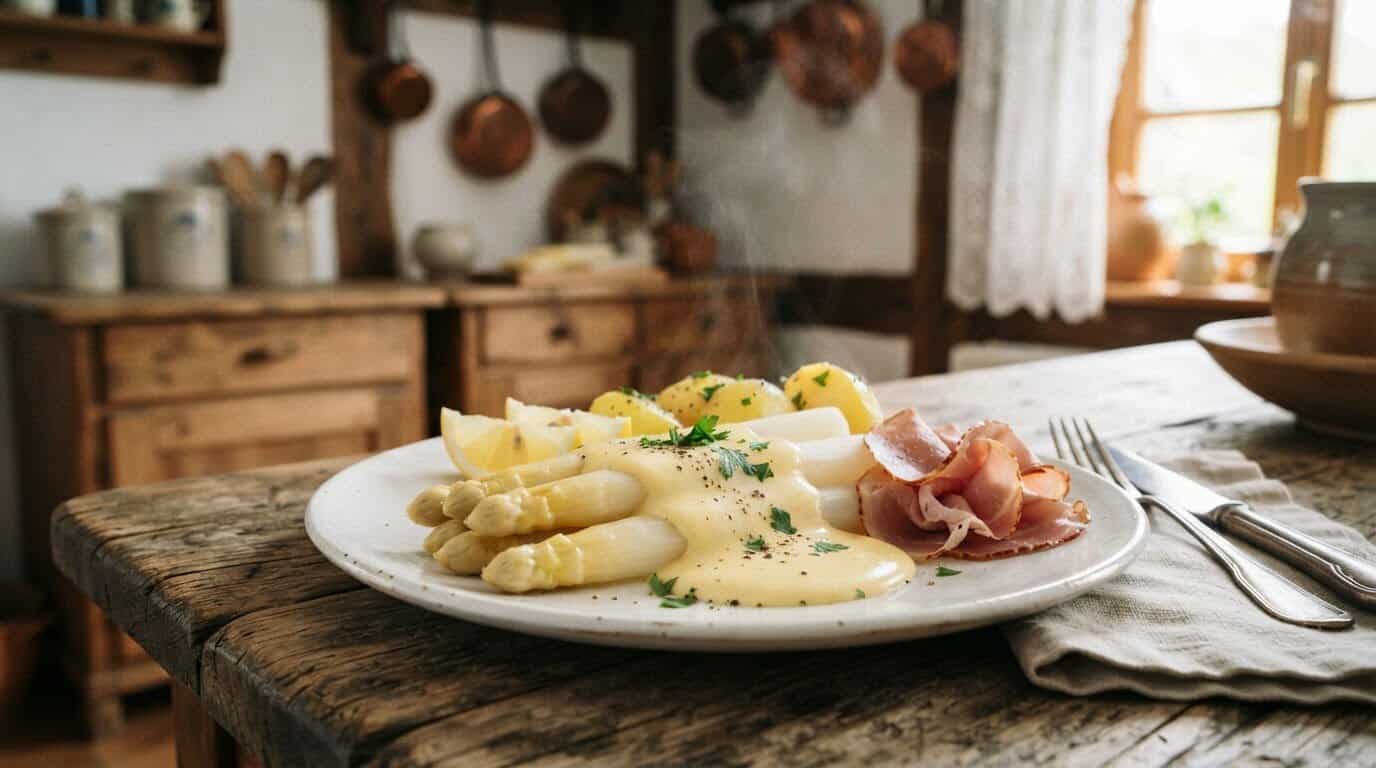
You’ll spot the German Spargel recipes quiet elegance right away—those pale, tender spears at the market almost look like they’re daring you to try something new. White asparagus (weißer Spargel) has this delicate, slightly sweet flavor that honestly makes the whole Spargelzeit worth the anticipation. That short white asparagus season? Totally worth rearranging your dinner plans for, if you ask me.
So, what’s really going on with Spargel? I’ll break down what it is, how to handle it, and why the German Spargel recipe gets people so worked up every spring. Plus, a bit of history—because, well, food always comes with a story in Germany.
By the time you finish reading, you’ll have a sense of when to buy during Spargel season, how to prep and peel without hacking off those tender tips, and some cooking tips that let the flavor do its thing. Basically, you’ll be ready to serve up a classic German Spargel recipe with a bit of swagger.
Description, Recipe, and Historical Information
White asparagus (Spargel) is this pale, tender version of asparagus that Germans absolutely treasure for its gentle flavor and soft texture. You need to peel the thick outer skin before cooking—yeah, it’s a bit of a chore, but it’s worth it. The spears taste milder than green asparagus and honestly, they’re just begging to be paired with simple, classic sides. You’ll see why in any German Spargel recipe.
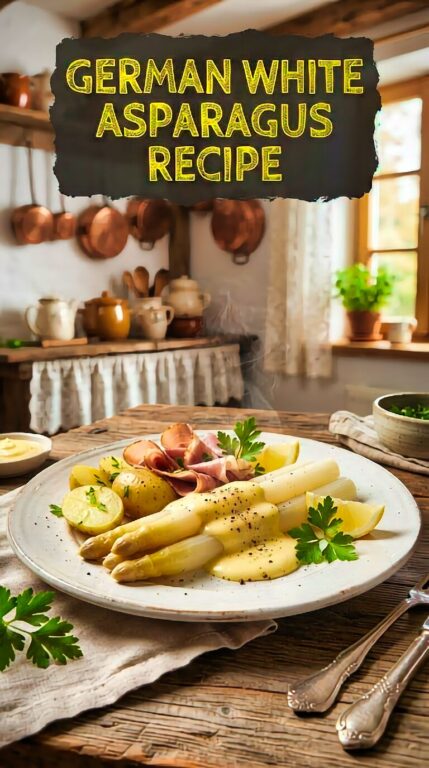
Most folks stick to the traditional German Spargel recipe: simmer the peeled spears in salted water with a knob of butter and a pinch of sugar until they’re tender. Serve them up with boiled potatoes (dampfkartoffeln or any small waxy potatoes), slices of Black Forest ham or Schinken, and a generous pour of hollandaise sauce. That’s the classic combo—white asparagus with hollandaise. If you’re feeling adventurous, swap in smoked ham or even smoked salmon for a bit of a twist on the usual German Spargel recipe. I mean, why not?
Got leftovers? Don’t toss them! Turn that extra Spargel into a creamy white asparagus soup. Just simmer the cooked spears with stock and cream, then purée until it’s nice and smooth. Plenty of German Spargel recipes call for soups like this, or even simple plates that just let the vegetable’s seasonality speak for itself. It’s one of those foods where less is almost always more.
Spargel season kicks off in mid-April and wraps up by late June. Germans really make a big deal out of Spargelzeit, and honestly, I get it. People usually pair the dish with a dry Riesling or maybe a Grüner Veltliner—both wines that play off the vegetable’s subtle sweetness. If you want a quick, no-nonsense guide to cooking fresh German white asparagus, check out this straightforward German White Asparagus Recipe (Spargel). Trust me, you’ll want to bookmark it for your next German Spargel recipe experiment.
Cooking Tips
Pick out firm, unblemished stalks with those satisfyingly tight tips—freshness really does make a difference if you want that crisp texture and gentle flavor. If you’re curious about when to buy or how to handle it, there’s a good explanation of white asparagus season and handling. When you’re after a proper German Spargel recipe, don’t skip this step.
Peel white asparagus thoroughly. Grab the head and run a vegetable peeler from just below the tip all the way down to the base, taking off that tough, bitter outer layer. Don’t forget to trim those woody ends—they’re never pleasant in a German Spargel recipe.
Simmer, don’t boil like mad. Drop the peeled spears into gently simmering water or even a light asparagus broth with a knob of butter, a little salt, and a teaspoon of sugar. This combo brings out the sweetness you want in a German Spargel recipe. Test tenderness with a fork after 8–12 minutes, though honestly, I check early and often—who likes mushy spargel?
Pair simply to let the flavor shine. Boiled potatoes and sliced ham? Classic. Or go for warm Hollandaise if you want a bit more luxury. I sometimes whip up an easy hollandaise in the blender (don’t judge), but a stovetop version works too. Either way, a German Spargel recipe really benefits from a good sauce.
Save a splash of the cooking liquid. That asparagus broth is gold for thinning out Hollandaise or adding depth to soups and sauces. I use it all the time when working through a German Spargel recipe. Just reheat gently—nobody wants limp spears after all the effort.
Handle cooked spargel gently. I keep the spears warm under a cover for a few minutes, just until serving. Serve right away for peak taste and that lovely presentation you expect from a German Spargel recipe. There’s nothing quite like it when it’s fresh and hot.
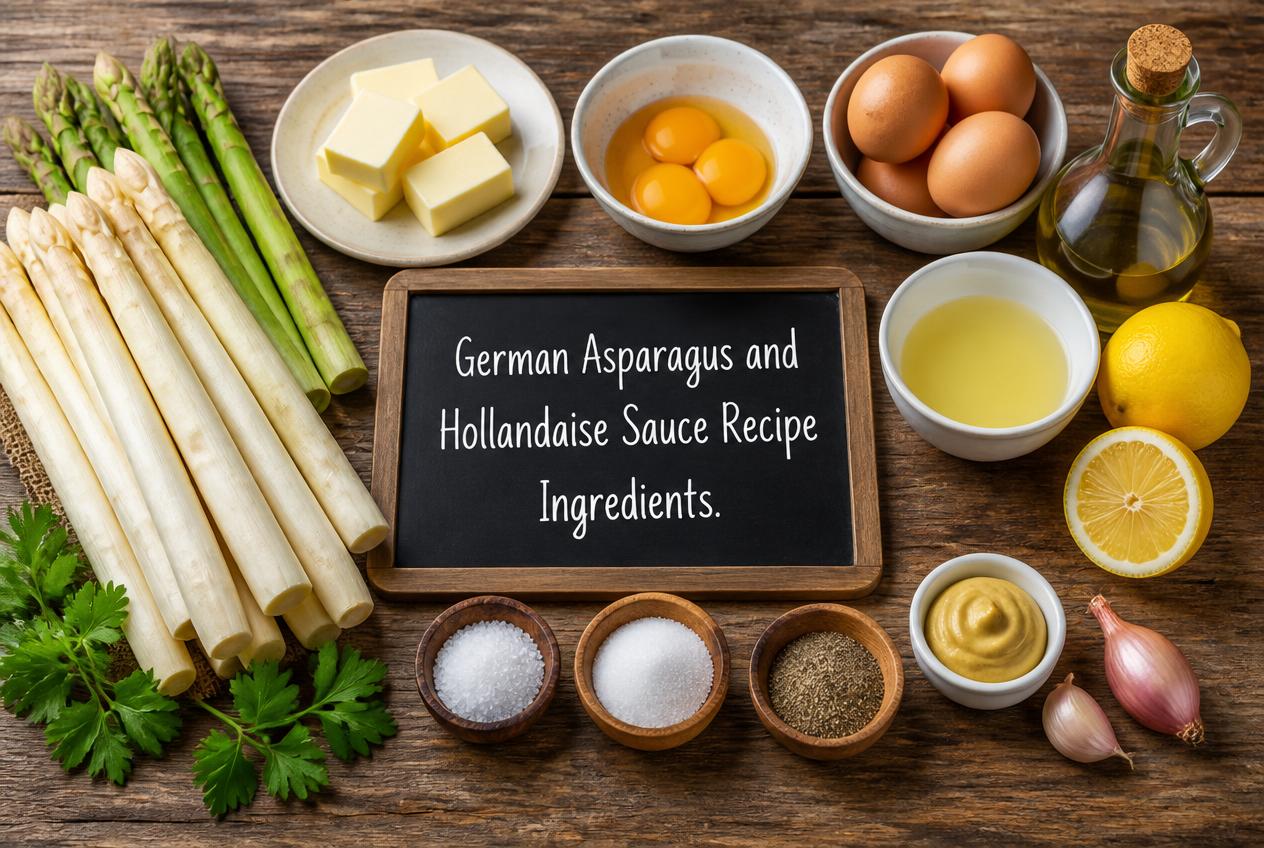
German Asparagus and Hollandaise Sauce Recipe (Spargel mit Bärlauch)
Ingredients
- 2 pounds white asparagus
- 2 teaspoons kosher salt
- 2 teaspoons granulated sugar
- 1 tablespoon fresh lemon juice
- 1 tablespoon butter
- 3 large egg yolks
- Pinch of salt
- 1 tablespoon fresh lemon juice
- 1 tablespoon white wine vinegar optional
- ½ cup butter melted and hot
- Pinch of cayenne or nutmeg
Instructions
- Begin by preparing 2 pounds of white asparagus. Unlike green asparagus, white asparagus has a thicker, tougher outer skin that should be removed before cooking. Using a vegetable peeler, start about ½ inch below the tip of each spear and peel downward toward the base. Rotate the stalk as you peel to remove the fibrous outer layer evenly.
- Once peeled, trim away the woody ends. Cut off about ½ to 1 inch from the bottom of each spear, checking the cut surface as you go. Continue trimming until you reach moist, tender flesh with no tough or dry sections remaining.
- Don't discard the peels and trimmed ends. They can be added to the cooking water for extra flavor or saved for making white asparagus soup or homemade vegetable stock later.
- Fill a large pot with enough water to completely submerge the asparagus spears and bring it to a boil over high heat. Once boiling, add the kosher salt, granulated sugar, fresh lemon juice, and butter. Stir briefly until the salt and sugar dissolve completely.
- Carefully place the asparagus into the boiling water and reduce the heat slightly to maintain a gentle boil. Cook until the asparagus is tender but still retains a slight bite in the center. This typically takes 10–12 minutes, although particularly thick spears may require up to 20 minutes.
- Check for doneness by inserting the tip of a knife into the thickest part of a spear. It should slide in easily but still meet slight resistance.
- Once cooked, gently remove the asparagus using a slotted spoon, spider strainer, or tongs. Arrange the spears neatly on individual serving plates or transfer them to a warmed serving platter while you finish the sauce.
- While the asparagus cooks, begin preparing the hollandaise sauce. Place the egg yolks, a pinch of salt, lemon juice, and white wine vinegar (if using) into a blender or food processor.
- Blend for several seconds until the mixture becomes smooth, pale, and slightly frothy. This initial blending helps create a stable base that will emulsify properly once the butter is added.
- Cut the ½ cup unsalted butter into cubes and place it in a microwave-safe bowl or a glass measuring cup with a pouring spout. Cover loosely and microwave for about 30 seconds. Stir, then continue heating in 10-second intervals until the butter is completely melted and very hot.
- The butter should be hot enough to help gently cook the egg yolks while forming a smooth, silky emulsion.
- With the blender running on low speed, begin drizzling the hot melted butter into the egg yolk mixture very slowly. Add it in a thin, steady stream rather than all at once. The gradual addition is essential for creating a stable emulsion and preventing the sauce from separating.
- Continue blending as you add the butter. The sauce will gradually thicken and become glossy, creamy, and smooth. The entire process should take at least a minute of slow pouring.
- Once all of the butter has been incorporated, the hollandaise should be thick enough to coat the back of a spoon.
- Add a small pinch of cayenne pepper, if desired, and blend briefly to incorporate. The cayenne adds a subtle warmth that complements both the asparagus and the richness of the sauce.
- Taste the hollandaise and adjust the seasoning if needed. A little extra lemon juice can brighten the flavor, while a pinch of salt can enhance the overall balance.
- Serve the White Asparagus with Hollandaise
- Spoon the warm hollandaise generously over the cooked asparagus. For a traditional presentation, allow some of the asparagus tips to remain visible while coating the stalks with the sauce.
- Finish with a light sprinkle of cayenne pepper or freshly grated nutmeg. If desired, garnish with chopped fresh parsley or chives for color and freshness.
- Serve immediately while both the asparagus and hollandaise are warm. The tender white asparagus paired with the rich, buttery sauce creates one of the classic spring dishes of Northern Europe, celebrated for its delicate flavor and elegant simplicity.

Recipes are gathered in person and written for real-world cooking conditions.
- 10 Hungarian Dessert Recipes Passed Down Through Generations - July 25, 2026
- 11 Easy English Recipes Anyone Can Make - July 25, 2026
- Hungarian Kifli Recipe - July 25, 2026