
There’s something about a German Sauerbraten recipe that just feels like home—it’s tangy, hearty, and a little bit nostalgic. You get this fork-tender, slow-braised pot roast where vinegar or wine works its magic with warm spices, all swirling together into a rich, slightly sour gravy. If you’re after an authentic German Sauerbraten recipe that really nails that Rhineland flavor, you’ve got to let the beef marinate for days and cook it low and slow. No shortcuts, trust me.
Let’s get into what a German Sauerbraten recipe actually is, how it shifts from region to region, and how you can pull it off in your own kitchen. I’ll share some history, a tried-and-true German Sauerbraten recipe, and a handful of practical tips so you can get that classic sour roast texture and gravy—plus a few ways to make it your own while keeping things pretty traditional.
Description, Recipe and Historical Information
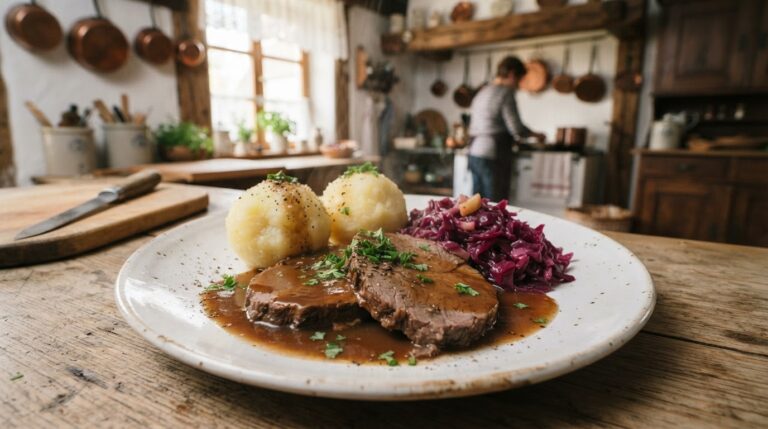
So, what’s the deal with a German Sauerbraten recipe? It’s a classic German pot roast, the kind you’d find in a cozy gasthaus or someone’s grandma’s kitchen. Usually, you’ll start with a boneless beef chuck roast—or whatever beef roast you’ve got—then let it soak for days in a tangy marinade before braising it until it practically falls apart.
For the marinade, grab some red wine vinegar or apple cider vinegar, maybe a splash of red wine, and toss in aromatics, bay leaves, crushed juniper berries, and allspice. The long soak really does wonders, breaking down the tough bits and packing the meat with that signature sour, savory punch you only get from a German Sauerbraten recipe.
Once it’s marinated, sear the meat, then slow-braise it with onion, carrot, and the leftover marinade. That’s where the magic happens. When it’s finally tender, finish the pan juices into a proper sauerbraten gravy—most old-school German Sauerbraten recipes call for thickening and sweetening it just a touch with crushed gingersnaps or lebkuchen. It sounds weird, but it works.
Your typical German Sauerbraten recipe uses beef, vinegar, red wine, onions, bay leaves, juniper berries, allspice, and maybe a bit of sugar or gingersnap crumbs. Some folks stick to the classic German Sauerbraten recipe, while others play around with different vinegars or toss in raisins for a regional spin. You do you.
Historically, the German Sauerbraten recipe came about as a way to preserve and flavor meat—medieval cooks used acidic marinades to make tough cuts edible and keep them around longer. These days, a good German Sauerbraten recipe is all about balancing that tangy marinade with the sweet-spiced gravy, so you get a roast that’s juicy, full of flavor, and kind of perfect for a special meal.
Want a quick overview? Check out the basics on Wikipedia or dive into a classic Sauerbraten recipe from a German cooking site.
Cooking Tips
Always brown the meat well before braising. A good sear really builds flavor and keeps those juices where you want them, so pat the roast dry and fire up a hot pan with a splash of oil. If you’re after that classic German Sauerbraten recipe flavor, don’t rush this part—it’s worth it.
If you want to speed things up, you can try some German Sauerbraten recipe swaps like marinating for just 24–48 hours or grabbing a cut like flank or chuck. Those cuts tenderize faster, and honestly, they still taste pretty great. Venison or pork? Both work, but you’ll want to keep an eye on the cook time—no one likes dry meat.
Stick with a sturdy braising liquid—vinegar and wine do the trick for any German Sauerbraten recipe. When you’re done, strain the pan fond right into your gravy. Deglaze the pan with some marinade; it brings out a tangy, layered flavor that’s hard to beat in a German Sauerbraten recipe.
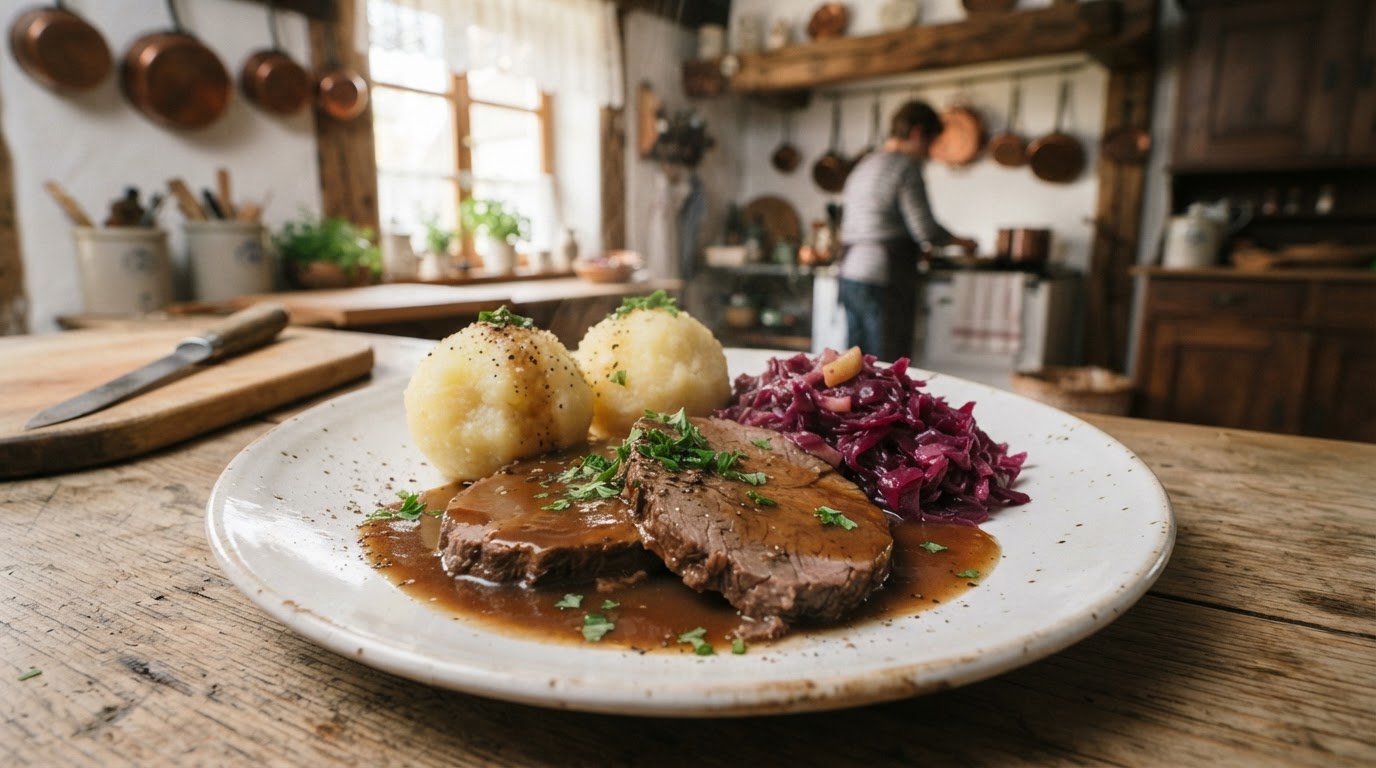
What should you serve with your German Sauerbraten recipe? Potato dumplings (Kartoffelklöße) and bread dumplings (Semmelknödel) are classics for a reason. They soak up every drop of gravy and mellow out the roast’s acidity. I don’t know, but is there anything better than dumplings with that sauce?
If you’re not a dumpling fan, spätzle or käsespätzle are solid picks too. They’re comforting, a little chewy, and really let the German Sauerbraten recipe shine. Boiled potatoes? Always a safe, lighter option—sometimes simple is best.
Craving crunch? Potato pancakes (Kartoffelpuffer) totally deliver. They add a crisp bite and just soak up the gravy in a way that makes the German Sauerbraten recipe feel extra special.
Braised red cabbage (Rotkohl) or German red cabbage brings a sweet-tart pop to your plate. Its acidity and hint of sweetness cut through the richness of the German Sauerbraten recipe, making every bite more interesting.
Right at the end, toss in some gingersnap crumbs or a splash of cream to finish your gravy. Taste it—marinades can dull the salt, so don’t be shy about seasoning near the end. Trust your palate; the perfect German Sauerbraten recipe is all about balance.
German Sauerbraten Recipe
Ingredients
- 2 onions large chopped
- 2 carrots large chopped
- 1 leek large chopped
- 3 cloves garlic minced
- 2 sprigs thyme
- 2 sprigs rosemary
- 2 bay leaves
- 8 juniper berries
- 6 whole cloves
- 10 whole black peppercorns cracked
- 2 ½ tsp kosher salt
- 1 tbsp sugar
- 2 cups red wine
- 1 ½ cups red wine vinegar
- 1 cup beef broth
- ½ cup raisins golden optional
- 4 pounds beef chuck roast
Equipment
- Large bowl for marinating
- Resealable plastic bag for marinating the meat
- Large ovenproof Dutch oven or roasting pan for searing and slow-cooking
- Cutting board for slicing the cooked meat
- Ladle for serving the sauce
- Plates and utensils for serving
Instructions
- a. In a large bowl, combine chopped yellow onions, carrots, leek, minced garlic, thyme sprigs, rosemary sprigs, bay leaves, juniper berries, whole cloves, cracked black peppercorns, kosher salt, and sugar.
- b. Pour red wine, red wine vinegar, and beef broth over the mixture.
- c. Add optional golden raisins if desired.
- d. Stir well to ensure all ingredients are evenly mixed.
- e. Cover the bowl and refrigerate the marinade for at least 24 to 48 hours, allowing the flavors to meld.
- a. Place the beef chuck roast or rump roast into a large, resealable plastic bag.
- b. Carefully pour the prepared marinade over the meat.
- c. Seal the bag, ensuring all excess air is removed to maximize contact between the meat and marinade.
- d. Refrigerate the meat in the marinade for at least 3 to 5 days, turning it occasionally to ensure even marination.
- a. Preheat your oven to 325°F (160°C).
- a. Remove the marinated meat from the plastic bag, allowing any excess marinade to drip off.
- b. In a large ovenproof Dutch oven or roasting pan, heat vegetable oil over medium-high heat.
- c. Sear the meat on all sides until it develops a golden-brown crust, approximately 4-5 minutes per side.
- d. Once seared, remove the meat from the pan and set it aside.
- a. In the same pan, add the crushed gingersnap cookies to the remaining marinade and stir well to dissolve.
- b. Return the seared meat to the pan, covering it with the sauce.
- a. Cover the Dutch oven or roasting pan with a tight-fitting lid.
- b. Place it in the preheated oven and roast for approximately 3 to 3.5 hours, or until the meat is fork-tender.
- c. Check the meat periodically, ensuring it stays submerged in the sauce. If needed, add a bit of water to maintain the desired consistency.
- a. Once the meat is tender, remove it from the oven.
- b. Transfer the meat to a cutting board and allow it to rest for a few minutes.
- c. While the meat rests, skim any excess fat from the sauce if necessary.
- d. Slice the Sauerbraten into thin pieces against the grain.
Notes

Recipes are gathered in person and written for real-world cooking conditions.
- 10 Hungarian Dessert Recipes Passed Down Through Generations - July 25, 2026
- 11 Easy English Recipes Anyone Can Make - July 25, 2026
- Hungarian Kifli Recipe - July 25, 2026