
The German Kirschmichel recipe is perfect if you’ve got leftover bread hanging around. You can whip up a classic German cherry dessert—German Kirschmichel recipe—that’s all warm, custardy, and packed with tart cherries and a good hit of vanilla. It’s the kind of thing that makes you wonder why anyone ever throws out stale bread. German Kirschmichel recipe gives you a cozy cherry dessert where bright fruit meets a rich, bread-based batter—honestly, it’s best served warm with vanilla sauce, but I wouldn’t blame you for sneaking a spoonful cold.
So, what’s the deal with the German Kirschmichel recipe? I’ll walk you through what it is, how folks tweak it across different regions, and then give you a no-fuss recipe that’ll get you close to those classic flavors at home.
Let’s talk practical stuff too. The German Kirschmichel recipe works with fresh, frozen, or even canned cherries, and you can adapt it for whatever bread you’ve got. Maybe you’ll splash in some kirsch or almond extract for a little extra something—totally up to you.
Description, Recipe, and Historical Information
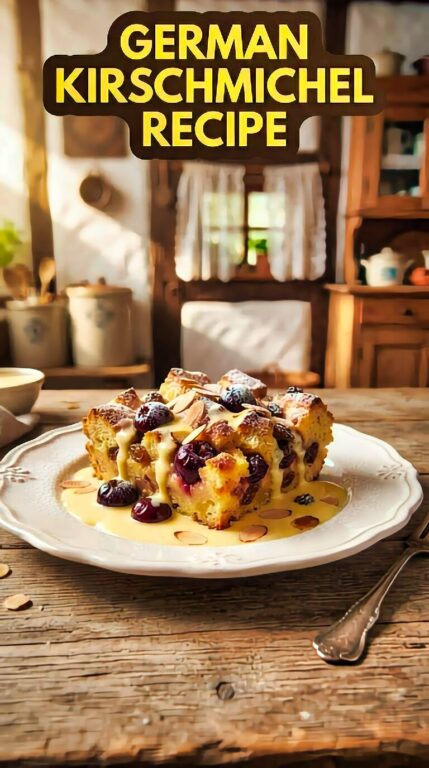
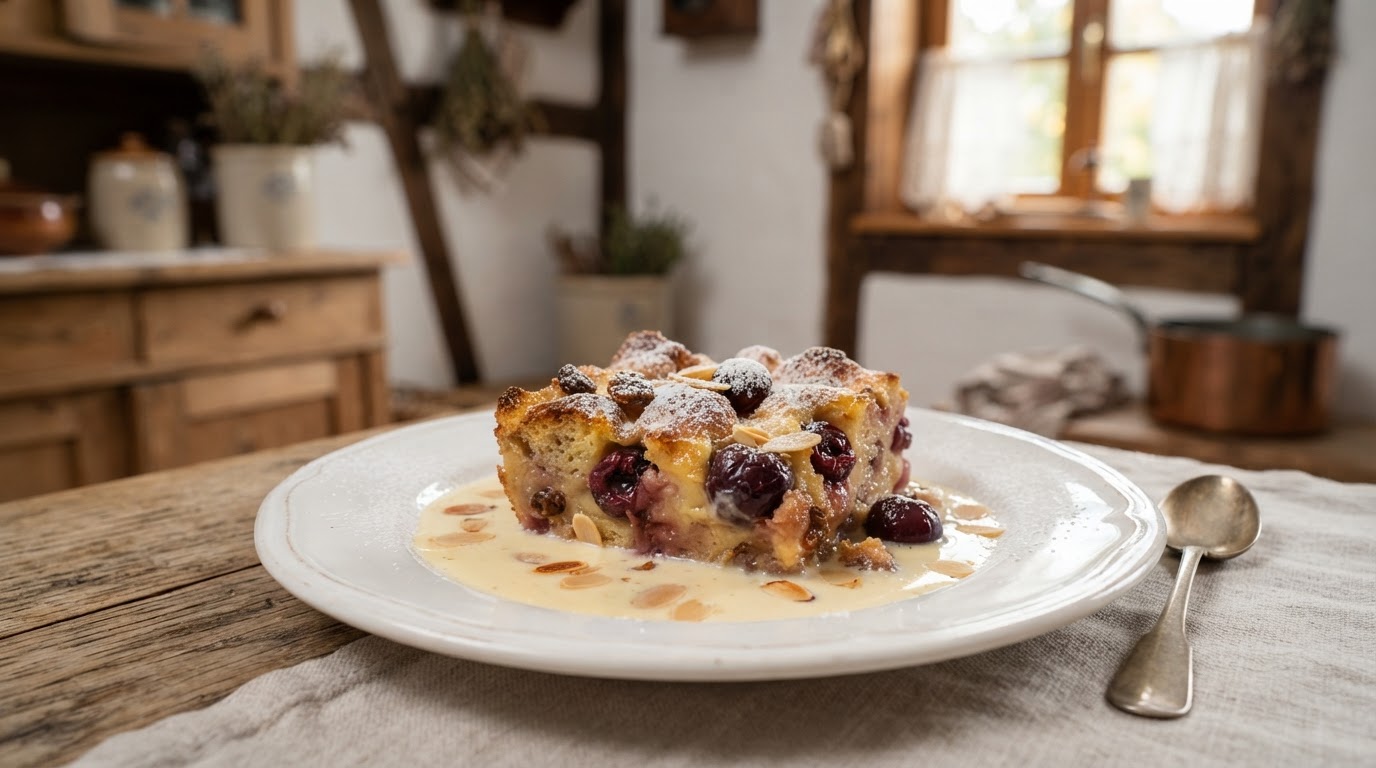
The German Kirschmichel recipe—sometimes called Kirschenmichel, Kirschenplotzer, or Kirschpfanne—turns old bread or rolls into a traditional German cherry bread pudding. You get pitted cherries folded into a custardy batter, and after baking, it’s got that crisp top with a soft, almost creamy inside.
Here’s how I usually do it: tear up some day-old bread or rolls, soak them in milk, eggs, sugar, vanilla, and a bit of lemon zest, and then mix in juicy, drained cherries. You press all that into a buttered dish, dot the top with butter, and bake until it’s golden. With the German Kirschmichel recipe, you can serve it warm—maybe with vanilla sauce or just a dusting of powdered sugar if you’re keeping it simple.
Across southern Germany and Austria, you’ll hear other names like Semmelauflauf or Ofenschlupfer. These are close cousins to the German Kirschmichel recipe—sometimes swapping in semolina, using more butter on top, or picking sour Morello cherries for a tangy kick. It’s all about what’s on hand and what you like.
The German Kirschmichel recipe goes way back. Families in Bavaria, Franconia, Baden-Württemberg, and the Palatinate would use up old bread this way, and everyone’s got their own spin—maybe a longer soak, a different cherry, or a glug of rum or kirsch for aroma. Makes you appreciate how resourceful home cooks can be.
If you want a quick rundown of the German Kirschmichel recipe: first, prep your pitted cherries and stale bread. Whisk together milk, eggs, sugar, and vanilla. Mix it all, let it rest for a bit, then bake at 180°C (350°F) for 35–45 minutes until it’s set. You might want to tweak the sugar or baking time depending on your cherries and bread—nobody gets it perfect every time, and honestly, that’s part of the charm with the German Kirschmichel recipe.
Cooking Tips
Crank up your oven early—nobody wants a soggy German German Kirschmichel recipe, right? Let it preheat until it’s hot enough so you get that golden brown top. I usually grab a shallow baking dish because it gives you a soft center and a crisp, caramelized crust. It’s just better that way.
Grab stale bread, but don’t just toss in big hunks. Tear it into little bits so the custard can really soak in. If you’re after a silkier German German Kirschmichel recipe, toss the soaked bread into a food processor for a few quick pulses before you add the cherries. That makes a difference.
When you fold in the pitted cherries, do it gently. You want juicy pockets of fruit, not cherry mush. You can use fresh, frozen, or even canned cherries—just drain them well if they’re canned. If you go with frozen, maybe cut back on the extra liquid in your German German Kirschmichel recipe. They can be pretty watery.
A splash of kirschwasser? Absolutely. It’s not required, but it gives the German German Kirschmichel recipe that classic cherry kick. I usually start with a tablespoon or two, then taste the batter (yes, raw eggs, but I live dangerously). The flavor gets stronger as it bakes, so don’t overdo it.
Sweeten things up with vanilla sugar or just plain granulated sugar. I always toss in a glug of vanilla extract too—trust me, it adds depth to any German German Kirschmichel recipe. If you’re feeling extra, serve it warm with homemade vanilla sauce or a scoop of vanilla ice cream. That’s the good stuff.
Top off each serving with a cloud of whipped cream or a spoonful of crème fraîche. It balances out the sweetness and just feels special. Right before serving, dust it with powdered sugar so it still looks pretty—otherwise it just melts away. That’s one of those little tricks people forget about German German Kirschmichel recipe.
Want to make your German German Kirschmichel recipe ahead? Bake it until it’s just set, let it cool down, and stash it in the fridge. When you’re ready, warm it up gently in the oven. Oddly enough, leftovers taste even better after the flavors settle in. I’ve found German German Kirschmichel recipe is the kind of thing you might crave the next day, too.
German Kirschmichel Recipe
Ingredients
- 6 slices bread stale rolls or 6 slices stale
- 1 cup milk warm
- 3 large eggs separated
- 4 tablespoons sugar granulated
- 2 teaspoons cinnamon optional
- 1 28- ounce cherries sour - drained
- pinch salt
- 1 tbsp sugar powdered
Equipment
- Baking dish
- Mixing Bowls
- whisk
- Measuring cups and spoons
- Butter or cooking spray for greasing the baking dish
- Oven for baking
Instructions
- a. Start by cutting the stale rolls or slices of stale bread into small cubes.
- b. Place the bread cubes in a large mixing bowl.
- a. Pour warm milk over the bread cubes in the mixing bowl.
- b. Let the bread soak in the milk for a few minutes until it becomes soft and absorbs the liquid.
- a. Separate the egg yolks from the egg whites into two different bowls.
- b. You will need the egg yolks for later in the recipe.
- a. Sprinkle granulated sugar over the soaked bread cubes.
- b. If desired, add cinnamon for extra flavor.
- a. Gently stir the soaked bread, sugar, and cinnamon to combine them thoroughly.
- a. Gradually add the separated egg yolks to the bread mixture.
- b. Mix until the yolks are well incorporated.
- a. In a separate bowl, beat the egg whites until they form stiff peaks.
- b. This will add lightness and fluffiness to the dish.
- a. Carefully fold the beaten egg whites into the bread mixture.
- b. Ensure that the egg whites are evenly distributed without deflating them.
- a. Drain the sour cherries from the jar, removing excess liquid.
- b. Gently fold the cherries into the bread and egg mixture.
- a. Grease a baking dish with butter or a preferred cooking spray.
- b. Ensure the dish is large enough to accommodate the mixture.
- a. Pour the bread and cherry mixture into the greased baking dish.
- b. Spread it evenly in the dish.
- a. Preheat your oven to the desired temperature.
- b. Place the baking dish in the oven and bake until the Kirschmichel is golden brown and set.
- a. To check if it's done, insert a toothpick or a knife into the center. It should come out clean.
- a. Allow the Kirschmichel to cool before serving.
- b. Once cooled, dust the top with powdered sugar for a sweet finishing touch.

Recipes are gathered in person and written for real-world cooking conditions.
- 10 Hungarian Dessert Recipes Passed Down Through Generations - July 25, 2026
- 11 Easy English Recipes Anyone Can Make - July 25, 2026
- Hungarian Kifli Recipe - July 25, 2026