
You can whip up an Egyptian Falafel recipe (ta’ameya) at home with just dried fava beans, fresh herbs, and spices. The mix crisps up so well, whether you fry or bake it. This Egyptian Falafel recipe gives you the exact bean blend, seasoning, and hands-on tips so you end up with a crisp crust and a soft, fragrant middle every time.
As you dig into the Egyptian Falafel recipe and the little history behind it, you’ll see why Egyptians love fava beans over chickpeas. There’s something about the soaking time, how you pulse the beans, and even the oil temp that really matters. I’ll share a few shortcuts and honest advice so you don’t feel lost, whether you’re frying in a pan or going for a lighter, oven-baked Egyptian Falafel recipe.
Description, Recipe, and Historical Information
The Egyptian Falafel recipe, or ta’ameya, leans heavy on fava beans—or sometimes a mix of fava and chickpeas. That’s what gives it that green, herby inside and a punchier flavor compared to chickpea-only falafel. Parsley and cilantro really come through, along with cumin and coriander for that classic Egyptian Falafel recipe taste.
For the Egyptian Falafel recipe itself, you’ll pulse soaked fava beans with onion, garlic, herbs, and spices. Shape that into patties, then fry until golden and crisp. I love stuffing them into pita with tahini, pickles, and fresh veggies—honestly, it’s the best way to eat an Egyptian Falafel recipe.
Here’s what you need for this Egyptian Falafel recipe:
- 2 cups soaked fava beans (or go half fava, half chickpeas if you want)
- 1 small onion, 1–2 garlic cloves
- 1 cup parsley, 1/2 cup cilantro
- 1 tsp cumin, 1 tsp coriander, salt, pepper
- Oil for frying
Egyptians have called falafel a staple for centuries. The Egyptian Falafel recipe is more than just food—it’s tradition, and it’s cheap, portable protein. If you’re curious, you can check out the authentic Ta’ameya recipe and see how the fava-bean base and herbs became the heart of the Egyptian Falafel recipe (Egyptian Falafel: The Original Ta’ameya Recipe).

Cooking Tips
Soak your fava beans for at least 8–12 hours, then drain them really well before grinding. Draining makes the Egyptian Falafel recipe turn out with a cleaner texture and helps avoid oil splatter when frying. Nobody likes a mess, right?
Pulse the mixture instead of pureeing it to keep things a bit coarse and grainy. That texture is key for the Egyptian Falafel —helps the patties hold together, and they’re lighter inside. Pureeing just makes them dense and, honestly, a little dull.
Toss in plenty of fresh herbs for color and moisture. Parsley and cilantro really brighten up the Egyptian recipe and help bind the mix. I always chop them finely by hand instead of blending—there’s just something better about the texture.
Chill your shaped patties or balls for 20–30 minutes before frying. Cold patties from the fridge hold their shape in hot oil, so the Egyptian Falafel comes out without falling apart. It’s a small step, but it saves a lot of frustration.
Use a thermometer and keep the oil steady at 350–365°F (175–185°C). With the right temperature, the Egyptian Falafel recipe browns evenly without soaking up too much oil. Too hot or too cold, and things just go sideways.
Prefer to bake? Brush or spray the patties with oil and bake at 400°F (200°C) for 20–25 minutes, flipping once halfway. The Egyptian Falafel recipe comes out lighter this way, though you won’t get that deep-fried crunch. Still, it’s not a bad trade-off if you want something less heavy.
Season the batter well and fry a tiny test piece first. That’s how I tweak the Egyptian Falafel recipe—add more salt, cumin, or coriander if it needs it. It’s worth the extra minute to get the flavor just right.
Serve up your Egyptian Falafel recipe right away for the best texture. If you have to wait, keep them on a wire rack in a 200°F (95°C) oven for a bit to hold onto that crispness. Honestly, they’re never quite as good after sitting, but sometimes you do what you have to.
Curious about the traditional way to use fava beans in Egyptian ta’ameya? Check out this Egyptian Falafel recipe overview for more inspiration.
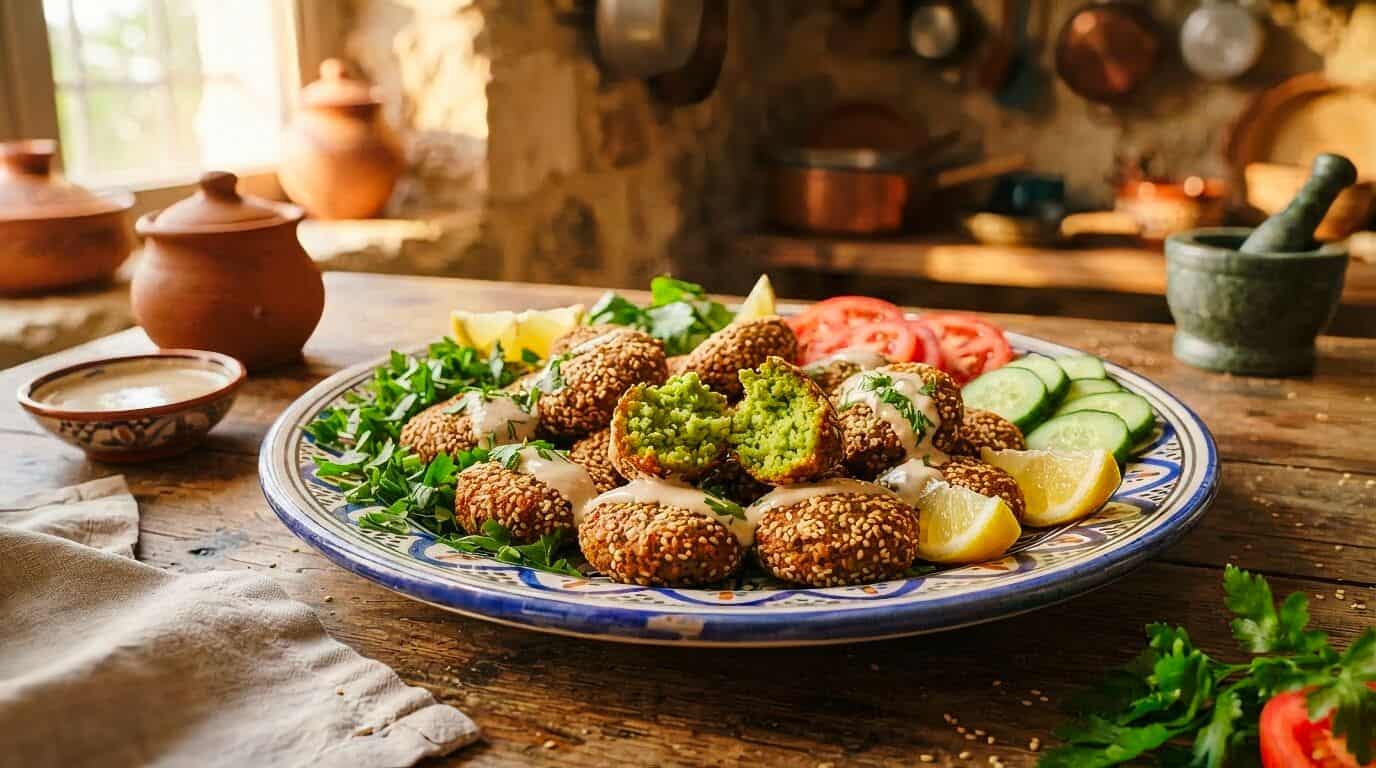
Classic Egyptian Falafel Recipe
Ingredients
- 2 cups fava beans dried split
- 1 red onion quartered
- ½ cup parsley fresh
- ½ cup cilantro fresh
- ½ cup dill fresh
- 3 cloves garlic
- 1 ½ teaspoons coriander ground
- 1 ½ teaspoons salt
- 1 teaspoon cumin ground
- 1 cup sesame seeds Optional
- 1 quart vegetable oil or as needed
Instructions
- Place the dried fava beans in a large bowl.
- Cover completely with water and soak for 8 hours or overnight.
- Drain and rinse before using.
- Add the soaked fava beans, red onion, parsley, cilantro, dill, garlic, ground coriander, salt, and cumin to a food processor.
- Blend until the mixture forms a thick, uniform paste.
- Heat a dry skillet over medium heat.
- Add the sesame seeds and stir frequently until lightly golden and fragrant.
- Transfer them to a plate and allow them to cool.
- Scoop small portions of the mixture and roll them into evenly sized balls.
- Coat each ball in the toasted sesame seeds.
- Heat the Oil
- Pour enough oil into a deep saucepan to fill it about one-quarter full.
- Heat over medium heat until ready for frying.
- Carefully fry the falafel in small batches.
- Cook for 3 to 5 minutes, turning as needed, until crisp and golden brown.
- Transfer to a paper towel-lined plate to drain.
- Serve hot with pita bread, tahini sauce, fresh vegetables, or your favorite Egyptian sides.
- Traditional Egyptian ta'ameya is made with fava beans, fresh herbs, garlic, and aromatic spices before being coated in toasted sesame seeds and fried until perfectly crisp. Crunchy on the outside and tender inside, it's a delicious appetizer, sandwich filling, or meat-free meal.

Recipes are gathered in person and written for real-world cooking conditions.
- 10 Hungarian Dessert Recipes Passed Down Through Generations - July 25, 2026
- 11 Easy English Recipes Anyone Can Make - July 25, 2026
- Hungarian Kifli Recipe - July 25, 2026