
You can roast a Bavarian pork hock recipe to tender, juicy perfection with crisp, crackling skin by just rubbing it with salt, letting it slow-roast in the oven, and finishing with a blast of high heat to make that rind shatteringly crunchy. This Bavarian pork hock recipe lays out the classic moves and timing so you get meat that slides off the bone and a golden, crunchy crust every single time—well, unless you get distracted by a good beer.
As you dig into the origins and prep, you’ll see how little choices—like scoring the skin, seasoning the joint, and splashing the pan with some beer or stock—turn a humble hock into a real showstopper. Honestly, this Bavarian pork hock recipe feels made for sauerkraut, red cabbage, potato dumplings, or a big scoop of warm German potato salad. I’ll throw in some tips on getting that fat to render, making pan gravy, and picking sides that really keep with Bavarian tradition.
Origins and Heritage
People trace Schweinshaxe (sometimes just called haxe or German pork knuckle) back to rural Bavarian kitchens, where cooks had to stretch ingredients and coax out every bit of flavor. They slow-roasted the pork hock to soften up those tough cuts and get the skin to crisp up, turning what’s basically a budget cut into a feast-worthy centerpiece. That’s the magic of a good Bavarian pork hock recipe—it transforms the ordinary.
This dish pops up all over the place in old regional records and festival traditions, especially at Oktoberfest and local village feasts. You’ll spot a few twists: Eisbein, the boiled or braised kind, is more of a northern German thing, while the Bavarian pork hock recipe focuses on roasted hocks with that signature crackling skin and a deep, caramelized crust.
It’s kind of wild how local ingredients shaped the technique. In Bavaria, cooks use beer, caraway, and coarse salt to flavor the hock, leaning on whatever’s handy and the region’s deep brewing culture. Over the centuries, everyone’s tweaked the Bavarian pork hock recipe, trying to get that perfect balance—slow cooking for tenderness, high heat for that epic crunch.
The cultural weight of this dish shows up in language and where you find it on menus. In Bavaria, “haxe” means you’re getting something hearty and properly traditional, whether you’re at a noisy beer hall or a street market. When you order a German pork knuckle now, you’re picking a dish rooted in practical kitchen know-how and a whole lot of communal celebration. That’s the spirit behind every Bavarian pork hock recipe, honestly.
Check out a typical Bavarian pork hock recipe and some background details at Bavarian Ham Hocks – Roasted Pork Knuckles (Original Recipe). If you’re after a Bavarian pork hock recipe that nails the real taste, this is where you start. There’s just something about the ritual of roasting, carving, and serving that keeps the Bavarian pork hock recipe close to people’s hearts. If you haven’t tried a Bavarian pork hock recipe yet, what are you waiting for?

Preparation and Technique
First things first: trim off any extra skin and work your fingers around the pork hocks or pork knuckle to loosen the membrane. You really want those seasonings to get in there. Score the skin into a diamond pattern—yeah, it takes a minute, but it’s the secret to that shattering, crispy crust everyone craves in a Bavarian pork hock recipe.
Pat the meat as dry as you can with paper towels. Then, go to town with coarse salt, fresh pepper, and a good sprinkle of crushed caraway seeds. If you’re into a bit of tanginess (and honestly, why not?), smear a thin layer of German mustard over the pork shank before adding the spices. It helps everything stick, and the flavor is just… better. This detail is a must in any Bavarian pork hock recipe worth its salt.
Grab a heavy roasting pan or Dutch oven and brown the ham hocks over medium-high heat. Sear every side until you see a deep, rich caramel color. Pour off most of the fat, but don’t toss those tasty browned bits—they’re gold for the beer gravy. That’s a little trick I always use for my Bavarian pork hock recipe.
Pop the hocks in the oven and roast them low and slow at 150–170°C (300–340°F). It’ll take anywhere from 2.5 to 4 hours, depending on how hefty your pork hocks are. You want the meat to get tender enough to almost fall off the bone. For the skin, crank up the heat at the end—230–250°C (450–480°F) for a short blast does the job. That’s the crispy magic you expect from a Bavarian pork hock recipe.
Now, about that gravy: pour some dark beer into the roasting pan and scrape up all the good stuff stuck to the bottom. Skim off the fat, add some stock, and simmer it down until you’ve got a rich, glossy beer gravy. Seriously, don’t skip this part—it ties the whole Bavarian pork hock recipe together. Serve your roasted German pork knuckle with that gravy, plus sauerkraut or dumplings if you’re feeling traditional. If you ask me, that’s the only way to do a Bavarian pork hock recipe right.
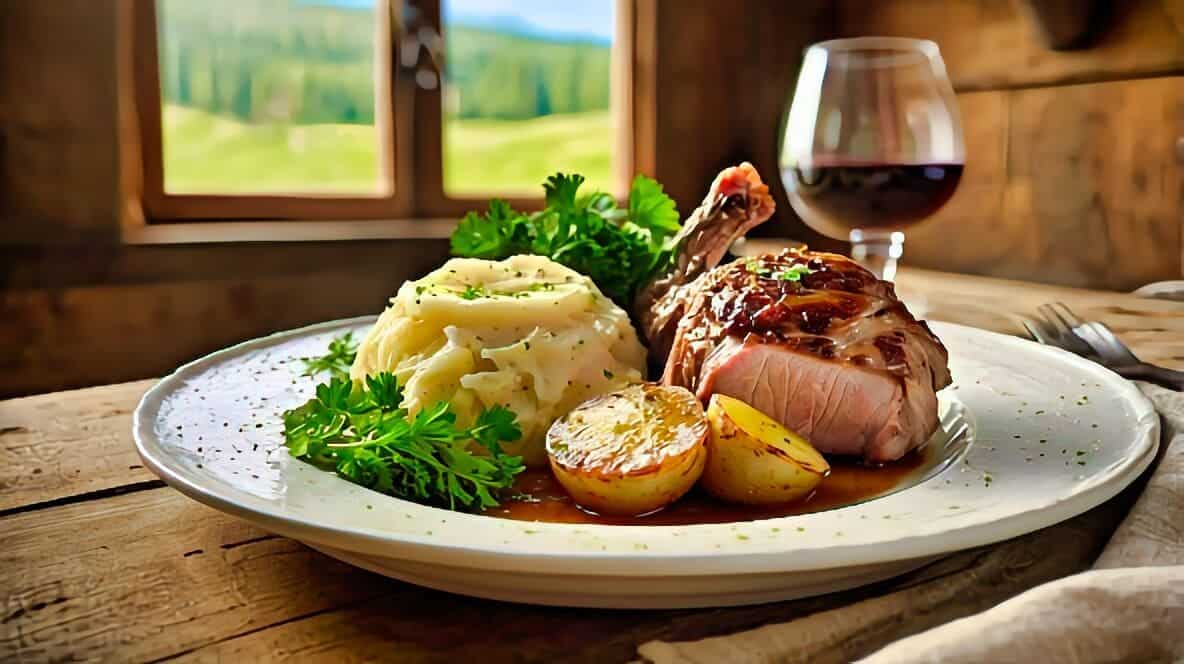
Bavarian Pork Hock Recipe — Authentic Slow-Roasted
Ingredients
- 1 leek well cleaned and diced
- 1 rib celery diced
- 1 carrot diced
- 1 onion diced
- 1 teaspoon salt
- 1 teaspoon peppercorns
- 4 pork knuckles
Instructions
- Place the vegetables, salt, peppercorns, and pork knuckles into a large stockpot.
- Pour in enough hot water to completely cover the pork.
- Bring the pot to a boil over high heat.
- Once boiling, reduce the heat to a gentle simmer.
- Cook for 2 to 3 hours, or until the pork is just tender. Avoid overcooking, as the meat should remain firm enough to hold its shape during roasting.
- Using a large slotted spoon, carefully remove the pork knuckles from the cooking liquid.
- Strain the broth, reserving both the cooked vegetables and the flavorful cooking liquid.
- Preheat the oven to 425°F (218°C).
- Allow the pork knuckles to drain well before placing them upright in a large roasting pan.
- Arrange the cooked vegetables around the pork.
- Pour a small amount of the reserved cooking liquid into the roasting pan, adding just enough to cover the meaty portion of the knuckles while leaving the skin and fat exposed.
- Using a sharp knife, score the thick layer of skin and fat in a shallow crisscross pattern to help it crisp as it roasts.
- Transfer the roasting pan to the preheated oven.
- Roast for about 30 minutes, checking occasionally to ensure there is still a little liquid in the pan.
- If the liquid evaporates too quickly, add a little more reserved cooking broth to keep the meat moist.
- Cook until the pork reaches an internal temperature of at least 165°F (74°C).
- If the skin has not become deeply browned and crisp after roasting, switch the oven to the broiler setting.
- Broil the pork for 5 to 10 minutes, watching closely to prevent the skin from burning.
- The finished crackling should be crisp, golden brown, and blistered.
- Serve the roasted pork knuckles with the cooked vegetables, potatoes, and sauerkraut.

Recipes are gathered in person and written for real-world cooking conditions.
- 10 Hungarian Dessert Recipes Passed Down Through Generations - July 25, 2026
- 11 Easy English Recipes Anyone Can Make - July 25, 2026
- Hungarian Kifli Recipe - July 25, 2026