
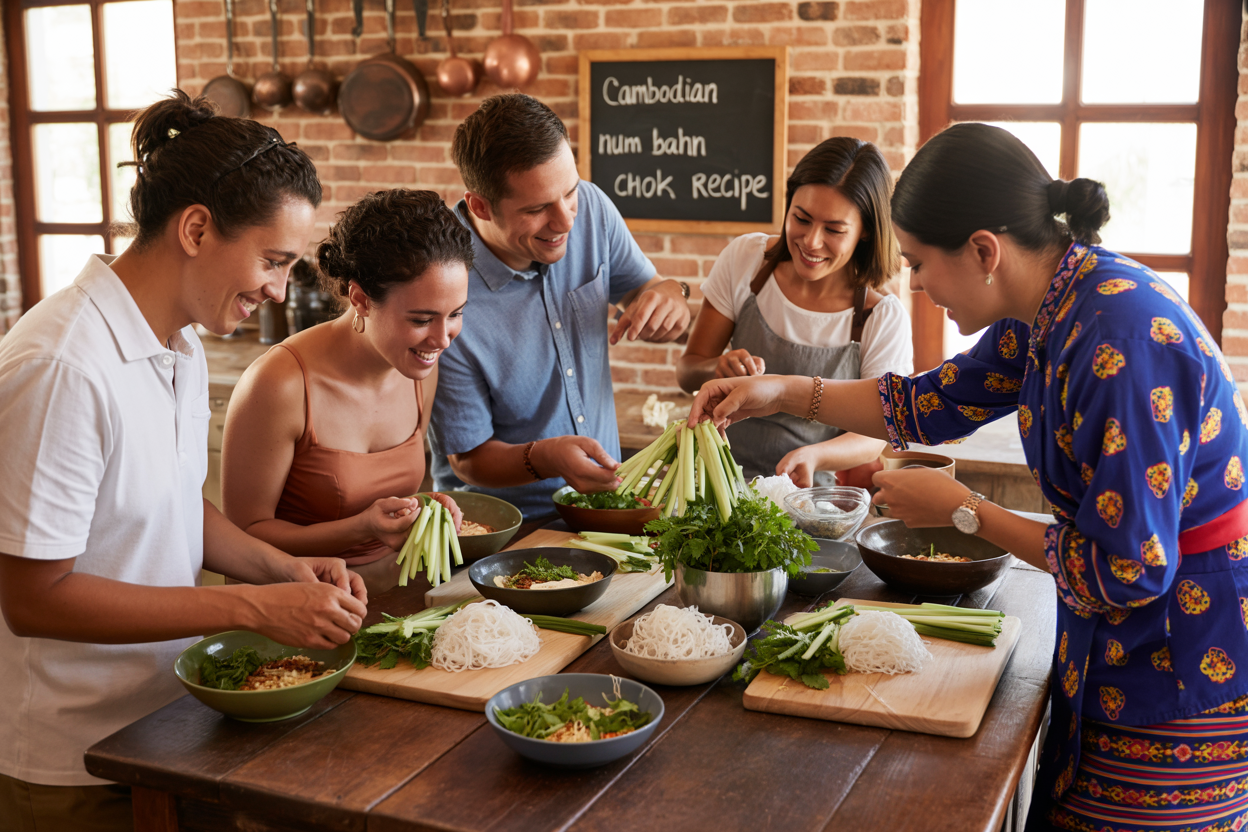
The Cambodian Num Bahn Chok Recipe is a refreshing noodle dish that stands out for its clean and vibrant presentation. The dish features thin rice noodles that are often served cold, making them soft and light to the bite. These noodles form the base, and they are usually topped with a generous ladle of green curry broth. The broth, made with a mix of fresh ingredients, has a light texture, neither too thick nor too runny, giving the dish a balanced consistency.
Vegetables like crisp cucumbers, bean sprouts, and finely shredded banana blossom are added on top of the noodles in the Cambodian Num Bahn Chok Recipe, adding a crunchy texture that contrasts with the softness of the noodles. The fresh herbs, often including mint and basil, contribute a refreshing bite, making the dish taste both light and flavorful.
Visually, the Cambodian Num Bahn Chok Recipe is an inviting plate with its mix of vibrant greens from the herbs and vegetables and the pale yellow-green hue of the broth. The noodles sit neatly in the center, while the garnishes and broth surround them, creating an appetizing spread.
The overall texture of the Cambodian Num Bahn Chok Recipe is a balanced mix of tender noodles, crunchy vegetables, and a smooth yet slightly creamy broth. This combination of textures makes each bite satisfying without feeling heavy. The dish’s makeup is simple, but it offers a pleasant mix of flavors and textures, making the Cambodian Num Bahn Chok Recipe a fresh and enjoyable meal.
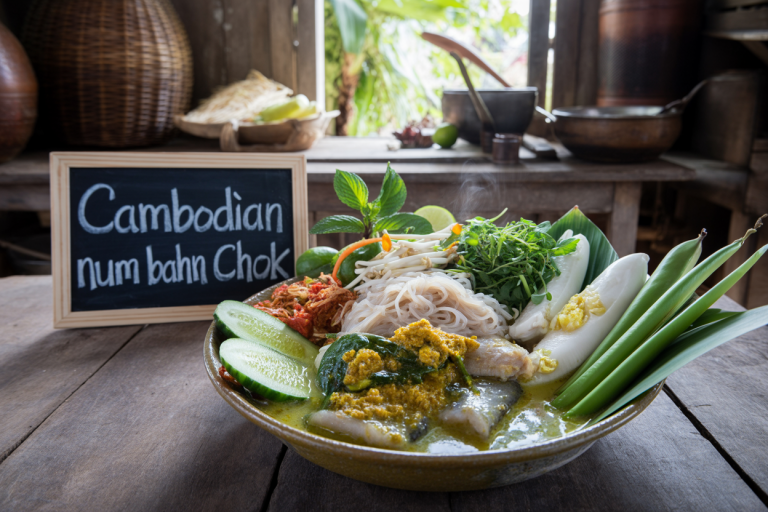
Cambodian Num Bahn Chok Recipe
10 Reasons Why to Eat Cambodian Food
1. Balanced Flavors – Cambodian cuisine is known for its balanced mix of sweet, sour, salty, and spicy flavors. Unlike some other cuisines that might lean heavily on one flavor profile, Cambodian food expertly combines these elements in a single dish. This balance creates a satisfying and well-rounded taste experience, appealing to a broad range of palates.
2. Fresh Ingredients – Cambodian dishes emphasize the use of fresh, locally sourced ingredients. From herbs like lemongrass and kaffir lime to seasonal vegetables, the freshness of ingredients plays a key role in enhancing the flavor. This focus on fresh produce not only adds to the taste but also makes the food healthier and more nutritious.
3. Healthy Options – Many Cambodian meals are light, with a focus on vegetables, fish, and rice, making them a great option for health-conscious eaters. Soups like Samlor Machu (a sweet and sour soup) are packed with fresh vegetables and lean protein, making it both filling and nutritious. Grilled dishes also provide a lower-calorie alternative without compromising on taste.
4. Cultural Diversity – Cambodian food has been influenced by Chinese, Thai, Vietnamese, and even French culinary traditions. This unique blend of cultures has resulted in a rich culinary landscape, offering dishes with diverse textures, flavors, and preparation methods. Whether you’re craving noodles, curries, or grilled meats, Cambodian cuisine has something to offer.
5. Fish Amok – This is one of Cambodia’s most famous dishes, a delicate fish curry steamed in banana leaves. Its rich, creamy coconut base is flavoured with fresh herbs and a special spice mix called kroeung. Fish Amok is a symbol of Cambodia’s culinary identity, and trying it gives you a real taste of the country’s heritage.
6. Khmer Barbecue – Cambodian barbecue is not just about the food, it’s an interactive dining experience. Grilled meats are served with a variety of dipping sauces, vegetables, and rice, allowing diners to customize each bite. It’s a fantastic way to enjoy a social meal with friends and family while exploring different combinations of flavors.
7. Nom Banh Chok – This traditional breakfast dish, also known as Khmer noodles, is a light yet flavorful way to start the day. The dish features fresh rice noodles topped with a fragrant fish-based broth, herbs, and green vegetables. It’s a staple in Cambodian households, offering a refreshing and healthy breakfast option that’s perfect for a warm day.
8. Affordable – One of the best things about Cambodian food is that it’s incredibly affordable. Whether you’re dining at a street stall or a local restaurant, you can enjoy a full, delicious meal without spending much. This makes Cambodian cuisine accessible to both locals and travelers on a budget.
9. Street Food – Cambodia’s street food scene is vibrant and diverse, offering everything from grilled meats to exotic snacks like fried insects. Street vendors provide a quick, affordable, and exciting way to sample authentic Cambodian flavors. It’s an adventurous way to explore local cuisine while immersing yourself in the culture.
10. Community Experience – Cambodian meals are often shared, with several dishes placed in the middle of the table for everyone to enjoy. This tradition fosters a sense of togetherness and conversation during mealtimes. It’s not just about the food; it’s about enjoying the company of others and creating lasting memories around the table.
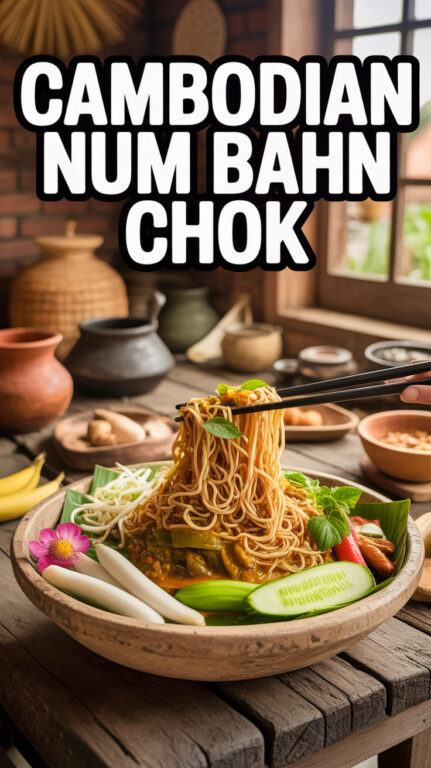
Best method for cooking Cambodian rice dishes at home?
The best method for cooking Cambodian rice dishes at home involves understanding the type of rice typically used and the traditional techniques that bring out its flavors. Cambodian cuisine commonly features fragrant, long-grain jasmine rice, which is prized for its soft texture and slightly sticky quality when cooked.
Start by rinsing the rice thoroughly under cold water to remove excess starch, which can make the rice too sticky. Use a 1:1.5 rice-to-water ratio to get the perfect texture. For example, for every cup of rice, add 1.5 cups of water. Bring the water and rice to a boil in a heavy-bottomed pot, then reduce the heat to low, cover the pot, and simmer for about 15-18 minutes.
To enhance the flavor, Cambodian home cooks sometimes add pandan leaves or a pinch of salt while cooking the rice. Another popular technique is using a rice cooker, which simplifies the process by automatically adjusting the heat and cooking time for perfect results every time.
For more traditional Cambodian rice dishes like Bai Sach Chrouk (pork with rice) or Amok Trey (steamed fish curry), the rice serves as the perfect base, soaking up all the savory sauces and seasonings. Simple and versatile, properly cooked rice is a staple for any Cambodian meal.
Ingredients For the Cambodian Num Bahn Chok Recipe
Rice Noodles
Shredded Cooked Chicken
Fish Sauce
Tamarind Concentrate
Coconut Milk
Water
Lemongrass
Red Bell Pepper
Yellow Bell Pepper
Green Bell Pepper
Bean Sprouts
Cilantro
Mint
Basil
Peanuts
Lime wedges
Salt
Pepper
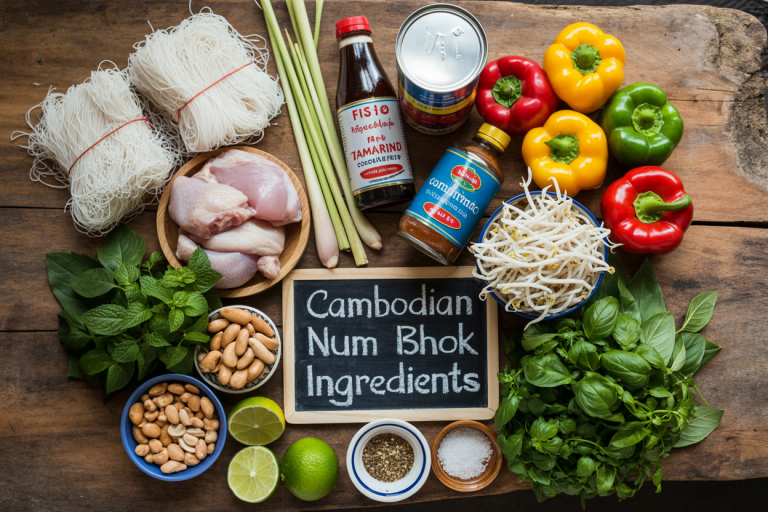
Cambodian Num Bahn Chok Recipe – Ingredients
Cooking Instructions For the Cambodian Num Bahn Chok Recipe
- Cook the rice noodles in a big pot of boiling water until they are soft, following the package directions. Rinse and reserve.
- Bring the fish sauce, tamarind concentrate, coconut milk, water, and lemongrass to a boil in a big saucepan set over medium heat. Reduce heat to low and simmer for 5 to 7 minutes, stirring once.
- Cook the chopped bell peppers for a further 5 minutes, or until they reach a tenderness you can taste.
- Mix the cooked noodles with the shredded chicken in a big serving bowl.
- Incorporate the chicken and noodles with a gentle toss in the hot sauce mixture.
- Garnish with peanuts, bean sprouts, fresh cilantro, mint, and basil.
- Add salt and pepper to taste and garnish with lime wedges.
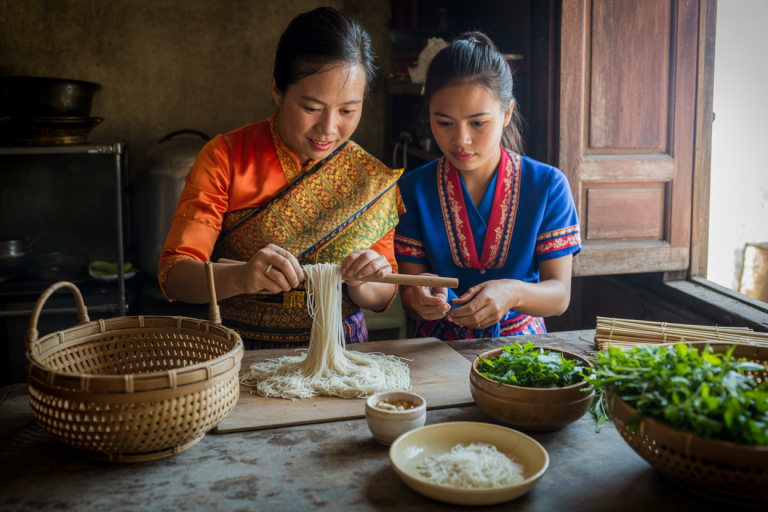
Cambodian Num Bahn Chok Recipe – Cooking
Cooking Tips For the Cambodian Num Bahn Chok Recipe
• Cook the rice noodles just until tender to help prevent them from becoming too soft.
• Rinse the noodles with cool water after cooking to help stop the cooking process.
• Prepare the broth separately and season it gradually for better flavor control.
• Cut vegetables and herbs into small even pieces for easier serving and texture balance.
• Add delicate herbs just before serving to keep them fresh and bright.
• Stir the broth occasionally during simmering so the ingredients heat evenly.
• Serve the noodles and broth immediately after assembly for the best texture.
• Keep extra toppings on the side so each serving can be adjusted easily.
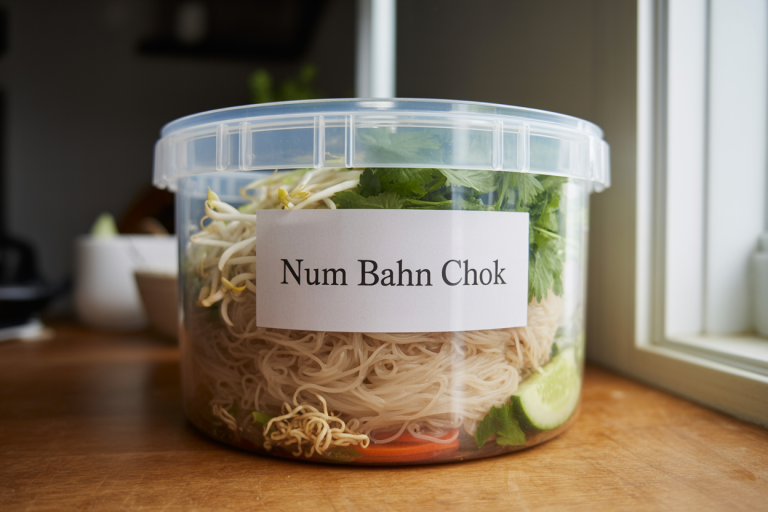
Cambodian Num Bahn Chok Recipe – Storate
Storage Tips For the Cambodian Num Bahn Chok Recipe
• Store the noodles, broth, and fresh toppings separately to help maintain texture.
• Allow the broth to cool slightly before transferring it into storage containers.
• Refrigerate leftovers within 2 hours of cooking for proper food safety.
• Keep herbs and vegetables in sealed containers to help preserve freshness.
• Reheat the broth gently over medium-low heat before serving.
• Rinse refrigerated noodles briefly with warm water if they stick together during storage.
• Freeze the broth separately in freezer-safe containers for up to 2 months if needed.
• Avoid freezing fresh vegetables or herbs because their texture changes significantly after thawing.
• Thaw frozen broth overnight in the refrigerator before reheating.
• Discard the noodles, broth, or toppings if they develop a sour smell, slimy texture, discoloration, mold, or unusual taste, as these are common signs of spoilage.
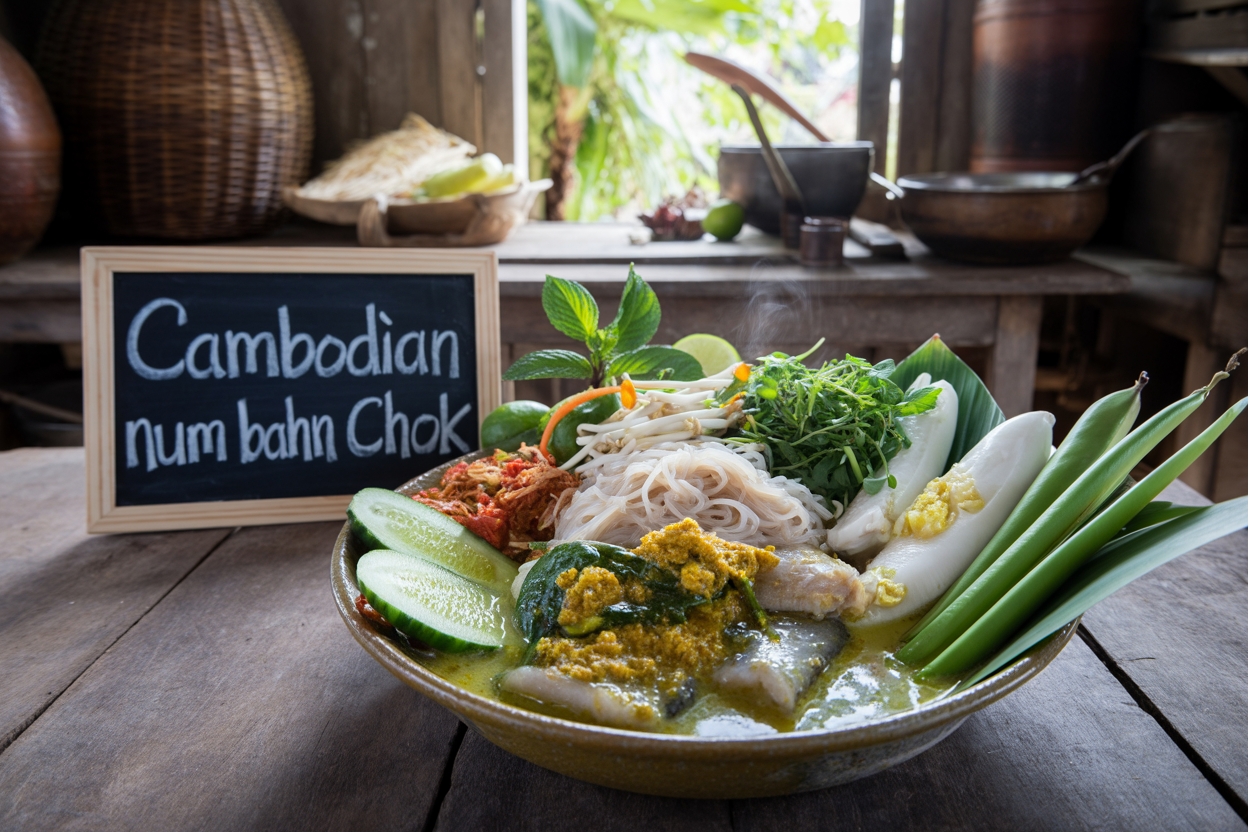
Cambodian Num Bahn Chok
Ingredients
- 1 14 oz rice noodles
- 2 cups shredded cooked chicken
- 4 cups fish sauce
- 1/4 cup tamarind concentrate
- 2 cups coconut milk
- 1/2 cup water
- 1 lemongrass, finely chopped
- 1/2 chopped green bell pepper
- 1/2 chopped red bell pepper
- 1/2 chopped yellow bell pepper
- 2 cups bean sprouts
- 1/2 cup chopped fresh cilantro
- 1/2 cup chopped fresh mint
- 1/2 cup chopped fresh basil
- 1/2 cup crushed roasted peanuts
- Lime wedges for serving
- Salt and pepper to taste
Equipment
- Large pot or wok
- Medium-sized saucepan
- Cutting board and a sharp knife
- Colander
- Spoon or spatula
- Serving bowl
Instructions
- In a large pot of boiling water, cook rice noodles according to package instructions until tender. Drain and set aside.
- In a large saucepan over medium heat, combine fish sauce, tamarind concentrate, coconut milk, water, and lemongrass. Bring to a simmer and cook for 5-7 minutes, stirring occasionally.
- Add the chopped bell peppers to the sauce and cook for another 5 minutes, or until they are tender.
- In a large serving bowl, combine the cooked noodles and shredded chicken.
- Pour the hot sauce mixture over the noodles and chicken, and toss gently to combine.
- Top with bean sprouts, fresh cilantro, mint, basil, and crushed peanuts.
- Serve with lime wedges and season with salt and pepper to taste.
Notes
Tips and Tricks
Prepare all ingredients before cooking to make the process smoother. Cook the noodles al dente and drain them well before stir-frying. Stir-fry the ingredients over high heat to retain their crunchiness and prevent them from becoming soggy. Adjust the level of spiciness to your preference by adding more or less chili paste.FAQ For the Cambodian Num Bahn Chok Recipe
Q: What is the Cambodian Num Bahn Chok recipe?
The Cambodian Num Bahn Chok recipe is a traditional dish consisting of rice noodles topped with a fish-based green curry sauce, fresh vegetables, and herbs.
Q: What ingredients are needed for the Cambodian Num Bahn Chok recipe?
The Cambodian Num Bahn Chok recipe typically requires rice noodles, fish, kroeung (Cambodian spice paste), coconut milk, lemongrass, turmeric, and fresh garnishes like cucumbers, bean sprouts, and herbs.
Q: How long does it take to prepare the Cambodian Num Bahn Chok recipe?
Cambodian Num Bahn Chok recipe takes about 1 to 1.5 hours to prepare, including time to cook the fish and make the green curry sauce.
Q: Can I use other proteins in the Cambodian Num Bahn Chok recipe besides fish?
Yes, while the Cambodian Num Bahn Chok recipe traditionally uses fish, you can substitute chicken, shrimp, or tofu for a different variation.
Q: What side dishes pair well with the Cambodian Num Bahn Chok recipe?
The Cambodian Num Bahn Chok recipe is often served with fresh herbs, lime wedges, and pickled vegetables to enhance the flavors of the dish.

Recipes are gathered in person and written for real-world cooking conditions.
- 10 Hungarian Dessert Recipes Passed Down Through Generations - July 25, 2026
- 11 Easy English Recipes Anyone Can Make - July 25, 2026
- Hungarian Kifli Recipe - July 25, 2026
1 comment
Great
Comments are closed.