
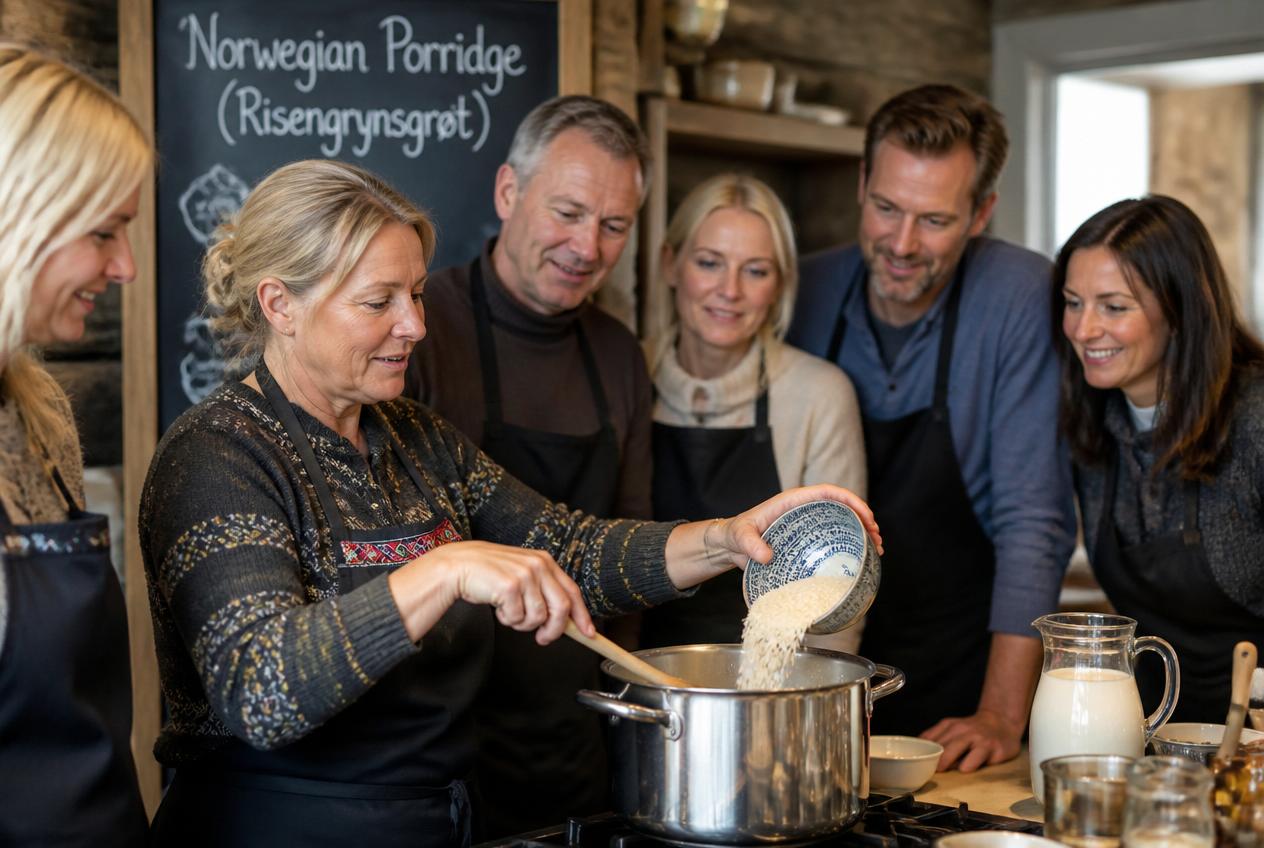
I’ll be honest: before I stumbled onto Norwegian rice porridge, I thought porridge was just that bland oatmeal your grandma insisted you eat. But Norwegian Porridge (Risengrynsgrøt) changed everything for me. This creamy Norwegian rice porridge only needs short grain rice, milk, and a pinch of salt, then gets topped with butter, cinnamon, and sugar—a cozy tradition Norwegians have loved for generations, especially on Christmas Eve.
The first time I made Norwegian Porridge (Risengrynsgrøt), I couldn’t believe how something so basic could taste so good. You cook rice slowly in milk until it turns into this thick, creamy bowl of comfort that somehow manages to warm your soul. Norwegians have this tradition of hiding an almond in the porridge, and whoever finds it gets a marzipan pig. Honestly, I’d eat it year-round just for an excuse to keep tiny pig-shaped treats around.
Whether you want to make it the old-school way on the stovetop or try a shortcut, I’ll walk you through what you need to nail this Norwegian comfort food classic. Once you try Norwegian Porridge (Risengrynsgrøt), you’ll get why whole Scandinavian families gather around bowls of it every weekend.
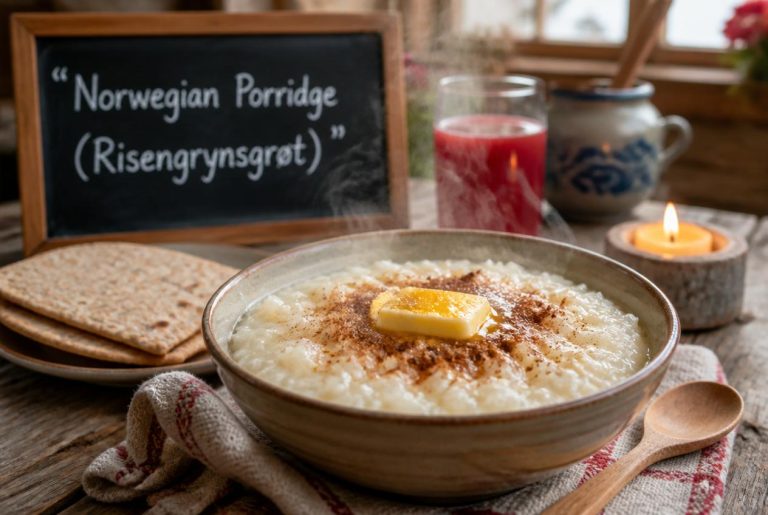
Norwegian Porridge (Risengrynsgrøt)
Key Takeaways
- Norwegian Porridge (Risengrynsgrøt) uses just three ingredients but turns out incredibly creamy and comforting if you cook it right.
- The Christmas version hides an almond in the pot—whoever finds it gets a marzipan pig and a bit of luck.
- You can top your risgrøt however you want and even use leftovers for other creative dishes.
A Hearty Tale: How This Dish Earned Its Legendary Status
It’s wild to think that rice porridge first showed up at the Norway-Sweden border in the 1340s as a luxury. Back then, rice was rare and pricey, so serving Norwegian Porridge (Risengrynsgrøt) meant you were flexing your wealth, but in the most delicious way.
As rice became more common, Norwegian families embraced this creamy porridge as comfort food for cold winters. It shifted from status symbol to everyday staple pretty quickly.
What really made Norwegian Porridge (Risengrynsgrøt) legendary is its role in Christmas traditions. Norwegians serve risgrøt on Christmas Eve, turning a humble bowl of rice and milk into a festive event. The almond hunt for the marzipan pig? That’s a holiday activity I can get behind.
The game of hiding the almond makes Norwegian Porridge (Risengrynsgrøt) unforgettable for generations of Norwegian kids. It turns a regular meal into something magical—and a bit competitive, too.
Risgrøt holds a special place on Norwegian holiday tables, usually served for lunch the day before Christmas. The dish’s simplicity is its charm. With just rice, milk, and salt, Norwegian Porridge (Risengrynsgrøt) proves you don’t need fancy ingredients for something special.
Today, Norwegian Porridge (Risengrynsgrøt) means more than just food. It’s comfort, tradition, and that kind of cozy warmth you crave when the snow piles up outside.
Cooking Like a Viking: Essential Tips for Success
Making traditional Norwegian risgrøt takes patience and a willingness to stir. I imagine Vikings standing by the fire, wooden spoon in hand, just waiting for their Norwegian Porridge (Risengrynsgrøt) to get creamy.
The Golden Rules I Swear By:
- Use a heavy-bottomed pot—It keeps the porridge from burning and spreads the heat evenly.
- Stir all the time—I mean, don’t walk away. Every couple of minutes, get in there.
- Keep the heat low and steady—If you rush it, you’ll regret it. Scorched rice is nobody’s friend.
- Pick the right rice—Short or medium grain is the way to go for that classic creamy vibe.
I always toss the rice into boiling water first, then add milk gradually. It helps keep the rice from clumping up like nervous Vikings in a storm. The whole thing takes about 45 minutes to an hour, so settle in.
My Temperature Guide:
| Phase | Heat Level | What to Watch For |
|---|---|---|
| Initial boil | Medium-high | Rice softens |
| Adding milk | Medium-low | Gentle bubbles |
| Final simmer | Low | Creamy, thick texture |
Early on, I made the rookie mistake of walking away from the pot. My Norwegian Porridge (Risengrynsgrøt) turned into a crusty disaster stuck to the bottom. Now, I treat it like a meditation—just me, my spoon, and endless stirring.

Norwegian Porridge (Risengrynsgrøt)
Remixing Tradition: Norwegian Twists to Try
Norwegians don’t always stick to one recipe for Norwegian Porridge (Risengrynsgrøt). When the mood strikes, they’ll switch things up.
The most famous cousin of Norwegian Porridge (Risengrynsgrøt) is rømmegrøt, a Norwegian sour cream porridge. It swaps rice for flour and milk for sour cream. It’s richer and tangier, and on days when I want breakfast to feel like dessert, this is my move. Melted butter and cinnamon-sugar on top? Yes, always.
Some Norwegians add that sneaky almond to their Christmas Eve Norwegian Porridge (Risengrynsgrøt). Whoever finds it is supposed to get good luck for the year. I tried it once and nearly chipped a tooth, so… maybe my luck wasn’t in the cards.
Other fun twists I’ve tried:
- Cardamom boost: A pinch of cardamom gives Norwegian Porridge (Risengrynsgrøt) a warm, spicy kick.
- Berry swirl: Lingonberry or cloudberry jam adds a pop of color and sweetness.
- Cream upgrade: Swapping some milk for cream makes it next-level rich.
- Vanilla bean: Real vanilla beans make me feel a little fancy, even if I’m still in pajamas.
The best thing about Norwegian Porridge (Risengrynsgrøt) is how it welcomes creativity. I can stick to tradition or make it my own, one bowl at a time.
Leftovers and Legendary Storage Strategies
I’ve found that leftover Norwegian Porridge (Risengrynsgrøt) keeps in the fridge for up to five days if you use an airtight container. Overnight, it turns into a thick, almost jelly-like blob—which isn’t as bad as it sounds, but it’s not exactly pretty.
When I reheat Norwegian Porridge (Risengrynsgrøt), I always add a splash of milk to loosen it up. The microwave works, but the stovetop lets me tweak the texture more.
Storage Options:
- Fridge: 3-5 days in a sealed container
- Freezer: A few months in freezer-safe bags
I like to freeze extra Norwegian Porridge (Risengrynsgrøt) in bags, always leaving space for it to expand. I label the date because, let’s be real, I never remember when I made anything.
My favorite hack? Turning leftover Norwegian Porridge (Risengrynsgrøt) into riskrem. You just mix cold porridge with whipped cream and sugar, and suddenly you’ve got a whole new dessert. Accidental genius, if you ask me.
I never toss leftover Norwegian Porridge (Risengrynsgrøt). Sometimes I eat it straight from the fridge at midnight, like some kind of Scandinavian goblin. No shame here.
The thickness gets wild after storage. I’ve opened containers where my spoon stood straight up. Just add milk when reheating, and you’re golden.
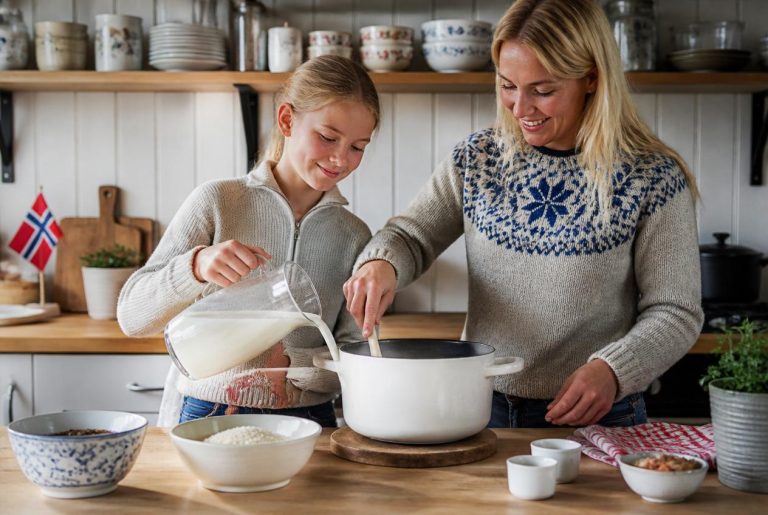
Norwegian Porridge (Risengrynsgrøt) Cooking Tips
Norwegian Porridge (Risengrynsgrøt) Recipe Cooking Tips
• Risengrynsgrøt is known for its creamy texture, comforting flavor, and important role in Norwegian holiday traditions.
• Short-grain rice works best because it releases starch and creates a rich creamy consistency.
• Whole milk produces the traditional rich flavor and smooth texture.
• Begin cooking the rice in a small amount of water before adding milk to help prevent scorching.
• Stir frequently once the milk is added to keep the porridge smooth and prevent sticking.
• Cook slowly over low heat for the creamiest results.
• A pinch of salt enhances the natural sweetness of the milk and rice.
• The porridge should become thick and creamy without becoming overly stiff.
• Butter is traditionally added to the center of each serving.
• Cinnamon and sugar are classic Norwegian toppings.
• Some families hide a single almond in the porridge as a Christmas tradition.
• Serve warm for the most comforting texture and flavor.
• The flavor should balance creamy milk richness, tender rice, and sweet cinnamon.
• Risengrynsgrøt is especially popular during Advent, Christmas, and winter gatherings.
• Leftover porridge is often used to make rice cream desserts the next day.
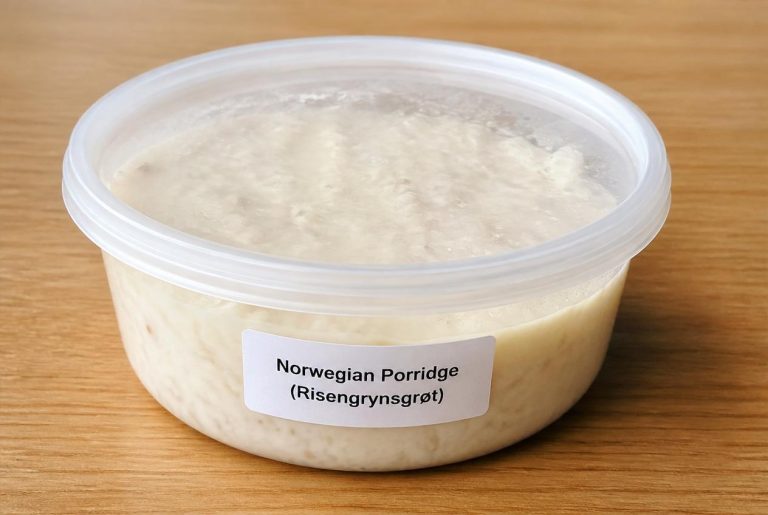
Norwegian Porridge (Risengrynsgrøt) Storage TIps
Norwegian Porridge (Risengrynsgrøt) Storage Tips
• Allow the porridge to cool before transferring it into storage containers.
• Store refrigerated in airtight containers to preserve freshness.
• Refrigeration causes the porridge to thicken considerably, which is normal.
• Add a small amount of milk when reheating to restore a creamy consistency.
• Reheat gently over low heat while stirring frequently.
• Cinnamon and milk flavors often deepen after overnight refrigeration.
• Portioning before storage makes reheating easier later.
• Freeze only if necessary, as texture may change slightly after thawing.
• Defrost frozen porridge gradually in the refrigerator before reheating.
• Stir thoroughly during reheating to restore a smooth texture.
• Use clean utensils when handling leftovers to help maintain freshness.
• Dairy-based porridges are generally best enjoyed within a shorter refrigerated storage period for ideal quality and safety.
• Keep away from strongly scented foods because milk-based dishes absorb odors easily.
• Discard leftovers if the porridge develops sour odors, curdling, mold, or unusual texture changes.
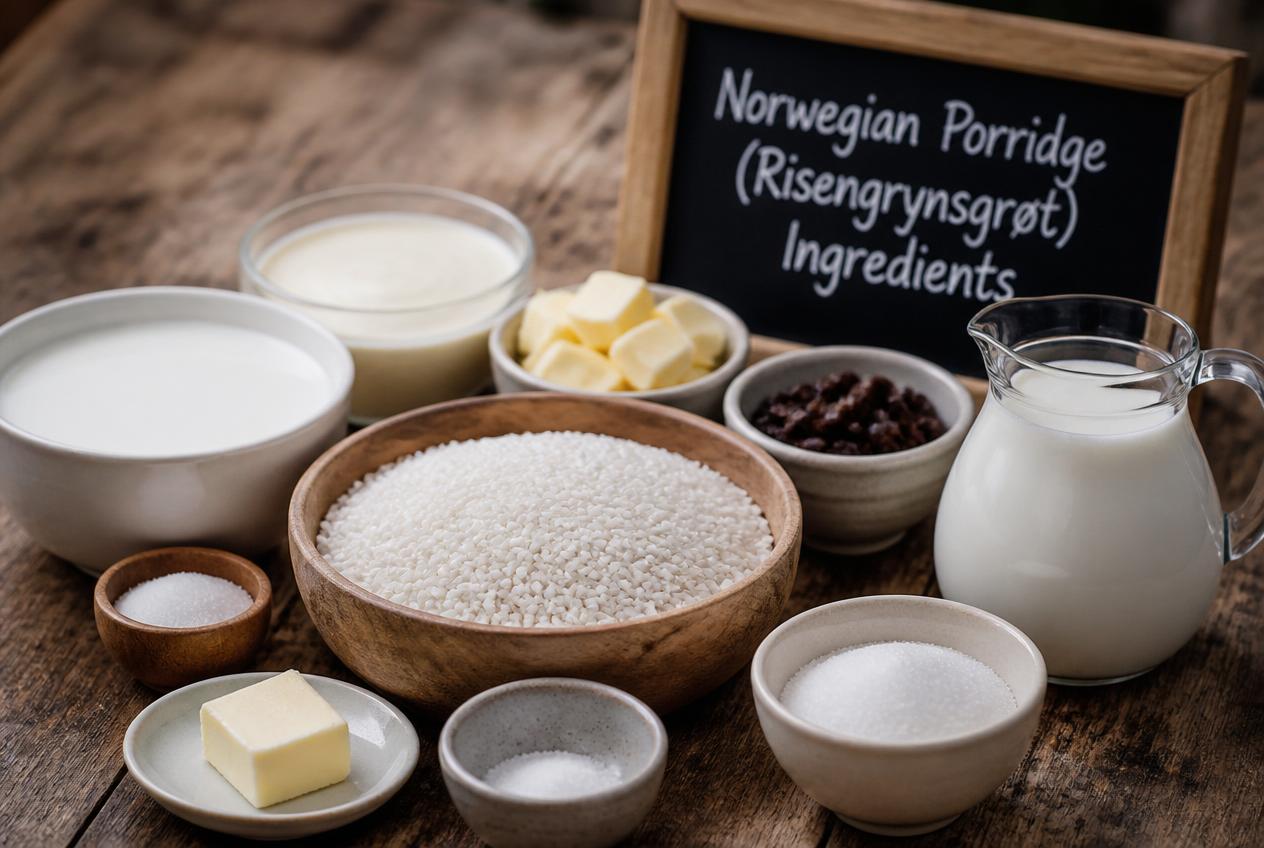
Norwegian Porridge (Risengrynsgrøt)
Ingredients
- 1 cup long-grain white rice hearty base
- 2 cups water
- 1/4 cup granulated sugar adds sweetness
- 1 teaspoon vanilla extract enhances flavor
- 1/2 teaspoon ground cardamom for warmth
- 6 cups whole milk for creaminess
- 1 tablespoon salted butter for serving
- 1 teaspoon ground cinnamon for warmth
- 1 cup fresh berries optional for garnish
Instructions
- In a large heavy-bottomed pot, combine the 1 cup of long-grain white rice with 2 cups of water. Place the pot over medium-high heat and bring the mixture to a gentle boil, stirring once or twice to keep the rice from sticking to the bottom. Once boiling, reduce the heat to low and allow the rice to simmer uncovered for about 10 minutes. Stir occasionally as the rice cooks so it heats evenly and absorbs the water properly. During this stage, the grains will begin to soften and become fluffy while still retaining a slight firmness in the center. Keeping the pot uncovered helps excess moisture evaporate and prevents the rice from becoming overly mushy before the milk is added.
- Once the rice has absorbed most of the water and looks light and fluffy, gently stir in the ¼ cup granulated sugar, 1 teaspoon vanilla extract, and ½ teaspoon ground cardamom. The sugar adds a delicate sweetness while the vanilla and cardamom give the porridge its warm, comforting Scandinavian flavor. Stir thoroughly so the spices and sugar dissolve evenly into the rice mixture. As the cardamom warms, its aromatic fragrance will begin to bloom and infuse the dish.
- Gradually pour in the 6 cups of whole milk while stirring continuously to keep the rice smooth and prevent clumping. Adding the milk slowly helps the temperature adjust evenly and creates a creamier final texture. Once all the milk has been incorporated, keep the heat on low and allow the risgrøt to cook gently for about 45 minutes. Stir frequently, especially toward the end of cooking, to prevent the milk from scorching on the bottom of the pot. Over time, the rice will continue softening and release starch into the milk, naturally thickening the porridge into a rich, creamy consistency. The finished risgrøt should be soft, velvety, and thick enough to coat a spoon while still remaining smooth and spoonable.
- Ladle the hot risgrøt into serving bowls while still warm and creamy. Top each bowl with a small pat of salted butter so it melts slowly into the porridge, creating extra richness and flavor. Sprinkle generously with ground cinnamon for warmth and aroma, and add fresh berries if desired for a bright, slightly tart contrast to the creamy sweetness. Risgrøt is traditionally served warm and comforting, making it especially perfect for cold weather breakfasts, holiday gatherings, or cozy evening meals.
Norwegian Porridge (Risengrynsgrøt) Frequently Asked Questions
Cooking Norwegian Porridge (Risengrynsgrøt) brings up plenty of questions—how to avoid sticky disasters, what’s up with the Christmas almond tradition, and if there’s a decent dairy-free option out there.
How do I stop the rice from sticking to the pot like it owns the place?
Constant stirring is the only way I’ve found to keep Norwegian Porridge (Risengrynsgrøt) from sticking. The rice loves to settle and create a crusty mess that’s a nightmare to scrub.
I keep the heat low and stir every few minutes, especially at the start. A heavy-bottomed pot helps spread the heat and prevent hot spots where rice likes to glue itself down.
Some folks add a bit of butter at the start, which helps prevent sticking. I also rinse my rice before cooking—gets rid of that extra starch that turns into glue.
Which ingredients do I really need for Norwegian Porridge (Risengrynsgrøt), and which are just for show?
The basics for Norwegian Porridge (Risengrynsgrøt) are short grain rice, milk, and salt. That’s all you need for creamy magic.
Everything else—like butter, cinnamon, and sugar—is for topping, not cooking in. Some recipes add vanilla or cardamom, but honestly, I stick to the classics. Norwegian Porridge (Risengrynsgrøt) is all about simplicity, not showing off your spice rack.
Can I make this in a slow cooker without it turning into rice-themed glue?
I’ve actually managed to make Norwegian Porridge (Risengrynsgrøt) in a slow cooker—though, I’ll admit, it’s trickier than the stovetop method. You need more liquid than you’d expect, and the whole thing has to simmer on low for a couple of hours, maybe two or three. The slow cooker insert gets a generous swipe of butter first, because I’m not in the mood to scrape burnt rice out of anything ever again.
I give it a good stir every half hour or so. If you skip this, you’ll get sad, sticky clumps—trust me. The texture doesn’t quite match the stovetop version of Norwegian Porridge (Risengrynsgrøt), but it’s close enough when you want something hands-off. If it thickens up too much, I just splash in some extra milk at the end. Happens more often than I’d like to admit, but hey, that’s Norwegian Porridge (Risengrynsgrøt) for you.
Honestly, if you’re after the absolute classic Norwegian Porridge (Risengrynsgrøt) texture, stick to the pot on the stove. But if you’re busy or just feeling a bit lazy, the slow cooker version will get you there—almost.
How do Norwegians traditionally serve it at Christmas—besides with a side of smug coziness?
Norwegian Porridge (Risengrynsgrøt) usually lands on the table for lunch on Christmas Eve, not as dessert. It’s the kind of meal you eat before diving into the chaos of holiday prep. There’s something comforting about a bowl of it, especially when the world outside is cold and a little bit wild.
Here’s the fun part: someone hides a whole almond in the Norwegian Porridge (Risengrynsgrøt), and whoever finds it wins a marzipan pig. This is apparently the pinnacle of Christmas excitement in Norway—who knew? I always top mine with butter, cinnamon, and sugar. The butter melts and makes these little rivers of sweetness. Some families even leave a bowl of Norwegian Porridge (Risengrynsgrøt) outside for the nisse, the farm’s guardian elf. But honestly, I suspect it’s just the neighbor’s cat getting a treat.
You’ll see Norwegian Porridge (Risengrynsgrøt) show up in all sorts of ways during the holidays. It’s simple, a little old-fashioned, and somehow perfect for a winter day.
What’s the difference between this and Norwegian rice pudding, and when did dessert crash the party?
Norwegian Porridge (Risengrynsgrøt) is the warm, creamy stuff you eat with a spoon, straight from the pot. But if you let it cool down and stir in whipped cream, it turns into riskrem—Norwegian rice pudding. They’re basically siblings, just at different points in their lives. It’s a bit like Clark Kent and Superman, if you ask me.
When I want dessert, I take leftover Norwegian Porridge (Risengrynsgrøt), fold in a cloud of whipped cream, and serve it cold with berry sauce. That’s riskrem. The rice porridge morphs into dessert with just a little effort. I usually make a big pot of Norwegian Porridge (Risengrynsgrøt), eat it warm for lunch, and then transform the leftovers into riskrem for later. Feels efficient, but also a little sneaky—especially if you’ve already eaten the marzipan pig.
Norwegian Porridge (Risengrynsgrøt) really is versatile. It’s lunch, it’s dessert, it’s a holiday tradition, and sometimes it’s just comfort food on a random Tuesday. I don’t think I’ll ever get tired of finding new excuses to make it.
Is there a dairy-free version that still tastes like comfort and not like regret?
I’ve tried making Norwegian Porridge (Risengrynsgrøt) without dairy, swapping in full-fat coconut milk or oat milk. Honestly, it works better than you might expect. You just need to grab a creamy plant milk—skip those watery ones that taste like disappointment.
Coconut milk brings a gentle sweetness and a hint of something tropical to Norwegian Porridge (Risengrynsgrøt). It’s not exactly traditional, but it’s not bad either. Still, I usually reach for oat milk because it’s more neutral, and somehow the creamy vibe sticks around. If you’re picky about flavor, oat milk’s probably your best bet for Norwegian Porridge (Risengrynsgrøt).
I stick with the usual milk-to-rice ratio for Norwegian Porridge (Risengrynsgrøt) and toss in a pinch of salt to round things out. The cooking time doesn’t really change, though I keep an eye on it—plant milks can get weird if you crank the heat. Nobody wants curdled Norwegian Porridge (Risengrynsgrøt), right? If you’re after that cozy, creamy bowl and can’t do dairy, this version of Norwegian Porridge (Risengrynsgrøt) gets surprisingly close. Try it and see if it hits the spot.

Recipes are gathered in person and written for real-world cooking conditions.
- 10 Hungarian Dessert Recipes Passed Down Through Generations - July 25, 2026
- 11 Easy English Recipes Anyone Can Make - July 25, 2026
- Hungarian Kifli Recipe - July 25, 2026