

Norwegian Pancakes (Sveler), or sveler as they’re called in Norway, are these thick, fluffy griddle cakes that have fueled Norwegians through coffee breaks and ferry rides for generations. I first stumbled across Norwegian Pancakes (Sveler) at a café along Norway’s west coast. Let me just say, they’re nothing like the flat American pancakes I grew up with. Pancakes (Sveler) are made with buttermilk and a quirky ingredient called horn salt (ammonium bicarbonate), which gives them that signature fluffiness and a slight tang, and people usually serve them folded with butter and sugar or brown cheese.
What keeps me coming back to these Norwegian thick pancakes is their versatility. You can eat Norwegian Pancakes (Sveler) hot off the griddle or cold out of your backpack during a hike. I’ve tried them with butter and sugar, jam, sour cream—pretty much anything I could get my hands on. So far, I haven’t found a topping that doesn’t work.
Honestly, making Norwegian Pancakes (Sveler) at home is a breeze. Most folks have the ingredients already. Whether you’re craving a new breakfast or just want a snack with your coffee, Norwegian Pancakes (Sveler) always seem to hit the spot.
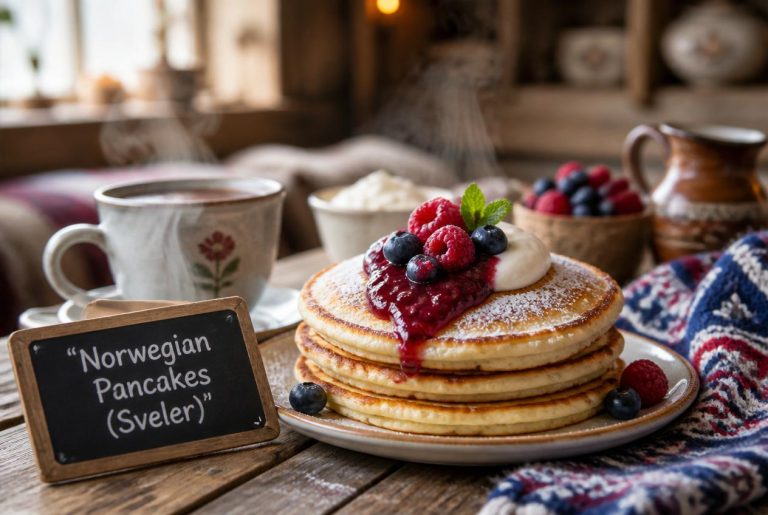
Norwegian Pancakes (Sveler)
Key Takeaways
- Pancakes (Sveler) are thick, fluffy pancakes made with buttermilk and horn salt for that classic tang and rise
- You can enjoy Norwegian Pancakes (Sveler) hot or cold, and top them with butter, sugar, jam, or brown cheese
- It’s easy to make authentic Norwegian Pancakes (Sveler) at home—just a few pantry staples and a couple of tricks
Batter Up: The Sizzling Saga of Sveler
When I first heard about Norwegian Pancakes (Sveler) on ferries, I figured someone was joking. Pancakes on a boat? Turns out, Norwegian Pancakes (Sveler) have been a staple along the west coast for ages, and people take them pretty seriously.
The magic behind traditional Norwegian Pancakes (Sveler) comes from one oddball ingredient. Horn salt—ammonium bicarbonate—gives these pancakes their signature rise and texture. I know, it sounds like something you’d find in a science class, not a kitchen, but it works.
Key Ingredients:
- Eggs and sugar
- Butter
- Fermented milk or kefir
- Flour
- Horn salt (or baking powder if you’re in a pinch)
The batter for Pancakes (Sveler) is thicker than what I’m used to. It makes these cake-like rounds that need a slow cook on the griddle. The result? A golden pancake that’s less sweet, with a gentle tang from the cultured milk.
Norwegian Pancakes (Sveler) stand apart from their cousin, Norwegian waffles (vafler), thanks to their texture and how you serve them. Vafler need a waffle iron, but you can make Norwegian Pancakes (Sveler) in any frying pan. I usually eat them warm, right off the griddle, and yes, with my hands.
The Fjord1 ferry company claims they make Norway’s best Norwegian Pancakes (Sveler). That’s some serious pancake pride, if you ask me.
Flippin’ Good Tips for Pancake Perfection
From my experience, medium heat is the sweet spot for Norwegian Pancakes (Sveler). If you crank it up too high, you’ll get burnt outsides and raw middles. Nobody wants that.
The batter should be thick but still pourable. If it runs off your spoon like soup, add more flour. If it’s standing up like a scoop of ice cream, thin it out with a splash of milk.
Don’t overmix. I stir just until everything is combined. A few lumps? Totally fine. Overmixing makes Norwegian Pancakes (Sveler) tough, and who wants that?
Here’s what I do for perfect Norwegian Pancakes (Sveler) every time:
- Let the batter rest 10-15 minutes before cooking
- Use a ladle or measuring cup so they’re all about the same size
- Wait for bubbles to form on top—then flip
- Only flip once (I know it’s tempting, but just don’t)
I always test the first Pancake (Sveler) to check my heat. That first one usually looks a bit wonky, but it helps me dial things in.
The key to authentic Norwegian Pancakes (Sveler) is horn salt. If I can’t find it, baking powder is my backup. It’s not quite the same, but it works in a pinch.
I pull my Norwegian Pancakes (Sveler) off the pan when both sides are golden and the center springs back if I poke it. Simple, right?

Norwegian Pancakes (Sveler)
Going Rogue: Sveler Variations that Break the (Butter) Mold
Honestly, while traditional Norwegian Pancakes (Sveler) are served with butter and sugar, I can’t help but experiment in the kitchen.
Some folks treat Norwegian Pancakes (Sveler) like a blank canvas. I’ve tried Nutella, fresh berries, and even peanut butter when I’m feeling rebellious. My Norwegian grandma would probably shake her head, but my taste buds are happy.
Here are some variations that might make a purist cringe:
- The Dessert Lover’s Dream: Pile on whipped cream and chocolate chips
- The Breakfast Rebel: Add crispy bacon and a drizzle of maple syrup
- The Fruit Fanatic: Top with strawberries, blueberries, and a dollop of vanilla yogurt
- The Savory Swapper: Skip sweet stuff and go with cream cheese and smoked salmon
If you want to keep things a little Norwegian while still breaking the rules, try brunost (brown cheese) in creative ways. I’ve melted it into a sauce, grated it over warm Norwegian Pancakes (Sveler) with honey, and even tossed tiny cubes into the batter.
If you’re into other Norwegian flatbreads, you might want to look up lefse for more topping inspiration. The best part about Norwegian Pancakes (Sveler) is how sturdy they are—they can handle whatever wild topping combo you dream up, even if it’s 2 PM and you’re raiding the pantry.
Sveler Longevity: Storage Secrets Revealed
Norwegian Pancakes (Sveler) taste great cold, which is a lifesaver when I make a big batch. You don’t have to eat them all at once. That’s good news for anyone who, like me, gets a little carried away.
Short-term storage is easy. I let Norwegian Pancakes (Sveler) cool, then stack them in an airtight container with parchment between each one. No sticking, no mess.
Here’s my go-to storage guide for Norwegian Pancakes (Sveler):
- Room temp: 1-2 days (assuming you don’t eat them first)
- Fridge: 4-5 days, airtight
- Freezer: Up to 3 months, if you wrap them well
For freezing, I wrap each Norwegian Pancake (Sveler) in plastic, then toss them all in a freezer bag. That way, I can grab just one or two whenever I need a snack.
Reheating makes a difference. Sure, you can microwave Norwegian Pancakes (Sveler) for 15-20 seconds, but I think they taste best when you warm them in a dry pan over medium heat—about 30 seconds each side. The texture comes back, almost like they’re fresh.
I never leave Norwegian Pancakes (Sveler) out uncovered—they dry out so fast. Air is their enemy. My grandma would probably give me a hard time for not eating them all right away, but sometimes you’ve got to plan ahead.
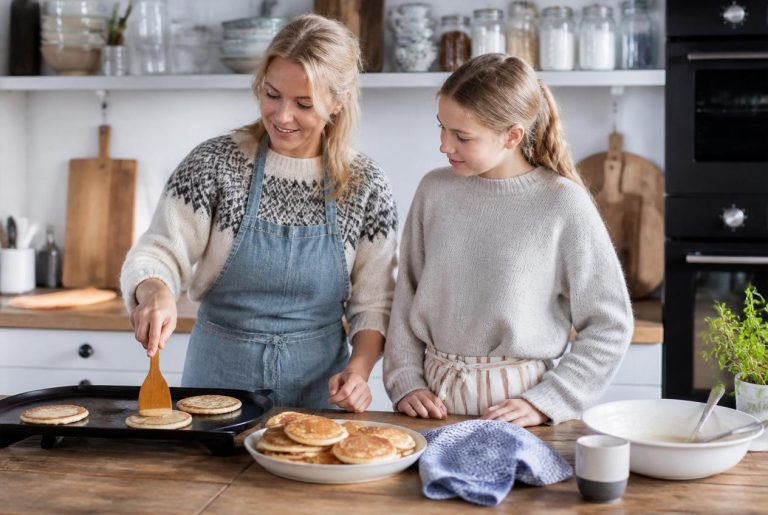
Norwegian Pancakes (Sveler) Cooking Tips
Norwegian Pancakes (Sveler) Recipe Cooking Tips
• Sveler are known for their soft fluffy texture and lightly sweet flavor.
• Sveler are thicker and smaller than crêpes but softer than American pancakes.
• Buttermilk or cultured milk gives the pancakes their traditional tenderness and slight tang.
• Eggs help create a light airy texture.
• A small amount of sugar adds gentle sweetness without making them dessert-like.
• Cardamom is a classic Norwegian flavoring that adds warmth and aroma.
• Letting the batter rest briefly helps improve texture and consistency.
• Cook on a lightly greased griddle or skillet over medium heat.
• Avoid cooking at high heat because the centers may remain undercooked.
• Turn when bubbles form on the surface and the edges begin to set.
• Sveler should remain soft and lightly golden rather than dark brown.
• Butter, brunost (brown cheese), jam, or sour cream are traditional toppings.
• Serve warm for the best flavor and texture.
• The flavor should balance mild sweetness, creamy richness, and subtle cardamom notes.
• Sveler are especially popular on Norway’s west coast and are often served on ferry journeys and at family gatherings.
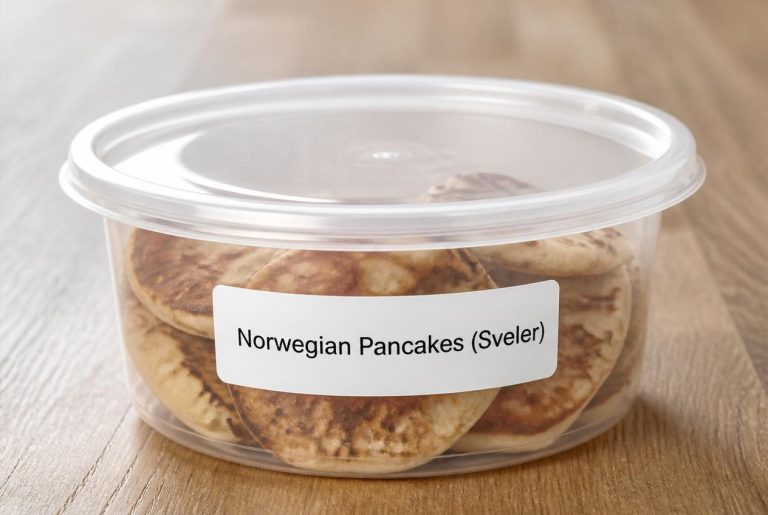
Norwegian Pancakes (Sveler) Storage TIps
Norwegian Pancakes (Sveler) Storage Tips
• Allow the pancakes to cool completely before storing.
• Store in airtight containers or wrapped tightly to help maintain softness.
• Refrigerate if storing beyond the same day.
• Separate layers with parchment paper to prevent sticking.
• Reheat gently in a skillet, microwave, or low oven until warmed through.
• Avoid overheating because the pancakes may dry out.
• Freeze extra pancakes in airtight freezer-safe bags or containers if desired.
• Separate layers with parchment paper before freezing for easier serving.
• Defrost frozen Sveler gradually before reheating.
• Fresh toppings such as jam, butter, or cheese should be added after reheating.
• Use clean utensils when handling leftovers to help maintain freshness.
• Pancakes are generally best enjoyed within a shorter storage period for ideal texture and flavor.
• Keep away from strongly scented foods because they absorb odors easily.
• Discard leftovers if they develop sour odors, mold, or unusual texture changes.

Norwegian Pancakes (Sveler)
Ingredients
- 2 eggs
- 1/2 cupsugar
- 2 2/3 cupkefir
- 2 cupflour
- 1/4 teaspoonsalt
- 1/2 teaspoonbaking soda
- 1 teaspoonhorn salt ammonium bicarbonate
- Oil as needed
Instructions
- In a medium mixing bowl, whisk together the eggs and sugar until the mixture becomes pale, light, and noticeably fluffy. This step is important because incorporating air into the eggs helps create soft, tender sveler with a delicate texture. Continue whisking until the sugar has mostly dissolved and the mixture looks smooth and slightly thickened. Depending on how vigorously you whisk, this can take several minutes and may require a bit of arm strength if mixing by hand. Once the eggs and sugar are fully aerated, slowly pour in the kefir while continuing to whisk gently so everything blends into a smooth, creamy batter base. Set the bowl aside while preparing the dry ingredients.
- In a separate small mixing bowl, combine the flour, salt, baking soda, and horn salt. Use a fork or small whisk to stir the ingredients together thoroughly so the leavening agents are evenly distributed throughout the flour. This ensures the sveler rise evenly while cooking and develop their signature soft, airy texture. Breaking up any small clumps at this stage also helps prevent uneven pockets of baking soda or horn salt in the finished pancakes.
- Gradually add the dry ingredients into the bowl of wet ingredients, folding everything together gently with a spatula. Stir only until the flour is incorporated and no large dry streaks remain. The batter does not need to be perfectly smooth—small lumps are completely fine and actually help prevent overmixing, which could make the sveler dense instead of tender. Once combined, let the batter rest for about 30 minutes at room temperature. This resting period allows the flour to fully hydrate while giving the leavening ingredients time to activate, resulting in lighter and fluffier pancakes with a more delicate texture.
- Heat a non-stick griddle or frying pan over medium-low heat. The pan should be hot enough that the batter begins cooking gently when added, but not so hot that the pancakes brown too quickly before the centers are cooked through. Most non-stick pans will not require additional oil or butter, though it’s helpful to keep a small amount nearby just in case the batter begins sticking.
- Using a soup ladle or approximately ⅓ cup of batter, pour the batter onto the pan and gently spread it into a circle about 4 to 5 inches wide. Allow the svele to cook undisturbed until bubbles begin actively forming and popping across the surface and the edges start to look slightly set. Carefully slide a spatula underneath and flip the pancake over. Cook the second side until lightly golden and fully cooked through. The exact timing may vary depending on your stove and pan, so the first few pancakes help you find the perfect heat level and cooking time.
- Sveler are especially delicious served warm straight from the griddle, but they can also be prepared ahead of time and enjoyed cold or at room temperature. Traditionally, Norwegian ferry-style sveler are spread with a simple sweet butter filling made by creaming equal parts softened butter and sugar together until smooth and fluffy. The pancakes are then folded in half before serving.
- You can also serve them with sour cream or crème fraîche paired with your favorite berry jam for a sweet and tangy topping combination. Another traditional option is to spread the warm sveler with butter and top them with thin slices of brunost, the caramelized Norwegian brown cheese that melts slightly from the heat of the pancake. Once your toppings are added, fold the svele in half and enjoy alongside a hot cup of coffee for a classic Scandinavian treat.
Norwegian Pancakes (Sveler) Frequently Asked Questions
Norwegian Pancakes (Sveler) bring up a lot of questions, especially when your homemade batch doesn’t look like the fluffy ones on Norwegian ferries. Even the pronunciation can make you doubt your Viking roots.
What’s the difference between these and the thin, fancy French-style pancakes that fold like origami?
Norwegian Pancakes (Sveler) are thicker than American pancakes and nothing like those delicate French crêpes. Crêpes are so thin you could almost read through them, but Norwegian Pancakes (Sveler) have real heft.
The batter for Norwegian Pancakes (Sveler) uses soured milk or buttermilk. The texture is fluffy and tender, not thin or lacy. People eat Norwegian Pancakes (Sveler) folded in half, but not for fancy folding—just because that’s the Norwegian way.
Which ingredients are absolutely non-negotiable, and which ones can I swap without offending Norway?
The classic recipe for Pancakes (Sveler) uses horn salt (ammonium bicarbonate). If you don’t have horn salt, baking powder will do, but you’ll lose a bit of that signature texture.
You’ll need eggs, sugar, flour, and some kind of soured milk—like buttermilk or kefir. The tang from the soured milk is pretty key. Regular milk just doesn’t cut it for Norwegian Pancakes (Sveler).
Butter is a must for richness. Cardamom is optional, but I love adding it for that classic Norwegian Pancakes (Sveler) vibe.
Why do mine turn out flat and sad instead of fluffy and proud?
Your leavening might be old, or maybe you’re not using enough. Horn salt and baking powder lose their oomph after a while, so check those dates.
Overmixing is another culprit. Stir just until everything comes together, then stop. Overmixing makes Norwegian Pancakes (Sveler) dense instead of fluffy.
Let the batter rest before you cook. Resting the batter lets the leavening work and the flour hydrate, which helps you get that perfect Norwegian Pancakes (Sveler) texture.
What’s the best way to cook them so they’re golden—not burnt like my last “experiment”?
Stick with medium heat. Cranking up the burner might seem like a shortcut, but honestly, patience is the secret to perfect (Sveler).
Grab a griddle or a cast iron pan—they spread the heat around so you don’t get random burnt spots. I always let my pan heat up first. Try flicking a few drops of water on there; if they sizzle and vanish, you’re good to go. That’s when you pour in the Pancakes (Sveler) batter.
Wait for bubbles to pop up on the surface and the edges to look a little firm. That’s your cue to flip—usually after two or three minutes. Flip just once. If you keep flipping, Norwegian Pancakes (Sveler) get chewy, and nobody wants that. By the way, if you’re new to this, don’t worry if the first one’s a little wonky. Happens to the best of us.
How do you pronounce the name without sounding like you’re summoning a sea monster?
It’s “SVEH-leh” for a single Pancake (Sveler), and “SVEH-ler” for more than one. The E is soft, not harsh. I’ve heard all sorts of attempts, and honestly, as long as you’re close, people know what you mean. I mean, it’s not like you’re reciting ancient runes—just say Norwegian Pancakes (Sveler) with a bit of confidence.
Don’t stress too much about the pronunciation. Norwegian Pancakes (Sveler) are about comfort, not perfection. Mess it up? Who cares! I’d rather have someone joyfully mispronounce Norwegian Pancakes (Sveler) than skip making them altogether. And if you’re serving Norwegian Pancakes (Sveler) to friends, they’ll probably stumble over the word too—which is kind of part of the fun.
What are the classic toppings, and is it socially acceptable to drown them in jam?
Traditional toppings for Norwegian Pancakes (Sveler) usually start with butter and sugar, brown cheese (brunost), or a mix of sour cream and jam. People fold Norwegian Pancakes (Sveler) in half like a crescent after throwing on whatever toppings they fancy.
You want to spread butter on Pancakes (Sveler) while they’re still warm so it melts right in. Most folks just grab some sugar and sprinkle it over the top—no need to overthink it, that’s just how it’s done.
Jam with sour cream? That’s a classic, too. And honestly, if you want to be heavy-handed with the jam, nobody’s going to stop you. Norwegian Pancakes (Sveler) show up all the time in ferry cafés along Norway’s west coast, and people just pile on toppings, sometimes with wild abandon. If you’re worried about what’s “acceptable,” well, Norwegian Pancakes (Sveler) are all about comfort, not rules. Maybe it’s the cozy vibe or just nostalgia, but Norwegian Pancakes (Sveler) beg for a little extra jam now and then.

Recipes are gathered in person and written for real-world cooking conditions.
- 10 Hungarian Dessert Recipes Passed Down Through Generations - July 25, 2026
- 11 Easy English Recipes Anyone Can Make - July 25, 2026
- Hungarian Kifli Recipe - July 25, 2026